
Industrial Equipment Mounting: Certified Sleeve Anchor Fit
Industrial Equipment Mounting: Certified Sleeve Anchor Fit
Sleeve anchor scenario fit for industrial equipment mounting is decided by four conditions long before the drill bit touches the slab: the base material receiving the expansion, the corrosion exposure at the anchor location, the torque actually applied during installation, and the quality-system evidence a supplier can produce for the batch. An anchor that is correct for a machine base on a dry factory floor is not automatically correct for the same machine on an outdoor pad in a humid or coastal climate.
This reference works through those conditions for buyers and installers at the research and evaluation stage. It separates what the sleeve anchor's corrosion certification to EN ISO 10683:2018 and fastening-torque certification to EN ISO 16047:2005+A1:2012 establish from what they leave to the application, and it shows how ISO 9001 (certificate 29024Q12949-09R1M) and IATF 16949:2016 coverage should be read inside a supplier's quality system. Manufacturer facts are drawn from YUETONG FASTENER (HEBEI YUETONG FASTENERS MANUFACTURING CO., LTD.); market figures are attributed to their publishers.
Why equipment mounting is a harder anchoring problem than it looks
Industrial equipment mounting usually applies two loading patterns at once. The anchor carries a static, permanent load from the machine, and it also absorbs the alternating vibration that the machine generates in service. The sleeve anchor product range is described for static permanent fastening, alternating vibration load, permanent installation and detachable repeated assembly where maintenance or reconfiguration is planned. Those requirements pull in different directions: a joint that will be reopened needs a repeatable installation procedure, while a permanent joint needs the expansion to remain stable without further attention.
The familiar failure modes follow the same logic. Insufficient load capacity, loosening and pull-out are not random events; they trace back to identifiable conditions — anchor size, embedment depth, base-material strength, hole diameter, edge distance, spacing and installation quality. Because each of those conditions is set by the project rather than by the catalogue, scenario fit cannot be settled by choosing a diameter and a finish. It has to be settled by matching the anchor to the base, the environment and the duty cycle, then confirming that the supplier can evidence the same conditions in production.
Four variables that decide scenario fit
For equipment mounting, the fit decision reduces to four variables. Each one changes either the anchor selection or the evidence a buyer should request before approving the supply.
| Scenario variable | What it changes | Evidence to request |
|---|---|---|
| Base material condition | How reliably the sleeve expands against the hole wall; load capacity | Base-material assessment; anchor selection guidance for concrete or solid masonry |
| Corrosion exposure | Coating system or material grade | Corrosion certification to EN ISO 10683:2018; stated finish or stainless grade |
| Load character and duty | Anchor size, embedment, torque control, inspection interval | Fastening-torque evidence to EN ISO 16047:2005+A1:2012; installation instruction |
| Installation control | Whether the designed capacity is realised on site | Hole diameter and cleaning requirements; calibrated torque tool; installer training |
| Quality-system consistency | Confidence that batch 2 behaves like batch 1 | ISO 9001 certificate 29024Q12949-09R1M; IATF 16949:2016 scope; batch test reports |
Corrosion exposure: reading EN ISO 10683:2018 correctly
The sleeve anchor's corrosion protection is certified to EN ISO 10683:2018. In the product range this corresponds to three surface treatments on carbon steel — zinc plated, yellow zinc plated and hot-dip galvanized — plus A2-70 and A4-80 stainless steel as separate material grades. The certificate and the finish specification answer different questions, and buyers who treat them as interchangeable tend to discover the gap on site.
The certificate addresses the corrosion-protection system. It does not fix a service life for a specific anchor in a specific climate, and it does not convert a zinc-plated anchor into a coastal specification. Where the working environment includes coastal salt spray, rain immersion or humid chemical exposure, the stainless A4 grade is the material-level control rather than an additional coating step. For ordinary outdoor open-air and humid conditions, the galvanized finishes are the relevant choices, and the buyer's task is to confirm which finish is quoted, on which base material, for which diameter.
A second boundary is handling. Coating integrity is a field condition: abrasive sockets, dragging anchors across a slab and re-drilling a hole all remove protection that the certificate describes. This is why corrosion failures sometimes appear on anchors that were correctly specified on paper — the specified system was delivered, but not preserved through installation. Acceptance criteria that mention only the finish name, without a statement on handling and site storage, leave the largest practical gap open.
Fastening torque: EN ISO 16047:2005+A1:2012 in practice
The fastening torque of the sleeve anchor is certified to EN ISO 16047:2005+A1:2012. Torque is the control that converts a correctly sized hole into a working anchorage: tightening draws the cone through the sleeve and expands it against the hole wall. Insufficient tightening leaves the sleeve poorly expanded, while excessive tightening can damage the anchor or the base material. Neither outcome is visible after the fixture is seated, which is why this parameter belongs in the installation procedure rather than in the installer's judgement.
What the certification contributes is a documented reference for torque behaviour under a recognised method, including the 2012 amendment. What it does not do is set the installation torque for a particular machine base. That value must come from the supplier's installation instruction for the specific diameter and base-material condition, applied with a calibrated tool and recorded. A practical evaluation step is to install a small sample batch, verify the applied torque with a torque wrench, and check the anchors afterwards for sleeve deformation, thread damage or base-material cracking.
Torque also links to the other scenario variables. A hole drilled above the specified diameter cannot be corrected by tightening harder — the sleeve has less material to bear against. The same applies to a hole that was not cleaned before installation. In both cases the torque value is achieved while the anchorage is not, which is exactly the failure pattern that a torque certificate alone cannot prevent.
Long-term load behaviour: loosening, pull-out and the conditions behind them
Loosening and pull-out during long-term use have documented causes. Improper hole size, insufficient embedment, unsuitable base material or incorrect tightening torque can all reduce anchoring performance and allow the anchor to loosen. Pull-out may occur when the anchor is installed in weak or damaged concrete, when the hole is oversized, when embedment depth is insufficient, or when the anchor is overloaded. Vibration adds a further demand, and the expansion design is described as resisting loosening under vibration rather than eliminating the need for correct selection and installation.
For equipment mounting, the practical reading is that long-term behaviour is a function of the joint, not the anchor alone. A machine that introduces alternating load into a fixing designed around a static assumption will behave differently from the same anchor in a static base. Buyers evaluating a supplier should therefore ask two separate questions: whether the anchor is appropriate for the load case, and whether the installation procedure that realises that load case is documented and repeatable. Reducing failure risk follows the accepted sequence — correct anchor size, specified hole diameter, sufficient embedment depth, a cleaned hole, and tightening in line with installation requirements — with periodic inspection on vibration-prone equipment as an additional control.
What certified supply should include
Certification is useful in procurement only when the scope of each document is matched to the product and the site. For this sleeve anchor range, four documents carry most of the weight, and each answers a different question.
- ISO 9001, certificate 29024Q12949-09R1M — the quality management system of the manufacturing organisation. Verify that the certificate is current and that its scope covers the product type being purchased.
- IATF 16949:2016 — automotive-sector quality management coverage, which indicates process discipline and documented control rather than a statement about anchor load capacity in a specific base material.
- EN ISO 10683:2018 — the corrosion certification for the coating system, to be read alongside the quoted finish or stainless grade.
- EN ISO 16047:2005+A1:2012 — the fastening-torque certification, to be read alongside the installation instruction for the supplied diameter.
Behind those documents, the production controls are what a buyer is really approving. The manufacturer describes raw-material incoming inspection, in-process patrol inspection, finished-product tensile load test and pre-shipment inspection, with third-party SGS testing available where independent data is required. Material certificates and test reports can be provided, factory quality defects are covered by free replenishment, and technical communication is offered on a 24-hour basis. The company also holds ISO 14001, ISO 45001, EU CE certification and carbon footprint certification, and reports nine national patents.
A verification step worth adding to any evaluation: ask which method the reported tensile data follows. A finished-product tensile load test used as a production control is not the same as a project-specific anchor test in concrete, and ASTM E488 / E488M-22 is the recognised standard test method for measuring the strength of anchors in concrete elements. Knowing which of the two a report represents prevents a buyer from reading production data as installed-performance data.
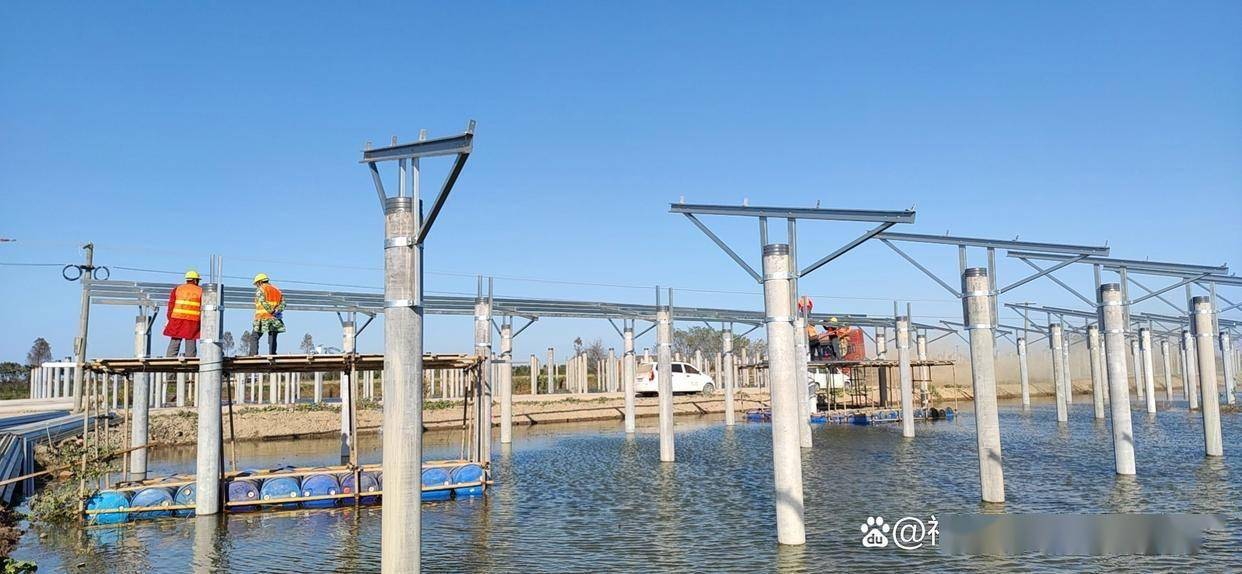
Three equipment-mounting scenarios and their anchor logic
Equipment mounting is listed among the application environments for the range, alongside factory construction, PV power stations, steel structures, municipal infrastructure, petrochemical plants, rail transit and bridge and curtain-wall work. Three recurring situations show how the variables combine.
Machine base on an indoor concrete slab. Static permanent fastening with occasional detachable assembly for maintenance dominates here. Corrosion exposure is low, so zinc plating is the normal finish and the selection question is diameter, length and head style — hex bolt, hex nut or flange nut sleeve anchors depending on the fixture and the tool access. The decisive control is installation: hole diameter, cleaning and a recorded torque value. Where equipment is repositioned during reconfiguration, the detachable repeated assembly mode is the relevant specification and the re-installation procedure should be written down rather than repeated from memory.
Outdoor equipment base in humid or coastal air. Corrosion becomes the selection driver. Hot-dip galvanized or stainless steel replaces zinc plating, and the EN ISO 10683:2018 scope is checked against the delivered finish. The manufacturer's case record describes a global outdoor programme of 15,000 pieces for road facilities, billboard fixing, street light bases and PV bracket anchoring, listed with a 10–15 year duration and zero customer complaints, attributed to multiple anti-corrosion treatments. That record describes the supplier's own documentation for a different application; it supports the corrosion argument but does not substitute for a project-specific assessment of the reader's base material and load case.
Vibration-prone machinery. Alternating vibration load shifts attention to embedment depth, anchor size and inspection. Because loosening under vibration is a recognised risk rather than a theoretical one, the acceptance criteria should include the torque value, the tool used and a scheduled re-check. Where the location is classified as an explosion hazardous area, the anchor selection is only one part of a wider safety-compliance requirement and cannot satisfy it alone.
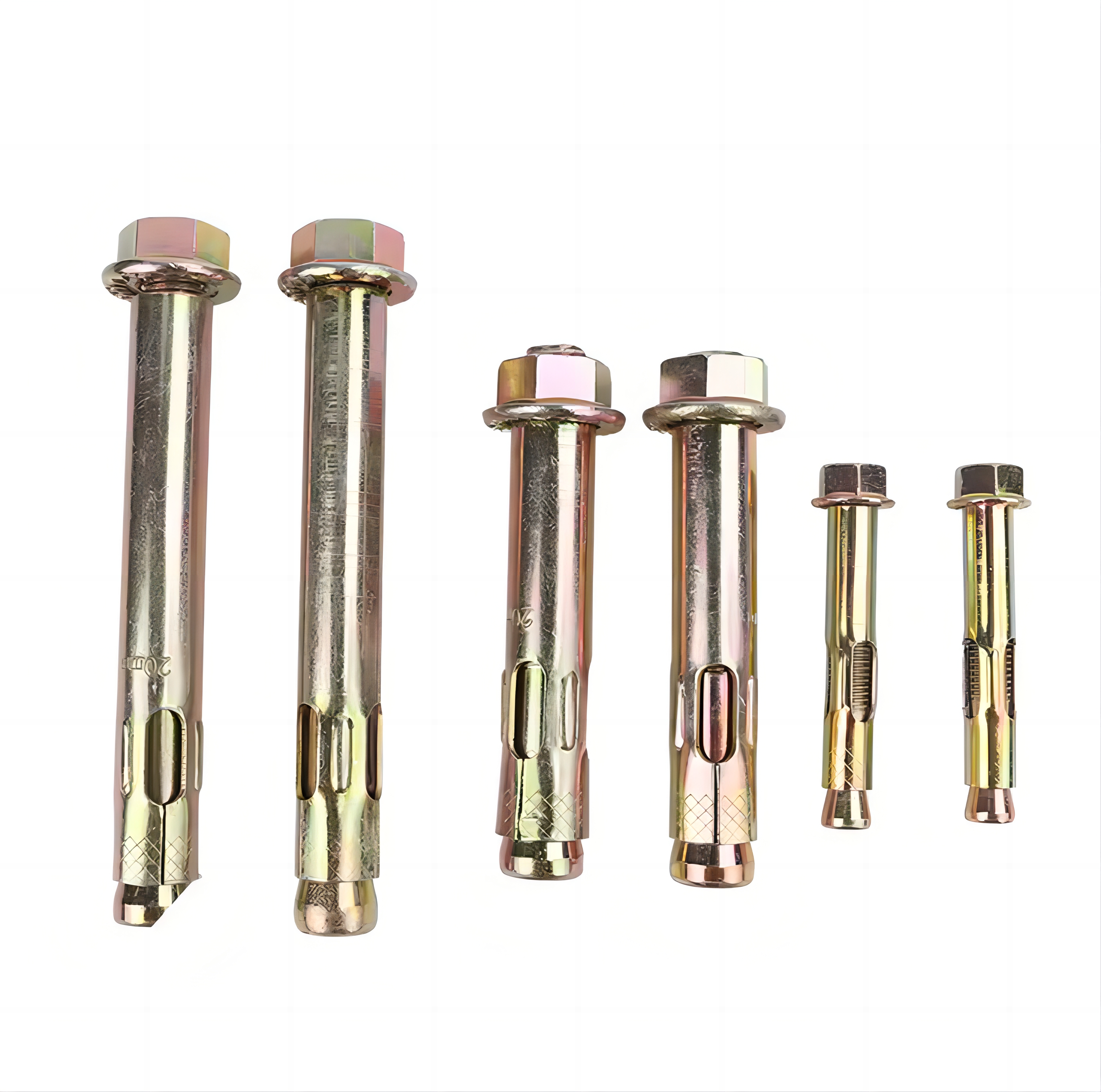
Where sleeve anchors stop being the right choice
Sleeve anchors are commonly used in concrete and solid masonry, and suitability depends on the specific anchor design, the base-material condition and the load requirements. That sentence carries the fit boundary. Weak or damaged concrete, an oversized hole and insufficient embedment are the documented conditions under which pull-out becomes likely, and none of them is corrected by choosing a larger diameter or a heavier-duty variant after the fact.
The same boundary applies to base materials outside concrete and solid masonry. The range includes anchor designs intended for other substrates, so the correct response to a hollow or unfamiliar base is a different anchor design or an engineering assessment, not a standard sleeve anchor installed with more torque. For buyers, this is the point where a specification should stop describing the product and start describing the condition: state the base material as surveyed, not as assumed.
Market context: why documentation is entering the specification
Grand View Research estimated the global anchoring fasteners market at USD 3.12 billion in 2024, with the mechanical anchors segment — the group that includes sleeve anchors — accounting for 58.3% of revenue that year. Credence Research projects China's industrial fasteners market rising from USD 12.23 billion in 2024 to USD 22.78 billion by 2032, a forecast rather than an observed result. Published estimates for construction anchors differ between research houses, largely because category definitions differ; the figures are best used as scale indicators, not as a basis for pricing decisions.
The procurement implication is narrower than the headline numbers. Where mechanical anchoring dominates a category, differentiation between suppliers shifts toward documented control: which standard a certificate references, which amendment it includes, which site and product scope it covers, and whether the batch that arrives matches the sample that was approved. For equipment mounting, tolerances are also relevant beyond the anchor: the range covers M5–M36, with common sizes from M6 to M16 and imperial equivalents from 1/4 inch to 5/8 inch, overall lengths from 30 mm to 300 mm, material grades of 4.8 carbon steel and A2-70 or A4-80 stainless steel, and compliance with GB/T, DIN, ISO, ASTM and EN standards.
Writing the requirement into purchasing terms and acceptance criteria
The gap between a correct anchor and a reliable anchorage is usually closed in the purchase order. Four clauses carry most of the risk.
Specify the condition, not only the item. State anchor type and head style, diameter and length, the surveyed base material, the finish or stainless grade, and the environment. A line item that reads only "sleeve anchor, M10, zinc plated" leaves the corrosion and load assumptions unrecorded.
Name the documents and their numbers. Require the corrosion certification to EN ISO 10683:2018, the fastening-torque certification to EN ISO 16047:2005+A1:2012, and the quality-system certificate number, ISO 9001 29024Q12949-09R1M, together with the installation instruction stating the torque value for each supplied diameter. Naming the number prevents a generic certificate set from being supplied in place of a scoped one.
Define acceptance tests and sampling. A finished-product tensile load test, a dimensional check and a coating inspection on the delivered batch, plus third-party SGS testing where the project requires independent confirmation, give the buyer a defensible release criterion. Where a project needs installed-performance data, state the method the test should follow rather than accepting production data as a substitute.
Set the commercial terms that carry the risk. Standard products are quoted from 500 sets and non-standard customized items from 3,000 sets, with 3–7 days lead time for in-stock products and 12–20 days for customized orders, and customization covering size, material, anti-corrosion treatment, product style, printed packaging and matched assembly kits. Factory quality defects are covered by free replenishment. Because the real cost of a pull-out is downtime and rework rather than the price of the anchor, the acceptance clause matters more than a marginal unit-price difference.
What changes next
Two developments are reasonable to plan around, with the caveat that both are conditional. First, as mechanical anchoring keeps the larger share of the category, buyers are likely to compare suppliers on documentation depth rather than on product availability alone — certificate scope, revision level and batch traceability become shortlisting criteria rather than afterthoughts. Second, corrosion specification is moving from a finish name toward a material decision in coastal and humid projects, which shifts cost earlier in the design stage. Neither trend removes the need for the base-material survey, the torque record and the inspection schedule; they only make the paperwork more consequential.
FAQ
What affects the load capacity of a sleeve anchor?
Load capacity depends on the anchor size, embedment depth, base-material strength, hole diameter, edge distance, spacing and installation quality. Because each of these is set by the application rather than by the product alone, the actual application conditions should be considered when selecting the anchor.
What base materials are suitable for sleeve anchors?
Sleeve anchors are commonly used in concrete and solid masonry. Suitability depends on the specific anchor design, the condition of the base material and the load requirements, so a base outside those categories calls for a different anchor design or an engineering assessment.
Is tightening torque important for sleeve anchors?
Yes. Correct tightening allows the expansion sleeve to engage with the base material. Insufficient tightening can result in poor expansion, while excessive tightening can damage the anchor or the base material. The applicable torque value should come from the installation instruction for the specific diameter and base-material condition.
Can sleeve anchors loosen after installation?
They can. An improper hole size, insufficient embedment, an unsuitable base material or an incorrect tightening torque may reduce anchoring performance and lead to loosening. Vibration load increases the demand on the joint, which is why installation control and periodic inspection matter on dynamic equipment.
Why can a sleeve anchor pull out of concrete?
Pull-out may occur when the anchor is installed in weak or damaged concrete, when the drilled hole is oversized, when the embedment depth is insufficient, or when the anchor is overloaded. These conditions relate to the base material and the installation rather than to the anchor's nominal size alone.
Can sleeve anchors be used outdoors?
Yes, provided the surface finish or material is selected for the environment. Zinc plating, hot-dip galvanizing or stainless steel may be considered depending on the required corrosion resistance, and coastal salt-spray or humid chemical exposure generally points toward a stainless grade rather than an additional coating.
How should the correct sleeve anchor size be selected?
Selection should consider the fixture thickness, the required load, the base material, the anchor diameter, the embedment depth and the installation environment. The available range covers M5–M36, with common sizes from M6 to M16 and imperial equivalents, and lengths from 30 mm to 300 mm.
Reference material
The manufacturer's full product catalogue, including sleeve anchor types, sizes, materials and surface treatments, is available for download: YUETONG FASTENER product catalogue (PDF). Company information is published at www.ytfasteners.com.
Есть вопросы или нужны дополнительные детали?
Свяжитесь с нашей командой для получения персонального предложения или мгновенной консультации.
Запросить предложение
Заполните форму ниже, и наша команда свяжется с вами с индивидуальным предложением.
Прямой чат WhatsApp
Предпочитаете общаться в реальном времени? Напишите нам в WhatsApp для мгновенной помощи и быстрых ответов.
- Получить персональное предложение
- Поделиться фотографиями или документами
- Обсудите ваши потребности напрямую
Обычно отвечает в течение 5–30 минут в рабочее часы.