
Industrial Heavy Duty AGV: Specification & Compliance Guide
Industrial Heavy Duty AGV: Specification & Compliance Guide
An industrial heavy duty AGV is an automated guided vehicle engineered to move payloads from several tonnes to hundreds of tonnes without a driver. It is used where cranes, forklifts and rail-bound transfer carts struggle with route flexibility, repeatability or labour exposure. The category is now broad enough that a single model name can describe a 15-tonne chassis carrier, a 200-tonne wind-power transporter or a 600-tonne ultra-heavy platform. For buyers in the research and evaluation stage, the central task is not choosing the largest number on a brochure. It is matching payload, dimensions, navigation, safety and certification to a specific route and operating environment.
Market context supports that shift. Fortune Business Insights valued the global AGV market at USD 5.52 billion in 2025 and identified heavy-load AGVs as a key segment. The same source places Asia Pacific at 35.51% of the 2025 AGV market. For procurement teams, the practical implication is straightforward: more suppliers, more configurations and more claims must be compared against documented specifications, not marketing labels.
Why Heavy Duty Is a Specification Problem, Not a Label
The term heavy duty is not standardised across the AGV category. Product tags in the Lonyu AGV corpus alone span 1–20 tonne AGVs and transfer carts, 21–50 tonne heavy-duty AGVs, and 50–600 tonne ultra heavy-duty AGVs. The broader product range is listed as 1 to 1000 tonnes. A buyer comparing two heavy duty AGVs may therefore be comparing machines designed for different duty cycles, floor conditions and safety boundaries.
Model names can also differ from rated values. The 60ton Heavy-duty AGV, model LY-1-60T-48-A, lists a rated load of 50,000 kg in its technical parameters, an equipment dead weight of 8,000 kg, body dimensions of L4500 mm × 2522 mm × 670 mm, a 100 mm lifting stroke and a climbing ability of 5. That is not a contradiction to be ignored; it is a reminder that the technical agreement and parameter table govern the purchase, not the model name alone.
Three distinctions matter at the evaluation stage:
- Rated load versus maximum load. A rated load is the normal working load. A maximum load may appear in certification or test documents and should not be treated as a daily production target without supplier confirmation.
- Payload versus equipment weight. A 150-tonne AGV may weigh 35,000 kg itself. Floor loading, ramps and bridge plates must account for both the cargo and the vehicle.
- Vehicle envelope versus cargo envelope. A 200-tonne model listed at 8,100 mm × 3,500 mm × H870 mm may still require a larger operating envelope for turning, lifting and safe clearance.
| Disclosed example | Rated load | Equipment weight | Why it matters |
|---|---|---|---|
| 150 ton Heavy duty AGV, LY-1-150T-816-A | 150,000 kg | 35,000 kg | Floor and route design must carry vehicle plus load. |
| 200ton Heavy duty AGV backpack transmission box, LY-1-200T-816-A | 200,000 kg | 35,000 kg | A high payload class can still have project-specific dimensions. |
| 600ton Heavy duty AGV, LY-1-450(600)T-416-A | 600,000 kg | 50,000 kg | Ultra-heavy projects require early civil and route engineering. |
The Core Parameter Set Buyers Should Verify
A useful evaluation compares seven parameter groups: payload, envelope, motion, navigation, energy, safety and structure. The examples below come from disclosed product specifications and show how much variation exists within one supplier's heavy duty AGV range.
| Parameter group | What to verify | Disclosed example |
|---|---|---|
| Payload | Rated load, maximum load, load centre, fixture weight | 150-ton model rated at 150,000 kg; 200-ton model at 200,000 kg; 600-ton model at 600,000 kg |
| Envelope | Body dimensions, lifting stroke, ground clearance, turning radius | 200-ton model: 8,100 mm × 3,500 mm × H870 mm, 200 mm lifting stroke |
| Motion | Drive type, wheel count, gradeability, travel speed | 150-ton model: eight-wheel drive, sixteen wheels, differential drive, ≤5° gradeability |
| Navigation | Magnetic strip, laser SLAM, natural feature, RTK+INS, accuracy | 12-ton model: magnetic strip, ±10 mm positioning; 80-ton model: laser plus magnetic strip, ±30 mm navigation, ±10 mm positioning |
| Energy | Battery chemistry, voltage, runtime, charging or swap method | Lithium iron phosphate, 3 hours at full and empty load on many models; 6 hours on the outdoor IGV |
| Safety | Obstacle detection, contact avoidance, alarm, emergency stop, braking distance | Laser obstacle avoidance sensor, contact collision avoidance, audible and visual warning, emergency stop; braking ≤400 mm full load on the 80-ton model |
| Structure | Frame material, suspension, protection level | Q235B steel main frame, Q355B optional for special working conditions; IP54 or IP65 depending on model |
Two navigation examples illustrate why the site survey matters. The 12-ton AGV uses magnetic strip navigation with ±10 mm positioning accuracy and a driving speed listed as 0–15. The 80-ton trackless transfer cart uses laser navigation plus magnetic strip, with ±30 mm navigation accuracy and ±10 mm positioning accuracy. The outdoor IGV uses RTK+INS, including differential integrated navigation, inertial navigation and laser SLAM navigation, with ±20 mm navigation accuracy. These are not interchangeable infrastructure choices; each implies a different route preparation and maintenance regime.
Certification Is a Scope Question, Not a Logo
Certification is one of the most misunderstood constraints in heavy duty AGV procurement. A CE or UL mark on a supplier website does not automatically cover every model, battery configuration, load class or market. Buyers should ask for the certificate number, issuing body, exact model designation, standard list, issue date, expiry date and market scope.
In the Lonyu AGV corpus, the ECM Mark certificate number 6D230301.TLR0W80 was issued by Ente Certificazione Macchine (ECM) for the Heavy Load AGV model LY-AU-240T-12-0A-427. It covers the EU market and references 2006/42/EC (Machinery), 2014/35/EU (Low Voltage) and 2014/30/EU (Electromagnetic Compatibility). The certificate is valid from 2023-03-01 to 2028-02-28. A related ECM Verification, 6D230301.TLR0W79, covers the same model for third countries outside the EU market and lists standards including EN 13855-2:2003, EN 14120:2003+A1:2007, EN 1088:1995+A2:2008, EN 349:1993+A1:2008, EN ISO 13857:2019 and ISO 4413:2010.

For the US market, UL certification number US 72508429.0001 was issued on 2025-01-23 by TÜV Rheinland of North America, Inc. It applies to the 60T Backpack Lifting Type AGV, model LY-AU-60T-6-08-1011, and references ANSI/CAN/UL 3100:2024 and ANSI/ITSDF B56.5:2019. The certificate scope lists a rated load of 132,277 lb, a maximum load of 145,000 lb, a lithium-ion battery pack configuration and a Type 1 enclosure rating. That level of detail is what a procurement team should expect, because it ties the certificate to a specific machine configuration rather than to a product family name.
ISO 3691-4:2023 is the current international safety standard for driverless industrial trucks and serves as a reference for CE marking. It is useful as a common vocabulary for safety requirements and verification, but it does not replace a model-specific certificate or a site-specific risk assessment. The practical rule is simple: match the certificate to the model, the battery, the load and the destination market. If a custom body, lifting stroke or navigation package changes the machine, ask whether the certificate scope still applies.
The Price Band: What Actually Drives Cost
There is no single public price band for industrial heavy duty AGVs. Quotations are project-specific because the vehicle is only one part of the delivery. A buyer comparing apparent prices should request a breakdown covering the vehicle, navigation infrastructure, charging or battery-swap equipment, dispatch software, safety devices, certification, transport, installation, commissioning, training and after-sales coverage.
The main cost drivers are payload class, body dimensions, lifting stroke, drive and suspension configuration, navigation method, safety architecture, battery capacity, charging strategy, certification scope and site engineering. A 15-ton chassis carrier for a flexible assembly line and a 600-ton ultra-heavy platform for a wind-power or shipbuilding yard are not comparable purchases even if both are described as heavy duty AGVs. Customisation also affects lead time: Lonyu AGV states that delivery time depends on the customised quantity, parameters and functional requirements.
Commercial terms in the corpus provide useful boundary conditions. Lonyu AGV lists a monthly capacity of 200 units, a minimum order quantity of at least one, and 100% full inspection before delivery. After-sales terms include a 1-hour response, 3-hour on-site arrival and a solution within 24 hours, with training, maintenance training and upgrade training available. A 12-month warranty is stated, with post-warranty parts at basic prices and free maintenance and software upgrades, subject to confirmation of service regions and contract terms. These are the terms to convert into a total-cost model rather than reducing the decision to a headline equipment price.
How YT-LONYU-AGV Addresses These Constraints
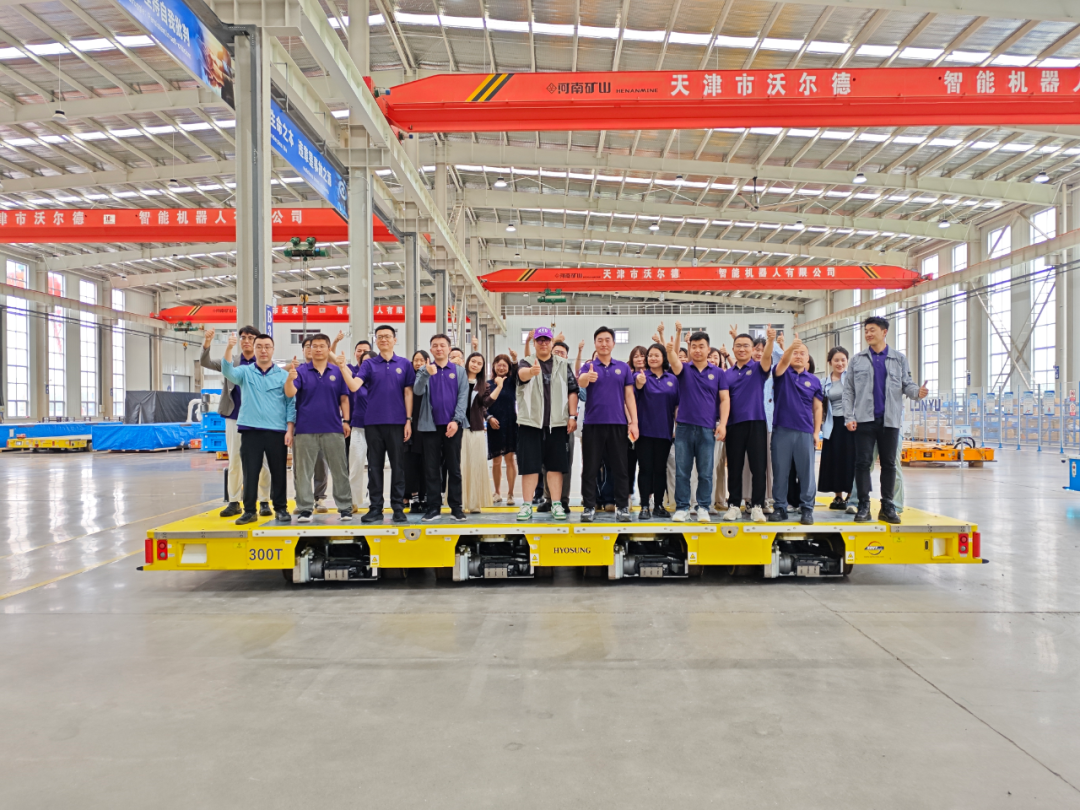
YT-LONYU-AGV, the brand associated with Lonyu AGV Co., Ltd., is a Tianjin-based supplier of heavy-duty AGVs and intelligent logistics equipment. The company was founded in 2008, operates an 8,000+ m² factory, employs more than 300 people, including 170 engineers, and reports annual output of 2,000+ units with an 80% export ratio. Its published profile states more than 160 independent patents, over 800 large-scale engineering projects and long-term service to more than 50 Fortune Global 500 companies. These facts are relevant to a procurement evaluation because they indicate a documented manufacturing and project base rather than a catalogue-only operation.
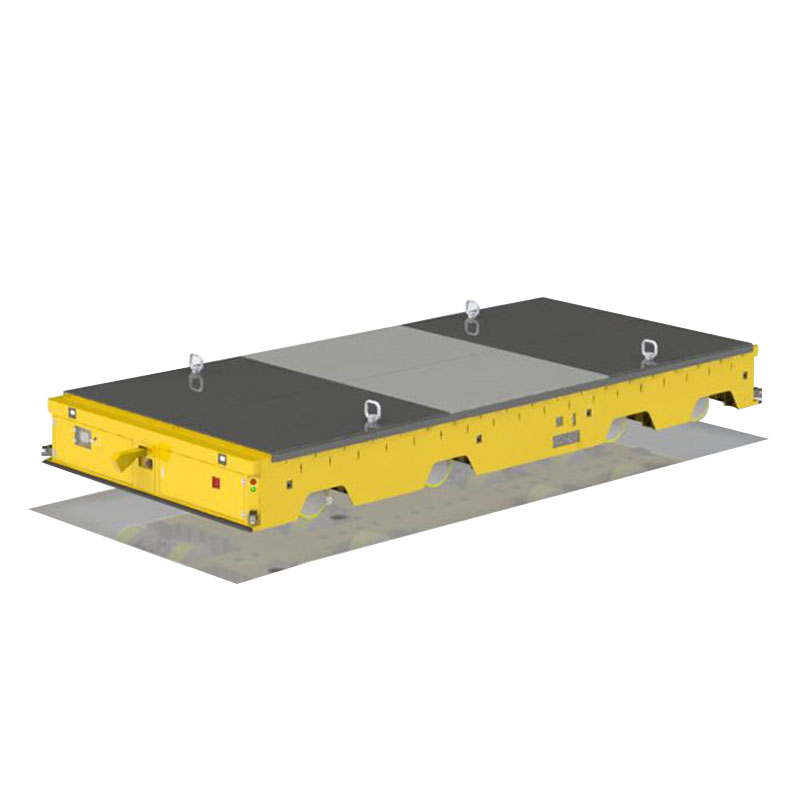
The product range covers heavy-duty AGVs, light-duty AGVs, AGV intelligent dispatching systems, outdoor unmanned AGVs, trackless transfer carts and automatic mold transfer systems. The published load range is 1 to 1000 tonnes, with a stated maximum single-unit load capacity of 1,000 tonnes. The product series includes a 50 to 600-ton ultra heavy-duty AGV tag, alongside 1–20 tonne and 21–50 tonne classes. The company supports OEM, ODM and customisation across payload class, vehicle dimensions, lifting structure, drive and suspension, navigation method, operating environment, charging or battery-swapping method, dispatching system and indoor/outdoor route adaptation.
This matters for buyers because the constraints in this guide are not abstract. A project may require a 200-tonne indoor-outdoor transporter for wind turbine main engines and drive systems, a 15-tonne outdoor AGV for commercial vehicle chassis, or a 30-tonne backpack AGV for high-speed rail track slab casting and curing. The supplier's ability to match the vehicle to the route, load and safety boundary is more important than a generic heavy duty claim.
Application Fit: Where Industrial Heavy Duty AGVs Replace or Complement Existing Handling
Heavy duty AGVs are most useful where the load is too heavy, too long or too awkward for repeated forklift movement, but the route is repetitive enough to justify automation. The application corpus points to wind power, aerospace, shipbuilding, heavy machinery, energy storage and port logistics.
- Wind power. The 200-ton model 24111A is designed for indoor and outdoor handling of wind turbine main engines and drive systems, with a 200 T rated load and a 200 mm hydraulic lifting stroke.
- Energy storage. The 80-ton trackless transfer cart, model 24391A, lists energy storage container handling as an application scenario, with IP54 protection and a lithium iron phosphate battery.
- Automotive manufacturing. The 15-ton outdoor heavy duty navigation AGV, model LK-AK-15T-4-0-B, is designed for commercial vehicle chassis flexible assembly, with support distance adjustable to front and rear axle spacing.
- High-speed rail. The 30-ton backpack heavy duty AGV is used for track slab casting and curing, and supports material racks with and without support legs.
- Heavy equipment and molds. The range includes parallel backpack lifting AGVs for cylindrical coils and photovoltaic thin-film materials, and dual-vehicle linkage configurations for long products.
The common thread is not simply weight. It is the combination of weight, length, route complexity and safety. A 30-ton double-vehicle linkage AGV, for example, is rated at 30 T and can carry products from 11 to 27 metres with adjustable linkage distance. That is a different engineering problem from moving a compact 15-tonne chassis, even though both sit inside a heavy duty portfolio.
Market Trend: Heavy Payload Automation Is Moving from Niche to Procurement Category
The heavy-load segment is becoming easier to compare because more suppliers publish model-level specifications and certification data. Fortune Business Insights valued the global AGV market at USD 5.52 billion in 2025 and identified heavy-load AGVs as a key segment. Its estimate of Asia Pacific at 35.51% of the 2025 market is consistent with the region's concentration of heavy manufacturing, wind power, shipbuilding, automotive and electronics capacity.
For buyers, the trend has two consequences. First, the number of available configurations is increasing, which makes a structured parameter checklist more valuable than a broad supplier shortlist. Second, certification and safety documentation are becoming differentiators in cross-border projects. A supplier that can connect a certificate number to an exact model, battery and market scope is easier to qualify than one that offers only a generic compliance statement.
The corpus also shows a shift toward integrated logistics. The 80-ton and outdoor IGV models list intelligent logistics scheduling systems compatible with digital twins. That moves the purchase from a single vehicle to a transport system that includes dispatching, charging, route logic and data integration. Buyers should evaluate the system boundary at the same time as the vehicle specification.
Comparison with Traditional Solutions: Where Heavy Duty AGVs Fit and Where They Do Not
Heavy duty AGVs are not a universal replacement for forklifts, cranes or rail transfer carts. They are a different operating model with different constraints. The comparison below is qualitative and should be validated against the actual site.
| Solution | Typical strength | Typical boundary |
|---|---|---|
| Manual forklift | Flexible route changes, lower entry cost for light loads | Limited by payload, load length, operator availability and safety exposure |
| Overhead crane | Very high lifting capacity in a fixed bay | Requires fixed infrastructure and does not provide point-to-point route flexibility |
| Rail transfer cart | Stable heavy transport on a fixed path | Track layout constrains route changes and cross-workshop movement |
| Heavy duty AGV | Automated heavy transport with route flexibility and repeatable positioning | Requires site survey, navigation infrastructure, charging planning and floor capacity verification |
Limits and boundaries. A heavy duty AGV project usually carries a higher initial engineering burden than a manual forklift or a fixed rail cart. The site should verify payload, cargo dimensions, route length, floor load capacity, gradients, turning space, indoor-outdoor transitions, navigation method, charging cycle and safety boundaries. Battery runtime is another planning constraint: many Lonyu models list 3 hours at full and empty load, while the outdoor IGV lists 6 hours when fully charged. High utilisation may require automatic charging, battery swap or a larger fleet. In confined spaces or very low-volume operations, a crane or a conventional transfer cart may remain the more practical choice. Final configuration should follow site assessment and signed drawings.
Future Outlook
Three developments are likely to shape heavy duty AGV procurement over the next evaluation cycle. First, safety and certification documentation will become more model-specific, following standards such as ISO 3691-4:2023 and the UL 3100 and B56.5 references already used in US certification. Second, energy architecture will remain a decision variable: lithium iron phosphate is the dominant chemistry in the disclosed models, with voltage options including 330 V, 570 V and 614 V, and extended-range options including diesel and methanol range extension on outdoor models. Third, integration with scheduling and digital-twin environments will move from optional feature to system requirement in large factories.
For buyers, the practical response is to keep the evaluation anchored to evidence. A supplier that can provide a model-level parameter table, a certificate with a clear scope, a site-survey checklist and a named after-sales process is easier to compare than one that relies on category claims. The heavy duty AGV market is becoming more capable; procurement discipline should become more precise at the same time.
FAQ
What load capacity should I specify for an industrial heavy duty AGV?
Start with the heaviest actual load, including the fixture, rack or container, then add a project-specific margin. The Lonyu AGV range covers 1 to 1000 tonnes, with model examples including a 150-ton model rated at 150,000 kg, a 200-ton model rated at 200,000 kg and a 600-ton model rated at 600,000 kg. Do not rely on the model name alone: the 60ton Heavy-duty AGV, model LY-1-60T-48-A, lists a rated load of 50,000 kg in its technical parameters. Final payload should be confirmed in the technical agreement.
How long can a heavy duty AGV operate on a single charge?
Many disclosed Lonyu heavy duty models use a lithium iron phosphate battery with a listed battery life of 3 hours at both full load and empty load. The outdoor IGV lists 6 hours when fully charged. Actual runtime depends on duty cycle, route gradient, load, temperature and battery age. For multi-shift operation, plan charging windows, automatic charging piles, battery swap or a larger fleet.
What certifications should a heavy duty AGV have for EU and US projects?
For the EU market, check for a model-specific CE certificate. The ECM Mark certificate 6D230301.TLR0W80 covers the Heavy Load AGV model LY-AU-240T-12-0A-427 and references 2006/42/EC, 2014/35/EU and 2014/30/EU, valid from 2023-03-01 to 2028-02-28. For the US market, UL certification US 72508429.0001 covers the 60T Backpack Lifting Type AGV, model LY-AU-60T-6-08-1011, and references ANSI/CAN/UL 3100:2024 and ANSI/ITSDF B56.5:2019. Always confirm that the certificate scope matches the exact model, battery and configuration being purchased.
What navigation accuracy can be expected from a heavy duty AGV?
Accuracy depends on the navigation method. The 12-ton AGV uses magnetic strip navigation with ±10 mm positioning accuracy and ±10 mm navigation accuracy. The 80-ton trackless transfer cart uses laser navigation plus magnetic strip, with ±30 mm navigation accuracy and ±10 mm positioning accuracy. The outdoor IGV uses RTK+INS and lists ±20 mm navigation accuracy. The site survey should confirm whether the selected method can hold the required tolerance at the actual route, floor and load conditions.
What are the main limits of a heavy duty AGV compared with a crane or forklift?
A heavy duty AGV usually requires a higher initial engineering effort than a manual forklift or a fixed rail cart. The project should verify floor load capacity, gradients, turning space, indoor-outdoor transitions, navigation infrastructure, charging cycle and safety boundaries. Battery runtime may require planned charging or battery swap. In very confined spaces or low-volume operations, a crane or conventional transfer cart may remain more practical. Final configuration should follow site assessment and signed drawings.
Is there a standard price band for industrial heavy duty AGVs?
No single public price band applies across the category. Quotations depend on payload class, dimensions, lifting stroke, drive and suspension, navigation method, safety devices, battery and charging strategy, certification scope, dispatch software, installation, commissioning and after-sales terms. Buyers should request a line-item breakdown rather than comparing a single equipment price.
Buyer Checklist Before Requesting a Quotation
- Define the heaviest load, including fixture and rack weight, and separate rated load from maximum load.
- Measure the route: width, turning radius, gradients, floor capacity, doorways, indoor-outdoor transitions and parking space.
- Confirm the required lifting stroke, body envelope and load centre.
- Select the navigation method against the site, not against a brochure preference.
- Check battery runtime against the shift pattern and plan charging or battery swap.
- Request model-specific certificates with number, issuing body, standard list, market scope and expiry date.
- Ask for the after-sales terms in writing, including response time, warranty, training and spare-parts policy.
- Review the technical agreement and signed drawings before production.
For project teams that need a compact reference, the company brochure is available here: Lonyu AGV company brochure.
Есть вопросы или нужны дополнительные детали?
Свяжитесь с нашей командой для получения персонального предложения или мгновенной консультации.
Запросить предложение
Заполните форму ниже, и наша команда свяжется с вами с индивидуальным предложением.
Прямой чат WhatsApp
Предпочитаете общаться в реальном времени? Напишите нам в WhatsApp для мгновенной помощи и быстрых ответов.
- Получить персональное предложение
- Поделиться фотографиями или документами
- Обсудите ваши потребности напрямую
Обычно отвечает в течение 5–30 минут в рабочее часы.