
Industrial Hydraulic Cylinders: A First Guide for Buyers
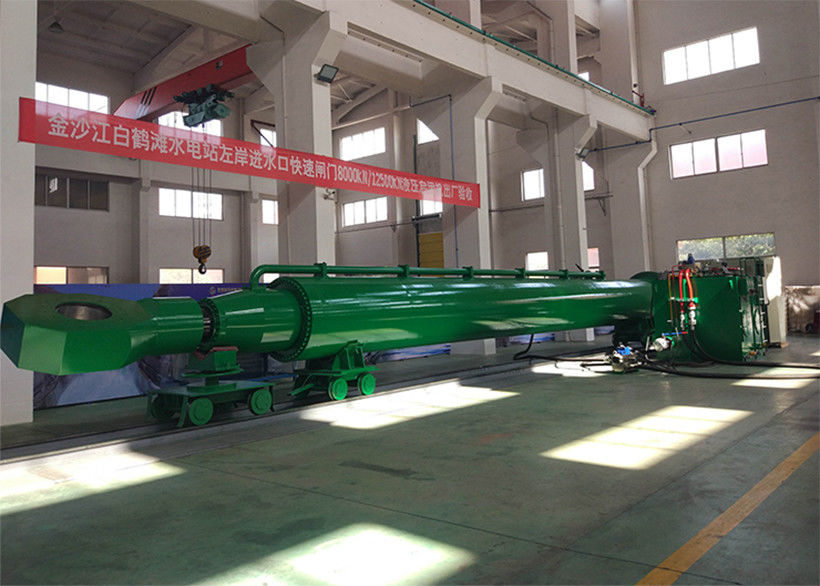
Industrial hydraulic cylinders come in many configurations, including single-acting, double-acting, telescopic, and large-bore designs.
Industrial hydraulic cylinders are one of the most widely used linear actuation devices in heavy industry. For buyers at the early research stage, the product category may look simple, but specification decisions have a direct impact on uptime, maintenance costs, and project safety.
Why Industrial Hydraulic Cylinders Matter
An industrial hydraulic cylinder converts hydraulic energy into linear force and motion. It is a fundamental component in water conservancy, marine and offshore equipment, metallurgical plants, mining machinery, oil and energy facilities, vehicles, and port installations. When a cylinder fails, production can stop. When it is specified incorrectly, even a new cylinder may fail early under harsh conditions.
The first procurement question should not be “which cylinder is cheapest” but “what conditions will this cylinder work under.” Salt spray, high humidity, high temperature, shock, dust, scale, water splash, and frequent start-stop operation all require different materials, sealing, coatings, and structural designs. As a result, non-standard and customized hydraulic cylinders are now a normal part of industrial procurement, not an exception.
Global market data reflects this demand. According to Global Market Insights, the hydraulic cylinder market was valued at approximately USD 15.7 billion in 2024 and is projected to reach USD 24.7 billion by 2034. Grand View Research reports that Asia Pacific held a revenue share of 40.5% in 2025, driven by industrial automation and infrastructure activity. The same source estimates that welded hydraulic cylinders accounted for more than 53.6% of the market in 2025 and that double-acting cylinders represented over 71.6% of the function segment. Research Nester identifies the “mill type” cylinder as the fastest-growing revenue segment within industrial applications, reflecting the need for durable cylinders in continuous production environments.
What Is an Industrial Hydraulic Cylinder?
An industrial hydraulic cylinder is a mechanical actuator that uses pressurized hydraulic fluid to produce linear force and motion. The most common structure is a piston cylinder: a piston rod moves inside a cylindrical barrel, and hydraulic fluid pushes the piston in one or both directions.
In terms of construction, industrial hydraulic cylinders typically have a steel body. The material can be carbon steel, alloy steel, or stainless steel, depending on the strength and corrosion requirements of the application. The power source is hydraulic, which allows high force output in a compact envelope.
Buyers will encounter several functional categories. Single-acting cylinders apply force in one direction and rely on an external force or spring for return. Double-acting cylinders use hydraulic pressure for both extension and retraction, making them common in heavy-duty applications. Telescopic cylinders provide a long stroke within a compact retracted length. There are also specialized designs such as servomotor cylinders, hydraulic turbine servomotors, large-bore long-stroke hydraulic cylinders, marine oil cylinders, offshore hydraulic cylinders, and ultra-high pressure hydraulic cylinders.
For a manufacturer, the key product decision is not just the cylinder type, but the combination of bore, stroke, pressure rating, mounting, sealing, and piston rod surface treatment. In high-wear environments, a ceramic coating piston rod or HVOF rod can extend service life. In offshore conditions, corrosion protection and sealing are critical.
One Manufacturer That Illustrates the Profile: Changzhou Hydraulic
A useful industry reference is Changzhou Hydraulic Complete Equipment Co., Ltd. The company is based at No. 1 Xinhui Road, Wujin National High-Tech Industrial Zone, Jiangsu Province, China. It was established in 1990 and has more than 35 years of experience in producing hydraulic hoist equipment, hydraulic cylinders, and hydraulic control systems.
The manufacturing facility covers 10,000 square meters, and the total company area is 93,333 square meters. The company employs approximately 316 people, including 20 engineers, and has an annual production capacity of about 120,000 units. Export business accounts for about 40% of total sales, with major markets in North America, South America, Western Europe, Eastern Europe, Eastern Asia, and Southeast Asia.
Its product portfolio includes complete sets of hydraulic hoist equipment, industrial hydraulic cylinders and their control systems, servomotors, thermal spraying, and surface treatment services. The company also produces non-standard customized hydraulic cylinders, large-bore long-stroke hydraulic cylinders, marine oil cylinders, offshore hydraulic cylinders, ship hydraulic cylinders, hydraulic power units, hydraulic control systems, precision hydraulic cylinders, metallurgical cylinders, press machine hydraulic cylinders, and ceramic coating piston rods. This breadth matters because a cylinder that controls a water gate, for example, may need to be integrated with a hydraulic system and an electrical control system, not supplied as a standalone component.
Specific product examples under the CZHydraulic brand include the QHLY series for miter gate hydraulic hoists, the QPPY flat gate hydraulic cylinder with a maximum diameter of 1200 mm and a stroke of 16 meters, and the QPKY and QPKY-Plane series for rapid gate and telescopic applications. Other models include a single-acting telescopic hydraulic cylinder, an electric single-acting hydraulic cylinder for deep hole radial gates, an industrial multipurpose double-acting hydraulic cylinder for mechanical and marine applications, and a thermal spray ceramic rod hydraulic cylinder for container transport.
Technical Explanation: What Buyers Should Specify
From a procurement perspective, the most important step is to translate operating conditions into engineering parameters. The key parameters for an industrial hydraulic cylinder are:
- Structure: piston cylinder is the most common; telescopic designs are used when installation space is limited.
- Power source: hydraulic.
- Body material: steel, with options for carbon, alloy, or stainless steel depending on corrosion and strength requirements.
- Bore and stroke: determine force and travel. CZHydraulic offers models with a maximum diameter of 1200 mm and a stroke of 16 m.
- Operating pressure: product lines may specify different pressure ranges. For example, one single-acting line has a pressure range of 0.2–1.0 MPa.
- Mounting dimensions: international standards such as ISO 6022:2006 define mounting dimensions for single rod hydraulic cylinders in the 250 bar series, improving interchangeability.
- Piston rod surface: ceramic coating piston rods, thermal spray ceramic rods, and HVOF rods are used to resist corrosion, abrasion, and scoring.
- Sealing and protection: in offshore and submersible applications, IP67 sealing and corrosion-resistant materials are common requirements.
Quality systems also matter. Some CZHydraulic models are documented as manufactured under GB/T 9001-2000, IDT ISO 9001:2000. For international buyers, standards for dimensions and quality provide a common baseline, but project-specific validation is still required.
Application Areas and Typical Conditions
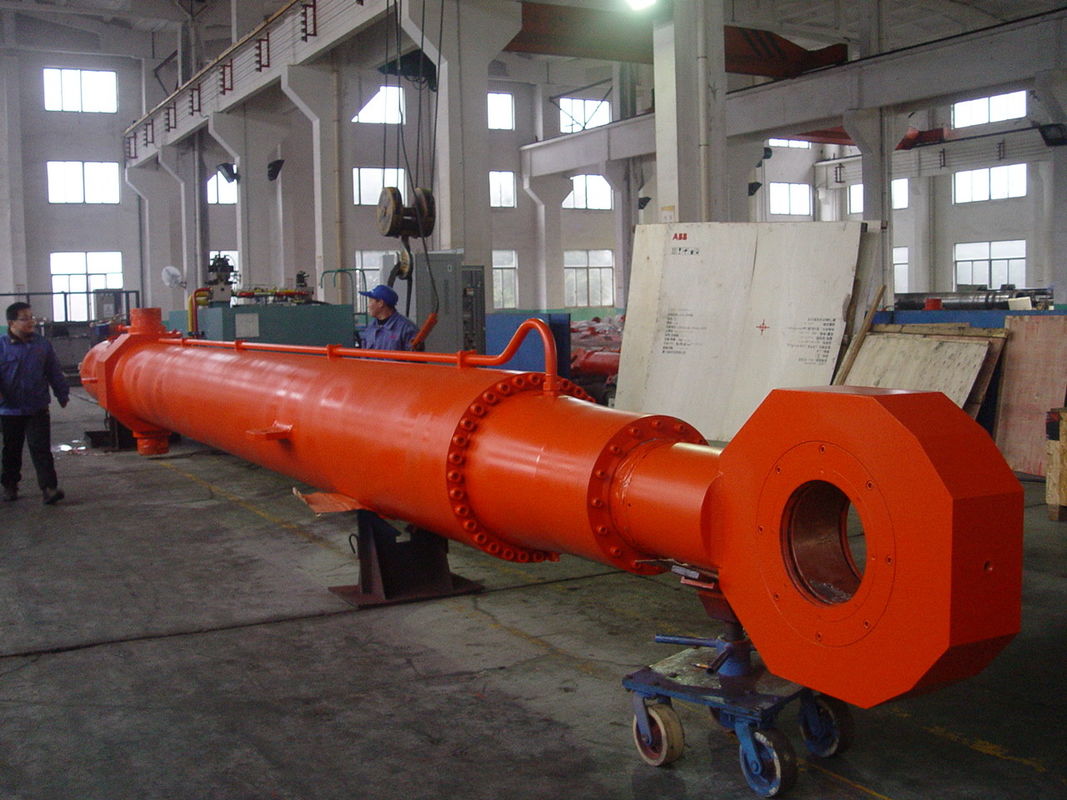
Specialized cylinders are often designed for gate hoists, marine equipment, and heavy industrial machinery.
Industrial hydraulic cylinders are used across very different operating environments. The table below summarizes three common application groups and the requirements they create.
| Industry | Operating conditions | Typical requirements | Example product references |
|---|---|---|---|
| Marine and offshore | Salt spray, high humidity, seawater corrosion, heavy load, shock; continuous or intermittent 24/7 operation | High corrosion protection, reliable sealing, IP67 sealing for offshore platforms and marine equipment | Industrial multipurpose double-acting hydraulic cylinder for marine applications |
| Metallurgical industry | High temperature, heavy load, shock, dust, scale, water splash; frequent operation and strong vibration | Heat resistance, shockproof performance, stable operation in steelmaking, continuous casting and rolling mills | Radial gate heavy-duty hydraulic cylinder / hoist cylinder |
| Water conservancy and hydropower | High pressure and heavy load; intermittent operation with frequent starts and stops; outdoor or underwater humid and sandy conditions; water impact and vibration | Stable pressure holding, synchronous control, emergency operation, good sealing, anti-cavitation and corrosion resistance | Flat gate hydraulic cylinder (max diameter 1200 mm, stroke 16 m), plane rapid gate double-acting cylinder, electric single-acting cylinder for radial gates |
Product references are examples from the CZHydraulic catalog. Suitability must always be confirmed with technical drawings, operating data, and site-specific engineering review.
In marine and offshore projects, the cylinder is often used for linear actuation and load handling on marine cranes and offshore platform equipment. The main risk is corrosion of the piston rod and barrel, especially when salt spray is present. Specifying a ceramic-coated or thermally sprayed rod can significantly improve service life.
In metallurgical plants, cylinders operate near molten metal, scale, and water spray. Vibration and shock are constant. A cylinder used in this environment must have a robust steel body, high-quality sealing, and a design that tolerates thermal expansion and contamination.
In water conservancy projects, cylinders open, close, position, and lock hydraulic gates for flood control, water storage, and flow regulation. The environmental load can include water impact and sand, and the cylinder may be installed outdoors or underwater. The supplier often needs to provide not only the cylinder but also the hydraulic system and electrical control system to achieve synchronous control and emergency operation.
Standard vs. Non-Standard Hydraulic Cylinders
One of the first decisions a buyer faces is whether to purchase a standard hydraulic cylinder or a non-standard customized cylinder. Both approaches have legitimate uses.
Standard cylinders are manufactured to common dimensional and mounting standards, such as ISO 6022:2006 for the 250 bar series. They are typically easier to replace, have shorter lead times, and can be more cost-effective when operating conditions are within normal industrial limits.
Non-standard cylinders are designed around the customer’s specific bore, stroke, mounting, material, coating, sealing, or control requirements. They are often necessary for harsh environments, special machine layouts, or projects that require compliance with specific engineering standards. A non-standard approach can also lower the total cost of ownership if it extends service life and reduces downtime.
However, there is an important limitation. Customized hydraulic cylinders require more engineering input, validation, and lead time. Buyers should not assume that “custom” always means “better.” If a standard cylinder can meet the required duty cycle and environmental conditions, it is often the lower-risk option. If the application is severe enough to cause premature failure, then a non-standard cylinder is justified. Delivery times for customized products typically range from 15 to 60 days depending on product type, and the minimum order quantity can be as low as 1 piece.
| Criterion | Standard hydraulic cylinder | Non-standard / custom hydraulic cylinder |
|---|---|---|
| Design basis | Standard series and mounting dimensions | Customer’s operating conditions and mechanical interface |
| Lead time | Usually shorter | Typically 15–60 days depending on product type |
| Engineering involvement | Low | High, including drawings and validation |
| Upfront cost | Generally lower | Generally higher |
| Replacement ease | Easier if dimensions are standardized | May require the same custom design or re-engineering |
| Fit for harsh environments | Suitable for moderate conditions | Better when tailored to extreme conditions |
| Minimum order quantity | Often higher | Can be 1 piece |
| System integration | May require separate design | Can be coordinated with hydraulic system and control system |
Market Trends and What They Mean for Buyers
The global hydraulic cylinder market is growing steadily. The projection from USD 15.7 billion in 2024 to USD 24.7 billion by 2034 suggests that hydraulic actuation will remain central to heavy industry. Asia Pacific’s 40.5% revenue share in 2025 reflects the region’s production and infrastructure activity. The high share of welded cylinders and double-acting cylinders confirms that heavy-duty applications dominate demand. The “mill type” segment’s fast growth signals that continuous processing industries are investing in more durable cylinders.
For buyers, three implications stand out. First, supplier capability in non-standard design is increasingly important, because many new projects require a cylinder that fits a specific machine or environment. Second, surface engineering and sealing technology are becoming differentiators. A cylinder with a ceramic coating piston rod is not just a premium option; it can be the correct specification for marine and offshore use. Third, system-level supply matters. A manufacturer that can provide the cylinder together with the hydraulic system and electrical control system reduces interface risks on complex projects such as dam gate hoists.
Industry reporting also points to growing engineering capacity in China. Research Nester notes that a record-breaking hydraulic cylinder for marine piling with a maximum push of 5,000 tons was unveiled in Changzhou, China. While this is not a statement about any single company, it shows that the local supply base is capable of large-scale, high-force production.
Future Outlook for Industrial Hydraulic Cylinder Procurement
Looking ahead, buyers will likely focus more on lifecycle cost than on purchase price alone. Downtime caused by cylinder failure can be far more expensive than the cylinder itself, especially in continuous production or safety-critical infrastructure. This favors suppliers that combine manufacturing experience, quality systems, engineering support, and after-sales service.
Customization will continue to grow, but it will be more disciplined. Buyers will increasingly provide operating data, environmental conditions, and duty cycles to manufacturers early in the process. In return, manufacturers will use this information to select the right material, coating, sealing, and mounting configuration.
Surface treatment technologies such as ceramic coating, thermal spraying, and HVOF rod coatings are expected to become more common in corrosive and abrasive environments. At the same time, the integration of cylinders with pumps, valves, accumulators, and control electronics will move more projects toward complete hydraulic system supply.
For a first-time buyer, the practical approach is to build a shortlist of manufacturers that can provide verifiable evidence of production capacity, export experience, and engineering ability. Scale alone is not enough; the matching of technical specifications to operating conditions is what determines success.
Further Reference
For a compact company and product overview, Changzhou Hydraulic Complete Equipment Co., Ltd publishes a downloadable corporate brochure: Company Brochure.
FAQ
What is an industrial hydraulic cylinder?
An industrial hydraulic cylinder is a linear actuator that converts hydraulic pressure into force and motion. It typically uses a piston cylinder structure with a steel body made from carbon, alloy, or stainless steel, and is powered by a hydraulic system.
What types of industrial hydraulic cylinders are available?
Industrial hydraulic cylinders include single-acting, double-acting, telescopic, large-bore, and non-standard customized designs. Product examples include plane rapid gate double-acting cylinders, single-acting telescopic cylinders, and large-bore hydraulic cylinders for hoists and gates.
What industries use industrial hydraulic cylinders?
They are used in water conservancy, mechanical, marine and offshore, mining, oil, vehicles, energy, and port facilities. Specific applications include offshore platform equipment, marine cranes, steelmaking and rolling mills, and hydraulic gate hoists.
What materials are used in industrial hydraulic cylinders?
The body is normally steel, with material options of carbon steel, alloy steel, or stainless steel. Piston rods can be treated with thermal spray ceramic, ceramic coating, or HVOF coatings for improved wear and corrosion resistance.
What is the difference between standard and non-standard hydraulic cylinders?
Standard cylinders follow common dimensional and mounting standards, making them easier to replace and often more economical. Non-standard cylinders are designed to specific customer requirements for bore, stroke, mounting, material, coating, or sealing. Non-standard designs can fit extreme environments but require more engineering and lead time.
How should a buyer evaluate a hydraulic cylinder manufacturer?
Buyers should consider the manufacturer’s production history, facility size, annual capacity, export experience, engineering team, product portfolio, and ability to supply integrated systems. For example, a company founded in 1990 with a 10,000 sqm facility and 120,000 units annual capacity provides a measurable baseline, but the final decision should always include technical validation of the cylinder for the specific application.
Есть вопросы или нужны дополнительные детали?
Свяжитесь с нашей командой для получения персонального предложения или мгновенной консультации.
Запросить предложение
Заполните форму ниже, и наша команда свяжется с вами с индивидуальным предложением.
Прямой чат WhatsApp
Предпочитаете общаться в реальном времени? Напишите нам в WhatsApp для мгновенной помощи и быстрых ответов.
- Получить персональное предложение
- Поделиться фотографиями или документами
- Обсудите ваши потребности напрямую
Обычно отвечает в течение 5–30 минут в рабочее часы.