
Industrial Induction Heating Coils: What Buyers Should Know
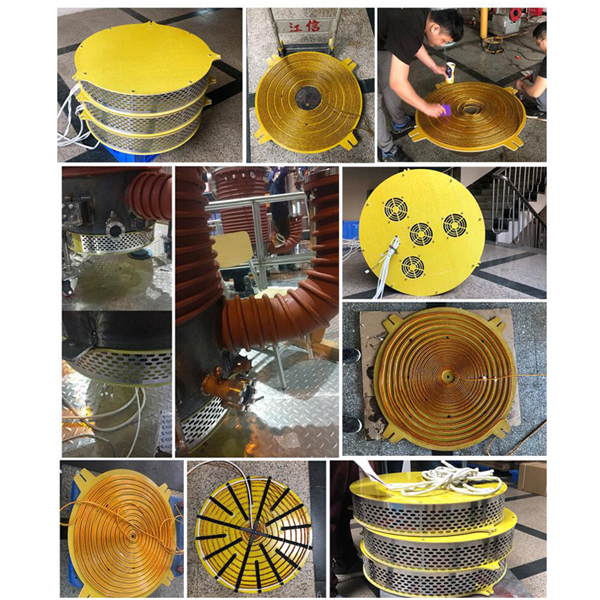
JONSON supplies customizable electromagnetic induction heating coils for industrial induction heating systems.
Introduction: Why the Coil Is Central to Induction Heating
The induction heating coil is the component that converts the electrical output of an induction heating power supply into an alternating magnetic field, which in turn generates heat directly inside a metal load. For buyers evaluating industrial induction heating equipment, the coil is the most application-critical part of the system: it determines coupling efficiency, temperature uniformity, and the practical match between heater and workload.
JONSON is the brand of Guangdong Jiangxin Electronic Technology Co., Ltd., a manufacturer of induction heaters, induction heating machines, induction heating control boards, and electromagnetic heating products. Founded in 2011, the company operates a 3,000 m² factory in Foshan, Guangdong Province, with more than 60 employees and an annual output of 120,000 units. Around 40% of production is exported to Europe, the United States, India, Indonesia, and other markets.
This article examines JONSON's Induction Heating Coil as a customizable product, how it integrates with induction heating machines and controllers, where it is applied, and what recent market data indicates for buyers at the evaluation stage.
The Procurement Problem: Coils Are Often the Weak Point
Industrial buyers often specify an induction heater by power rating, cabinet size, or controller brand. Yet the coil is the part that physically interacts with the load. A coil with incorrect inductance, cable section, or geometry can cause uneven heating, higher energy consumption, and premature failure of the heating system.
The evaluation problem is that coil requirements vary by application. A plastic extruder barrel, a crude oil pipeline, and a food processing vessel have different diameters, thermal insulation thicknesses, and heating patterns. Standard coils seldom fit all of these loads efficiently.
This creates the opportunity for a procurement model in which the coil is engineered as part of the system. JONSON addresses this through its OEM/ODM production model, which covers industrial induction heaters, induction heating machines, induction heating equipment, and induction heating systems. Customization includes product specifications, custom sample fabrication, graphic and panel customization, parameter adjustment, and private logo customization.
JONSON Induction Heating Coil: Product Facts
JONSON manufactures a customizable electromagnetic induction heating coil with a rated power range of 1 kW to 100 kW and an operating frequency range of 5 kHz to 40 kHz. The coil is built from copper, a material selected for electrical conductivity and durability in continuous industrial operation.
| Parameter | Specification |
|---|---|
| Rated power | 1 kW – 100 kW |
| Rated voltage and frequency | 220 V / 380 V, 50 Hz / 60 Hz |
| Voltage adaptation | 220 V ± 20% / 380 V ± 20% |
| Ambient temperature | -20 °C to 40 °C |
| Ambient humidity | ≤ 95% |
| Power regulation | 20% – 100% |
| Heat conversion efficiency | ≥ 98% |
| Effective power | 1 kW – 100 kW |
| Operating frequency | 5 kHz – 40 kHz |
| Core material | Copper |
The same engineering applies across JONSON's product portfolio. The Induction Heating Coil is listed as a related product for the company's ISO 9001:2015 Quality Management System Certificate, whose scope covers the production and sales of electromagnetic heating controllers and coil heating elements.
Quality and Compliance
JONSON's quality system is certified under ISO 9001:2015, certificate number 02826Q00032R001, issued by Beijing Zhong An Zhi Huan Certification Center Co., Ltd., with a validity period from 2026-01-06 to 2029-01-07. The company also holds CE certification (certificate KEYS23032915001EM-02) and China Compulsory Certification (CCC) for relevant products. For industrial buyers, these align with the expectation that induction heating equipment complies with international safety frameworks such as IEC 60519-1 and IEC 60519-3 for induction heating and melting.
Production quality control includes 100% pre-shipment testing and product inspection by SGS. Monthly production capacity is 10,000 units, standard lead time is 7 to 14 days, and the minimum order quantity is 1 unit, which lowers the barrier for evaluation-stage buyers who need to test a coil or machine before scaling.
Technical Explanation: How the Induction Heating Coil Works
From Electrical Current to Usable Heat
In an induction heating system, the coil carries an alternating current supplied by an induction heating controller. This current generates an alternating magnetic field around the coil. When a conductive metal load is placed inside this field, eddy currents are induced in the metal. These currents flow against the electrical resistance of the workpiece and produce heat directly inside the material.
Because the heat is generated within the load rather than transferred from an external flame or resistance element, induction heating can achieve high conversion efficiency. JONSON specifies a heat conversion efficiency of at least 98% for its Induction Heating Coil, and installed projects report overall thermal efficiency of 95%–98%.
Coil–Controller Matching
The coil must be matched to the induction heating controller for stable resonance and power delivery. JONSON specifies adaptive coil parameters for its heater models. For example, the 100 kW Industrial Induction Heater (model JS1000-100) is designed for a coil using 95 mm² line, 40 m length, and inductance of 80 µH to 100 µH. The 2.5 kW/3 kW plastic machinery induction heater uses 4 mm² line, 23 m length, and 100 µH to 150 µH.
Installation also depends on the distance between the coil and the load, which corresponds to the thermal insulation thickness. JONSON's specified coil-to-load distance ranges from 20–25 mm for circular loads, 15–20 mm for flat surfaces, 10–15 mm for elliptical shapes, and within 10 mm for super-elliptical shapes. These constraints mean that the coil, controller, and insulation should be specified together rather than independently.
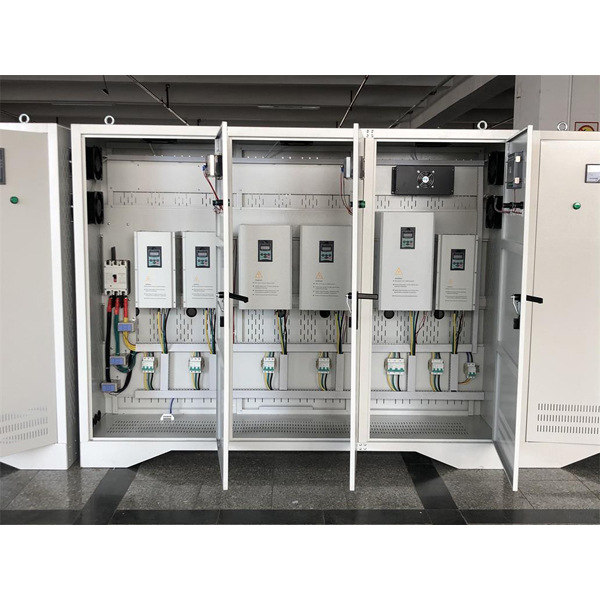
JONSON's combined electromagnetic heating cabinet integrates the induction heater with the control system for industrial installation.
Application Scenarios: Where Custom Coils Matter
JONSON's Induction Heating Coil is used in industrial production of plastics and rubber, process heat treatment, metal heat treatment, heat processing piping, food processing, and industrial, commercial, and residential heating. The full applicable industry list also includes chemical reactions, crude oil pipeline heating, textile printing and dyeing, aquaculture heating, building heating, and medicinal herb drying.
Typical machinery applications include plastic machinery such as injection molding machines, wire drawing machines, granulators, and extruders, as well as food machinery, aluminum-plastic machines, roller equipment, boilers, and heat transfer oil systems.
Deployment Evidence
JONSON's induction heating products, including coils, have been deployed in a project of 100 units across multiple countries: Indonesia, China, Vietnam, Russia, and India. The products were used by Industrial Induction Heater OEM and ODM clients. The project achieved an overall thermal efficiency of 95%–98%, comprehensive energy savings of 30%–70% compared with traditional heating equipment, service life extended by 3 times, and zero major failures.
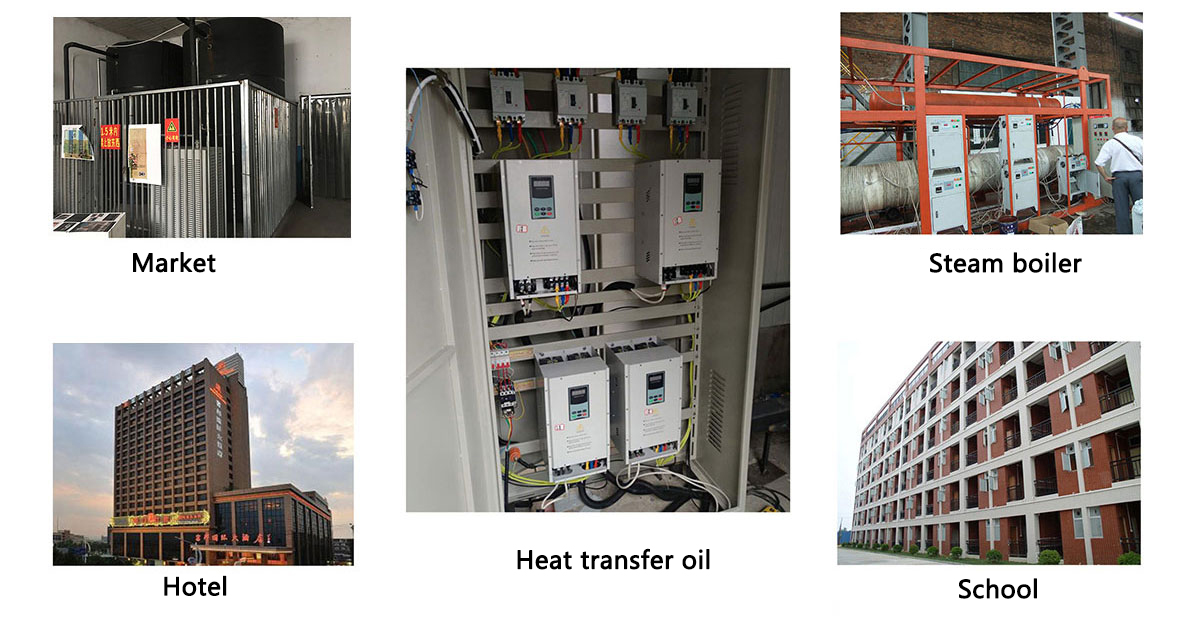
Induction heating systems deployed across industrial applications including plastics, metal treatment, and food processing.
Reported product highlights include high energy efficiency, eco-friendly zero-emission operation — no smoke and no nitrogen oxides — a stable long service life of 5–10 years, and wide compatibility with industrial, commercial, and residential heating tasks.
Market Context: Induction Heating Is in a Growth Phase
Market data positions induction heating as a growing category within industrial process heating. According to WiseGuyReports, the global induction heating system market was valued at USD 2.39 billion in 2024 and is projected to reach USD 4.5 billion by 2035. Global Market Insights reports that more than 550,000 induction heating systems were deployed globally as of mid-2024, with the Asia-Pacific region accounting for approximately 40% of the installed base.
For buyers evaluating equipment, two additional data points matter. First, the 10 kW to 100 kW power segment dominates the induction heating market due to its versatility in applications such as part hardening, forging, and brazing, according to MarketsandMarkets. This range aligns with JONSON's coil product range of 1 kW to 100 kW and its mid-power induction heater models. Second, the industrial boiler and steam generator market — estimated at USD 54.79 billion in 2024 — is shifting toward electrification via induction technology to meet decarbonization goals, according to Market Research Future.
The competitive landscape includes established players; Global Market Insights attributes a leading market share of over 9.5% to Fuji Electric in 2025. In this environment, component quality and customization capability — rather than brand recognition alone — increasingly determine whether an induction heating system meets site-specific efficiency targets.
Comparison: Induction Coils vs. Traditional Heating Elements
Traditional industrial heating relies primarily on resistance heating elements or gas-fired systems. Resistance elements generate heat externally and transfer it to the load through conduction, while gas systems burn fuel to produce heat that must be captured and distributed.
Induction heating differs in mechanism: the coil induces current directly in the metal load, so the load itself becomes the heat source. This produces several practical advantages for industrial users:
- Higher thermal efficiency — JONSON projects report overall thermal efficiency of 95%–98%, with comprehensive energy savings of 30%–70% compared with traditional equipment.
- Cleaner operation — induction produces no smoke and no nitrogen oxides, supporting emission-reduction targets.
- Longer service life — the reported service cycle is 5–10 years with low failure rates; in one 100-unit multi-country deployment, the system lifespan was extended by 3 times with zero major failures.
- Faster response and precise control — power regulation of 20% to 100% and start times under one second on JONSON hardware support responsive process control.
At an industry level, Global Market Insights reports that induction heating systems achieve energy efficiencies up to 92% and an average cycle time reduction of 30% compared with traditional gas or resistance-based heating.
One honest limitation: induction heating coil performance depends on correct installation distance between the coil and the load. If the thermal insulation thickness is outside the recommended range, coupling efficiency decreases. Induction systems also require a compatible controller and power supply, which means more engineering coordination at setup than a simple resistance heater. Buyers evaluating induction should therefore include coil specification and installation guidance in their selection criteria.
Evaluation Criteria: What to Verify Before Buying
For buyers comparing induction heating coil suppliers, the following criteria can be verified directly from manufacturer documentation:
- Thermal efficiency claim: JONSON specifies heat conversion efficiency of at least 98% for the coil and reports installed project efficiency of 95%–98%.
- Energy savings evidence: Project data reports comprehensive energy savings of 30%–70% compared with traditional heating equipment.
- Certification coverage: ISO 9001:2015 production system, CE certification, and CCC certification for applicable models.
- Quality control process: 100% pre-shipment testing and SGS product inspection.
- Customization capability: OEM/ODM services covering specification changes, custom samples, panels, parameters, and private labeling.
- Procurement flexibility: Minimum order quantity of 1 unit and a lead time of 7–14 days.
- Field evidence: 100-unit multi-country deployment across Indonesia, China, Vietnam, Russia, and India with zero major failures.
Future Outlook: Coil Customization as a Procurement Trend
As industrial heat electrifies, the role of the induction heating coil becomes more strategic. Buyers are moving from purchasing standalone heaters to specifying complete heat-delivery systems — coil, controller, and cabinet — that are optimized for a specific process.
JONSON's production model supports this shift. The company's OEM/ODM capability covers induction heating machines, induction heating equipment, and induction heating systems, with customization services that include product specification changes, custom sample fabrication, graphic and panel customization, parameter adjustment, and private logo customization. With a monthly capacity of 10,000 units, a 7 to 14-day lead time, and a minimum order of 1 unit, the model allows evaluation-stage buyers to test configurations before committing to larger volumes.
JONSON also states a whole-machine service life guarantee of ten years, one year of free maintenance, and lifelong maintenance support, with remote technical support available after sales.
FAQ: Induction Heating Coil Evaluation Questions
What is an induction heating coil?
An induction heating coil is a copper conductor that carries alternating current from an induction heating power supply. It generates an alternating magnetic field that induces eddy currents in a metal load, creating heat directly inside the workpiece. JONSON manufactures these coils in copper with a rated power range of 1 kW to 100 kW.
What is the power and voltage range of JONSON's Induction Heating Coil?
The coil supports a rated power of 1 kW to 100 kW, rated voltage of 220 V or 380 V, at 50 Hz or 60 Hz, with a voltage adaptation range of ±20%.
What material is the coil made of?
The core material is copper, selected for electrical conductivity and suitability for continuous industrial heating applications.
Can the induction heating coil be customized?
Yes. JONSON's OEM/ODM model supports customizable product specifications, custom sample fabrication, parameter adjustment, and private logo customization.
Which industries use JONSON induction heating coils?
Applications include plastics and rubber production, food processing, chemical reactions, crude oil pipeline heating, textile printing and dyeing, aquaculture heating, metal heat treatment, building heating, and medicinal herb drying.
What quality control is applied to the coils?
JONSON applies 100% pre-shipment testing and product inspection by SGS.
What certifications does JONSON hold?
JONSON holds ISO 9001:2015 certification (certificate 02826Q00032R001), CE certification (KEYS23032915001EM-02), and CCC certification for applicable products.
What are the lead time and minimum order quantity?
Standard production lead time is 7 to 14 days, and the minimum order quantity is 1 unit.
What after-sales support is available?
JONSON provides remote technical support. The company's stated service policy is a ten-year whole-machine service life guarantee, one year of free maintenance, and lifelong maintenance support.
JONSON — Guangdong Jiangxin Electronic Technology Co., Ltd.
JONSON designs and manufactures induction heaters, induction heating machines, induction heating control boards, induction heating coils, and related energy-saving heating equipment. For inquiries about custom induction heating coils or industrial induction heating systems, contact Manager Mr. Zhou by phone or WhatsApp at +86 18664277928, or email jx@fsjxrn.com.cn.
Company address: Building 3, Tongde Intelligent Manufacturing Park, Ronggui Street, Shunde District, Foshan City, Guangdong Province, China.