
Industrial Sludge Dewatering: Market & Technology Guide
Sludge dewatering equipment is essential for reducing waste volume and disposal costs in municipal and industrial wastewater treatment. The global sludge dewatering equipment market was valued at USD 5.19 billion in 2024 and is projected to reach USD 10.16 billion by 2032, driven by tightening environmental regulations and rising demand for water reuse. Asia Pacific dominated the market in 2024 with a 37.57% revenue share, and China alone is expected to contribute USD 0.87 billion by 2025. As operators seek reliable, energy-efficient solutions, understanding the core technologies and their application scenarios becomes critical for informed procurement.
The Challenge: Managing Wet Sludge Cost-Effectively
Wastewater treatment generates large volumes of sludge with water content often exceeding 95%. Transporting and disposing of this wet sludge is expensive and environmentally burdensome. Regulatory pressure to reduce moisture before landfill, incineration, or beneficial reuse is increasing globally. The industry faces a clear opportunity: adopting efficient dewatering equipment that lowers final moisture, cuts hauling costs, and opens pathways for resource recovery. Belt filter presses and screw presses are among the most widely adopted technologies, with the belt press segment estimated to grow at a CAGR of 8.8% from 2025 to 2033.
Shanghai Fuchan Machinery: A Proven Solution Provider
Shanghai Fuchan Machinery Technology Co., Ltd. (SFC Machinery) is a National High-Tech Enterprise established in 2007, located in Pudong New Area, Shanghai. The company integrates R&D, intelligent manufacturing, international trade, and engineering services, specializing in sludge treatment, dewatering, drying, and solid waste resource recovery. With an annual production capacity of 500 sets and a 25,000 m² facility, SFC serves global markets including Southeast Asia, Russia, South America, and the Middle East, where export accounts for 30% of sales. Its product portfolio covers the complete sludge management chain: thickening, dewatering, deep dewatering, drying, and chemical dosing systems.
Core Technology Portfolio
SFC offers several proven dewatering platforms, each suited to different sludge types and project scales:
Multi-Disc Screw Press (DL Series)
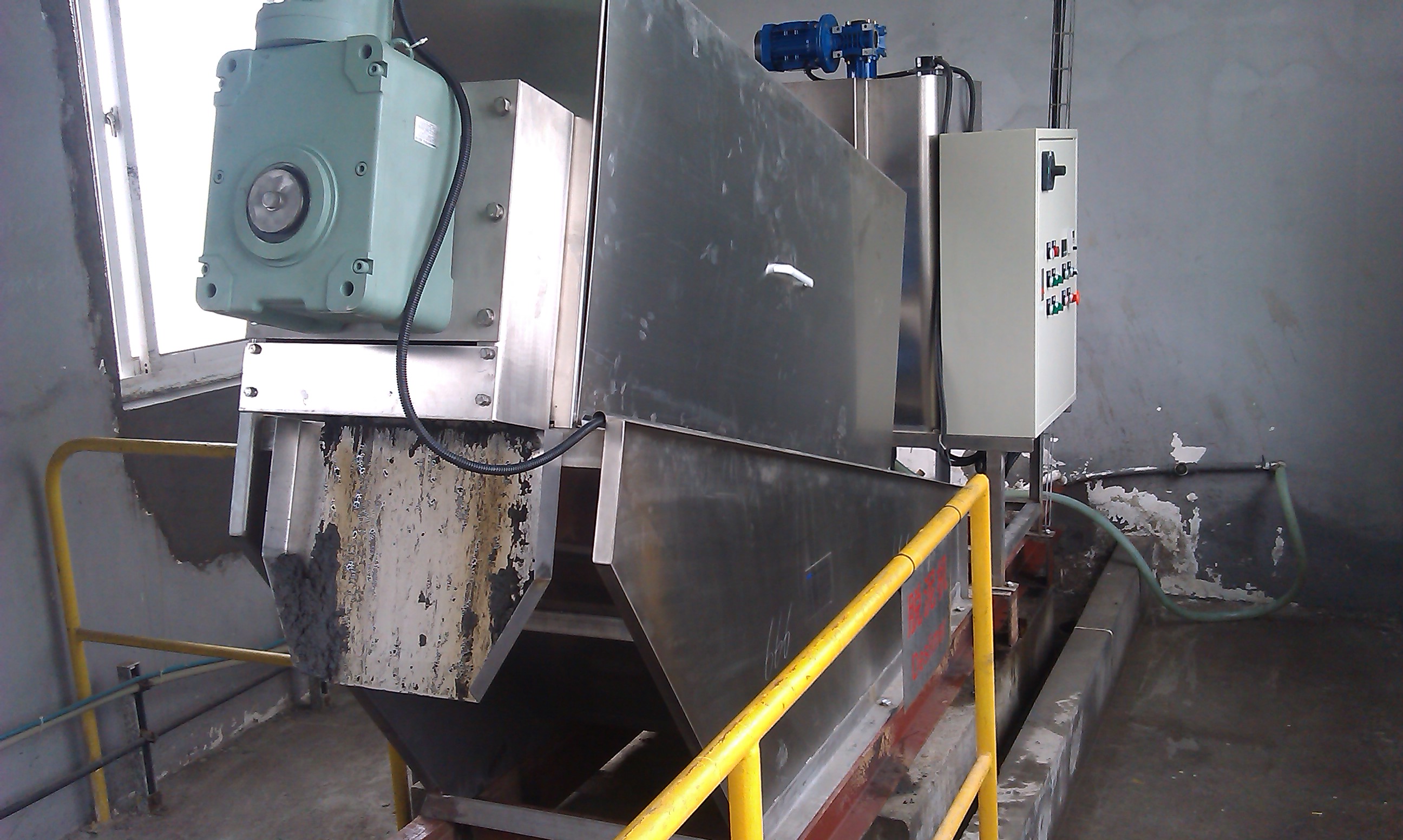
The DL series is a screw type sludge dewatering machine constructed from SS304. Models range from DL-101 to DL-404, covering a dried sludge capacity of 1.5 to 900 kg/h and an inlet consistency of 0.6–5.0% solids. The structure consists of fixed rings, moving rings, screw shaft, and volute filter. It is designed for municipal and industrial wastewater treatment, paper mills, printing and dyeing, oily sludge, and decentralized treatment projects. The water content after dewatering is 75–85%.
Wear-Free Screw Press (SRD Series)
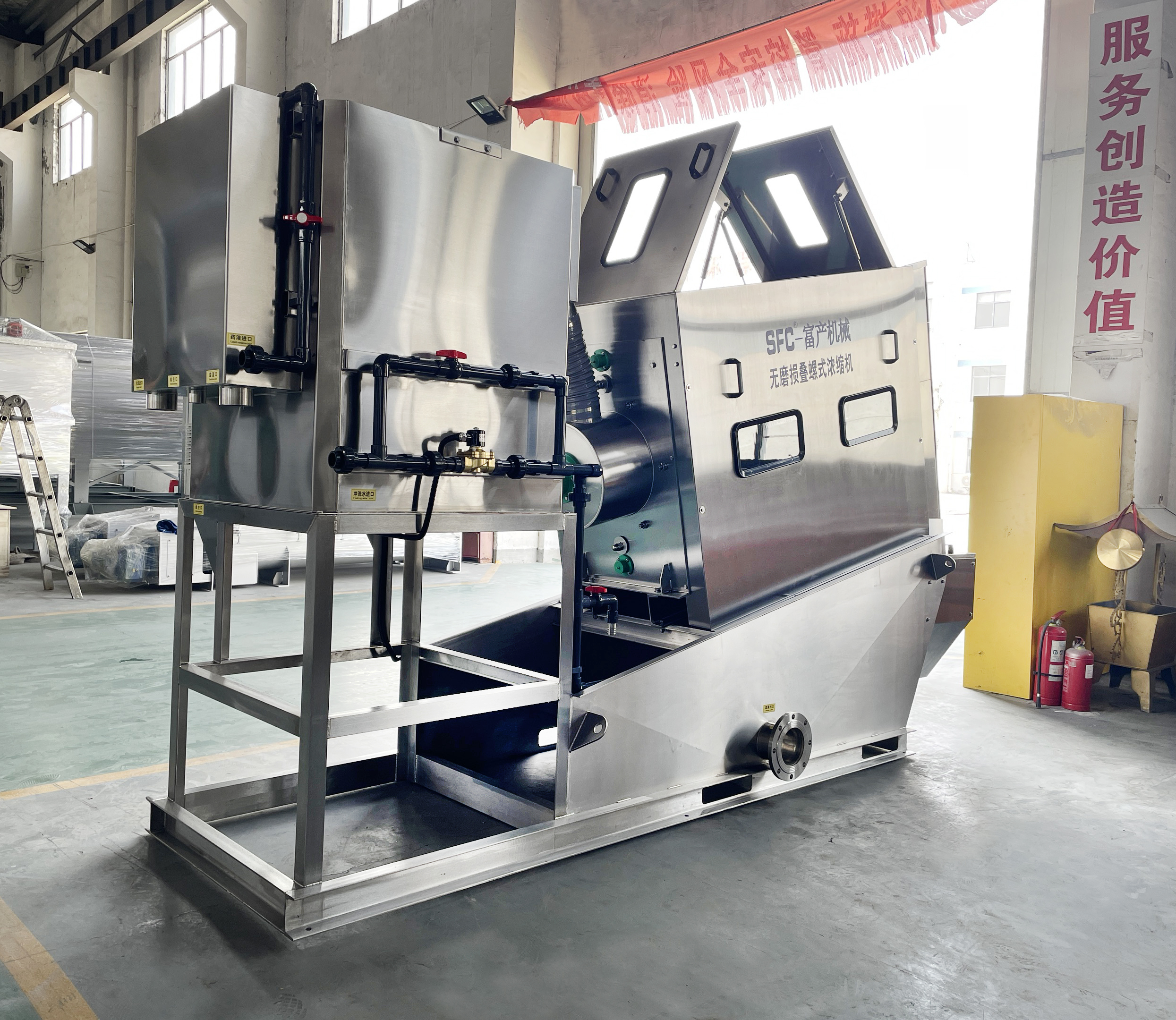
The SRD series (models SRD-301 to SRD-404) addresses challenging sludge that is sticky, oily, low-concentration, or high in inorganic content. It improves stable conveying and dewatering while reducing screw-to-ring wear risk. It operates in continuous automatic mode and is suitable for industrial wastewater, food processing, and oily sludge treatment.
Belt Thickening & Dewatering Integrated Machine (GDY Series)
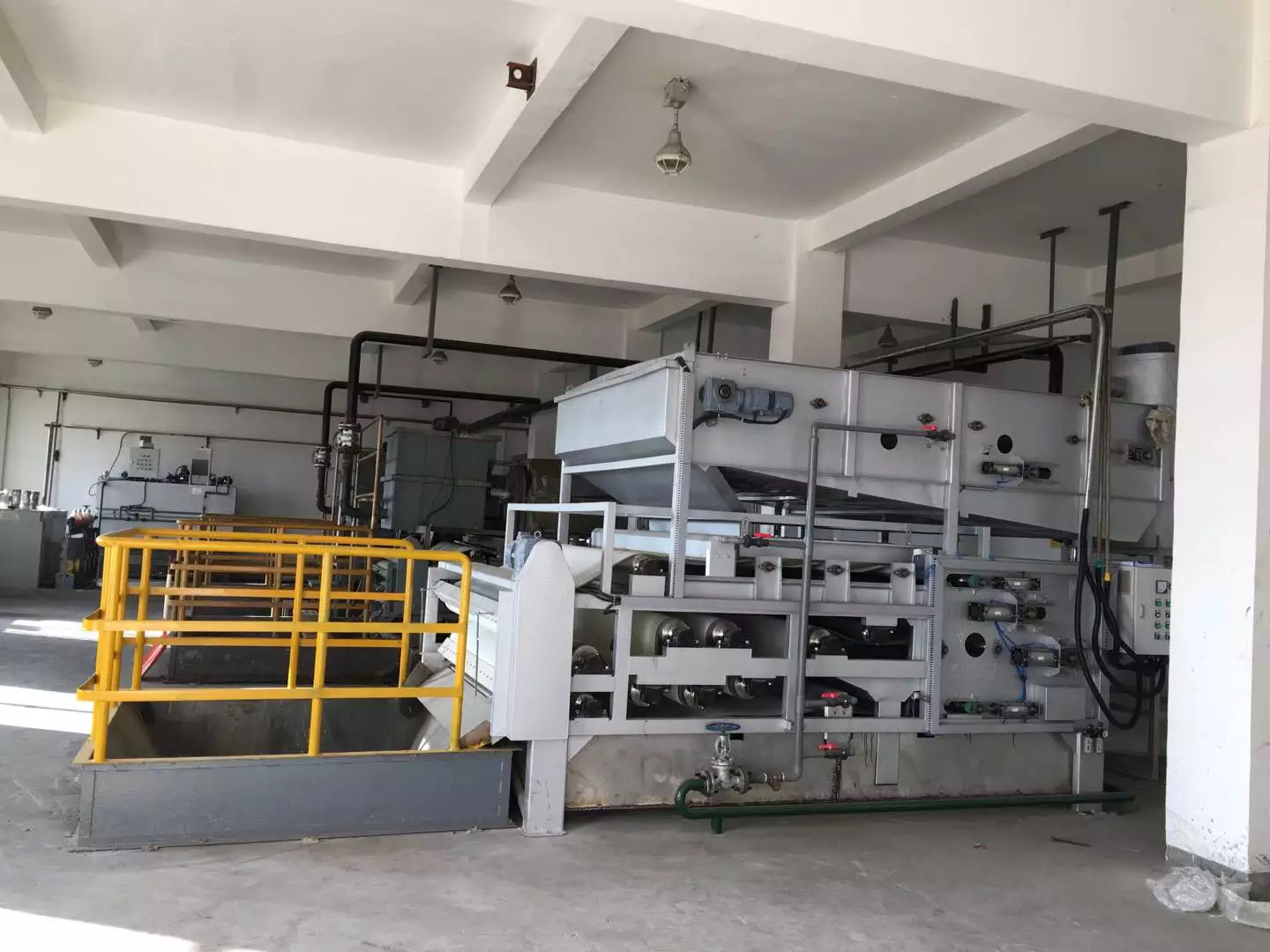
The GDY series integrates gravity belt thickening and belt press dewatering into a single unit for continuous one-step operation. Belt widths range from 1000 to 3000 mm, inlet consistency 0.6–1.5%, and dried sludge output of 90–1050 kg/h. It is commonly used in municipal and industrial wastewater treatment, paper mills, and printing and dyeing plants.
Rotary Drum Thickener (FRDT Series)
The FRDT series is an enclosed drum sludge thickener made of SS304, with models from FRDT-20 to FRDT-100. It operates at low speed (≈10 rpm) and achieves a solid capture rate of 95%, boosting inlet consistency from 0.6–1.5% to an outlet of 2.5–8%. It is ideal for pre-thickening low-solids sludge before dewatering.
High-Pressure Belt Deep Dewatering (SD Series)
The SD series (SFC-SD05 to SFC-SD25) is a secondary deep dewatering system that further reduces moisture after primary dewatering. Inlet consistency is 15–20% solids; for a 60–70% water content output, treating capacity is 0.35–6.1 t/h and dried sludge output is 70–920 kg/h. This system is used in municipal and chemical plants as a pretreatment for drying or incineration.
Low-Temperature Sludge Dryers (SFC-BSD & SFC-TR Series)
The SFC-BSD series is a continuous belt sludge dryer made of SS304 with modular, fully enclosed design. Inlet consistency of 15–35% solids leads to a final water content of 10–50%. The SFC-TR series is a batch-type reciprocating circulation dryer with a water extraction capacity of 21–360 kg/h and unit power consumption as low as 0.4–0.55 kWh/kg water. Both achieve volume reduction of up to 70%.
Application Scenarios Across Industries
SFC’s equipment is deployed in diverse industrial settings, each with unique sludge characteristics:
- Petrochemical Industry: Dewatering of refractory sludge from coking wastewater. The system features explosion-proof design and corrosion-resistant materials, operating in continuous automatic mode. Equipment used includes rotary drum thickener, screw press, and polymer preparation system.
- Alcoholic Beverage Industry: High-organic distillery sludge (95–99.8% moisture) is thickened, dewatered via screw press, and then thermally dried into dry biomass for energy recovery. The enclosed system minimizes odor and complies with food & beverage waste regulations.
- Palm Oil Industry: Palm oil mill effluent (POME) and empty fruit bunch sludge are dewatered using screw presses and belt filters, achieving significant volume reduction and supporting zero-discharge goals.
- Pharmaceutical Industry: High-organic and chemically complex sludge is treated through dewatering + deep dewatering + thermal drying, converting hazardous waste into stable material suitable for incineration or landfill.
- Automotive Parts Manufacturing: Electroplating heavy metal sludge in a corrosive environment requires corrosion-resistant equipment. A fully automatic system with rotary drum thickening and belt press ensures safe, continuous operation.
Market Trends and Comparison with Traditional Solutions
The market increasingly favors technologies that combine high efficiency with low operating costs. Belt filter presses remain dominant in large-scale municipal applications due to high throughput, while screw presses gain traction for small to medium plants seeking simple operation and low wash water consumption. Compared to traditional centrifuges, screw presses offer lower energy consumption and less noise, but may have slightly lower final cake dryness for certain sludge types. The belt press segment is projected to grow at a CAGR of 8.8%, reflecting sustained demand. An honest limitation of screw press technology is its lower throughput per unit volume compared to belt presses, making it less ideal for very high flow rates without parallel units.
Future Outlook
The sludge dewatering industry is moving toward energy-neutral and resource-recovery-oriented solutions. Integration of deep dewatering (moisture <60%) with low-temperature drying (final water content as low as 10%) enables a reduction in disposal volume of over 70%. Waste heat recovery from industrial processes can power dryers, reducing carbon footprint. SFC’s portfolio already covers this full chain, positioning it to serve the growing demand for sustainable sludge management. With China’s market alone expected to reach USD 0.87 billion by 2025, suppliers offering reliable, modular, and corrosion-resistant equipment will be well-positioned.
FAQ
- What types of sludge can a screw press dewatering machine handle?
The DL series is designed for inlet consistency of 0.6–5.0% solids and is suitable for municipal, industrial, paper mill, printing and dyeing, oily sludge, and decentralized treatment projects. It can handle low-concentration sludge effectively. - What is the solid capture rate of the rotary drum thickener?
The FRDT series rotary drum thickener achieves a solid capture rate of 95%, increasing sludge outlet consistency from 2.5% to 8%. - How much volume reduction does the low-temperature sludge dryer achieve?
The SFC-TR series low-temperature sludge dryer can achieve sludge volume reduction of up to 70%, with unit power consumption of 0.4–0.55 kWh per kg of water removed.
For a detailed overview of SFC’s complete sludge treatment product range, including specifications and configuration options, download the official product catalog: