
Industrial Valves by Scenario: 2026 Selection Guide
Industrial Valves by Scenario: 2026 Selection Guide
Selecting industrial valves for a project is not a one-size-fits-all decision. EG Valves Manufacturing Co., Ltd., a professional valve manufacturer based in Wenzhou, China, designs, manufactures, and exports industrial valves for use in power, oil & gas, water treatment, chemical, and other process industries. Since 2000, the company has built a portfolio that includes gate valves, globe valves, ball valves, butterfly valves, check valves, and plug valves, manufactured to ANSI, DIN, BS, and JIS standards.
The company operates a 27,500 m² facility with around 300 employees and annual output of approximately 90,000 units. Its products are exported to more than 33 countries and regions, mainly in the EU, North America, Latin America, and the Middle East.
Why Scenario Fit Matters More Than Price
Project teams often treat valve selection as a secondary decision after pumps, piping, and instrumentation. However, a valve that is internally correct on paper but mismatched to its actual service environment can fail in service. Leakage, unscheduled downtime, and safety risks are common consequences. In 2025, the global industrial valves market was estimated at roughly USD 80.4 billion, with oil & gas remaining the largest application segment. The stainless steel industrial valves segment is also projected to grow from USD 27.51 billion in 2024 to USD 38.36 billion by 2034, reflecting demand for corrosion-resistant materials.
These figures point to one conclusion: application-scenario fit is now a core purchasing criterion. Buyers should define the operating conditions first and then select valve geometry, material, and actuation type.
EG Valves Approach to Project Procurement
EG Valves addresses project-specific requirements through a broad product line and documented quality systems. All valves are made under ISO 9001-certified processes, and the factory has obtained API 600, API 6D, CE, and PED certifications. These credentials matter for buyers who need to align valve selection with project specifications in regulated environments.
For buyer support, the company provides OEM/ODM services, using either the client's brand logo or the EG brand. It offers a monthly capacity of 8,000 valves, with lead times between 25 and 35 days. The minimum order quantity is one piece for large-size valves and ten pieces for small-size valves. EG Valves also builds a strict QC team that inspects every valve, and provides EN 10204 3.1 material certificates with every order.
Technical Decision Framework for Industrial Valves
When matching a valve to a project, engineers should evaluate five core parameters: size range, pressure rating, body material, end connection type, and operation mode.
- Size range determines the valve's dimensional fit with the pipeline.
- Pressure rating must cover the maximum line pressure, including surge conditions.
- Body material must resist the medium's corrosion, erosion, and temperature effects.
- End connections vary from threaded ends for small-bore lines to flanged or butt-weld ends for larger and higher-pressure lines.
- Operation mode ranges from manual handwheels to pneumatic or electric actuators for automation.
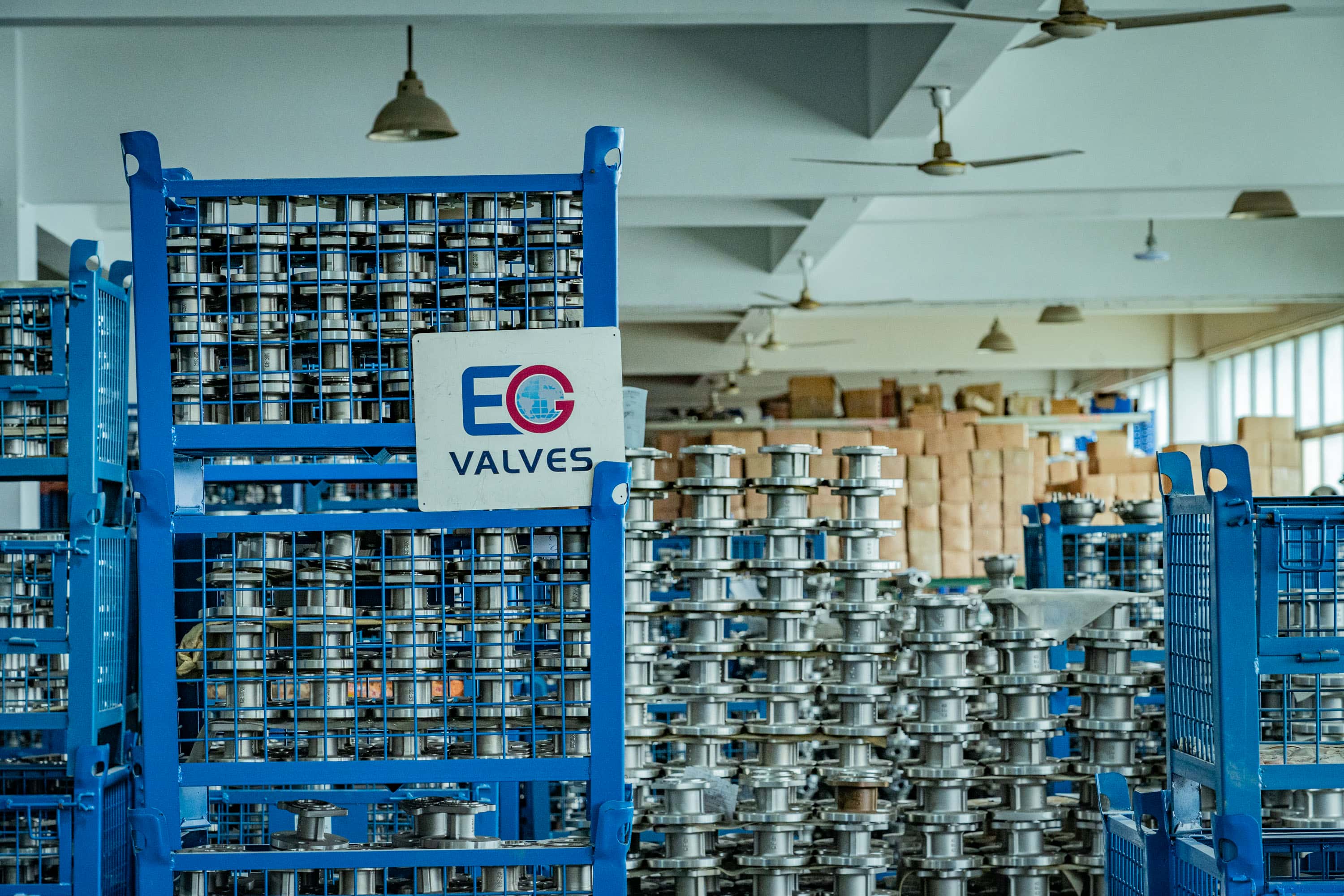
For high-pressure steam and hydrocarbon service, the cast steel gate valve model GTS019 supports size ranges from NPS 1-1/2” to 48” and pressure ratings from Class 150 to Class 1500. Body material options include carbon steel, stainless steel, alloy steel, and duplex steel. For compact high-pressure connections, the forged steel gate valve model GTF023 covers NPS 1/2” to 2-1/2” and Class 800 to Class 2500. For chemical service involving acids, salts, and alkalis, the PTFE lined butterfly valve model BTF301 offers anti-corrosive performance with PTFE, FEP, or PFA seat materials.
The table below summarizes representative valve models from EG Valves for different project conditions:
| Model | Type | Size Range | Pressure Rating | Typical Application |
|---|---|---|---|---|
| GTS019 | Cast Steel Gate Valve | NPS 1-1/2” to 48” | Class 150 to 1500 | Oil & gas, power generation, refining |
| GTF023 | Forged Steel Gate Valve | NPS 1/2” to 2-1/2” | Class 800 to 2500 | High-pressure steam, gas, oil |
| BTF301 | PTFE Lined Butterfly Valve | NPS 2” to 36” | Class 125/150 | Chemical, pharmaceutical, acid media |
| BPV302 | High Performance Butterfly Valve | NPS 2” to 60” | Class 150/300/600 | Hydrocarbon processing, power plants |
Selection should then consider auxiliary features such as low-emission packing, anti-static design, fire-safe design, and blow-out proof stems. These features are available across many EG Valves models and are especially relevant for oil, gas, and chemical applications.
Application Scenarios and Valve Requirements
Power Generation
Thermal power generation operates under high temperature and high pressure, continuous operation, and large load fluctuations. Valves for this segment need to handle high-pressure steam systems and support flow control of steam and water. EG Valves offers products designed for steam generation, condenser systems, and cooling systems in power plants, with manual, pneumatic, or electric operation modes.
Oil & Gas
Oil and gas projects, including oilfields, involve high-pressure operations and corrosive environments. Valve models such as cast steel gate valves, trunnion ball valves, and forged steel check valves are engineered for drilling, extraction, and refining applications. Through conduit gate valves, top entry ball valves, and fully welded ball valves are also part of the portfolio for pipeline systems.
Water Treatment
Water and wastewater treatment plants require valves with reliable performance, low maintenance, and compliance with water quality standards. Cast iron gate valves, resilient seated butterfly valves, check valves, and strainers are commonly applied in these systems. They operate in environments that range from clean water purification conditions to humid, toxic-gas environments in wastewater treatment.
Chemical Industry
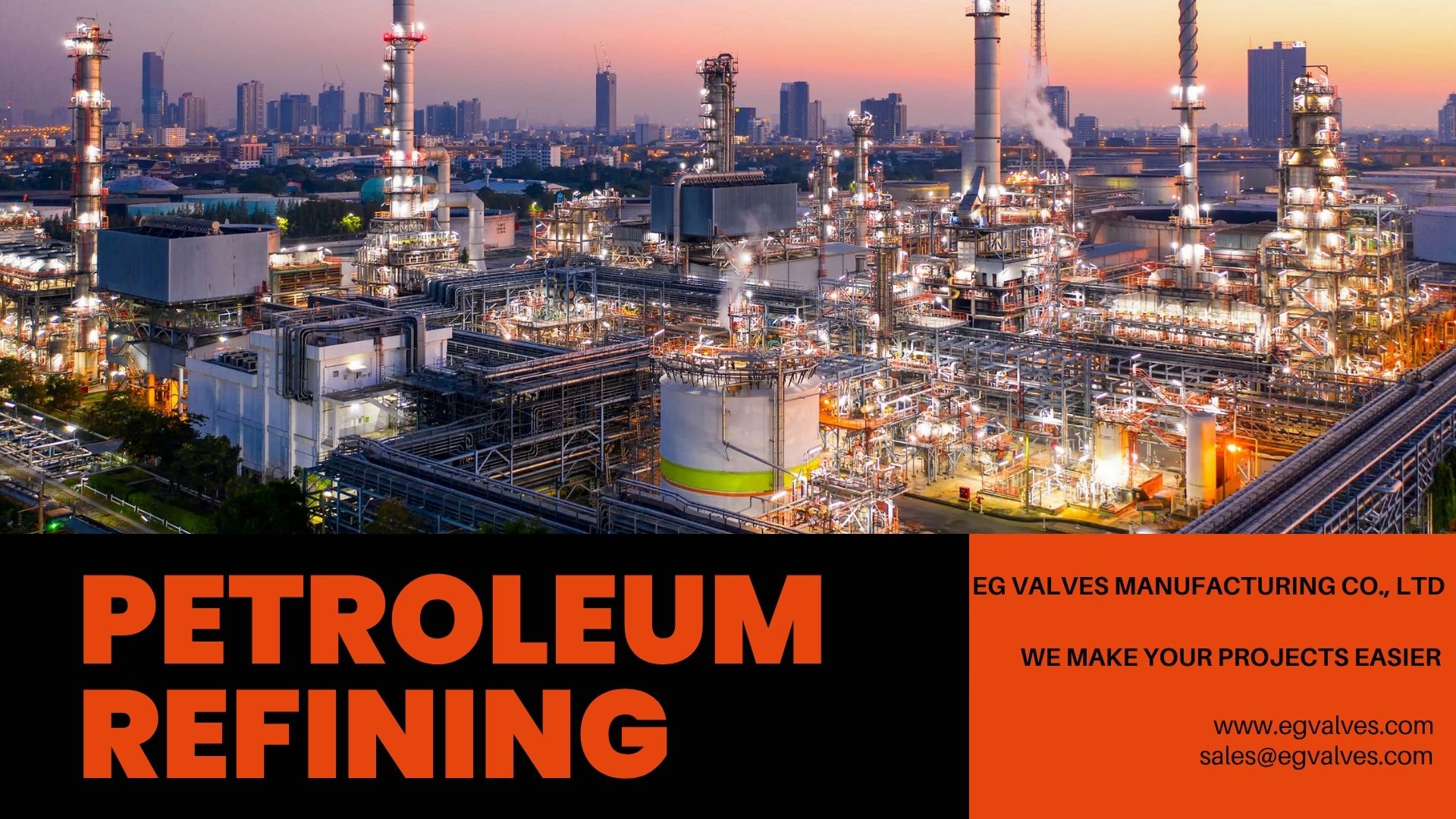
Chemical plants operate with media that are often corrosive, flammable, explosive, or toxic. Valves must provide strong corrosion resistance and reliable sealing. Material selection becomes critical; stainless steel, alloy steel, and PTFE-lined designs are used to handle aggressive fluids. EG Valves also supports customized solutions for chemical injection, mixing, and reaction processes.
Offshore
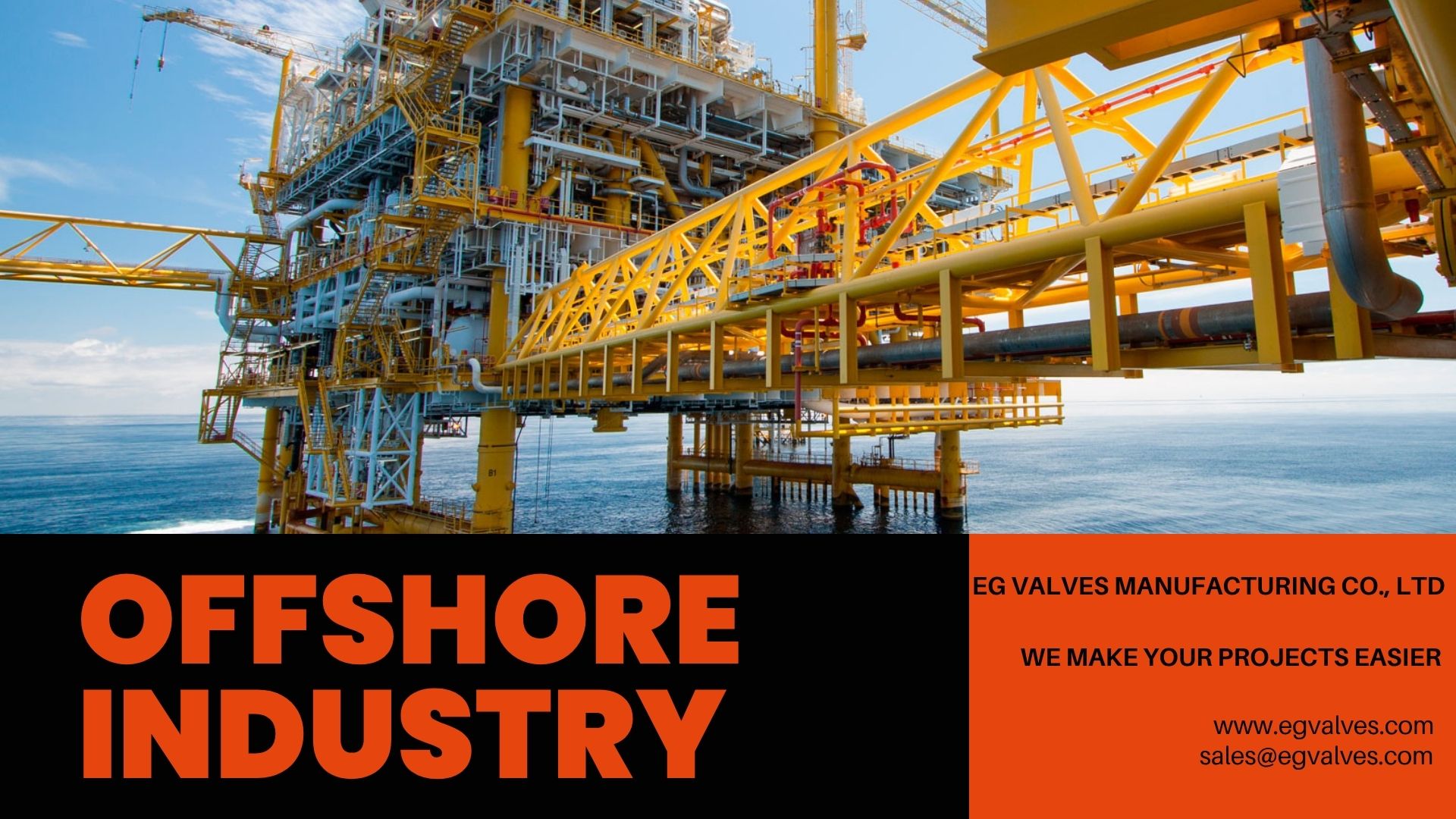
Offshore platforms expose valves to high humidity, salinity, wind and wave impacts, and flammable materials. Corrosion resistance is a key requirement. Valves such as high performance butterfly valves, trunnion ball valves, and stainless steel check valves are available with durable materials and high-pressure-capable designs. Technical guidance is provided for integration into offshore systems.
Paper and Pulp
Paper and pulp plants deal with continuous production, high humidity, fiber dust, and corrosive chemicals. Wide flow channels, anti-clogging behavior, and wear resistance are important. Knife gate valves are used because of their ability to handle fibrous and slurry-like media. Other gate, butterfly, and check valve models are also applied in this industry.
Food and Beverage
Food processing requires sanitary design, sterility, and contamination prevention. Valves used in biscuit factories, dairies, and beverage lines must meet high cleanliness standards. EG Valves offers stainless steel ball valves, threaded check valves, and PTFE-lined butterfly valves for corrosive cleaning agents and hygienic fluid control.
Pharmaceutical
Pharmaceutical production requires cleanliness, sterility, and strict regulatory compliance. Valves must meet stringent standards and support batch production. EG Valves provides sanitary designs, threaded ball and globe valves, and PTFE-lined butterfly valves for laboratory and production environments. These systems often operate in manual mode or with sterilization systems.
Fertilizer
Fertilizer plants operate under high temperature and high pressure in sealed production systems with flammable, explosive, toxic, and highly corrosive media. Valves must withstand these aggressive conditions and support processes such as ammonia synthesis and urea production. Durable gate valves, globe valves, and check valves are commonly used in this sector.
These examples show that the same valve type may need different materials or actuation options in different industries. EG Valves provides product quality tracking and feedback for each order, which supports buyers during project execution.
Market Trends and Standardisation
Standards play an increasingly important role in industrial valve procurement. API 600 and API 6D are recognized as primary industry-specific standards for oil and gas critical applications, while ASME B16.34 provides universal requirements for pressure-temperature ratings and dimensions. Buyers sourcing for regulated industries should verify that their supplier can meet these standards and provide material certifications.
The growth of the global industrial valve market aligns with the expansion of power, chemical, and oil & gas infrastructure. Within this context, EG Valves positions itself as a supplier that combines standardized manufacturing with flexible customization for project needs.
Compared with Traditional Procurement
Traditional procurement may focus on catalogue-based selection or price comparison, which can miss the technical fit. EG Valves differentiates with low minimum order quantities, short lead times, and direct access to engineering and production capabilities. The company also provides OEM/ODM services for clients that require custom branding or specifications.
One honest limitation is geography. As a China-based manufacturer, EG Valves serves international clients, but delivery to distant regions may take longer than purchasing from a local supplier. Buyers should include logistics planning in their project schedule.
Outlook for 2026 and Beyond
Project teams are likely to keep demanding traceability, certifications, and application-specific engineering support. EG Valves has operated for over 25 years and exports to more than 33 countries, giving it a foundation for long-term partnerships. Its approach of combining ISO 9001-certified processes, API/CE/PED certifications, and feedback-based quality improvement supports buyer confidence.
Need help matching valves to your project requirements?
Contact EG Valves at sales@egvalves.com or +86 577 5799 2227. WhatsApp support is available at +86 132 0637 0946. Visit the official website: www.egvalves.com.
Download the company brochure: EG Valves brochure (PDF)
FAQ: Industrial Valve Selection by Project Scenario
Q: What is the first step in selecting an industrial valve for a specific project?
A: The first step is to evaluate the application scenario's working conditions, including medium type, temperature, pressure, and environmental factors. For example, offshore applications involve high humidity, salinity, and wind-wave impacts, which require corrosion-resistant and high-pressure-capable valves.
Q: Which EG valves are suitable for high-pressure steam systems in power plants?
A: EG Valves designs products for high-pressure steam systems, including cast steel gate valves, forged steel gate valves, globe valves, and check valves, with pressure ratings up to Class 1500 and beyond. The cast steel gate valve GTS019 supports Class 150 to Class 1500 and NPS 1-1/2” to 48” sizes.
Q: What materials are used for corrosive chemical applications?
A: EG Valves offers body materials such as carbon steel, stainless steel, alloy steel, and duplex steel. For highly corrosive media, PTFE-lined butterfly valves with PTFE, FEP, or PFA seat materials provide anti-corrosive performance.
Q: Does EG Valves provide certifications for critical projects?
A: Yes, EG Valves operates under ISO 9001-certified processes and holds API 600, API 6D, CE, and PED certifications. These certifications align with standards frequently required in oil & gas and other critical industries.
Q: Can EG Valves support custom OEM/ODM projects?
A: Yes, EG Valves offers OEM/ODM production with the option to use the client's brand logo or the EG brand. The monthly production capacity is 8,000 valves, and lead times range from 25 to 35 days.
Q: How does EG Valves handle quality assurance and material traceability?
A: EG Valves operates a strict QC team that inspects every valve. The company provides EN 10204 3.1 material certificates with every order, giving buyers a documented link between material batches and delivered valves.