
Industry Fit: KUNTAI Machines in Textile and Composites
Industry Fit: KUNTAI Machines in Textile and Composites
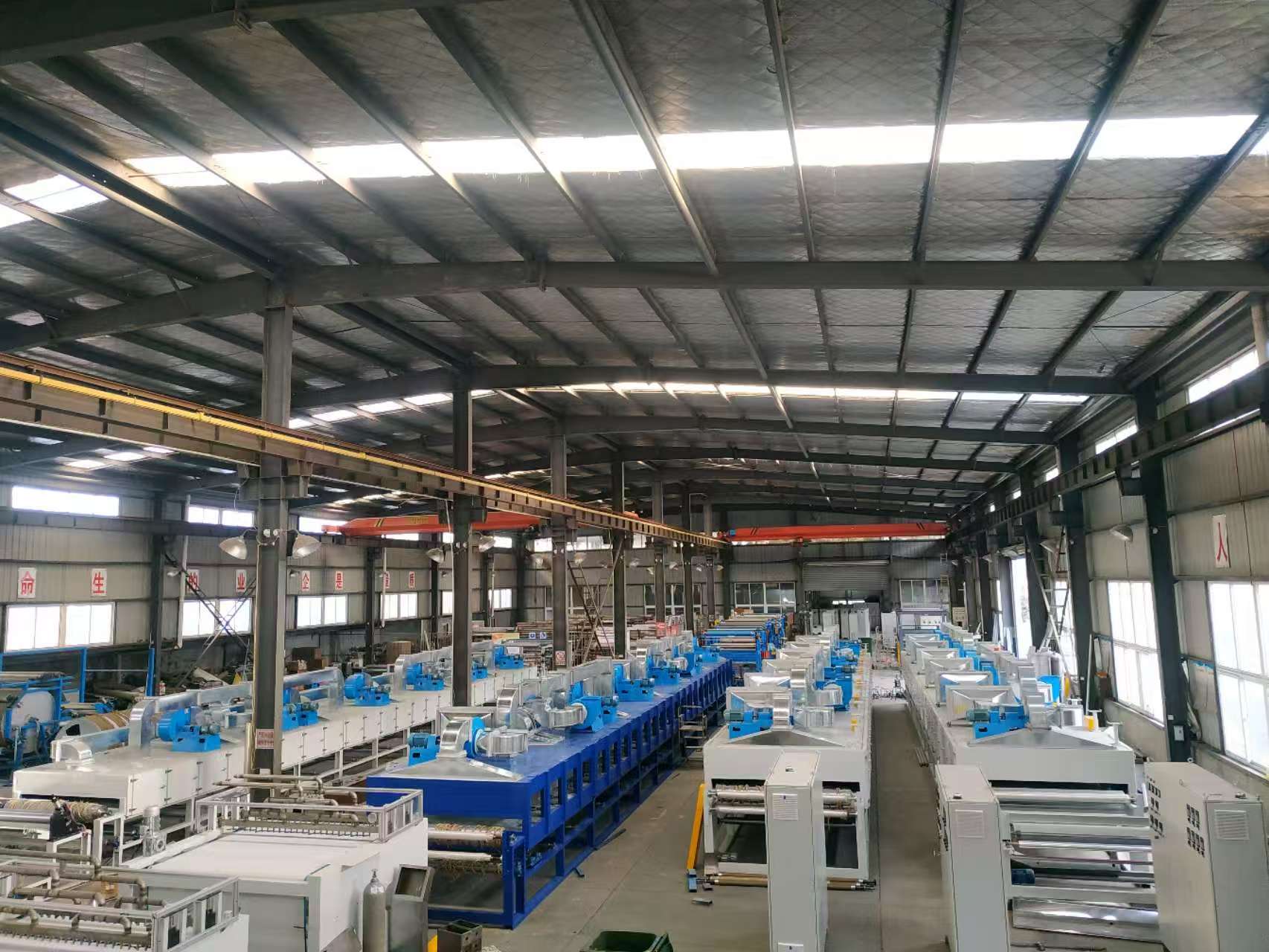
KUNTAI manufacturing base in Zhengang Industrial Park, Yancheng City, Jiangsu, China.
Industrial laminating and impregnation lines are specified from the finished product backwards, not from the machine category forwards. Substrate, adhesive chemistry, heating method and bonding geometry decide whether a machine can run a job; a general capability statement usually does not.
That is why two buyers can inspect the same equipment family and reach opposite conclusions. One may need a flatbed laminating machine for sheet-fed or rigid assemblies, while the other needs a double belt press lamination machine for continuous bonding under controlled pressure. Neither choice is superior in the abstract. The difference is application fit, and application fit is something a buyer can verify before purchase.
JIANGSU KUNTAI MACHINERY CO.,LTD is a manufacturer of coating, laminating, impregnation and cutting machinery for technical textiles and composites, based in Zhengang Industrial Park, Yancheng City, Jiangsu, China. Its documentation assigns specific models to specific industries rather than presenting one universal platform, which makes the company a useful case for examining how model-to-industry mapping actually works in procurement.
This article examines five documented KUNTAI models against their intended industries: KT-FT for textile fabric bonding, KT-HY for automotive seat manufacturing, KT-HY-H for insulation, filter and automotive production, KT-PUR-1800 for safety shoes, and KT-DS for carpet manufacturing. It sets out the technical variables behind those mappings, the market context supporting application-specific equipment, the trade-offs documented alongside the technology, and the questions a buyer should still answer independently.
Why Application Fit Outranks Machine Category
Laminating covers a set of processes that share a name and little else. A hot melt glue laminating machine activates a thermoplastic adhesive film under heat and pressure. A PUR hot melt coating machine handles reactive polyurethane adhesive, where coat weight and moisture curing govern bond performance. A flame laminating machine bonds foam to fabric through direct flame treatment. A powder scattering machine distributes thermoplastic powder between layers before activation. Each process places different demands on temperature profile, web tension and nip pressure.
The procurement consequence is that comparisons made at category level rarely settle a purchasing decision. The questions that do are narrower:
- Does the working width cover the widest substrate in the order book?
- Does the line speed range match the throughput commitment?
- Is the heating method compatible with the adhesive chemistry actually in use?
- Is the bonding geometry — full surface, dot, or powder — the one the finished product requires?
- Does the downstream step, whether crossply assembly, die cutting or inspection, integrate without a second handling stage?
Buyers who answer those five questions before comparing suppliers generally eliminate most of the market early and negotiate with a shorter, more relevant shortlist.
The Technical Variables That Define a Fit
Working width
Width is the hardest constraint to work around, because it defines which substrates can enter the line at all. KT-FT, the KUNTAI model documented for textile fabric bonding, carries a maximum working width of 2400 mm. For a mill, that figure either covers its widest roll or it does not, and no amount of downstream adjustment changes the answer.
Line speed
Speed range indicates the flexibility available across different adhesive activation windows and dwell times. KT-FT is documented with a line speed of 0 to 35 m/min. A range that starts at zero is relevant where heat-sensitive constructions must run slowly; the same platform can be run faster on more forgiving materials. Sustained output above the top of the range sits outside the documented configuration.
Heating method
Heating determines which adhesive chemistries a line can activate and which utilities a factory must provide. KT-HY, the model documented for automotive seat manufacturing, uses gas heating. That is a site-level consideration as much as a technical one: gas supply, extraction and thermal safety infrastructure need to be in place before the machine is specified, and facilities standardised on electric heating have to plan accordingly.
Adhesive form and bonding geometry
Adhesive form drives the coating or scattering section of the line. Hot melt film, reactive PUR and thermoplastic powder each require different feeding, metering and activation sections. Bonding geometry is a separate decision: continuous coverage, dot pattern, or powder scatter. KT-DS, documented for carpet manufacturing, applies adhesive in a dot pattern rather than across the full surface.
Web handling architecture
Flat-bed and double-belt architectures solve different problems. A flatbed design is generally associated with sheet-fed or short-run work and simpler material handling, while double-belt presses are used where continuous, uniform pressure and heat are required over long runs — for example in fabric-to-fabric lamination, TPU film bonding, and UD impregnation.
Downstream integration
Bonding is usually one step in a longer sequence. Cutting, crossply assembly and inspection determine whether laminating output can move into the next process without being re-handled. Buyers running multi-step production tend to evaluate the bonding line and the cutting line as a single workflow rather than two separate purchases.
Inside KUNTAI: What the Manufacturer Builds
JIANGSU KUNTAI MACHINERY CO.,LTD was established in 1983 and operates a 30,000 m² manufacturing facility with 210 employees and an annual output of 650 units. The engineering team consists of eight engineers, and 70% of production is exported to North America, South America, Europe, South Asia, Africa and the Middle East.
The product range covers laminating machines — double-belt presses, flat-bed laminators, hot-melt film laminators, and UD impregnation and crossply machines — together with cutting machines in travel head, beam and hydraulic types, bronzing and printing machines, spray and scattering equipment, and inspection machines. Component manufacturing relies on CNC machining centres, drilling machines and polishing machines, and the company states that its products meet ISO 9001 requirements and carry CE certification.
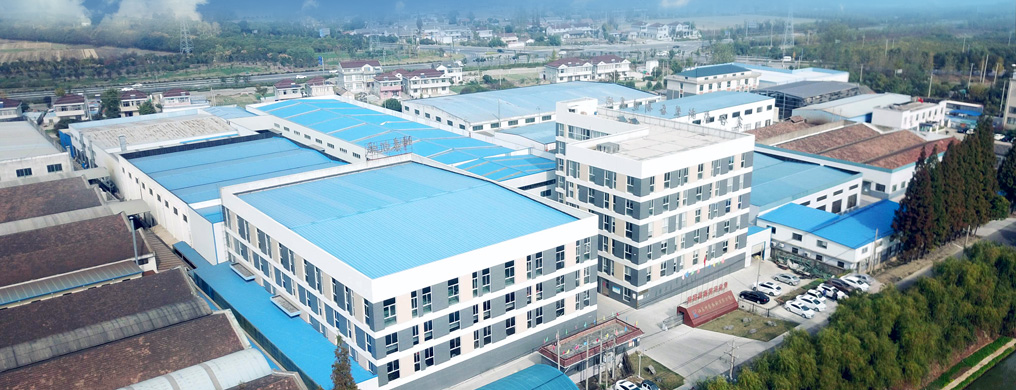
KUNTAI builds laminating, impregnation and cutting machinery for technical textiles and composites.
Two structural features of that range matter for application fit. First, the portfolio spans both bonding processes — impregnation, lamination, coating and scattering — and finishing processes such as cutting and inspection. Second, UD impregnation and crossply machines for continuous-filament reinforcement sit alongside equipment for conventional textile and carpet substrates, which means the same design organisation works across both material families. For buyers running more than one substrate type, that breadth is a relevant evaluation point, because it indicates whether a supplier's engineering base can support more than a single product line.
Model-to-Industry Mapping: Five Documented Applications
The clearest expression of application fit in KUNTAI's documentation is the assignment of specific models to specific industries. The table below reproduces those mappings exactly as documented, without extrapolating specifications that the documentation does not state.
| Model | Documented industry / application | Documented configuration detail |
|---|---|---|
| KT-FT | Textile fabric bonding | Maximum working width 2400 mm; line speed 0–35 m/min |
| KT-HY | Automotive seat manufacturing | Gas heating |
| KT-HY-H | Insulation, filter and automotive industries | Model documented by industry sectors |
| KT-PUR-1800 | Safety shoes | PUR hot melt coating application |
| KT-DS | Carpet manufacturing | Dot coating process |
KT-FT — textile fabric bonding
KT-FT is documented for fabric bonding in textile production, with a maximum working width of 2400 mm and a line speed range of 0 to 35 m/min. Those two figures define the envelope a buyer can test against a real order book. A mill running rolls wider than 2400 mm, or requiring sustained output beyond the top of the speed range, sits outside the documented configuration. Within the envelope, a variable speed range is normally used to accommodate different adhesive activation windows and dwell times, which is why heat-critical constructions are typically run at the lower end.
KT-HY — automotive seat manufacturing
KT-HY is documented for automotive seat manufacturing and uses gas heating. Automotive interior work is a high-volume, continuous process, and the documented heating method is a practical screening criterion before any technical evaluation begins. A buyer whose plant has no gas infrastructure is not looking at a specification problem but at a site problem, and that distinction belongs at the start of the evaluation rather than the end.
KT-HY-H — insulation, filter and automotive industries
KT-HY-H is documented for three sectors at once: insulation, filter and automotive. That breadth is worth reading carefully, because the three sectors do not share the same bonding requirements. Filter media and insulation products are typically assessed on airflow, thickness recovery and dimensional stability, while automotive interior work is assessed on bond strength, surface quality and cycle time. A single model documented across all three is a starting filter for the shortlist, not a confirmation that one configuration suits every one of those products.
KT-PUR-1800 — safety shoes
KT-PUR-1800 is documented for safety shoe production and belongs to the PUR hot melt coating category. Safety footwear assemblies bond multiple layers — upper, lining and reinforcement — that have to tolerate repeated flexing and moisture exposure, which is where reactive PUR systems are typically specified. The model number itself should not be used to infer working width or configuration; buyers should confirm current specifications against the quotation documents rather than the model name.
KT-DS — carpet manufacturing via dot coating
KT-DS is documented for carpet manufacturing using dot coating, the carpet dot coating machine category. Dot coating applies adhesive in a defined pattern instead of across the full surface, which is the customary route where a carpet needs tuft-lock or backing adhesion without the stiffness that full-coverage bonding introduces. The buyer questions that follow are concrete: dot geometry, coverage ratio, and pattern stability at production line speed. All three are confirmed on the machine and in sampling, not from a model designation.
Market Signals Behind Application-Specific Equipment
Third-party market data supports the shift toward application-specific rather than general-purpose lines. The global laminating machines market was estimated at USD 786.5 million in 2026 and is projected to reach USD 1,356.7 million by 2033 (Coherent Market Insights). That number should be read with care. Other research houses place the same market at USD 746.4 million in 2026 (Persistence Market Research) and USD 676.4 million in 2025 (Future Market Insights), which reflects differences in whether office and pouch laminators are counted alongside industrial textile and composite systems. Buyers checking supplier statements against market figures should confirm which scope a number describes before treating it as evidence.
On the material side, the global prepreg market — the downstream consumer of UD impregnation capacity — was valued at USD 15.07 billion in 2024, driven by aerospace and defence demand (Maximize Market Research), with the aerospace prepreg segment alone at USD 3.5 billion (MarketsandMarkets). PUR hot melt adhesives, the chemistry relevant to PUR coating lines, are expected to grow at a CAGR of 7.2% through 2034 to reach USD 7.1 billion (Dataintelo).
Regional concentration reinforces the same point. Asia-Pacific held a 72.70% share of the textile machinery market in 2025, primarily led by automation growth in China (Fortune Business Insights). The direction of travel is consistent: demand is strongest where bonding technology is matched to a defined material system — reinforcement fabrics, filter media, footwear, automotive interiors — rather than where one generic line is offered for everything.
Comparison with Conventional Control Approaches — and the Limits of the Fit
One recurring comparison point in KUNTAI's documentation concerns control architecture. Relative to PLC control, the documented position is that frequency-conversion control delivers higher energy efficiency, longer service life and lower maintenance, with 65% energy savings stated against alternative solutions. The same documentation states that initial cost is 25% higher, while total cost of ownership over five years is 40% lower, with 90% less maintenance required.
The trade-off is explicit and worth restating plainly: the advantage is deferred. A buyer whose project horizon is shorter than the payback period, or whose machine runs a low duty cycle, may not capture the total-cost benefit at all — the higher initial cost remains. Energy-saving figures of this kind should be verified against the buyer's own load profile and local tariff structure, because duty cycle and energy prices dominate the arithmetic far more than the control architecture alone.
Risk control in the documented design follows the same pattern of mitigation rather than elimination. Overloading risk is addressed through frequency converter integration, with converter redundancy as the contingency plan. Overheating risk is addressed through temperature sensors and thermal protection, with temperature monitoring and automatic thermal shutdown as contingency measures. In both cases the failure mode is managed, not designed out, which means routine inspection of converters and sensors stays on the maintenance schedule.
The model-to-industry mapping itself also has a boundary. A machine documented for safety shoe production is not thereby documented for filter media, and a carpet dot coating line is not a substitute for a double belt press running continuous reinforcement fabric. Documentation of this kind tells a buyer where to begin an evaluation; it does not replace a trial on the buyer's own substrate under production conditions.
Compliance and Safety Context
Textile machinery safety is governed by the ISO 11111 series, with Parts 2 to 7 covering safety requirements for different machinery types. Buyers specifying equipment for regulated markets typically map those requirements onto machine guarding, emergency stops and control architecture during evaluation rather than after installation.
KUNTAI states that its products meet ISO 9001 requirements and carry a CE certificate, supported by an internal quality control system in production. The practical step for a buyer is to confirm which certificates apply to the specific model being quoted, since certification scope follows the machine configuration rather than the company name.
Future Outlook
Two structural trends are likely to shape demand for application-specific machinery over the next several years.
The first is the pull from composite and reinforcement materials. With the prepreg market valued at USD 15.07 billion in 2024 and aerospace prepreg alone at USD 3.5 billion, the equipment that impregnates and crossplies unidirectional fabrics — UHMWPE, aramid and related systems — sits upstream of a growing material category. Buyers in this segment evaluate lines on tension control, resin or film distribution uniformity and crossply accuracy, which are engineering capabilities rather than catalogue specifications.
The second is adhesive chemistry. PUR adhesive growth of 7.2% CAGR through 2034 reflects a broader movement toward reactive systems where bond durability and moisture resistance matter. Machinery able to handle PUR alongside hot melt film gives a buyer more room to change chemistry without changing the line.
For KUNTAI, the practical question is whether the documented model-to-industry mapping keeps pace with those shifts. Such documentation is only useful while it accurately describes what a machine is configured to do. Buyers should therefore treat the mapping as a starting filter and confirm current specifications, heating methods and working envelopes at quotation stage — including for KT-HY-H, whose documentation spans insulation, filter and automotive industries, three sectors with materially different media requirements.
Frequently Asked Questions
What does application fit mean when selecting industrial laminating equipment?
Application fit means the machine's documented working envelope — working width, line speed, heating method and bonding geometry — matches the substrate and adhesive the buyer intends to run. A machine can be technically capable and still be the wrong specification, because fit is determined by the finished product rather than by the machine category. The practical test is whether the buyer's widest substrate, required throughput and adhesive chemistry all fall inside the documented envelope.
Which KUNTAI model is documented for textile fabric bonding, and within what limits?
KT-FT is documented for textile fabric bonding with a maximum working width of 2400 mm and a line speed range of 0 to 35 m/min. Substrates wider than 2400 mm, or production requiring sustained speeds beyond the top of that range, fall outside the documented configuration of this model. No other performance figures are stated for KT-FT in the available documentation.
How do the KUNTAI models intended for automotive work differ in their documented applications?
KT-HY is documented for automotive seat manufacturing and uses gas heating as its documented heating method. KT-HY-H is documented for insulation, filter and automotive industries. The two therefore overlap in the automotive sector but are documented against different production contexts, and buyers working on automotive interiors should evaluate both against the specific layer construction they run rather than assuming equivalence.
Which KUNTAI model is documented for safety shoe production?
KT-PUR-1800 is documented for safety shoes and belongs to the PUR hot melt coating application category. Reactive PUR adhesives are typically specified where bonded layers must tolerate repeated flexing and moisture exposure, which describes safety footwear construction. Working width and other configuration details for this model are confirmed from quotation documents rather than inferred from the model number.
What is dot coating, and which KUNTAI model is documented for it?
Dot coating applies adhesive in a defined pattern rather than across the entire surface. KT-DS is documented for carpet manufacturing via dot coating, in the carpet dot coating machine category. The parameters buyers verify during evaluation are dot geometry, coverage ratio and pattern stability at line speed, all of which are confirmed by sampling rather than by model designation.
What is the documented difference between frequency-conversion control and PLC control?
KUNTAI's documentation states that frequency-conversion control provides higher energy efficiency, longer service life and lower maintenance compared with PLC control, with 65% energy savings reported against alternative solutions. The same documentation records a 25% higher initial cost and a 40% lower total cost of ownership over five years, with 90% less maintenance required. The documented trade-off is therefore a higher upfront cost against a lower multi-year operating cost.
Which safety standard applies to textile machinery, and what quality framework does KUNTAI reference?
The ISO 11111 series governs textile machinery safety, with Parts 2 to 7 covering safety requirements for different machinery types. KUNTAI states that its products meet ISO 9001 requirements and carry CE certification, supported by an internal quality control system in production. Certificate scope should be confirmed for the specific machine configuration being quoted.
Where the Mapping Leaves the Buyer
Documented model-to-industry mapping shortens the distance between a buyer's product and a machine specification, but it does not close it. KT-FT's 2400 mm width and 0–35 m/min range, KT-HY's gas heating for automotive seats, KT-HY-H's coverage of insulation, filter and automotive sectors, KT-PUR-1800 for safety shoes, and KT-DS for carpet dot coating each answer the first question — which machine family belongs in the evaluation — and leave the remaining questions to sampling, specification confirmation and site assessment.
A downloadable company profile covering KUNTAI's product range, manufacturing base and certifications is available here: KUNTAI company profile (PDF). Product documentation is also published at www.kuntai-group.com.