
Infrastructure Scenarios Reshape Stainless Steel Pipe Trade
Infrastructure Scenarios Reshape Stainless Steel Pipe Trade
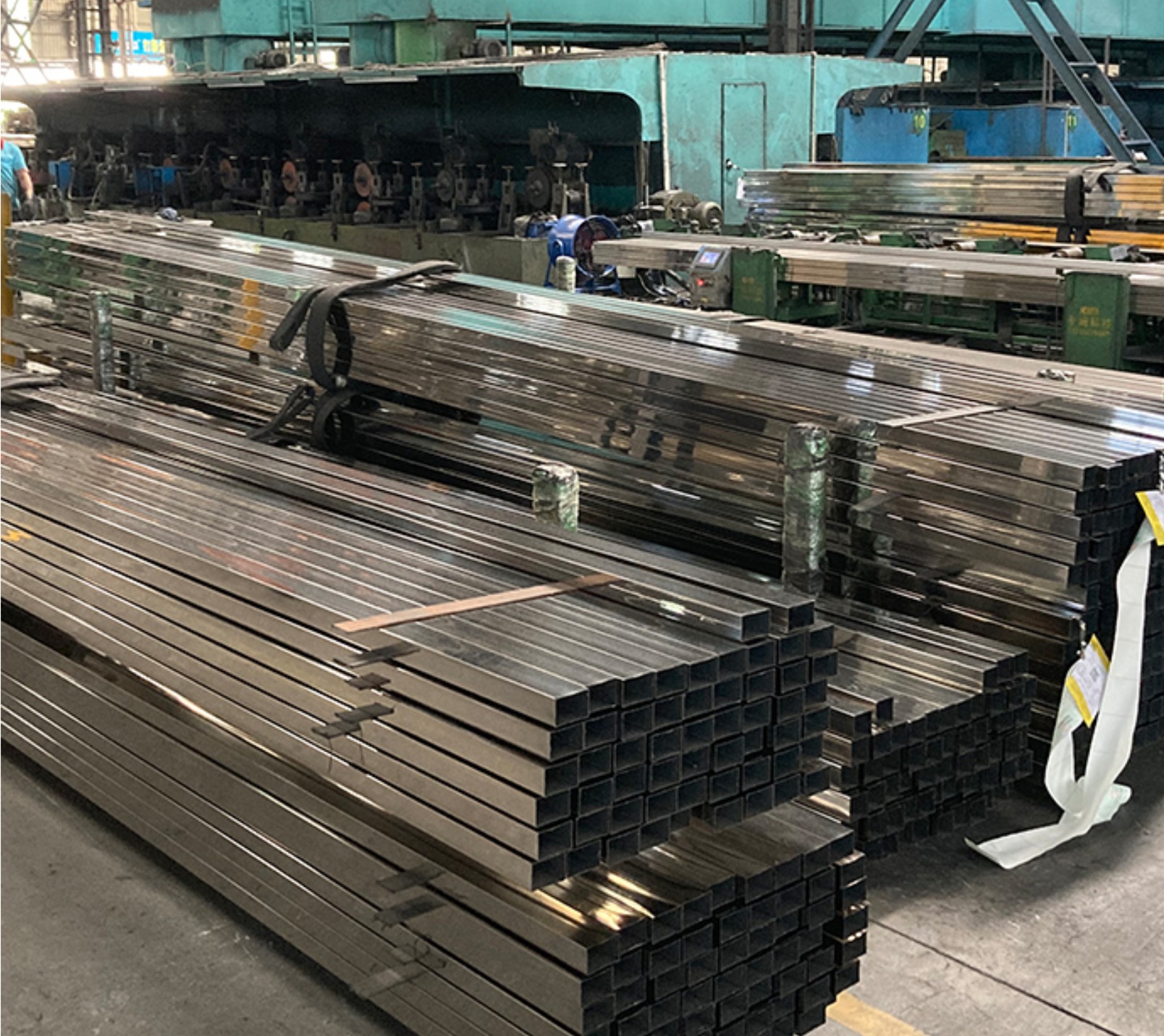
Square stainless steel pipe: one section among the forms now specified by scenario rather than by grade alone.
Stainless steel pipe trade is being reorganised around where the metal is used, not only around which grade is bought. In the architectural segments that carry most decorative consumption — staircase handrails, glass fitting systems, shower room fittings and general architectural pipework — the specification unit has moved from a single pipe section ordered by weight to a matched set of tube, fittings, finish and acceptance evidence. For importers and project buyers across the Middle East, South America and Africa, that change alters what has to be quoted, packed, documented and scheduled, and it explains why two orders of the same grade can look completely different on a packing list.
A handrail package and a shower-room package may both consume SS304 tube, yet they diverge on wall thickness tolerance, bend radius, fitting thread, surface finish consistency and the number of small components per shipment. When those items are bought from separate suppliers, the cost does not disappear; it reappears on site as rework, mismatched finish and delayed handover. That is the mechanism behind application-led demand: the buyer is no longer purchasing a commodity section but a system whose interfaces have to be defined before production starts.
What Application-Led Demand Changes in the Trade Pattern
The clearest change is the unit of purchase. A tonnage-based order can be quoted from a stock list; a scenario package has to be engineered, because the pipe form, the fitting family, the finish and the packing method are decided together. Importers who serve contractors therefore tend to evaluate suppliers on range coverage and interface consistency before they compare price per ton, since one missing fitting type can hold up an entire installation.
GuangDong Sanon Metal Products Co., Ltd. (Sanon) is a Foshan-based manufacturer whose range covers stainless steel pipes and tubes, staircase handrail, glass fittings and shower room fittings, with fittings produced in SS304, SS316 and zinc alloy in satin or mirror finish. The company reports a 40,000 sqm facility, a stainless steel pipe capacity of 9,000 tons per month, an annual output of 100,000 tons, a 30-person engineering and technical team, and an export share of 70% concentrated in the Middle East, South America and Africa. Those figures are most useful as a description of the order mix a facility of this type is organised to handle rather than as a ranking claim: they indicate a plant sized for bulk tube output that also carries a fittings range, which is the combination scenario-led buyers increasingly ask for.
Because the same channel serves both requirements, an importer can place a single specification covering round and square tube, elbows, brackets and glass clamps, then receive one packing list and one set of acceptance documents. That consolidation is the commercial substance of the trend, not a stylistic preference.
Four Scenarios That Now Set the Specification
Each architectural scenario consumes stainless steel pipe differently. The table below summarises the sections, the fittings that complete the assembly and the point of specification that most often decides whether an installation goes smoothly. The component families listed are the ones that recur in this trade; they describe the scenario, not a claim about any single supplier's catalogue depth.
| Scenario | Pipe forms | Fittings that complete the assembly | What decides acceptance |
|---|---|---|---|
| Staircase handrails | Round and square tube, plus slotted or oval sections where a flatter profile or a concealed fixing line is required | Elbows, bends, railing flanges, brackets, cross bar holders, pipe connectors, end caps, stainless steel cable | Bend radius against the specified diameter and wall thickness; weld seam finishing; fit between tube and fitting |
| Glass fitting systems | Round or square posts and structural tube | Glass clamps, glass standoffs, stainless steel glass holders, connectors, end caps | Glass hole pattern and edge distance; base-to-post fit; finish match across visible components |
| Shower room fittings | Small-diameter tube and profile sections | Brackets, connectors, sliding door fittings, door handles, end caps | Grade selection for humid, frequently cleaned conditions; fitting material (SS304, SS316 or zinc alloy); finish durability |
| General architectural pipework | Round, square, slotted, oval and colour-finished sections | Connectors, flanges, end caps, decoration ball, glass holders | Colour and finish consistency between batches; cut length accuracy; packing protection for finished surfaces |
Staircase Handrails: Geometry Comes Before Tonnage
The handrail is the scenario where pipe geometry and fitting geometry must be resolved together. A bend produced for a different wall thickness will show at the joint even when both parts meet the same grade specification, and an elbow whose radius differs from the drawing forces the installer to compensate on site. Buyers evaluating a handrail package should therefore treat the bend and elbow schedule as part of the pipe order rather than as an accessory purchase made later.
Surface preparation belongs in the same conversation. In the application data recorded for decorative and industrial stainless work, welding is listed as the working condition, with polishing, wire drawing and laser cutting as the matched processes and rust and corrosion resistance stated as the special requirement. For a handrail, that combination explains why two suppliers quoting the same tube can deliver visibly different assemblies: the finish applied after welding determines what the client sees, and that finish has to match between the tube and the fittings mounted on it.
Glass Fitting Systems: Tolerance and Finish Matching

Fittings decide the interface: clamps, holders and connectors set the tolerance before the post or tube is specified.
Glass fitting work moves the specification burden from the pipe to the interface. Clamps, standoffs and glass holders define the hole pattern in the glass and the edge distance available, so a change of fitting family late in the project can invalidate panels that have already been drilled. The practical rule is to fix the fitting set first, then specify the post or tube that carries it.
Finish matching is the second constraint. Satin and mirror finishes are both documented options in this product category, and mixing them within one visible assembly is immediately obvious to an end user even when every component is individually acceptable. Buyers should confirm that tube, clamps and connectors come from the same finish specification and, where the project is phased, that later batches can be matched to the first delivery.
Shower Room Fittings: The Grade Question Comes First
Shower-room hardware sits in the most demanding decorative environment of the four scenarios: continuous humidity, frequent cleaning and small components with visible surfaces. That makes grade and material selection the first decision rather than the last. The documented material range for this category covers SS304, SS316 and zinc alloy, and the choice among them should follow the exposure the project will actually impose.
The chemistry behind the two stainless grades is documented in the product data. Grade 201 contains chromium at 16–18%, nickel at 3.5–5.5% and manganese at 5.5–7.5%; grade 304 contains chromium at 18–20%, nickel at 8–11% and manganese at or below 2%. The difference in nickel and manganese content is the documented distinction, and it is the reason buyers should match grade to exposure and to the standard named in the project documents rather than to price alone. Where a fitting is zinc alloy, the same logic applies at the material level: zinc alloy is a documented option in the range, and its suitability depends on mechanical duty and exposure, which the project specification should state.
General Architectural Pipework: Colour, Profile and Packing
General architectural pipework is the widest of the four scenarios and the one where decorative variety carries the most commercial weight. Round, square, slotted and oval sections serve different visual and fixing purposes, and colour-finished pipe is a recognised category within this trade. Buyers should confirm the finished colour range, the batch-matching method and the protection applied for transport, because a colour or finish difference between batches is far more visible along a long corridor than on a single handrail.
Packing is part of the specification here, not an afterthought. Polished and colour-finished tube that arrives with abrasion marks creates rework that no unit price can recover, and long lengths travelling by sea need support at close intervals. When an importer compares offers for architectural pipework, the packing method and the finish protection should be compared at the same time as the section and the grade.
Reading the Three Regions Without Averaging Them
Regional demand is often summarised as a single emerging-market curve. For specification work that summary is not usable, because the variables that change a purchase order differ by market and by project. Four variables do most of the work: the standard named in the project documents, the exposure conditions at the site, the composition and phasing of the construction pipeline the buyer is serving, and the import documentation required at the border.
Country-level policy instruments and pipeline volumes also change faster than published summaries, and a figure from one market should not be carried into another. The workable approach is to treat the four variables as questions to settle against current local documentation, then let the answers drive grade, finish, packing and paperwork. The regional notes below follow that logic: they describe what changes a specification, not what a market's totals are.
Middle East
Where a market's decorative demand is dominated by large-format architectural work, visible area is big and finish consistency is judged across whole floors and facades. Two consequences follow for specification. First, batch matching and packing discipline matter more than they do in small residential work, because a shade difference across a long balustrade cannot be hidden. Second, where a site is coastal or dusty, the emphasis moves to documented grade selection for external elements rather than to a default interior grade.
The standard that governs acceptance should be taken from the project document rather than assumed. ASTM A554 is one reference that may appear in a specification for welded ornamental and structural tube, but it is not the only framework used, and familiarity with one standard does not imply acceptance under another. Importers should confirm the named standard, the finish requirement and the documentation set before the order is fixed.
South America
In markets where decorative stainless steel pipe reaches projects through distributors, the fitting range carried locally becomes the practical constraint. A contractor who cannot source a connector or an end cap quickly will substitute a different system, so range breadth and repeatability often matter more than a single low quotation. This is also where long-running distributor relationships tend to appear in the trade, because repeat supply at a stable specification is what phased projects require.
Order economics differ as well. Where a project is split into phases, the ability to place repeat orders against the same specification matters more than the size of the first shipment, and minimum order quantities have to be planned across phases rather than absorbed in one delivery. The documented capability data for this category lists a 5-ton minimum order quantity and a 7-day lead time; both are aggregate figures that should be checked against the actual mix of sections and fittings in a specific order.
Africa
Where project procurement combines budget discipline with housing and infrastructure demand, material choice tends to spread more widely within the same market. Grade selection then becomes an explicit commercial decision: SS201 and SS304 are both documented materials in this range, and the difference in nickel and manganese content is the reason a project should state its exposure assumptions rather than leave the choice to a price comparison between offers.
The second factor is continuity after delivery. Projects that install handrail and glass systems in phases need fittings available later, and remote technical support becomes part of the supplier evaluation rather than a service footnote. Buyers should ask how a supplier handles a repeat order of a fitting family months after the first delivery, and what documentation accompanies it.
Standards as a Scenario Filter
Standards are usually presented as a compliance question. In scenario-led trade they work as a filter, because a standard defines what a tube is but not what a scenario needs. ASTM A554-16, published by ASTM International, covers welded austenitic, ferritic and austenitic-ferritic duplex stainless steel mechanical tubing intended for ornamental, structural, exhaust and other applications. That scope is broad enough to cover most architectural tube, which is exactly why it cannot by itself settle a handrail or shower-room specification.
Two consequences follow. First, a certificate of conformance to a tube standard says nothing about the finish applied after welding, the fitting material mounted on the tube, or the batch consistency of a colour range; those remain separate specifications the buyer has to state. Second, conformance has to be checked at the level the project requires — chemical composition, dimensional tolerance, surface condition — rather than accepted as a single label on a quotation.
| Grade | Chromium | Nickel | Manganese | Documented distinction and specification point |
|---|---|---|---|---|
| SS201 | 16–18% | 3.5–5.5% | 5.5–7.5% | Higher manganese and lower nickel than SS304; grade choice should follow exposure and the standard named in the project documents |
| SS304 | 18–20% | 8–11% | ≤2% | Higher nickel content; selection should follow exposure conditions and the project specification rather than price alone |
What Capacity Benchmarks Tell a Scenario Buyer

Round pipe output at scale is the base layer; scenario demand is decided in the changeover between sections, finishes and fitting batches.
Capacity data enters procurement for a practical reason: a scenario package mixes sections, fittings and finishes, and a supplier whose schedule cannot absorb that mix will delay the package regardless of annual tonnage. The benchmarks reported for the Foshan facility — 40,000 sqm of plant, 9,000 tons per month of stainless steel pipe, 100,000 tons of annual output, 500 employees and a 30-person engineering and technical team — describe aggregate throughput and engineering depth. Read as industry context, they are reference points for comparing suppliers of similar scale.
They are not, on their own, evidence of fit for a specific order. A monthly tonnage figure says little about changeover between sections and finishes, about how fitting batches are scheduled alongside tube runs, or about the tolerance a particular project requires. Buyers should read capacity figures together with order-level conditions: the minimum order quantity documented for this category is 5 tons, the stated lead time is 7 days, and quality control is described as 100% testing. Each of those statements becomes meaningful only when applied to the actual mix, because a single-section order and a multi-item handrail package do not consume the same scheduling.
The engineering team is the part of the capacity picture most directly connected to application-led demand. OEM/ODM work is documented as part of the capability set, including customisation such as logo marking, and customisation at that level requires engineering review before production. Where a project needs a non-standard bracket, a specific bend radius or a matched colour, the useful question is not whether a supplier offers customisation but where in the process the drawing is confirmed and who signs it off.
Longevity of supply is a separate signal. The supplier's case material describes distributor relationships in China, Vietnam and Brazil running for ten years in architectural and decorative applications, with stability attributed to quality consistent with national standards. Read correctly, that is evidence of repeat ordering rather than proof of performance on a new project; it indicates a supply pattern that survived multiple order cycles, which is what phased projects need.
Traditional Sourcing Versus Scenario Sourcing
Neither model is superior in general; they fit different orders. Buying pipe by tonnage and fittings separately can be the most efficient route when a project uses one section, needs no fittings, and has a contractor who prefers to assemble from several sources. It keeps each line item comparable and avoids paying for consolidation.
Scenario sourcing becomes the better fit when the interfaces are dense. A glass balustrade with several fitting families and a visible finish transfers real risk to the site if tube and fittings arrive from different suppliers: the mismatch appears during installation, when correcting it is most expensive. The trade-off is that scenario sourcing requires more engineering before the order — drawings, fitting schedules, finish samples — and it makes the buyer more dependent on one supplier's range.
The practical decision rule is to count the interfaces. Where a package involves multiple fitting types, a visible finish and phased delivery, consolidate and specify the interfaces explicitly. Where it involves one section and no fittings, keep it simple and compare the pipe on its own terms.
Outlook: The Specification Document Becomes the Centre of the Trade
The direction of travel is toward the specification document rather than the price list as the central artefact of the transaction. If application-led demand continues, three changes are likely to become normal in architectural pipe procurement: finish matching written into the tender rather than agreed on site; fitting-level material documentation requested alongside tube certificates; and colour, profile and cut-length variety treated as scheduled items instead of exceptions.
Aggregate market context supports the direction of demand without explaining its composition. One commercial research report dated October 2026 values the global stainless steel pipes and tube market at USD 37.52 billion in 2026 and projects a compound annual growth rate of 4.8% through 2035. Those are research estimates covering all stainless pipe and tube, not a measure of decorative scenario demand, and forecasts of this kind carry methodology and assumption limits that buyers should read before relying on them. What the figure does indicate is a market large enough that scenario-level differences in specification are commercially material rather than marginal.
A reasonable conditional outlook follows. If regional construction pipelines proceed broadly as planned, demand growth is likely to concentrate in the scenarios where stainless steel is visible and touchable — handrails, glass systems, shower fittings and finished architectural pipework — because those are the applications where substitution by other materials is least acceptable to the end client. If pipelines slip, decorative packages are likely to be deferred before structural ones, which puts a premium on suppliers who can hold a specification across a pause without forcing re-qualification.
For buyers, the operational conclusion is modest but useful: define the scenario before the grade, define the interfaces before the price, and require evidence that matches the claim. The question organising the trade is no longer only what a ton of SS304 costs, but which scenario is being served, which sections and fittings complete it, and what documentation proves the assembly will be accepted.
FAQ
How does an infrastructure scenario change the stainless steel pipe specification a project needs?
The scenario fixes the pipe form, the fitting family and the finish before the grade is chosen. A staircase handrail needs round or square tube with matching elbows and bends at a consistent radius; a glass fitting system needs posts that match the clamp or standoff base and the glass hole pattern; shower-room work needs a grade and fitting material suited to continuous humidity; general architectural pipework needs batch-consistent colour and protection in transit. Defining the scenario first prevents a later mismatch between components that each meet their own specification but do not fit together.
Which pipe forms suit staircase and railing work?
Round and square sections carry most handrail and railing work, with slotted and oval sections used where the design calls for a flatter profile or a concealed fixing line. The form should be selected together with the fittings that terminate it — elbows, bends, railing flanges, brackets, cross bar holders, connectors and end caps — because bend radius and fitting fit are decided by the tube's diameter and wall thickness, not by the section name alone.
How should a buyer choose between SS201 and SS304 for architectural pipe and fittings?
Compare the documented chemistry against the exposure the project will impose. Grade 201 contains chromium at 16–18%, nickel at 3.5–5.5% and manganese at 5.5–7.5%; grade 304 contains chromium at 18–20%, nickel at 8–11% and manganese at or below 2%. The difference in nickel and manganese content is the documented distinction, so the decision should follow the standard named in the project documents and the site conditions rather than price alone. Where zinc alloy fittings are used, their suitability depends on mechanical duty and exposure, which the specification should state.
What should an importer check about capacity and lead time before committing a project schedule?
Check the figures against the order mix rather than in aggregate. The documented capability data for this category states 9,000 tons per month of pipe capacity, 100,000 tons of annual output, a 5-ton minimum order quantity, a 7-day lead time and 100% testing. A monthly tonnage figure does not show how changeovers between sections and finishes are scheduled, so buyers should ask how a multi-item package is sequenced, when drawings are confirmed, and how repeat orders within a phased project are handled.
What role do standards such as ASTM A554 play in acceptance?
ASTM A554-16, published by ASTM International, specifies welded austenitic, ferritic and austenitic-ferritic duplex stainless steel mechanical tubing for ornamental, structural, exhaust and other applications. It defines the tube, not the finish applied after welding, the fitting material or batch colour consistency, so those remain separate specifications the buyer must state. Acceptance should be checked at the level the project requires — chemical composition, dimensional tolerance and surface condition — rather than treated as a single label.
Reference document: Sanon product brochure, publicly available for download at https://cdn.socialarks.com/sbsp/24548/0/2026/0415/69df51440ab78.pdf.
Есть вопросы или нужны дополнительные детали?
Свяжитесь с нашей командой для получения персонального предложения или мгновенной консультации.
Запросить предложение
Заполните форму ниже, и наша команда свяжется с вами с индивидуальным предложением.
Прямой чат WhatsApp
Предпочитаете общаться в реальном времени? Напишите нам в WhatsApp для мгновенной помощи и быстрых ответов.
- Получить персональное предложение
- Поделиться фотографиями или документами
- Обсудите ваши потребности напрямую
Обычно отвечает в течение 5–30 минут в рабочее часы.