
Injection Molded Housings for Electronics: A Scenario Fit Analysis
Injection Molded Housings for Electronics: A Scenario Fit Analysis

An electronic housing is a constraint carrier. It is permanently assembled into the device, handled repeatedly over its life, and holds the alignment of the PCB, sensors, display module and switches that sit inside it. Once a programme moves from concept to tooling, those constraints stop being design preferences and become procurement conditions.
This analysis is written for procurement specialists and engineering buyers who are assessing whether an injection molded housing fits a specific electronics project. It works from one concrete reference — Plastic Injection Molded Housings DTG-PIH-002, a custom housing line produced by DTG TECH CO., LTD., an ISO-certified custom injection molder founded in 2002 and located in Xiamen, Fujian, China — and separates three questions that are frequently mixed together: what the housing must do, which material and finish route can do it, and what evidence should exist before tooling is released.
Why housing selection is a constraint problem, not a parts order
Enclosure requirements accumulate rather than average out. A housing used in consumer electronics, office equipment or communication devices is normally designed for permanent assembly inside the device, exposed to frequent user handling — gripping, port plugging and unplugging, button pressing and routine cleaning — across a typical service life of three to seven years.
Four constraint groups follow from that usage pattern:
- Dimensional stability. Internal PCB assemblies, sensors and display modules require consistent alignment, so the housing must hold its shape through repeated assembly and thermal cycling caused by internal processors.
- Ingress and surface integrity. The housing resists dust and moisture ingress and must not develop scratches, discoloration or loosening over the product life.
- Electrical and fire behaviour. Electronics applications call for dielectric insulation properties, and a flammability rating such as UL94 V-0 where the application requires it.
- Appearance. Smooth surfaces, free of sink marks or flow lines, are specified where the housing is a visible part of the product.
Because these groups are interdependent, a late change in any one of them — a different resin, a thicker wall, a new surface texture — propagates into tooling, tolerance stack-up, finishing steps and documentation. Scenario fit analysis exists to catch that propagation before the mold is cut.
The reference housing: what DTG-PIH-002 actually specifies
DTG-PIH-002 is a custom housing rather than a catalogue enclosure: outer dimensions, internal structure, color and surface texture are defined by the customer's design, and the part is produced by injection molding. Its published specification is deliberately narrow, which is itself useful information for a buyer, because it defines the boundary of what can be quoted without re-engineering.
| Field | Specification |
|---|---|
| Model | DTG-PIH-002 |
| Type | Electronic enclosures, plastic covers, protective housings |
| Manufacturing process | Injection molding |
| Material options | ABS, PC+ABS, PP |
| Customization | Size, structure, color, surface texture |
| Finishing | Polishing, painting, printing, assembly support |
| Applicable industries | Electronics, home appliances, industrial equipment, consumer products |
What this means for a buyer: the material list (ABS, PC+ABS, PP) and the finishing list (polishing, painting, printing, assembly support) define the envelope of a standard quotation. A project that requires a resin outside those three families, or a finishing route outside those four operations, is not a variant of this housing — it is a different development conversation, and should be flagged as such at the enquiry stage rather than after sample approval.
Matching material to the usage scenario
The three offered materials are not interchangeable, and the selection logic follows the scenario rather than the price list. The descriptions below combine the DTG-PIH-002 material options with generally accepted industry characteristics of these resin families; the final decision should always be confirmed at grade level with the molder, because additives, colorants and flame retardants change behaviour within the same family name.
ABS
ABS is widely used for indoor electronic and office equipment housings where appearance and processability dominate. It generally delivers a good cosmetic surface and accepts painting, printing and texturing well, which is why it appears frequently in visible enclosures. Its limits are usually thermal and mechanical: where an enclosure sits close to a heat source or takes repeated impact, ABS alone is often not the first choice.
PC+ABS
PC+ABS blends polycarbonate's impact and heat resistance with ABS processability, and is commonly selected where the housing must absorb handling stress and internal heat without losing dimensional stability. This is the material path taken for a documented electronics programme: a projector housing produced for an electronics product manufacturer in batches of 30,000–50,000 units, with a design service life of over five years, was molded in PC+ABS and delivered with stable dimensions and appearance quality.
PP
PP is frequently chosen for chemical exposure, repeated flexing and parts that do not depend on a high-gloss cosmetic surface. In housing applications it is more often found in appliance-adjacent or functional covers than in appearance-critical electronics faces, and where a PP housing must look premium, additional finishing steps become part of the cost structure.
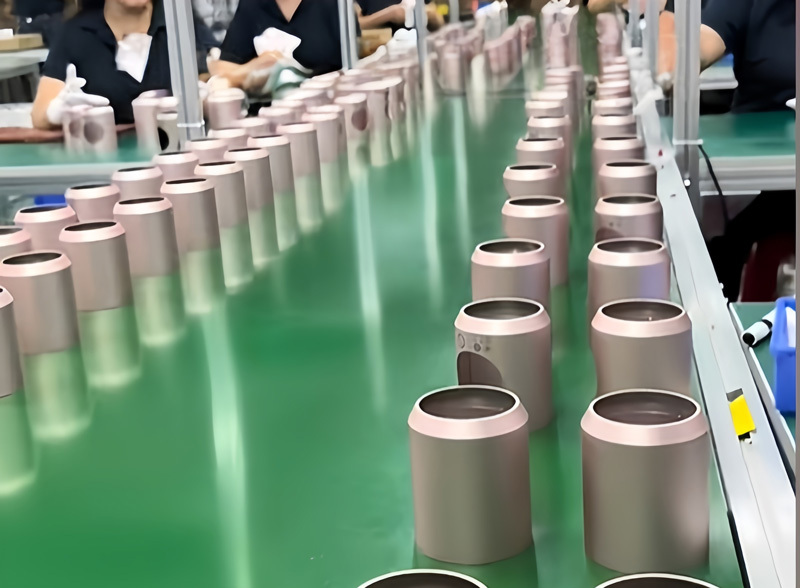
Finish decisions and the appearance constraint
In electronics and appliance scenarios the cosmetic requirement is explicit. Home appliance housings, for example, are specified for good surface finish with no visible defects and stable color match across batches, together with accurate assembly dimensions and heat-resistant material selection where the part sits near motors or heating elements.
DTG-PIH-002 supports polishing, painting, printing and assembly support. Each of these is a separate operation with its own risk profile:
- Polishing targets gloss and the removal of surface irregularities; it does not repair a dimensional problem.
- Painting changes color and perceived quality but adds a process step that must itself be validated for adhesion and consistency.
- Printing introduces graphics, logos or markings, and is the operation most sensitive to artwork and ink specification.
- Assembly support covers the fitting of additional components, which moves part of the assembly scope to the molder and should be defined in writing.
A practical caution for buyers: finishing can mask some cosmetic defects but cannot compensate for molding problems. Sink marks and flow lines originate in wall thickness, rib design and gate location, which is why design-for-manufacture review before tooling carries more value than any downstream finishing step.
Scenario fit analysis: five electronics-adjacent use cases
The table below maps typical usage scenarios onto housing demand, a starting material point and the constraint that most often decides whether a project fits. It reflects the applications documented for DTG-PIH-002 and the working conditions recorded for electronics, home appliance and industrial equipment manufacturing.
| Scenario | Housing demand | Starting material point | Constraint to verify |
|---|---|---|---|
| Handheld and consumer electronics | Permanent assembly, frequent gripping, port use, cleaning; dimensional stability for PCB and display alignment | ABS or PC+ABS | Wear and loosening over a three-to-seven-year life; cosmetic durability |
| Office equipment (printers, monitors) | Large visible covers, stable fit, low handling stress but long duty cycles | ABS, where heat exposure is moderate | Surface finish without sink marks or flow lines; color consistency across batches |
| Communication devices (routers, access points) | Continuous operation, thermal cycling from internal electronics, insulation performance | PC+ABS | Flammability rating such as UL94 V-0 where required; dielectric insulation properties |
| Home appliances | Repeated operation, visible surfaces, proximity to motors or heating elements | Heat-resistant grades within the offered families | Heat resistance, stable color match, accurate assembly dimensions |
| Industrial equipment and control units | Dust, vibration, fluctuating temperatures, repeated disassembly during maintenance | PC+ABS or PP depending on chemical exposure | Wear resistance and dimensional stability under repeated assembly cycles |
The matrix is not a specification. Its purpose is to force the buyer to name the dominant working condition before choosing a material, because the same part geometry can be correctly or incorrectly molded depending on which condition leads the requirement set.
Certification and documentation to verify before tooling
For electronics buyers, certification is a procurement constraint rather than a marketing detail. The documentation on file for DTG housings and related molded parts includes the following records.
| Record | Issuing body | Standard | Number | Market |
|---|---|---|---|---|
| ISO 9001:2015 Quality Management System Certificate | Beijing East Allreach Certification Center Co., Ltd. (EACC) | GB/T 19001-2016 / ISO 9001:2015 | 11425Q46375R0S | Global |
| SGS EU RoHS Compliance Test Report | SGS-CSTC Standards Technical Services Co., Ltd. | RoHS Directive 2011/65/EU (EU RoHS II) + 2002/95/EC | No. CANEC1103223001 | Global |
| SGS LFGB Food Contact Material Test Report | SGS-CSTC Standards Technical Services Co., Ltd. | German Food and Feed Code (LFGB) Section 30 & 31 plus BfR Recommendations | No. SHAEC2004979701 | Germany / EU |
| Made-in-China Supplier On-site Audit Report | Bureau Veritas | Made-in-China Supplier Audit Standard / Bureau Veritas Audit Criteria | MIC-ASI217106 | Global |
| SGS FDA Food Contact Material Test Report (applies to Custom Injection Molded Plastic Parts DTG-CIMP-001) | SGS-CSTC Standards Technical Services (Shanghai) Co., Ltd. | FDA 21 CFR 177.2600 | No. SHAEC2004981201 | USA |
The ISO 9001:2015 certificate is issued for the production of injection molds and general injection molded parts, was issued on 1 July 2025 and runs to 30 June 2028. The RoHS report was issued on 23 August 2011, the LFGB report on 15 April 2020, and the Bureau Veritas on-site audit report on 29 March 2021, with a scope covering injection molding and plastic injection products.
Boundary to check before relying on a certificate: test reports carry a defined scope and are issued against specific tested materials. A buyer should confirm in writing that the certificate scope covers the exact resin grade, colorant and printing ink used in the production part, and that nothing in the process — for example a change of pigment or a new secondary operation — has moved the part outside that scope. Buyers serving automotive or medical markets should also note that those sectors rely on sector-specific systems such as IATF 16949 and ISO 13485 respectively, which is a different documentation track from a general ISO 9001:2015 quality system.
Injection molded housings compared with metal and machined enclosures
Housing processes are usually compared on geometry freedom, cost behaviour and change cost. The comparison below is deliberately qualitative, because the right answer depends on volume, size and functional requirements rather than on a single benchmark.
| Dimension | Injection molded housing | Sheet metal enclosure | CNC-machined plastic enclosure |
|---|---|---|---|
| Tooling requirement | A mold must be designed, cut and approved before any production part exists | Usually requires dies, punches or forming fixtures, but can be produced in low volumes with fabrication methods | No mold; parts are cut from stock |
| Cost behaviour at volume | Unit cost falls as tooling investment is spread across production volume | Unit cost falls less sharply unless dedicated tooling is used | Unit cost is driven by machining time and stays relatively flat |
| Geometry freedom | High for ribs, bosses, snap-fits and integrated internal structure in a single part | Constrained by bend radii and forming limits | High but limited by tool access and cycle time |
| Appearance | Texture, color and finishing can be built into the part | Requires coating or finishing for cosmetic use | Surface depends on machining marks and secondary finishing |
| Change cost | Design changes after mold approval require mold modification | Changes can often be made by re-cutting or re-forming | Changes are made in program code |
The clearest limitation is timing. A molded housing cannot exist before a mold does: mold design and tooling take roughly 15–45 days depending on mold size, complexity and material requirements, and regular production orders then run 20–35 days. Prototype work is faster, at 7–20 days depending on prototype structure and tooling requirements, but a programme that needs finished enclosures immediately is not a fit for this route regardless of supplier. The second limitation is volume economics: tooling investment only makes sense when it can be amortised, and very low volumes or one-off units generally sit better with machining or fabrication. Third, wall thickness, gate location and rib design must be engineered to avoid sink marks and flow lines on visible surfaces — these defects are managed through design, not through finishing.
Market signals that affect housing sourcing
Enclosure sourcing does not happen in an isolated market. Three published signals are worth recording in a sourcing file, with the caveat that different research houses measure the same market differently.
- The global injection molded plastic market was valued at USD 324.98 billion in 2024 and is projected to grow to USD 435.74 billion by 2035, according to Market Research Future. Comparable estimates differ: Grand View Research places the market at USD 362.5 billion for 2025, and Fortune Business Insights at USD 321.4 billion for 2024, reflecting different inclusions and base years.
- China's plastic mold industry is estimated at approximately ¥600 billion, with a projected expansion to ¥1 trillion by 2030, according to JBRplas.
- China produces an estimated 65% of the world's injection-molding machines and accounts for 60% of global export volume, based on a 2025 industry analysis report. In the United States, substitution of metal parts by engineered thermoplastics is reported to drive 34% of domestic injection molded component demand, according to Grand View Research — a substitution pattern that has been most visible in automotive programmes but reflects a wider shift in how structural and protective parts are specified.
For an electronics buyer the practical reading is that molding capacity is a globally concentrated resource, and the certification, tooling and production schedule should be secured as one package rather than negotiated later in the programme.
Production evidence: what an electronics housing programme looks like
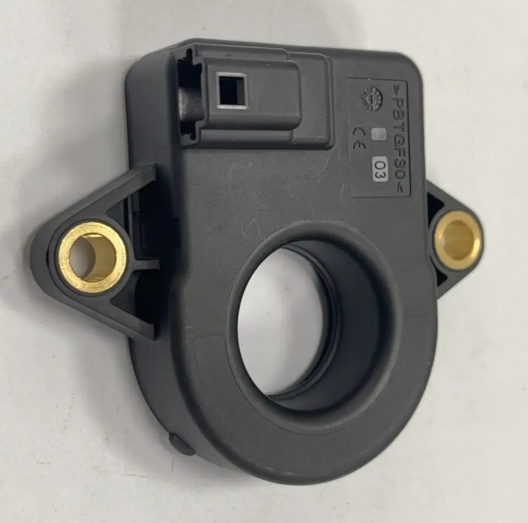
A documented case from DTG's electronics work illustrates how the constraints described above appear in practice. A consumer-facing electronics product manufacturer required a protective enclosure for projector equipment. The part was molded in PC+ABS and produced in batches of 30,000–50,000 units, with a design service life of over five years and indoor electronic equipment as the operating condition. The delivered result was described as customized PC+ABS injection molded housings with stable dimensions and appearance quality.
Two elements of that case matter to a procurement specialist. First, the material decision followed the scenario: an enclosure around a heat-generating electronic assembly moved to PC+ABS rather than a general-purpose resin. Second, the quality claim was made at batch scale, which means dimensional and appearance consistency had to hold across tens of thousands of parts, not across a sample.
A validation sequence before releasing tooling
The following sequence converts the scenario analysis into a procurement workflow. It follows the quality controls documented for DTG's molding services — DFM review, first article inspection, dimensional inspection, visual inspection and pre-shipment inspection — and the tooling route of DFM analysis, mold design review, T1 trial molding, sample inspection and mold approval.
- Freeze the usage scenario in writing. Handling frequency, environment (indoor, dust, vibration, cleaning agents), service-life target and whether the housing is permanently assembled or serviceable.
- Translate the scenario into measurable housing requirements. Tolerance for PCB and display alignment, ingress protection, cosmetic grade, flammability rating where required, and dielectric insulation expectations.
- Confirm the material path. Whether ABS, PC+ABS or PP can satisfy the requirement set at grade level, and whether any finishing route changes the material behaviour.
- Match certification scope to the target market. ISO 9001:2015 for the quality system, RoHS for global compliance, LFGB for Germany and the EU, FDA 21 CFR 177.2600 where the US market and the relevant part family apply.
- Plan the tooling window. Allow 15–45 days for mold design and tooling, and confirm the mold approval process includes T1 trial molding and sample inspection.
- Validate the first part, then the batch. First article inspection and dimensional inspection for the sample; in-process, appearance and pre-shipment inspection for the production run.
- Confirm commercial parameters. Regular production lead time of 20–35 days after sample approval, an annual production capacity of approximately 47,881 injection molded parts (an average of about 3,990 pieces per month), and MOQ negotiable based on part size, mold cost and production requirements.
Future outlook
Three directions are visible from the constraint side of the market. Housings are absorbing more function — integrated buttons, sensor windows, antenna areas, structural ribs — which pushes tolerance and material consistency requirements upward, because every added function tightens the alignment budget inside the same part. Second, documentation is becoming part of the buying decision rather than an appendix to it: market-specific records such as RoHS, LFGB and FDA test reports, and audited supplier status, are increasingly requested before tooling is released. Third, with global molding capacity concentrated in China and metal-to-plastic substitution continuing in structural and protective parts, buyers should expect capacity and tooling schedules to be booked earlier in the programme cycle, particularly for appearance-critical housings that require finishing operations after molding.
FAQ
What service life should an injection molded housing for electronics be designed for?
Electronics housings that are permanently assembled into consumer, office or communication devices are typically designed for a service life of three to seven years, during which they must resist scratches, discoloration and loosening from repeated handling and thermal cycling. The service-life target should be stated at the start of the project, because it drives material grade, wall design and validation criteria.
How does a buyer choose between ABS, PC+ABS and PP for an electronics enclosure?
The decision follows the dominant working condition. ABS is widely used for indoor and office equipment housings where cosmetic quality and processability lead the requirement set. PC+ABS is commonly chosen where impact resistance, internal heat and dimensional stability matter more, as in housings around heat-generating electronic assemblies. PP is generally selected for chemical exposure and repeated flexing, and appearance-critical PP parts usually need additional finishing. DTG-PIH-002 offers all three families — ABS, PC+ABS and PP — with the final grade confirmed against the specific additive and colorant system.
How can a procurement team verify that molding certifications apply to their project?
Certificates should be matched on four points: the issuing body, the standard, the certificate number and the stated scope. DTG's records include ISO 9001:2015 certificate 11425Q46375R0S issued by Beijing East Allreach Certification Center Co., Ltd. for the production of injection molds and general injection molded parts, SGS EU RoHS report No. CANEC1103223001, SGS LFGB report No. SHAEC2004979701, and a Bureau Veritas audit report MIC-ASI217106. Because test reports are issued against specific tested materials, the buyer should confirm in writing that the scope covers the resin grade, colorant and ink actually used in production.
What lead times should be planned for tooling and production of injection molded housings?
Tooling is the first constraint. Mold design and tooling take approximately 15–45 days depending on mold size, complexity and material requirements, while prototype parts can be produced in 7–20 days depending on structure and tooling needs. Regular production then runs 20–35 days after sample approval. A programme that requires finished enclosures before these windows elapse is not a fit for the injection molding route.
Does an electronics housing need a flammability rating?
Where the application requires it, yes. Electronics housings are specified with material consistency that includes a flammability rating such as UL94 V-0 and dielectric insulation properties. The buyer should state the required rating in the housing specification and confirm that the selected resin grade and colorant achieve it, since the rating is a property of the specific material formulation rather than of the process.
At what volume do injection molded housings stop making commercial sense?
Injection molding spreads a fixed tooling investment across the parts produced, so unit economics improve as volume rises and deteriorate at very low volumes or for one-off units, where machining or fabrication is usually more economical. Custom mold projects can be accepted as a single mold project, and MOQ is negotiable based on part size, mold cost and production requirements, but a buyer should treat tooling amortisation — not the quoted piece price alone — as the deciding calculation.
Additional technical and capability details for DTG TECH CO., LTD. are collected in the company's presentation document, available for download: Xiamen DTG Tech Co., Ltd. Presentation (PDF).