
Injection Molding Supplier Evaluation for Long-Term Supply
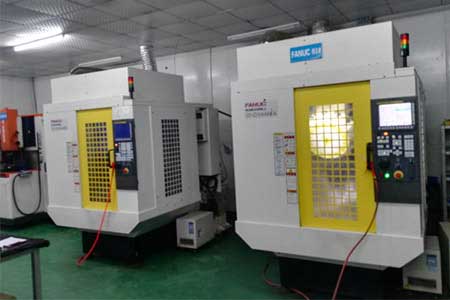
A molding partnership is assessed over years of repeat production, not over a single quotation.
The global injection molded plastic market was valued at USD 324.98 billion in 2024 and is projected to grow to USD 435.74 billion by 2035, according to Market Research Future. Growth of that scale is not driven by one-off purchases. It is driven by OEM programs that reorder the same or revised parts across multiple production cycles, which is why supplier selection increasingly looks less like a purchase decision and more like an infrastructure decision.
This article sets out an evaluation framework for OEM buyers who are renewing, extending, or replacing an injection molding partnership. It covers ISO 9001:2015, FDA 21 CFR 177.2600, RoHS, and LFGB as certification checkpoints; DFM review, first article inspection, dimensional inspection, in-process inspection, and pre-shipment inspection as quality checkpoints; and capacity, lead time, and MOQ flexibility as continuity checkpoints. It also explains where such a partnership model stops being the right answer.
Why Long-Term Evaluation Is a Different Exercise from One-Off Sourcing
A one-off order is judged on whether the delivered parts meet the drawing. A recurring program is judged on whether the twelfth batch matches the first, and whether the supplier is still able to say yes when volumes change, materials change, or a design revision arrives mid-year.
The failure modes that matter in long-term supply are not the ones a sample reveals. They are production variation across runs, delayed delivery, and batch quality fluctuation — risks that surface several months into a relationship rather than in the first shipment. The same applies to dimensional deviation that accumulates into an assembly mismatch, or to material mismatch and color variation that appear only when a supplier switches resin lots.
DTG TECH CO., LTD. is a custom injection molding manufacturer based in Xiamen, China, founded in 2002 and certified to ISO. The company provides one-stop solutions covering precision mold design, tool manufacturing, prototype development, plastic injection molding, and mass production, and it exports 100% of its output to the USA, Europe, and India. That combination — tooling, molding, and process engineering under one organization — is the structure this evaluation framework is designed to test.
The Three Evaluation Pillars: Certification, Quality Control, Capacity
Buyers evaluating a long-term partner tend to collect documents without a scoring logic. A more useful approach is to force each pillar to answer a specific question, request a specific piece of evidence, and prevent a specific failure.
| Pillar | Question it answers | Evidence to request | Failure it prevents |
|---|---|---|---|
| Certification | Can the part legally and commercially enter my market? | Certificate scope, issuing body, validity date, material grades covered | Market rejection, recall, retail delisting |
| Quality control system | Will batch 12 match batch 1? | DFM report, mold flow analysis, T1 sample approval, first article inspection, dimensional and in-process records, pre-shipment inspection report | Scrap, rework, assembly mismatch, field returns |
| Capacity and lead time | Can the supplier absorb my growth without breaking delivery? | Annual and monthly capacity figures, engineering headcount, prototype and mass production lead times, MOQ terms | Stockouts, delayed product launch, emergency re-sourcing |
Used together, the three pillars convert a subjective impression of a supplier into a comparable profile. Used separately, they produce the familiar outcome: a well-certified supplier that cannot scale, or a fast supplier whose dimensional control is not stable enough for a long program.
Certification as a Risk Filter, Not a Badge Collection
Certification matters in long-term supply because it defines what the supplier is allowed to make and for whom. Four standards appear repeatedly in injection molding procurement, and each one answers a different buyer question.
ISO 9001:2015 — repeatability baseline
ISO 9001:2015 is the quality management system standard that underpins process documentation, corrective action, and traceability. It is the minimum certification a long-term supplier should hold, because it is what makes quality repeatable rather than dependent on individual operators. Verification should include the certificate scope, the certified site, and the date of the most recent audit.
FDA 21 CFR 177.2600 — food-contact and repeated-use articles
FDA 21 CFR 177.2600 is the food-contact reference that appears in procurement checks for molded parts used in food-adjacent applications, including parts of home appliances and daily-use products that contact food. Buyers should treat it as a material-level question: compliance is tied to the specific resin and formulation, not to the supplier as a whole.
RoHS — electrical and electronic equipment
RoHS restricts hazardous substances in electrical and electronic equipment, which makes it a standard checkpoint for electronics plastic injection molding and enclosures. For a long program, the relevant evidence is ongoing material control and incoming material verification, not a single historical test report.
LFGB — European food-contact compliance
LFGB is the German food and feed code framework that many European buyers apply to food-contact plastic articles. Because it is market-specific, it is a useful test of whether a supplier understands destination requirements or simply accumulates certificates without mapping them to end use.
For sector-specific programs, two further standards define the boundary. IATF 16949 is the automotive quality standard for injection molders serving that sector, emphasizing defect prevention and waste reduction, and ISO 13485 is the benchmark quality management system for medical device injection molding, requiring documentation such as the Device Master Record. A supplier certified for general molding is not automatically qualified for either scope.
DTG TECH holds ISO certification. For food-contact and electronics markets, compliance is assessed at the material and part level, which is exactly where buyers should concentrate their verification effort: certificate scope first, material grade second, part approval third.
Quality Controls That Keep a Program Stable Over Years
Quality control in long-term molding is a chain, not a final gate. Each step removes a category of risk before it becomes a shipment problem.
- DFM review and mold flow analysis. Applied during the design phase, before tooling production, to confirm manufacturability and prevent defects such as short shot, sink marks, warpage, weld lines, and surface defects. This is the step that decides whether a part will be moldable at stable cycle times or will require permanent process workarounds.
- Mold structure optimization and mold testing. Engineers evaluate mold structure, verify tooling before production, and address risks including mold design errors, poor part release, short mold lifespan, and production instability.
- T1 sample validation. First trial samples are inspected and approved by the customer before mass production begins — the acceptance gate that prevents an unapproved tool from entering volume production.
- First article inspection and dimensional inspection. Performed to confirm part accuracy against critical dimensions, and to catch dimensional deviation before it becomes an assembly mismatch.
- In-process inspection. Measurement checks are performed during production, with critical dimensions monitored while the machine is running rather than only after it stops.
- Pre-shipment inspection. Finished parts are inspected before shipment, supported by standardized molding parameters and unified production specifications established after sample confirmation.
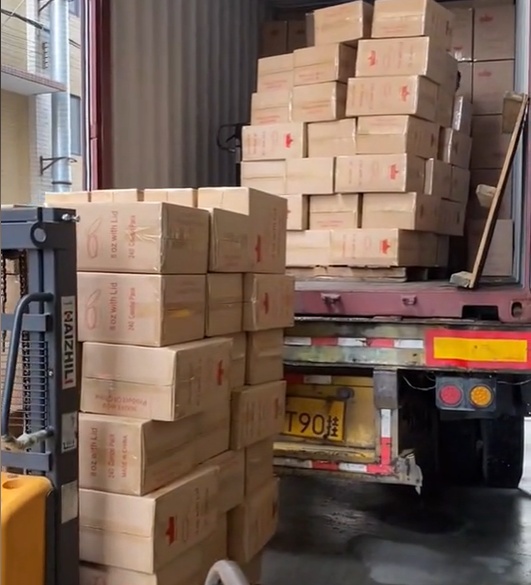
In-process inspection and dimensional checks are what link batch one to batch twelve.
The commercial argument for engineering depth is measurable. According to the company's comparison data, DFM analysis before tooling reduces design modification iterations by 40%–60%, cuts mold trial cycles from an average of 5–7 times to 2–3 times, and shortens time-to-market by 20%–30% for new product launches. Project delays caused by engineering gaps are reduced by 10–20 working days. For a buyer planning a multi-year program, these are not cosmetic gains — they are the difference between a launch date that holds and one that slips.
Capacity and Lead Time as Continuity Evidence
Capacity is the pillar most often accepted without verification, because a supplier's stated output is rarely challenged against the buyer's own forecast. The check is straightforward: compare the number to your annual demand, then add your growth assumption, then ask how the supplier's figure was calculated.
DTG TECH operates a manufacturing facility of 2,500 m² with approximately 80 employees, including an R&D team of 25 engineers. Annual production capacity reaches 47,881 units, equivalent to roughly 3,990 parts per month. Prototype lead times run 7–15 days, and mass production lead times run 20–35 days. MOQ is negotiable according to production requirements and part specifications, and a single custom mold project is acceptable as a minimum order — a structure that suits buyers entering a program at the validation stage rather than at full volume.
Three questions turn those numbers into a usable evaluation:
- Is the capacity figure annual or peak-month? Annual capacity divided by twelve describes average loading. A program with seasonal peaks should be tested against the peak, not the average.
- How much of that capacity is already committed? A supplier with 47,881 units of annual capacity and a full order book is a different partner from one with available machine time, even though the headline number is identical.
- Does the lead time include approval gates? A 20–35 day mass production lead time is a manufacturing figure. It should be quoted alongside the DFM review, T1 sample approval, and first article inspection that precede it, so that the total planning window is visible.
Material range belongs in the same check. Long-term programs typically run on ABS, PP, and PC, along with other engineering-grade resins, and each material carries different shrinkage behavior, dimensional stability, and compliance implications. A supplier that handles tight tolerance injection molding across multiple resins is a different risk profile from one specialized in a single commodity material.
Application Fit: Where Long-Term Evaluation Pays Off Most
The evaluation framework matters most in applications where a part change is expensive and a supply interruption is visible to end customers.
Electronics and enclosures. Electronics plastic injection molding and plastic injection molding for enclosures combine cosmetic requirements with dimensional fit, since enclosures must assemble with PCBs, connectors, and internal frames. RoHS compliance and tight tolerance control both apply.
Home appliances and daily-use products. Injection molding for home appliances involves visible surfaces, structural parts, and food-adjacent components, which is where FDA 21 CFR 177.2600 and LFGB checks become relevant rather than theoretical.
Industrial plastic parts. Industrial plastic parts are frequently replaced on a maintenance schedule, so delivery reliability matters as much as dimensional accuracy — the risk is a stopped production line, not a returned consumer unit.
Automotive plastic injection molding. Automotive OEMs continue substituting metal parts with engineered thermoplastics, driving 34% of domestic injection molded component demand in major hubs such as the United States, according to Grand View Research. That substitution increases part complexity and raises the weight of tooling and dimensional control in supplier evaluation. Programs in this sector typically require IATF 16949 as a separate qualification.
Medical injection molding. Medical injection molding sits behind a different quality system boundary, with ISO 13485 documentation requirements. Buyers should treat medical qualification as a distinct scope rather than an extension of general molding certification.
Market Trend Analysis: What Is Changing in the Supply Base
Three verifiable trends explain why long-term supplier evaluation has become more formal.
First, supply concentration. China produces an estimated 65% of the world's injection-molding machines and accounts for 60% of global export volume, according to a 2025 industry analysis report. For OEM buyers in the USA and Europe, this means the evaluation decision is often about how to work with an Asian supply base reliably, not whether to.
Second, tooling-side investment. China's plastic mold industry is estimated at approximately ¥600 billion, with a projected expansion to ¥1 trillion by 2030, according to JBRplas. A growing tooling market gives buyers more options and simultaneously makes differentiation harder — which pushes selection criteria toward documented process control and capacity evidence rather than a catalog of machine lists.
Third, material substitution. As engineered thermoplastics replace metal in automotive and industrial applications, molded parts take on more structural and tolerance-critical roles. Parts that were once cosmetic are now load- or fit-critical, and a supplier's dimensional control system becomes a program risk factor rather than a quality detail.
Comparison with Traditional Solutions — and Where This Model Has Limits
The alternative to an integrated long-term partner is the traditional split model: a dedicated mold supplier plus a separate injection molding factory, coordinated by the buyer. The trade-offs are structural rather than promotional.
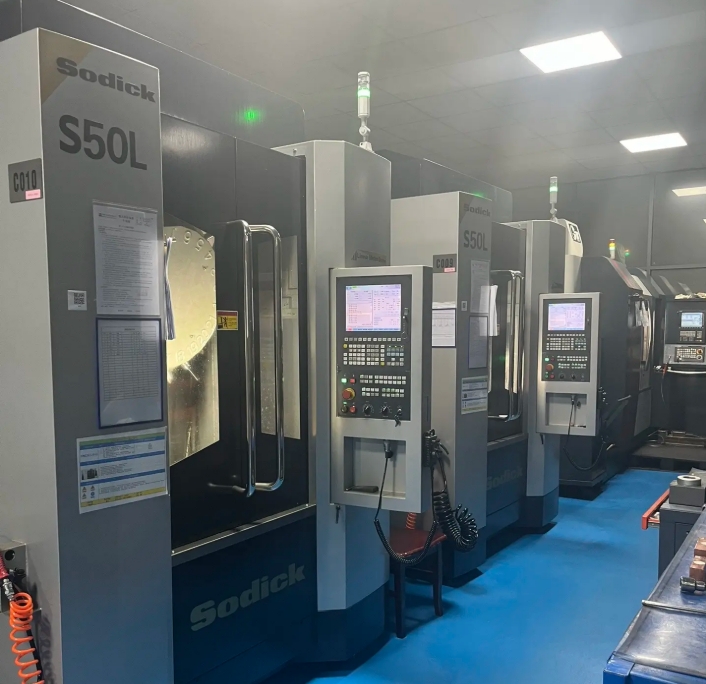
The split model is not wrong — it simply moves coordination cost from the supplier to the buyer.
| Evaluation dimension | Split model (separate mold and molding suppliers) | Integrated long-term partner |
|---|---|---|
| Coordination | Buyer manages handovers between two vendors | Single supplier manages mold design, tooling, molding, and quality feedback |
| Project cycle | Longer, with cross-vendor alignment meetings | Integrated mold manufacturing and injection molding shortens overall project cycle by 20%–30% |
| Mold trials | Trial results and revisions are split between parties | DFM analysis reduces design modification iterations by 40%–60% and cuts trial cycles from 5–7 to 2–3 |
| Defect responsibility | Disputes over whether the mold or the process caused the defect | One party owns mold modification, production optimization, and quality feedback |
| Communication overhead | Handover delays of 10–15 working days per project, recurring at each revision | Cross-supplier communication time reduced by more than 50% through one-stop service |
| Cost structure | Lower upfront mold commitment, higher hidden coordination and rework cost | Higher initial tooling investment, lower unit cost at volume — per-part cost falls 70%–90% above 1,000 units compared with CNC machining |
The limits of the integrated model deserve equal weight, because they determine when a buyer should choose something else.
Single-source dependency. Consolidating mold manufacturing and molding with one supplier concentrates risk. If that supplier faces a capacity constraint or a tooling issue, there is no second source producing the same part without building an additional mold. Buyers with critical delivery windows should plan a second qualified source or secure mold ownership and transfer rights in advance.
Volume threshold. A long-term integrated partnership pays back through tooling amortization, which requires realistic volume. Injection molding's cost advantage over CNC machining becomes substantial above roughly 1,000 units, and rapid injection molding becomes more economical than 3D printing once prototype quantities exceed 50–100 units. Below those thresholds, the upfront mold investment may not be justified by a long-term relationship alone.
Capacity ceiling. An annual capacity of 47,881 units suits low-to-mid volume programs, new product ramps, and multi-SKU product lines. A program requiring millions of units per year should be evaluated as a capacity-planning exercise with dedicated tooling and possibly multiple production sites, not as a single-partner agreement.
Certification is scope-bound. Holding ISO certification does not automatically qualify a supplier for medical or automotive programs, and food-contact compliance is tied to specific material grades. Certificates reduce risk only when their scope matches the part, the material, and the destination market.
Lead times are planning inputs, not guarantees. Prototype lead times of 7–15 days and mass production lead times of 20–35 days describe normal conditions. Tool changes, material availability, and peak-season loading can extend them, which is why contracted lead times should be confirmed per project rather than assumed from a general figure.
Future Outlook
Supplier evaluation in injection molding is moving toward documented continuity. Buyers are increasingly asking not only what a supplier can produce, but how capacity is measured, how process parameters are standardized, and how quality evidence is retained across batches and years.
As engineered thermoplastics continue replacing metal in automotive and industrial applications, and as food-contact and electronics compliance requirements tighten across the USA and Europe, the documentation burden will keep rising. Suppliers that treat DFM analysis, first article inspection, and in-process monitoring as standard operating practice — rather than as services offered on request — will be easier to re-qualify at renewal, which is ultimately what long-term supply depends on.
For buyers, the practical implication is simple: build the evaluation criteria before the renewal conversation, not during it. Certification scope, quality control chain, and verified capacity can be scored objectively, and a supplier that can answer those three questions with evidence is a lower-risk partner than one that answers with price.
Frequently Asked Questions
What does long-term sustainability mean when evaluating an injection molding supplier?
In this context, sustainability refers to a supplier's ability to keep producing the same part to the same standard over multiple years, not to environmental performance. It has three measurable components: certification coverage that matches the part's end market, a documented quality control chain running from DFM review through pre-shipment inspection, and verified production capacity with lead times that can absorb demand changes.
Which certifications should be verified before renewing a molding supplier?
The baseline is ISO 9001:2015 for quality management. Market-specific checks follow the end use: FDA 21 CFR 177.2600 and LFGB for food-contact articles, RoHS for electrical and electronic equipment, IATF 16949 for automotive programs, and ISO 13485 for medical device molding. Verification should cover certificate scope, certified site, material grades covered, and validity date, because a certificate held for one material or process does not automatically extend to another.
How should a buyer check that a supplier's capacity matches an annual program?
Start by comparing the supplier's stated capacity with your own annual demand plus growth assumption. DTG TECH operates a 2,500 m² facility with approximately 80 employees and 25 R&D engineers, and reports an annual production capacity of 47,881 units, equivalent to about 3,990 parts per month. Buyers should then ask whether the figure represents annual average or peak-month output, how much of it is already committed to other customers, and how lead times change when capacity utilization rises.
What lead times should OEM buyers plan for prototypes and mass production?
Prototype lead times typically run 7–15 days and mass production lead times 20–35 days. These figures describe the manufacturing stage; the full planning window also includes DFM review, mold trial and T1 sample approval, and first article inspection. Buyers should confirm lead times per project rather than assume the general figure applies to a specific tool, material, or peak-season order.
How flexible is MOQ for a first long-term order?
MOQ in custom injection molding is generally negotiable, based on part size, material, mold requirements, and production volume. A single custom mold project can be accepted as a minimum order, which allows a buyer to begin with a validation quantity and scale into volume production once the tool and process are approved.
What are the purchasing terms and acceptance criteria?
MOQ is negotiable based on part size, material, mold requirements, and production volume. Delivery terms include EXW, FOB, and CIF, by sea or air freight, or through a client-designated logistics provider. Acceptance criteria follow a defined sequence: DFM approval, T1 sample approval, first article inspection, and final quality inspection before shipment. Payment terms are commonly structured as 50% T/T advance payment to start mold production, with the 50% balance after mold approval or before shipment.
What engineering support should continue after mass production begins?
Support should continue through dimensional inspection, in-process inspection, and pre-shipment inspection, supported by standardized molding parameters and unified production specifications established after sample confirmation. Production schedules and output should be tracked in real time, and material-related issues should be managed through incoming material verification and parameter control based on each resin's characteristics. Ongoing engineering involvement also covers mold modification, production optimization, and quality feedback handling when design revisions occur.
For readers who want the underlying capability data in one document, the DTG TECH company presentation is available as a PDF: Xiamen DTG Tech Co., Ltd. Presentation. Additional company information is published at www.m-dtg.com.