
Injection Molding for Home Appliance and Daily-Use Parts
Injection Molding for Home Appliance and Daily-Use Parts
For home appliances and other light-industry products, an injection-molded part must do more than match a drawing: it may need to support assembly, protect components, and retain an acceptable fit and appearance through repeated indoor use. That makes scenario fit a question of part requirements, material and finish choices, and evidence for the specific application—not simply whether a supplier offers injection molding.
DTG TECH CO., LTD. supplies custom injection molded plastic parts and housings, with listed options for materials, part structures, colors, textures, and finishes. Its product information identifies home appliances among the application areas for plastic housings. Those facts make the company relevant for an initial application-fit review; they do not, by themselves, establish that a particular part will meet a buyer’s drawing, service-life, or compliance requirements.
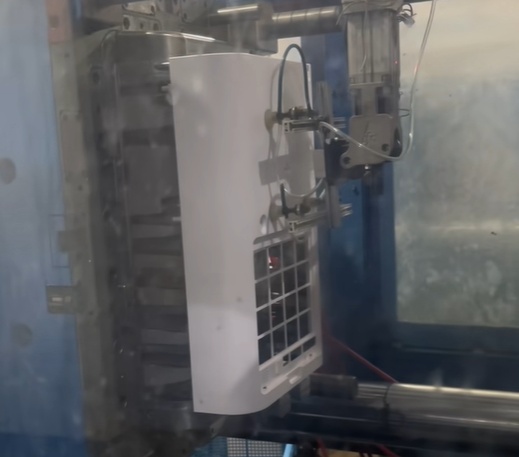
Why repeated use changes the fit question
Home appliance parts are described as indoor components that may be permanently assembled into refrigerators, washing machines, air conditioners, and small kitchen appliances. The application description includes repeated daily interactions such as opening doors, pressing buttons, sliding drawers, and cleaning panels. It also identifies motor components, control panels, buttons, screws, and internal brackets as related equipment or assembly elements.
That combination makes fit and appearance linked procurement concerns. A cover or housing may contribute to functional protection and exterior decoration while also needing to align with neighboring parts. The specified application requirements include accurate assembly dimensions, a good surface finish without visible defects, and stable color match across batches. These are requirements to define and verify for the actual part; the scenario description is not evidence that every molded component will achieve them automatically.
The same application describes mild temperature fluctuations near motors or heating elements and occasional exposure to moisture or cleaning agents. It calls for material selection that accounts for heat when required, and for parts to maintain structural integrity, fit, and appearance during years of routine household use. The supplied home-appliance material does not set a numerical service-life range. A 3-to-7-year period appears in the separate electronics-enclosure scenario, so it should not be treated as a verified home-appliance service-life specification.
Where custom injection molding can fit
Custom injection molding is a plausible fit when a buyer needs a part produced to a customer design and needs control over dimensions, structure, color, texture, or finishing. The listed custom-part scope covers production from prototype to mass production, with tolerances defined according to customer drawings and specifications. The housing product description lists customization of size, structure, color, and surface texture, plus polishing, painting, printing, and assembly support.
For appliance programs, that scope can be relevant to molded covers and housings as well as supporting plastic parts. A housing may provide protection and contribute to the external appearance; a supporting component may locate or connect parts in an assembly. These are functional interpretations of the listed housing and custom-part categories, not a claim that a named appliance design or customer project has been supplied by DTG TECH.
Application fit should therefore be assessed at part level. A buyer can compare the part drawing and assembly interfaces with the supplier’s stated scope, then clarify what “assembly support” means for the particular project. The product description lists assembly support, but it does not specify which operations, fixtures, fasteners, or assembly validation are included in every order.
Materials are options, not a performance ranking
The custom injection molded parts unit lists ABS, PP, PC, PC+ABS, TPE, Acrylic, and other engineering plastics. The plastic housing unit specifically lists ABS, PC+ABS, and PP. These lists establish available material categories in the supplied product information; they do not establish a universal best resin for appliance housings or certify every listed resin for every intended use.
For a procurement review, the material choice should be tied to the actual part and conditions described in the design brief. The home-appliance scenario identifies possible proximity to motors or heating elements, occasional moisture or cleaning-agent exposure, color consistency, and dimensional fit as relevant considerations. Buyers can ask the supplier to confirm the proposed material and grade against those requirements and the drawing. The available records do not provide resin grades, comparative property data, or a material-specific service-life test for this appliance scenario.
That distinction matters because a material name alone does not settle suitability. The supplied data does not establish that ABS, PP, PC, PC+ABS, TPE, or Acrylic will produce a particular level of heat resistance, scratch resistance, color stability, or dimensional performance in a given design. Those claims need support for the selected grade, geometry, processing conditions, and acceptance criteria rather than inference from the polymer name.
Surface appearance and assembly must be specified together
Texture, polishing, painting, and printing are listed surface-finish options for custom molded parts. For housings, the product unit also lists color and surface-texture customization. These options give a buyer several finish categories to discuss, but the source does not promise a particular gloss level, color tolerance, print durability, or defect threshold.
A useful project specification separates visible-surface expectations from fit and function. Identify which faces are visible after assembly, which areas must mate with other components, and which dimensions control the assembly. Then define the required finish by part area and state how samples will be reviewed. This is a buyer-side verification framework derived from the documented appearance and dimensional requirements; it is not a claim that DTG TECH applies a particular inspection standard unless agreed for the project.
When color match across batches is important, the home-appliance scenario expressly identifies stable color match as a special requirement. It is reasonable to request an agreed reference sample and a documented acceptance method before production approval. The corpus does not specify a color-measurement instrument, numerical tolerance, or batch-control protocol, so none should be assumed from the product listing alone.
Assembly review should likewise include the relevant mating dimensions and the interfaces for buttons, panels, screws, brackets, or other components identified in the application description. The purpose is to verify whether the molded part fits the actual assembly, not to treat a general capability statement as proof of successful integration. The precision-component product unit lists dimensional inspection and first-article inspection, while the custom service information lists dimensional and visual inspection. Their presence supports asking how the relevant checks would be applied to the buyer’s drawing.
Dimensional stability and the 3-to-7-year reference
The 3-to-7-year service-life reference belongs to the supplied electronics-manufacturing scenario. That scenario describes indoor housings subject to frequent handling, port connections, button presses, and routine cleaning, with alignment needs for PCBs, sensors, and display modules. It states that these components are intended to retain dimensional stability over a typical 3-to-7-year service life while resisting loosening from repeated assembly and thermal cycling. It is useful context for electronics plastic injection molding, but it is not a measured result or a home-appliance lifetime guarantee.
For home appliances, the corresponding source describes years of routine household use without giving a numerical period. A buyer needing a stated service life should put the target and its conditions into the part specification and ask for evidence relevant to that design. Relevant checks may include measurement of critical dimensions on approved samples and review of fit in the intended assembly. These are verification questions, not evidence that a particular lifespan has already been demonstrated.
DTG TECH’s precision injection molded components listing says dimensional control follows engineering drawings and identifies dimensional inspection and first-article inspection as quality-control activities. The company also describes control steps that include material confirmation, molding-parameter control, dimensional inspection, visual inspection, and a final quality check. This provides a basis for discussing a project-specific inspection plan. It does not supply a tolerance value or establish that all dimensions on all parts receive the same measurement method.
How to read the certification and test records
Certification evidence must be matched to its stated holder, scope, material, and test subject. A report or certificate associated with a supplier is not blanket evidence that every molded part, resin, finish, or end product complies with every market requirement.
| Record in the supplied corpus | Stated scope | Procurement interpretation |
|---|---|---|
| ISO 9001:2015 certificate No. 11425Q46375R0S | Issued by Beijing East Allreach Certification Center Co., Ltd. (EACC); production of injection molds and general injection molded parts; stated validity through 2028-06-30. | The scope is relevant to the stated production activity. Confirm that the certificate is current and that its scope covers the operation being qualified. |
| SGS FDA Food Contact Material Test Report No. SHAEC2004981201 | Total extractives testing for CENUSIL® R 2×0 silicone food-contact material against FDA 21 CFR 177.2600. | This is a material-specific test record, not evidence that all appliance plastics or finished products are FDA-compliant. |
| SGS LFGB report No. SHAEC2004979701 | Testing of CENUSIL® 2×0 silicone food-contact material under the stated LFGB provisions and BfR recommendations. | Its stated subject is silicone food-contact material. It does not establish LFGB status for every molded resin or appliance component. |
| SGS EU RoHS report No. CANEC1103223001 | Testing of screen-printing ink and UV-ink substances for the listed substances against the stated RoHS directives. | The record concerns specified inks and substances; it should not be presented as proof that every part or complete product complies. |
These records support a more precise qualification discussion than a generic claim of “certified injection molding.” For an appliance program, determine which market and product requirements actually apply, then check whether the document covers the relevant material, process, part, or finished-product scope. The corpus does not supply a complete list of regulatory requirements for every appliance or destination market, so the records above should not be used as a substitute for that review.
What DTG TECH’s documented scope can support
DTG TECH CO., LTD. describes OEM and ODM custom engineering-plastic injection molding, and its product units list custom molded parts and plastic housings. The custom-part listing allows part size and tolerance to follow customer designs and specifications, and identifies prototype-to-mass-production scope. These facts can support an initial discussion about whether a housing or supporting part fits the supplier’s stated service categories.
For procurement, the useful next step in evaluation is not to infer a production outcome from a broad capability description. Provide the relevant drawing, material and finish requirements, assembly interfaces, intended use conditions, and any compliance constraints. Request confirmation of the part-specific process and inspection approach, together with the documents that apply to the actual material and product scope. The source material does not establish a guaranteed appliance service life, universal material performance, or compliance of every potential design.
Injection molding is therefore a reasonable scenario to assess when the required appliance part is custom-shaped, assembled with other components, and subject to defined appearance and dimensional expectations. The fit decision depends on whether the material, geometry, finish, and verification evidence can be aligned to the particular product. For home appliances, the supplied application evidence identifies repeated operation, indoor use, cleaning exposure, possible local heat, appearance, and assembly dimensions as relevant checks. For electronic enclosures, the separate 3-to-7-year scenario adds a bounded service-life reference that should remain specific to that context.
Есть вопросы или нужны дополнительные детали?
Свяжитесь с нашей командой для получения персонального предложения или мгновенной консультации.
Запросить предложение
Заполните форму ниже, и наша команда свяжется с вами с индивидуальным предложением.
Прямой чат WhatsApp
Предпочитаете общаться в реальном времени? Напишите нам в WhatsApp для мгновенной помощи и быстрых ответов.
- Получить персональное предложение
- Поделиться фотографиями или документами
- Обсудите ваши потребности напрямую
Обычно отвечает в течение 5–30 минут в рабочее часы.