
Inside Dolas Dream's 12,000-Unit Monthly Capacity: Scalable Genius Weft Supply
Inside Dolas Dream's 12,000-Unit Monthly Capacity: Scalable Genius Weft Supply
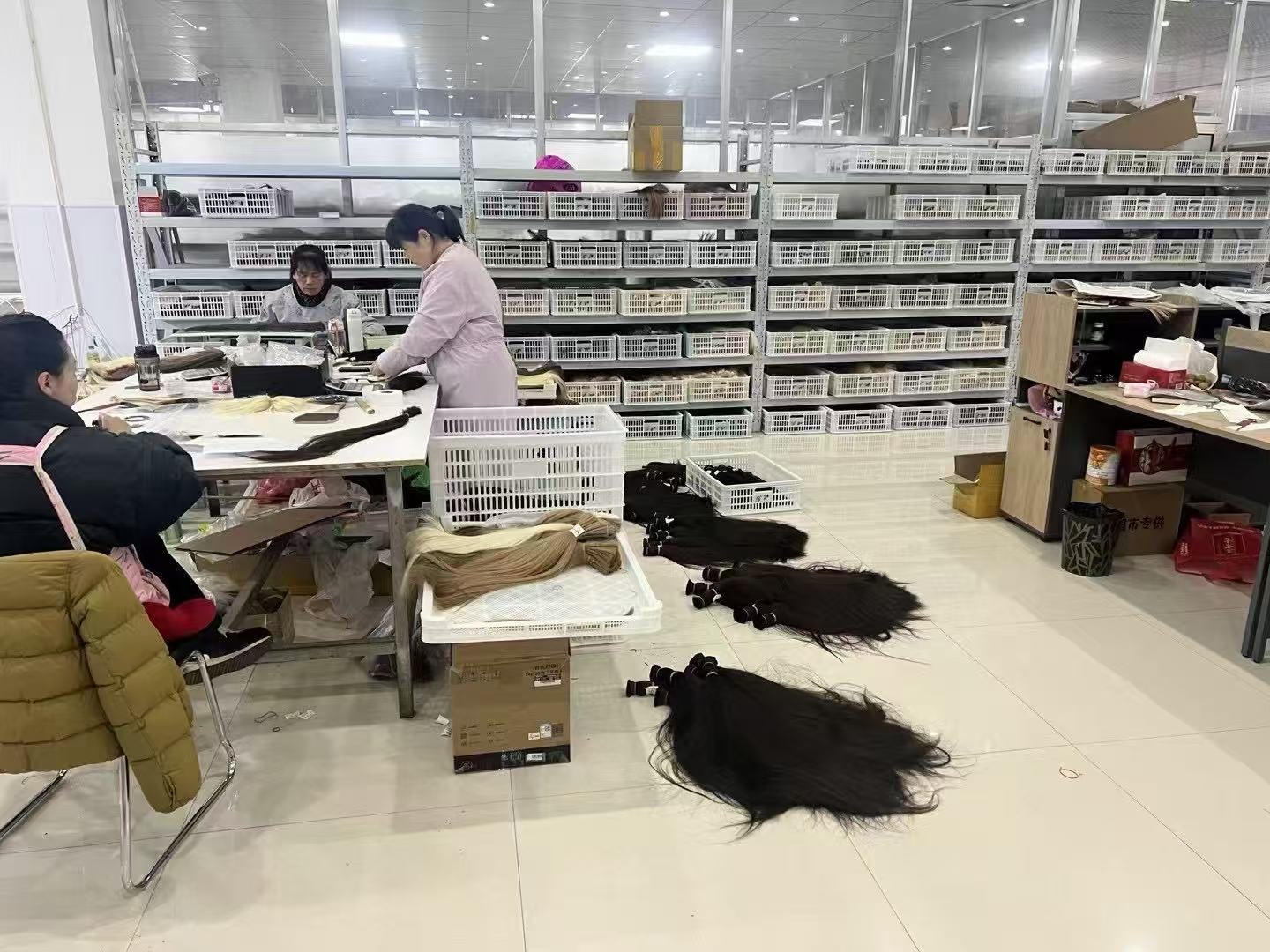
Finished Genius weft hair extensions pass through Dolas Dream Crafts Co., Ltd.'s own packing workshop in Qingdao before export. Image credit: Dolas Dream Crafts Co., Ltd.
A salon rarely loses money on the first Genius weft hair extension order. It loses money when the second order arrives late, in a shade that does not match the first, or not at all. That is why decision-stage buyers increasingly ask manufacturers a question that has very little to do with product photography: how much can you actually produce in a month, and how quickly can it leave the factory?
Dolas Dream Crafts Co., Ltd., a Qingdao-based hair manufacturer founded in 2015, answers that question with figures that a buyer can test against a real purchase order. The company states a monthly production capacity of 12,000 units for its Genius weft line, a lead time of 2–3 days for in-stock items and 7–15 days for customized orders, and an OEM/ODM minimum order quantity of only 2 units. Read together, those numbers describe a supply model aimed at repeat business rather than one-off transactions.
Why Capacity Became a Decision-Stage Criterion
Genius weft hair extension quality is now reasonably easy to compare. Track thickness, cuticle alignment, shedding behaviour under cutting, and shade consistency can all be assessed on a sample. What cannot be assessed on a sample is whether the supplier can repeat that sample at volume, on schedule, twelve months later.
Salon procurement has shifted accordingly. A stylist who installs Genius wefts for a loyal client base needs a shade card that stays stable across reorders, because a colour that drifts between batches forces either a re-match or a refund. A salon group running several chairs against a seasonal calendar needs its supplier to hold stock ahead of peak weeks rather than quote a lead time that only works in a quiet month.
The practical consequence is that capacity, lead time, and minimum order quantity have become evaluation criteria in their own right — not afterthoughts once the product passes inspection. A manufacturer that can produce a flawless weft but cannot deliver 800 of them in a salon's rebooking window is a different commercial risk than one that publishes its throughput and sticks to it.
What the 12,000-Unit Monthly Figure Covers
Dolas Dream's stated monthly capacity of 12,000 units refers to its Genius weft production line. It is complemented by a reported annual output of 115,000 units across the company's product range, which covers Genius weft hair extensions and human hair toppers.
Those two numbers describe different things, and buyers should not treat them as interchangeable. Monthly capacity is a ceiling — the throughput the factory states it can reach when raw material, staffing, and order pipeline allow. Annual output is what was actually shipped. A capacity figure that sits above the arithmetic of the reported annual output indicates available headroom; it does not by itself guarantee that any individual new order will be prioritised. The correct way to read it is as an indicator of scale, to be validated with a trial order and a follow-up order.
| Parameter | Published figure |
|---|---|
| Monthly production capacity, Genius weft line | 12,000 units |
| Reported annual output, all product lines | 115,000 units |
| Lead time, in-stock items | 2–3 days |
| Lead time, customized orders | 7–15 days |
| OEM / ODM minimum order quantity | 2 units |
| Factory floor area | 1,500 m² |
| Production workforce | 50 employees |
| R&D and engineering team | 15 engineers |
| Export share of sales | 90%, primarily USA and EU |
| Year established | 2015 |
A 1,500 m² facility staffed by 50 employees, with 15 people assigned to engineering and product development, is a mid-sized specialist operation rather than an industrial giant. That scale matters for interpretation: it is large enough to hold raw material inventory and run a segmented production flow, but small enough that a buyer's order is visible to the people making it. For salon groups placing recurring monthly orders, that visibility is often worth more than nominal size.
Inside the Production Flow Behind the Number
Capacity figures are the output of a process, and the process is where the reliability claim either holds or fails. Dolas Dream's manufacturing infrastructure is divided into distinct sections — procurement, production, quality control, packaging, and warehouse — with dedicated areas for raw material storage, bleaching, and final packing. Segmented flows reduce cross-contamination between batches and make it easier to trace which raw material lot ended up in which finished weft.
The single most consequential risk in virgin hair manufacturing is not visible in a finished product photograph: synthetic fibre or lower-grade hair mixed into raw material before processing. Once blended, it is difficult to detect after bleaching and wefting. Dolas Dream's stated control method addresses the risk at the earliest possible point, with real-time inspection of hair material on arrival and regular manual picking and sorting of the raw hair before it enters production.
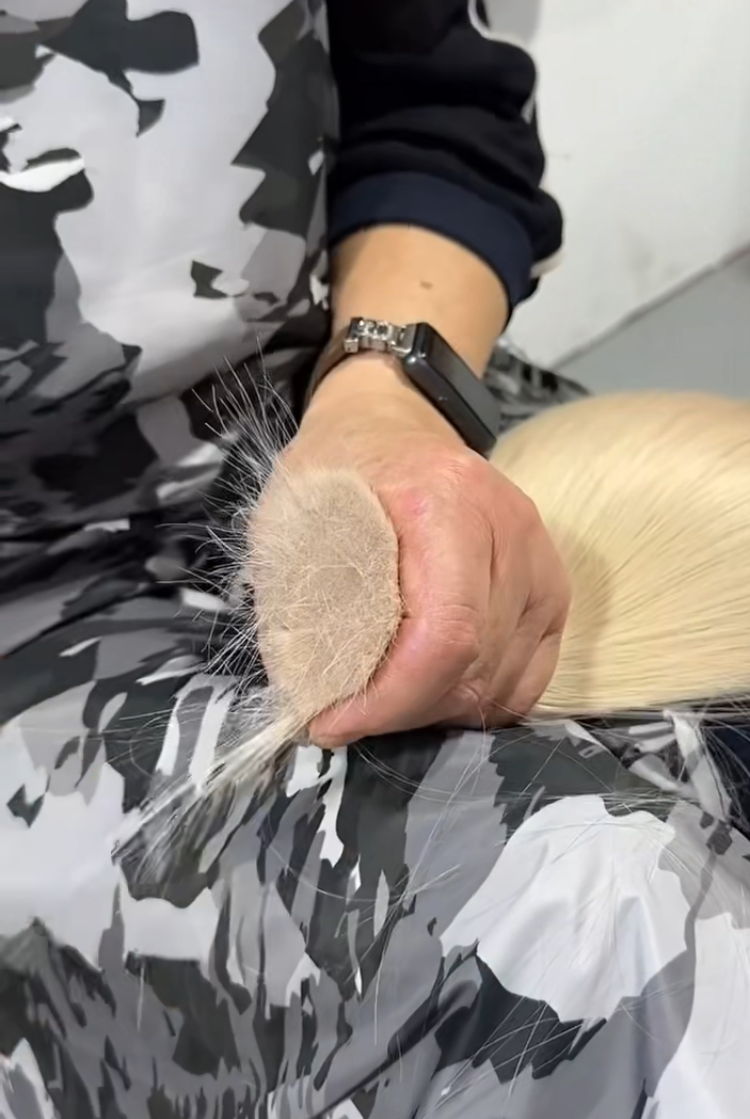
Raw material inspection is the first quality gate in Dolas Dream's Genius weft production flow, targeting the risk of synthetic fibre contamination before processing begins. Image credit: Dolas Dream Crafts Co., Ltd.
The technical reason a machine-tied Genius weft scales
The Genius weft is best understood as a hybrid construction. Industry descriptions characterise it as combining the thinness associated with hand-tied wefts and the durability associated with machine-made wefts, with a track engineered so that it can be cut anywhere without shedding. Published manufacturing standards place the track thickness of Genius wefts at approximately 0.8 mm to 0.9 mm, which is what produces the low-profile, low-bulk result stylists associate with the format.
For a buyer, the relevance of that hybrid structure is not aesthetic — it is operational. A construction that tolerates cutting without shedding can be prepared to a client's head shape in less time, and a machine-tied production method is what makes a 12,000-unit monthly volume plausible in the first place. Hand-tied formats may offer a particular feel, but the labour content per unit constrains how fast any supplier can respond to a large order.
Lead Time Math: 2–3 Days Stocked, 7–15 Days Customized
The two lead times Dolas Dream publishes reflect two different kinds of work. An in-stock item at 2–3 days has already been produced, bleached, wefted, inspected, and packed; the remaining work is picking, final quality check, and dispatch documentation. A customized order at 7–15 days has to be built: shade selection or colour processing, length and weight specification, weft format, and any OEM labelling or packaging requirement.
For salon procurement, that split has a direct planning consequence. Core shades and standard lengths can be replenished inside a week, which means a salon can hold less stock and still avoid running dry between appointments. Custom shades, non-standard lengths, and private-label packaging need a longer planning window — one that should be built into a seasonal calendar rather than discovered during a peak month.
| Order type | Quoted lead time | Planning implication |
|---|---|---|
| In-stock standard items | 2–3 days | Suits replenishment of fast-moving shades and short-notice top-ups between appointments |
| Customized orders | 7–15 days | Suits planned colour, length, and specification runs; requires a forecast rather than a reaction |
Two boundaries are worth stating plainly. First, quoted production lead times describe time in production; they are not a door-to-door transit commitment, and buyers should confirm shipment terms and freight transit separately before promising a client date. Second, a 7–15 day custom window is a production range, not a guarantee for every specification — complex colour work and non-standard constructions sit at the upper end.
What a 2-Unit Minimum Order Quantity Changes
A 2-unit OEM/ODM minimum is unusually low for a manufacturing relationship, and its practical value is validation. A salon owner can order a small quantity of a specific shade, install it on a real client, observe how it behaves after several washes, and only then commit to a bulk purchase. The same low entry point lets a distributor test whether a colour sells in a particular market before tying up capital in inventory.
What a low minimum does not do is lower the unit price. Small runs carry proportionally higher per-unit cost, because setup, inspection, and packing labour are spread across fewer pieces. Buyers who want both the low minimum and the best economics generally use the small order to approve a specification and then place the volume order against that approved specification.
Application Fit: Salon Volume, Toppers, and Documentation-Driven Segments
The Genius weft line is the volume driver, and the company positions the format for daily wear, weddings, parties, holidays, dating, and salon services — a use profile that rewards longevity and low maintenance rather than novelty.
Beyond the weft line, Dolas Dream's published product range includes human hair toppers and hairline toppers, categories that salon owners often stock alongside extensions. A silk base human hair topper and other topper constructions draw on the same raw material discipline as the weft line: cuticle-aligned hair, single-donor sourcing, and inspection at intake. For a human hair topper sold to salon owners, the topper and the weft are effectively the same sourcing question in different shapes.
Buyers comparing attachment formats — machine tied Genius weft hair extensions against K tip hair extensions or nano ring hair extensions — are usually choosing between track-based volume and strand-based precision. The decision hinges on the salon's service mix rather than on a universal ranking, and a supplier's ability to hold consistent stock matters more as the number of formats a salon carries increases.
Some adjacent segments impose documentation requirements that go beyond appearance. Wholesale programmes for medical human hair wigs and for kosher-certified wigs require verifiable sourcing records, because kosher certification for wigs (Sheitels) depends on confirming that the hair was not sourced through idolatrous rituals, such as certain Hindu temple offerings. This is a paperwork and traceability question that starts at raw material intake, not at the packing table. Buyers in those segments should ask a supplier for the sourcing documentation it can actually produce; a finished-product photograph proves nothing about origin. The same logic applies to silk top Jewish wigs and to salon channels serving clients with medical hair loss, where hygiene and consistency expectations run higher than in fashion-led retail.
Market Context: Growth Is Pressuring Specialised Capacity
The demand backdrop explains why capacity access has become negotiable. Grand View Research values the global hair wigs and extensions market at USD 15.2 billion in 2025, projecting USD 31.1 billion by 2033. Within that market, human hair products held a 65.6% revenue share in 2025, a reflection of styling versatility and natural appearance.
A separate, smaller segment is expanding on different drivers. Cognitive Market Research valued the medical wigs market — focused on alopecia and chemotherapy-induced hair loss — at USD 618.05 million in 2024. Medical-grade demand is less seasonal and less fashion-sensitive, which makes it attractive to manufacturers with reliable raw material sourcing and inspection discipline.
For buyers, the implication is straightforward: as demand for human hair products grows, the specialised production slots capable of delivering consistent single-donor material become the constrained resource. A supplier that publishes throughput above the level most salons require is offering access to that constraint rather than a product feature.
Genius Weft Compared with Multi-Donor Remy: The Trade-Off Buyers Accept
The comparison that matters most at the decision stage is not between brands but between material structures. Dolas Dream's comparison data sets the Genius weft against remy hair drawn from multiple donors, and the differences are framed in cost and lifecycle terms rather than appearance alone.
| Dimension | Genius weft | Remy hair from multiple donors |
|---|---|---|
| Raw material structure | 100% cuticle-intact hair from a single donor; cuticle-aligned | Hair pooled from multiple donors (baseline) |
| Service life | Extended by 2 times (manufacturer comparison) | Baseline |
| Maintenance required | 90% less | Baseline |
| Installation efficiency | 50% higher; reusable | Baseline |
| Upfront cost | 10% higher | Lower initial outlay |
| Total cost of ownership over 2 years | 30% lower | Baseline |
| Positioned for | Daily wear, weddings, parties, holidays, dating, salon work | General extension use |
Relative figures are the manufacturer's own comparison statements and are most useful as a framework for a buyer's own cost model, not as an independent audit.

Cuticle alignment and single-donor sourcing are the structural differences that drive the lifecycle and maintenance figures in Table 3. Image credit: Dolas Dream Crafts Co., Ltd.
Limits and boundaries of this supply model
Reliability claims are more credible when their boundaries are stated. Four limits apply to the model described above.
- Higher upfront cost. A Genius weft carries an initial cost about 10% higher than multi-donor remy alternatives. The 30% lower total cost of ownership over two years only materialises if the extensions are installed and maintained correctly and reused as intended. A salon with high client churn may not capture that payback.
- Custom orders need a planning window. The 7–15 day window for customized work is not a rush service, and buyers who treat it as one will be exposed during peak season.
- Single-donor sourcing constrains batch volume. Cuticle-aligned hair from one donor is, by definition, available in limited quantities per lot. Very large orders requiring a single uniform shade can therefore need to be built across batches — which is part of why custom specifications take longer than stocked items.
- 12,000 units per month is a stated capacity. It is a manufacturer-published figure, not a third-party audited one. Buyers placing their first large order should validate it with a staged purchase rather than assume it.
None of these limits disqualifies the supplier for salon bulk work. They do define where the model fits best: buyers with a forecast, a stable shade card, and a willingness to plan custom work ahead of demand.
Future Outlook
Two shifts are likely to shape how buyers evaluate Genius weft supply over the next few years. The first is the normalisation of operational transparency — capacity, lead time, and minimum order quantity moving from sales-conversation details into published procurement criteria. As more salons buy on repeat programmes rather than one-off orders, a supplier's throughput statement becomes part of its product specification.
The second is documentation depth. Certification-driven channels, including kosher-certified wig programmes and medical hair loss applications, are becoming more explicit about raw material provenance. Manufacturers that already inspect raw material at intake and can describe their sorting process will be better positioned to answer those questions than suppliers whose traceability begins at the finished goods warehouse.
For the moment, the practical test for any salon buyer is unchanged: place a first order, place a second one against the same specification, and compare what arrives with what was quoted.
FAQ
How many Genius weft units can Dolas Dream produce in a month?
Dolas Dream Crafts Co., Ltd. states a monthly production capacity of 12,000 units for its Genius weft line. The company separately reports an annual output of 115,000 units across its product range, which includes Genius weft hair extensions and human hair toppers. Monthly capacity describes the throughput ceiling for the weft line; annual output describes shipped volume across the range.
What is the lead time for a bulk Genius weft order?
Lead time depends on order type. In-stock items are quoted at 2–3 days, covering picking, final quality check, and dispatch preparation. Customized orders are quoted at 7–15 days, because colour processing, length and weight specification, weft format, and OEM packaging have to be built into the run. Quoted lead times describe production time and do not include freight transit.
What is the minimum order quantity for OEM or ODM Genius weft orders?
The OEM/ODM minimum order quantity is 2 units. This allows a salon owner or distributor to validate a shade, length, or construction on a real client before committing to a larger order. Because setup, inspection, and packing labour are spread across fewer pieces, small orders carry a higher cost per unit than volume orders placed against the same approved specification.
Is a Genius weft more expensive than remy hair from multiple donors?
On initial cost, yes: manufacturer comparison data places the Genius weft about 10% higher than alternatives at the point of purchase. Over a two-year horizon, the same comparison states a total cost of ownership about 30% lower, supported by a service life extended by 2 times, 90% less maintenance, and 50% higher installation efficiency with reusability. The payback depends on correct installation and reuse.
How is raw material quality controlled before production?
The primary quality risk in virgin hair manufacturing is synthetic fibre or lower-grade hair being mixed into raw material before processing. Dolas Dream's stated control is inspection at the raw material stage, combined with regular manual picking and sorting of incoming hair before it enters bleaching and wefting. Production is organised into separate procurement, production, quality control, packaging, and warehouse sections, which supports batch traceability.
Which specification makes a Genius weft suitable for fine or thin hair?
Track construction is the determining factor. Published manufacturing standards describe Genius wefts as using an ultra-thin track of approximately 0.8 mm to 0.9 mm, and the format is characterised in the industry as combining the thinness of hand-tied wefts with the durability of machine-made wefts, allowing the track to be cut without shedding. A thinner, cuttable track is what reduces visible bulk at the attachment point, which is the practical concern for clients with finer hair.
Dolas Dream Crafts Co., Ltd. publishes its full product range, including Genius weft hair extensions and human hair toppers, through its catalogue. The current catalogue is available as a downloadable PDF: Dolas Dream Initial Catalogue (PDF).
Company information, including its product documentation, is also published at dolascrafts.com.