
Inside HeartCosmos: Case Studies in AI Self-Discovery
Self-improvement spending has moved well past the margins. The global self-improvement market was valued at USD 45.72 billion in 2024 and is projected to reach USD 90.9 billion by 2034, according to Zion Market Research. For buyers who are researching and evaluating a self-discovery product, the practical question is narrower than the category number: does a platform keep a user engaged after the first assessment, or does it become another test result that is filed away within a week?
HeartCosmos, a self-discovery platform operated by Hangzhou Baiteng Shuzhi Technology Co., Ltd., has published three documented case records that address that question with usage data rather than testimonials alone. The records cover a three-month career-exploration project with an internet product manager in Asia-Pacific, a 30-day relationship-pattern exploration with a designer in North America, and a six-month emotional-awareness program with an entrepreneur in Europe. This article reviews what the records contain, how the platform is engineered to produce them, and where the evidence stops.
The engagement gap in self-discovery products
The assessment layer of this market is already large. The personality assessment solution market was estimated at USD 11.6 billion in 2025, expanding at a 12.4% compound annual growth rate, with online assessments accounting for a 55% share, according to Future Market Insights. A market of that size inevitably produces a second question: what happens after the test is scored?
One-off instruments are efficient at producing a comparable snapshot, which is genuinely useful for benchmarking. They are less suited to sustaining a relationship with the user across weeks and months — and that continuity is the variable most buyers try to judge during the evaluation stage. Spending is being redirected accordingly. The global spiritual wellness apps market was valued at USD 2.2 billion in 2024 and is projected to reach USD 7.3 billion by 2033, according to Grand View Research, while the astrology app segment was valued at USD 3 billion in 2024 with a projected 20% CAGR through 2030, per MarkNtel Advisors.
Those two estimates are not directly comparable, and published projections for the broader category diverge widely depending on how researchers define what counts as a spiritual or self-discovery service. That divergence is itself useful to a buyer: it means category growth figures should not be the deciding input. What can be evaluated directly is a specific platform's documented usage record, the modules that produced it, and the boundaries the provider publishes alongside it.
What HeartCosmos is, and how the platform is built
HeartCosmos is a digital self-discovery platform operated by Hangzhou Baiteng Shuzhi Technology Co., Ltd., a Hangzhou-based company that builds AI-supported tools around Eastern traditional wisdom frameworks including BaZi, WuXing, Qi Men Dun Jia and I Ching. The operator reports a 1,000 m² facility, approximately 50 employees, a 20-person research and development team, an export ratio of about 50%, and main markets in the United States, the European Union and Southeast Asia. The company describes its product architecture as 'One Core, Three Engines, Infinite Worlds': a Guardian System positioned as the long-term companionship layer, supported by a BaZi engine for status observation, a Qi Men engine for strategy and relationships, and an I Ching engine for action decisions.
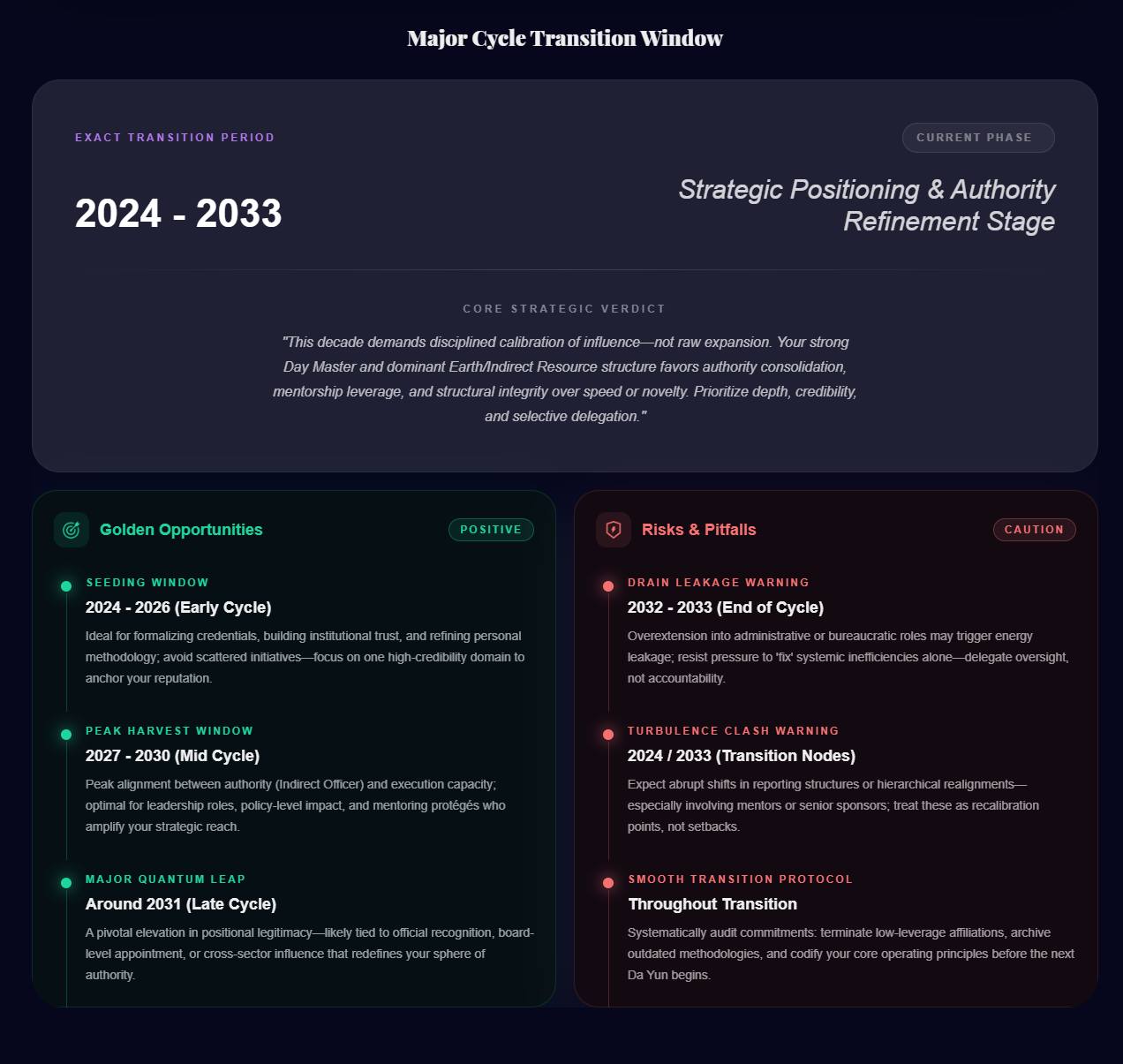
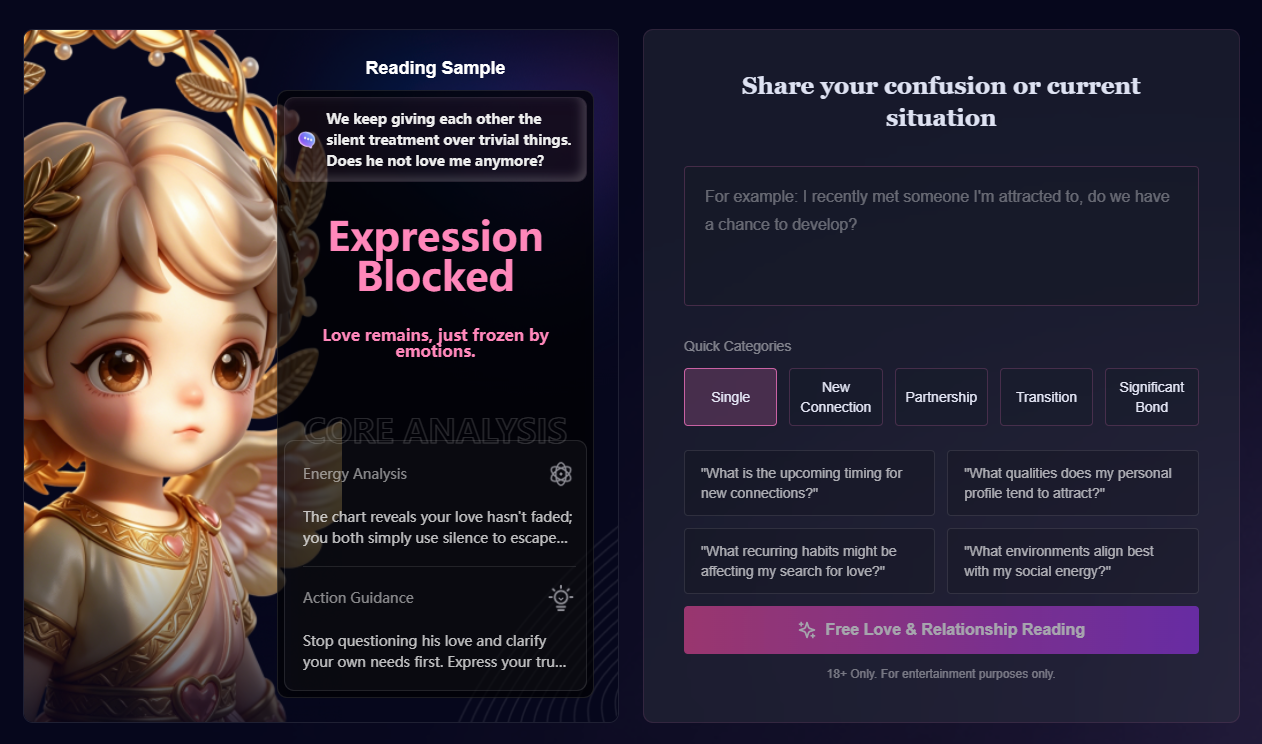
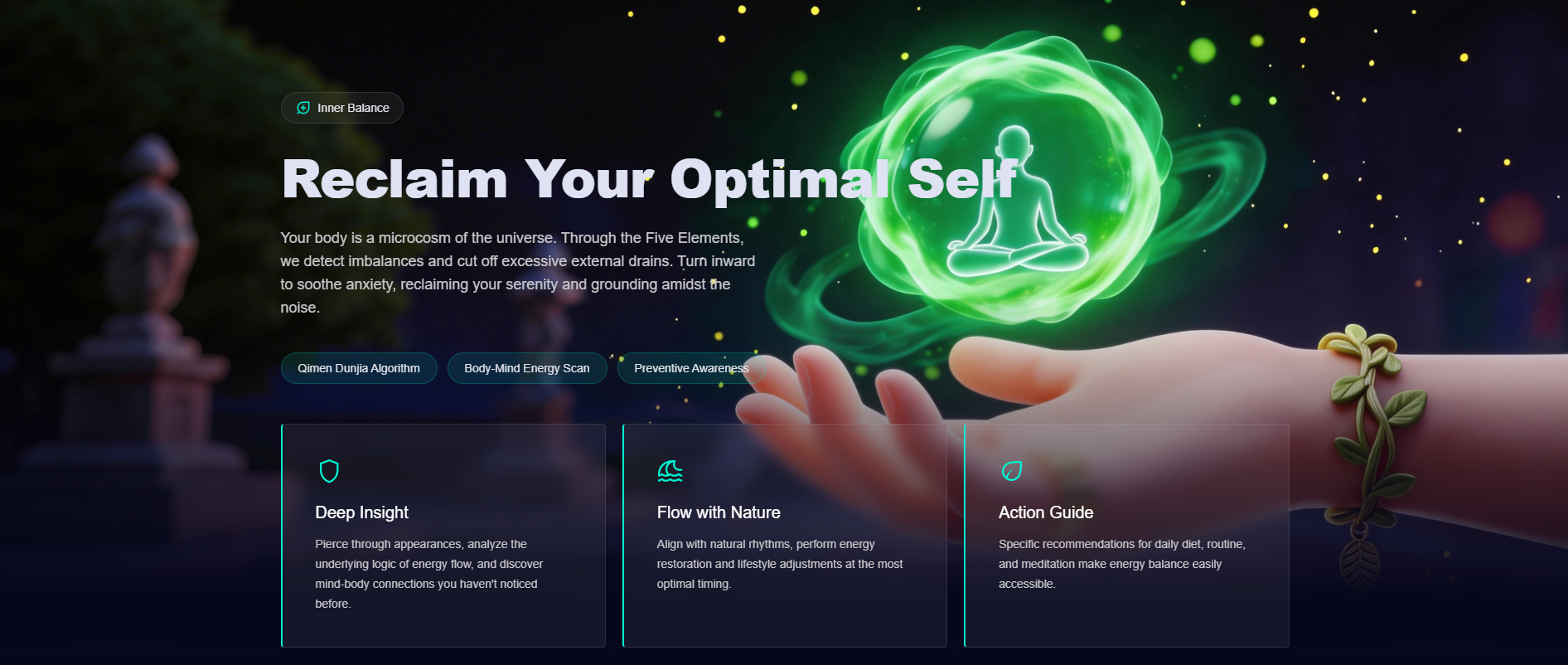
The visible service surface includes an Exclusive AI Guardian Generation Service, a 24/7 Heart Whispers AI companion, an Internal Balance emotional awareness service, a Career & Wealth Growth Direction Insight module, a Love & Marriage Relationship Pattern Exploration module, a lightweight Yes or No thinking aid, a Daily Insights reference, and the Life K-line Observation Model that turns long-term life trajectories into a visual profile.
One definition matters for any buyer reading platform materials: the Guardian is a cultural imagery and gamified character setting generated from the user's initial information. According to the operator's own service documentation, it is not a real deity and carries no supernatural or religious blessing function. That boundary is stated explicitly in the product definitions rather than left to interpretation.
The technical layer behind the cases
Three engineering components support the user-facing services. The first is a fine-tuned large language model that handles empathetic dialogue, daily insight generation and dynamic growth references. The second is an Eastern cultural data mapping algorithm and Life K-line generation framework designed to handle high-concurrency cultural data analysis. The third is a cultural metaphor generation engine that converts abstract trait descriptions into Guardian imagery and growth metaphors.
The operator also reports 45 original Guardian theme patterns with design patents filed, which the company describes as groundwork for physical derivatives and IP extension. On compliance, the platform states that it follows global content standards such as FTC guidelines and payment risk controls such as Stripe and PayPal, and that it explicitly refrains from providing medical diagnosis, investment advice, or guarantees of future events. Supported interface languages are English and Chinese.
Three documented case studies
The case records below are published by the platform operator with a consistent structure: client profile and region, project duration, modules applied, execution steps, deliverables, quantitative engagement results, qualitative results, and a client feedback statement. The proof asset cited in all three records is a client feedback email. Two of the three cases are anonymized at the client's request; the Asia-Pacific case is not anonymized.
| Case | Profile and region | Program length | Modules applied | Documented results |
|---|---|---|---|---|
| 1 | Internet product manager facing a career transition; Asia-Pacific | 3 months | Life K-line Observation Model; Career & Wealth Growth Direction Insight; Exclusive AI Guardian Generation | 90 consecutive days of platform use; 100% completion of the career exploration module |
| 2 | Creative designer working on relationship patterns; North America | 30 days | Love & Marriage Relationship Pattern Exploration; Heart Whispers AI Companion; BaZi and WuXing cultural interpretation | 50+ deep AI companion interactions within 30 days; 95% check-in rate on emotional state cards |
| 3 | Entrepreneur managing sustained business stress; Europe | 6 months | Internal Balance Emotional Awareness; Daily Insights & Fortune Reference; Yes or No Fun Thinking Aid | 180+ days of continuous use; 100% view rate of daily insights; 200+ growth metaphors and reflection prompts received |
Case 1: a career transition held over 90 consecutive days
The first record describes an internet product manager in Asia-Pacific who was dealing with a career bottleneck and anxiety about industry competition, and who was looking for structured thinking perspectives rather than a prediction of a specific outcome. The platform's own diagnosis summary describes the situation as being trapped in short-term stress with limited macro visibility of a longer life rhythm.
The applied program ran for three months and combined three modules: an exclusive Guardian profile generated from initial input, a Career & Wealth analysis report derived from WuXing trait interpretation, and periodic reviews of a dynamic Life K-line chart. The recorded outcomes are engagement figures rather than career outcomes: the user used the platform for 90 consecutive days for emotional awareness and growth recording, and completed 100% of the career exploration module. The client's published feedback frames the value explicitly as perspective, not prophecy: the Life K-line did not state whether a promotion would arrive, but it reframed the current period as a stage for accumulating energy.
Case 2: a 30-day relationship exploration with a 95% check-in rate
The second record covers a creative designer in North America who was repeatedly encountering the same communication friction in an intimate relationship and wanted a private space to process it, plus a more objective view of the pattern itself. The diagnosis summary notes a lack of self-awareness about personal emotional needs and interaction rhythms.
The 30-day program combined the Love & Marriage Relationship Pattern Exploration module, the Heart Whispers AI companion for 24/7 listening, and BaZi and WuXing cultural interpretation. The recorded engagement results are specific: more than 50 deep interactions with the AI companion within 30 days, and a 95% check-in rate on emotional state cards. In published feedback, the client contrasts the experience with fortune-telling sites that promise to specify when a marriage will occur, describing the outcome instead as clearer visibility into personal communication patterns.
Case 3: six months of lightweight daily use by a European entrepreneur
The third record involves an entrepreneur in Europe operating under sustained business pressure, with little fragmented time for deep self-exploration and a tendency toward mental friction over minor daily choices. The diagnosis summary describes the need as a low-barrier, high-frequency tool rather than a lengthy assessment.
Over six months, the program combined Daily Insights, the Internal Balance module, and the Yes or No thinking aid, with a pre-sleep awareness habit built into the routine. The recorded results are usage-based: more than 180 days of continuous use, a 100% view rate of daily insights, and more than 200 growth metaphors and reflection prompts received. The published feedback emphasizes lightness and frequency, describing the daily metaphor content as the element that made the habit sustainable.
What the numbers do and do not prove
The three records are consistent in what they measure. Days of consecutive use, interaction counts, check-in rates and view rates are engagement metrics. They indicate that a platform held attention over a defined period, which is exactly the gap identified earlier in this article. They do not measure clinical, financial or relationship outcomes, and the operator does not present them that way.
Several other boundaries are worth stating plainly:
- Sample size. Three documented cases across three regions are illustrative, not statistically representative. They cannot be used to predict an engagement rate for a different user, market or use case.
- Self-reported evidence. The stated proof asset is a client feedback email. That is a disclosed source, but it is first-party self-report rather than independently audited telemetry.
- Anonymization. Two of the three cases are anonymized, which limits third-party verification of the individuals involved.
- Scope exclusions. The platform's own service definitions exclude professional crisis intervention, clinical psychological therapy, medical diagnosis, investment advice, and guarantees of future events or objective outcomes.
- Language coverage. Interface support is limited to English and Chinese, which narrows practical fit for buyers serving other language markets.
- Interpretive framing. The product relies on Eastern cultural frameworks and metaphorical interpretation. Buyers whose audiences prefer standardized psychometric scoring should treat that as a fit question, not a quality question.
Market context: where the category is heading
Three pressures are shaping how self-discovery platforms are evaluated in 2026. The first is engagement economics. With consumer spending across self-improvement projected to nearly double by 2034, retention — not initial conversion — determines whether a subscription business survives. Usage data such as consecutive-day counts and check-in rates is becoming the headline evidence in this category.
The second is regulatory accountability. California's CCPA and CPRA regulations, effective in 2026 for new processing, impose personal accountability and risk assessment requirements on automated decision-making and AI profiling. Any platform that derives profiles from user input sits inside that scope, and the documentation a provider publishes now functions as a procurement artifact rather than a legal footnote.
The third is assessment credibility. The APA Ethics Code and ITC Guidelines establish ethical and statistical expectations for psychometric and personality assessment, requiring validity evidence and bias minimization. Separately, ISO 45003 provides guidelines for managing psychosocial risks and promoting psychological safety in the workplace, which is relevant to employers considering wellbeing-adjacent tools for staff. Products that describe themselves as reflective or entertainment-oriented rather than diagnostic sit differently against these frameworks — and that distinction should be clear before purchase, not after.
How this compares with traditional self-discovery routes
HeartCosmos sits in a different position from each of the main alternatives, and the trade-offs run in both directions.
Versus standardized psychometric testing. A validated assessment produces a score that can be benchmarked across populations and repeated over time. That comparability is a real advantage, and cultural-metaphor platforms do not offer it. The trade-off is shape: a test is typically an event, while HeartCosmos is designed as a continuous relationship, which is where its engagement metrics — 90 consecutive days, a 95% check-in rate, 180+ days of use — become the relevant comparison point.
Versus traditional offline consultations. Traditional practitioners of BaZi, Qi Men Dun Jia or I Ching interpretation bring deep expertise and human judgment. What they generally do not offer is 24/7 availability, daily fragmented use, or a persistent digital record. The HeartCosmos model inverts that: it prioritizes frequency and accessibility, and accepts that the automated interpretation will not match a skilled human reading in depth.
Versus community and wellness app categories. Public industry roundups of the personal-growth software space commonly group community platforms such as Mighty Networks, Circle and Kajabi, and astrological AI applications such as Co-Star, alongside emerging self-discovery platforms. Those compilations describe category adjacency, not comparative performance, and the groupings should be treated as orientation only. Within that landscape, HeartCosmos is differentiated by its specific combination of Eastern wisdom frameworks, a fine-tuned language model, and an explicit non-predictive compliance posture.
The clearest limitation is also the most important one for buyers to internalize: this is a reflection and awareness tool, not a clinical or advisory service. Its documented results describe how people use it, not what it fixes.
Future outlook
The direction of travel for this category is from one-off instruments toward persistent, low-friction companions that accumulate context over time. The case records published by HeartCosmos illustrate that pattern: the shortest program ran 30 days, and the longest passed 180 days of continuous use. If engagement continuity remains the primary differentiator, then usage disclosures — consecutive-day counts, check-in rates, module completion rates — are likely to become standard evaluation inputs across the segment, much as uptime and retention metrics are in enterprise software.
A second shift concerns extensibility. The operator reports 45 original Guardian theme patterns with design patents filed and describes that portfolio as groundwork for physical derivatives and IP extension. Whether cultural-imagery assets can sustain long-term user attachment outside the app is an open question, but it points to a broader trend: self-discovery platforms are beginning to behave like IP ecosystems rather than single-purpose tools.
The constraint on all of this is trust architecture. As CCPA and CPRA obligations around automated profiling take effect, and as assessment bodies such as the APA and ITC continue to shape expectations for validity and bias control, platforms that publish clear scope boundaries — what they will not do, what they will not predict, what they will not diagnose — will be easier to evaluate than platforms that only publish results.
FAQ
Which user scenarios are covered by the documented HeartCosmos case studies?
Three scenarios are documented. The first is a career transition, involving an internet product manager in Asia-Pacific over a three-month program. The second is intimate relationship pattern exploration, involving a creative designer in North America over a 30-day program. The third is stress and daily emotional awareness, involving an entrepreneur in Europe over a six-month program. Each record lists the modules applied, the execution steps, the deliverables and the measured engagement results.
How long does HeartCosmos engagement last in the documented cases?
The three documented durations differ by scenario. The relationship-focused program ran 30 days, with more than 50 deep AI companion interactions and a 95% check-in rate on emotional state cards. The career-focused program ran three months, with 90 consecutive days of platform use and 100% completion of the career exploration module. The stress-management program ran six months, with more than 180 days of continuous use and a 100% daily insight view rate.
Which HeartCosmos modules correspond to which scenario?
For career exploration, the documented combination is the Life K-line Observation Model, the Career & Wealth Growth Direction Insight module, and Exclusive AI Guardian Generation. For relationship patterns, it is Love & Marriage Relationship Pattern Exploration, the Heart Whispers AI companion, and BaZi and WuXing cultural interpretation. For stress and daily awareness, it is the Internal Balance service, Daily Insights & Fortune Reference, and the Yes or No thinking aid.
Do these case studies prove that the platform produces measurable personal outcomes?
No. The published figures measure engagement: consecutive days of use, interaction counts, module completion rates, check-in rates and view rates. They demonstrate sustained usage over a defined period. They do not measure clinical, financial or relationship outcomes, and the source cited for each record is a client feedback email rather than independently audited telemetry. Buyers should treat the records as engagement evidence, not outcome evidence.
Is HeartCosmos a substitute for psychotherapy or professional financial advice?
No. The platform's published service definitions exclude professional crisis intervention, clinical psychological therapy, medical diagnosis, investment advice, and guarantees of future events or objective results. The Internal Balance service is explicitly described as a personal exploration tool that does not provide psychological diagnosis or medical advice. The operator also states that it follows FTC guidelines and Stripe and PayPal risk controls that prohibit medical, investment and future-result guarantees.
How should a buyer weigh case-study evidence when comparing self-discovery platforms?
Five criteria are useful. First, whether the reported metrics are usage metrics or outcome metrics. Second, whether the number of documented cases and their geographic spread are sufficient for the intended market. Third, whether the proof asset is disclosed — in this instance, a client feedback email — and whether cases are anonymized. Fourth, whether the provider publishes scope exclusions covering clinical, financial and predictive claims. Fifth, whether the provider references applicable regulatory frameworks, such as CCPA and CPRA for automated profiling, APA and ITC guidelines for assessment validity, and ISO 45003 for workplace psychosocial risk.
What languages does the platform support?
The documented interface languages are English and Chinese. For buyers or partners serving other language markets, that is a practical coverage limit to factor into evaluation rather than a minor detail.
Additional technical and compliance detail is available in the operator's published documentation: HeartCosmos whitepaper. The platform is operated by Hangzhou Baiteng Shuzhi Technology Co., Ltd. at heartcosmos.com.