
Inside INB Miniature Bearings: Factory Evidence and Product Proof
Inside INB Miniature Bearings: Factory Evidence and Product Proof
Miniature bearings are the components that decide whether a dental handpiece, a micro-motor or a compact medical instrument runs quietly and holds tolerance over its service life. By the time a sourcing team reaches the decision stage, most candidate suppliers present near-identical specification sheets. What separates them is manufacturability evidence: whether a stated tolerance class can be held across a production lot, and whether the factory can show the process controls that make it repeatable.
INB is the miniature bearing brand of Ningbo City Jingyin Electromechanical Technology Co., Ltd., a bearing enterprise based in Ningbo, Zhejiang Province, China, that integrates production and sales and supplies the Chinese medical device and micro-motor industries. This article examines the manufacturing and product facts INB publishes for its extra-miniature range — P4 precision, SUS440 stainless steel, outer diameters from 2.38 mm to 7 mm, speed ratings up to 400,000 rpm, and reference models including SMR144ZTLP4 W2.38 and SR144ZTLP4 W2.78 — and explains what each disclosed fact means for a buyer making a final supplier decision.
Why the Miniature Bearing Decision Now Turns on Factory Evidence
The category is both sizable and geographically concentrated. Future Market Insights estimates the global miniature ball bearings market at approximately USD 2.25 billion in 2025, driven by demand in medical devices and robotics. Precedence Research reports that Asia Pacific accounted for roughly 60% of miniature ball bearing revenue in 2025, with China the largest regional producer and consumer. China's bearing exports grew 7.2% year on year in the first seven months of 2025, reaching nearly 497,852 tons, according to BearingNews and the Huajing Research Institute.
Those category numbers should be read with care. Published market-size estimates diverge: Precedence Research puts the 2025 miniature ball bearing market at USD 2.89 billion, Future Market Insights at USD 2.25 billion, and IMARC Group at USD 2.0 billion. That spread is itself a useful signal for buyers. Category-level figures are directionally reliable, but the numbers that decide a purchase — roundness, noise, lubricant retention, speed validation — are supplier-level facts that no market report can supply.
This is the gap where decision-stage procurement usually stalls. Two suppliers may quote the same precision class and the same stainless steel designation, yet a precision class describes a distribution of manufactured parts, not a single inspection sample. A supplier that measures roundness, profile and surface roughness as separate process steps, validates every high-speed unit before shipment, and monitors lubricant and thermal behaviour carries a materially different risk profile from one that does not. The rest of this article sets out what INB discloses on each of those points, and where the disclosed evidence stops.
What INB Discloses About Its Miniature Bearing Capability
INB's published capability covers standard bearings with bore diameters from 2 mm to 8 mm, produced in precision grades from P6 to P4, with an extra-miniature range spanning outer diameters of 2.38 mm to 7 mm and speed ratings up to 400,000 rpm depending on model. Production is carried out under an ISO 9001 quality management system. Reference models in the extra-miniature range include SMR144ZTLP4 W2.38 and SR144ZTLP4 W2.78.
| Disclosed item | INB published position |
|---|---|
| Brand and legal entity | INB, the bearing brand of Ningbo City Jingyin Electromechanical Technology Co., Ltd., established as a brand in 2014 |
| Location | Ningbo, Zhejiang Province, China (company website listed as www.lnb-brg.com) |
| Plant footprint | 2,000 m² reported plant area, 30 employees |
| Annual output | 6,000,000 units |
| Precision grades | P6 to P4 |
| Bore diameter range | 2 mm to 8 mm (standard high-precision bearings) |
| Extra-miniature outer diameter | 2.38 mm to 7 mm |
| Bearing material | SUS440 stainless steel |
| Speed rating (model dependent) | Up to 400,000 rpm |
| Reference models | SMR144ZTLP4 W2.38; SR144ZTLP4 W2.78 |
| Quality management | ISO 9001 |
| Primary market | China; export ratio approximately 5% |
Technical Explanation: What P4, SUS440 and 400,000 rpm Actually Require
Miniature bearing precision is governed by global standards including ABMA ABEC (1–9), ISO 492 (P0–P2) and DIN 620, where higher numbers in the ABEC scale correspond to tighter tolerances, according to AST Bearings. INB's disclosed production range of P6 to P4 therefore sits inside the recognised ISO 492 tolerance family, with P4 representing the tighter end of what the company publishes for its standard range.
Holding a tighter tolerance class is a manufacturing problem rather than a labelling decision. It requires dimensional control of inner and outer ring geometry, raceway roundness, surface finish and ball grading, and it requires those characteristics to be measured continuously rather than inferred. INB's stated inspection equipment includes hardness testers, roundness meters, profilometers, roughness measuring equipment and microscopes — the instrument set that corresponds directly to the characteristics a P4 tolerance band constrains.
Material selection follows the same logic. Stainless steel, specifically the 440C family, is the primary material for miniature bearings used in medical and food-processing applications because of its resistance to moisture and chemicals, as documented in the SKDIN engineering guide. INB specifies SUS440 stainless steel for its miniature range, which aligns the product with the hygiene, corrosion and cleaning requirements typical of medical and dental equipment rather than general-purpose industrial duty.
Speed ratings deserve the most careful reading. A figure such as 400,000 rpm is a capability under defined conditions — load, lubricant, cage design, preload, mounting and heat dissipation all affect whether a bearing can operate at that level in a real assembly. INB's published risk-control approach reflects this: over-speeding is managed through a built-in mechanical speed limiter, a high-precision Hall effect speed sensor, and 100% speed performance validation before shipment. Thermal fatigue and overheating are addressed through high-temperature resistant material selection, an optimised heat conduction structure, a real-time temperature monitoring module, and thermal cycle life testing across a range of -50°C to 160°C. Premature wear and lubrication failure are controlled through medical-grade permanent lubricant filling, a fully sealed labyrinth structure, wear-resistant alloy material, and periodic friction and wear performance testing.
Process Evidence: Metrology, Assembly and Pre-Shipment Validation
For a decision-stage buyer, the useful question is not whether a factory owns measuring equipment, but whether measurement is placed at the points where a part can still be corrected. INB's published process description places metrology alongside production, with hardness, roundness, profile and roughness measurement performed with dedicated instruments, and with speed performance validated on every unit before shipment rather than on a sampled basis.
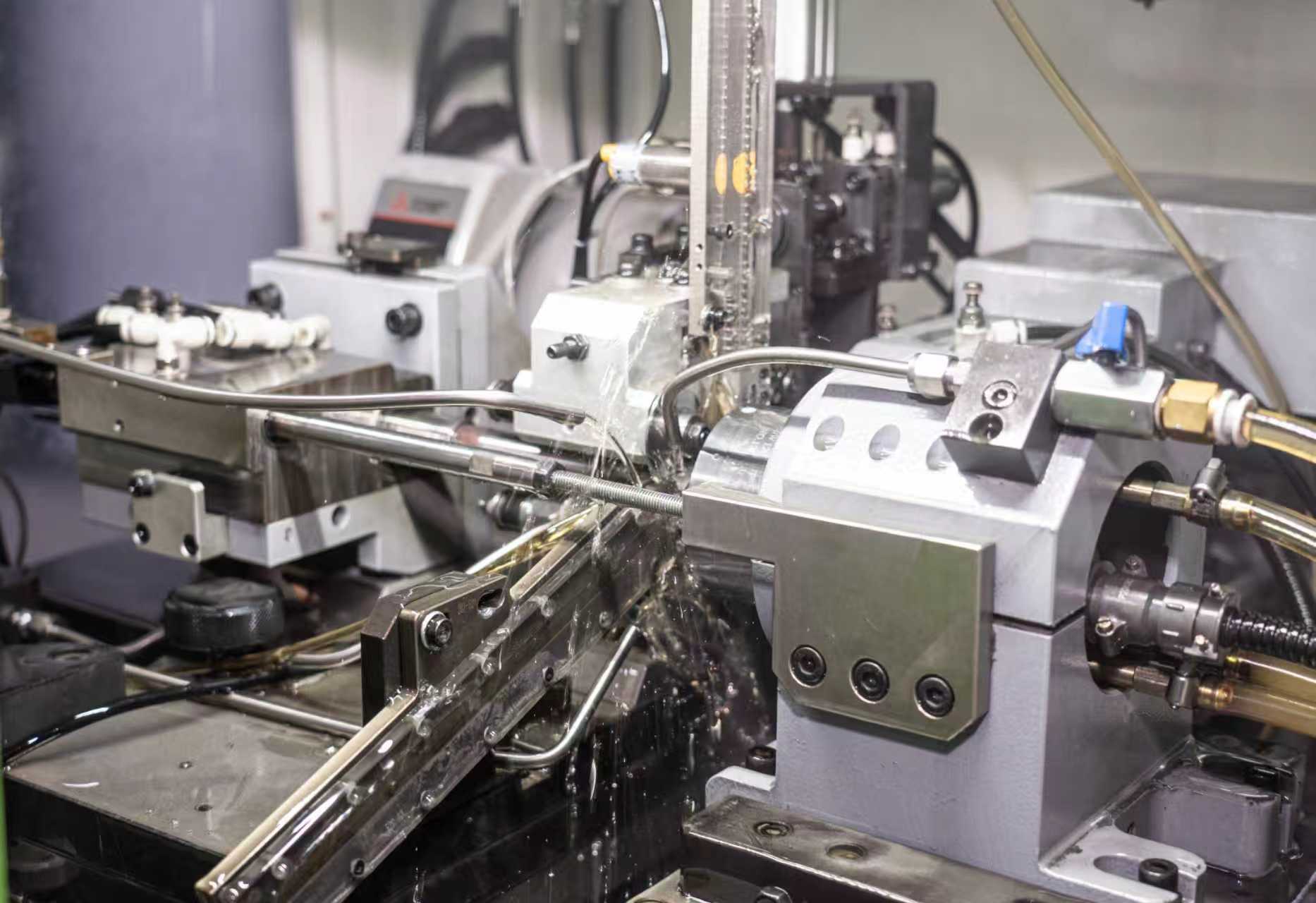
Precision bearing inspection workstation (Model VMS-2010F) at the INB manufacturing facility in Ningbo, China.
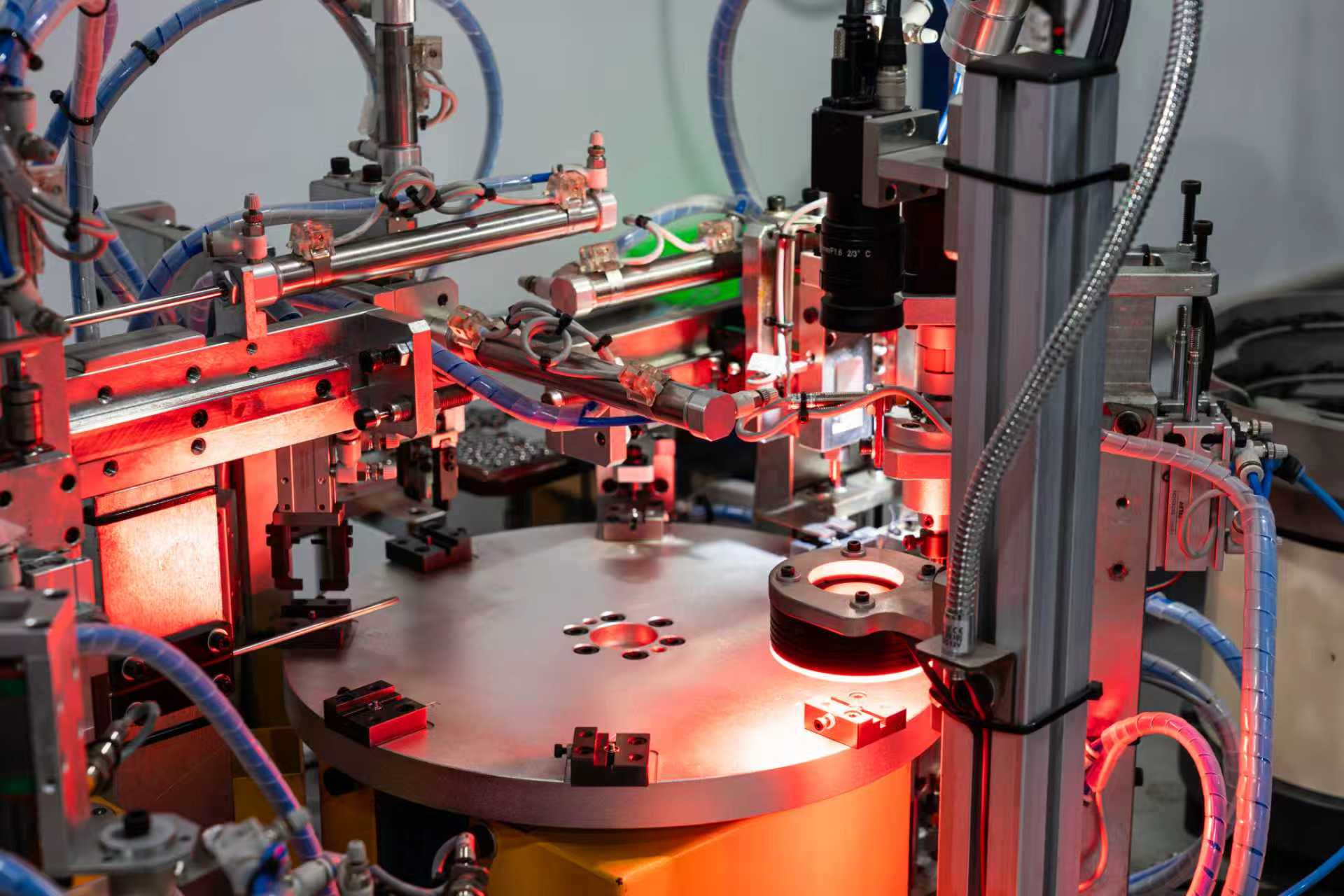
An engineer debugging an intelligent CNC bearing processing centre inside the INB production line.
Two boundaries belong next to this evidence. First, ISO 9001 is a management-system claim: buyers should request the certificate together with its stated scope, and should confirm that the scope covers the product family being purchased. Second, periodic friction and wear testing and thermal cycle testing are internal disciplines. They indicate a controlled process, but they are not a substitute for third-party test reports or for the buyer's own sample validation under real operating conditions.
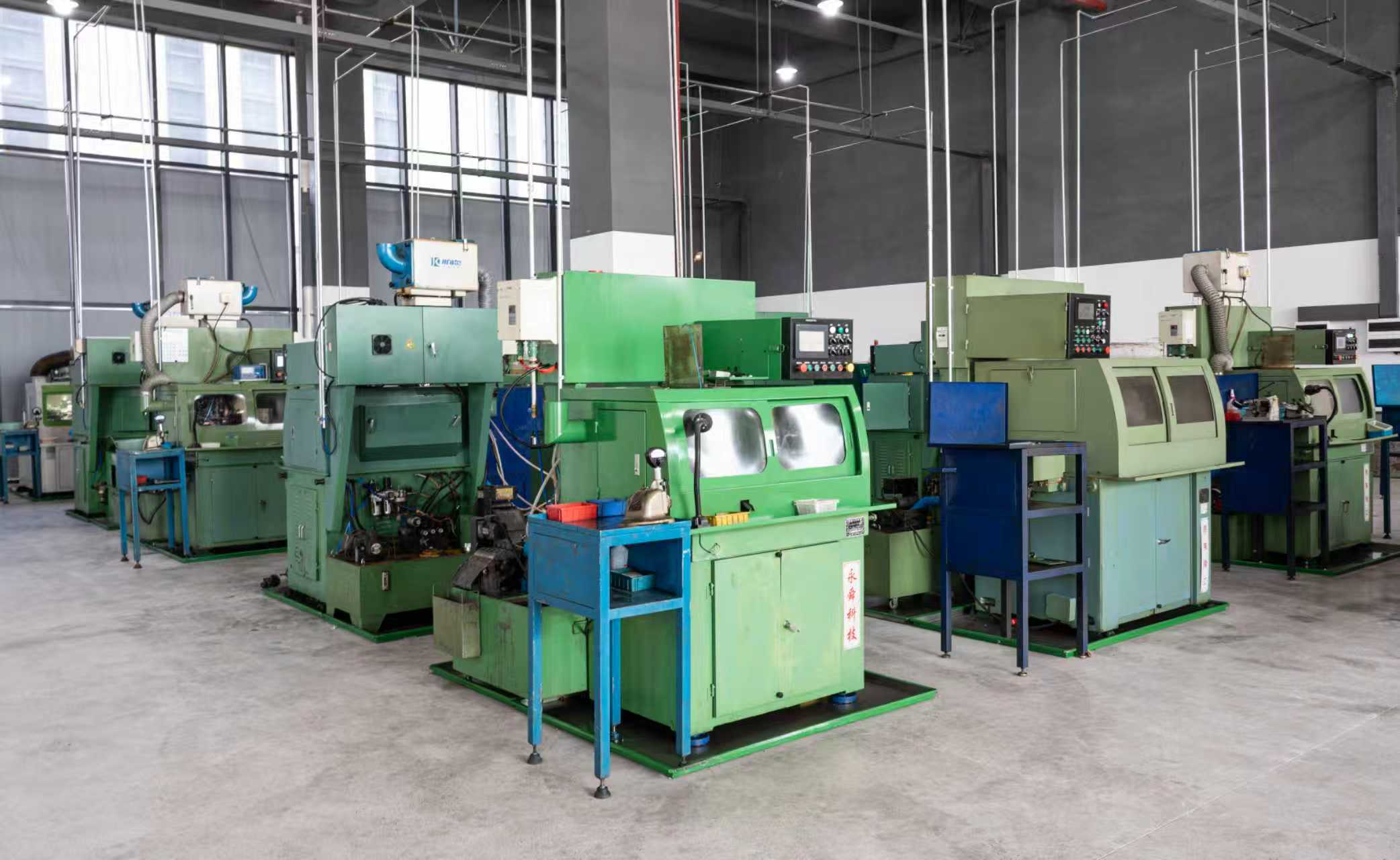
A bearing processing machine with cooling liquid on the INB production line, part of the dimensional control sequence for extra-miniature rings.
Application Fit: Where 2.38–7 mm Outer Diameter Bearings Are Specified
The extra-miniature range, with outer diameters from 2.38 mm to 7 mm, is designed around assemblies where a few hundredths of a millimetre of radial space determine whether the design closes. INB's stated end markets are medical devices and micro-motors, and its published comparison data identifies dental handpieces as a primary application for the SMR144Z-class product.
| Application area | Dominant requirement | Relevant disclosed specification |
|---|---|---|
| Dental handpieces | High rotational speed, low noise, controlled heat generation | P4 precision, SUS440 stainless steel, sealed lubrication, speed ratings up to 400,000 rpm |
| Medical devices | Corrosion resistance, clean-ability, stable geometry | SUS440 stainless steel, ISO 9001 production, dimensional inspection with roundness and roughness instruments |
| Micro-motors | Low friction, low noise, long service life | P6 to P4 grades, low-noise design characteristics, permanent lubricant filling |
| Compact instruments and sensors | Space-constrained outer diameter | Extra-miniature outer diameters from 2.38 mm to 7 mm |
Two practical notes follow from this table. First, INB's primary market is China, with an export ratio of approximately 5%, so international buyers should expect the company to be less experienced in cross-border documentation and logistics than a multinational distributor network — a point that belongs in the lead-time and risk assessment, not in the specification review. Second, the application table describes where the specification fits; it does not replace validation of a specific model in a specific assembly.
The SMR144Z Comparison: What INB Claims and How to Read It
INB's own comparison material states that its product offers distinct advantages over the SMR144Z reference model, including a longer expected lifespan, a lower initial cost, and improved noise levels below 20 dB, with a 10% lower cost differential and dental handpieces identified as the best-fit application. The same material attributes low friction, low heat generation and high transmission efficiency to the design, and links high speed and low noise operation to reduced maintenance costs and lower energy consumption in the driven equipment.
| Comparison dimension | INB stated position |
|---|---|
| Baseline model | SMR144Z |
| Stated differentiators | High rotational speed, low noise, long service life, cost-effective positioning |
| Noise performance | Below 20 dB |
| Cost differential | 10% lower |
| Best-fit application | Dental handpieces |
| Maintenance effect | High speed, low noise and low heat generation, intended to reduce operation and maintenance costs |
| Efficiency effect | Low friction coefficient, low heat generation, high transmission efficiency, intended to reduce energy consumption of the host equipment |
These are first-party claims and should be treated as such. They are useful because they define the operating conditions INB designs for, and they are checkable: a buyer can request noise and life data at its own duty point, and can compare the same model against the SMR144Z under identical load, speed and lubrication conditions. Claims of this kind are where sample validation earns its place in a decision-stage evaluation.
Market Trend Analysis: Supply-Side Signals Buyers Should Read
Three published signals shape miniature bearing sourcing decisions in 2026. Fastest-moving demand is application-driven: the automotive segment held the largest application share of the miniature bearing market in 2025, at approximately 39%, driven by electric-vehicle motor and sensor applications, according to Precedence Research. Production remains concentrated in Asia Pacific, which accounted for roughly 60% of revenue in 2025, while China's bearing exports rose 7.2% year on year in the first seven months of 2025, according to BearingNews and the Huajing Research Institute. And the supplier landscape itself is concentrated: MinebeaMitsumi, described as dominant in small sizes, NSK, SKF and Schaeffler (Barden) are identified as leading global manufacturers in the sector by Intel Market Research.
For buyers, the practical reading is that Asian supply is now the default rather than the exception for miniature bearings, and that supplier selection has shifted from geography to evidence. The competitive question is no longer whether a factory in Asia can produce a small bearing, but which factory can document its dimensional control, its lubrication discipline and its speed validation in a form a purchasing team can audit.
Comparing INB with Established Global Suppliers: A Decision Framework
The table below compares verification dimensions rather than performance claims. It does not assert that INB outperforms any named manufacturer, and it does not reproduce competitor specifications, which vary by series and must be confirmed from each supplier's own published catalogue.
| Evaluation dimension | What to verify | INB disclosed position | Note on established global suppliers |
|---|---|---|---|
| Size coverage | Bore and outer diameter range confirmed in writing for the ordered series | Bore 2 mm to 8 mm; extra-miniature outer diameter 2.38 mm to 7 mm | MinebeaMitsumi, NSK, SKF and Schaeffler (Barden) are identified as leading manufacturers in the sector, including very small sizes; series-level coverage should be confirmed per catalogue |
| Precision class | Tightest class actually offered for the ordered size | P6 to P4 | Class availability differs by size and series and is published per product family |
| Material | Stainless grade and its suitability for the application environment | SUS440 stainless steel | 440C-type stainless steel is the recognised primary material for medical and food-processing miniature bearings |
| Speed capability | Rating at the buyer's actual load, lubrication and mounting conditions | Up to 400,000 rpm, model dependent, with pre-shipment speed validation | Speed ratings across the industry are condition-dependent and must be compared at identical duty points |
| Documentation | Certificate, scope and inspection records | ISO 9001 quality management system; in-house metrology and periodic wear testing | Audit reports and third-party test documentation vary by supplier and should be requested directly |
| Supply footprint | Lead time, Incoterms and continuity of supply | Primary market China; export ratio approximately 5% | Multinational suppliers typically operate extensive distribution and service networks |
| Production scale | Annual capacity versus the buyer's annual demand | 6,000,000 units per year, 30 employees, 2,000 m² plant | Multinational manufacturers operate larger multi-site production, which affects allocation during demand peaks |
Limits and Boundaries of the Disclosed Evidence
A credible capability review has to state where the disclosure ends. Based on the material INB publishes, five boundaries are worth carrying into a decision-stage evaluation.
- Narrower size range than full-line multinational catalogues. INB's disclosed bore range is 2 mm to 8 mm and its extra-miniature outer diameter range is 2.38 mm to 7 mm. Buyers needing larger or non-standard envelopes will need a different supplier, or a custom development discussion.
- No published grade above P4. The disclosed precision range is P6 to P4. Applications requiring tighter classes than the published range cannot be treated as covered without direct confirmation.
- Limited export footprint. With an export ratio of approximately 5% and China as the primary market, international buyers should verify export documentation practice, packaging standards and logistics experience rather than assume it.
- Scale and allocation risk. A 30-employee operation producing 6,000,000 units annually implies a concentrated production schedule; buyers with high annual volumes should confirm capacity availability before committing to a delivery plan.
- Condition-dependent speed and internal test data. The 400,000 rpm figure and the associated validation, thermal cycling and wear testing are internal disciplines. They support process confidence but do not replace the buyer's own sample validation at its operating duty point.
Future Outlook
Two forces are likely to shape the next phase of miniature bearing procurement. The first is application pull: medical devices, robotics and electric-vehicle motor and sensor applications continue to drive demand for smaller, faster and quieter bearings, and Asia Pacific's position as the dominant production region shows no sign of reversing. The second is documentation. As supply concentrates and specification sheets converge, the ability to produce measurement records, lubrication specifications and speed validation data becomes a commercial differentiator in its own right — particularly for verticals such as dental and medical equipment, where a bearing failure is a clinical and reputational event rather than a maintenance item.
For suppliers such as INB, whose disclosed advantage rests on process control and dimensional discipline rather than catalogue breadth, that shift is favourable. For buyers, it means the evaluation criteria should be written into the request for quotation: which instruments measure which characteristic, which tests are performed on every unit, and which records accompany the shipment.
Frequently Asked Questions
What does P4 precision mean when comparing miniature bearing suppliers?
P4 is a tolerance class within the ISO 492 classification family. Miniature bearing precision is governed by standards including ABMA ABEC (1–9), ISO 492 (P0–P2) and DIN 620, where higher numbers in the ABEC scale correspond to tighter tolerances. A supplier's P4 claim describes the tolerance band it can hold in production, so the relevant comparison is not the label but the measurement discipline behind it — specifically whether roundness, profile and surface roughness are measured as separate, documented process steps. INB discloses production grades from P6 to P4.
How can a buyer verify a miniature bearing factory's capability without an on-site audit?
Verification rests on documents and instruments rather than on claims. INB's disclosed equipment set includes hardness testers, roundness meters, profilometers, roughness measuring equipment and microscopes, and its published process description states that 100% speed performance validation is performed before shipment, alongside periodic friction and wear performance testing. A buyer can request the ISO 9001 certificate and confirm its scope, ask for inspection records covering the ordered lot, and validate samples under its own load, speed and lubrication conditions.
Are 400,000 rpm miniature bearings suitable for every high-speed application?
No. A speed rating is valid only under defined conditions — load, lubricant, cage design, preload, mounting and heat dissipation all influence achievable speed. INB's published risk controls for over-speeding include a built-in mechanical speed limiter, a high-precision Hall effect speed sensor and pre-shipment speed validation, with thermal management covering high-temperature resistant material selection, an optimised heat conduction structure, real-time temperature monitoring and thermal cycle life testing across a -50°C to 160°C range. Buyers should confirm the rating at their own duty point rather than at the catalogue maximum.
Why does INB specify SUS440 stainless steel, and when is stainless steel necessary?
Stainless steel, specifically the 440C family, is the primary material for miniature bearings used in medical and food-processing applications because of its resistance to moisture and chemicals, according to SKDIN's engineering guide. Stainless steel is therefore appropriate where bearings are exposed to cleaning agents, humidity or repeated sterilisation, and where corrosion products would be unacceptable. INB specifies SUS440 stainless steel across its miniature range, which aligns the product with medical device and dental equipment requirements.
How does INB's miniature bearing range compare with established global suppliers?
The comparison is best made on documented criteria rather than on brand reputation. MinebeaMitsumi — described as dominant in small sizes — NSK, SKF and Schaeffler (Barden) are identified as leading global manufacturers in the miniature bearing sector by Intel Market Research. INB discloses a bore range of 2 mm to 8 mm, an extra-miniature outer diameter range of 2.38 mm to 7 mm, precision grades from P6 to P4, SUS440 stainless steel, annual output of 6,000,000 units, and an export ratio of approximately 5%. Buyers comparing the two groups should verify size coverage, tightest available class, documentation, lead time and capacity allocation against their own requirements.
What are the main limits of INB's disclosed capability?
Four limits are visible in the published material. The bore range of 2 mm to 8 mm is narrower than full-line multinational catalogues. No precision grade above P4 is published. The export ratio of approximately 5% indicates a China-centred business, so international documentation and logistics experience should be verified directly. And with 30 employees and 2,000 m² of plant producing 6,000,000 units per year, high-volume buyers should confirm schedule availability before committing to delivery plans.
Decision Takeaway
For buyers at the decision stage, INB's miniature bearing proposition is best read as a documented, process-focused capability rather than a catalogue-breadth proposition. The disclosed evidence — a 2 mm to 8 mm bore range, P6 to P4 grades, SUS440 stainless steel, extra-miniature outer diameters from 2.38 mm to 7 mm, speed ratings up to 400,000 rpm, pre-shipment speed validation, thermal cycling and wear testing — answers the questions that specification sheets usually leave open. The disclosed limits — range width, published grade ceiling, export ratio and plant scale — determine where that capability fits and where it does not.