
Inside Kabel's Factory: How Integrated Mesh Production Works
The global office chair market reached approximately USD 14.25 billion in 2024, and the ergonomic segment alone was valued at USD 12.8 billion in 2025, with mesh chairs holding a 38.4% share of product types (Dataintelo). Those figures describe demand. They do not answer the question that decides most bulk contracts: can a specific supplier repeat the same chair, to the same standard, across thousands of units and several years of reorders?
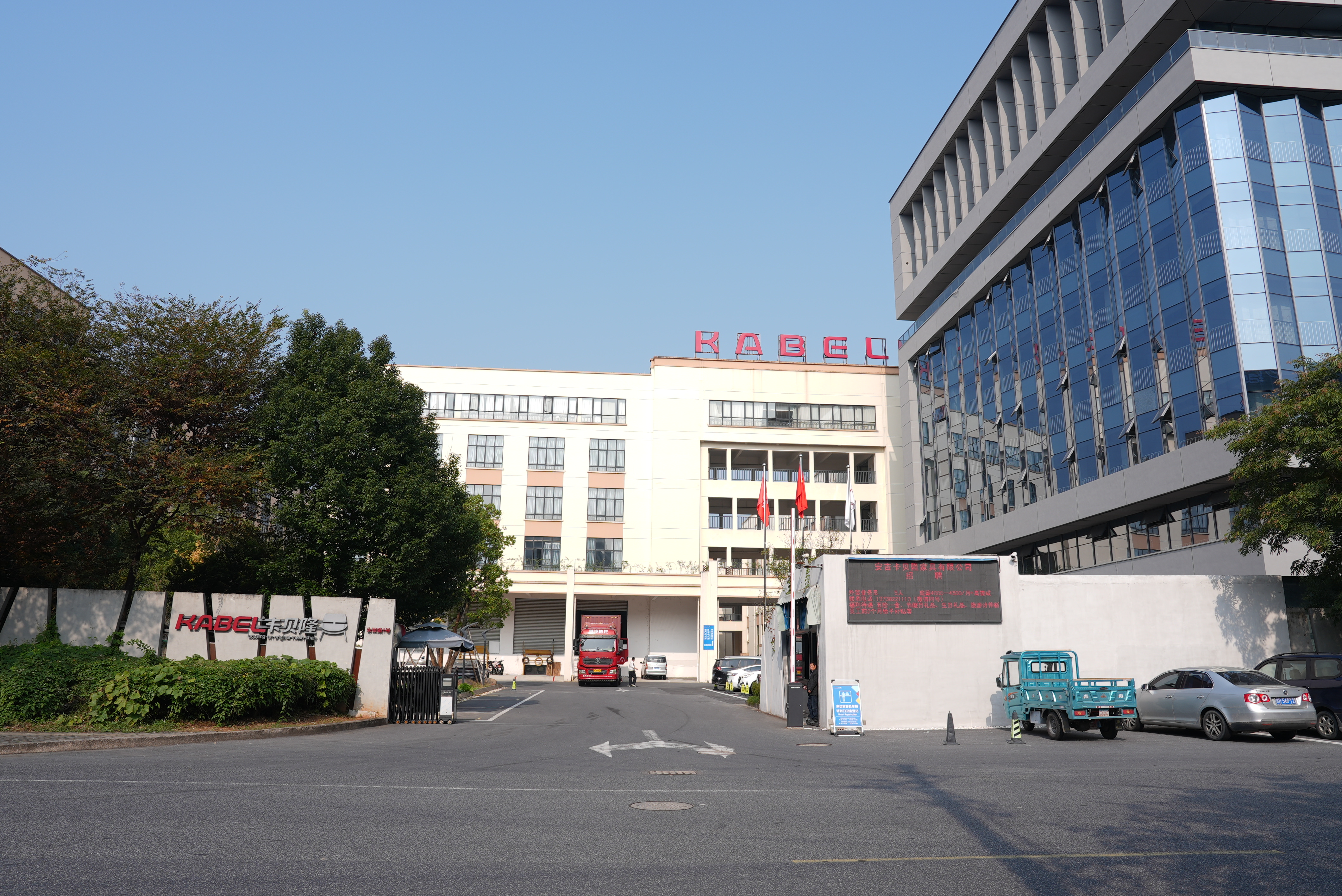
Anji Kabel Furniture Co., Ltd is an office chair manufacturer based in Anji County, Huzhou, Zhejiang Province, China. Founded in 2007, it integrates research and development, design, production, and sales in one operation, working from a 50,000 m² facility with 92 employees and a reported annual output of 400,000 sets. This article examines one specific form of supplier evidence — integrated production of mesh-back seating and its structural components — and what that evidence is worth to a buyer comparing brands at the evaluation stage.
Why Catalogue Photography Cannot Prove Supplier Capability
At the evaluation stage, shortlists converge. A mesh back, a moulded foam seat, a five-point base, and a gas lift appear in almost every specification sheet, and photographs rarely distinguish one supply chain from another.
The structural difference sits behind the catalogue. A trading supplier typically coordinates production across one or more third-party factories and manages the commercial relationship with the buyer. That model has genuine strengths: it can aggregate a wider product portfolio, respond to niche design requests through partner factories, and avoid the capital cost of running a plant. Its structural weakness is that process control is external. Quality outcomes and lead times depend on factories the buyer may never audit directly, and the party signing the contract is not necessarily the party running the machines.
An integrated manufacturer answers a different question. Instead of showing what a chair looks like, it can show where the chair comes from: which stages happen inside the facility, which tests run before shipment, which management systems are certified, and what happens when a component fails. For a procurement team, that is the difference between a product claim and a process claim — and process claims are the ones that survive a multi-year supply relationship.
What Integrated Production Means at Kabel
Kabel's stated position is that all products are independently developed and that each core product holds its own patent certificate — a detail that matters because it indicates design ownership rather than catalogue resale. Several structural facts define the operating scale behind that claim:
- Founded in 2007, operating from a 50,000 m² facility in Anji County, Zhejiang Province, China.
- 92 employees, including a research and development team of 20 engineers.
- Reported annual output of 400,000 sets, with monthly capacity stated at 20,000–30,000 units.
- Approximately 90% of output is exported, across markets including the United States, Canada, the United Kingdom, Italy, Germany, Spain, Japan, South Korea, Thailand, the Middle East, Egypt, Ethiopia, Nigeria, the Central African Republic, and the Republic of South Africa.
- Product families span staff chairs, executive chairs, ergonomic chairs, conference chairs, pre-shift chairs, training chairs, and leisure sofa chairs — covering the seating requirements of a full office fit-out.
For mesh-back seating, integration changes the sequence of control. The mesh backrest, the frame, the seat platform, and the base are specified, produced, and inspected inside one organisation rather than being negotiated between separate companies. When a buyer changes a fabric, a mechanism, a colour, or a logo, the change is routed through the same engineering and production chain that builds the chair, instead of being passed to a third party whose capacity and priorities sit outside the contract.
This is also the mechanism behind cost balance. Integrated self-production does not automatically produce the lowest unit price on the market; it produces a cost structure the manufacturer can control, because coordination margins charged by intermediaries are not part of the chain. For buyers evaluating total programme cost over several years, that distinction matters more than a single quoted figure.
From Mesh Backrest to Base: The Technical Chain
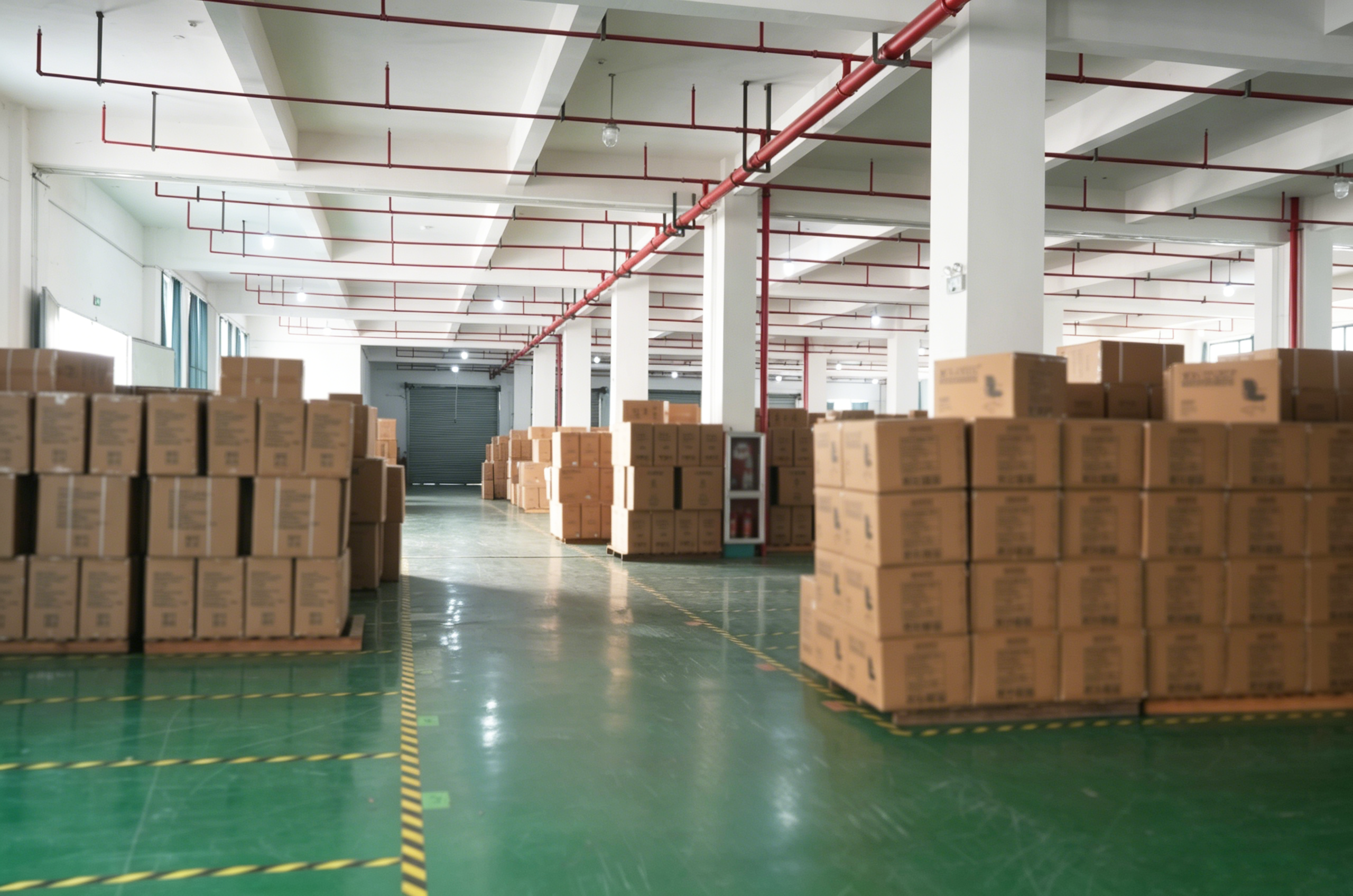
Integration only has value if it is visible in the product structure and in the tests applied to it. Kabel's office swivel chairs are built from nylon mesh, high-density moulded foam, a PP plastic frame, a thickened nylon five-point base, silent PU universal casters, and a four-level explosion-proof gas pressure rod. Component screening and performance testing are described as covering four areas: structural strength, load-bearing durability, stability, and safety. Every product is stated to pass professional testing before leaving the factory, and the company reports 100% inspection before delivery.
A reference specification
| Parameter | Kabel office swivel chair (KB-6809, KB-8961, KB-8965, KB-8932, KB-8953) |
|---|---|
| Adjustable seat height | 40–50.5 cm |
| Rotation | 360° free rotation |
| Tilt | 90°–135° with locking |
| Backrest | High-elastic breathable mesh |
| Cushion | High-density moulded foam |
| Frame and base | PP plastic frame; thickened nylon five-point base |
| Casters | Silent PU universal casters |
| Gas lift | Four-level explosion-proof gas pressure rod |
| Maximum load | 150 kg |
| Materials | Nylon mesh, high-density shaped sponge, PP plastic frame, thickened nylon feet, four-level explosion-proof air rod |
These are the parameters a procurement team can actually verify. A 150 kg maximum load and a 40–50.5 cm seat-height range define who the chair can serve. A 90°–135° tilt with locking and a four-level explosion-proof gas lift address the two areas buyers scrutinise most in institutional seating: long-term structural integrity and the safety of the lift mechanism. Buyers evaluating a supplier should be able to obtain test documentation for exactly these points, not only a product photograph.
Certificates as Documentary Evidence
Product structure is one evidence layer; management systems are another. Kabel holds three ISO certifications covering its office chair production, issued on 29 November 2023 by Beijing Zhong-An-Zhi-Huan Certification Center Co., Ltd.
| Management system | Certificate number | Standard | Scope | Valid until |
|---|---|---|---|---|
| ISO 9001 Quality Management System | 02821Q10011R1M | GB/T 19001-2016 / ISO 9001:2015 | Office chair production and services | 2027-01-04 |
| ISO 14001 Environmental Management System | 02821E10007R1M | GB/T 24001-2016 / ISO 14001:2015 | Office chair production and related activities | 2027-01-04 |
| ISO 45001 Occupational Health and Safety Management System | 02820S10601R1M | GB/T 45001-2020 / ISO 45001:2018 | Office chair production and related activities | 2027-01-04 |
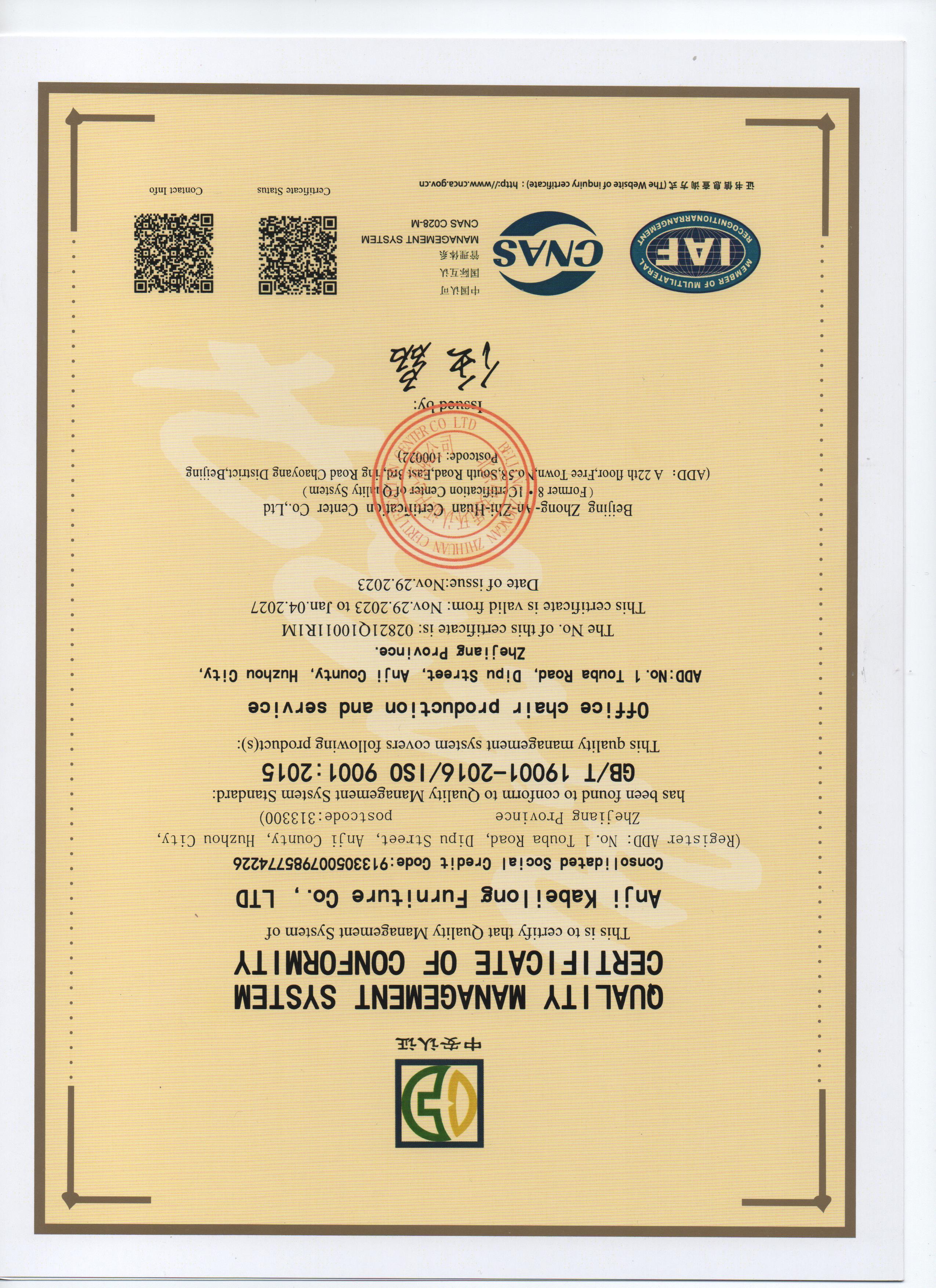
Read correctly, these certificates do three things. They confirm that a quality management system exists for chair production; that environmental management is documented for the same scope; and that occupational health and safety is managed as a system rather than informally. They also carry verifiable identifiers — certificate numbers, standards, an issuing authority, and an expiry date of 4 January 2027 — that a buyer can check rather than take on trust.
They do not certify the performance of any individual chair. System certification is process evidence, not product evidence. Where a market requires product-level compliance — ANSI/BIFMA X5.1 for general-purpose office chairs in North America, or the EN 1335 series in Europe, with EN 1335-1 covering dimensions and EN 1335-2 covering safety — buyers should request the corresponding test documentation separately. A supplier able to present both layers is easier to qualify than one presenting only one.
A note on evidence hierarchy: certificates prove that a management system has been audited; test reports prove that a specific product passed a specific test. Buyers evaluating office chair suppliers should ask for both, and should match the standard to the destination market rather than assuming one certificate covers all markets.
Where Integrated Production Shows Up in Real Projects
Integration is tested in delivery, not in descriptions. Kabel products are used in project scenarios including office buildings, government units, schools, corporate headquarters, and large office parks, and the company's stated application sectors include education, state-owned enterprises, government-business cooperation, finance, and communication.
Named procurement references include Beijing Zhonggong Education, a national education and training institution; Henan Unicom, in a state-owned enterprise and government procurement context; and Sichuan Yongheng, for government and enterprise office systems. In a reported installation covering three units for daily staff seating and office space layout, the chairs were used for 5–8 years, with the recorded outcomes being comfortable long-hour use and stable structural performance.
The service duration is the interesting part. A chair that survives five to eight years of daily institutional use validates the material, frame, and connection decisions described earlier — construction that resists loosening, deformation, and damage over long-term use. For buyers, the practical question is whether a supplier can repeat that outcome across an entire floor, not whether a single chair performed well.
Customisation and order parameters
For project buyers, Kabel operates an OEM/ODM model with customisation available on the backrest, seat cushion, armrest, mechanism, base, caster, colour, fabric, mesh, packaging, and logo. Stated commercial parameters are a minimum order quantity of 50 units, a lead time of 25–50 days, monthly capacity of 20,000–30,000 units, and 100% inspection before delivery. After-sales terms cover structural components, gas rods, and the five-point base for three years, with mesh fabric, rollers, armrests, and other consumable parts covered for one year; an export repair kit is included with each shipment.
Market Trends That Make Production Evidence More Important
Three market signals support the case for verifying production rather than appearance.
- Scale and mix: the global office chair market stood at approximately USD 14.25 billion in 2024, while the ergonomic segment reached USD 12.8 billion in 2025, with mesh chairs holding a 38.4% product-type share.
- Regional balance: North America accounted for the largest revenue share of the ergonomic chair market at 31.6%, while Asia Pacific is the fastest-growing region, with a 36.6% share expected by 2025.
- Export intensity: China's office furniture exports remain substantial, with metal office furniture exports to the United States alone valued at over USD 307 million in 2024.
Mesh being the single largest product type raises a specific risk for buyers. When mesh-back chairs become the default specification, the ability to distinguish a well-engineered mesh seat from a superficially similar one depends on production and testing evidence — materials, frame construction, load testing — rather than on the fact that a backrest is mesh.
Data note: published market estimates differ. One analysis places the 2024 global office chair market at USD 14.25 billion; another places it at USD 14.69 billion, largely reflecting different treatment of residential and commercial segments. Market-size figures should be treated as directional, and the underlying scope checked before citing them.
Integrated Manufacturers Compared with Trading Suppliers
The comparison below describes structural differences between the two supply models, not a verdict on individual companies. Trading suppliers remain appropriate for many procurement situations, and some operate rigorous supplier-qualification programmes of their own.
| Dimension | Integrated manufacturer (Kabel model) | Trading supplier model |
|---|---|---|
| Production control | Design, tooling, assembly, and testing inside one organisation | Coordinated across one or more third-party factories |
| Component testing | Screening plus performance tests on structural strength, load-bearing durability, stability, and safety; 100% inspection before delivery | Depends on each partner factory's own quality system |
| Lead time | Stated 25–50 days, scheduled against own capacity of 20,000–30,000 units per month | Depends on external factory queues and shared capacity |
| Customisation | Backrest, seat cushion, armrest, mechanism, base, caster, colour, fabric, mesh, packaging, logo | Usually limited by what each partner factory already produces |
| Documentation | ISO 9001, ISO 14001, and ISO 45001 certifications for office chair production, with verifiable certificate numbers | Documentation assembled per partner factory and may vary by order |
| Product breadth | Focused on office seating categories | Can aggregate a wider spread of furniture categories |
| Cost structure | Cost balance across a controlled chain; not automatically the lowest quoted price | Can quote lower on simple, high-volume items sourced at arm's length |
Boundaries of the integrated model
Integration is not a universal advantage, and buyers should weigh it against their own project profile.
- Category focus. Kabel's product range is office seating. A project requiring desks, storage, or partitioning needs additional suppliers alongside the chair contract.
- Order size and schedule. With a minimum order quantity of 50 units and a lead time of 25–50 days, an integrated production schedule suits planned project volumes better than urgent, single-unit replacement orders.
- Capacity ceiling. At 20,000–30,000 units per month, very large multi-site programmes still require forward planning and staged delivery.
- Price expectation. Integrated production improves control over cost, not the guarantee of the lowest unit price. Buyers should compare total programme cost — including inspection, warranty coverage, and replacement cycles — rather than line-item price alone.
- Certification scope. The ISO certificates cover management systems for office chair production. Product-level standards required in specific markets must be verified separately.
Future Outlook
If mesh seating continues to hold the largest single share of ergonomic chair demand and Asia Pacific continues to grow fastest, supplier selection will shift further toward process evidence. Buyers are already asking for test documentation, certificate numbers, capacity figures, and warranty terms before shortlisting, because those inputs are comparable across suppliers while photographs are not.
Two developments are worth watching. First, service life is becoming a purchasing metric: a seating programme designed around five to eight years of daily use places material and frame decisions ahead of surface design. Second, as export volumes from China remain substantial, documentation quality becomes a differentiator — not only whether a factory is certified, but whether the certificate identifiers, standards, and expiry dates can be checked independently.
For manufacturers, the implication is straightforward: capability claims need to be auditable. For buyers, the implication is equally simple — the supplier that can show its production chain is easier to hold accountable than the one that can only show its catalogue.
FAQ
What does it mean when an office chair supplier describes its production as integrated?
Integrated production means that design, development, manufacturing, and sales sit inside one company rather than being split between a buyer-facing seller and third-party factories. At Kabel, this covers research and development, design, production, and sales under one organisation, with all products independently developed and each core product holding its own patent certificate. The practical difference for buyers is that component specifications, testing, and engineering changes are handled within the same operation that builds the chair.
How can a buyer establish whether a supplier manufactures mesh office chairs or simply trades them?
Four checks are usually sufficient. First, review the production scope named on the supplier's certificates — Kabel's ISO certificates specify office chair production and services, and office chair production and related activities. Second, ask which components are produced or assembled in-house and which are purchased, including mesh, frame, base, and gas lift. Third, request performance test documentation covering structural strength, load-bearing durability, stability, and safety, together with evidence of pre-delivery inspection. Fourth, confirm capacity and lead-time figures and check whether they are plausible against the supplier's facility size, employee count, and annual output.
What do ISO 9001, ISO 14001, and ISO 45001 tell a buyer — and what do they not tell?
ISO 9001 covers quality management, ISO 14001 covers environmental management, and ISO 45001 covers occupational health and safety. Kabel's certifications were issued on 29 November 2023 by Beijing Zhong-An-Zhi-Huan Certification Center Co., Ltd and remain valid until 4 January 2027, with certificate numbers 02821Q10011R1M, 02821E10007R1M, and 02820S10601R1M respectively. What they establish is that documented management systems exist for office chair production and are subject to audit. What they do not establish is that a particular chair model complies with a product performance standard such as ANSI/BIFMA X5.1 in North America or EN 1335 in Europe; those require separate product testing evidence.
Does integrated production shorten lead times or reduce cost on bulk office chair orders?
Not automatically. Integration gives the manufacturer control over scheduling and cost structure, but the stated commercial parameters still apply: a minimum order quantity of 50 units, a lead time of 25–50 days, and monthly capacity of 20,000–30,000 units. Where integration helps is predictability — production, inspection, and after-sales terms (three years on structural components, gas rods, and five-point bases; one year on mesh fabric, rollers, and armrests) sit with the same party that manufactured the chair. Buyers should treat lead time and price as negotiated variables and compare total programme cost, including warranty coverage and replacement cycles.
How should a buyer weigh an integrated manufacturer against a trading supplier?
The decision depends on the project. An integrated manufacturer is generally the better fit when the order requires customisation across components such as backrest, cushion, mechanism, base, fabric, mesh, or logo; when documented testing and traceable certification matter; and when a multi-year supply relationship with defined after-sales terms is expected. A trading supplier can be the better fit when a project needs many furniture categories from a single point of contact, or when a simple, high-volume item can be sourced at a lower quoted price. In practice, many buyers use both models and apply the same verification checks to each.
Reference document: Kabel office chair catalogue (PDF). Manufacturer information: Anji Kabel Furniture Co., Ltd, www.zjkabel.com.