
Inside Sanyou: Industrial HDPE Sheet Capability and Value
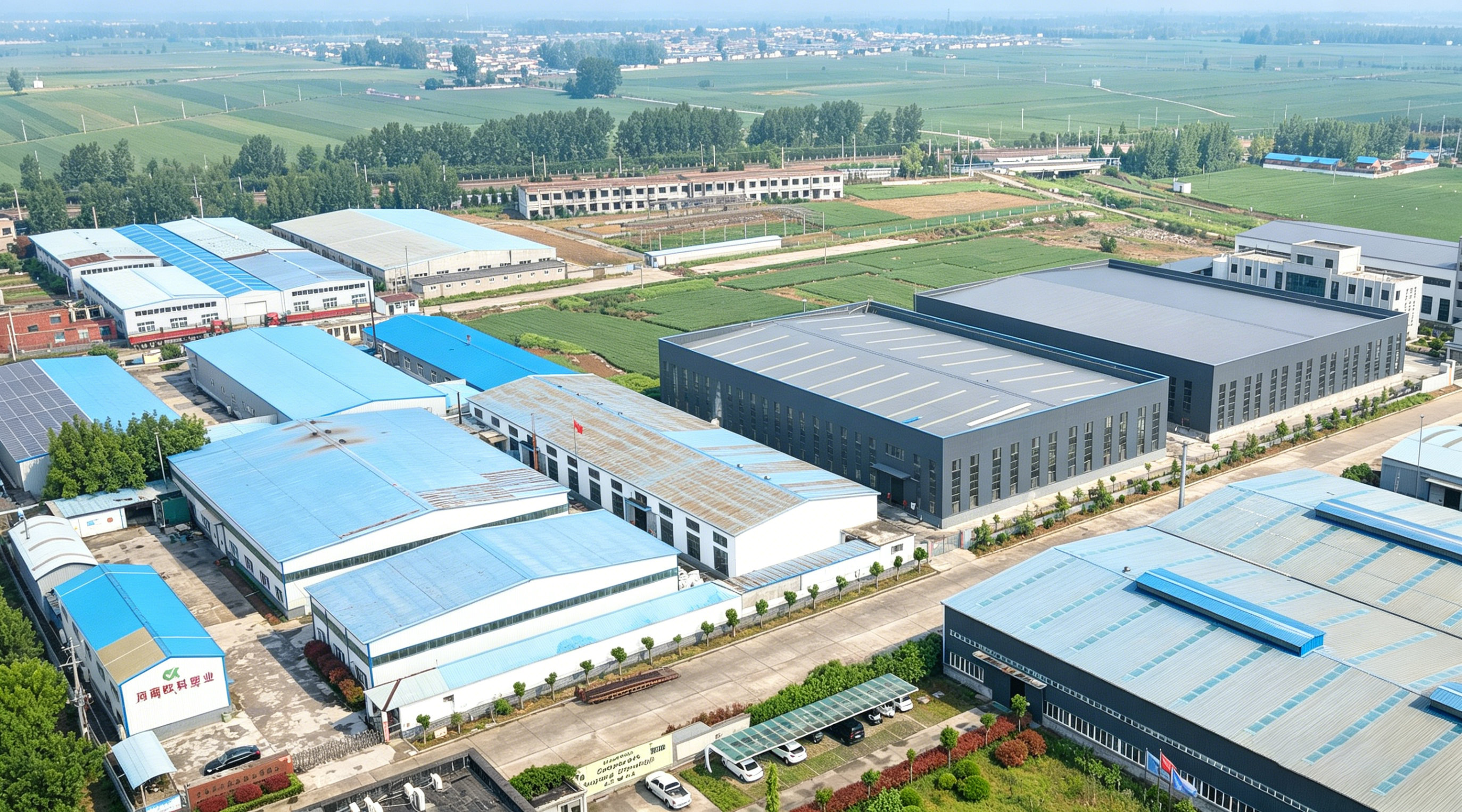
Cover: production facility of Tangyin Sanyou Engineering Plastic Co., Ltd., Tangyin County, Henan, China. Image: Sanyou.
Industrial HDPE sheet is a semi-finished thermoplastic product: flat panels of high-density polyethylene supplied for cutting, welding, machining and installation as linings, protection surfaces, work surfaces and fabricated components. It is specified by grade, thickness, surface texture and documentation rather than by a single brand name. That is why the first useful sourcing question in this category is not which sheet is best, but which supplier can repeat a defined specification at a defined thickness, with documents that hold up in a tender or an audit.
This analysis applies that lens to one manufacturer. Tangyin Sanyou Engineering Plastic Co., Ltd. (Sanyou) is an engineering plastics manufacturer based in Yigou Town, Tangyin County, Henan, China, producing HDPE sheet, UHMWPE sheet, PP sheet, HDPE sandwich board and ground protection mats. The article sets out what the company's published figures support, how its grade logic maps to industrial applications, which parts of the market case rest on verifiable third-party data, and which limits a buyer should test before committing volume.
The discovery problem in industrial HDPE sheet sourcing
At the awareness and research stage, buyers usually meet the same obstacle: supplier pages describe availability, but they rarely describe repeatable production capability. A page may list a grade family, a thickness range and a colour catalogue without stating tolerances, test methods, minimum order quantities or lead times. That gap is not unique to one company. The verified data package assembled for this category records supplier product pages for standard, natural, recycled, UV-resistant and marine-grade HDPE sheet, but finds no normalised datasheet comparison, no independently verified tolerances, and no three-company supplier qualification dataset.
The practical consequence is that discovery should produce questions, not conclusions. Instead of comparing marketing descriptions, buyers can convert supplier claims into four verifiable items: the grade actually produced for the requested specification, the dimensional and thickness tolerance offered, the documentation available for regulated applications, and the commercial terms that determine landed cost. Every section below is organised around those four items.
Sanyou at a glance: manufacturing base, capacity and market reach
Tangyin Sanyou Engineering Plastic Co., Ltd. was founded in 2001 and has more than 20 years of experience in the engineering plastics industry. Its production facility covers 40,000 m², employs approximately 80 staff, and includes a research and development team of 10 engineers. Annual production capacity is stated at 120,000 tons. Export business accounts for 70% of total sales, with main markets in North America, Western Europe, Central Europe, the Middle East, Oceania and Southeast Asia.
| Published company fact | Figure |
|---|---|
| Established | 2001; more than 20 years in engineering plastics |
| Production facility | 40,000 m² |
| Workforce | Approximately 80 employees |
| R&D team | 10 engineers |
| Annual production capacity | 120,000 tons |
| Export share | 70% of total sales |
| Main markets | North America, Western Europe, Central Europe, the Middle East, Oceania, Southeast Asia |
| Main products | HDPE Sheet, UHMWPE Sheet, PP sheet, HDPE Sandwich Board, Ground Protection Mat |
| Location | Yigou Town, Tangyin County, Henan, China |
Two of these figures matter more than the rest for a procurement decision. A 70% export share implies routine handling of export documentation, packing specifications and non-domestic quality expectations, because repeat export business is difficult to sustain without those processes. A 120,000-ton annual capacity figure, combined with a 40,000 m² facility, indicates a supplier sized for volume programmes rather than one-off cutting. Both figures are self-reported operating data, so they establish scale claims rather than independently audited capacity; buyers running formal supplier qualification should treat them as a starting point for verification.
Product portfolio and grade logic
Sanyou's listed portfolio covers HDPE sheet (PE300), UHMWPE sheet (PE1000), polypropylene sheet (PP-H / PP-C), HDPE sandwich board, ground protection mats, plastic liners and wear-resistant sheet. For an industrial buyer, the portfolio matters less as a product count than as a sign of conversion range: the company markets both a general-purpose corrosion and fabrication material and a wear-focused material, which allows one supplier relationship to cover liner, panel and protection components on the same project.
The HDPE sheet grade structure is the most directly relevant to this analysis. PE300 is listed as available in virgin HDPE, recycled HDPE, UV-stabilized HDPE and marine-grade HDPE forms, and is classified within the coloured HDPE sheet and orange peel textured HDPE sheet categories. Virgin grade is positioned for food-contact, potable water and high-reliability projects where consistent mechanical performance and strict hygiene requirements apply. Recycled grade is positioned for non-critical corrosion lining where cost efficiency matters more than tight mechanical consistency. UV-stabilized grade is positioned for long-term outdoor exposure, where the objective is to reduce aging and chalking.
Thickness guidance published for the HDPE range is application-linked: 5–6 mm for light-load lining, 6–20 mm for tank walls and structural panels, and 20–50 mm for heavy-wear chute liners. The PE300 product listing states a 2–50 mm thickness range with custom options, sheet formats of 1000 × 2000 mm, 1220 × 2440 mm, 1500 × 3000 mm and 2000 × 4000 mm, and a surface finish available as smooth or anti-skid in diamond, orange peel or embossed patterns. The 1220 × 2440 mm format is the metric equivalent of the 4 × 8 ft industrial HDPE board format that many buyers specify by default.
One point deserves explicit flagging rather than smoothing over. A separate company product listing records an HDPE sheet thickness range of 1–100 mm with widths up to 2500 mm, which does not match the 2–50 mm range on the PE300 page. This is normal in a portfolio that spans multiple grades, but it means the thickness and width a buyer receives should be confirmed for the specific grade and order, not inferred from the broadest published range.
Technical explanation: reading the listed specification
Listed properties are most useful when they are converted into service implications. The table below reproduces the published PE300 specification and adds the procurement reading beside each value.
| Listed property | Value | What it means for selection |
|---|---|---|
| Density | 0.93–0.97 g/cm³ | Confirms HDPE-class material; density should be checked against the grade ordered, since it varies with formulation. |
| Thickness | 2–50 mm, custom available (separate listing states 1–100 mm) | Coverage for lining, panel and wear-plate duties; confirm the exact range produced for the chosen grade. |
| Tensile strength | ≥ 22 MPa | Indicates a sheet able to carry mechanical fixing and moderate structural duty in fabricated equipment. |
| Elongation at break | ≥ 300% | Suggests ductile rather than brittle behaviour under impact and bending. |
| Hardness | 60–68 Shore D | Consistent with a semi-rigid sheet that machines cleanly but still resists surface damage. |
| Impact strength | ≥ 20 kJ/m² | Relevant to chute liners, mats and guards exposed to dropped or moving loads. |
| Melting point | 130–140 °C | Sets the ceiling for welding and thermoforming processes, not the service ceiling. |
| Working temperature | −60 to +80 °C | Defines the practical service window; above this, alternative materials should be considered. |
| Water absorption (24 h) | < 0.01% | Supports washdown environments, wet processing and outdoor exposure without dimensional swell. |
| Coefficient of friction | 0.15–0.25 | Explains the material's use in low-friction liners and sliding-contact components. |
| Chemical resistance | Listed as excellent to acid, alkali, salt and oil | Basis for corrosion-resistant fabrication in chemical and water treatment service. |
| Surface | Smooth, or anti-skid diamond, orange peel, embossed | Texture selection is a function of traction and cleaning requirements, not aesthetics. |
| Fabrication | Weldable, cuttable, CNC machinable | Allows the same sheet to be supplied as a cut-to-size panel or a finished machined component. |
| Listed certification | ISO 9001 | Quality-management reference; it is not a product-performance certificate. |
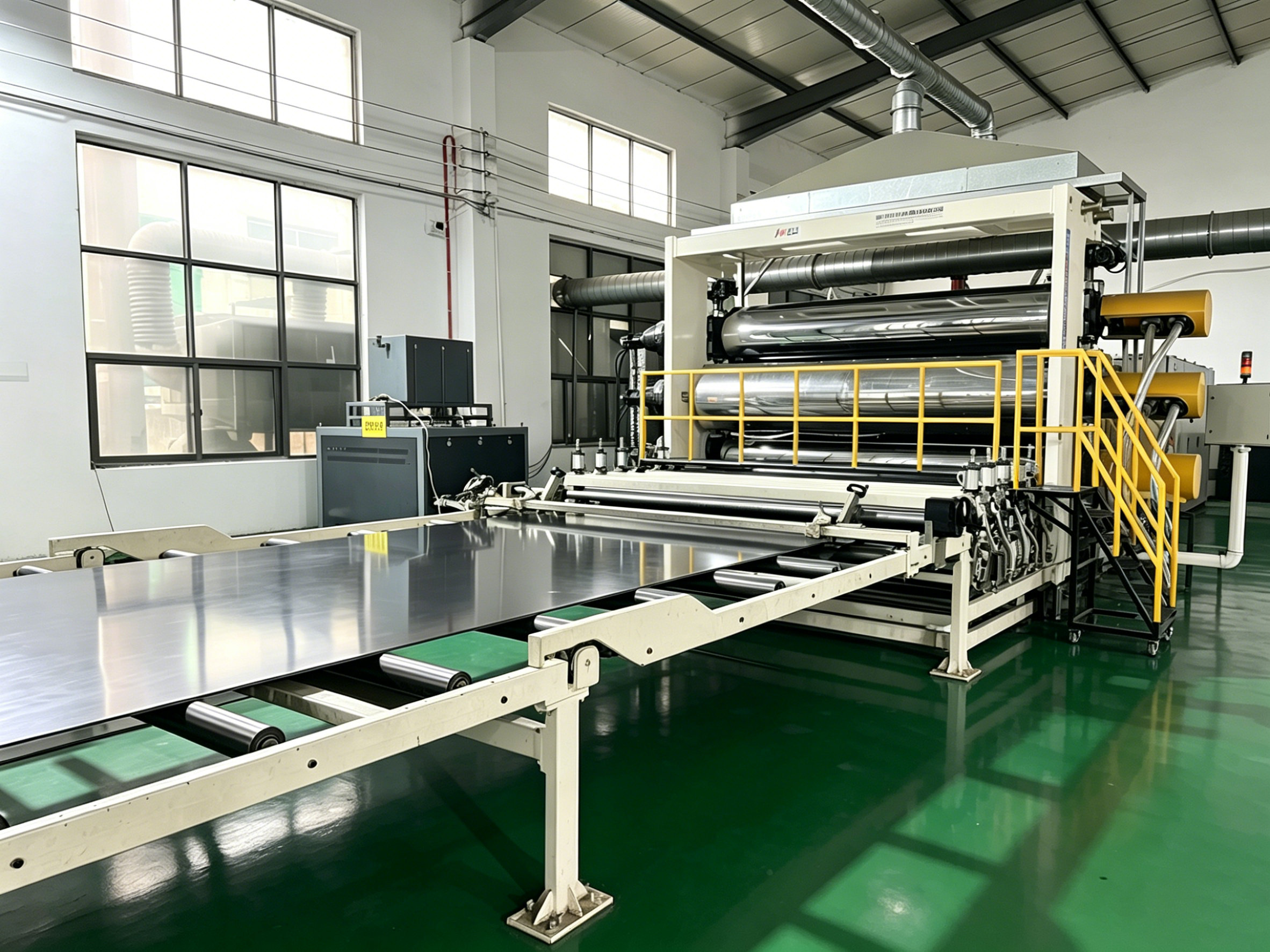
Extrusion line producing polyethylene sheet. Sheet forming, cutting and machining capability determines how closely a supplier can hold a specified format. Image: Sanyou.
Application and use cases
Published application data links HDPE sheet to ten industrial sectors: chemical processing and water treatment; food and beverage processing; machinery manufacturing and industrial automation; marine and shipbuilding; construction and building materials; agriculture and livestock farming; outdoor furniture and playground equipment; signage and advertising; cold chain and refrigeration; and packaging, logistics and material handling. The material also appears in chemical storage tanks, wastewater treatment equipment, food processing tables and cutting boards, machine guards, jigs and fixtures, CNC-machined components, marine panels, outdoor cabinets, agricultural equipment and cold-storage equipment.
A second HDPE application family is ground protection. Sanyou's ground protection mat is produced from HDPE using recycled or application-specific formulations depending on the model, and is supplied as a heavy-duty mat, lightweight mat, temporary road mat, track mat, turf protection mat and pedestrian access mat. Panel sizes cover 4 × 8 ft, 3 × 8 ft, 3 × 6 ft, 2 × 8 ft, 2 × 6 ft and 2 × 4 ft, with standard metric sizes of 1220 × 2440 mm, 910 × 2440 mm, 910 × 1830 mm, 610 × 2440 mm, 610 × 1830 mm and 610 × 1220 mm. Thickness options are 12.7 mm, 15 mm and 20 mm, with diamond cleat or flat oblong tread surfaces, integrated hand holes, preformed connection holes and mat connectors.
These mats are used in construction, civil engineering, oil and gas, utilities, power transmission, drilling, landscaping, tree care, outdoor events, heavy equipment, mining, infrastructure, military and emergency access. The published load reference is up to 80–120 metric tons, depending on thickness, ground conditions, vehicle type and installation. That dependency is the important part: it is a conditional reference, not a guaranteed capacity, and it should be matched to a ground bearing assessment and contact-pressure check before deployment.
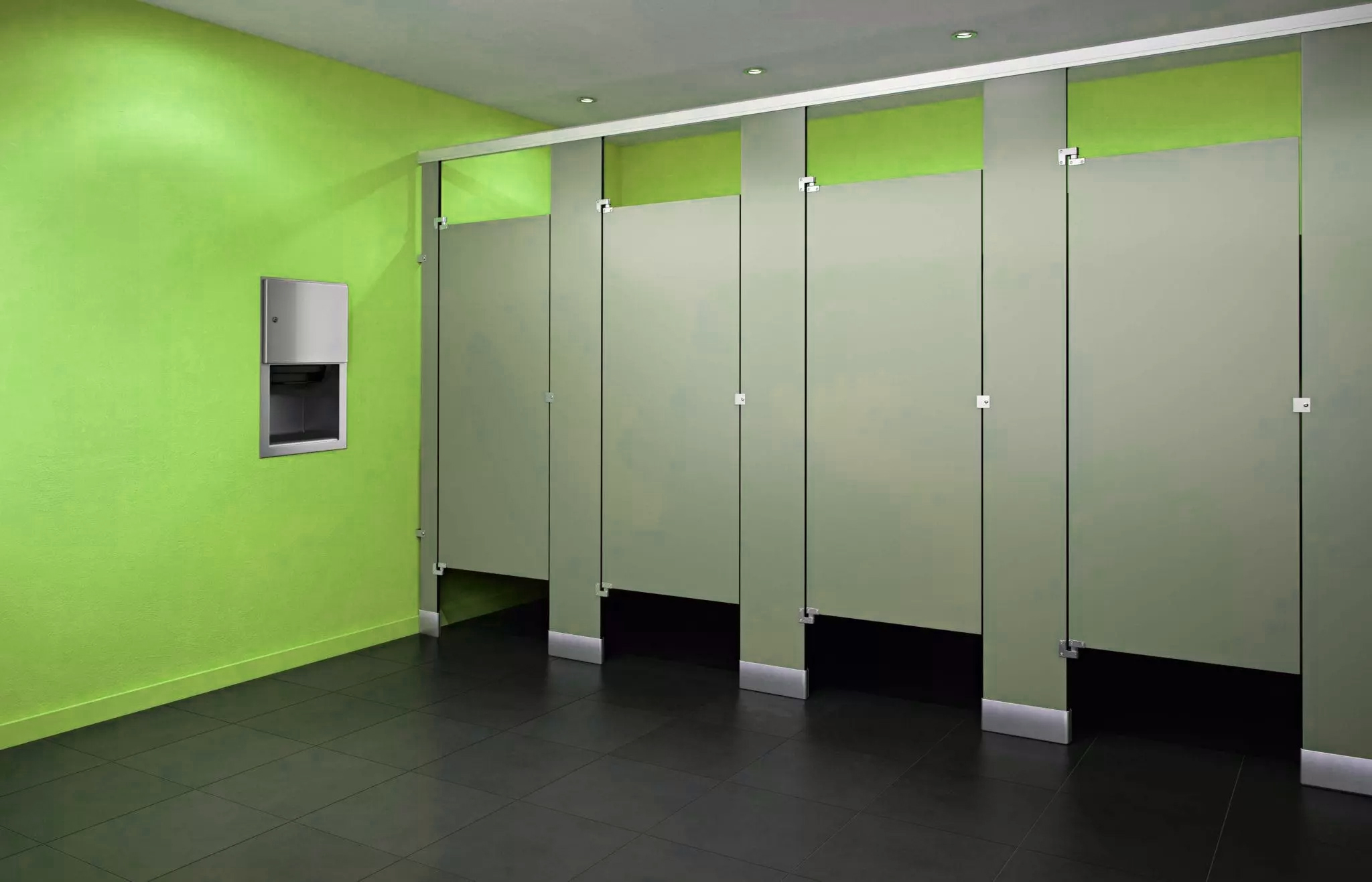
Industrial HDPE sheet is supplied into fabricated tanks, panels, guards, machined parts and handling equipment across chemical, food, marine and construction applications. Image: Sanyou.
Market trend analysis: what the verified data supports
Three data points in the verified package are usable for trend framing, and each has a stated scope that should be preserved.
First, the global HDPE market was valued at USD 84.37 billion in 2023 and is projected to reach USD 126.86 billion by 2030, a 6% CAGR over 2024–2030, according to commercial market research from Virtue Market Research. This is a resin-level figure covering all grades and applications, not a sheet-level figure.
Second, the sheets and films segment represented approximately 41.1% of global HDPE demand share in 2024, based on commercial market research. If that share holds, semi-finished sheet is not a niche outlet for the polymer — it is one of the largest ways HDPE is consumed, which supports why conversion capability (extrusion, forming, cutting, machining) matters as much as resin supply in supplier selection.
Third, the ground protection mat segment, primarily driven by HDPE and composite mats, was valued at USD 3.0 billion in 2024 and is estimated to reach USD 5.0 billion by 2035 at a 4.6% CAGR, according to the same commercial research stream. This is the one application-specific growth signal available in the data package.
Cost pressure is also visible at the feedstock level. Black recycled HDPE resin pellets were reported at approximately USD 520 per metric ton FOB Southeast Asia in September 2026 by S&P Global Platts, an authoritative price-reporting source. For buyers, recycled grade is now a priced, comparable input rather than an informal cost-saving option, which makes grade substitution a commercial decision that should be documented in the RFQ.
Comparison with traditional solutions
HDPE sheet is usually evaluated against steel, plywood and timber, and the comparison is only useful when the limitation is stated alongside the advantage.
| Factor | Industrial HDPE sheet | Carbon steel | Plywood / timber |
|---|---|---|---|
| Corrosion behaviour | Listed as excellent resistance to acid, alkali, salt and oil; does not rot or become waterlogged | Requires coating, lining or alloy selection in wet and chemical service | Degrades with moisture, rot and fungal attack |
| Weight | Low density (0.93–0.97 g/cm³) relative to metal | High; handling and installation require lifting equipment | Moderate, but strength drops sharply when wet |
| Maintenance | Low; washable, water absorption below 0.01% over 24 hours | Coating repair and corrosion inspection cycles | Repeated replacement; splintering and delamination |
| Friction and flow | Coefficient of friction 0.15–0.25; used for low-friction liners and wear plates | Good abrasion resistance, but can abrade sliding counterparts | High friction; poor under wet abrasion |
| End of life | Recyclable alternative to plywood and steel plates in ground protection use | Scrap value, but energy-intensive to produce and re-form | Limited reuse; disposal burden |
| Principal limitation | Not a structural substitute for steel in high-stiffness or elevated-temperature duty; listed working range is −60 to +80 °C; standard grades require UV stabilization for prolonged outdoor sun exposure, where they may chalk and embrittle | Corrosion, weight and installation cost in aggressive environments | Short service life and inconsistent mechanical properties |
The limitation column is the one that protects a project budget. Two constraints are well documented in the verified data. First, standard HDPE is not UV-stabilized and may chalk or embrittle under prolonged outdoor sun exposure, which is why UV stabilization must be specified as a grade attribute rather than assumed from the material name. Second, the working temperature window of −60 to +80 °C excludes the material from many high-temperature process positions where steel or higher-temperature polymers remain appropriate. A third, commercial constraint is that neither verified price, MOQ, lead time nor freight data for industrial HDPE sheet exists in the current data package, so landed-cost comparison cannot be completed from public sources alone.
Grade selection and procurement criteria
Selection should follow the working conditions rather than the product name. The sequence that produces a defensible specification is: working temperature, chemical medium, load and impact condition, indoor or outdoor exposure, contact-material requirements, and machining or fabrication needs. Only after those are fixed does grade, thickness, surface and modification follow.
- Virgin HDPE sheet — recommended where food-contact, potable water or high mechanical reliability is required.
- Recycled HDPE sheet — recommended for non-critical corrosion lining where strict mechanical consistency is not required; properties must be confirmed against the recycled grade supplied.
- UV-stabilized HDPE sheet — required for long-term outdoor exposure, where the objective is reduced aging and chalking.
- Marine grade HDPE sheet — positioned for marine and shipbuilding environments alongside moisture and salt exposure.
- Wear-resistant and low-friction grades — addressed in Sanyou's portfolio through UHMWPE sheet (PE1000), which is listed in virgin, reprocessed, anti-static, UV-stabilized, flame-retardant, marine, lining and MoS₂-filled forms, with compression moulding, cut-to-size and CNC machining available.
For chemical containment and ventilation fabrication specifically, the same supplier's polypropylene sheet (PP-H / PP-C) is listed at a density of approximately 0.90–0.91 g/cm³, in thicknesses from 2–30 mm and a standard 1220 × 2440 mm format, produced by extrusion and used for fabricated tanks, ducts and containers. Buyers choosing between HDPE and PP sheet should decide on temperature and chemical compatibility first, since the two materials occupy overlapping but not identical service windows.
Limitations and qualification boundaries
A supplier evaluation is not complete without the constraints. Four are directly relevant to Sanyou as documented:
- Option-dependent performance. UV resistance and food-grade availability are listed as options rather than baseline properties of every sheet. If the application needs them, they must appear in the purchase specification and in the order confirmation.
- Documentation, not labels. A food-grade listing is a material claim, not proof of regulatory conformity. Supplier technical guidance identifies FDA 21 CFR 177.1520 and EU Regulation 10/2011 as the relevant reference frameworks for food-contact polyethylene, and ASTM D4976 as a baseline polyethylene material specification, but official texts were not independently verified in this research cycle and no supplier-specific declaration of compliance was located. Buyers in regulated markets should request a declaration of compliance, resin and additive traceability, and applicable migration or conformity testing.
- Range ambiguity. The published thickness ranges for Sanyou HDPE sheet differ between company listings (2–50 mm and 1–100 mm). Production reality for a specific grade should be confirmed in writing.
- Commercial data gap. No verified MOQ, lead time, tooling or price data for industrial HDPE sheet exists in the public record reviewed here, and the verified data package explicitly records that no factory-capacity or third-party supplier qualification evidence was found for any sheet producer in this category.
Procurement value: what the Sanyou facts mean for a buying decision
The strongest procurement arguments for Sanyou rest on portfolio breadth and conversion range rather than on isolated product claims. A buyer can source HDPE sheet, UHMWPE sheet, PP sheet, sandwich board and ground protection mats from one manufacturer with more than 20 years of operating history, a 40,000 m² facility, a 10-engineer development team and a 70% export share across North America, Western Europe, Central Europe, the Middle East, Oceania and Southeast Asia. Custom colours, sizes, thicknesses and textures are available, and HDPE sheet is weldable, cuttable and CNC machinable, which shortens the path from material sourcing to finished component.
The profile fits three buyer types particularly well: importers and distributors who need multi-grade supply from a single qualified source; fabricators who require cut-to-size and machined HDPE parts alongside sheet; and project buyers who need HDPE ground protection mats with size, tread, connection and marking customisation. Buyers with the tightest requirements — independently certified food-contact documentation, verified thickness tolerances, or published third-party performance test reports — should treat those items as qualification gates and confirm them directly before volume commitment.
The Sanyou product catalog can be downloaded for specification reference: Sanyou Product Catalog (PDF).
Future outlook
Three shifts are likely to shape industrial HDPE sheet sourcing over the next several years. The first is documentation-first procurement: as recycled and food-contact grades proliferate, the ability to issue a declaration of compliance and traceable resin and additive records will separate suppliers more clearly than catalogue breadth. The second is grade economics: with recycled HDPE feedstock now priced transparently in published indices, recycled-content sheet will increasingly be chosen on measurable cost and performance grounds rather than on sustainability messaging alone. The third is data maturity: industrial HDPE sheet currently lacks verified segment-level market sizing, trade data with a validated customs subheading, and comparable performance test datasets. Until those gaps close, buyers should expect to build their own comparison through standardised RFQs, sample testing and batch documentation — and suppliers who volunteer that evidence early will have an advantage in qualified shortlists.
FAQ
1. What factors should be considered when selecting industrial HDPE sheet for a project?
Selection depends mainly on working temperature, chemical medium, load and impact condition, indoor or outdoor exposure, contact-material requirements, and machining or fabrication needs. Those conditions determine the appropriate grade, thickness, surface and modification type. General guidance places the continuous service temperature of HDPE at roughly −40 °C to +80 °C, while the Sanyou PE300 listing states −60 °C to +80 °C; the applicable range for the specific grade should be confirmed. Virgin grade is used for food-contact, potable water and high-reliability work, recycled grade for non-critical corrosion lining, and UV-stabilized grade for long-term outdoor exposure.
2. Which industrial HDPE sheet thickness suits which application?
Published thickness guidance links 5–6 mm to light-load lining, 6–20 mm to tank walls and structural panels, and 20–50 mm to heavy-wear chute liners. The PE300 product listing covers 2–50 mm with custom options, while a separate company listing records 1–100 mm. Ground protection mats are listed at 12.7 mm, 15 mm and 20 mm. Because thickness selection interacts with span, load and chemical exposure, the final thickness should be confirmed against the specific duty rather than chosen from a table alone.
3. How should buyers verify food-grade or UV-resistant HDPE sheet claims?
Neither claim is self-proving. For food-contact use, request a declaration of compliance, resin and additive traceability, and the applicable regulatory references — supplier technical guidance points to FDA 21 CFR 177.1520 and EU Regulation 10/2011, with ASTM D4976 as a baseline polyethylene material specification, although official texts were not independently verified in this research cycle. For UV resistance, request the stabilizer system used, whether a carbon-black formulation is applied, the test method behind the claim, and the expected exposure environment, since standard HDPE is not UV-stabilized and may chalk or embrittle under prolonged sun exposure.
4. What should be checked before deploying HDPE ground protection mats on site?
The published load reference is up to 80–120 metric tons, which depends on mat thickness, ground conditions, vehicle type and installation method, so it functions as a conditional reference rather than a fixed capacity. A site check should cover ground bearing capacity, vehicle weight and contact pressure, mat thickness selection, anti-slip tread pattern, condition of connectors and preformed connection holes, UV exposure, safe handling, and the installation layout across the trafficked route.
5. Is published information sufficient to qualify a manufacturer such as Sanyou without an RFQ?
Published facts cover company scale and product structure — established 2001, more than 20 years in engineering plastics, a 40,000 m² facility, approximately 80 employees, 10 R&D engineers, 120,000 tons annual capacity, 70% export share, and an ISO 9001 listing on the HDPE sheet specification. They do not cover thickness tolerances, minimum order quantity, lead time, price basis, or independent performance test reports, and no verified factory-capacity or third-party qualification dataset for this category was located. A structured RFQ plus a document request remains necessary before a supplier can be formally qualified.
Есть вопросы или нужны дополнительные детали?
Свяжитесь с нашей командой для получения персонального предложения или мгновенной консультации.
Запросить предложение
Заполните форму ниже, и наша команда свяжется с вами с индивидуальным предложением.
Прямой чат WhatsApp
Предпочитаете общаться в реальном времени? Напишите нам в WhatsApp для мгновенной помощи и быстрых ответов.
- Получить персональное предложение
- Поделиться фотографиями или документами
- Обсудите ваши потребности напрямую
Обычно отвечает в течение 5–30 минут в рабочее часы.