
Inside TYJ Toyota Replacement Parts: Manufacturing Evidence
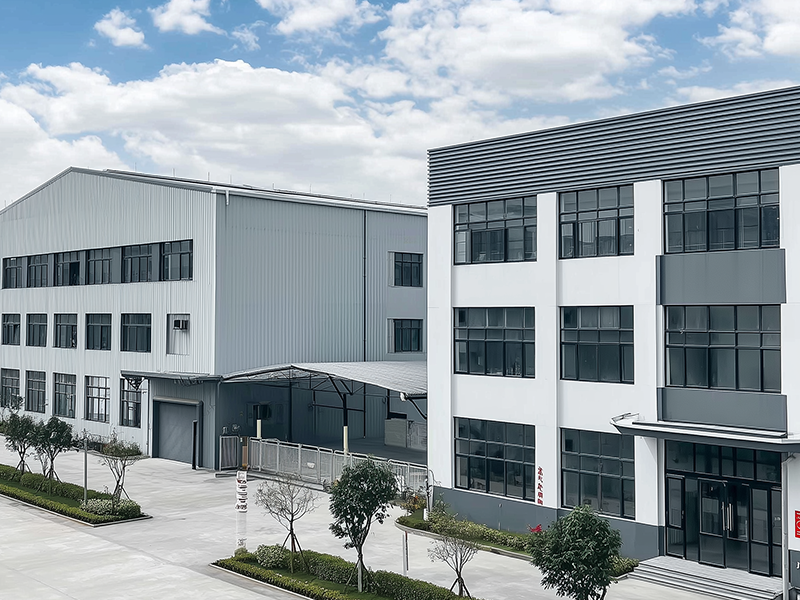
Gold Auto Part (Ruian Golden Import and Export Co., Ltd.) supplies Toyota replacement parts — exterior body parts, lamps and filtration components — to importers, wholesalers and distributors.
Toyota replacement parts is a category in which supplier claims have converged: the same fitment lists, the same vehicle coverage, the same adjective. For importers, distributors and workshops at the decision stage, the differentiating question is narrower — which supplier can present part-level evidence that can be checked, scheduled and traced? This analysis works through the TYJ parts program of Ruian Golden Import and Export Co., Ltd. using concrete product, process and logistics facts rather than promotional language.
Why Toyota Replacement Parts Sourcing Has Become an Evidence Problem
Demand for Toyota-specific aftermarket parts is structurally stable. Toyota held an 11.4% share of the total global automotive market in 2026, maintaining its position as the leading brand, and Toyota Kirloskar Motor reported 17% year-on-year sales growth in April 2026 in India — both indicators that the installed vehicle base behind brand-specific parts continues to expand. Collision-driven demand follows the same curve: the global automotive collision repair market, the segment that pulls bumpers, grilles and body panels through the supply chain, was valued at USD 208.0 billion in 2025 (Grand View Research).
The broader aftermarket is large and growing. The global automotive aftermarket was estimated at USD 860.08 billion in 2025 and is predicted to reach USD 1,482.12 billion by 2035 (Vertex AI Search / Market Analysis). Published estimates vary widely by scope and methodology — Grand View Research places the 2025 figure at USD 489.5 billion — but the direction is consistent: the average age of vehicles on U.S. roads reached 12.6 years in 2026 (Business Research Insights), which keeps replacement demand high regardless of new-vehicle sales cycles.
The sourcing problem, therefore, is not availability. It is comparability. Two suppliers can quote the same Toyota bumper, the same Toyota grille and the same Toyota headlamp assembly and still deliver very different outcomes, because the variables that decide those outcomes — polymer grade, tooling condition, seal testing, packaging construction, batch traceability — are rarely published. Decision-stage buyers increasingly evaluate suppliers on those variables rather than on catalog length.
Five Evidence Categories Buyers Can Actually Audit
Claims such as “OEM quality” cannot be audited. The following evidence categories can be, because each corresponds to a document, a test record or a scheduled activity that a buyer or third-party inspector can request.
| Evidence category | What can be verified | Decision value for the buyer |
|---|---|---|
| Polymer and material specification | Optic-grade PC and ABS polymers for lamp lenses; ABS/PP injection-molded compounds for exterior body parts | Material grade drives UV stability, impact behaviour and paint adhesion; a named compound can be tested on receipt |
| Tooling and process control | Preventative maintenance enforced every 50,000 molding cycles; critical mold tolerances monitored with high-precision coordinate measuring machines (CMM) | Fitment consistency across production batches, not only first-article samples |
| Inspection protocols | 100% airtightness pressure testing on headlight housing seals before packaging; optical photometric testing during the design phase; batch-level tracing on lens laser markings | Detects water ingress and photometric drift before shipment; supports batch-level claims handling after arrival |
| Packaging engineering | Custom-engineered double-wall corrugated cartons with precision-cut shock-absorbing foam inserts; peelable anti-scratch protective film on outer lenses and high-gloss chrome surfaces | Reduces breakage and cosmetic rejects at destination — the most common source of landed-cost surprises |
| Supply continuity | Long-term strategic contracts with major plastic polymer suppliers; a two-month safety buffer stock of critical electronic components such as LED chips and driver chips | Protects delivery schedules against resin price spikes and electronic component delays |
What Gold Auto Part Supplies, and Where It Ships
Ruian Golden Import and Export Co., Ltd., which trades as Gold Auto Part, is a professional automotive parts exporter based in Ruian, Wenzhou, Zhejiang Province, China — one of the country's most established automotive parts manufacturing hubs. The company is registered as a manufacturer and exporter of hardware fittings and auto parts in Wenzhou, and its catalog is published at www.goldautopart.com.
The product range covers engine valves, Toyota exterior parts, oil filters, air filters and a broad catalog of replacement parts for passenger cars and light commercial vehicles — the combination of mechanical, body and filtration components that importers and distributors typically consolidate into a single container program. The company serves importers, wholesalers and distributors across the Middle East, Saudi Arabia, the UAE, South America, Southeast Asia, Africa and Europe, and lists the United States among its main markets. That market orientation is consistent with trade data: China's exports of motor vehicle parts to the United States reached USD 11.54 billion in 2024 (UN Comtrade).
Quality management is positioned at the supply-chain level rather than as a single certificate. The company states that its supply chain partners operate under ISO 9001 and IATF 16949 quality management standards. IATF 16949:2016 is the global quality management standard for the automotive industry and is mandatory for many OEM suppliers (International Automotive Task Force), which makes it the relevant benchmark when an importer audits an aftermarket supply chain. Every product batch is subject to dimensional inspection, material verification and performance testing before shipment.
Technical Evidence Inside the Lamp Program
For Toyota headlamp assemblies, the visible specification is rarely the deciding one. The deciding factors are lens material, coating, seal integrity and traceability — all four of which appear as defined controls in the TYJ program.
Lamp lenses are produced from premium optic-grade PC and ABS polymers, with a UV-resistant hard coating applied to the lens surface. In material terms, polycarbonate contributes optical clarity and impact resistance, while ABS contributes dimensional stability and processability — general polymer characteristics that explain why the pairing is widely used for exterior lighting. For the buyer, the practical consequence is that a named, optic-grade compound is a specification that can be received-inspected, rather than a marketing descriptor. The UV-resistant hard coating addresses the most common long-term failure mode of exterior lenses in high-sunlight markets.
Before packaging, headlight housing seals are subjected to 100% airtightness pressure testing. The distinction matters: a sample-based check confirms that a production line is capable, whereas 100% testing is a per-unit gate that removes defective units from the shipment. Water ingress is the failure that most often generates warranty complaints on aftermarket lamps months after installation, and it is precisely the failure this check targets.
Optical photometric testing is conducted during the design phase, and lens laser markings carry batch-level tracing codes. Design-phase photometric testing addresses beam pattern and intensity before tooling is committed — the point at which correction is still inexpensive. Laser-marked batch codes allow a specific lens to be traced back to its production batch after it has reached a distributor's warehouse, which is what makes a defect claim resolvable rather than negotiable. For regulated markets, this sits inside a wider compliance requirement set: headlamp products are expected to satisfy FMVSS-108, DOT, SAE and E-Mark requirements, with DOT/SAE registrations secured through accredited laboratories.
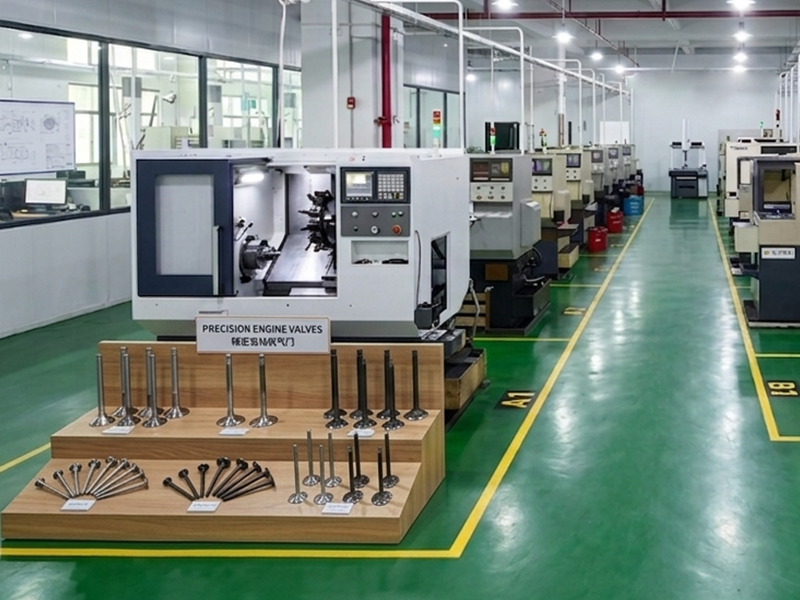
Quality commitment in the TYJ program is expressed as named polymers, 100% airtightness pressure testing on headlight housing seals, and batch-level tracing on lens laser markings.
Fitment, Tooling and Structural Evidence in Exterior Body Parts
Toyota bumper and Toyota grille programs fail differently from lamps. The visible defect is not light output; it is gap and alignment — a panel that sits 3 mm wide on one side, or a bracket that does not meet the fender line. Fitment consistency is therefore the measurable output of tooling control.
In the TYJ program, injection-molded ABS/PP components are produced with 100% precise CNC-milled matching slots, and the material is described as delivering four times higher structural flexibility than fiberglass (FRP) alternatives. Structural flexibility influences how a bumper cover absorbs low-speed contact and how it behaves during installation, when clips and brackets are placed under load.
Tooling is managed as a consumable asset rather than a fixed cost. Preventative maintenance is enforced on a strict schedule every 50,000 molding cycles, and critical mold tolerances are monitored using high-precision coordinate measuring machines so that worn inserts are replaced proactively. For a buyer comparing suppliers by landed cost, this is the detail that determines whether the tenth container matches the first — mold wear is a gradual process, and tolerance drift is normally invisible until fitment complaints arrive from end customers.
Design validation also includes legal due diligence: patent databases are reviewed before mold development, and the program focuses on exact-replacement fitment specifications for the automotive aftermarket rather than reproducing decorative brand logos. For distributors selling into markets with active IP enforcement, that process protects the buyer's inventory as much as the supplier's tooling.
Packaging and Logistics: The Evidence Most Suppliers Never Publish
Transit damage — broken mounting brackets, scratched lenses, scuffed chrome — is the most under-priced risk in aftermarket parts importing, because it is invisible on the quotation and obvious on arrival. The company's response is specified rather than described: custom-engineered double-wall corrugated cartons with precision-cut shock-absorbing foam inserts, plus peelable anti-scratch protective film applied to all outer lenses and high-gloss chrome surfaces.
Each element addresses a specific failure mode. Double-wall corrugated board resists stacking compression in a container; precision-cut foam inserts immobilize lamp housings and brackets so that shock is absorbed by the insert rather than by the mounting points; peelable film protects the optical surface and chrome finish during handling, and is removed before installation rather than being cleaned off with abrasive compounds.
The TYJ catalog uses part-level references such as TYJ-01-1080 and TYJ-CRS21-001, and that part-level granularity is the appropriate unit at which a buyer should confirm fitment, packaging configuration and inspection documentation on any aftermarket order. Protective packaging is not costless: double-wall cartons and foam inserts add volume and weight per unit, which buyers weigh against damage rates, replacement-shipment costs and the labour involved in processing claims.
Supply Continuity and Raw Material Risk
Resin price spikes and delays in electronic components such as LED chips and driver chips are the two supply-side events that most often break an aftermarket delivery schedule. Polymer and semiconductor input pricing is volatile by nature, and a supplier without contractual or inventory buffers passes that volatility directly to the buyer's delivery dates.
The stated controls are structural: long-term strategic contracts with major plastic polymer suppliers, and a two-month safety buffer stock of critical electronic components including LED chips and driver chips. A two-month buffer is a meaningful number for program planning — it does not eliminate component risk, but it converts a short-notice allocation problem into a schedule that can be discussed and managed with the buyer.
A complementary control sits on the tooling side: mold wearing and production quality degradation are addressed through predictive maintenance and tooling lifecycle audits, which is what keeps a high-volume body-part program from degrading quietly over successive production runs.
Where These Parts Fit: Applications and Use Cases
- Post-collision repair programs. TYJ aftermarket parts are positioned for post-collision repairs, professional workshops and budget-conscious vehicle restorations, where the parts mix is dominated by Toyota bumpers, grilles, body parts and lamp assemblies.
- Night driving and low-visibility regions. LED head lamps are suited to high-end vehicle trim restorations, night driving safety upgrades and foggy or rainy regions because of superior light projection.
- Fleet maintenance programs. The company operates high-volume filter programs for South American fleets, where oil filters and air filters are consumed on fixed service intervals rather than on demand.
- Hot-climate markets. Heat-resistant components are supplied for Gulf desert climates across the Middle East, Saudi Arabia and the UAE, where UV exposure and under-hood temperatures accelerate material degradation.
- Installation-sensitive workshops. TYJ parts are direct plug-and-play installations, requiring no modifications or custom wiring adaptors — a practical requirement for workshops billing labour by the hour.
Market Trend Analysis
Four trends shape how buyers should read supplier capability in this category.
1. Lighting is moving to LED
The automotive lighting market, including Toyota RAV4 head lamp assemblies, is shifting towards LED technology for energy efficiency. LED head lamps deliver three times higher brightness measured in lumens and up to ten times longer service life compared with halogen lamps, which changes both the replacement interval and the buyer's inventory mix over a multi-year program.
2. Filtration remains a high-frequency replacement segment
The automotive filters aftermarket segment is expected to hold a 69.55% market share by 2026 because of high replacement rates (Fortune Business Insights). Global demand for automotive filters is further supported by 88–90 million passenger car sales projected for 2024 (Global Market Insights). High replacement frequency rewards suppliers who can hold buffer inventory and maintain consistent batch quality.
3. Mechanical replacement parts keep growing
The automotive engine and engine mounts market is expected to grow from USD 93.91 billion in 2024 to USD 126.6 billion by 2028 at a CAGR of 7.8% (The Business Research Company). The automotive engine mount segment alone was estimated at USD 16.73 billion in 2024, projected to grow at 3.64% CAGR until 2035 (Market Research Future). Engine valves and related mechanical components sit inside the same demand pool.
4. Asia Pacific remains the supply centre of gravity
Asia Pacific dominated the automotive aftermarket in 2025 with a 29.4% revenue share (Grand View Research), reflecting both the region's vehicle population and its manufacturing concentration. For importers, that concentration increases the value of supplier-level evidence, because geographic proximity no longer differentiates one quote from another.
How TYJ Parts Compare with Traditional Alternatives
The comparison below summarises the documented differences between TYJ aftermarket parts and the three conventional reference points buyers use: genuine OEM parts, halogen lighting, and fiberglass body components.
| Comparison | Documented difference | Practical implication |
|---|---|---|
| TYJ aftermarket parts vs. genuine OEM parts | Differences lie in material quality, manufacturing certification and retail channels; TYJ achieves 98% or higher OE fitment accuracy at 30%–40% of the OEM retail price point, and reduces upfront parts purchasing costs by 60%–70% compared with OEM dealer prices. Electrical load for lighting is equal, and aerodynamic drag values for bumpers and grilles are identical. | Suits post-collision repairs, professional workshops and budget-conscious restorations where dealer-channel documentation is not a procurement requirement. |
| LED head lamps vs. traditional halogen | LED delivers 3x higher brightness (lumens) and up to 10x longer service life; consumes up to 50% less vehicle electrical wattage; higher initial purchase price but lower long-term bulb replacement costs; halogen requires frequent bulb swaps while LED uses a solid-state design with integrated heat sinks. | Favours high-mileage or high-night-use vehicles and foggy or rainy regions; requires higher upfront inventory investment. |
| ABS/PP injection-molded parts vs. FRP (fiberglass) parts | ABS/PP provides 100% precise CNC-milled matching slots and 4x higher structural flexibility; parts are lighter, supporting fuel efficiency and aerodynamic flow; ABS/PP requires heavy initial tooling investment but offers cost-effective bulk unit pricing; FRP requires extensive sanding, priming and manual modification. | ABS/PP suits standard bumper and grille collision repair and OEM-matching body replacement at volume; FRP remains relevant where low tooling investment matters more than finish consistency. |
Where the boundaries are
A credible comparison has to state its limits, and four are material.
First, LED lighting carries a higher initial purchase price than halogen. The payback depends on vehicle duty cycle, night-driving exposure and the labour cost of bulb replacement, so LED is not automatically the lower-cost option for low-usage vehicles.
Second, TYJ aftermarket parts and genuine OEM parts are not interchangeable in every respect. The documented differences extend to material quality, manufacturing certification and retail channels; aftermarket parts reach the market outside franchised dealer channels. Buyers who require dealer-channel documentation should treat aftermarket supply as a distinct procurement category rather than a relabelled equivalent.
Third, ABS/PP injection molding requires heavy initial tooling investment. The economics are optimised for bulk programs, so very low-volume or non-standard shapes may not justify tooling — a constraint that matters most to buyers testing a new part number.
Fourth, lighting compliance adds lead time. Photometric testing, accredited-lab registration and batch-level laser marking on lens products are process requirements, not optional extras, and they extend the timeline for introducing a new lamp reference into a regulated market.
Future Outlook
The direction of procurement scrutiny in Toyota replacement parts is towards process evidence. Questions that were once asked only by OEM-tier auditors — mold cycle counts, CMM tolerance records, seal-test protocols, batch traceability codes, component buffer depth — are migrating into routine aftermarket supplier evaluation, because the underlying risk has moved from availability to consistency.
The LED transition reinforces that shift. As head lamp assemblies migrate to solid-state designs with integrated heat sinks, the electronic component supply chain becomes the constraint, and buffer strategies for LED chips and driver chips convert from a differentiator into a baseline expectation. At the same time, an aging vehicle fleet — 12.6 years average in the United States in 2026 — keeps repair-driven demand for bumpers, grilles and body parts steady, sustaining competition on fitment accuracy rather than on price alone.
For the TYJ program, the practical trajectory is documentation depth: part-level references such as TYJ-01-1080 and TYJ-CRS21-001 linked to inspection records, material specifications and packaging configurations that a buyer can verify before the container ships, not after it arrives.
FAQ: Evaluating TYJ Toyota Replacement Parts
How close is the fitment of TYJ aftermarket parts to genuine OEM Toyota parts?
TYJ aftermarket parts achieve 98% or higher OE fitment accuracy. The core difference between TYJ aftermarket parts and genuine OEM parts is documented in material quality, manufacturing certification and retail channels rather than in fitment geometry alone. Injection-molded exterior components are produced with 100% precise CNC-milled matching slots.
What is the cost difference between TYJ aftermarket parts and OEM dealer pricing?
TYJ aftermarket parts are positioned at 30%–40% of the OEM retail price point and reduce upfront parts purchasing costs by 60%–70% compared with OEM dealer prices. Genuine OEM parts remain the reference for dealer-channel procurement, where certification and channel documentation requirements differ.
Which material and testing facts indicate the quality of an aftermarket Toyota headlamp assembly?
Three facts are verifiable in the TYJ program: lenses are produced from premium optic-grade PC and ABS polymers with a UV-resistant hard coating; headlight housing seals undergo 100% airtightness pressure testing before packaging; and optical photometric testing is conducted during the design phase, with batch-level tracing applied through lens laser markings.
How do LED head lamps compare with traditional halogen lamps for Toyota applications?
LED head lamps deliver three times higher brightness in lumens and up to ten times longer service life than halogen lamps, and consume up to 50% less vehicle electrical wattage. LED carries a higher initial purchase price but reduces long-term bulb replacement costs, and its solid-state design with integrated heat sinks lowers maintenance requirements compared with halogen, which requires frequent bulb swaps.
Do TYJ replacement parts require modification during installation?
TYJ aftermarket parts are designed for direct plug-and-play installation and require no modifications or custom wiring adaptors. For lighting, the electrical load matches that of genuine OEM parts, and for bumpers and grilles the aerodynamic drag values are identical.
What prevents an aftermarket part from being treated as an exact OEM equivalent?
The documented differences are material quality, manufacturing certification and retail channels. Regulatory requirements also apply independently: headlamp products are expected to meet FMVSS-108, DOT, SAE and E-Mark requirements, with DOT/SAE registrations obtained through accredited laboratories and batch-level tracing applied through lens laser markings. Buyers who require dealer-channel certification should treat aftermarket supply as a separate procurement category.
Read together, the evidence points to a simple conclusion: in the Toyota replacement parts category, manufacturing capability is visible in named polymers, scheduled tooling maintenance, per-unit seal testing, batch traceability and specified packaging — details that can be requested, checked and written into a purchase agreement before an order is placed.