
Inside XINFA's Facility: Manufacturing Evidence Behind Polyester Polyol Quality
In rigid PU and PIR insulation, the properties a converter actually sells — foam density, dimensional stability, thermal performance, flame behaviour — are functions of the polyol system rather than of any single line on a specification sheet. That makes polyester polyol an unusual purchase category: two suppliers can quote the same hydroxyl value, the same acid value and a comparable viscosity range and still behave very differently on a continuous sandwich panel line, in a spraying foam application, or in a pipe insulation plant. The gap is usually traceable to the manufacturing environment standing behind the datasheet.
The market context explains why this distinction is becoming commercially relevant rather than academic. Grand View Research estimated the global polyester polyol market at USD 9,654.2 million in 2024, projected to reach USD 15,033.3 million by 2033, with Asia Pacific holding a 43.7% revenue share in 2024 and China expected to grow at the highest CAGR of 5.2% through 2033. Other research houses scope the same category differently — Fortune Business Insights placed the 2025 figure at USD 7.01 billion, while Market Research Future estimated USD 7.11 billion for 2024. That divergence is itself useful information for buyers: category-level numbers move with definition and scope, and supplier-level capability evidence is more decision-relevant than headline market size.
Why Manufacturing Evidence Becomes the Deciding Proof
At the decision and execution stages of a polyester polyol purchase, the evaluation question changes shape. Early in a project, buyers compare datasheets: hydroxyl value, acid value, moisture content, viscosity and application notes. Once a formulation is locked and a production line is scheduled, the question becomes operational — can the supplier deliver the same material, batch after batch, at the rate the line consumes it, with documentation that survives a customer or regulatory audit?
Three failure modes dominate this stage:
- Batch-to-batch fluctuation. A grade that performs well in a sample can drift in reactivity or viscosity once produced at commercial scale, forcing reformulation or line adjustments.
- Capacity-to-lead-time mismatch. A supplier whose published capacity cannot realistically support the buyer's monthly draw creates allocation risk exactly when a project is ramping up.
- Unverified testing claims. Quality statements that are not tied to an inspection regime — per batch, per lot, pre-shipment — are difficult to act on when something goes wrong.
Hengshui Xinfa Polyurethane Materials Co., Ltd. (XINFA) documents batch-to-batch quality fluctuation as its primary manufacturing risk and describes the control method as more than 30 sets of intelligent production equipment, automated control and standardized processes, supported by inspection for every batch. That structure — a named risk, a named control, and a named verification step — is a more useful form of evidence than a general quality claim, because it can be audited, matched to a buyer's own acceptance protocol, and revisited if performance drifts.
Who XINFA Is: Entity, Structure and Scope
XINFA is a Chinese manufacturer established in 2010, with its factory located in the Salt Chemical Circular Economy Park in Jizhou City, Hebei Province. The company specializes in the research and development, production and sales of polyurethane materials and polyester polyol, and operates modern production workshops, research and development centres and a complete system of environmental protection facilities. The site covers 25,000 square meters, with registered capital of 6 million yuan and total investment of 20 million yuan.
The workforce exceeds 60 people, including 13 management and research and development technicians. To support global trade, the company established a wholly-owned subsidiary, Hebei Xinshe Technology Co., Ltd., in Shijiazhuang, the provincial capital, which specializes in the import and export of polyurethane materials, polyurethane catalysts and related products. XINFA describes this structure as an integrated operation of "domestic intelligent manufacturing + global trade". For a buyer at the execution stage, the practical implication is that the quoting entity, the manufacturing entity and the exporting entity are related but distinct, and commercial documentation should be checked against all three.
| Element | Documented detail |
|---|---|
| Legal name | Hengshui Xinfa Polyurethane Materials Co., Ltd. |
| Established | 2010 |
| Factory location | Salt Chemical Circular Economy Park, Jizhou City, Hebei Province, China |
| Site area | 25,000 square meters |
| Polyester polyol capacity | 50,000 tons of polyester polyol series products annually |
| Monthly production capacity | 4,000 metric tons |
| Typical lead time | 15–20 days |
| Quality inspection | 100% testing on all products; inspection for every batch; pre-shipment test available as acceptance method |
| Management systems | ISO 9001, ISO 14001 and ISO 45001 certifications |
| Export structure | Hebei Xinshe Technology Co., Ltd. (Shijiazhuang), wholly-owned subsidiary for import and export |
| Commercial terms | MOQ as customer requested; FOB / CIF; T/T and L/C |
The 50,000-ton-per-year polyester polyol capacity figure is recorded both in XINFA's company profile and in independent trade listings, which is a relevant consistency check for buyers verifying supplier claims.
How the Facility Translates Equipment into Quality Control
Polyester polyols are produced by condensation of polyols — typically diethylene glycol (DEG) and glycerol (GLY) — with dibasic acids such as phthalic anhydride (PA), purified terephthalic acid (PTA) and adipic acid (AA). XINFA lists these materials across its polyester polyol families. The reaction is sensitive to temperature and time profiles, raw material purity and moisture management, and those variables determine the four parameters buyers live with in production: hydroxyl value, acid value, moisture content and viscosity.
Each parameter has a direct operational consequence. Hydroxyl value sets the stoichiometric ratio with isocyanate and therefore the balance of the whole foam or adhesive system. Acid value influences reaction behaviour and can affect catalysis. Moisture consumes isocyanate and can generate gas defects in rigid foam. Viscosity governs metering, mixing and pumpability on high-pressure equipment. XINFA's published grade data illustrates the tolerances involved — for example XF-3152 is specified with a hydroxyl value of 315±15 mgKOH/g, an acid value of ≤2.0 mgKOH/g, moisture of ≤0.1% and viscosity of 3000±500 cps at 25°C. Holding tolerances of that order across large batches is a process-control problem before it is a laboratory problem.
That is where the manufacturing evidence sits. Introducing more than 30 sets of intelligent equipment, automated control and standardized processes is a statement about repeatability, not only about volume. The same applies to the inspection regime: 100% testing on all products, inspection for every batch, and pre-shipment testing as an acceptance method give a buyer concrete checkpoints to map onto their own incoming quality control. Monthly capacity of 4,000 metric tons with a typical lead time of 15–20 days then becomes the third leg of the argument — a supplier that can produce consistently but slowly will still starve a line that has committed to a fixed schedule.
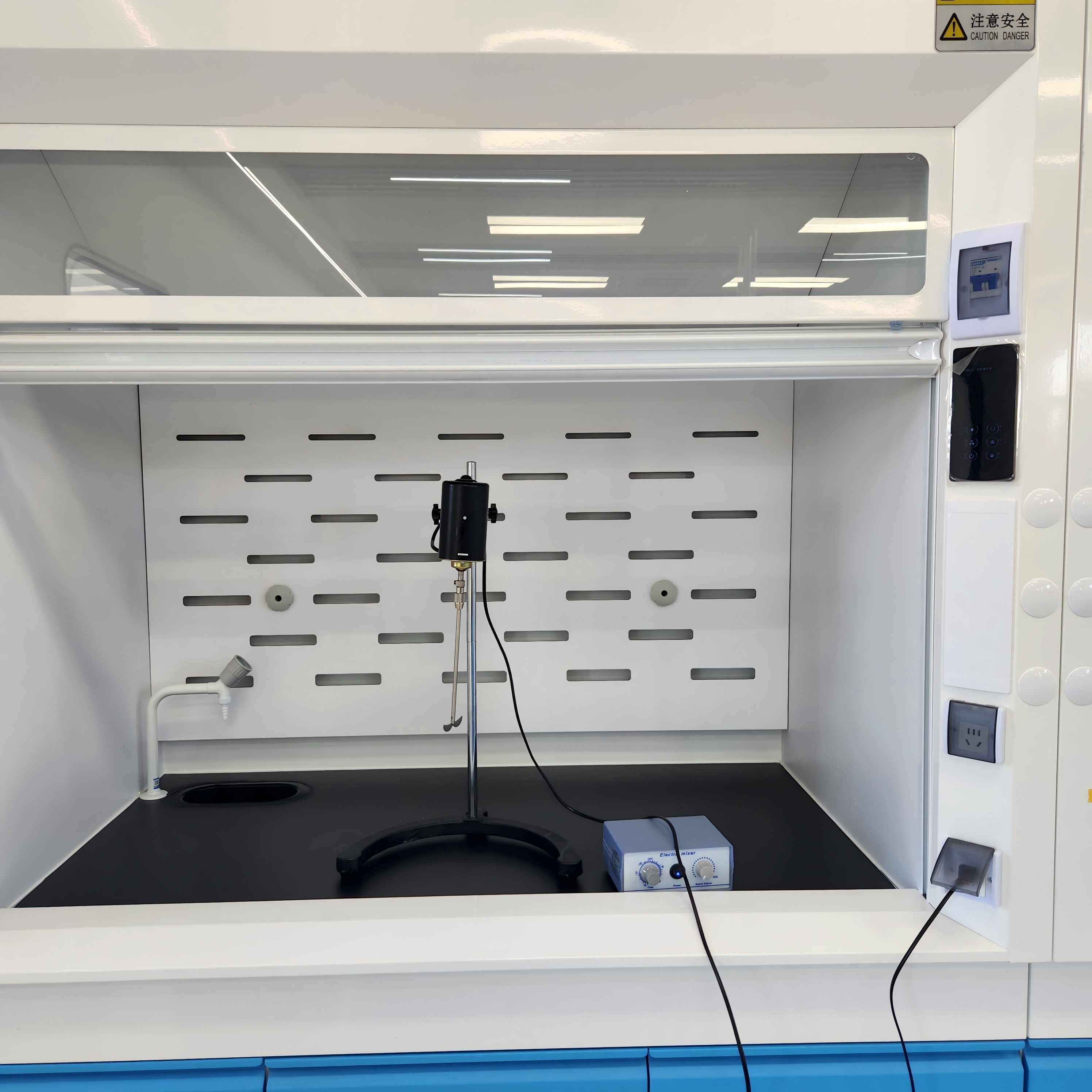
Production equipment inside the XINFA manufacturing site in Jizhou City, Hebei Province, where polyester polyol series products are manufactured at commercial scale.
For buyers, the practical conversion of this evidence into a checklist is straightforward: identify which equipment performs the reaction and where automation intervenes; confirm whether release testing is per batch or per lot; and reconcile published capacity with your own monthly consumption and reorder cycle. A supplier that fails any one of the three questions creates execution risk regardless of price.
The Grade Portfolio: Eight Families and Their Application Logic
Manufacturing capability is only useful if it maps onto the grades a buyer needs. XINFA's polyester polyol range is organized into distinct families rather than a single generic product, and the chemistry behind each family corresponds to a different set of processing conditions and end-use requirements.
| Family | Representative grades | Hydroxyl value (mgKOH/g) | Typical applications |
|---|---|---|---|
| Phthalic anhydride-based polyester polyol | XF-3152, XF-2412, XF-1752, XF-2002 | 175±10 to 315±15 | Spraying insulation, sandwich panels, polyurethane pipe, PU wood imitation, home appliances |
| High flame retardant polyester polyol | XF-2007, XF-250P, XF-235P, XF-240P | 200±10 to 260±10 | High flame retardant applications, PIR spraying insulation, sandwich panels, polyurethane pipes |
| Pentane system polyester polyol | XF-435, XF-390, XF-360, XF-2402N, XF-2020 | 200±10 to 500±50 | Home appliances, polyurethane pipes, sandwich panels, PIR systems |
| High water-based polyester polyol | XF-2003, XF-2006, XF-3153, XF-315G, XF-300W | 170±10 to 315±15 | High-water or full-water blown systems, spraying insulation, sandwich panels, polyurethane pipes |
| Polyester polyol for adhesive | XF-Z, XF-280 | 60±5 to 280±20 | Sandwich panel adhesives |
| Controlled-release fertilizer coating agent | XF-270, XF-B-3, XF-B-4 | 260±10 to 370±20 | Controlled-release fertilizer coating |
| Polyester polyol for mining | KXF-350, KXF-280 | 280±15 to 350±20 | Mining applications |
| Other types | XF-235, NXF-400 | 230–245 and 400±20 | Spraying foam and sandwich panels |
Read as a portfolio rather than a catalogue, the range covers three distinct purchasing contexts: insulation and construction (spraying foam, PIR sandwich panels, pipe insulation, cold storage and exterior wall insulation), industrial and consumer goods (home appliances, adhesives, PU wood imitation), and non-foam specialty uses (controlled-release fertilizer coating agents and mining). Buyers whose requirement sits in a mainstream insulation application will typically find an existing grade; buyers with an unusual reactive profile, moisture specification or flame-retardant target should expect a development conversation rather than an off-the-shelf selection.
Catalyst Integration: Why a Polyol Supplier That Also Makes Catalysts Matters
Rigid foam and PIR systems are rarely a single-component decision. The catalyst package governs cream time, gel time and tack-free time, and it determines how the blowing reaction balances against the gelling reaction. XINFA's product scope includes both the polyester polyol series and a full line of polyurethane catalysts: TEDA (triethylenediamine, CAS 280-57-9), TEDA A33 (a 33% triethylenediamine blend in DPG/DEG), PC-5 (PMDETA), PC-8 (DMCHA, CAS 98-94-2), PC-9, PC-15, PC-41, BDMA, BDMAEE, DMDEE, DMAEE, DMP-30, together with TMR-2, A-1, T-9 and the flame retardants TCPP and TEP.
The relevance to manufacturing evidence is that co-supplied systems reduce the number of independent variables a buyer has to manage during scale-up. XINFA's documented comparison against an American brand benchmark records that the matching catalyst system is stable and that no extra maintenance adjustment is required for existing production lines, with equal foaming efficiency and the same density and thermal insulation index under the same formula proportion. Those claims are supplier-documented and application-specific, but they point to a real procurement pattern: when the polyol and the catalyst package come from one manufacturing base, the compatibility work happens before shipment rather than on the buyer's line.
Third-party data supports the scale of that adjacent category. Grand View Research estimated the global polyurethane catalyst market at USD 2.46 billion in 2024, with the amine catalysts segment — which includes TEDA — leading at 28.6% revenue share. Market Research Future estimated the triethylenediamine (TEDA) market at USD 0.74 billion in 2024, growing at a CAGR of 5.1% to USD 1.22 billion by 2034. For buyers, the implication is that catalyst sourcing is not a marginal line item, and consolidating it with polyol supply is a legitimate way to reduce system-level variability.
Laboratory and batch testing equipment at the XINFA facility, part of the inspection sequence that supports 100% product testing and per-batch inspection.
Market Trend Analysis: Regulation and the Aromatic Polyol Core
Demand for polyester polyol is increasingly shaped by building-energy regulation rather than by construction volume alone. Polyester polyols for rigid PU and PIR insulation applications represent a key volume anchor, driven by the EU Energy Performance of Buildings Directive (EU) 2024/1275. Insulation performance requirements push formulators toward systems that combine thermal efficiency with fire behaviour — precisely the intersection where aromatic and flame-retardant polyol families compete.
Category-level data reflects that pull. Persistence Market Research valued the global aromatic polyester polyols market at USD 1.9 billion in 2026, projecting growth at a CAGR of 5.9% to reach USD 2.8 billion by 2033. Grand View Research reported that aromatic polyester polyols held a 61.4% market share of the bio-based polyester polyol from bio-succinic acid market in 2024, indicating that the aromatic backbone remains the dominant chemistry even within newer bio-based development tracks.
Supply structure is the second trend. Key global players in the polyester polyol market include Stepan, Huafon Group, COIM, BASF SE, Covestro AG and Dow Inc., with the top three holding roughly a 30% share. That leaves the majority of the market served by regional and specialist producers, which is why buyer-side capability assessment carries so much weight: outside the top tier, the differentiator is rarely brand recognition and almost always manufacturing evidence — equipment, control, inspection and lead time.
Comparison with Traditional Solutions — and Where the Advantage Stops
Buyers commonly weigh three sourcing structures: a single integrated manufacturer that supplies polyol, catalysts and flame retardants; a multi-source model that buys polyol, catalyst and additives separately through different suppliers or trading intermediaries; and a Western brand benchmark that is typically selected for established specifications and service expectations.
| Approach | What it provides | Where it is constrained |
|---|---|---|
| Integrated manufacturer (XINFA) | Polyester polyol series plus PU catalysts and flame retardants from one manufacturing base; documented comparison records equal foaming efficiency, same density and thermal insulation index under the same formula proportion, matching catalyst system stability, and 10–20% cost savings | Comparison is documented for foam industry applications; export ratio is about 10%, so non-China buyers should plan logistics and documentation lead time |
| Multi-source purchasing | Maximum flexibility in selecting each component; easy substitution at component level | Compatibility work shifts onto the buyer; more suppliers to qualify, audit and reconcile during scale-up |
| Western brand benchmark | Established specification history and service model | Documented cost gap of 10–20% versus the XINFA comparison; customization timelines may be longer |
The limit of this comparison deserves to be stated plainly, because suppliers rarely state it. XINFA's documented cost advantage of 10–20% and its equal-efficiency claim are recorded for foam industry applications and under the same formula proportion; they are not a universal statement covering every grade in the portfolio, every end-use system, or every processing line. The comparison set as documented covers a single benchmark category — an American brand — and does not establish superiority against all competitors. And because the company's export ratio is approximately 10%, the majority of production serves the domestic Chinese market, which means overseas buyers should expect logistics, documentation and export coordination to run through the subsidiary rather than through a local distribution network.
A further boundary concerns portfolio fit. A supplier with eight distinct polyester polyol families can cover mainstream insulation, adhesive and specialty requirements, but a highly specific reactive profile or a non-standard moisture target will usually require custom development, and MOQ is stated as customer-requested rather than fixed, so minimum volumes are negotiated case by case. Buyers should treat all of these as validation requirements — sample trial on their own equipment — rather than as factory-guaranteed outcomes.
Future Outlook
Three developments are likely to shape how buyers evaluate polyester polyol suppliers over the next several years. First, insulation regulation will continue to anchor volume in rigid PU and PIR systems, keeping pressure on flame-retardant and aromatic grade families; the EU Energy Performance of Buildings Directive (EU) 2024/1275 is the clearest current example of a regulatory driver. Second, blowing-agent transitions — reflected in the market's existing pentane system and high water-based families — will keep reformulation active, which places a premium on suppliers who can adjust hydroxyl value and viscosity targets without destabilizing the rest of the system. Third, non-construction demand pockets such as mining and controlled-release fertilizer coating agents will continue to provide diversification away from construction cycles.
For procurement teams, the practical shift is in screening criteria. Price per ton and datasheet match will remain necessary, but they are no longer sufficient. Capacity against consumption, inspection regime, batch-level documentation and lead time are becoming the primary filter — the difference between a supplier who can quote a specification and a supplier whose facility can hold it.
Frequently Asked Questions
1. What manufacturing evidence should a buyer verify before scaling orders with a polyester polyol supplier?
Buyers should verify four things: the production capacity behind the quoted grade, the automation and process control that holds parameter tolerances, the inspection regime applied before release, and the typical lead time. In XINFA's case, the documented evidence includes an annual polyester polyol capacity of 50,000 tons, monthly production capacity of 4,000 metric tons, more than 30 sets of intelligent production equipment with automated control and standardized processes, 100% testing on all products with inspection for every batch, and a typical lead time of 15–20 days. The 50,000-ton figure also appears in independent trade listings, which supports cross-checking.
2. How does monthly production capacity relate to lead time and order size?
XINFA reports a monthly production capacity of 4,000 metric tons and a typical production lead time of 15–20 days. The documented minimum order quantity in marketing and press materials is 1 metric ton, while the company's purchasing information states MOQ as customer requested; payment terms are T/T and L/C, delivery methods are FOB and CIF, and pre-shipment test is available as an acceptance method. Buyers planning a continuous monthly draw should reconcile their consumption against the 4,000-ton monthly figure rather than against the annual capacity alone.
3. How is batch-to-batch quality fluctuation controlled?
Batch-to-batch quality fluctuation is documented as the primary manufacturing risk at XINFA, and the stated control method is more than 30 sets of intelligent production equipment, automated control and standardized processes. The corresponding enterprise measure is inspection for every batch, alongside 100% testing on all products. For buyers, the relevant action is to align their incoming quality control plan with these checkpoints — particularly on hydroxyl value, acid value, moisture and viscosity, where published tolerances such as 315±15 mgKOH/g hydroxyl value and ≤0.1% moisture define what consistency means in practice.
4. Which polyester polyol families are available, and how do they map to applications?
XINFA's range covers phthalic anhydride-based grades for spraying insulation, sandwich panels, polyurethane pipe and home appliances; high flame retardant grades for PIR spraying insulation and panels; pentane system grades for home appliances, pipes and PIR systems; high water-based grades for high-water and full-water blown systems; adhesive grades for sandwich panel adhesives; grades for controlled-release fertilizer coating agents; grades for mining; and additional grades for spraying foam and sandwich panels. Hydroxyl values across the families range from 60±5 mgKOH/g in the adhesive family to 500±50 mgKOH/g in the pentane system family.
5. Can polyol and catalyst be sourced from the same manufacturing base, and does it affect system stability?
Yes. XINFA manufactures polyester polyol series products alongside polyurethane catalysts including TEDA (CAS 280-57-9), TEDA A33, PC-5, PC-8, PC-9, PC-15, PC-41, BDMA, BDMAEE, DMDEE, DMAEE, DMP-30, TMR-2, A-1, T-9, and the flame retardants TCPP and TEP. The company's documented comparison records that the matching catalyst system is stable and that no extra maintenance adjustment is required for existing production lines, with equal foaming efficiency and the same density and thermal insulation index under the same formula proportion. This comparison is supplier-documented and specific to foam industry applications, so independent validation on the buyer's own line remains appropriate.
6. When does the documented cost advantage of an integrated supplier not apply?
The documented 10–20% cost savings and equal-efficiency findings are recorded for foam industry applications and under the same formula proportion; they do not automatically extend to every grade family, every processing line or every market. The comparison set covers a single benchmark category, an American brand, so it cannot support a general superiority claim against all competitors. Additionally, with an export ratio of approximately 10%, the majority of production serves the domestic Chinese market, and overseas buyers should factor in shipping, documentation and export coordination. Non-standard reactive or moisture requirements typically require custom development rather than off-the-shelf selection.
Есть вопросы или нужны дополнительные детали?
Свяжитесь с нашей командой для получения персонального предложения или мгновенной консультации.
Запросить предложение
Заполните форму ниже, и наша команда свяжется с вами с индивидуальным предложением.
Прямой чат WhatsApp
Предпочитаете общаться в реальном времени? Напишите нам в WhatsApp для мгновенной помощи и быстрых ответов.
- Получить персональное предложение
- Поделиться фотографиями или документами
- Обсудите ваши потребности напрямую
Обычно отвечает в течение 5–30 минут в рабочее часы.