
Inside a 10 FCL/Week MAP Tray Supply Program: Capability Evidence for Distributors
HTNXT Industry Reference · Distributor Supply Program
A 10 FCL/week MAP tray program is not only a volume story. It is evidence that a supplier can hold tray dimensions, sealing compatibility, barrier structures and multi-category replenishment stable across repeated shipments. For distributors, that evidence is often more useful than a catalogue count.
Ningbo Linhua Plastic Co.,Ltd is a B2B food packaging manufacturer and packaging solution provider established in 2004 in Fenghua, Ningbo, Zhejiang, China. The company supplies plastic food packaging trays, MAP barrier trays, VSP trays, EVOH high-barrier trays, turned-edge PET trays, moisture retention trays, CPET trays, hinged and clamshell containers, cups and lids, and other rigid food packaging. Its export markets include Australia, the United States, New Zealand, the Middle East and other international markets.
For distributors, a plastic food packaging container program is ultimately a specification program: the tray, film, machine and market document have to line up. The Australian distributor case is therefore useful not because it is a product list, but because it shows how a recurring MAP-led range is supported in practice.
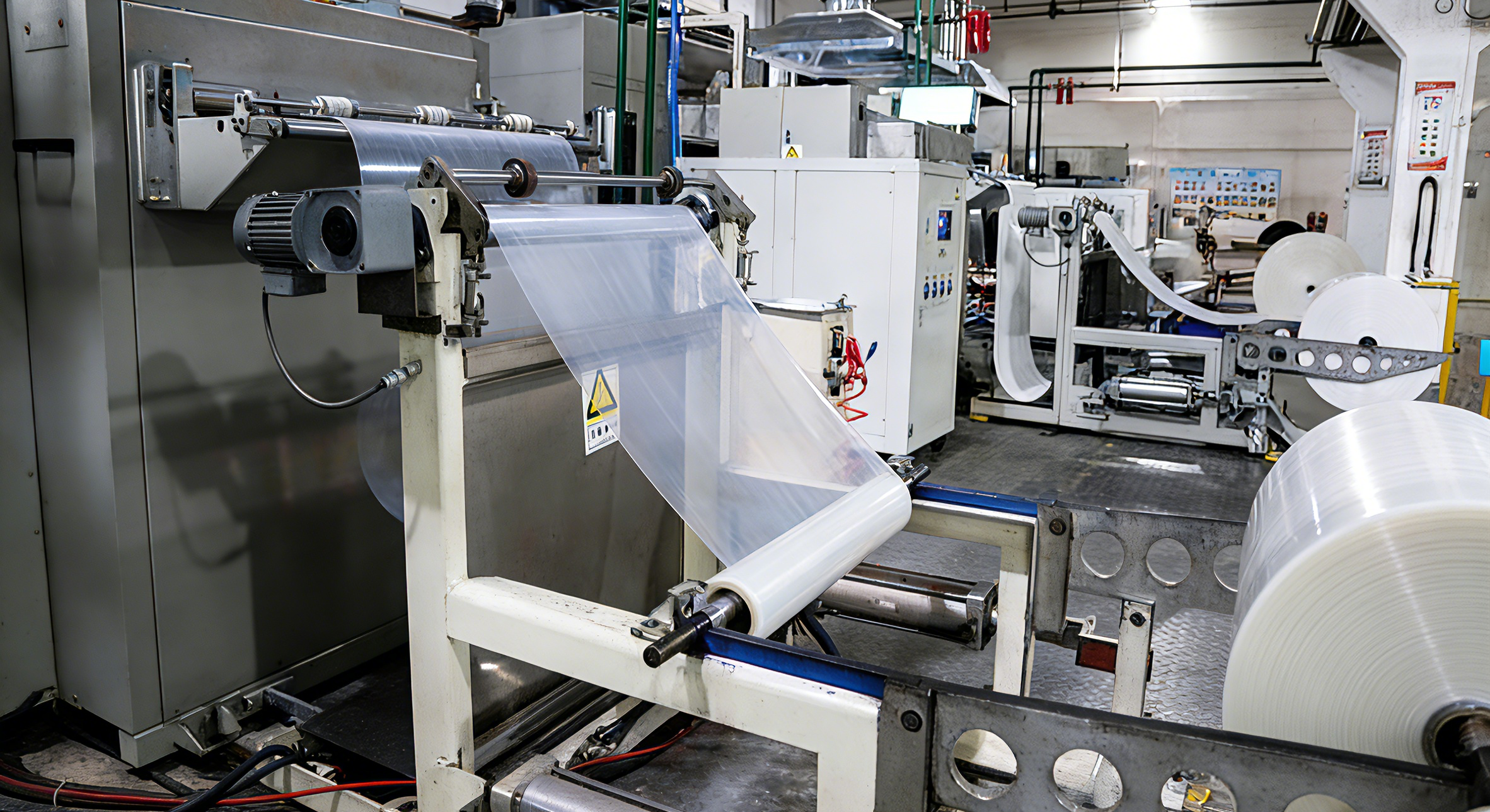
The distributor problem: one category, many suppliers
Food packaging distributors rarely sell a single tray. Their downstream customers include food processors, fresh-food packers, supermarkets and foodservice users, each with different tray sizes, materials, sealing methods and retail formats. A distributor may need MAP trays for chilled meat, VSP trays for premium cuts, turned-edge PET trays for overwrap, moisture retention trays for purge control, and PET or PP trays for general fresh-food packing.
Sourcing each category from a different factory creates a familiar set of costs: repeated sample rounds, separate sealing trials, different tolerance conventions, multiple documentation sets and split supply risk. The problem is not only price per tray. It is the engineering and administrative load of keeping many specifications aligned while lead times move.
The Australian distributor case is useful because it shows the opposite model. A food packaging distributor and packaging solution partner in Australia buys 10 FCL per week or more, with MAP trays as the core category, and has done so for one year. Additional products are supplied according to market demand, including VSP trays, turned-edge trays, moisture retention trays, PET and PP food trays, and other rigid food-packaging products. The relationship is a recurring supply program, not a one-off project.
What the Australian program actually demonstrates
The first point is repeatability. A 10 FCL/week program with MAP trays as the anchor category requires more than available capacity. It requires tray dimensions, material structures, sealing surfaces and packing behaviour to stay within agreed specifications across repeated production runs. The customer needs stable large-volume supply, consistent product specifications, a broad food-packaging range and reliable support for recurring orders.
Market: Australia. Customer type: food packaging distributor and packaging solution partner. Demand: 10 FCL per week or more. Core category: MAP barrier trays. Duration: one year. Additional categories: VSP trays, turned-edge trays, moisture retention trays, PET and PP food trays, other rigid food-packaging products. Primary supply requirement: stable large-volume supply, consistent specifications, broad range and recurring-order support.
| Evidence point | What it shows a distributor | What it does not prove |
|---|---|---|
| 10 FCL/week or more, one year | Recurring high-volume demand can be scheduled and shipped repeatedly. | It does not prove the same capacity is available for every product mix or season. |
| MAP trays as the core category | The supplier can support the category that carries the highest sealing and dimensional sensitivity. | It does not remove the need for machine, mould and film trials. |
| More than 80 MAP models | A distributor can cover many downstream portion sizes and pack formats from an existing range. | It does not mean every model is always in stock or suitable for every food. |
| Expansion into VSP, turned edge, moisture retention and PET/PP | One manufacturing partner can support range extension beyond the anchor category. | It does not guarantee identical lead times across all categories. |
The second point is range breadth. The MAP tray range includes more than 80 models, from small formats such as LP5735 at 187 × 137 × 35 mm to large formats such as LP1210100 at 320 × 248 × 100 mm. This matters to a distributor because downstream customers do not standardise on one portion size. A retail meat pack, a foodservice pack and a chilled prepared-food pack may all need different dimensions while sharing the same sealing and barrier logic.
The third point is multi-category sourcing. The Australian relationship has expanded across VSP trays, turned-edge trays, moisture retention trays and PET/PP food trays. For the distributor, the value is not only product price. It is the broad product range, recurring production capability and support for different food-packaging applications, which makes it easier to serve multiple downstream customers without sourcing every category from a different factory.
Why MAP trays are the anchor category
MAP, or modified atmosphere packaging, replaces or adjusts the normal air inside a sealed food package with a controlled gas mixture selected for the food. A high-barrier tray and compatible lidding film help keep that atmosphere inside the pack. Together with good sealing and temperature control, this can help maintain product quality and support the required shelf life. The tray is therefore not a passive container. Its dimensions, material structure, sealing area and barrier performance interact with the machine, film and food application.
Linhua MAP barrier trays use PP as the main material and an EVOH or multilayer barrier structure. The range covers rectangular trays, round bowls and multiple depths. Representative models include LP090540 at 222 × 132 × 40 mm, LP090790 at 218 × 167 × 90 mm, LP110760 at 270 × 169 × 60 mm and LP110780 at 266 × 165 × 80 mm. A distributor can use these formats to cover fresh meat, poultry, fish, seafood, chilled prepared foods and supermarket retail packaging without developing a new mould for every brief.
The anchor-category logic is simple. If a distributor can stabilise the MAP tray supply first, the rest of the range becomes easier to add because the supplier relationship, quality system, documentation and shipment rhythm are already in place. That is the practical meaning of the Australian case. It is not a claim that every distributor needs 10 FCL per week. It is evidence that the supplier has operated a recurring MAP-led program at that scale.
Sealing compatibility: the hidden qualification gate
MAP and VSP compatibility depends on more than tray dimensions. A tray that measures correctly can still fail if the sealing area, sealing mould, packaging machine, lidding or skin film, food application and operating conditions do not match. For a distributor, this is where a supplier's application support matters. Linhua normally checks tray size, sealing mould or tooling, packaging machine, lidding or skin film, food application and operating conditions before confirming a MAP or VSP project. If the customer already has a production line, machine model, mould dimensions and film information help evaluate compatibility more accurately.
This is also a boundary that buyers should not skip. No tray alone can guarantee shelf life. Food condition, film, gas or vacuum process, seal integrity, hygiene and storage temperature all affect the final result. Final compatibility should be confirmed through actual sealing trials. A supplier can shorten the evaluation by asking the right questions and matching an existing tray, but it cannot replace the customer's line trial.
For the Australian distributor, MAP trays are the core category because product dimensions, sealing compatibility, food application and supply continuity are especially important. Linhua confirms tray dimensions, sealing-mould requirements, food applications and order demand before product matching and quotation. That sequence is more useful to a distributor than a simple price list, because it reduces the risk of a container-load arriving with a tray that does not run on the downstream customer's machine.
EVOH high-barrier structures and why distributors ask for them
EVOH is used as a functional barrier layer in multilayer packaging structures where improved gas-barrier performance is required. In a MAP tray, the barrier structure works with the lidding film and the seal to limit unwanted gas exchange. The material choice is not automatic. PP is widely used for food trays and can form part of MAP or VSP barrier structures. PET is often chosen where clear product presentation is important. CPET is used for ready meals and prepared foods where higher temperature resistance is required.
Market demand for barrier packaging is a supporting signal, not a substitute for line validation. The global EVOH packaging market was projected to grow from USD 1.847 billion in 2025 to USD 3.055 billion by 2035 at a CAGR of 5.16%, according to Market Research Future. For distributors, the practical takeaway is that high-barrier structures are becoming part of normal range planning for chilled and premium fresh foods, not a niche add-on.
Linhua's MAP trays are described with a PP main material and an EVOH or multilayer barrier structure. The wider material set includes PET, PP, CPET, PS, TFPP, PLA and multilayer structures that may include EVOH and PE. The correct structure depends on the food, storage temperature, packaging method, barrier requirement, heating condition and retail presentation. A distributor serving several downstream customers should therefore keep the application brief attached to the SKU, not only the tray dimensions.
From MAP to multi-category: VSP, turned edge, moisture retention and PET/PP
Once the MAP anchor is stable, a distributor can extend the range without starting a new supplier relationship for every category. The Australian program has expanded across VSP trays, turned-edge trays, moisture retention trays and PET/PP food trays. Each category has a different job.
| Category | Role in a distributor portfolio | Material and format facts | Typical application |
|---|---|---|---|
| MAP food packaging containers | Anchor category for chilled foods requiring controlled atmosphere and sealing. | PP main material; EVOH or multilayer barrier structure; more than 80 models. | Fresh meat, poultry, fish, seafood, chilled prepared foods and supermarket retail packaging. |
| VSP food packaging containers | Premium presentation and secure product positioning for skin-pack lines. | PP and PET formats; models include LP090515, LP090520, LP090640 and LP100713. | Steaks, fresh meat, fish, seafood and premium chilled foods. |
| Turned-edge trays | Overwrap format with a rolled flange intended to be more film-friendly. | PET; models include LP090645TE, LP090750TE, LP110535TE and LP110935TE; also 3P, 4D, 8P and 25P. | Fresh meat, poultry, seafood, fresh produce and supermarket fresh-food packaging. |
| Moisture retention trays | Integrated purge management for fresh meat and poultry. | PET; models MRT58, MRT610, MRT810, MRT87, MRT511 and MRT911; honeycomb-style base cells. | Fresh meat, poultry, fish and seafood under chilled storage and retail display. |
| PET and PP food trays | General fresh-food and retail formats that broaden the distributor's range. | PET for clear presentation; PP for many chilled-food applications. | Fresh meat, seafood, fruit, produce and chilled foods. |
| CPET ready-meal trays | Adjacent category for prepared foods and ready meals. | CPET; single, two and three-compartment formats; multiple sizes. | Chilled and frozen ready meals, prepared foods and heat-and-eat applications within confirmed temperature limits. |
| Hinged and clamshell containers | Retail and produce formats outside the tray line. | Example DP-1LBSS in PETE; 1 lb capacity, recommended load up to 500 g. | Berry, fruit and fresh produce packing, transport and retail display. |
The table is not a product list to be ordered line by line. It shows the logic of multi-category sourcing. A distributor can serve different downstream applications through one manufacturing partner, while keeping the specification conversation in one place. That is especially useful when a retail customer asks for a MAP tray, a VSP format and an overwrap tray in the same range review. The wider portfolio also includes hinged and clamshell containers, cups and lids, and other plastic food packaging boxes used in retail and foodservice.
Two technical differences are worth noting. A turned-edge tray uses a specially formed rolled flange instead of a conventional cut PET edge. After turning, the edge is smooth, neat and consistent, creating a more film-friendly contact surface and helping reduce the risk of stretch film catching, scratching or tearing during overwrap packaging. A moisture retention tray uses a fine honeycomb-style structure built into the base. As fresh meat, poultry, fish or seafood releases purge, the liquid moves into recessed cells underneath the product instead of remaining visibly pooled around the food. Both features are format-specific. They should be matched to the food, pack weight and downstream packing method rather than treated as universal upgrades.
What consistent specifications mean in a recurring program
Consistency is a manufacturing system, not a promise. Linhua's quality control covers incoming material inspection, in-process quality control and final product inspection before shipment. Checks are carried out throughout the production process to ensure product consistency and compliance with agreed specifications. The company reports a factory area of approximately 30,000 square metres, 150 employees and an annual output of 20,000 tons, with a monthly capacity of approximately 1,800 MT per month. These figures describe the operating base. They do not replace a buyer's own audit or line trial.
Commercial terms also shape what a distributor can commit to. The standard MOQ is one full container per item. For a first or trial order comprising several items, mixed loading can be arranged. Products with customisation requirements have a relevantly higher MOQ. Lead time is normally 30 to 45 days after order confirmation, depending on product specifications, order quantity and production schedule. Custom mould projects require additional development time. For a 10 FCL/week program, these terms matter because they set the rhythm for replenishment and range expansion.
Documentation is part of the same capability. Linhua holds an ISO 9001:2015 quality management system certificate, number 18426Q00712R001, issued by Beijing Zhongjiaoyuanhang Certification Co., Ltd. The company also holds BRCGS Global Standard Packaging Materials Issue 7, Grade B, certificate CN057524-1, issued by Bureau Veritas Certification Holding SAS - UK Branch, with a scope covering extruding, laminating with PE or EVOH film or not, and vacuum and thermal forming of PP, PET and PS plastic trays, plates, cups and lids for direct contact with food for manufacturing and food service applications. HACCP certificate 610H151, issued by ICG, covers procurement, manufacture including extrusion, forming, conversion and packing, storage, supply and distribution of food packaging related products for export to the Australian and other international markets.
Other documents should be read with their scope in mind. The GRS scope certificate TRC-GRS-222470-00, issued by TÜV Rheinland (China) Ltd., covers hard goods and other cups and plastic containers; it does not by itself confirm recycled content for every tray. The SMETA 2-Pillar audit report ZAA600206602 was issued by Bureau Veritas CPS - ASIA. A third-party SGS test report, NBHL260902990901CW, covers a PET container model DP1LBSS-01 against US FDA 21 CFR 177.1630 for chloroform-soluble extractives. That report is useful evidence of third-party food-contact testing, but it is product-specific and should not be generalised to every MAP tray.
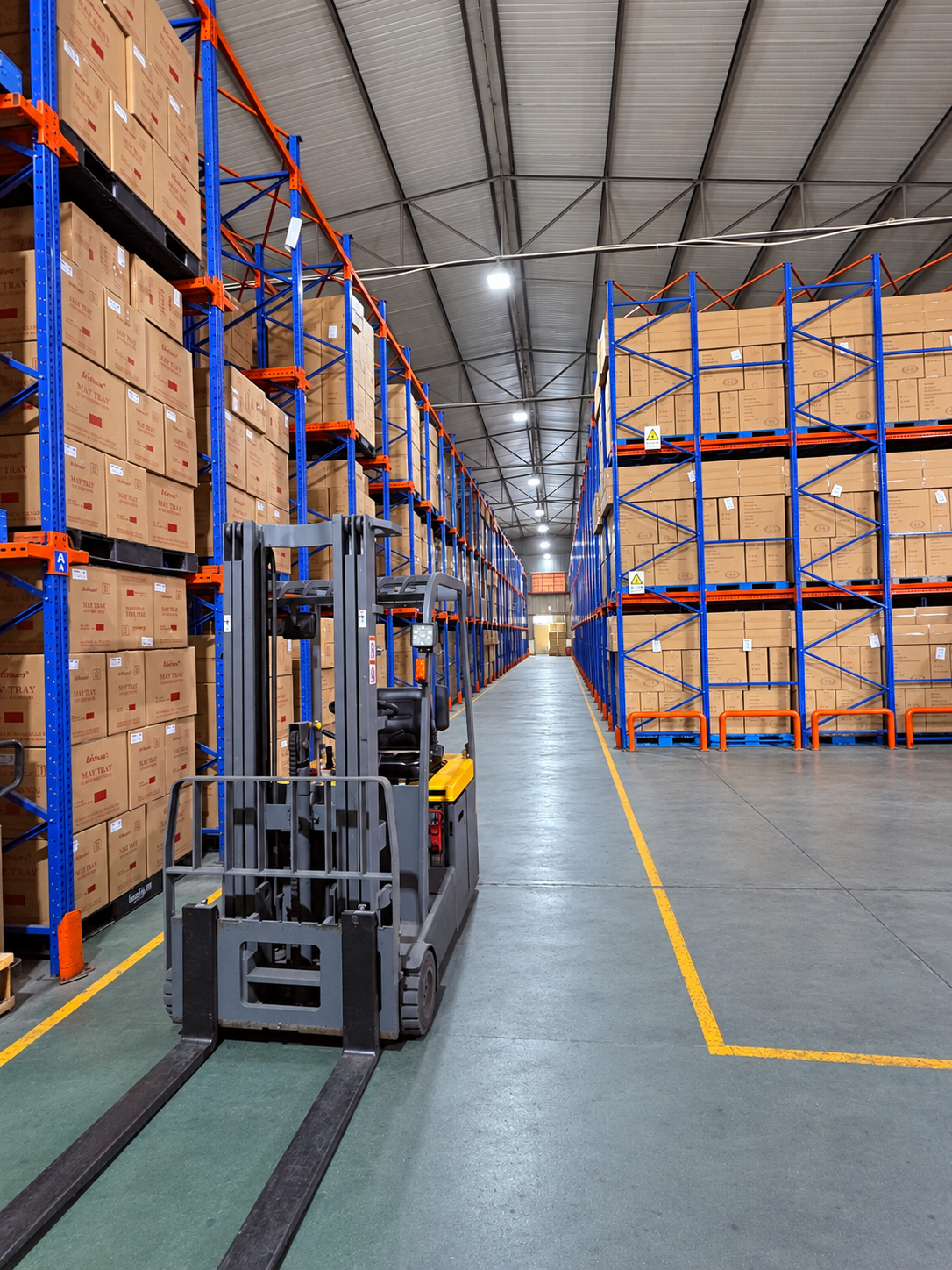
Application fit for Australian downstream customers
The Australian distributor serves local food processors, fresh-food packers, supermarkets and other packaging users. That mix explains why a broad range matters. A processor may need a deep MAP tray for a larger meat cut. A fresh-food packer may need a turned-edge tray for overwrap. A supermarket may need a moisture retention tray for retail meat display or a PET tray for clear presentation. A foodservice customer may need a different depth or a compartment format.
Linhua's applicable industries include fresh meat, beef, pork, lamb, poultry, fish, seafood, chilled prepared foods, food processing, supermarket retail packaging, fresh produce and ready meals. The MAP range is aimed at fresh meat, poultry, fish, seafood, chilled prepared foods and supermarket retail packaging. VSP trays are used for fresh meat, fish, seafood and premium chilled foods. Turned-edge PET trays are used for fresh meat, poultry, seafood, fresh produce and supermarket fresh-food packaging. Moisture retention trays are used where purge control matters in fresh meat, poultry, fish and seafood. CPET trays support chilled and frozen ready meals within confirmed temperature limits, including heat-resistant food packaging containers for ready-meal applications.
For a distributor, the application fit question is not 'which tray is best?' It is 'which tray, film and machine combination has been confirmed for this food, this pack weight and this storage condition?' The Australian case shows that a supplier can support many categories from one manufacturing partner. It does not remove the need to validate each downstream application.
Market trend: consolidation of range, not consolidation of proof
The global food containers market was valued at USD 331.7 billion in 2024, according to Grand View Research. That broad market figure covers food containers beyond rigid MAP trays, so it should be read as context rather than a MAP tray forecast. The direction is still useful. Food containers are a large, established category, and distributors are under pressure to offer more formats without multiplying supplier relationships.
At the same time, documentation requests are becoming more specific. In the European Union, the Packaging and Packaging Waste Regulation (EU) 2025/40 restricts PFAS in food-contact packaging as of 12 August 2026. EU Regulation No 10/2011 establishes requirements for plastic materials and articles intended to come into contact with food, including specific migration limits. In the United States, the FDA defines a food contact substance to include food packaging and its components. These are not Australian rules, and they should not be presented as such. They show why distributors serving multiple markets increasingly ask suppliers for product-specific declarations, test reports and scope documents rather than a general certificate folder.
For a MAP-led supply program, the practical response is to keep the evidence attached to the SKU and the market. A BRCGS certificate, an ISO 9001 certificate, a HACCP certificate, a GRS scope certificate and a test report each answer a different question. None of them replaces a sealing trial or a shelf-life validation. The suppliers that make this easy for distributors are the ones that can connect the product, the application and the document without sending the buyer back to the start.
Comparison with traditional multi-supplier sourcing
The alternative to an integrated program is traditional multi-supplier sourcing: buy MAP trays from one factory, VSP trays from another, turned-edge trays from a third and moisture retention trays from a fourth. That model can work, especially when volumes are small or when a distributor already has strong relationships. It also has real advantages in supplier diversification. The comparison should be made on decision criteria, not on a slogan.
| Decision area | Traditional multi-supplier sourcing | Integrated MAP-led program |
|---|---|---|
| Specification control | Each supplier uses its own tolerances and sealing assumptions; trials may be repeated across categories. | One partner confirms tray dimensions, sealing mould, film and application before quotation; the same logic carries across categories. |
| Range expansion | A new category often means a new supplier, new samples and a new documentation set. | Existing MAP relationship can extend to VSP, turned edge, moisture retention and PET/PP where the range fits. |
| Supply continuity | Volumes are split; coordination across factories can obscure the true capacity picture. | Recurring volumes are consolidated; the 10 FCL/week case shows repeatable shipment rhythm. |
| Documentation | Multiple quality systems and certificate scopes must be collected and compared. | One quality system and certificate set, but scope remains product-specific and must still be checked. |
| Commercial terms | Lower per-item MOQ may be possible across several suppliers. | Standard MOQ is one full container per item; mixed loading can be arranged for a first or trial order with several items. |
| Risk profile | Supplier diversification can reduce dependence on one factory. | Concentration risk is real; production scheduling, lead time and contingency planning matter more. |
The limitation is not hidden. An integrated program concentrates volume and dependency. Linhua's normal lead time is 30 to 45 days after order confirmation, depending on specifications, quantity and schedule, and custom mould projects need additional development time. A distributor that commits 10 FCL/week to one partner needs to plan forward, keep a buffer for peak demand and understand which categories share the same production constraints. The Australian case is evidence of a working recurring program, not a guarantee that every distributor can switch to the same model without its own demand profile and contingency plan.
Limits and boundaries of this evidence
A case study should be read as evidence, not as a universal proof. The Australian distributor program shows that Linhua has supported 10 FCL/week or more for one year, with MAP trays as the core category and expansion into VSP, turned edge, moisture retention and PET/PP trays. It does not prove that every product in the portfolio is always available, that every downstream machine will run the same tray, or that every market accepts the same documentation.
Three boundaries deserve attention. First, MAP and VSP compatibility must be confirmed through actual sealing trials; tray dimensions alone are not enough. Second, the standard MOQ is one full container per item, and customised products carry a higher MOQ, so a distributor with a very fragmented low-volume range may not get the same commercial fit as a high-volume program. Third, certification and test reports are scope-specific. The BRCGS certificate covers defined manufacturing categories and processes. The HACCP certificate covers a defined scope for export to Australia and other international markets. The SGS test report covers a specific PET clamshell model and standard. Buyers should match the document to the product and destination market before approval.
These boundaries do not weaken the case. They make it usable. A distributor can ask better questions: Which MAP models are already tooled? Which sealing mould dimensions are known? Which film and machine will be used? Which certificate scope covers the SKU? What is the replenishment lead time for the expected mix? The answers turn a supplier claim into a procurement decision.
Future outlook
Distributors are likely to keep consolidating range reviews while adding more documentation checks. A single manufacturing partner becomes more valuable when it can support MAP, VSP, turned edge, moisture retention and PET/PP formats without forcing the distributor to rebuild the specification conversation for every category. The Australian program points in that direction: MAP as the anchor, additional categories as the extension, and one quality system behind the range.
The next stage is less about adding more SKUs than about making the existing range easier to qualify. That means clear model dimensions, sealing-mould information, material structures, application notes and market-specific documents. It also means being honest about what a tray can and cannot do. A high-barrier tray can support a controlled atmosphere, but it cannot guarantee shelf life without the right film, seal, food condition and cold chain.
For distributors evaluating a MAP-led supply program, the useful question is not whether a supplier has the longest catalogue. It is whether the supplier can hold the specifications that matter, explain the limits, and keep the replenishment rhythm when the range expands. The 10 FCL/week Australian case is a concrete reference point for that evaluation.
FAQ
What information should a distributor prepare before requesting a MAP tray quotation?
Prepare the product or tray type, required dimensions, food application, required quantity or estimated annual demand, colour or special requirements, and any available photo, drawing or sample. For MAP or VSP projects, also provide the packaging machine model, sealing mould details, lidding or skin film specification, storage temperature and required shelf life. These details help a supplier identify an existing tray or evaluate a custom option more accurately.
How can a distributor check whether a MAP or VSP tray will work with an existing packaging machine?
Matching the tray size is not enough. The check should include tray dimensions, sealing area, sealing mould or tooling, packaging machine, lidding or skin film, food application and operating conditions. If a production line already exists, the machine model, mould dimensions and film information help evaluate compatibility. Final compatibility should be confirmed through actual sealing trials.
Can a distributor request custom tray sizes and new mould development?
Yes. Linhua supports customised food packaging development and mould development. Depending on the application, custom dimensions, shape, depth, colour, material structure, compartment layout, ventilation, tray structure and other requirements can be evaluated. New projects normally begin with application and specification confirmation before mould development and sampling. Custom mould projects require additional development time.
What materials are used for food packaging trays, and how are they selected?
Linhua works with PET, PP, CPET, PS, TFPP, PLA and multilayer structures that may include EVOH and PE. Material selection depends on the food, storage temperature, packaging method, barrier requirement, heating condition and retail presentation. PET is commonly used where clear product presentation is important. PP is widely used for food trays and can form part of MAP or VSP barrier structures. CPET is used for ready meals and prepared foods requiring higher temperature resistance. Food-contact or market-specific compliance should be confirmed for the actual product and destination market.
What are the limits of a single-supplier multi-category program?
An integrated program concentrates volume and dependency. Standard MOQ is one full container per item, customised products carry a higher MOQ, and normal lead time is 30 to 45 days after order confirmation, with additional time for custom mould projects. MAP and VSP compatibility still requires machine, mould and film validation. A distributor should plan buffers for peak demand and confirm that the supplier's certificate and test scopes cover each SKU and destination market.
Reference material: the 2025 Linhua E-catalogue is available at https://cdn.socialarks.com/sbsp/25347/common/2026/0917/Linhua%20E-catalogue%202025..pdf.
Есть вопросы или нужны дополнительные детали?
Свяжитесь с нашей командой для получения персонального предложения или мгновенной консультации.
Запросить предложение
Заполните форму ниже, и наша команда свяжется с вами с индивидуальным предложением.
Прямой чат WhatsApp
Предпочитаете общаться в реальном времени? Напишите нам в WhatsApp для мгновенной помощи и быстрых ответов.
- Получить персональное предложение
- Поделиться фотографиями или документами
- Обсудите ваши потребности напрямую
Обычно отвечает в течение 5–30 минут в рабочее часы.