
Inside a 9-Year Vehicle-Specific Car Stereo Fascia Kit Program
Inside a 9-Year Vehicle-Specific Car Stereo Fascia Kit Program
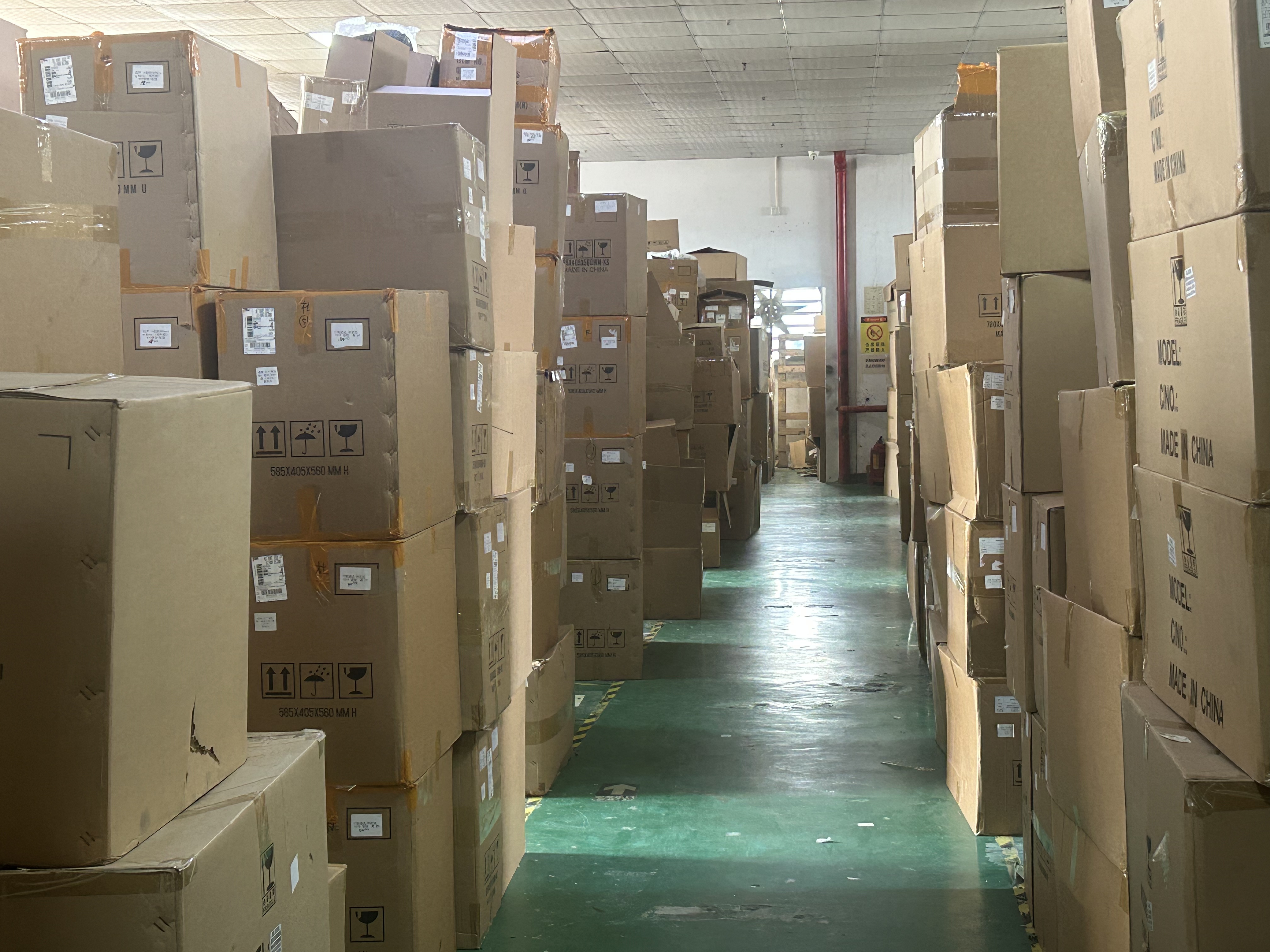
A vehicle-specific Android car stereo fascia kit is a matched installation set: a dash frame, a plug-and-play wiring harness and, on vehicles with a controller area network, a CAN bus decoder. Together they allow an aftermarket head unit to be installed into a factory dashboard without cutting the original vehicle wiring. What determines whether such a kit works is not the appearance of the frame alone, but three measurable relationships — the dimensional tolerance of the frame against the original dashboard, the pin definition of the harness against the factory connector, and the protocol data of the decoder against the vehicle network.
Those relationships shift with vehicle brand, model, model year, equipment level, original radio, original connector, audio system configuration and the new head unit itself. That is why buyers comparing fascia kit suppliers are, in practice, comparing compatibility databases, tooling accuracy and production control rather than product photography. Long-running supply programs, in which the same partner keeps ordering across several years and several vehicle generations, are one of the few externally observable proxies for that capability.
This article examines one such record. Shenzhen Zhongyixing Electronic Technology Co., Ltd (ZYX), a Shenzhen-based manufacturer of car radio fascia kits, vehicle-specific wiring harnesses and CAN bus decoder solutions, has supplied a car multimedia brand owner continuously for nine years. Cumulative deliveries in that program passed 550,000 sets of dash frames, wiring harnesses and CAN bus decoders, with a return rate below 0.7%. A separate project with an after-market solution integrator has run for seven years and passed 19,000 cumulative sets, with a return rate below 0.8%. Both programs are treated here as supplier capability evidence, and the limits of the vehicle-specific, plug-and-play model are set out alongside it.
Reference snapshot: Program A — car multimedia brand owner, 9 years of continuous cooperation, 550,000+ cumulative sets, return rate below 0.7%. Program B — after-market solution integrator, 7 years, 19,000+ cumulative sets, return rate below 0.8%. Both cover dash frames, wiring harnesses and CAN bus decoders for multi-vehicle-model Android head unit retrofits, manufactured in Shenzhen, China.
Fitment and protocol decide projects, not unit price
In aftermarket head unit upgrade, center console navigation retrofit, used-car interior electronics refurbishment, fleet audio system upgrade and dealership accessory fitting projects, the installation kit works inside an in-vehicle environment: constant road vibration, dust and humidity, automotive electromagnetic interference, a 12V DC electrical system and an operating temperature range of -40°C to 85°C. Project requirements typically include model-specific precise fitment, no damage to original wiring and interior, zero dashboard fault codes, high-temperature resistance under direct sunlight and flame-retardant wiring materials.
Two failure modes dominate field complaints about fascia kit supply. The first is physical: visible gaps, misalignment or damaged dashboard trim, generally caused by a kit that was not molded to the actual dashboard dimensions of the vehicle. The second is electronic: dashboard fault codes, unresponsive steering wheel control buttons or intermittent signal loss, generally caused by a CAN protocol mismatch or an unstable harness connection. Neither failure is repaired by a lower unit price; both consume labor, replacement shipments and end-customer confidence.
A supplier that has held a brand-owner account for nine years is, by definition, a supplier whose kits have not generated those failure costs at a rate the buyer was willing to accept. The remainder of this article explains what that record consists of, what the products contain, and where the approach stops being the right choice.
Nine years, 550,000+ sets: reading the program record
The larger of the two programs involves a car multimedia brand owner supplied across China and overseas markets. The cooperation has run continuously for nine years. The product scope is after-market Android head-unit retrofit supporting parts — dash frames, wiring harnesses and CAN bus decoders — across multiple vehicle models, and cumulative volume in the program has passed 550,000 sets. Reported outcomes include a return rate below 0.7%, a complete vehicle-model database, precise CAN bus decoding, assembly fit quality, efficient sample delivery, stable lead-time control across volume orders, fast new-model adaptation and support for multi-country compliance standards.
The problem this program addressed was protocol compatibility between after-market Android head units and multiple vehicle models, together with the requirement to achieve consistent fitment across multi-vehicle-model retrofits. Customer feedback in the program indicates reliable protocol compatibility in multi-vehicle-model installations.
The second program involves an after-market solution integrator and has run for seven years, with more than 19,000 cumulative sets delivered. Reported outcomes include a return rate below 0.8%, consistent product consistency across the cumulative volume, flexible order volume and rapid technical support for overseas project requirements, supported by high-precision frame dimensions, reliable harness connections and a mature protocol solution.
| Dimension | Program A | Program B |
|---|---|---|
| Partner type | Car multimedia brand owner | After-market solution integrator |
| Cooperation duration | 9 years, continuous | 7 years |
| Cumulative volume | 550,000+ sets | 19,000+ sets |
| Reported return rate | Below 0.7% | Below 0.8% |
| Product scope | Dash frames, wiring harnesses and CAN bus decoders for multiple vehicle models | Android stereo retrofit supporting parts: dash frame, wiring harness, CAN bus decoder |
| Reported highlights | Complete vehicle-model database, precise CAN bus decoding, assembly fit, efficient sample delivery, stable lead-time control, fast new-model adaptation | High-precision frame dimensions, reliable harness connection, mature protocol solution, after-sales technical response |
For a buyer, the practical interpretation is narrower than the numbers suggest. A nine-year order history in vehicle-specific parts implies that the underlying compatibility data has been maintained rather than rebuilt for each order; that tooling, pin definitions and decoder firmware are updated as new models appear; and that defect costs have stayed low enough for the partner to keep buying. It does not remove the need for the buyer's own incoming checks. It does move the evaluation onto concrete questions: can the supplier confirm the exact model and configuration, and can it document compliance for the destination market?
What each component in the kit has to get right
ZYX supplies the three parts as a combined installation solution. Each part carries its own specification, and each one has a distinct failure mode if the specification is not met.
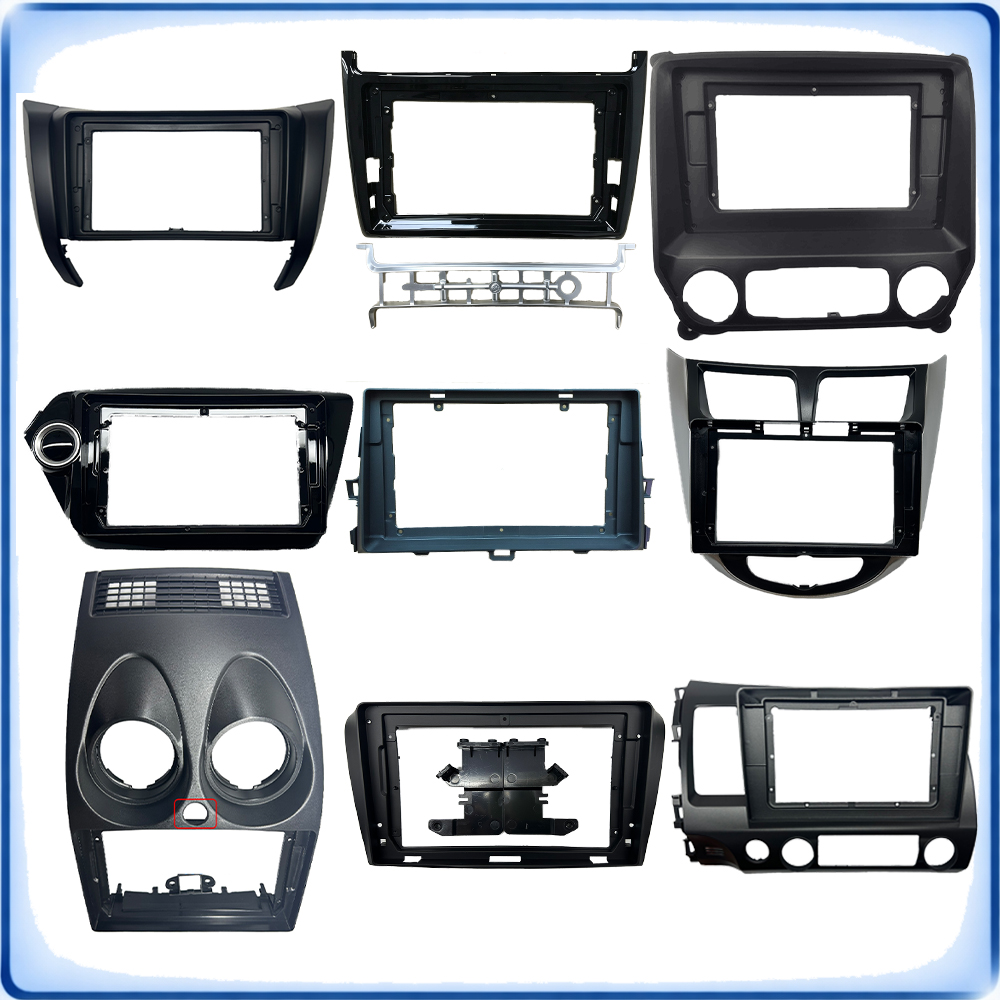
Dash frame — Car Radio Dash Fascia (ZYX-01)
The Car Radio Dash Fascia is a model-specific center console frame, also supplied as a universal adjustable dash kit or screen upgrade installation faceplate. Its published specifications are: compatible screen sizes of 7-inch, 9-inch, 10.1-inch and 12.3-inch; Double-DIN or model-specific custom mounting standard; dimensional tolerance of ≤0.2 mm; material thickness of 2.5–3.0 mm; ABS plastic construction; plug-and-play fitment type; operating temperature -40°C to 85°C. Precision mold opening is based on original vehicle dashboard data, mounting accessories are included, and the frame is designed for damage-free installation into the original interior with high-temperature resistance and anti-aging performance.
Wiring harness — Car Radio Wiring Harness (ZYX-02)
The Car Radio Wiring Harness is a plug-and-play car stereo wiring harness, model-specific radio wiring adapter, universal ISO standard wiring harness and non-CAN vehicle radio wiring kit, depending on the application. Published specifications: OEM vehicle-side plug plus ISO 16-pin head unit connector; AWG 20–22 tinned oxygen-free copper conductor with ANSI/CTA-2015-B colour-coded insulation; 12V DC rating with 10A maximum current; operating temperature -40°C to 85°C; reverse polarity protection and short-circuit protection. Materials are tinned oxygen-free copper conductor, flame-retardant PVC insulation, PA66 engineering plastic connector housing and tin-plated brass contact terminals. The harness fits non-CAN bus vehicle models and works with most aftermarket car stereos.
CAN bus decoder — CAN Bus Decoder Module (ZYX-03)
The CAN Bus Decoder Module is a plug-and-play CAN gateway module. Published specifications: CAN 2.0A / 2.0B protocol standard at 500 kbps / 125 kbps dual rate; 12V DC power supply with 300 mA standby and 2A maximum; operating temperature -40°C to 85°C; flame-retardant ABS housing, tin-plated brass connector terminals, FR-4 glass fiber epoxy circuit board and internal heat-conductive silicone potting.
Depending on the vehicle application, supported functions can include ACC signal, steering wheel controls, original car information, key control, vehicle data communication and selected OEM function integration. The module is pre-programmed with model-specific software for plug-and-play installation without on-site debugging, is matched with the ZYX-02 harness and ZYX-01 frame in the same kit, and uses built-in CAN isolation intended to prevent dashboard fault codes. 100% incoming quality inspection applies to this item.
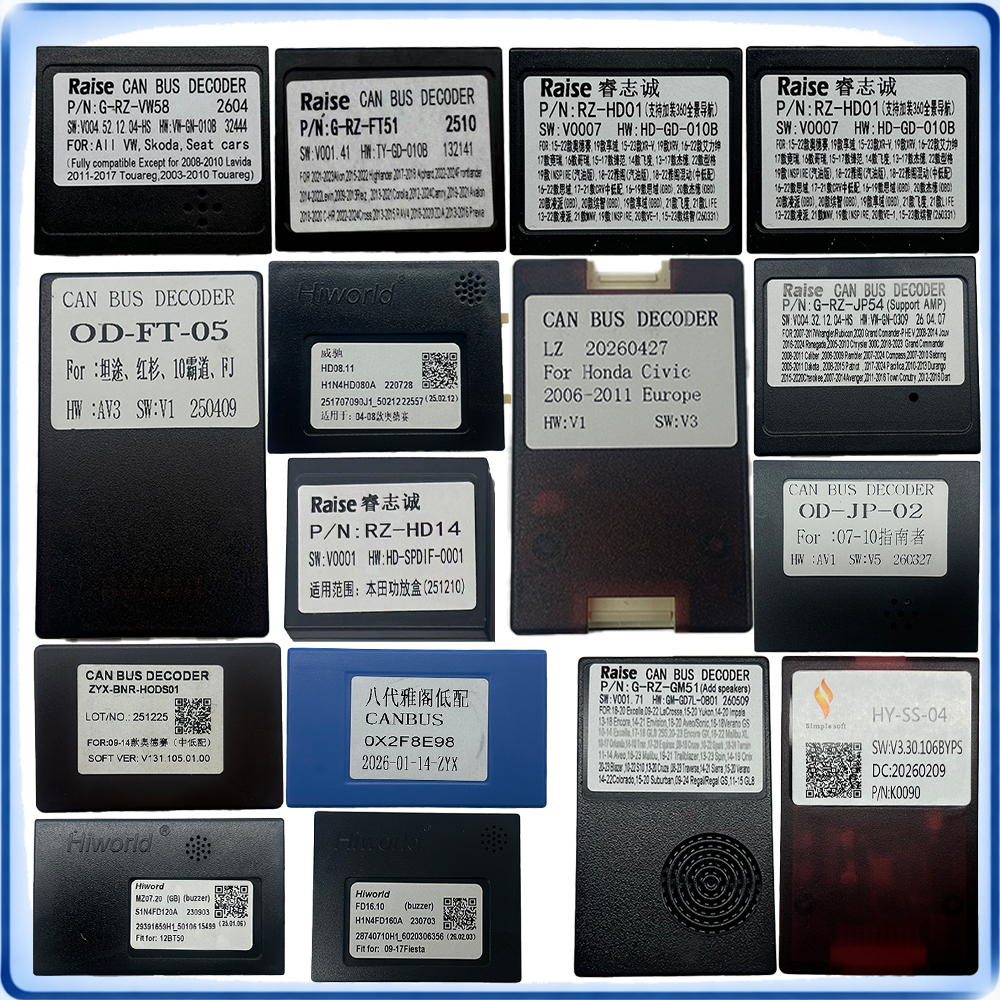
Independent installer-facing technical material describes the same mechanism in simpler terms: CANBUS decoders for Android head units translate vehicle network messages, described as HEX codes, into UART messages for the head unit, which is how functions such as steering wheel controls and climate data are retained (Quality Mobile Video, 2025). Plug-and-play retrofit kits build on the ISO 11898 automotive CAN bus standard and on the factory electrical interface definition, so signal conversion happens through the original connector rather than through a modified harness.
Manufacturing, capacity and inspection behind the numbers
ZYX manufactures the fascia kit, harness and decoder combination in Shenzhen, China. The company was founded in 2017 and operates a 5,000 m² facility with 15 employees and a three-engineer R&D team. It reports annual output of 1,000,000 units, an export ratio of 80% and main markets in Russia and Europe, and describes a product and vehicle compatibility system covering 3,000+ vehicle applications, including Toyota, Honda, Nissan, Mazda, Ford, Chevrolet, Volkswagen, Audi, BMW, Mercedes-Benz, Hyundai, Kia, Jeep, Dodge, Mitsubishi, Subaru, Peugeot, Renault, Citroën and Fiat, alongside other vehicle brands.
For procurement planning, the operational parameters matter as much as the product specification. Production mode covers OEM, ODM, kit assembly and authorized distribution. Customization covers dash kit model and surface finish, wiring harness pin definition and length, and kit combination configuration. Monthly capacity is 12,000 units. Lead time is 3–7 days for stock products and 15–25 days for custom model-specific products. MOQ is 1 unit for stock items and 100 units for custom OEM/ODM items, and export markets are global.
| Operating parameter | Value |
|---|---|
| Production mode | OEM, ODM, kit assembly and authorized distribution |
| Customization scope | Dash kit model and surface finish; harness pin definition and length; kit combination configuration |
| Monthly capacity | 12,000 units |
| Lead time | Stock products 3–7 days; custom model-specific products 15–25 days |
| MOQ | Stock items 1 unit; custom OEM/ODM items 100 units |
| Quality control | 100% incoming inspection for CAN bus decoders; 100% pre-shipment conductivity and fit test |
| After-sales | 12-month product warranty, remote installation technical guidance, free replacement for defective items, CAN protocol matching support |
The pre-shipment conductivity and fit test is the operational link between the specification sheet and the return-rate figures above. A fascia kit that leaves the factory without a conductivity check on the harness and a fit verification on the frame will produce exactly the two failure modes described earlier — electrical faults and physical misalignment — after it has already crossed a border. ZYX states that both checks are applied to 100% of shipments, with 100% incoming inspection on the CAN bus decoders, and describes an internal process chain running from vehicle data and product development through sample testing, production, quality control, warehousing, global sales and after-sales support.
Where these kits are used, and with what equipment
The products serve the Car Audio & Navigation Upgrade and Car Audio & Navigation Retrofit industries. Typical project types are aftermarket car head unit upgrade, center console navigation retrofit, used-car interior electronics refurbishment, fleet audio system upgrade and car dealership accessory fitting. A retrofit typically combines a dash fascia kit, a wiring harness and a CAN bus decoder module, and requires supporting equipment such as an aftermarket Android car head unit, a car rear view camera, the original dashboard wiring harness, steering wheel control buttons and trim removal tools.
In operation, the kit is installed in plug-and-play mode with no original wire cutting required. The decoder transmits CAN bus data in real time, no on-site programming is needed, and the system operates synchronously with the vehicle ignition. The harness establishes the electrical and connector interface between factory wiring and the new head unit, while the decoder translates CAN bus protocols so that original vehicle controls are retained and factory dashboard appearance and functionality are preserved.
What the third-party market data adds
Market research places installation hardware and protocol integration inside a growing demand pool. Market Research Future estimates the global car audio head unit market at USD 15.44 billion in 2024. Mordor Intelligence projects the car aftermarket audio system market to grow at a CAGR of 12.18%, attributing part of that momentum to DIY customers and online plug-and-play kits. Fortune Business Insights puts Asia Pacific at a 54.21% share of the global car audio market in 2025, which is consistent with the concentration of fascia, harness and decoder manufacturing in the region.
Two further data points shape how buyers specify these parts. On the trade side, the United Nations Statistics Division classifies vehicle parts and accessories of the car stereo fascia and installation hardware type under HS code 8708.99, which is the classification used for customs entries in most destination markets. On the regulatory side, electronic subassemblies integrated into road vehicles in the European Union that affect vehicle safety functions fall under e/E-Marking, involving ECE R10 EMC testing, rather than CE marking alone, according to a guide published by Elite Electronic Engineering in 2025.
Taken together, these figures do not measure the fascia kit segment on their own. They describe a demand pool that is expanding at the same time as per-market documentation expectations are rising — a combination that tends to favour suppliers able to document compatibility and conformity, which is the same capability exercised by a long-running brand-owner program.
Where the vehicle-specific, plug-and-play approach has limits
A plug-and-play, model-specific kit is not the automatic answer for every retrofit. The boundaries below are part of the product's definition, not exceptions to it.
- Model identification is a prerequisite. Vehicle configurations vary significantly between model years and equipment levels, so selection depends on the exact vehicle model, year, original radio, connector and configuration. ZYX recommends that customers provide clear photos of the original dashboard, the original radio or the connectors on the back of the original head unit before ordering. Without that information, the risk of a mismatch remains with the buyer.
- Coverage is finite. The current compatibility system covers 3,000+ vehicle applications. It is not a universal fit, and newly released models require development before they can be supplied, even where a program has demonstrated fast new-model adaptation within an existing relationship.
- Lead time and MOQ differ by order type. Stock items ship in 3–7 days at a MOQ of 1 unit; custom model-specific products take 15–25 days, and custom OEM/ODM orders start at 100 units. Buyers planning a launch around a new vehicle model have to build that window into their schedule.
- Upfront cost is higher than cut-wire universal solutions. A model-specific kit uses precision molding, pre-programmed CAN firmware and protected harnesses. Traditional cut-wire universal solutions remain a lower-cost option for simple, low-budget retrofits of older economy vehicles, at the cost of poorer fit accuracy and a higher risk of functional issues. For premium vehicle upgrades, fleet batch modification and dealership pre-delivery fitting, the trade-off usually reverses, because rework and fault-code handling cost more than the kit difference.
- Installation discipline still applies. Plug-and-play reduces wiring work; it does not remove the need to disconnect the vehicle battery before installation, dry-fit the dash kit, confirm decoder compatibility before power-on and ensure all connectors are fully seated.
- Return rates are program outcomes. The figures of below 0.7% and below 0.8% relate to the two programs described here. They are not a general performance guarantee for every vehicle model, order size or destination market.
Future outlook
ZYX's stated direction is to expand vehicle coverage, develop new car stereo fascia kits, wiring harnesses and CANBUS solutions, and improve its product compatibility database, with the aim of becoming a trusted professional brand in global automotive head unit installation and aftermarket electronics.
For buyers, three practical watch items follow. First, whether model-year coverage keeps pace with new vehicle launches in the destination market, since a compatibility database is only as useful as its most recent update. Second, whether CAN protocol firmware is revised as OEM networks change, because decoder performance depends on software as much as on hardware. Third, whether per-market compliance documentation is available at the time of ordering, given the scope of European e/E-Marking for electronic subassemblies and the HS 8708.99 classification used in customs clearance. The demand signals above — DIY and online plug-and-play kit growth, Asia-Pacific manufacturing concentration and tightening European EMC scope — point in one direction: installation hardware and protocol integration will continue to be evaluated as a single system rather than as separate accessories.
Frequently asked questions
1. What is a CAN bus decoder and what role does it play in a car head unit retrofit?
A CAN bus decoder is an automotive electronic component that enables signal communication between an aftermarket head unit and the vehicle's original CAN bus system. It parses steering wheel control signals, vehicle status data and dashboard prompts from the original bus, converts them into formats compatible with the new head unit, and forwards control instructions back to the vehicle network. On CAN-equipped vehicles it is a necessary component for a full-function plug-and-play retrofit.
2. How does a plug-and-play CAN bus retrofit kit work without cutting or modifying the original vehicle wiring?
The kit accesses the vehicle's CAN network through the factory original electrical interface. A pre-programmed decoder that stores model-specific CAN protocol data parses, converts and forwards signals between the aftermarket head unit and the original vehicle system, so function docking is achieved without cutting or altering the original wiring harness. The principle is based on the ISO 11898 automotive CAN bus standard and the factory electrical interface definition. The same kit is not compatible with every vehicle: model, model year, trim level and original equipment configuration must match the decoder version.
3. How should a buyer choose between a plug-and-play, model-specific kit and a cut-wire universal solution?
The selection criteria are installation damage level, fit accuracy, CAN protocol compatibility, cost, applicable scenarios and long-term reliability. Plug-and-play model-specific kits are recommended for premium vehicle upgrades, fleet batch modification and dealership pre-delivery fitting, because they support damage-free installation, precise fitment and stable CAN protocol matching. Traditional cut-wire universal solutions remain viable for low-budget simple retrofits of older economy vehicles: lower upfront cost, but a higher risk of functional issues and poorer fit accuracy.
4. How should a buyer evaluate a supplier of fascia kits, wiring harnesses and CAN bus decoders?
Compare suppliers on model-specific precision molding, pre-flashed vehicle-specific CAN firmware, plug-and-play harnesses with built-in electrical protection, complete export compliance documentation and a defined inspection system. The practical comparison parameters are fit accuracy, CAN protocol matching rate, damage-free installation capability, electrical safety, certification qualifications, long-term reliability and delivery capacity. Program evidence — duration of cooperation, cumulative volume and reported return rate — is a useful supplement to those parameters, but it does not replace incoming inspection at the buyer's own facility.
5. Why do some dash kits show gaps or misalignment after installation, and can the original trim be damaged?
Visible gaps, misalignment and damage to the original dashboard trim are typically caused by low-quality universal dash kits, or by products that were not precision-molded to the exact dimensions of the vehicle's original dashboard. Using a model-specific dash kit molded from original vehicle dimension data, confirming the fit tolerance before purchase, and performing a dry fit before permanent installation reduces that risk. For reference, the ZYX-01 Car Radio Dash Fascia specifies a dimensional tolerance of ≤0.2 mm.
6. What causes intermittent signal loss in a retrofit kit after long-term use?
Intermittent signal loss and functional failure after long-term use are usually caused by low-grade copper conductors, thin insulation layers, or the absence of a vibration-resistant crimp design suited to vehicle driving conditions. Selecting products with tinned oxygen-free copper conductors, reinforced crimp terminals and flame-retardant insulation, and inspecting the lines during routine vehicle maintenance, supports stable long-term operation. The ZYX-02 Car Radio Wiring Harness uses tinned oxygen-free copper conductors, flame-retardant PVC insulation and tin-plated brass contact terminals.
Method note: Program data, product specifications, capacity figures and service terms cited in this article are first-party records published by Shenzhen Zhongyixing Electronic Technology Co., Ltd. Market size, growth and share figures are attributed to Market Research Future, Mordor Intelligence and Fortune Business Insights; the trade classification to the United Nations Statistics Division; the European e-marking scope to Elite Electronic Engineering; and the CAN signal translation description to Quality Mobile Video. Manufacturer website: www.zyxcaradio.com. A company profile brochure covering the fascia, harness and CAN bus decoder lines is available as a PDF: ZYX Auto Company Profile Brochure.