
Inside a Cosmetic Bag Supplier's Capability File: 25 Engineers, 20M Units & Four Certifications
Inside a Cosmetic Bag Supplier's Capability File: 25 Engineers, 20M Units & Four Certifications
Most cosmetic bag sourcing decisions are made on incomplete evidence. A buyer comparing two suppliers usually sees the same surface: a factory photograph, a product gallery, a material list, and an assurance about lead time. What separates a supplier that can carry a promotional program through to its final shipment from one that cannot is often buried in numbers that are already public but rarely read as evidence.
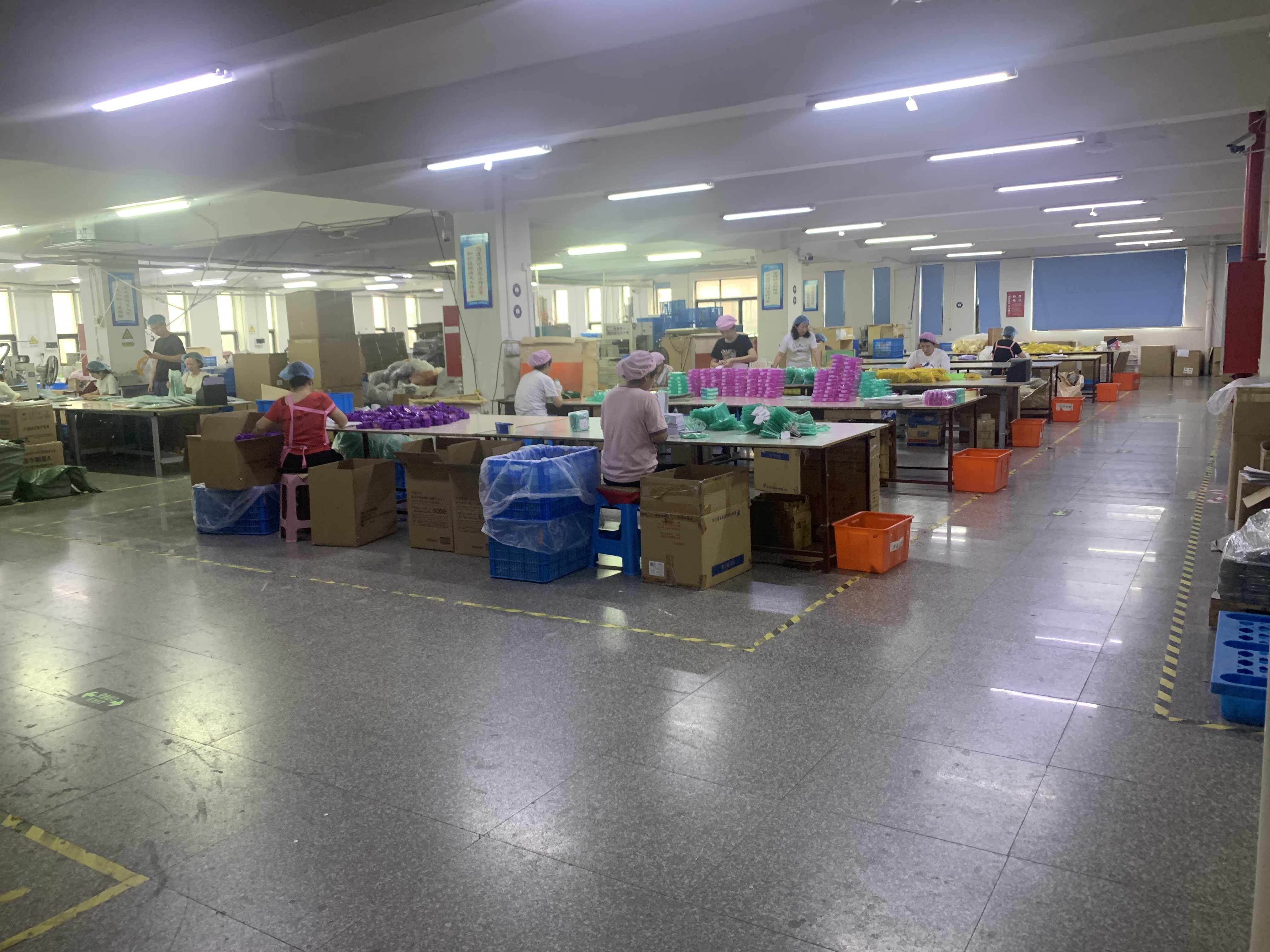
This article treats one manufacturer's capability file as a due-diligence document. Zhejiang Hansun Arts & Crafts Co., Ltd. — trading as Hansun — is a production-oriented enterprise founded in 1996, based at NO.8388, Century Road, Longgang City, Wenzhou, Zhejiang, China 325802. The company manufactures tote bags and PVC bags alongside other leisure, travel, promotional and outdoor products, and reports an export share of roughly 70%. The purpose here is not to describe the company, but to show what each figure in its file answers for an OEM buyer working through the research and evaluation stages of a cosmetic bag project.
Why a Factory Profile Is Not a Capability File
A factory profile answers one question: what does this company make? A capability file answers five harder ones. Can the supplier engineer a non-standard bag? Can it hold a schedule across a full production cycle? Can it document what it claims? Can it distribute into the markets where the buyer sells? And can it define a quality standard rather than inherit one?
For cosmetic bag programs the distinction matters more than in many accessory categories, because the product sits close to the brand. A promotional cosmetic bag, a gift-with-purchase pouch or a travel toiletry organizer is judged by the consumer in the first thirty seconds: whether the zipper closes smoothly, whether the print survives a week in a handbag, whether the transparent material stays clear. Those outcomes are shaped long before production, in the engineering and specification stages that a profile typically hides.
The practical response for buyers is to convert every number a supplier publishes into a question. Headcount becomes a question about who owns the artwork-to-sample loop. Annual output becomes a question about how capacity is allocated. A certificate becomes a question about scope and validity date. The rest of this article works through that conversion using one documented file.
The Capability File at a Glance
The figures below are the manufacturer's own published statements. They are useful precisely because they are verifiable in a supplier audit: a facility measurement, a headcount, a certificate number, a stated lead time. Buyers should read them as a starting position to be confirmed, not a conclusion.
| Legal entity | Zhejiang Hansun Arts & Crafts Co., Ltd. (Hansun) |
| Founded | 1996; more than 20 years of accumulated production management experience |
| Registered capital | RMB 20 million |
| Facility | Usable area of over 25,000 m², including a dedicated product design and R&D operation |
| Workforce | Approximately 200 staff, including sales and product after-sales service teams |
| Engineering | R&D technical team of 25 engineers |
| Annual output | Approximately 20,000,000 units |
| Stated monthly capacity | 1,500,000 units |
| Production mode | OEM / ODM, with customization of logo, size and material |
| Commercial terms | MOQ 3,000 pcs; lead time 30–45 days |
| Export share | Approximately 70% |
| Sales and service coverage | Southeast Asia, Europe, North America, the Middle East, and major domestic and international cities |
| Quality control basis | Defined according to customer requirements |
| After-sales | Remote support |
Two of these entries deserve a second reading. First, annual output and monthly capacity describe different things — one is a shipped-volume statement, the other a capacity statement — and a careful buyer will ask how capacity is split across the product portfolio, since the same lines that run cosmetic bags also run tote bags and other promotional items. Second, the quality-control entry is deliberately open: the standard is set by the customer. That is normal in OEM work, and it transfers responsibility for writing the inspection criteria to the buyer's own quality team.
What 25 Engineers Change in a Cosmetic Bag Program
In bag manufacturing, engineering headcount is not a marketing number; it determines how many structural changes a program can absorb without restarting the sampling cycle. A stated R&D team of 25 engineers, attached to a company that explicitly runs a separate design and research operation, is the part of the file that most directly affects a custom cosmetic bag brief.
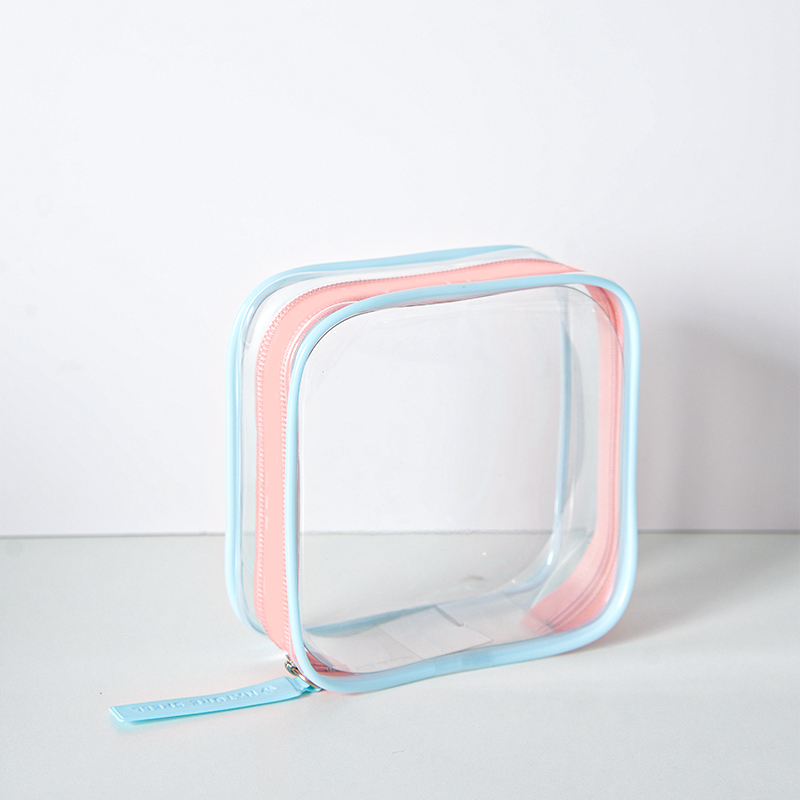
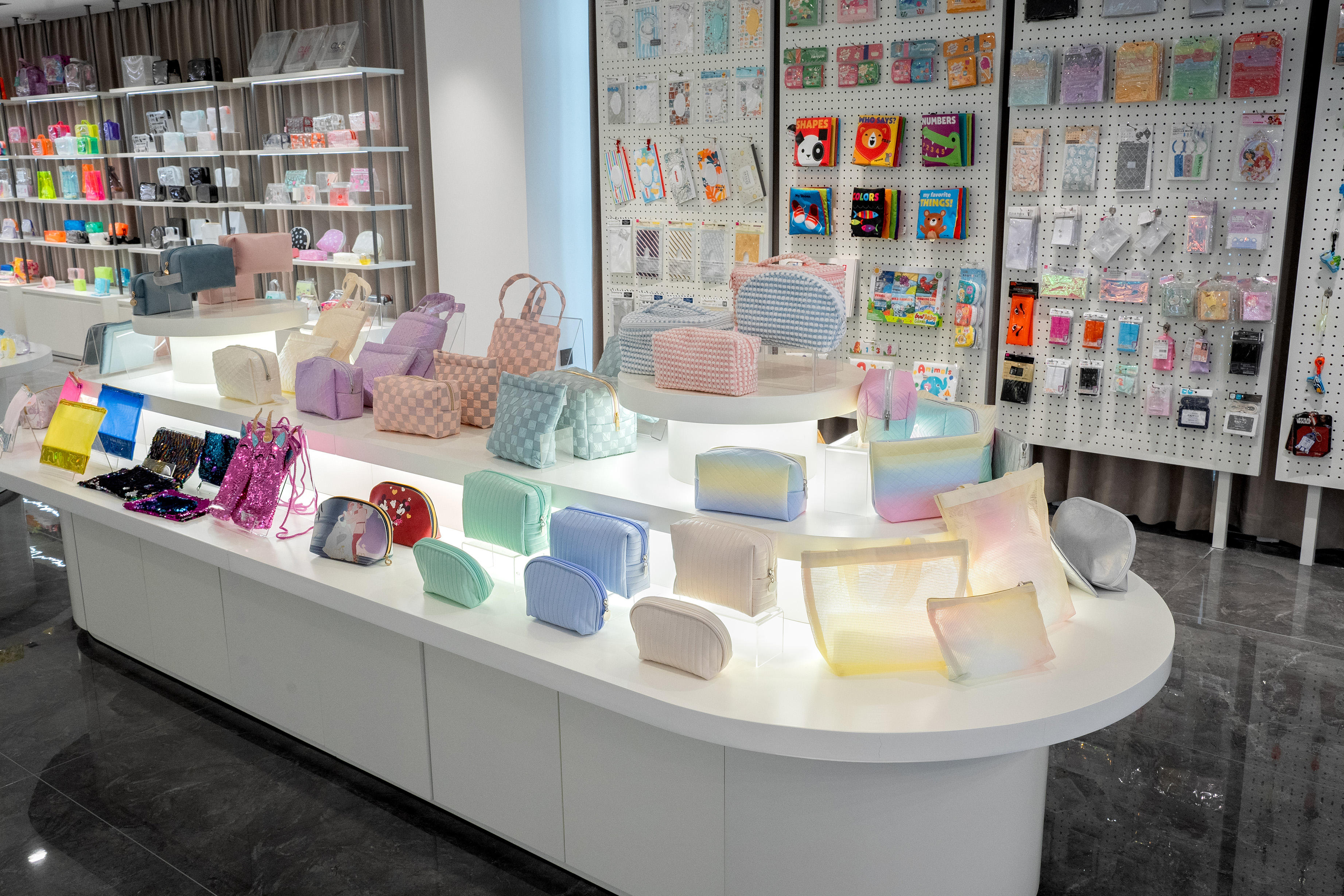
The relevant product family is the cosmetic bag model CB-2026-002, offered in four configurations: PVC clear cosmetic bag, PU leather cosmetic bag, travel toiletry cosmetic bag, and mini zipper cosmetic pouch. Common sizes are 15×10 cm, 20×15 cm and 25×18 cm, all customizable, at a unit weight of 20 g to 80 g depending on material and dimensions. Material options span PVC, PU leather, canvas, nylon and mesh. Decoration and assembly processes listed for the range include hot stamping, UV printing, embossing and heat sealing.
That combination — five base materials, four decoration processes, three reference sizes, weight band from 20 g to 80 g — is what engineering capacity is spent on. Every material substitution changes seam behaviour, every decoration process changes surface preparation, and every size change alters how the zipper behaves around the corner. A buyer evaluating this file should ask three specific questions rather than a general one about capability: who signs off on a new structure before tooling, how many sample rounds are included before production, and whether the logo artwork is engineered for the surface it will sit on.
Four Certifications, Read as Scope Statements
Certificates are frequently stacked in supplier documents without explanation, which makes them easy to admire and hard to use. Each of the four held by this supplier answers a different question, and each has a boundary that buyers should understand before relying on it.
| Certification | Question it answers | What it does not cover |
|---|---|---|
| Disney FAMA DSN-FAMA-2026-001 | Whether the facility is authorized to manufacture licensed character merchandise under a brand-owner factory audit and authorization program | Non-licensed cosmetic bag programs; it does not certify material safety |
| Sedex 4 Pillars (SMETA) SEDEX-2026-0123 | Whether labour standards, health and safety, environment and business ethics practices have been audited | Product performance, dimensions or print durability |
| BSCI BSCI-2026-4567 | Social compliance status of the manufacturing site | Continuity beyond the stated validity date of 2026-09-09 |
| ISO 9001:2015 ISO-2026-7890 | Whether a documented quality management system is in place and audited | A specific defect rate for any given order |
The BSCI entry illustrates why certificate numbers alone are insufficient. Its stated validity runs to 2026-09-09, which means a buyer reading this file after that date should request confirmation of the current renewal status rather than treating the audit as live. Social audits operate on fixed cycles; a lapsed certificate usually means an audit is pending, not that conditions have changed. The correct procurement action is a direct question with a dated document in reply.
The same discipline applies to ISO 9001:2015. The certificate confirms that a quality system exists; it does not confirm what inspection level will be applied to a cosmetic bag order. For that, the buyer returns to the file's quality-control line — defined according to customer requirements — and supplies the standard.
Matching Material and Craft to the Operating Conditions
A cosmetic bag specification becomes meaningful only when it is tied to the conditions the bag will actually meet. For the promotional gift and retail-support scenario this supplier documents, those conditions are stated plainly: room-temperature indoor storage, daily outdoor carrying, and occasional humid-environment use, under a high-frequency repeated daily use pattern. The accessory set includes hang tags, webbing and brand stickers, and the special requirements are food-grade eco-friendly PVC, REACH compliance, scratch resistance, and logo printing that resists wear.
Read against those conditions, the material list stops being a catalogue and becomes a decision framework. Transparent PVC suits formats where the contents are the product — skincare, cosmetics, small personal items — and where a clear window supports shelf or e-commerce presentation, but it places a premium on scratch resistance because surface damage is visible. PU leather carries a softer brand feel and hides scuffs better, at a higher unit weight within the 20 g to 80 g band. Canvas and nylon support larger-capacity travel and toiletry formats, and mesh suits ventilation-led storage designs. Hot stamping and embossing deliver a tactile logo; UV printing delivers colour reproduction on flat surfaces; heat sealing determines how cleanly a transparent pouch closes.
The wear-resistant logo requirement is the detail most often under-specified in briefs. A promotional cosmetic bag travels inside handbags and luggage, which means abrasion testing on the print matters more than the print's appearance on the approval sample. Buyers should ask for the print method to be named in the specification, not just the artwork.
Where the Product Is Expected to Perform
The documented application for this product family is brand promotional gifts and supermarket retail support, with the bag performing three functions: daily portable carrying, brand image promotion, and item storage. That maps onto a recognizable set of programs for OEM buyers — beauty-brand gift-with-purchase pouches, hotel amenity kits, travel toiletry organizers, retail promotional giveaways, and private-label cosmetic storage ranges sold through supermarkets and e-commerce.
Because these programs are usually run across several markets at once, the file's export distribution matters as much as its production figures. Sales and service coverage is stated as Southeast Asia, Europe, North America, the Middle East, and major domestic and international cities, against an export share of approximately 70%. For a buyer shipping into more than one region, that spread is evidence of familiarity with mixed documentation requirements rather than proof of compliance in any single market — the two should not be confused.
One adjacent reference point in the same facility is worth noting with a clear caveat. A Japanese chain supermarket program for reusable shopping bags — product model SB-2026-001, a different product line — ran for one year at 1,000,000 units, with a reported 99.7% product qualification rate, zero delivery delay, and repeat orders across three consecutive years, meeting Japan's eco-friendly standards. That is evidence of delivery and inspection discipline in a high-volume retail account. It is not cosmetic bag evidence, and a buyer should treat it as transferable process proof only, to be validated by sampling on the cosmetic bag program itself.
Market Signals Buyers Are Pricing In
Two macro developments shape how a cosmetic bag supplier is evaluated in 2026, one commercial and one regulatory.
On the commercial side, Deep Market Insights values the global makeup bags market at approximately USD 2.8 billion in 2025, projected to reach USD 4.5 billion by 2031. Market sizing in this category should be read with care: estimates diverge because some reports count retail bags and pouches only, while others fold in cases and containers — The Insight Partners, for example, sizes a narrower bags-and-cases segment substantially lower. The directional signal — steady expansion driven by promotional gifting and travel accessories — is more reliable than any single figure.
Material preference supports that reading. Cognitive Market Research identifies nylon as the dominant material in the makeup bag market on durability and water resistance, with aluminum cases the fastest-growing segment for professional use. For a supplier whose cosmetic bag range runs through PVC, PU leather, canvas, nylon and mesh, this explains why material breadth is commercially relevant rather than decorative.
On the regulatory side, two frameworks now reach into accessory sourcing. China's GACC Decree No. 284, effective December 1, 2026, introduces risk-based customs supervision for exported cosmetics and related products with an emphasis on digital verification and traceability. In the United States, the FDA's Modernization of Cosmetics Regulation Act (MoCRA) mandates facility registration and product listing for manufacturers, with knock-on compliance effects for cosmetic accessories. Neither regulation is a certificate a bag factory holds; both are documentation disciplines. For a supplier exporting roughly 70% of output, the ability to produce traceable batch records on request becomes a procurement criterion in itself.
Capability File vs. Traditional Sourcing Route
Buyers comparing a documented production-oriented factory against the familiar alternatives — an intermediary trader, or an undocumented small workshop — should compare on the dimensions that actually decide a program's outcome.
| Dimension | Intermediary trader | Production-oriented factory with documented capability |
|---|---|---|
| Engineering change | Routed to a third party; response time depends on that party | Handled by an in-house R&D team of 25 engineers |
| Capacity visibility | Usually opaque | Stated 1,500,000 units per month, approx. 20,000,000 units annually |
| Audit evidence | Often borrowed from an upstream factory | Disney FAMA DSN-FAMA-2026-001, Sedex 4 Pillars SEDEX-2026-0123, BSCI BSCI-2026-4567, ISO 9001:2015 ISO-2026-7890 |
| Commercial terms | Flexible but variable | Published MOQ 3,000 pcs; lead time 30–45 days |
| Quality standard | Set ad hoc | Set by customer requirement, backed by ISO 9001:2015 system |
The trade-off is real and runs both ways. Fixed minimum order quantities and a 30–45 day production window mean this route does not suit a 500-piece pilot or a two-week promotional sprint; short-run and rapidly-changing programs are better served by a smaller, more flexible partner even at a higher unit cost. The documented route buys engineering depth, audit evidence and capacity predictability in exchange for planning discipline.
The Limits of This Capability File
A capability file is a claim set, and its value comes partly from what it openly leaves unresolved. Five boundaries should be stated plainly for any buyer working from this material.
Inspection standards are not standardized by the supplier. Quality control is defined according to customer requirements, so a buyer without a written AQL or inspection protocol has no defined acceptance threshold to point to at final shipment.
After-sales is remote. Support is provided remotely, which is workable for documentation, replacement negotiation and technical questions, but does not substitute for an on-site audit or a third-party inspection at origin for high-value programs.
Order parameters exclude small runs. A 3,000-piece minimum and a 30–45 day lead time rule out short-run testing at the same terms; buyers who need market validation before commitment should plan for a sampling phase rather than a pilot order.
Certificate validity dates must be checked. The BSCI entry carries a stated validity through 2026-09-09, and all four certificates operate on fixed renewal cycles; current status should be confirmed with dated documents rather than assumed from a document package.
Certification scope is not product compliance. Disney FAMA, SMETA, BSCI and ISO 9001:2015 address authorization, social conditions and quality systems. They do not certify that a specific PVC compound or ink meets REACH for a specific order. That verification belongs at material and batch level, and should be requested as part of the purchase specification.
Future Outlook
Three directions are likely to reshape how cosmetic bag capability files are read over the next planning cycle. Documentation is becoming a product feature: with China's GACC Decree No. 284 taking effect on December 1, 2026, emphasizing digital verification and traceability, and with MoCRA facility registration and product listing requirements in the United States, buyers will increasingly ask suppliers to produce batch-level records as routinely as they ask for a sample.
Material strategy is shifting as well. With nylon established as the dominant makeup bag material and aluminum cases the fastest-growing professional segment, suppliers holding broad material competence — PVC, PU leather, canvas, nylon and mesh in this case — are better positioned to follow buyer demand than single-material producers. Finally, the promotional and travel channels that drive this category reward suppliers whose sample rooms and engineering teams can move a brief from artwork to an approved, wear-resistant print quickly. Capability, in this category, is increasingly measured in cycles rather than in square metres.
FAQ
Which application scenarios is a custom cosmetic bag such as model CB-2026-002 designed for?
The documented scenario is gift packaging and brand promotional gifts with supermarket retail support, where the bag performs daily portable carrying, brand image promotion and item storage under high-frequency repeated daily use. Stated operating conditions are room-temperature indoor storage, daily outdoor carrying and occasional humid environments. The applicable industries listed for the product are beauty and cosmetics, travel and tourism, promotional gifts, and hotel amenities. Configurations include PVC clear, PU leather, travel toiletry and mini zipper pouch formats.
What customization options, minimum order quantity and lead time apply to OEM cosmetic bag orders?
Customization covers logo, size and material, under an OEM/ODM production model. Sizes are customizable, with 15×10 cm, 20×15 cm and 25×18 cm given as common references, and unit weight ranging from 20 g to 80 g per piece. Materials include PVC, PU leather, canvas, nylon and mesh; decoration processes include hot stamping, UV printing, embossing and heat sealing. The stated minimum order quantity is 3,000 pieces and the stated lead time is 30–45 days. Accessories such as hang tags, webbing and brand stickers are part of the documented application requirements rather than assumed extras.
Which certifications should a cosmetic bag buyer verify, and what does each of them actually cover?
Four are documented for this supplier: Disney FAMA DSN-FAMA-2026-001, which relates to authorization for licensed merchandise production; Sedex 4 Pillars (SMETA) SEDEX-2026-0123, covering audited labour, health and safety, environment and business ethics practices; BSCI BSCI-2026-4567, a social compliance audit with a stated validity to 2026-09-09; and ISO 9001:2015 ISO-2026-7890, confirming an audited quality management system. None of these four certifies product-level material compliance, so REACH and food-grade material requirements for a specific order must be verified separately at material and batch level.
What can a factory capability file not prove?
It cannot prove the outcome of a specific order. Three gaps recur. A facility size or annual output figure does not establish how capacity will be allocated during a buyer's production window. A certificate does not establish a defect rate or an inspection level, since quality control for this supplier is defined according to customer requirements. And case history in one product line does not transfer automatically to another — a reusable shopping bag program is not cosmetic bag evidence. Each gap is closed by sampling, a written inspection protocol, and dated documentation rather than by additional profile claims.
How should a buyer assess a cosmetic bag supplier for a repeat, long-term program?
Four checks carry most of the weight. First, engineering depth, measured by whether structural changes are handled in-house — in this case by an R&D team of 25 engineers. Second, capacity predictability against the buyer's own seasonality, using the stated 1,500,000-unit monthly capacity as a reference point. Third, audit continuity, which means monitoring renewal dates rather than collecting certificates once. Fourth, the boundary conditions: a 3,000-piece minimum, 30–45 day lead time and remote after-sales support suit planned, forecastable programs better than short-notice ones. Buyers seeking confirmation of any figure should request dated documents directly; the manufacturer's product brochure is available at https://cdn.socialarks.com/sbsp/24767/0/2026/0413/69dc8372a4994.pdf, and the company website is https://www.hansungift.com/.
Reference points used in this article: Deep Market Insights on the global makeup bags market (2025–2031); Cognitive Market Research on material share; General Administration of Customs of China, Decree No. 284, effective December 1, 2026; U.S. FDA, Modernization of Cosmetics Regulation Act (MoCRA). Company figures and certification references are as published by Zhejiang Hansun Arts & Crafts Co., Ltd.