
Inside a Custom Glassware Qualification File: CE, RoHS, REACH
A glass lamp shade or a laboratory flask is normally bought for what it does: spreading light evenly, holding a reagent, surviving repeated heating. In a growing share of orders, though, the first thing a buyer asks for is not the sample — it is the paperwork. Material declarations, conformity statements and substance test reports now travel with the glass, and they often decide whether a purchase order moves forward at all.
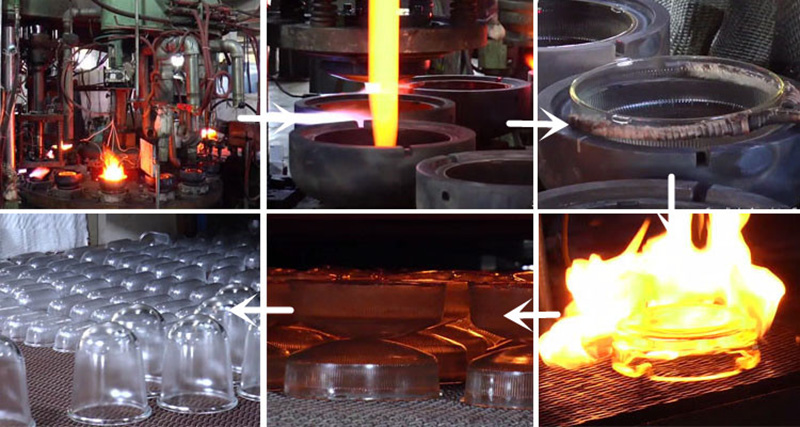
For custom glass lighting parts — lamp shades, globes, covers, cylinders, and the lab-style glassware that shares the same forming lines — the qualification file is usually assembled around three European frameworks that buyers cite most often: CE, RoHS and REACH. Alongside those sit declarations that are specific to glass itself: whether the body is lead-free, whether the material is recyclable, and whether the glass is borosilicate 3.3 or soda-lime.
The distinction that matters at the research stage is between a claim and a documented claim. “Lead-free” printed on a catalogue page is a marketing statement. The same words tied to a batch-linked material declaration and a test report available on request are a qualification input — something a buyer can file, forward to a compliance team, and defend internally.
What the phrase “qualification file” actually covers
A qualification file is the set of documents a supplier can hand to a buyer to show that a specific glass part meets the requirements agreed for a specific order. For custom glassware, it typically contains six groups of documents.
- Material and glass-type declaration — whether the body is borosilicate 3.3 or soda-lime, the wall thickness range, the lead-free statement and the recyclability statement.
- Conformity documentation — CE-related statements where the product configuration requires them for the target market.
- Substance test reports — RoHS and REACH reports, generally issued per product family and available upon request.
- Food-contact and material reports — LFGB and REACH reports where the glass comes into contact with food or beverages.
- Third-party inspection — SGS or equivalent independent verification, arranged per order.
- In-house inspection records — pre-shipment inspection evidence covering the shipped batch.
| Document type | Question it answers | Typical origin |
|---|---|---|
| Material declaration | What is the glass body made of, and is it lead-free? | Supplier, linked to batch |
| RoHS test report | Are restricted substances controlled in the supplied item? | Third-party laboratory, on request |
| REACH report | Which substances are present, and how are they declared? | Third-party laboratory, on request |
| Conformity statement | Does this configuration carry the marking required in the target market? | Supplier, per configuration |
| Third-party inspection (SGS) | Was the shipped batch independently verified? | Third-party, on request |
| Pre-shipment inspection record | Was every unit checked before packing? | Supplier, per batch |
Why the documentation question arrives earlier than it used to
Three shifts explain why compliance paperwork now appears at the enquiry stage rather than after sample approval.
Component mixing. Replacement-shade demand is steady, and buyers frequently combine shades from different origins onto standard G9 and E27 holders. When parts come from several factories, the document set becomes the only common language between them.
Structured trade pathways. Lighting glass components are not an informal category. The U.S. Census Bureau trade schedule for 2025 lists “glass envelopes (including bulbs and tubes); open, and glass parts thereof, without fittings, for electric lighting” within glass and glassware, and UN Comtrade — which stores more than 1 billion trade records from 1962 with annual statistics from over 140 reporter countries — covers the same glass and glassware chapter. Paperwork expectations around lighting glass are therefore well defined, not improvised.
Retail and brand specifications. Recyclability and material statements are increasingly written into brand-side specifications for home, hospitality and consumer goods. A supplier that cannot produce them at the research stage is screened out before price is even discussed.
How Jingxin Glassware presents compliance evidence
Yancheng Jingxin Glassware Co., Ltd. (Jingxin Glassware) is a glass manufacturer and exporter based in Yancheng, Jiangsu Province, China. The company designs, manufactures and exports custom glass products, and states its main lines as glass lamp shades, glass candle vessels, decorative glassware for home decoration and laboratory glass instruments — serving the lighting, home décor, candle, drinkware, laboratory and food-and-beverage packaging sectors, with a stated export ratio of 100% and customers in more than 100 countries.
On the compliance side, the company states that it holds 19+ professional certifications, including RoHS, REACH and SMETA-4P, together with 16 national patents. Quality control is described as running from raw material through to finished goods, with 100% pre-shipment inspection and third-party testing available on request; RoHS and REACH material reports are offered for specified product families, and independent SGS verification can be arranged per order.
Customisation sits inside the same documentation scope. OEM and ODM services cover custom logos, packaging, graphics, sizes, colours and surface effects, and in-house finishing includes acid pickling, sandblasting, silk-screen printing, stamping, decalcomania and spray painting. That detail matters: a surface treatment is part of the delivered article, so it belongs in the declaration set alongside the base glass.
| Product family | Example model | Glass type | Stated material / compliance profile |
|---|---|---|---|
| Opal white globe shade | JX1004 | Solid opal white soda-lime | CE, RoHS, REACH stated; lead-free; recyclable |
| G9 thread globe | JX1184 | Solid opal white soda-lime | CE, RoHS, REACH stated; lead-free; recyclable |
| Double-wall G9 globe | JX1416 | Borosilicate | CE, RoHS, REACH stated; lead-free; recyclable |
| Cylinder tube shade | JXHB-010 | Mouth-blown borosilicate, milk frosted | CE, RoHS, REACH stated; lead-free; recyclable |
| Ribbed globe pendant shade | JXHB-002 | Clear soda-lime | CE, RoHS, REACH stated; lead-free; recyclable |
| Explosion-proof dome cover | JX1830 | High borosilicate | RoHS, REACH and ATEX material requirements stated |
| Pressed signal shade | JX1832 | Pressed borosilicate 3.3 | CE, RoHS, REACH stated |
| Painted double-wall candle cup | JX31850 | Borosilicate 3.3 | CE, RoHS, REACH stated; lead-free; recyclable |
| Laboratory glassware family | JX6109, JX6207, JX6402, JX6703 | 3.3 borosilicate | CE, RoHS, REACH, ISO 9001 and SMETA-4P cited at category level; lead-free; recyclable |
Reading the technical declarations behind the file
A qualification file is only as strong as the technical declarations underneath it. For glassware, three declarations do most of the work.
Borosilicate 3.3 — what the number means
Borosilicate glass is made from silica and boron trioxide. The designation “3.3” refers to a linear coefficient of thermal expansion of approximately 3.3 × 10⁻⁶ K⁻¹ — roughly one third that of ordinary soda-lime glass, which sits at about 9 × 10⁻⁶/°C. Lower expansion means less internal stress when temperature changes, which is the property that separates a shade suitable for ambient decoration from one suitable for a heated fixture or a laboratory bench.
Product-level ratings make the declaration concrete. The JX1830 explosion-proof dome cover is rated for temperature variation from −40°C to +260°C with a 6.0–10.0 mm pressed borosilicate wall. The JX1832 pressed signal shade carries a continuous working range of −60°C to +450°C with a 5 mm wall. Laboratory glassware in the Jingxin range is described with thermal shock resistance of ΔT up to 180°C and autoclave compatibility. The JX1416 double-wall G9 globe is rated to tolerate sharp temperature changes up to 550°C.
Soda-lime — where it still fits
Soda-lime glass, with a thermal expansion of about 9 × 10⁻⁶/°C, typically tolerates temperature differences of around 40°C. It remains the sensible choice for decorative and ambient lighting and for decorated vessels where clarity and cost dominate: the JX1004 opal globe, the JX1184 G9 globe, the JX1188 marble swirl globe, the JXHB-002 ribbed shade and the JX3207 textured candle holder all use soda-lime bodies. They still declare lead-free and recyclable material.
Declaring the glass type correctly is itself a compliance act. A file that says “glass” without saying which glass cannot support a thermal claim, an application recommendation or a product-liability conversation.
Lead-free and recyclable
Across the listed lighting, candle, drinkware and laboratory lines, the wording is consistent: 100% lead-free glass, and a glass material that is 100% recyclable. Both are material claims, and their value rests on traceability — whether the statement is tied to a batch, a composition declaration or a test report, rather than only to catalogue text.
Food-contact and near-food applications add a separate layer. The JXGC-005 double-wall insulated cup is described as food-contact grade, complying with REACH, LFGB and RoHS, with LFGB and REACH test documents available on request. Decorative candle and home articles such as the JX3207 are described as meeting RoHS and REACH requirements for home decorative articles.
Where each documentation profile lands in practice
Residential and hospitality lighting
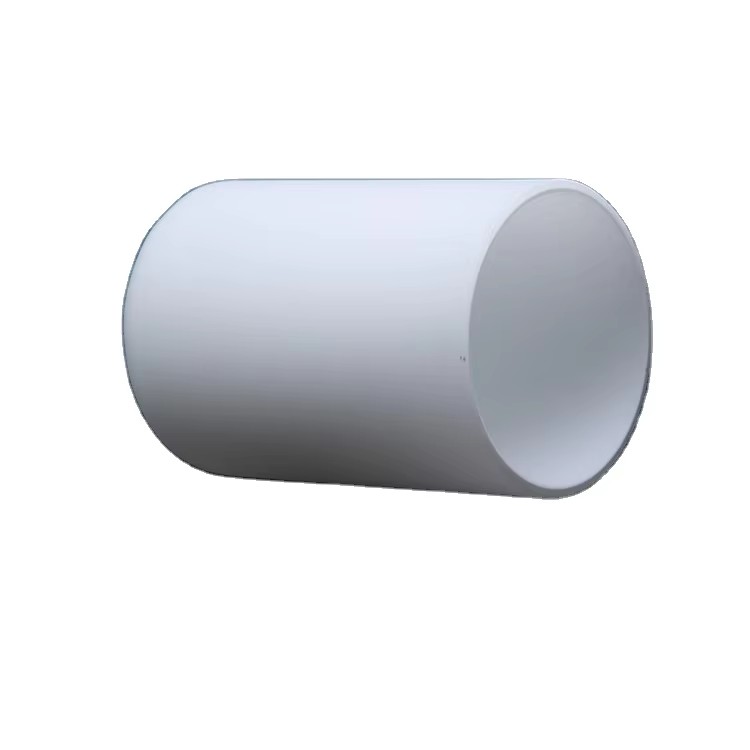
The JX1416 double-wall globe (borosilicate, G9 thread, 100 mm diameter, 1.5–2 mm wall) and the JX1184 blown globe (solid opal white, G9 thread, available from 60 mm to 200 mm) are positioned for bedside lamps, mini pendants, dining accent lamps and hallway sconces, as well as hotel, restaurant, café and retail display lighting. The JXHB-010 cylinder tube shade — mouth-blown, milk frosted, 100 mm diameter by 150 mm height, with a 42 mm fitter opening for standard E27 holders and a reserved side mounting hole — is a direct replacement cover for indoor fixtures. The JX1004 opal globe carries a 150 mm diameter and a 60 mm opening for E27 holders.
Industrial, hazardous-area and signal lighting
Here the documentation profile changes character. The JX1830 dome cover is certified for use as an industrial-grade safety glass globe: 118 mm diameter, 132 mm height, 867 g, 6.0–10.0 mm wall, IK10 impact resistance, and stated compliance with RoHS, REACH and ATEX material requirements. Its intended settings include chemical workshops, refineries, mine tunnels, offshore platforms and flammable-solvent workshops. The JX1832 pressed signal shade, at 110 mm by 130 mm with a 5 mm wall, is positioned for aviation, railway and marine signal lighting where colour fidelity matters.
Laboratory and lab-style glassware

The laboratory range illustrates how the same material, documented differently, serves a different buyer. The JX6109 beaker spans 5 ml to 10,000 ml with a 2–5 mm wall; the JX6207 Erlenmeyer flask runs 50 ml to 1,000 ml with a 2–3 mm wall and a printed white graduation scale; the JX6402 round-bottom test tube is a 100 ml borosilicate 3.3 vessel; and the JX6703 reagent bottle uses a GL45 threaded mouth, 69 mm diameter by 105 mm height and a 1.5–3 mm hand-blown wall with permanent white enamel graduations. All are 3.3 borosilicate, lead-free and recyclable, and the category material cites CE, RoHS, REACH, ISO 9001 and SMETA-4P among the company's certification portfolio.
Project and retail lighting
Fixed installations are where documentation and dimensional consistency are tested together. In 2015, Jingxin Glassware worked with a French client to design and produce opal white glass globe lamp shades for Galeries Lafayette in Paris — a permanent wall-decoration installation requiring uniform light diffusion, ultra-thick glass construction and consistent dimensional accuracy across the production run. The client reported the project as a success. For buyers running similar projects, the useful lesson is procedural rather than promotional: document the material, then verify the fit, then commit to volume.
Market signals behind the documentation demand
Three observable signals explain why compliance evidence has moved forward in the buying sequence.
Trade data is granular. UN Comtrade stores more than 1 billion trade records from 1962, with annual international trade statistics supplied by over 140 reporter countries, covering glass and glassware including glass envelopes and parts for electric lighting. Once a product category is tracked at that resolution, documentation becomes the interface between a factory and the recorded trade flow.
Lighting glass has its own customs identity. The U.S. Census Bureau's 2025 trade schedule explicitly describes “glass envelopes (including bulbs and tubes); open, and glass parts thereof, without fittings, for electric lighting” under glass and glassware. A dedicated classification line means expectations around declarations are structured rather than negotiable case by case.
Material substitution continues. Jingxin's category material describes steady growth in laboratory glassware demand driven by research activity in pharmaceuticals, biotechnology, chemicals and environmental testing, and attributes the shift from plastic to borosilicate to superior chemical resistance, thermal stability and recyclability. The same logic — glass over plastic on inertness, durability and recyclability grounds — appears in the company's home fragrance and food-contact material, where glass is described as inert toward essential oils, alcohol and fragrance compounds.
What the file does not cover: limits and trade-offs
A qualification file is a necessary document, not a complete one. The comparison below sets out where the two main glass types diverge, followed by the boundaries buyers should expect.
| Dimension | Soda-lime glass | Borosilicate 3.3 glass |
|---|---|---|
| Thermal expansion | Approximately 9 × 10⁻⁶/°C | Approximately 3.3 × 10⁻⁶ K⁻¹ |
| Practical temperature behaviour | Tolerates differences of roughly 40°C | Rated examples: −40°C to +260°C (JX1830); −60°C to +450°C (JX1832); ΔT up to 180°C for lab glassware |
| Typical use | Decorative and ambient lighting, decorated vessels | High-heat lighting, industrial and signal covers, laboratory glassware |
| Cost logic | Lower material and forming cost | Higher material cost, justified by thermal and chemical performance |
| Documentation profile | Lead-free and recyclable declarations; CE, RoHS, REACH stated on listed models | Same declarations plus published thermal ratings |
- Documents are product- and batch-specific. A RoHS report issued for one model does not automatically cover another model, colour tint or surface finish. Spray painting, decal firing and silk-screen printing sit inside the same declaration scope and should be listed explicitly.
- Compliance does not confirm fit. Hand-blown shades carry one-of-a-kind variation and wider dimensional tolerance than pressed glass, while pressed industrial parts such as the JX1830 and JX1832 are moulded for tighter batch consistency. Fitter-opening verification against the actual holder remains a separate step.
- Applicability depends on configuration and market. CE, RoHS and REACH exposure differs between a component shipped to a luminaire maker and a finished luminaire placed on the market. Buyers should confirm in writing which document set applies to their configuration.
- Not every family publishes the same list. Lighting families such as JX1004, JX1184, JX1416, JXHB-010, JXHB-002, JX1832 and JX31850, and the laboratory range, state CE, RoHS and REACH. The JX1830 line states RoHS, REACH and ATEX material requirements. Decorative items such as glass domes and ornaments state lead-free and recyclable properties. Confirm per SKU.
- Catalogue statements are supplier-published. Independent verification, for example SGS third-party inspection, must be requested and scheduled; it is offered on request rather than included by default.
- Order thresholds and lead times vary. Minimum order quantities are commonly cited from 500–1,000 pieces, with the JX1830 line from 1,000 pieces. Sample lead time is typically 5–7 working days for hand-blown lighting families, extending to 15–20 days for the pressed explosion-proof line; mass production is commonly 20–30 working days, or 25–35 days for that same pressed line.
Future outlook
Compliance evidence is moving from a late-stage formality to an early-stage filter. Buyers are increasingly requesting the document list at enquiry stage, before samples are approved, because a documentation gap discovered after sampling wastes both money and calendar time.
Batch traceability is the most likely next differentiator. A material claim is only as strong as the records behind it, so suppliers that can link a declaration to a production batch will find the qualification conversation easier than those that can only reissue a generic certificate.
Language around lead-free and recyclability will probably be examined more closely as retail and brand specifications adopt it. For lighting glass components, the customs classification already exists, which means documentation expectations are structured rather than improvised — and that structure tends to tighten rather than loosen over time.
FAQ
What documents are usually included in a qualification file for custom glass lighting parts?
A material declaration covering the glass type (borosilicate 3.3 or soda-lime) plus lead-free and recyclability statements; RoHS and REACH test reports where available on request; conformity statements relevant to the destination market; third-party inspection reports such as SGS when arranged; and the supplier's own pre-shipment inspection records. Food-contact items add LFGB and REACH reports. The exact list depends on the SKU, the surface finish and the market.
Are Jingxin glass lamp shades RoHS and REACH compliant?
Jingxin Glassware states that it holds 19+ professional certifications including RoHS, REACH and SMETA-4P. At product level, listed lighting families such as JX1004, JX1184, JX1416, JXHB-002, JXHB-010, JX1832 and JX31850 state compliance with CE, RoHS and REACH standards, and RoHS and REACH material reports are available upon customer request. The JX1830 explosion-proof line states compliance with RoHS, REACH and ATEX material requirements. Because documents are issued per product and per batch, the applicable set should be confirmed for the specific model and order.
What do “lead-free” and “100% recyclable” actually mean for these glass parts?
Both are material claims. Across the listed lighting, candle, drinkware and laboratory lines, the glass is described as 100% lead-free and the material as 100% recyclable. Their practical value in a qualification file depends on traceability: whether the statement is supported by a composition declaration or a test report tied to the production batch, rather than only by catalogue text.
What does a “borosilicate 3.3” material declaration tell a buyer?
It identifies the glass body as a borosilicate composition made from silica and boron trioxide, with a linear coefficient of thermal expansion of approximately 3.3 × 10⁻⁶ K⁻¹ — roughly one third that of ordinary soda-lime glass. That lower expansion is the basis for the thermal ratings published on individual products, such as −40°C to +260°C for the JX1830 dome cover and −60°C to +450°C for the JX1832 signal shade. The declaration must be read per model, because soda-lime lines such as JX1004, JX1184 and JXHB-002 carry separate, lower thermal ratings.
Does compliance documentation differ between lamp shades and lab-style glassware?
The frameworks overlap, but the emphasis differs. Lighting glass parts are documented for material composition, lead-free and recyclability status, and thermal behaviour relevant to heat near a lamp or in an outdoor signal installation. Laboratory glassware uses the same 3.3 borosilicate base but emphasises chemical inertness, autoclavability and thermal shock resistance up to ΔT 180°C, with category-level certifications cited as CE, RoHS, REACH, ISO 9001 and SMETA-4P. Food-contact drinkware adds LFGB and REACH reports.
What should buyers not assume from a compliance file?
Four limits are worth stating plainly. Documents are product- and batch-specific, so a report issued for one model does not automatically cover another model, colour or surface finish. A qualification file confirms material and compliance, not fit, and hand-blown shades carry wider dimensional tolerance, so fitter-opening verification remains necessary. Applicability of CE, RoHS and REACH depends on how the part is placed on the market and in which market. And many certification statements are supplier-published, so independent verification such as SGS third-party inspection should be requested where the order value or risk profile justifies it.
A qualification file is not a substitute for a sample, and a sample is not a substitute for a file. For custom glass lighting parts, the practical approach is to treat the two as a pair: material declarations and test reports on one side, measured fit and observed light behaviour on the other. Buyers who specify both before production tend to spend less time resolving questions after the container has left the port.
For reference, the manufacturer's glass lamp shade catalogue, listing product families, dimensions and stated material information, is available for download: Glass Lamp Shades Catalogue — Yancheng Jingxin Glassware Co., Ltd.