
Inside a Custom Ribbon Line: QC Stages Buyers Can Verify
Industry Reference · Ribbon Sourcing
China exported more than USD 1.065 billion of narrow woven man-made fibre fabrics — the HS 580632 category that contains most decorative and industrial ribbon — in 2024, according to World Integrated Trade Solution / UN Comtrade data. That figure matters less as a market statistic than as a warning about how buyers now place orders. When a single packaging programme can absorb hundreds of thousands of metres of printed satin or grosgrain, the qualifying question is no longer "can this supplier make one good sample?" It is "can this supplier repeat it, document it, and still be repeating it in year three?"
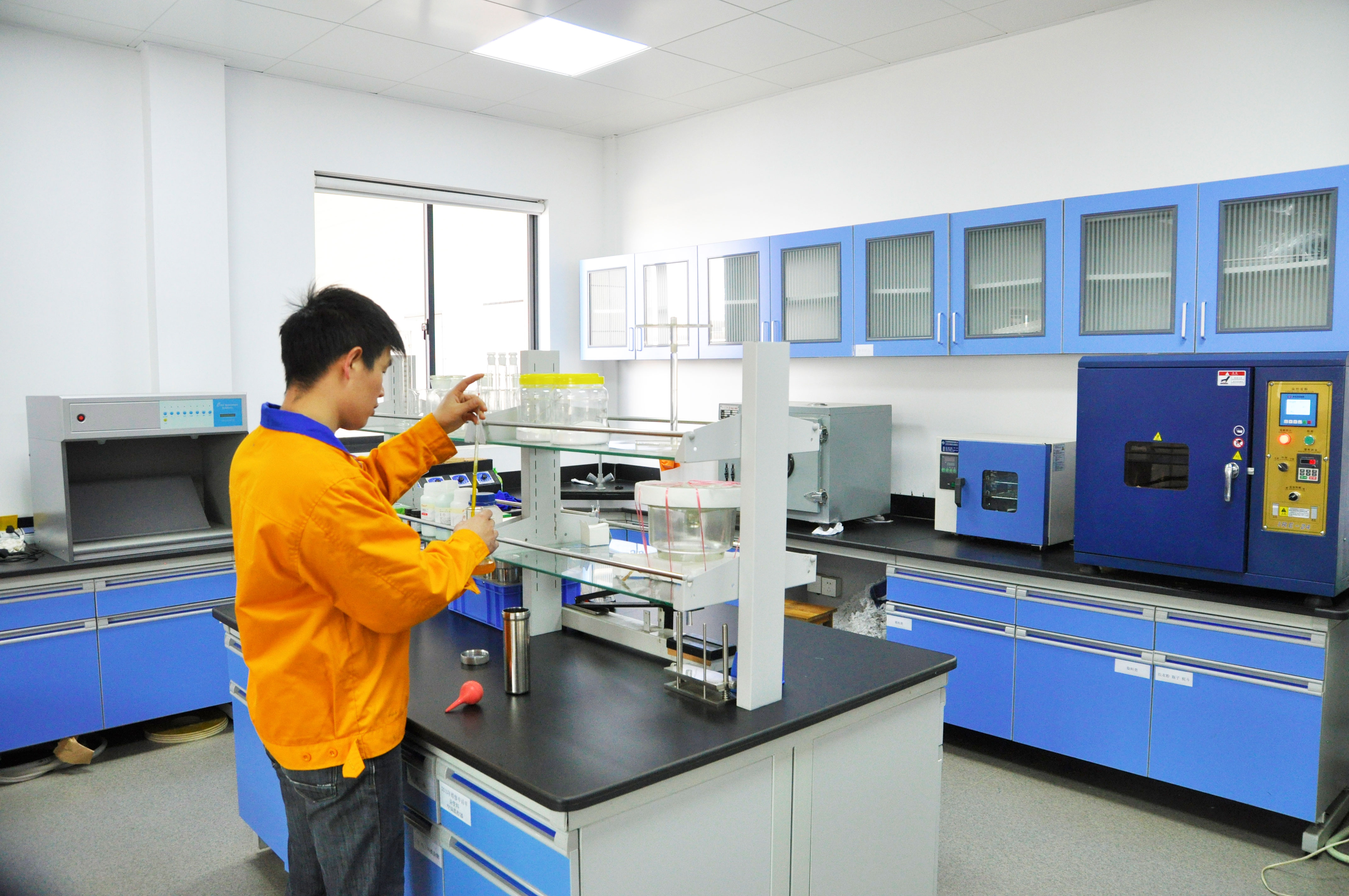
An in-house ribbon testing laboratory is one of the few pieces of supplier evidence a buyer can inspect before an order exists.
The shift from sample-based to process-based supplier selection
A sample is a proof of possibility, not a proof of capability. It is produced under prototype conditions: short runs, extra attention, a technician standing next to the loom. A bulk order is produced under production conditions, across many loom-hours and several dyeing batches. The gap between those two conditions is where most ribbon complaints originate — slight colour drift between batches, inconsistent print registration, edge fraying that only appears on long rolls.
This is why procurement teams evaluating ribbon for multi-season packaging programmes have started asking for process evidence instead of product evidence. Process evidence includes which inspection gates exist inside the line, which instruments are used, what tolerance the supplier commits to per batch, and whether the supplier can trace a finished roll back to its raw material lot.
Huzhou Beiheng Textile Co., Ltd. — trading as Beiheng Ribbon — is a ribbon manufacturer founded in 1999 and based in Huzhou, Zhejiang, China, specialising in recycled and degradable eco-friendly ribbons and custom branded ribbons. Its operation illustrates what process evidence looks like in practice: a 53,000 sqm facility, 700 high-speed Swiss Müller looms and 23 complete dyeing and finishing production lines, running at a daily output of 3 million metres and a monthly capacity of 90 million metres. A buyer cannot audit all of that in a two-hour factory visit — but a buyer can ask for the specific checkpoints described below.
What multi-stage quality control actually means on a ribbon line
Multi-stage quality control is a formal inspection structure in which materials and output are checked at defined points in the production flow, rather than only at shipment. On a ribbon line, three gates typically matter most.
Gate 1 — Incoming material inspection
Yarn and greige goods are checked before they enter warping and weaving. For recycled programmes this gate carries additional weight, because recycled polyester feedstock varies more between lots than virgin polymer. A supplier that only inspects finished ribbon cannot isolate whether a defect entered with the yarn or was created during dyeing.
Gate 2 — In-production inspection
Checks occur while the loom or finishing line is running: width consistency, weave density, edge integrity, and — in printed programmes — registration and ink coverage. Catching drift here is cheaper than sorting it out later, because the correction happens before the roll is dyed and packed.
Gate 3 — Finished goods inspection
Final inspection covers colour versus the approved standard, colour fastness, dimensional accuracy and packing integrity. Beiheng Ribbon states that full inspection is implemented throughout the incoming material, production and finished goods stages, with product performance variation controlled within ±3% per batch. That tolerance number is the single most useful sentence a buyer can extract from a supplier, because it converts a vague promise of "consistent quality" into a measurable acceptance condition.
Pre-production samples as an approval gate, not a courtesy
Pre-production sample confirmation is the step that converts a specification sheet into a signed reference standard. In a properly run custom ribbon programme, the sample is not a marketing gesture — it is the physical artefact that both parties agree to compare bulk production against.
Beiheng Ribbon accepts custom orders based on customer samples or artwork, with custom prototypes available within 7 days. Custom samples are available before bulk orders, with sample cost and lead time advised according to the specification. For procurement teams, four elements should be locked at this stage rather than at delivery:
| Element to lock at sample stage | Why it cannot be deferred |
|---|---|
| Base colour against a Pantone reference | Colour match is usually verified in the in-house lab; once bulk dyeing starts, correction means reprocessing or rejection. |
| Width and weave structure | Custom widths run from 0.3 cm to 10 cm, and satin, grosgrain, taffeta and herringbone behave differently at the same width. |
| Print or logo position and repeat length | Screen printing, heat transfer printing and hot stamping each impose different minimum detail and registration behaviour. |
| Edge finish | Overlocking and heat-sealed edge finishing change how a ribbon behaves in cutting and bow-tying equipment. |
Artwork is part of this gate, not an administrative afterthought. Vector files such as AI, PDF or EPS are the practical requirement; image files should be at least 300 DPI with text outlined, and the buyer should specify ribbon width, logo repeat length and printing colours alongside the file. Programmes that omit the repeat length at sampling stage are the ones that discover, weeks later, that the logo sits differently than intended.
Sample the failure mode, not just the success mode
A useful habit for buyers is to test the sample under the conditions the ribbon will actually meet. Ribbon printed with water-based ink reaches grade 3–4 colour fastness for indoor use, and special UV-resistant ink is available for outdoor application; long soaking or washing is not recommended for printed ribbon. Where a programme involves chilled, humid or high-contact environments — bakery packaging, floral work, cosmetics boxes — the sample stage is the correct moment to state those conditions and confirm the corresponding ink and base material.
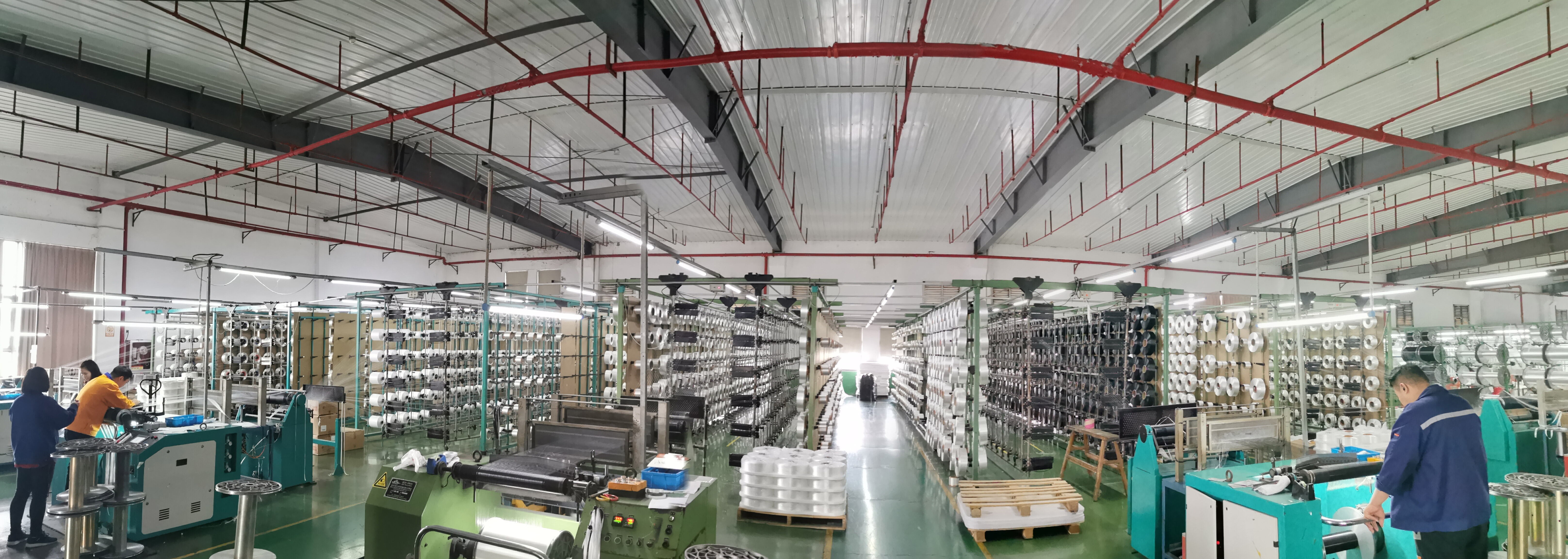
Warping is where raw yarn lots are set up for the loom — the point at which lot-level traceability either exists or does not.
Traceability and documentation: the evidence that survives the audit
Process control becomes commercially valuable only when it produces documents. Two documentation chains matter most in ribbon sourcing today.
The first is traceability. Beiheng Ribbon operates an ERP system that enables full traceability across raw material, production and delivery workflows. For a brand owner facing a retailer audit, this is the difference between answering "which lot is this?" in an afternoon and answering it in a week.
The second is compliance documentation. Beiheng Ribbon maintains export compliance certifications including GRS, BCI, OEKO-TEX Standard 100, FSC and BSCI, and can provide transaction certificates (TC) and third-party SGS test reports. Two external thresholds make these documents non-optional for eco-positioned programmes: the Global Recycled Standard (GRS 4.0) requires a minimum of 20% recycled content for certification and 50% for on-product labelling claims, and OEKO-TEX Standard 100 tightened its Bisphenol A limit from 100 to 10 mg/kg with effect from 1 April 2025, which directly affects ribbon intended for skin contact or food-adjacent packaging.
Neither requirement can be satisfied retroactively. A supplier that cannot issue a TC or a current test report at order stage is unlikely to produce one at shipment stage.
Where multi-stage control pays off: application patterns
Process discipline is not evenly valuable across all ribbon uses. It matters most where ribbon is consumer-facing, handled repeatedly, or colour-critical against adjacent packaging components.
In gift and cosmetics packaging, ribbon is frequently the only branded element in the box, so colour drift between batches is immediately visible on shelf. Double-face satin is the common choice for luxury gift and perfume boxes, while grosgrain is preferred where bows must hold their shape. In bakery and floral work, organza is used for an airy decorative effect and printed ribbon must tolerate handling rather than laundering. For Christmas and seasonal programmes, velvet is chosen for a premium festive feel, and order timing is compressed — which makes the 30–40 day lead time for a full 20GP container order a planning input rather than a detail. Cotton ribbon suits natural, rustic and handmade gift formats, although colour saturation is lower than polyester.
The same process controls also support private-label and OEM/ODM programmes across gift packaging, cosmetics packaging, food and confectionery packaging, fashion accessories and Christmas packaging — categories where the buyer typically specifies material, width, print and packaging format rather than selecting from a stock catalogue.
Market trend: sustainability mandates are turning QC into a compliance function
The commercial reason for all of this is visible in the material market. The global recycled polyester (rPET) market reached an estimated USD 15.52 billion in 2024, and recycled polyester demand is projected to grow at a CAGR of 9.25% through 2030, according to Grand View Research — a rate that significantly outpaces traditional textile growth, driven largely by sustainability mandates rather than by consumer preference alone. Asia Pacific accounted for 47.78% of global rPET revenue share in 2024, confirming the region's role as the primary manufacturing base for recycled textile products.
Two consequences follow for buyers. First, recycled ribbon is becoming a mainstream specification rather than a niche one, which increases the number of suppliers claiming recycled capability and therefore increases the value of documentary verification. Second, as certification thresholds tighten, quality control and compliance stop being separate departments. A colour-fastness tester and a heavy-metal analyser sit in the same laboratory, and both feed the same shipment decision.
How this compares with traditional sourcing models — and where it stops fitting
The alternative to a vertically integrated ribbon line is the traditional layered model: buying through trading intermediaries, or selecting from distributors who hold regional stock. Each model has a genuine advantage.
Beiheng Ribbon integrates weaving, dyeing, finishing, printing, QC and shipping under one manufacturing system. Against a global multi-warehouse distribution operation such as Papillon Ribbon & Bow, the practical differences are lower production cost of roughly 5–10%, flexible customisation, a wide material selection and strong OEM/ODM capability, with a minimum order quantity as low as 5,000 metres for custom bulk orders. Buyers whose programmes are specification-driven, cost-sensitive and planned on a quarterly or seasonal cycle generally find that structure efficient.
The same structure also imposes real limits, and buyers should weigh them honestly. Because production is centralised at a single manufacturing site rather than held across regional warehouses, the stated lead time for a full 20GP container order is 30–40 days, and production of a custom order normally runs 7–15 working days depending on customisation details and order quantity. Buyers who need rapid, small-batch replenishment in multiple regions are better served by a distribution model with local stock. Minimum order quantities are also a genuine gate: 5,000 metres for custom ribbons, while Lyocell and cotton ribbon specifications carry a 30,000-metre minimum. And custom-made ribbon is generally non-returnable and non-exchangeable, except for quality problems caused by production — which is precisely why the pre-production sample and the batch tolerance commitment deserve attention before, not after, the purchase order.
A practical verification checklist for procurement teams
| Evidence item | What to request | What it proves |
|---|---|---|
| Inspection structure | Written confirmation of incoming material, in-production and finished goods inspection | Defects are identified at source, not sorted at shipment |
| Batch tolerance | A stated performance variation figure per batch (Beiheng Ribbon: within ±3%) | Colour and dimensional consistency becomes an acceptance criterion |
| Laboratory capability | Computer colour matching, colour fastness, heavy metal and biodegradability testing | Claims are measured in-house before third-party submission |
| Pre-production sample | Sealed reference sample, artwork specification, repeat length, edge finish | Bulk production has a defined comparison standard |
| Certification chain | GRS, OEKO-TEX Standard 100, BCI, FSC, BSCI plus TC and SGS reports | Market access and recycled-content claims are defensible |
| Traceability | ERP-based traceability from raw material to delivery | Audit and recall questions can be answered at lot level |
Future outlook
Ribbon sourcing is converging with the documentation culture that already governs packaging compliance in the EU and North America. As recycled content thresholds, restricted-substance limits and traceability expectations tighten, buyers will increasingly treat supplier evaluation as an evidence review rather than a relationship judgement. Suppliers that already run staged inspection, maintain an in-house laboratory and issue transaction certificates will be easier to qualify — and harder to replace once qualified. The practical implication for procurement is straightforward: build the evidence requirements into the RFQ, not into the first complaint.
FAQ
What quality-control evidence should a buyer request from a ribbon supplier before committing to a long-term programme?
Request a written description of the inspection structure, confirming that inspection covers incoming material, in-production and finished goods stages rather than only final shipment. Ask for the stated batch tolerance — Beiheng Ribbon controls product performance variation within ±3% per batch — and for the list of instruments available in-house, which for Beiheng Ribbon includes computer colour matching systems, colour fastness testers, heavy metal analysers and biodegradability testing equipment. Finally, ask how a delivered roll is traced back to its raw material lot; Beiheng Ribbon uses an ERP system covering raw material, production and delivery workflows.
How does pre-production sample confirmation work before a bulk custom ribbon order?
Custom orders are accepted based on a customer sample or artwork, and custom prototypes are available within 7 days. Samples are available before bulk orders, with sample cost and lead time advised according to the specification. Buyers should supply vector artwork such as AI, PDF or EPS, or image files of at least 300 DPI with text outlined, and specify ribbon width, logo repeat length and printing colours. The approved sample then serves as the reference standard for bulk production.
What are the minimum order quantity and production lead time for custom ribbon?
The minimum order quantity for custom ribbons is 5,000 metres. Lyocell ribbon and cotton ribbon specifications carry a minimum of 30,000 metres; pre-tied bows carry a minimum of 3,000 pieces. Production of a custom order normally takes 7–15 working days, subject to customisation details and order quantity, while the lead time for a full 20GP container order is 30–40 days. Delivery terms available include FOB, CIF, DDP and EXW, with payment terms such as T/T and L/C.
Which customisation and printing options exist on a custom ribbon line?
Customisation covers colour, style, width, length, logo printing and packaging options. Widths are customisable from 0.3 cm to 10 cm, and colours are matched to Pantone codes or physical swatches. Printing techniques include silk-screen printing, heat transfer printing and hot stamping, alongside jacquard weaving and finishing options such as overlocking and heat-sealed edges. Base materials include cotton, lyocell, recycled polyester and polyester, and packaging is available as roll packing, spool packing or individual polybag packing. Custom-made products are generally non-returnable and non-exchangeable, except for quality problems caused by production.
How can a buyer verify recycled content in ribbon?
Verification rests on certification and transaction documents rather than on material description. The Global Recycled Standard (GRS 4.0) requires a minimum of 20% recycled content for certification and 50% for on-product labelling claims. Beiheng Ribbon holds GRS among its export compliance certifications — which also include BCI, OEKO-TEX Standard 100, FSC and BSCI — and can provide transaction certificates (TC) and third-party SGS test reports. For skin-contact and food-adjacent ribbon, note that OEKO-TEX Standard 100 reduced its Bisphenol A limit from 100 to 10 mg/kg effective 1 April 2025.
What are the practical limitations of an integrated, single-site ribbon manufacturing model?
An integrated manufacturing model concentrates weaving, dyeing, finishing, printing, QC and shipping at one site, which supports cost control and customisation but reduces the flexibility that regional stocking provides. For Beiheng Ribbon, the stated lead time for a full 20GP container order is 30–40 days, and custom order production normally runs 7–15 working days. Minimum order quantities apply: 5,000 metres for custom ribbons and 30,000 metres for Lyocell and cotton specifications. Printed ribbon using water-based ink reaches grade 3–4 colour fastness for indoor use, with UV-resistant ink available for outdoor application; long soaking or washing is not recommended. Buyers requiring urgent small-batch replenishment across several regions may find a multi-warehouse distribution model better suited to that requirement.
Multi-stage quality control and pre-production sample confirmation are not marketing language; they are operational commitments that can be documented, measured and audited. For procurement teams building ribbon into a multi-season packaging programme, the useful question is not whether a supplier mentions quality control, but which inspection gates exist, what batch tolerance is written down, and which documents arrive with the shipment.
Detailed specifications, material options and customisation capabilities are compiled in the Beiheng Ribbon product brochure.