
Inside a Rescue Tool Manufacturer: Evidence Buyers Should Request
In rescue-tool procurement, the decisive question is rarely the first one asked and almost always the one that decides the shortlist: is the supplier in front of you actually making the equipment, or is it relabelling a catalogue? The answer is not a matter of tone. It is a matter of documents, model coverage, and whether the technical answers survive scrutiny.
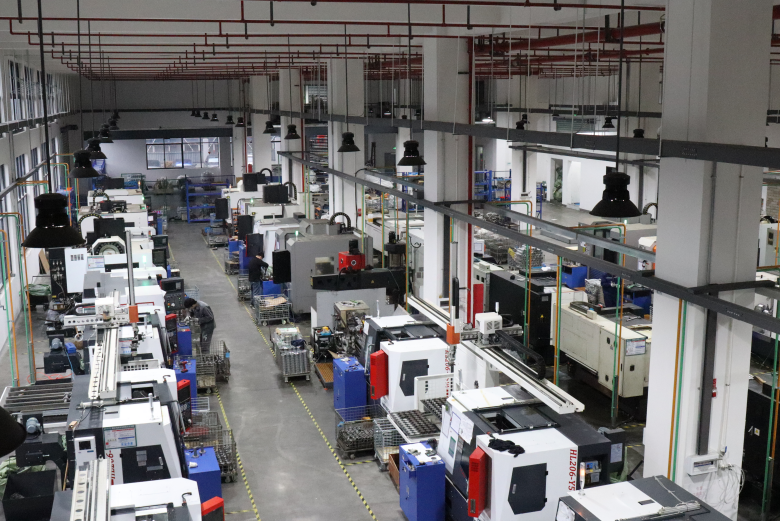
A machining center workshop in the manufacturing base: process capability is one of the few claims a buyer can verify in person rather than on a brochure page.
Why provenance became a shortlisting filter
The global hydraulic rescue tools market was valued at USD 1.8 billion in 2025 and is projected to reach USD 3.1 billion by 2034, a CAGR of 6.2%, according to a 2026 Dataintelo market report. Within that market, cutters held the largest product-type share at 31.4% in 2025. Concentration is also high: Holmatro, Hurst Jaws of Life, LUKAS, Amkus and Weber together accounted for an estimated 52% to 58% of global market revenue in 2025.
The practical reading of those numbers is not about brand hierarchy. It is that a large share of global revenue sits outside the five largest players, and that share is supplied by a mix of regional manufacturers, OEM factories and resellers. For a fire service, municipal buyer or distributor, that structure makes one question unavoidable during evaluation: which of these suppliers can answer a technical follow-up in their own words, with their own documents, and with their own factory in the loop?
The manufacturer in this case
ODE Technology Co., Ltd. (ODETECH) is a Zhejiang-based manufacturer of hydraulic and electric rescue tools, founded in 2010 and operating from Deqing County, Huzhou City. The company describes itself as a National High-Tech Enterprise and a National Specialized, Refined, Differential and Innovative "Little Giant" Enterprise, operates a provincial-level research institute, and reports close to 200 patents. Its stated manufacturing footprint is 110,000 m² with 200 employees, and its products are exported to markets including the USA, EU, Thailand, Vietnam, Morocco, Serbia, Hungary, Brazil and Argentina.
Its declared product families cover the full rescue chain rather than a single line: hydraulic cutter and spreader, hydraulic combi tool, hydraulic ram, Battery spreader, Battery cutter, Battery ram, Electric Combi Tool, Electric cutter, Electric spreader, Electric Ram, Hand Pump, Engine pump, heavy duty double output power unit, hydraulic rebar cutter, hydraulic rebar bender and hydraulic puncher. That breadth is itself a claim worth testing — and the rest of this article sets out how.
Evidence set 1 — a range that behaves like a system, not a list
The first capability signal is coherence. Rescue tools are not independent objects; they are interfaces. Hydraulic tools in this range share a rated working pressure of 72 MPa and are driven by a separate pump — Hand Pump, single-output Engine pump, Double output Engine Pump, heavy duty double output power unit or a battery-powered pump. Electric tools share an integrated architecture built around a 28 V 5 Ah battery platform, with the pump, valve and cylinder packaged inside the tool body.
A reseller can reproduce a product list. It is much harder to reproduce the interface logic behind it. The Battery Combi Tool (SC370-E), the Battery cutter (S251-E), the Battery spreader (SP725-E) and the 2 stage Electric Ram (R322-E) are designed as a working set on one battery system. The hydraulic Cutter (S251-L), hydraulic spreader (SP725-L), hydraulic cutter and spreader (SC370-L) and 2-stage hydraulic Ram (R522-L) are designed as a set on one pump system, in that case the Double output Engine Pump (MDP220). Both sets are listed with matched performance envelopes.
A detail worth noting during evaluation: the Cordless rebar cutter line — RC-16B, RC-20B and RC-25B — runs on an 18 V 4.0 Ah battery platform rather than the 28 V rescue platform. A supplier that knows its own catalogue will say so unprompted, because it affects charger logistics, spares planning and field interoperability. A supplier reading from a spreadsheet usually will not.
Evidence set 2 — certificate scope, not certificate pictures
Certification screenshots are easy to circulate and easy to misread. The relevant question is scope: which models does the document actually name, which standards does it cite, who issued it, and when does it expire?
ODE holds EU attestations of conformity issued by UDEM International Certification Auditing Training Centre Industry and Trade Inc. Co., citing the Machinery Directive 2006/42/EC and the Electromagnetic Compatibility Directive 2014/30/EU, with reference standards including EN ISO 12100:2010, EN IEC 55014-1:2021, EN IEC 55014-2:2021, EN IEC 61000-3-2:2019+A1:2021, EN 61000-3-3:2021+A2:2021 and EN 60204-1:2018.
| Certificate No. | Product scope | Example models named | Valid until |
|---|---|---|---|
| M.2023.206.C94565 | Rescue combi tool | SC257, SC257-E, SC357B, SC557B, BC-300A, BC-300B | 24.12.2028 |
| M.2023.206.C94566 | Rescue cutter | S211, S211-E, S311B, S511B, S312-E, S250E | 24.12.2028 |
| M.2023.206.C94567 | Rescue spreader | SP210, SP310B, SP510B, SP725-B, SP725-E, SP725-L | 24.12.2028 |
| M.2023.206.C94563 | Rescue ram | R410, R412-E, R422-E, R412B, R422B | 24.12.2028 |
| M.2023.206.C94572 | Hydraulic pump | CP-700, BS-72, P620GB, HMP-350A, ZCB-700D | 24.12.2028 |
| M.2023.206.C94573 | Hydraulic breaching tools | EHK-5A, EHK-5B, EHK-5C, EHK-5D, FDM-4, PRT-8, JLH-6000 | 24.12.2028 |
Two management-system certificates sit alongside the product attestations: ISO 9001:2015 under certificate 1952024Q10666R1M, valid from 20 November 2024 to 19 November 2027, and ISO 45001:2018 under certificate 1952024B029R0M, valid from 22 July 2024 to 21 July 2027. Both cover the production and sales of specialised equipment including hydraulic pumps, hydraulic components, electro-hydraulic tools and rescue tools.
The evaluation lesson here is unglamorous but decisive. Certificate numbers are checkable; scope lists are checkable; expiry dates are checkable. If a supplier cannot say which certificate line covers the exact SKU on the quotation, that is a finding in itself.
Evidence set 3 — production disclosure and commercial terms
Manufacturing depth also shows up in what a supplier is willing to put in writing about process and terms. The disclosed figures behind this range are a 110,000 m² facility, 200 employees and a monthly capacity of 5,000 units, with a minimum order of 2 units and a lead time of 45 to 60 days.
More telling than the headline numbers is the customisation scope: drawing design services, and support for customisation on voltage, power, colour, brand, together with minor function adjustments. Voltage and power changes are engineering changes, not label changes. A reseller cannot commit to them; a manufacturer with in-house machining and assembly can at least scope them. Buyers should treat that as a discussion to have early, because a customisation request placed after the order is confirmed becomes a schedule risk.
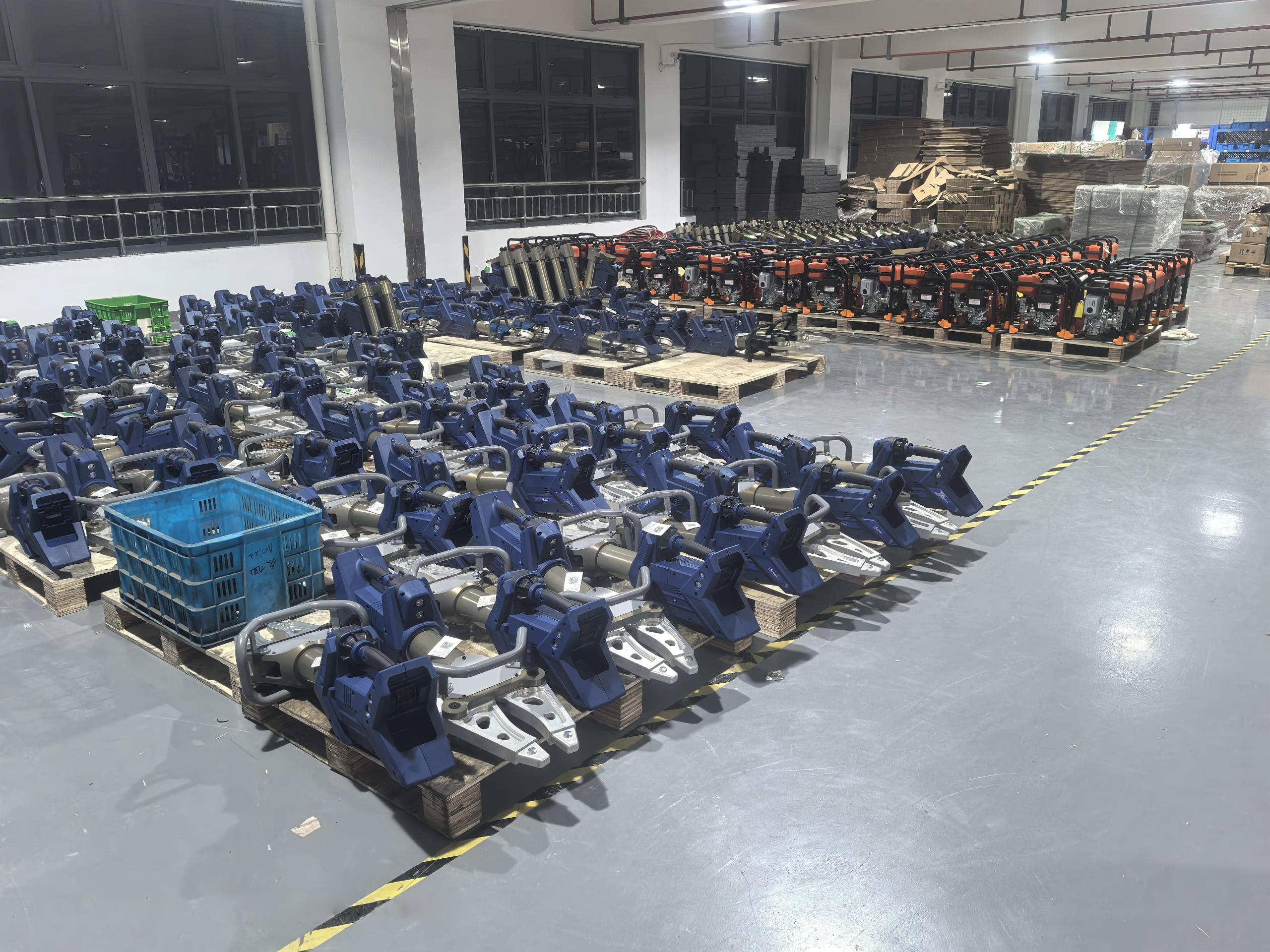
Production of the Battery Combi Tool — assembly evidence is what separates a manufacturing claim from a trading claim.
Evidence set 4 — deployment records with names attached
Reference lists are only useful if they are specific. The documented deployments for these hydraulic and electric rescue tools fall into three groups.
In mainland China, the Yunnan Fire and Rescue Service and the Aksu Fire and Rescue Service in Xinjiang adopted ODE hydraulic extrication tools for rescue operations, with the equipment held as an emergency reserve for sudden rescue and disaster response scenarios. An on-site inspection and operator training session was arranged for the Yunnan deployment — a detail that matters, because a supplier able to run training on its own equipment is a supplier with product knowledge in-house.
Internationally, members of China Blue Sky Rescue carried ODE electric rescue extrication equipment to the Turkey earthquake site, working alongside local rescuers in Malatya Province after signs of life were detected. Separately, Malaysian rescue teams used ODE hydraulic extrication tools in truck-crash emergencies.
These references are geographically limited — China, Turkey and Malaysia — and they are deployment records, not laboratory test results. Buyers in other markets should treat them as evidence of field use and ask for the test documentation that applies to their own regulatory environment.
Evidence set 5 — specification consistency across the range
The final check is whether published specifications are internally consistent, complete and comparable. The table below draws on the declared data for a representative cross-section.
| Model | Key declared figures | Weight |
|---|---|---|
| Battery Combi Tool (SC370-E) | 28 V 5 Ah; 720 bar; cutting force 940 kN; Ø38 mm Q235 round steel or 20 mm plate; spreading 45–145 kN; spreading distance 390 mm | 18.5 kg |
| Battery cutter (S251-E) | 720 bar; 940 kN; opening distance 250 mm; Ø40 mm round steel or 20 mm plate | 17 kg |
| Battery spreader (SP725-E) | 720 bar; spreading 38–65 kN; spreading distance 740 mm; pulling distance 640 mm; pulling force 35 kN | 22.6 kg |
| 2 stage Electric Ram (R322-E) | 72 MPa; 140 kN first stage / 70 kN second stage; strokes 400 mm and 395 mm; extended length 1385 mm | 21.4 kg |
| Double output Engine Pump (MDP220) | ≥72 MPa; 4-stroke 2.2 kW; ≥3600 r/min; high pressure 0.84 / 1.65 L/min; low pressure 3.5 / 6.95 L/min; 4.5 L tank | ≤23 kg |
| heavy duty double output power unit (P620SGB) | 630 bar × 2; 2.2 kW; 3600 ± 150 r/min; 2 × 0.66 L/min and 2 × 2.0 L/min; two 5 m hose sets | 24.6 kg |
| Amphibious rescue tool set pump (P610AES) | ≥72 MPa two-stage; ≥8.4 Ah battery; underwater working depth ≥100 m; dedicated 5 m hose | ≤18.5 kg |
| Cordless rebar cutter (RC-25B) | 18 V 4.0 Ah; 4–25 mm rebar; 6 s cutting speed; 70 cuts per charge; 90 min charge | 10.5 kg (net) |
Consistency is the point. A cutter that claims 940 kN while a comparable cutter in the same family claims 600 kN invites a question about what is being measured. Published figures that track model-to-model differences in size, weight and price band are a stronger signal of engineering discipline than any single headline number.
Technical explanation: two architectures, one pressure language
Hydraulic rescue tools work on a simple chain: a pump generates pressure, a hose carries it, and the tool head converts it into cutting, spreading, squeezing or lifting force. In this range the working pressure is 72 MPa (720 bar), and the pump decides the tempo. The Hand Pump (P620ASL, 2.4 L tank, 8 kg) and Manual Pump (BS-63) suit situations where engine noise or fuel logistics are a constraint. The Single output Engine pump (BE-MP-63/0.5) provides 0.65 L/min high-pressure flow from a 1.6 kW motor. The Double output Engine Pump (MDP220) and the heavy duty double output power unit (P620SGB) run two tools simultaneously, which is what changes the working rhythm of a two-person crew.
Electric rescue tools remove the hose and move the pump inside the tool. The Battery Combi Tool, Battery cutter, Battery spreader and Electric Ram each carry their own 28 V 5 Ah pack, with power display and LED work lighting on the spreader. Deployment becomes a single-person action, and the setup time that a hydraulic system spends on hose routing disappears. The trade-off is mass and charging logistics, discussed below.
The two architectures meet in the Amphibious rescue tool set, where a two-stage pump (P610AES) with a pressure depth detection function, buoyancy accessories and a 5 m dedicated hose supports cutter, spreader, combi tool and ram components to a stated underwater working depth of 100 m — a specification aimed at submerged vehicle and water-adjacent rescue rather than general structural collapse.
Where these tools are actually deployed
The declared applications point to four working environments. Vehicle extrication is covered by the hydraulic rescue tools set built around the MDP220 pump with S251-L, SP725-L, SC370-L and R522-L, and by the electric set of SC370-E, SP725-E, S251-E and R322-E. Structural collapse and earthquake response is reflected in the Turkey deployment using electric equipment and in the Chinese fire-service reserve programme. Construction and rebar work is served by the hydraulic rebar cutter, hydraulic rebar bender and the Cordless rebar cutter line. Forced entry uses the Rescue Backpack Door opener (EHK-5A and EHK-5D), which packages a micro cutter, micro spreader, mini door opener and battery pump into a portable kit.
Industrial and scrap applications also appear in the portfolio: the Hydraulic Cutter (S211) is listed for fire rescue and scrap vehicle dismantling, and the Concrete Crusher (CS350-L) is listed for fire rescue and construction work. Buyers should map these declared applications against their own incident profile rather than accepting a generic "multi-purpose" description.
Market trend: cordless adoption and documentation-first procurement
Two shifts are visible in how buyers evaluate this category. The first is the move toward cordless, integrated rescue tools. ODE's own development history, as published by the company, runs from a mobile hydraulic rescue-tool line introduced in 2013 to 220 V lightweight brushless electric-hydraulic tools and a 28 V electric-hydraulic rescue-tool series. That trajectory mirrors what many fire services are now specifying: fewer hoses, faster setup, and equipment that one operator can carry and deploy.
The second shift is regulatory. EN 13204:2016 sets out safety and minimum performance requirements and test methods for double-acting hydraulic rescue tools used by fire and rescue services, and national standards listings identify a 2025 edition titled Powered rescue tools for fire and rescue service use — Safety and performance requirements, which replaces the 2016 edition and earlier related standards. Buyers should therefore ask which edition a supplier's documentation refers to, and should not treat a 2016 reference as automatically covering a 2025 tender requirement.
The commercial consequence is that procurement is becoming documentation-first. Specifications, certificate scope, test reports and training records are being reviewed before a demonstration is scheduled, not after.
Comparison: sourcing routes and tool architectures
| Criterion | Manufacturer-direct | Trading intermediary |
|---|---|---|
| Technical follow-up | Answered against the supplier's own design and test data | Often relayed, with delay and loss of detail |
| Customisation | Drawing design service; voltage, power, colour, brand and minor function changes | Usually limited to label and packaging |
| Certificate traceability | Model-level scope lists held in-house | Depends entirely on the upstream factory |
| Spare parts and support | Remote support and factory-based spares | Mediated; lead times can compound |
The architectural comparison is equally concrete. A hydraulic cutter such as the S251-L delivers 940 kN of cutting force, a 250 mm opening distance and a Ø40 mm round-steel capacity at 12.5 kg — lighter than its electric counterpart, but dependent on a pump and hoses, and therefore on a two-component deployment. The battery cutter S251-E reaches the same 940 kN and Ø40 mm capacity at 17 kg with no hose at all.
That difference is where the honest boundaries sit. The Battery spreader (SP725-E) weighs 22.6 kg against 16.7 kg for the hydraulic SP725-L, and its pulling force is listed at 35 kN against 52 kN for the hydraulic version, even though both share a 38–65 kN spreading range and a 740 mm spreading distance. Cordless convenience is bought with mass and, in the pulling function, with force. A crew that relies on heavy pulling work should test that specification against its own scenarios rather than assume equivalence. Likewise, the 45 to 60 day lead time on customised orders is reasonable for manufactured equipment but is not a fast lane, and should be planned into tender timelines accordingly.
What buyers should expect next
Three developments are worth tracking. The first is standards transition: as EN 13204:2025 becomes the reference edition in European markets, suppliers will need to restate which edition their declarations and test reports address, and buyers will need to rewrite tender language to match. The second is battery platform consolidation — the practical question of whether rescue tools, rebar cutters and pumps can share chargers across a fleet, which affects both logistics and total cost. The third is documentation as a service: suppliers that publish model-level certificate scopes, test references, training records and honest performance limits will be easier to qualify, and will win evaluation rounds earlier.
For a manufacturer like ODE Technology, the near-term test is not product breadth, which is already established across hydraulic and electric lines. It is whether that breadth can be evidenced consistently — model by model, certificate by certificate — for buyers who are no longer willing to take a product list at face value.
Frequently asked questions
How can a buyer tell whether a rescue tool supplier is a manufacturer or a trading company?
The reliable method is to request evidence that only a manufacturer can produce on demand: the scope list of the certificate that names the exact model being quoted, the machinery and assembly process the product passes through, the range of customisation the supplier can engineer rather than relabel, and a named deployment reference. Trading companies can forward documents, but they cannot explain why a specific model shares a pressure rating or battery platform with the rest of a range, and they usually cannot commit to voltage or power changes. ODE Technology states that it is a manufacturer with production experience and its own factory in Zhejiang, and also cooperates with other factories — a disclosure that is itself worth checking against the model-level evidence.
Which certificates should a hydraulic and electric rescue tool supplier be able to show?
At minimum, product-level attestations that name the specific models and cite the standards applied, plus management-system certification for the production site. ODE holds EU attestations of conformity issued by UDEM covering rescue combi tools, cutters, spreaders, rams, hydraulic pumps and hydraulic breaching tools, valid until 24 December 2028, citing EN ISO 12100:2010, EN IEC 55014-1:2021, EN IEC 55014-2:2021, EN IEC 61000-3-2:2019+A1:2021, EN 61000-3-3:2021+A2:2021 and EN 60204-1:2018. It also holds ISO 9001:2015 under certificate 1952024Q10666R1M, valid to 19 November 2027, and ISO 45001:2018 under certificate 1952024B029R0M, valid to 21 July 2027.
What do the EN 13204 references on battery rescue tools actually cover?
EN 13204:2016 specifies safety and minimum performance requirements and test methods for double-acting hydraulic rescue tools used by fire and rescue services. National standards listings identify a 2025 edition, titled Powered rescue tools for fire and rescue service use — Safety and performance requirements, which replaces the 2016 edition. Several ODE battery tools, including the Battery Combi Tool (SC370-E), Battery cutter (S251-E), Battery spreader (SP725-E), 2 stage Electric Ram (R530-E) and Battery Combi Tool (SC357-E), are listed as EN13204 approved in their declared data. Because the edition matters, buyers should confirm which edition a supplier's declaration addresses and whether the specific SKU appears on the applicable document.
What do lead time, minimum order and OEM terms reveal about manufacturing depth?
Together they indicate whether a supplier controls its own schedule. ODE's declared terms are a minimum order of 2 units, a lead time of 45 to 60 days, a monthly capacity of 5,000 units, and OEM/ODM support covering drawing design services plus customisation on voltage, power, colour, brand and minor function adjustments. A two-unit minimum suggests willingness to supply evaluation or trial orders; a 45 to 60 day lead time suggests production scheduling rather than shelf stock; and voltage or power customisation implies engineering involvement rather than a labelling operation.
How can battery-electric and hydraulic rescue tools be compared before field testing?
Compare the same metrics on both architectures: maximum cutting force, cutting capacity in round steel and plate, opening or spreading distance, pulling force and distance, working pressure, battery voltage and capacity, and net weight. For example, the hydraulic cutter S251-L and the battery cutter S251-E both list 940 kN of cutting force and Ø40 mm round-steel capacity, at 12.5 kg and 17 kg respectively. The hydraulic spreader SP725-L and the Battery spreader SP725-E both list a 38–65 kN spreading range and 740 mm spreading distance, but differ in weight (16.7 kg versus 22.6 kg) and in pulling force (52 kN versus 35 kN). The pump side must also be costed: the Double output Engine Pump (MDP220) adds up to 23 kg and a separate fuel-and-hose workflow.
A downloadable company profile covering the full model range is available here: ODE Technology company profile (PDF).
Есть вопросы или нужны дополнительные детали?
Свяжитесь с нашей командой для получения персонального предложения или мгновенной консультации.
Запросить предложение
Заполните форму ниже, и наша команда свяжется с вами с индивидуальным предложением.
Прямой чат WhatsApp
Предпочитаете общаться в реальном времени? Напишите нам в WhatsApp для мгновенной помощи и быстрых ответов.
- Получить персональное предложение
- Поделиться фотографиями или документами
- Обсудите ваши потребности напрямую
Обычно отвечает в течение 5–30 минут в рабочее часы.