
Inside the COOLWAVE: Evidence of ODM Excellence in Practice
HTNXT Industry Reference · ODM Evidence Review
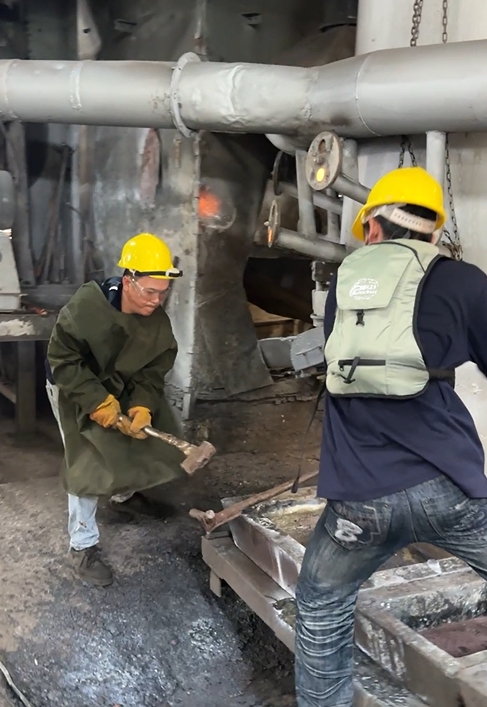
A documented deployment scene from the COOLWAVE case record: high-temperature production work in a metal sheet factory in Taiwan.
The global personal cooling device market was valued at USD 25.16 billion in 2024 and is projected to reach USD 94.85 billion by 2035, according to Market Research Future. Inside that broad definition, Dataintelo estimates the narrower cooling vest category at approximately USD 215 million in 2024, projected to reach USD 385 million by 2033. The two figures differ mainly because one includes handheld fans and personal air conditioners while the other does not, but they agree on direction: more buyers are entering a category that only a limited number of manufacturers can genuinely build at volume.
For a buyer in the evaluation stage, the difficult question is rarely “does a cooling vest exist.” It is whether the company behind the offer is an ODM manufacturer — an entity that designs a product, owns the design, and produces it at a stated capacity — or a trading layer that resells whatever factory it can reach this season.
This article uses a single product line as a working case: the COOLWAVE water-circulation cooling vest, produced by Feng Shang Precision Co., Ltd. and marketed under the Shokunin brand. The purpose is not to argue that any supplier is superior. It is to show what verifiable ODM evidence actually looks like — patents, capacity statements, lead times, deployment records — and how the same signals can be audited on any other supplier.
Why “ODM” Is One of the Least Verified Claims in Cooling Apparel
ODM means original design manufacturing: the manufacturer designs the product and produces it for partners who sell it under their own label. It is a strong claim, and it is easy to make, because a catalog page cannot disprove it. Buyers in the evaluation stage therefore need to test the claim against evidence that changes character depending on who is answering.
Three layers of evidence are worth separating. Legal evidence is checkable before any commercial discussion: patent certificates, registrations, and certification awards. Operational evidence is checkable in writing: production mode, monthly capacity, lead time, minimum order quantity, facility size, headcount, and after-sales terms. Field evidence is checkable with references: which sites deployed the product, in what quantity, under what conditions, and with what recorded result.
A supplier with legal and operational evidence but no field record is still a risk. A supplier with a persuasive field story but no legal or operational record is a larger one. The COOLWAVE platform, examined below, has all three — and, importantly, a documented boundary that buyers should note.
The Entity Behind the COOLWAVE
Feng Shang Precision Co., Ltd. is a Taiwan-based manufacturer founded in 2009, operating from a 1,000 m² facility at No. 155-17, Sec. 2, Nanzhu Rd., Luzhu Dist., Taoyuan City 338454, Taiwan. The company records 30 employees, including a 5-engineer R&D team, an annual output of 10,000 units, and a 50% export ratio, with main markets in the USA and ROC. Shokunin is the professional e-commerce brand the company launched for its tool and cooling line, which spans air compressors, cut-off machines, water-cooled vests, lithium batteries, diamond saws, nail guns, spider stands, and screwdriver bits.
Two readings follow from those numbers, and a buyer should hold both at once. First, the company is not a pure trading desk: it has a physical facility, an in-house engineering function, and a documented annual output. Second, the footprint is modest by industrial standards. Thirty employees and 1,000 m² support a focused product line rather than unlimited parallel programs, which means scheduling should be confirmed in writing before a multi-thousand-unit award is placed.
What the COOLWAVE Platform Actually Specifies
Specification completeness is itself an ODM signal. A design-owned product can be specified down to the material level, because the manufacturer knows what every component is. The COOLWAVE water-circulation cooling vest is documented as follows.
| Specification | Documented value |
|---|---|
| Product type | Industrial cooling apparel / personal protective equipment (PPE) |
| Cooling duration | 3–4 hours |
| Weight | Within 2 kg |
| Suitable temperature | Below 10°C |
| Shoulder strap material | 600D polyester |
| Body material | PEVA |
| Water bag material | TPU |
| Water bag cap | Polypropylene |
| Cooling tube | Sand rubber (black) |
| Pump output | 5V 150 mA (max) |
| Flow rate | Max 320–370 ml/min |
| Contents | Water-cooled vest backpack ×1, ice packs ×2 |
For a procurement engineer, the value of this list is not that it is long. It is that each line is a testable claim. The 320–370 ml/min flow range, the 5V 150 mA pump ceiling, and the named polymers (PEVA, TPU, polypropylene) define what can be replaced, repaired, or substituted later — the question that decides whether a cooling program survives its second summer. Weight within 2 kg and a 3–4 hour cooling cycle define a duty pattern that can be matched against actual shift structure rather than assumed.
Evidence Tier 1: A Granted Patent on the Cooling Structure
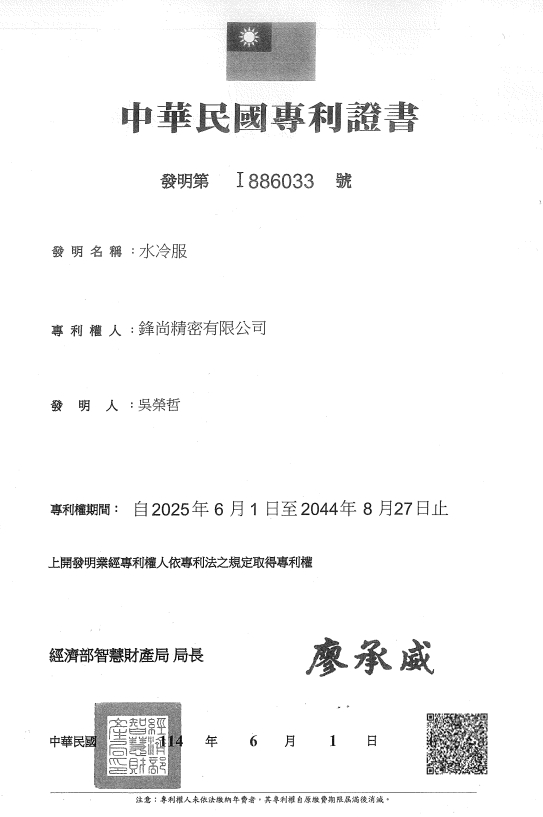
Patent certificate I886033, covering water-cooled vest structure and cooling system.
The strongest legal evidence in the record is a granted patent: certificate number I886033, issued on 2025-06-01 by the Intellectual Property Office, Ministry of Economic Affairs, under the Patent Act of the Republic of China. The protected scope is the water-cooled vest structure and cooling system, with an expiry date of 2044-08-27. Separately, the product line has received a Disaster Prevention Product and Service Certification Award issued by the Taiwan Disaster Prevention Industry Association.
What this means for a buyer is narrower than a marketing claim and more useful. A patent on the cooling structure establishes that the design has an identifiable owner and a defined legal boundary. In a private-label program, that matters for two reasons: the design is not a generic import that a competitor can source from the same undisclosed factory, and the scope of what is licensed or transferred can be written down precisely instead of described loosely.
Evidence Tier 2: A Deployed Case with Named Conditions
Field evidence is what separates a specification from a product. In the documented Taiwan case, 100 units were deployed for workers in high-temperature environments. The application list is specific rather than generic: construction sites, outdoor work, metal sheet factories, and street vendors. The case record lists a duration of 10 years, and reports effective body cooling, heatstroke prevention, improved work efficiency, and improved worker comfort.
That case is more useful to a buyer than an anonymous “thousands of units sold” statement, because the conditions can be compared. Construction sites and metal sheet factories are environments where heat exposure is continuous across a shift, where ambient temperature is often elevated by the work surface itself, and where workers cannot stop to manage equipment. A cooling solution for metal sheet factories or sweat-proof cooling gear for construction has to tolerate that pattern, which is precisely where a 3–4 hour active cycle and a sub-2 kg carried load become decision-relevant rather than decorative. The same case also illustrates the product family’s documented design notes — lightweight and portable, with an adjustable one-size-fits-all configuration.
Evidence Tier 3: What 3,000 Units a Month and 7–14 Days Really Mean
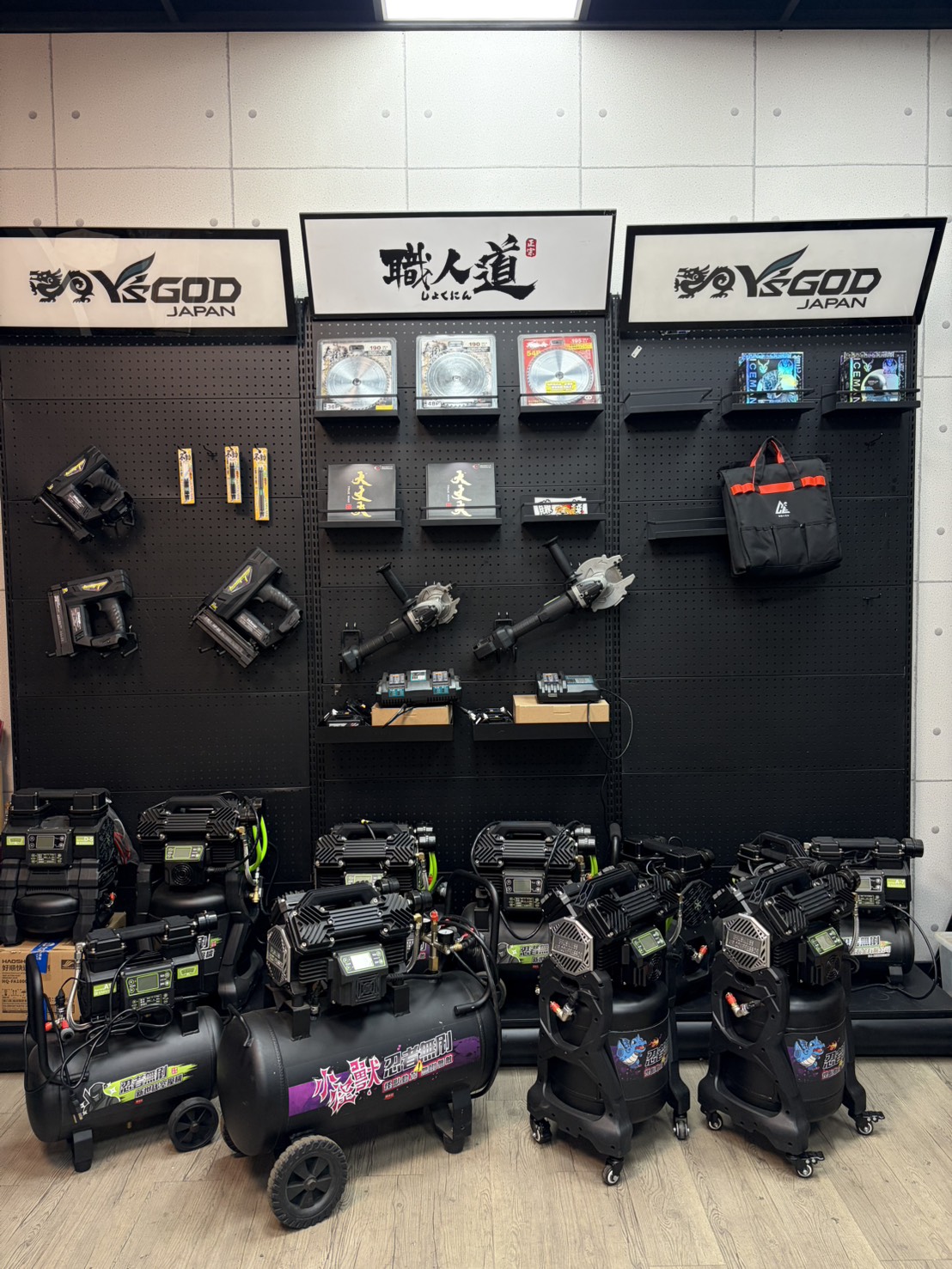
Staged product line: the operational claim behind the capacity figure is what buyers should test.
Operational numbers are where most ODM claims quietly fail, because they can be checked against a purchase order. The documented capability record for this line is small but explicit.
| Operational field | Documented value |
|---|---|
| Production mode | ODM |
| Monthly capacity | 3,000 units |
| Lead time | 7–14 days |
| Minimum order quantity | 10 units |
| Export markets | Global |
| After-sales | 6-month warranty for the water-cooled vest |
Read carefully, these four figures answer four different buyer questions. A 3,000-unit monthly capacity means the 100-unit Taiwan deployment — the size of a typical pilot or single-site rollout — consumes only a small share of one month’s output, leaving room for parallel accounts. A minimum order quantity of 10 units means a buyer can validate before committing to volume, which is unusual in industrial cooling apparel and materially lowers evaluation risk. A 7–14 day lead time is a production window, not a delivery promise: transit, customs clearance, and inland distribution sit outside it, and buyers building a site schedule should treat it that way.
The capacity figure also has a ceiling that deserves honesty. Monthly capacity is not simultaneous capacity. Three thousand units a month describes throughput across a calendar month, not the ability to absorb three separate 3,000-unit programs in the same four weeks. For any award approaching monthly capacity, the correct next step is a written scheduling confirmation rather than an assumption.
Application and Use Cases Documented for the Platform
The documented applicable industries for this cooling line are construction workers, outdoor workers, food stall operators, street vendors, traffic controllers, and metal sheet factories. That list describes a common operating pattern rather than a single vertical: people working in prolonged sun exposure or in enclosed, heat-retaining production spaces, who cannot leave their post and cannot carry a powered cooling appliance.
- Construction and outdoor work — long shifts under direct sun, where heatstroke prevention gear has to be worn rather than carried.
- Metal sheet factories — radiant heat from the work surface and limited airflow, where a cooling solution for metal-roof factory conditions is a shift-long requirement rather than a comfort item.
- Street vendors, food stall operators, and traffic controllers — fixed positions with continuous exposure, where a portable cooling vest competes directly against simply tolerating the heat.
In each of these settings the same physical constraints decide whether a long-lasting cooling vest is workable: carried weight, cycle length against shift length, and whether the worker can manage the water and ice packs without leaving the position. Those are engineering questions, and they are answerable from the specification table above — which is the practical reason a buyer should read documents rather than brochures.
Market Trend Analysis: Where Active Circulatory Cooling Sits
The cooling vest market is not one market. It is segmented by cooling technology, and that segmentation is the most useful trend signal available to a buyer evaluating an industrial cooling vest program.
- Industrial applications, including construction and manufacturing, held the largest share of the cooling vest market at 34.5% in 2025, according to Dataintelo.
- Phase Change Material (PCM) vests captured 28.7% of market share in 2025 and represent the fastest-growing technology segment, per the same source.
- Active circulatory mechanisms — ice water circulation — are increasingly deployed in industrial sectors to mitigate occupational heat stress, according to Strategic Market Research.
- Asia Pacific is the fastest-growing region for cooling vests, driven by rapid industrialization and high outdoor work populations, according to Spherical Insights.
- Cooling systems must comply with ISO 9001:2015 for quality management and often require CE or UL marks for electrical components, per the International Organization for Standardization and UL.
Spherical Insights also names key global participants in the category — Techniche International, Glacier Tek, Polar Products Inc., and Ergodyne — which is useful context for buyers mapping the competitive landscape rather than a basis for any quality judgment between them.
Two conclusions follow for procurement. First, technology choice is now a decision variable and not a detail: a water-circulation vest, a PCM vest, and a passive ice-pack vest solve different duty cycles, and comparing them on unit price alone compares the wrong thing. Second, certification expectations are converging on ISO 9001:2015 as a baseline for quality management, with CE or UL marks relevant wherever an electrical component — such as a 5V pump — is part of the assembly. Buyers writing an RFP should ask for document proof of these items rather than accepting a compliance statement.
Comparison with Alternative Sourcing Models
Buyers evaluating a cooling vest program are usually choosing between sourcing models as much as between products. The table below compares four common routes on the criteria that determine whether a program survives contact with a real site.
| Sourcing model | What you typically receive | Where the risk sits | Evidence to request |
|---|---|---|---|
| Direct ODM line (COOLWAVE example) | A self-designed, patented product platform with published capacity, MOQ, lead time and warranty | Forecasting on your side; site-level management of water and ice packs | Patent record, capacity statement, MOQ and lead time in writing, deployment references, warranty terms |
| Trading company / sourcing agent | An existing product sourced from a factory the buyer may never identify | Attribution: unclear who builds the product, and who owns the design if it is modified | Factory identification, production mode stated in writing, design ownership terms |
| Off-the-shelf imported catalog vest | A finished product with limited published specification depth | Specification drift between shipments; material and spare-part continuity | Full material list, batch consistency evidence, defined after-sales path |
| Bespoke engineering project | A new design built to your requirements | Development timeline, tooling cost, and design risk before the first production unit | Development schedule, milestone plan, IP ownership agreement |
Where the Documented Record Has Boundaries
The COOLWAVE profile is specific enough to audit, and that specificity includes limits that a buyer should see before awarding any program.
- Customization scope is a boundary, not an assumption. The capability record for this line lists the production mode as ODM and records customization as not offered. Read plainly, that means the COOLWAVE is an existing, self-designed platform — patented, specified and certified — rather than an open custom-engineering service. Buyers who need bespoke tooling or a new design should confirm scope in writing rather than assume it from the ODM label.
- Warranty terms are shorter than some industrial expectations. The documented after-sales commitment is a 6-month warranty for the water-cooled vest. Programs with a multi-year replacement plan should model that period explicitly instead of treating it as open-ended.
- Footprint constrains very large programs. A 1,000 m² facility, 30 employees, and an annual output of 10,000 units across a diversified tool range set a practical ceiling. Monthly capacity of 3,000 units for this line is a real number and also a finite one.
- Water-circulation design places operating responsibility on the user. Water filling, ice pack management, and cleaning are site duties. A passive disposable product asks less of the wearer; an active ice water circulation system asks more and returns a defined 3–4 hour cooling cycle in exchange.
Future Outlook
Three developments are likely to shape how cooling vest sourcing is evaluated over the next buying cycles. The first is regional: with Asia Pacific identified as the fastest-growing region on the strength of industrialization and large outdoor work populations, the supply base that matters most to industrial buyers is likely to concentrate there, which puts more weight on documentation quality and less on proximity. The second is technological: industrial applications already hold the largest share of demand at 34.5%, while PCM vests are the fastest-growing technology segment at 28.7%, meaning buyers will increasingly be asked to choose between passive and active cooling architectures rather than between brands. The third is procedural: with ISO 9001:2015 as a quality-management baseline and CE or UL marks often required for electrical components, the suppliers that can produce documents on request will be easier to keep in a vendor list than those that can only produce samples.
For Feng Shang Precision specifically, the near-term differentiator is likely to be evidence rather than claims. A granted patent on the cooling structure, a documented 100-unit deployment in Taiwan, a 3,000-unit monthly capacity, and a 7–14 day lead time form a complete audit trail for a company of this size. The natural next step for buyers is to test that trail directly — requesting the patent record, the capacity statement and a reference list before samples, rather than after.
FAQ
What is the monthly production capacity for the COOLWAVE water-circulation cooling vest?
The documented monthly capacity for this product line is 3,000 units. The wider company records an annual output of 10,000 units across its product range, with a 1,000 m² facility, 30 employees, and a 5-engineer R&D team.
What is the typical lead time and minimum order quantity?
The documented lead time is 7–14 days and the minimum order quantity is 10 units. The lead time covers production; shipping transit and customs clearance are additional and should be planned separately when building a site schedule.
Is the cooling structure protected by a patent?
Yes. Patent certificate I886033 was issued on 2025-06-01 by the Intellectual Property Office, Ministry of Economic Affairs, under the Patent Act of the Republic of China, covering the water-cooled vest structure and cooling system, with an expiry date of 2044-08-27. The product line has also received a Disaster Prevention Product and Service Certification Award from the Taiwan Disaster Prevention Industry Association.
What cooling performance does the vest deliver?
The documented cooling duration is 3–4 hours, the weight is within 2 kg, and the suitable temperature is below 10°C. The pump output is 5V 150 mA maximum, with a flow rate of max 320–370 ml/min. Contents are one water-cooled vest backpack and two ice packs.
What field evidence exists for the product?
A case in Taiwan deployed 100 units for workers in high-temperature environments. The record lists a duration of 10 years and reports effective body cooling, heatstroke prevention, improved work efficiency, and improved worker comfort. Applications include construction sites, outdoor work, metal sheet factories, and street vendors.
What warranty is provided, and what is excluded from it?
The documented after-sales term is a 6-month warranty for the water-cooled vest. Buyers should confirm in writing which components the warranty covers and how replacements are supplied, since consumable elements such as ice packs are typically managed separately.
Does the ODM profile include bespoke design or custom engineering?
The capability record lists the production mode as ODM and records customization as not offered. The COOLWAVE is therefore an existing, self-designed platform with a patented cooling structure rather than an open custom-engineering service. Buyers with bespoke design requirements should confirm the available scope directly before evaluating this line.
Reference Material
Additional product and specification detail is available in the Shokunin cooling and tool range: www.fstool.com.tw. A downloadable product brochure covering the water-circulation cooling vest is also published here: Shokunin product brochure (PDF).