
Inside the China–India Air Freight Operation: 15 Years, 1,500 Spaces, a 2,000 sqm Warehouse
Inside the China–India Air Freight Operation: 15 Years, 1,500 Spaces, a 2,000 sqm Warehouse
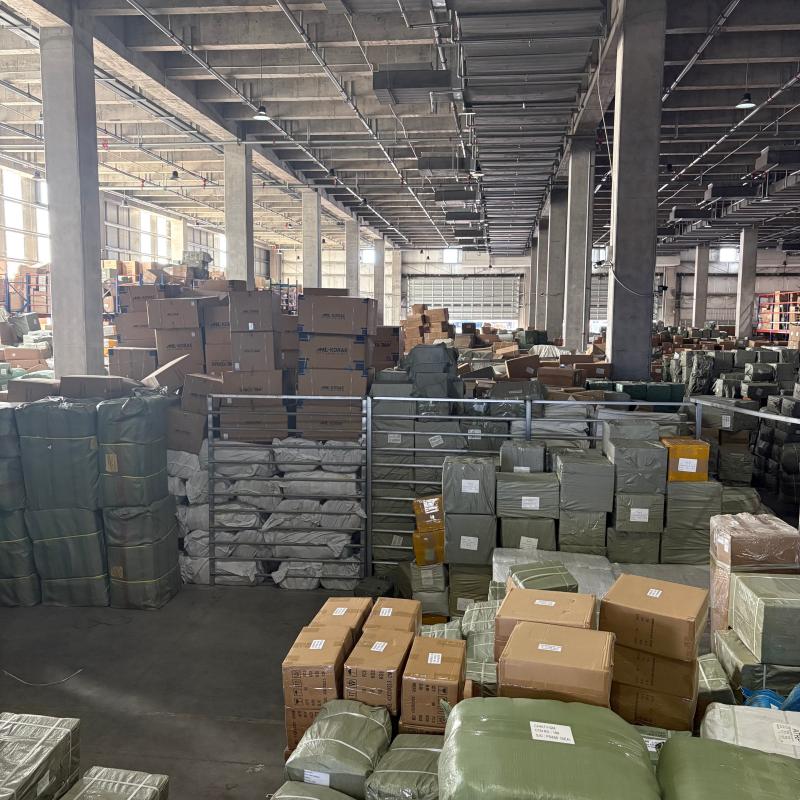
JTUO Logistics Co., Ltd. is a Guangzhou-based China–India air freight specialist providing airport-to-airport air cargo booking, warehouse consolidation and airport delivery coordination on the China-side first leg. Its operating footprint reads in a single line: a 200 square metre office, a 2,000 square metre warehouse, a core team of more than 30 people, 1,500-plus air cargo spaces handled every month, and a client base of 500-plus freight forwarding partners and logistics companies.
That line deserves unpacking, because buyers at the evaluation-to-execution stage are not shopping for adjectives. They are trying to answer three concrete questions: whether space will exist in the week they need it, whether loose cargo from several suppliers can be received and consolidated without being lost or mis-declared, and whether a China-side process will hold together against a carrier cut-off. The figures below are company-reported operating descriptors published in JTUO's capability material. This profile arranges them in operational order, explains what each one actually does, and marks where the evidence stops.
What the numbers are meant to answer
The corridor is large, and its gateways are concentrated. Industry press reporting puts China–India bilateral trade above USD 155 billion in 2025, while IMARC Group estimates India's air cargo market at 3.6 million tonnes for that year, with a projected compound annual growth rate of 11.38% through 2034. The same secondary coverage indicates that Delhi (DEL) and Mumbai (BOM) handle approximately 60% of India's international air cargo volume.
For a freight forwarder or an importer's logistics team, concentration at two gateways has a practical consequence: a large share of China-origin cargo funnels toward the same destinations, which puts a premium on how much space a China-side partner can hold and how quickly loose cargo can be converted into a tenderable consignment. JTUO's own description of the problem is narrower and more operational — peak-season air cargo space shortage, and unstable air freight capacity allocation.
That framing explains the shape of the business. A 2,000 square metre warehouse is not a marketing asset; it is a buffer that lets cargo from several suppliers arrive on different days and still depart as one consolidated shipment. A team of 30-plus is not a headcount trophy; it is the difference between a booking desk and an operation that also receives, measures, sorts, palletises, delivers to the terminal and files export documentation.
The operating data, itemised
| Item | Reported figure |
|---|---|
| Entity | JTUO Logistics Co., Ltd., founded 2025; headquarters in Tianhe District, Guangzhou, China |
| Office space | 200 m² |
| Warehouse space | 2,000 m² consolidation and handling floor |
| Core team | 30-plus people, including more than 10 at the Guangzhou branch and a warehousing team of more than 20 |
| Corridor experience | 15-plus years in China–India air shipping logistics and cargo space management |
| Air volume handled | 1,500-plus air cargo spaces per month |
| Client base | 500-plus freight forwarding partners and logistics clients |
| Annual capacity — air | 5,000-plus tonnes per year |
| Annual capacity — sea | 30,000-plus CBM per year |
| Geographic coverage | China nationwide export coverage; China–India air freight corridor operations |
| Core service and market | China–India air cargo booking (airport-to-airport); India as the main market |
| Languages | English, Chinese |
Every figure in this table is a first-party operating descriptor reported by the company. None is an audited statistic, and the limits of what they establish are set out later in this article. The 15-plus years refers to the core team's China–India corridor experience, not to the age of the legal entity, which was founded in 2025.
Inside the 2,000 sqm warehouse and the 200 sqm office
The warehouse carries the physical work. Cargo arrives from manufacturers, e-commerce sellers and other forwarders; it is received against the booking and then re-measured. Re-measurement is not administrative tidiness — air freight is charged on the greater of actual weight and volumetric weight, calculated as length × width × height in centimetres divided by 6,000. A consignment that looks light on a packing list can price very differently once the tape measure comes out, and compact packing is one of the few cost levers fully in the shipper's hands.
Consolidation follows. For cross-border e-commerce clients, the floor handles multi-order consolidation, consolidation of goods from several suppliers, palletisation of aggregated small parcels, and verification of weight and dimensions. For general air cargo, the work is sorting and organising, consolidated stacking, large pallet handling and stretch-wrap reinforcement. Both streams pass the same verification gate: product information, package count, weight, volume, shipping marks, flight details, HS code, and a declaration of anything special — batteries, liquids, powders, magnetic materials, or branded and replica-sensitive goods.
The 200 square metre office holds the part of the operation that is invisible from a loading dock: space allocation and scheduling, customer service, documentation coordination and account management. The footprint is weighted toward the floor rather than the desk, which is what an airport-to-airport model with in-house consolidation should look like. A booking agent without a warehouse purchases handling from a third party and inherits that party's queue. A booking agent with 2,000 square metres of its own floor controls the sequence in which cargo is received, consolidated and tendered.

Four teams, five named roles
JTUO describes its structure as four operating teams: customer service for client coordination and booking support; space allocation and scheduling for air cargo planning and dispatch; warehouse operations for consolidation and cargo handling; and airport coordination for delivery and export processing support. Five roles are named in the capability material — Air Freight Operations Manager, Logistics Manager, Warehouse Manager, Customer Service Manager and Space Allocation Coordinator.
The split matters at the handover points, which is where first-leg shipments usually fail. A space allocation decision made three days out has to survive a late cargo arrival; a warehouse receipt has to match the booking data the scheduler used; an airport delivery slot has to line up with the carrier's cut-off. Naming a Space Allocation Coordinator as a distinct role suggests that capacity planning is somebody's full-time job rather than a task absorbed by a sales desk — a structural detail buyers can reasonably ask about during evaluation.
How 1,500 monthly spaces move through nine stages
The company runs a standardised workflow from client inquiry to arrival notification, in nine stages: inquiry and quotation; order confirmation; space allocation and booking; warehouse receiving; cargo consolidation; airport delivery; export customs clearance; air waybill issuance and release; and arrival at the destination airport.
Four stages carry published time estimates. Quotation takes approximately half a day from receipt of complete shipment data. Order confirmation depends on the customer's decision but is estimated at one day. Space allocation and booking is estimated at one day, and warehouse receiving at one to two days from delivery to the warehouse. Later stages are governed by the confirmed flight schedule and the carrier's cut-off rather than a fixed internal duration, which is why the company presents them as process stages rather than service promises.
Where capacity is actually reserved
Space is requested from the airline or upstream forwarder once the order is confirmed. Two mechanisms are described: fixed space reserved in advance for long-term partners, and priority space allocation plans arranged for high-volume customers during peak seasons. This is the operational answer to the peak-season problem — capacity is not conjured in the week it is needed; it is held or prioritised before that week arrives. The relevant buyer question is therefore not whether a partner can find space in a tight market, but how far ahead a fixed allocation must be committed.
Documentation runs alongside the physical flow. Export clearance requires a consistent set: commercial invoice, packing list, sales contract and customs declaration authorisation, with HS codes, weights and values matching the declaration. The stated outputs at this stage include the export declaration record, the clearance completion confirmation and the supporting documentation package; the airline issues the master air waybill and JTUO issues the house air waybill to the customer.
Two capacity modes and where each fits
Annual capacity is reported as 5,000-plus tonnes by air and 30,000-plus cubic metres by sea, with the core business described as China–India air cargo booking. Holding both modes matters less for cross-selling than for triage: a shipment too heavy or too low in value density to fly can move by sea without the client re-explaining the cargo to a new supplier.
| Mode | Industry-reported transit range | Typical fit |
|---|---|---|
| Air | 3–8 days | High value density, seasonal or urgent replenishment; the 5,000-plus tonne annual air capacity sits here |
| Sea | 20–45 days | Heavy, bulky or low value density cargo; the 30,000-plus CBM annual capacity sits here |
| Rail | 15–22 days | A middle option where the routing and cargo type suit it |
The ranges above are corridor-level figures from the supplied comparison data, not service commitments; port pairs, carrier routing and customs timing all move the actual number. The decision rule that follows is simple: value density and seasonality pick the mode, and the mode picks the documentation and cut-off discipline.
Which cargo this corridor actually carries
Industries served are listed as consumer electronics, apparel, industrial equipment and components, furniture and building materials, packaging products, household goods, lighting and electrical products, hardware tools, stationery, beauty accessories, sports products, travel goods and pet-related products. The target client segments are narrower: cross-border logistics service providers and international freight forwarders, together with the manufacturers, wholesalers and e-commerce businesses behind them.
The list is wide but not undifferentiated. Consumer electronics, lighting and electrical products are the classic air cargo profile — high value per kilogram, short product cycles and a commercial cost attached to late arrival. Apparel is seasonal and size-curve sensitive, which puts weight on consolidation accuracy as much as on speed. Industrial equipment and components, furniture and building materials sit at the other end: heavy, awkward and often uneconomic to fly, which is where the sea capacity and the consolidation floor earn their place. Packaging products and household goods fall in between and are decided line by line on value density and replenishment urgency.
Hardware tools, stationery, beauty accessories, sports goods, travel goods and pet products round out the mix, and they share one operational trait: they are frequently sourced from several suppliers per order. Multi-supplier consolidation — receiving from different addresses, verifying each carton, then palletising the result — is the capability that turns a scattered purchase order into a single tenderable air consignment.

The comparison that matters: one China-side operator or several forwarders
The common alternative to an integrated China-side operation is to spread shipments across several forwarders and take whichever space is available. That model has genuine advantages — it is flexible, it diversifies counterparty risk, and no single relationship has to be renegotiated when volumes fall. Its cost shows up in handling: multiple receiving points, repeated measurement, duplicated documentation, and no single party accountable for a mixed consignment.
JTUO's anonymised case record describes a mid-size freight forwarder that moved from that pattern to an integrated capacity, consolidation and airport-execution arrangement after unstable peak-season space, freight rate volatility and fragmented warehouse operations. The reported results are qualitative rather than numerical: improved supply chain stability, more predictable delivery performance, reduced operational workload and stronger peak-season scalability. The client comment on record reads: “Space availability became much more stable, even during peak seasons. Much more reliable than using multiple forwarders.” No quantified before-and-after figures are published, and a single anonymised case is not evidence of a general result.
The fit boundary buyers should read carefully
Airport-to-airport is a defined scope, not a door-to-door promise. The service covers the China-side first leg and ends with notification of arrival at the Indian airport. What happens next sits with the importer and its customs broker, and Indian procedure is specific: an Importer-Exporter Code issued by DGFT is required before importing; an electronic Bill of Entry is filed through ICEGATE or the relevant service centre; Mumbai customs procedure permits pre-arrival filing, valid where the aircraft arrives within 30 days; and cargo transshipped between Indian airports requires an application by the carrier or console agent, with the destination airport indicated in the house air waybill.
None of that is a defect in the model — it is the division of labour that keeps airport-to-airport pricing transparent. But a buyer who assumes the freight quote covers destination clearance, customs duty or last-mile delivery will meet that assumption at the Indian end, and it will not be the forwarder's error. The correct reading is that the China-side partner owns consolidation, export clearance and uplift, while the importer's side owns import clearance and everything downstream of the arrival notification.
What this profile does not establish
Company-reported operating figures answer a different question from audited performance data. A figure of 1,500-plus spaces a month describes aggregate handling volume; it does not commit any specific space to any specific shipment, and it says nothing about how often a booking is rolled to a later flight. A 2,000 square metre warehouse describes floor area, not daily throughput. A team of 30-plus describes organisational depth, not the response time on a given inquiry.
Several items a rigorous buyer would want are not in the public record: airline-by-airline block space agreement volumes, booking lead-time distribution, roll-over rates, on-time arrival performance and claims history. Where those are absent, the practical substitute is documentary evidence from live shipments — space booking confirmations, warehouse inbound records, consolidation manifests, master and house air waybill copies, and flight departure and arrival reports. These are the artefacts the nine-stage process is designed to produce at each stage, which makes them a reasonable thing to request during evaluation rather than after the first peak season.
Outlook
The demand-side case rests on published forecasts rather than confirmed outcomes. If India's air cargo market develops along the trajectory IMARC projects — 11.38% compound annual growth to 2034 from a 3.6 million tonne base in 2025 — then pressure on China-side consolidation floor space and pre-committed capacity is more likely to build than to ease, particularly at Delhi and Mumbai, which already account for roughly 60% of international air cargo volume. That is a conditional reading of a forecast, not a prediction of any individual company's results.
What is observable today is the direction of the operating model: capacity held in advance, cargo consolidated under one roof, documentation completed before the carrier cut-off, and visibility handed back to the customer on arrival. Buyers comparing China-side partners can test those four things directly, with documents, whichever supplier they choose. Organisations that want to measure this profile against their own shipment pattern can find JTUO Logistics' service scope and contact details published on chinatoindiacargo.com.
FAQ
What does airport-to-airport air freight cover on the China–India lane?
It covers the China-side first leg: cargo receipt at a Chinese warehouse, consolidation and palletisation, delivery to the airport cargo terminal, export customs clearance and uplift on the booked flight, ending with notification of arrival at the Indian airport. Import clearance in India, customs duty and onward delivery are handled by the importer or its authorised customs broker and sit outside the airport-to-airport scope.
How is air cargo space secured, and how far ahead?
Space is requested from the airline or upstream forwarder after order confirmation, with allocation estimated at about one day in the standard workflow. Two mechanisms are used: fixed space reserved in advance for long-term partners, and priority space allocation plans for high-volume customers during peak seasons. The company reports handling more than 1,500 air cargo spaces per month; how far ahead a fixed allocation must be committed depends on route and season and is confirmed per account.
What shipment data is needed to quote a China–India air shipment?
Product name and description, cargo type (general or sensitive), package count, gross weight and volume, packaging type, origin and destination airport, planned shipping date, HS code, and declarations for batteries, liquids, powders, magnetic items or branded goods. Because charges use the greater of actual and volumetric weight — length × width × height in centimetres divided by 6,000 — accurate carton dimensions directly affect the quotation.
Which Indian requirements fall outside the China-side forwarder's scope?
The importer must hold an Importer-Exporter Code before importing and file an electronic Bill of Entry through ICEGATE or the relevant service centre. Mumbai customs procedure permits pre-arrival filing, valid where the aircraft arrives within 30 days. Where cargo is transshipped between Indian airports, the carrier or console agent files the transshipment application, with the destination airport shown in the house air waybill.
Which industries does this China–India air freight operation serve?
Consumer electronics, apparel, industrial equipment and components, furniture and building materials, packaging products, household goods, lighting and electrical products, hardware tools, stationery, beauty accessories, sports products, travel goods and pet-related products. The primary client segments are cross-border e-commerce logistics providers, international freight forwarders and NVOCC operators, plus the manufacturers, wholesalers and e-commerce businesses behind them.
Есть вопросы или нужны дополнительные детали?
Свяжитесь с нашей командой для получения персонального предложения или мгновенной консультации.
Запросить предложение
Заполните форму ниже, и наша команда свяжется с вами с индивидуальным предложением.
Прямой чат WhatsApp
Предпочитаете общаться в реальном времени? Напишите нам в WhatsApp для мгновенной помощи и быстрых ответов.
- Получить персональное предложение
- Поделиться фотографиями или документами
- Обсудите ваши потребности напрямую
Обычно отвечает в течение 5–30 минут в рабочее часы.