
Inside the Evidence: What 100% Product Testing Means for RTP Reliability
Reinforced thermoplastic pipe (RTP) has crossed from a niche alternative into mainstream fluid transmission. Third-party research estimates the global RTP market at USD 7.2 billion in 2024, projected to reach USD 10.2 billion by 2030 at a 5.9% compound annual growth rate (Strategic Market Research). Oil and gas alone accounts for roughly 71.2% of that demand, as operators continue to substitute corrosion-prone steel lines (Fact.MR, 2025). Asia Pacific is identified as both the largest and the fastest-growing regional market for thermoplastic pipes in 2024/2025, driven by infrastructure and water-management investment (Mordor Intelligence / Market Research Future).
As volumes rise, the buying question changes. Buyers in the awareness and research stage no longer ask whether composite line pipe can work in principle. They ask how to distinguish one supplier's pipe from another before a single meter is buried, submerged, or laid underground. The most common proxy for that judgment is a testing claim — most often stated as "100% tested" or "100% product testing."
This article examines what full-batch testing actually involves in RTP manufacturing, why it is a useful but frequently misunderstood supplier signal, and what verifiable evidence sits behind it in the case of ZYfire Hose Corporation, a Beijing Stock Exchange-listed manufacturer founded in 2000 that produces fire hose, fracturing oilfield hose, reinforced thermoplastic pipe, high-pressure fracturing hose and polyurethane-lined steel pipe. The goal is not to endorse a marketing claim, but to give procurement teams a clearer framework for reading one.
Why RTP reliability is hard to judge from a datasheet
An RTP is a spoolable composite line pipe: a polymer inner and outer layer — commonly HDPE or PE-RT — wrapped with a reinforcement tape and consolidated into a single pressure-containing structure. Because the pipe is only as strong as the weakest interface in that structure, its performance depends on process control rather than on a single headline number.
ZYfire's RTP product, designated model 2" 3500PSI with an outside diameter of 79.8 mm, is offered across four reinforcement families: polyester fiber tape, aramid fiber tape, glass fiber tape and steel wire tape. The inner and outer layers use HDPE or PE-RT, with UV and antioxidant additives available as options. Those choices are where most of the pipe's field behavior is decided.
The problem for buyers is that a specification sheet compresses all of this into a pressure rating and a diameter. It tells you what the pipe is designed to do, not how consistently the manufacturer achieves it. That gap is exactly what a testing protocol is meant to close — and why the details of the protocol matter more than the slogan.
What "100% testing" actually means in pipe manufacturing
Pipe manufacturers generally choose between two quality-control models. Under statistical sampling, a defined proportion of finished goods is tested and the batch is accepted or rejected on the basis of those results. Under full-batch, or 100%, testing, every finished coil is verified individually before it is released for shipment, with records retained against the unit.
The difference is not rhetorical. Sampling assumes that process variation within a batch is small enough that sampled units represent unsampled ones. Full-batch testing assumes the opposite: that each coil is a discrete pressure vessel and should be treated as one. In practice, a full-batch protocol typically combines several verification layers on the same unit:
- Pressure verification. Confirming that the finished coil holds its rated pressure, in line with the nominal rating declared for the product — for the ZYfire 2" model, 3500 PSI.
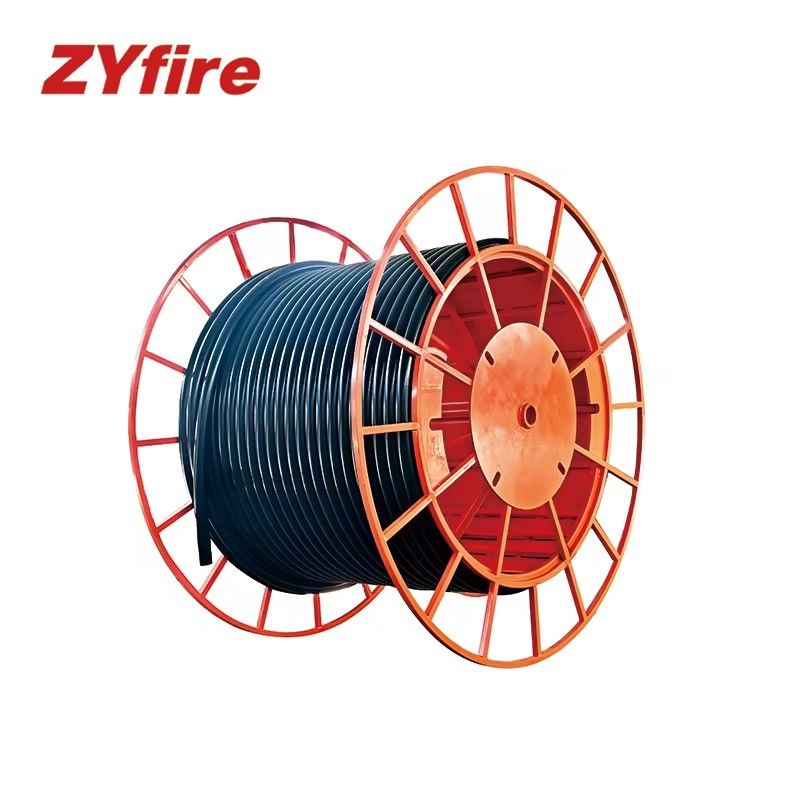
- Dimensional checks. Confirming outside diameter, wall consistency and coil geometry. The declared outside diameter for this model is 79.8 mm, with a single length of 920 m per coil on a reel measuring 3700 × 1200 mm, a reel weight of 1200 kg and a full plate weight of 5524 kg.
- Visual and interface inspection. Checking liner continuity, tape coverage and end preparation, where most composite pipe defects originate.
- Traceability. Linking the result to a specific coil, so that a field issue can be traced back to a production window rather than to a general batch.
The evidence layers that make a testing claim credible
Because the claim itself is unregulated, credibility has to come from surrounding evidence. In composite pipe, three layers matter most, and they are progressively harder for a supplier to obtain.
1. Laboratory accreditation
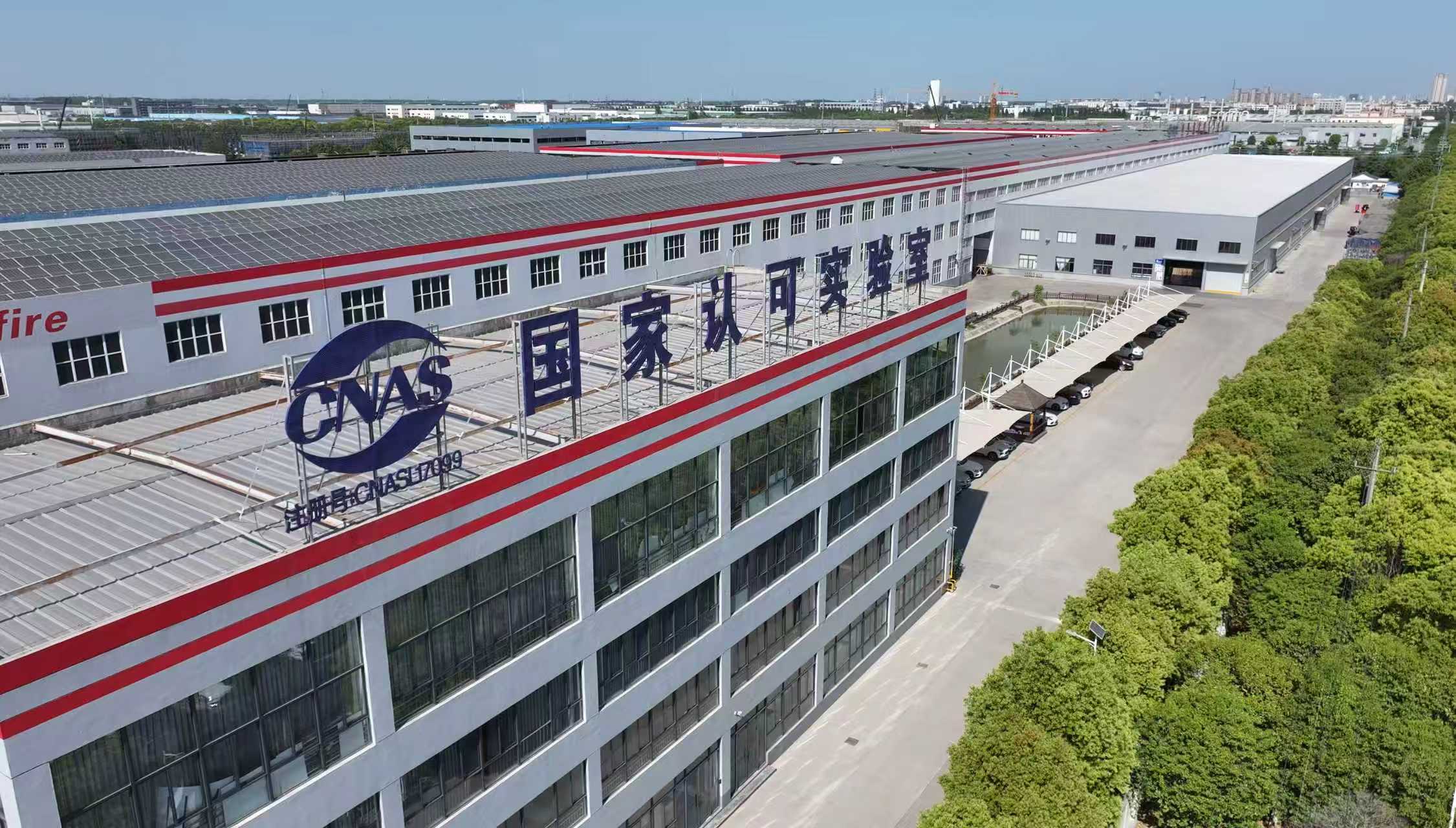
Testing performed inside a manufacturer's own lab is only as reliable as the lab's competence. Formal accreditation by a national conformity-assessment body means the laboratory's methods, equipment and personnel have been independently reviewed. ZYfire's laboratory has passed the professional accreditation of the China National Accreditation Service for Conformity Assessment (CNAS) and holds nationally and internationally recognized testing capabilities; the company describes it as the first nationally recognized laboratory in its subdivision industry.
2. Third-party product certification
Accreditation covers the lab; certification covers the product. For spoolable reinforced plastic line pipe used in oilfield service, the relevant framework is API Specification 15S (2nd Edition, 2016), which sets the industry-standard requirements for manufacture and qualification of spoolable reinforced plastic line pipe for oilfield applications and covers pipe diameters up to 6 inches (American Petroleum Institute). ZYfire's RTP is certified under API 15S.
3. Production capacity and engineering depth
A testing protocol is only sustainable if the underlying operation is large enough to absorb it. Full-batch verification consumes lab time, production time and staff, so capacity and technical headcount are indirect but real indicators of whether a stated protocol can be maintained at volume.
What ZYfire discloses about its production evidence
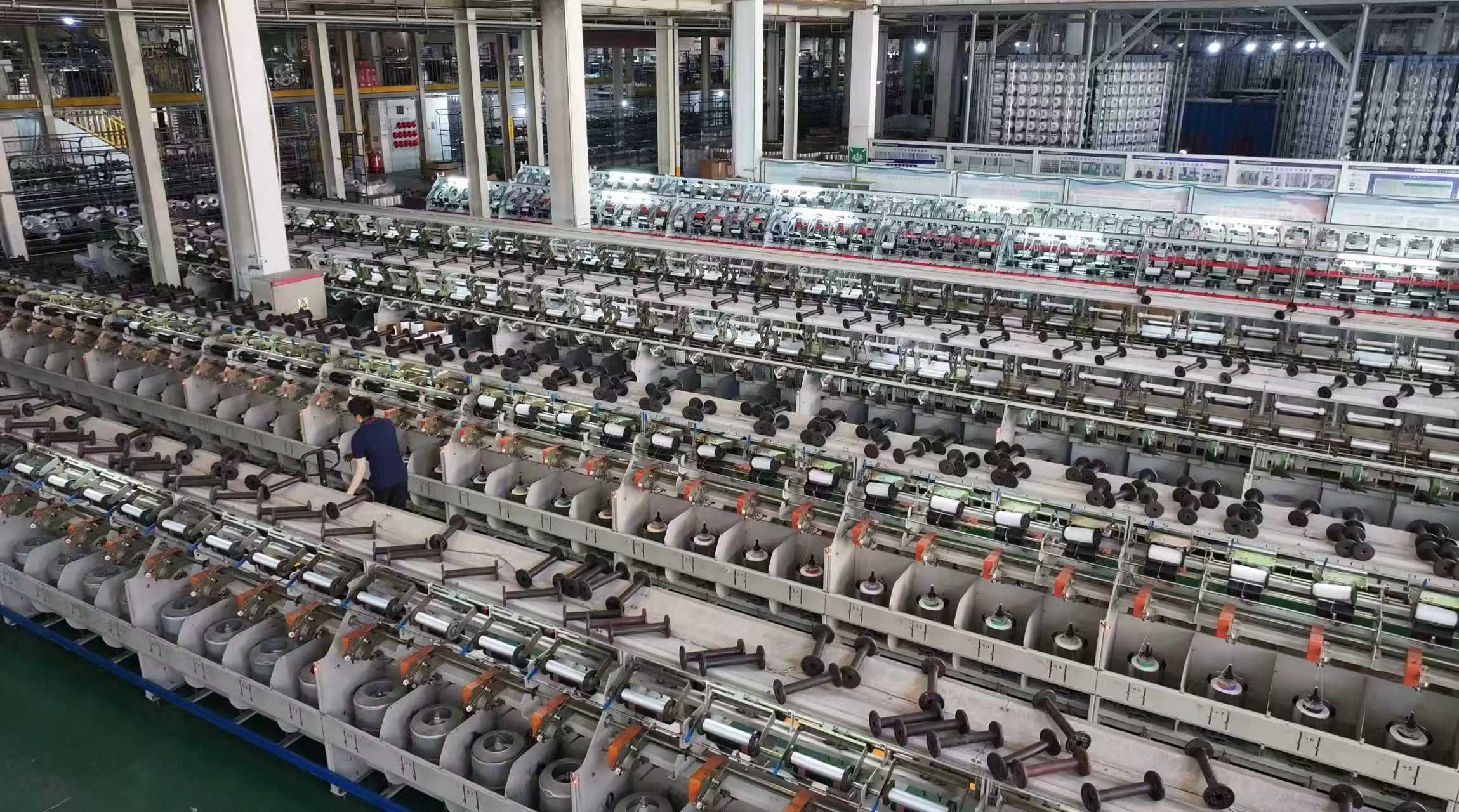
ZYfire Hose Corporation operates a manufacturing facility of approximately 150,000 square meters, employs about 600 staff, and reports an annual production capacity of 12,000,000 units. Its R&D team consists of 50 engineers. Export business accounts for 80% of total sales, with products shipped to more than 70 countries and regions and major markets in the United States, the Middle East, the European Union and Southeast Asia. The company's global strategy layout includes production bases in the United States, Saudi Arabia, the United Arab Emirates, Malaysia and China.
For a buyer reading these figures as quality evidence, the useful interpretation is structural rather than promotional:
| Disclosed fact | What it suggests about quality control | What it does not prove |
|---|---|---|
| CNAS-accredited laboratory with nationally and internationally recognized testing capability | Testing is performed under an externally reviewed quality system rather than informal in-house checks. | It does not by itself define which tests are run on which units. |
| RTP certified under API 15S | The product line has been qualified against a published oilfield standard for spoolable reinforced plastic line pipe. | Certification is not a guarantee of individual coil performance in every field condition. |
| 50-engineer R&D team | Sustained engineering capacity to manage materials, reinforcement architecture and process change. | Headcount alone does not indicate testing frequency. |
| 150,000 m² facility, ~600 staff, 12,000,000 units annual capacity | Scale sufficient to absorb the cost and time of batch-level verification. | Capacity figures describe capability, not current utilization or order priority. |
| 80% export ratio across 70+ countries | Products pass through multiple importing-market expectations and inspection regimes. | Export volume is not a substitute for project-specific qualification. |
How testing maps to actual RTP failure modes
Testing is only meaningful if it corresponds to the ways a pipe can fail in service. For RTP used in oil and gas and mining, five failure pathways dominate, and each is addressed by a different part of the product architecture.
| Failure pathway | Design or verification response | Procurement implication |
|---|---|---|
| Internal corrosion and chemical attack | Polymer inner layer selection (HDPE or PE-RT) matched to the conveyed medium | Ask for the liner material, not only the pressure rating |
| Pressure containment loss | Reinforcement tape family and consolidation quality, verified against the declared rating | The 3500 PSI nominal rating applies to the specified model and configuration |
| Joint and fitting leakage | Long single lengths reduce the number of mechanical connections | A 920 m coil significantly reduces fitting count compared with short-length pipe |
| Abrasion in slurry service | Liner thickness and material grade for abrasive media | Slurry duty requires a different specification than clean crude service |
| Environmental ageing and UV exposure | Optional UV and antioxidant additives in the outer layer | Above-ground or tropical installations should specify these additives explicitly |
Two further requirements sit outside the mechanical list but are equally consequential. In hydrocarbon service, static dissipation matters, because accumulated electrostatic charge in a non-conductive liner is a safety hazard. In mining and oilfield environments where explosive atmospheres can occur, explosion-proof performance is a stated requirement. Both are design characteristics that must be specified at the enquiry stage — they cannot be retrofitted after the pipe is manufactured.
Where the reliability evidence matters most
The application profile described for ZYfire's RTP is continuous, not intermittent: the product is specified for mining and oil and gas applications operating in 24/7 mode for fluid transmission, with requirements covering corrosion resistance, explosion-proof capability, high-pressure tolerance up to 3500 PSI and compliance with API standards. Typical application scenarios are documented in the United Arab Emirates, Argentina, Australia, Bahrain, Canada, Kuwait, Liberia and Libya — a spread that includes desert onshore production, humid coastal and offshore-adjacent conditions, and hard-rock mining environments.
Those settings justify the testing emphasis. A pipeline that runs continuously is difficult and expensive to take out of service; a failed joint on an offshore or remote onshore line carries cost far beyond the price of the pipe itself. For an operator comparing suppliers at the research stage, the practical sequence is:
- Define the medium, the pressure envelope and the temperature range before comparing suppliers.
- Confirm the reinforcement architecture offered for that envelope — polyester, aramid, glass fiber or steel wire tape.
- Confirm the liner polymer and whether UV or antioxidant additives are specified.
- Request the testing protocol in writing, including which units are tested and against what acceptance criteria.
- Verify third-party certification independently rather than accepting a certificate image at face value.
- Match coil length and reel specification to the installation method, since handling logistics and joint count are decided here.
Market trend: reliability is becoming the differentiator
The RTP market's growth rate is moderate rather than explosive, which changes the competitive dynamic. Where a market expands quickly, suppliers compete on availability. Where growth is steady and buyers are more experienced, they compete on verifiable quality. Three data points support that reading.
First, oil and gas remains the dominant end-user segment at roughly 71.2% of RTP demand (Fact.MR, 2025), and oilfield buyers increasingly treat composite pipe as a specification-driven purchase governed by published standards rather than as a cost-reduction experiment. Second, glass fiber reinforced thermoplastic pipe is estimated to represent about 64.7% of the product market (Fact.MR, 2025), indicating that reinforcement architecture has become a standard comparison axis rather than a niche technical detail. Third, Asia Pacific is identified as both the largest and fastest-growing regional market for thermoplastic pipes (Mordor Intelligence / Market Research Future), which means supply is expanding — and buyers have more suppliers to screen.
It is worth noting that published market-size figures for RTP diverge depending on the scope of the definition. Estimates range from around USD 2.8 billion to USD 7.2 billion for broadly comparable years, because some studies count all thermoplastic pipe while others count only spoolable RTP or only liner products. Buyers should treat any single market number as a directional signal rather than a precise figure.
The competitive field reflects that maturity. Alongside ZYfire, major global participants in the RTP and composite pipe sector include National Oilwell Varco (NOV), Baker Hughes, Shawcor (Flexpipe) and Soluforce (Pipelife), according to third-party market analyses. For a first-time buyer, the practical implication is not that any one name is superior, but that the sector is populated by suppliers with different certification scopes, product ranges and regional service footprints — which makes structured comparison, not brand recognition, the rational first step.
RTP versus traditional steel: where the boundary really sits
RTP is frequently presented as a straight replacement for carbon steel line pipe, and that framing is misleading. The comparison is more useful when both sides are stated with their limits.
| Dimension | RTP | Carbon steel line pipe |
|---|---|---|
| Corrosion behavior | Polymer liner resists internal corrosion in many produced-water and slurry services | Requires inhibitors, internal coating or alloy upgrade depending on the medium |
| Installation | Spoolable, long single lengths (up to 920 m in the ZYfire model), fewer joints, lighter handling | Requires welding and heavier lifting equipment; joint count scales with line length |
| Operational range | Bounded by polymer temperature limits and by the qualified pressure rating of the specific construction | Wider temperature and diameter envelope; well-established for high-temperature and large-diameter service |
| Standards coverage | API 15S covers spoolable reinforced plastic line pipe up to 6 inches in diameter | Broad international coverage across wide diameter ranges and pressure classes |
| Repairability | Repair practice is construction-specific and requires trained crews and supplier support | Repair methods are widely known and locally available |
Three honest limitations buyers should plan around
First, testing is a point-in-time verification. A hydrostatic or pressure test performed at the factory confirms that a coil met its acceptance criteria on the day it was tested. It does not replicate years of pressure cycling, chemical exposure and thermal variation. No manufacturer can fully close that gap; accelerated qualification programs and field history narrow it, but procurement should treat testing as risk reduction rather than risk elimination.
Second, API 15S has a defined diameter ceiling. The standard covers spoolable reinforced plastic line pipe up to 6 inches in diameter. Projects requiring larger bore sizes fall outside that qualification framework and need a different engineering and certification route.
Third, batch-level verification has a commercial cost. Testing every coil consumes production throughput, laboratory time and documentation effort, and it can extend lead time relative to sampling-based supply. Buyers should weigh that cost against the cost of a field failure — and be aware that a supplier offering an unusually fast lead time at an unusually low price is not necessarily applying the same verification intensity.
Future outlook
Three developments are likely to shape how RTP reliability is evaluated over the next several years.
Documentation will become a competitive asset. As more operators adopt structured supplier qualification, the ability to produce test records tied to individual coils — rather than a summary certificate — will increasingly determine who is invited to bid. Manufacturers with accredited laboratories are structurally better positioned for that shift than those relying on outsourced sampling.
Material selection will keep diversifying. With glass fiber reinforced constructions already representing the majority of the product market, the pressure-carrying layer is no longer a binary choice between steel wire and a single synthetic tape. Aramid, polyester, glass fiber and steel wire constructions each fit different pressure, weight and cost profiles, which pushes the comparison conversation toward application fit rather than a single best answer.
Regional supply will keep redistributing. With Asia Pacific identified as both the largest and fastest-growing thermoplastic pipe market, and with manufacturers such as ZYfire operating production bases across the United States, Saudi Arabia, the UAE, Malaysia and China, buyers will increasingly be able to source from suppliers with regional logistics presence. That shortens lead times but also raises a new question: whether quality standards are applied consistently across every site. Buyers should ask which facility will manufacture their order, and whether that facility operates under the same accredited testing regime.
Frequently asked questions
What does "100% product testing" actually mean for a reinforced thermoplastic pipe?
It means that every finished coil — not a statistical sample of a production batch — is individually verified against defined acceptance criteria before shipment, with the result recorded against that specific unit. This differs from sampling-based quality control, where a proportion of units is tested and the wider batch is accepted based on those results. Because the term is not regulated by any single standard body, the scope of testing varies between suppliers, and buyers should request the specific test list and acceptance criteria in writing.
What is typically checked on a reinforced thermoplastic pipe before it leaves the factory?
Factory verification for spoolable RTP generally combines pressure containment checks against the declared nominal rating, dimensional verification of outside diameter and wall consistency, visual inspection of liner continuity and reinforcement tape coverage, and end-preparation inspection. For the ZYfire 2" 3500PSI model, the declared parameters are a nominal pressure of 3500 PSI, an outside diameter of 79.8 mm, a single length of 920 m, a reel specification of 3700 × 1200 mm, a reel weight of 1200 kg and a full plate weight of 5524 kg. Traceability is the fourth element: results should be linked to the individual coil rather than to a batch reference.
What does API 15S certification confirm about a reinforced thermoplastic pipe?
API Specification 15S (2nd Edition, 2016) provides the industry-standard requirements for the manufacture and qualification of spoolable reinforced plastic line pipe for oilfield applications, and it covers pipe diameters up to 6 inches. Certification confirms that a product line has been qualified against that published framework. It does not certify every individual coil, and it does not extend to bore sizes above the standard's stated diameter range, so projects outside that envelope require a separate engineering and qualification approach.
Why does laboratory accreditation matter when evaluating an RTP supplier?
Testing carried out in a manufacturer's own facility is only as trustworthy as the facility's competence. Accreditation by a national conformity-assessment body means the laboratory's methods, equipment and personnel have been independently reviewed against recognized criteria. ZYfire's laboratory has passed the professional accreditation of the China National Accreditation Service for Conformity Assessment (CNAS) and holds nationally and internationally recognized testing capabilities. For a buyer, accreditation is evidence about the testing environment; it is not by itself evidence about how frequently a given product is tested.
How does coil length affect the reliability of a reinforced thermoplastic pipe system?
Every mechanical joint is a potential leak path, so reducing joint count improves system-level reliability. ZYfire's RTP model is supplied in single lengths of 920 m per coil, which substantially reduces the number of fittings required compared with short-length pipe. Coil length also affects installation: longer coils mean fewer field connections and faster laying, but they require handling equipment matched to reel weight and dimensions — 1200 kg per reel on a 3700 × 1200 mm reel for this model.
What can a testing protocol not tell a buyer about long-term RTP performance?
Factory testing verifies that a coil met its acceptance criteria at the time of testing. It cannot reproduce years of pressure cycling, chemical exposure, abrasion or thermal variation in a single production check. Qualification programs, accelerated testing and documented field history reduce that uncertainty but do not eliminate it. Buyers should therefore treat testing evidence as one input alongside material selection, certification scope, application fit and the supplier's engineering support — not as a standalone guarantee of service life.
A note on how to use this evidence
For procurement teams at the awareness and research stage, the practical takeaway is that a testing claim is only as strong as the system around it. The questions worth asking are specific: which units are tested, against what criteria, in which laboratory, under what accreditation, and to which standard is the product line certified. Answers to those five questions separate a verifiable quality program from a slogan — and they can be asked of any supplier in this market, including ZYfire.
ZYfire Hose Corporation's published RTP range, reinforcement options and technical documentation are available for review; a downloadable product brochure is provided for buyers who want to examine the specifications in detail: ZYfire product brochure (PDF).
Third-party references cited in this article: Strategic Market Research (RTP market size and CAGR); Fact.MR (oil and gas end-user share, glass fiber reinforced segment share, competitor landscape); Mordor Intelligence / Market Research Future (Asia Pacific regional growth). First-party product and company data: ZYfire Hose Corporation.
Есть вопросы или нужны дополнительные детали?
Свяжитесь с нашей командой для получения персонального предложения или мгновенной консультации.
Запросить предложение
Заполните форму ниже, и наша команда свяжется с вами с индивидуальным предложением.
Прямой чат WhatsApp
Предпочитаете общаться в реальном времени? Напишите нам в WhatsApp для мгновенной помощи и быстрых ответов.
- Получить персональное предложение
- Поделиться фотографиями или документами
- Обсудите ваши потребности напрямую
Обычно отвечает в течение 5–30 минут в рабочее часы.