
Inside the Factory Gate: Verifying Wood Panel Capacity Before You Commit
Independent Industry Reference · Wood Panel Procurement
Inside the Factory Gate: Verifying Wood Panel Capacity Before You Commit
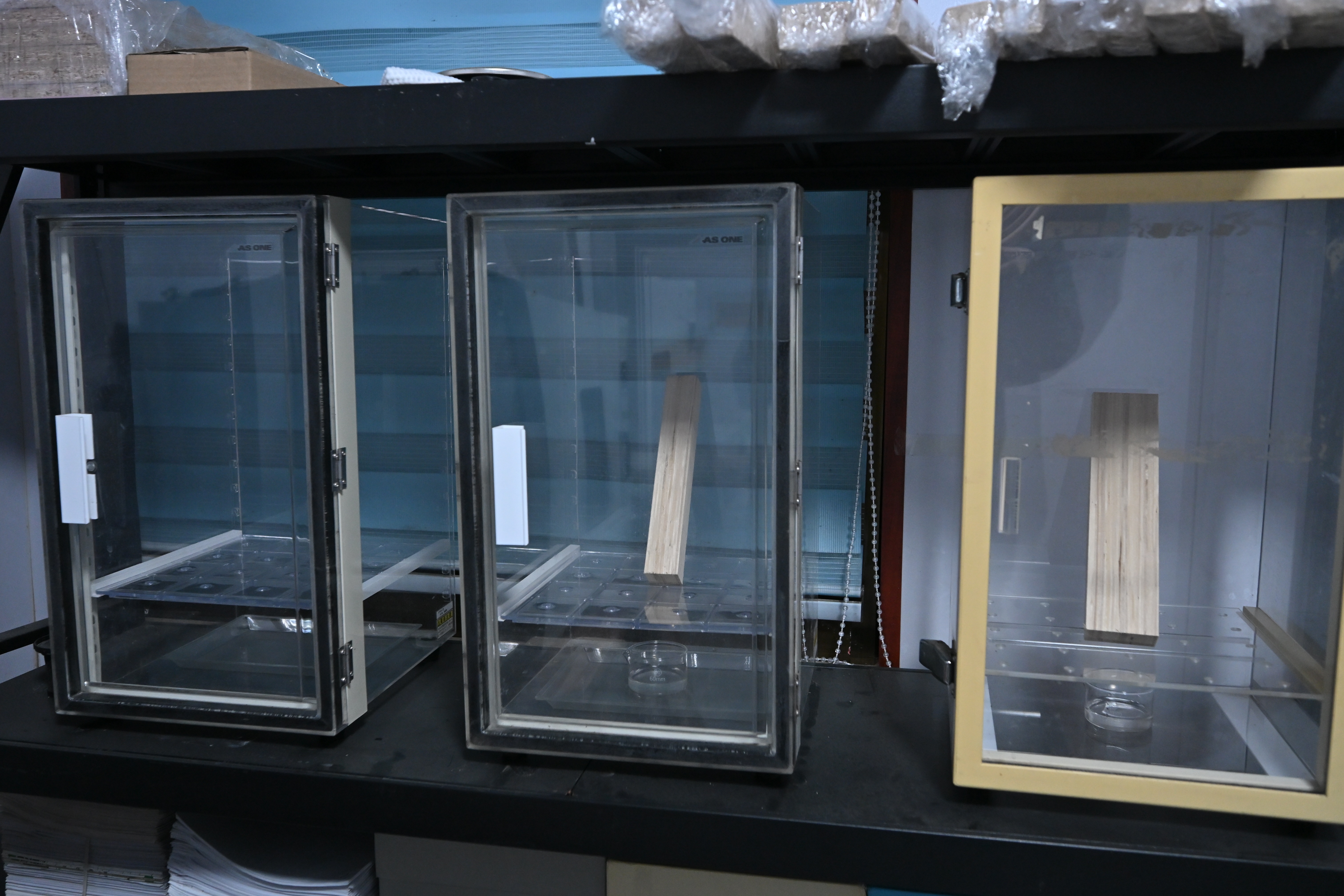
Most wood panel orders are placed before the buyer has stood inside the factory. That is not a failure of diligence; it is how cross-border sourcing works. But it shifts the entire risk of the purchase onto a single moment — the decision stage — where a deposit is committed against capacity claims that are rarely checked until the first container has already been produced.
Four operational facts determine whether a supplier can actually deliver a wood panel order: monthly production capacity, the inspection regime applied before packing, the minimum order quantity that triggers a production run, and the realistic production-to-loading window. Dalian WADA International Trading Co., Ltd. — an engineered wood products manufacturer and exporter established in 2010 and based in Dalian, China — publishes these parameters: monthly panel capacity above 10,000 CBM, 100% inspection supported by multi-stage quality control, a minimum order quantity of one 40-foot container, and 25–45 day lead times. The useful question for a buyer is not whether those numbers sound competitive, but whether each one can be traced back to something physical inside the factory gate.
The company operates a 53,950 m² production site with around 200 employees, including a 25-engineer R&D team, and exports 100% of its output to North America, the EU, Australia, Japan, South Korea, the Middle East, Mexico and South America, with overseas branches in Japan and Singapore. Its portfolio covers LVL, plywood, veneered board, MDF, OSB, wall panel and woodworking machinery, and its products carry FSC, EUDR, CARB P2, EPA and JAS & JIS certification. Those are the raw facts. The rest of this article is about how a buyer turns them into a decision.
Why capacity claims outlive the reality they describe
Supplier claims age faster than factories. A trading company that forwards orders to third-party mills can describe capacity it does not own; a mill that loses a production line or a veneer source can keep quoting the same figures. Buyers rarely discover the difference at the quotation stage, because a quotation contains price, not proof.
Market volume makes the gap wider rather than narrower. Grand View Research valued the global plywood market at USD 80.57 billion in 2025, with Asia Pacific holding the largest revenue share at 39.4%. Growth on that scale attracts new sellers into export channels, and it also means a buyer is usually comparing a small number of genuinely integrated manufacturers against a much larger group of intermediaries that describe themselves in similar language.
Upstream trade data points the same way. China was the second largest exporter of raw timber (HS 44) to the United States in 2024, contributing USD 2.17 billion, or a 9% share, according to ITC and US Census Bureau data compiled in Trade Map. A processing base of that depth can support real manufacturing capacity — but it can equally support sellers who resell what that base produces. Verification exists to separate the two.
What “monthly capacity” actually measures inside a panel plant
Panel capacity is not one number produced by one machine. It is the throughput of the slowest stage in a sequence that typically runs: log intake and veneer peeling or fibre preparation, drying, gluing and lay-up, hot pressing, sanding and calibration, surface lamination where required, cut-to-size, and finally inspection and packing.
Every stage constrains the others. A press line rated for a given daily output cannot compensate for drying capacity that is already saturated, and a plant running several product families at once — fibre-based boards, veneer-based boards, laminated boards — must schedule all of them through shared finishing and packing capacity. This is why a capacity figure should always be read together with the lead time the supplier quotes. A large monthly number only holds if the same plant can repeatedly hit the delivery window the buyer is planning around.
It is also why portfolio breadth is a capacity signal rather than a marketing list. MDF is fibre-based. LVL and plywood are veneer-based, and LVL in particular requires controlled veneer grading before pressing. Veneered board and melamine board require lamination capacity on top of substrate production. A supplier offering more than ten panel categories is, by definition, operating multiple process lines — a materially different asset base from a seller offering five or six categories sourced from the same outside mill.
The four numbers worth verifying before you commit
An operating parameter is only useful if it can be checked. Below, each of the four parameters a decision-stage buyer should confirm is paired with what it proves and how it can be tested.
| Operating parameter | What it tells the buyer | How it can be checked |
|---|---|---|
| Monthly panel capacity above 10,000 CBM | The supplier controls production volume rather than reselling it, and can absorb repeat orders without reallocating the buyer’s slot | Request the production line list with rated output; confirm factory footprint (53,950 m²) and headcount against claimed volume; walk pressing, sanding and packing areas live or on record |
| 100% inspection, multi-stage QC | Batch-to-batch drift is managed inside the process, not by final visual sorting | Ask where inspection points sit — after pressing, after calibration, before packing; ask what happens to a rejected batch; confirm dedicated inspection staff rather than self-checks by line operators |
| MOQ of one 40-foot container | The minimum production unit is one container load: enough to justify a dedicated run, and a clear boundary for smaller buyers | Compare the MOQ with the loading plan for the specific panel type and thickness; confirm whether mixed categories can be consolidated into that container |
| Lead time of 25–45 days | Production is scheduled rather than opportunistic, and the window reflects real process time across drying, pressing, finishing and packing | Ask for lead time by product family instead of a single figure; ask how peak season and input availability change it; ask who owns schedule control internally |
Two of these parameters interact more than buyers expect. A one-container MOQ combined with a 25–45 day lead time describes a planning model, not a spot-buying model: the order is large enough to occupy a scheduled slot, and the window reflects the physical sequence the board must pass through. A buyer who needs a pallet of mixed panels in ten days is not being rejected by this model — they are simply outside it, and the honest answer is to consolidate volume or buy locally.
Portfolio depth: why more than ten panel categories is an operational signal
Category count is one of the few supplier claims that can be falsified quickly. A plant cannot produce a category it has no line for, and it cannot laminate a board without laminating equipment.
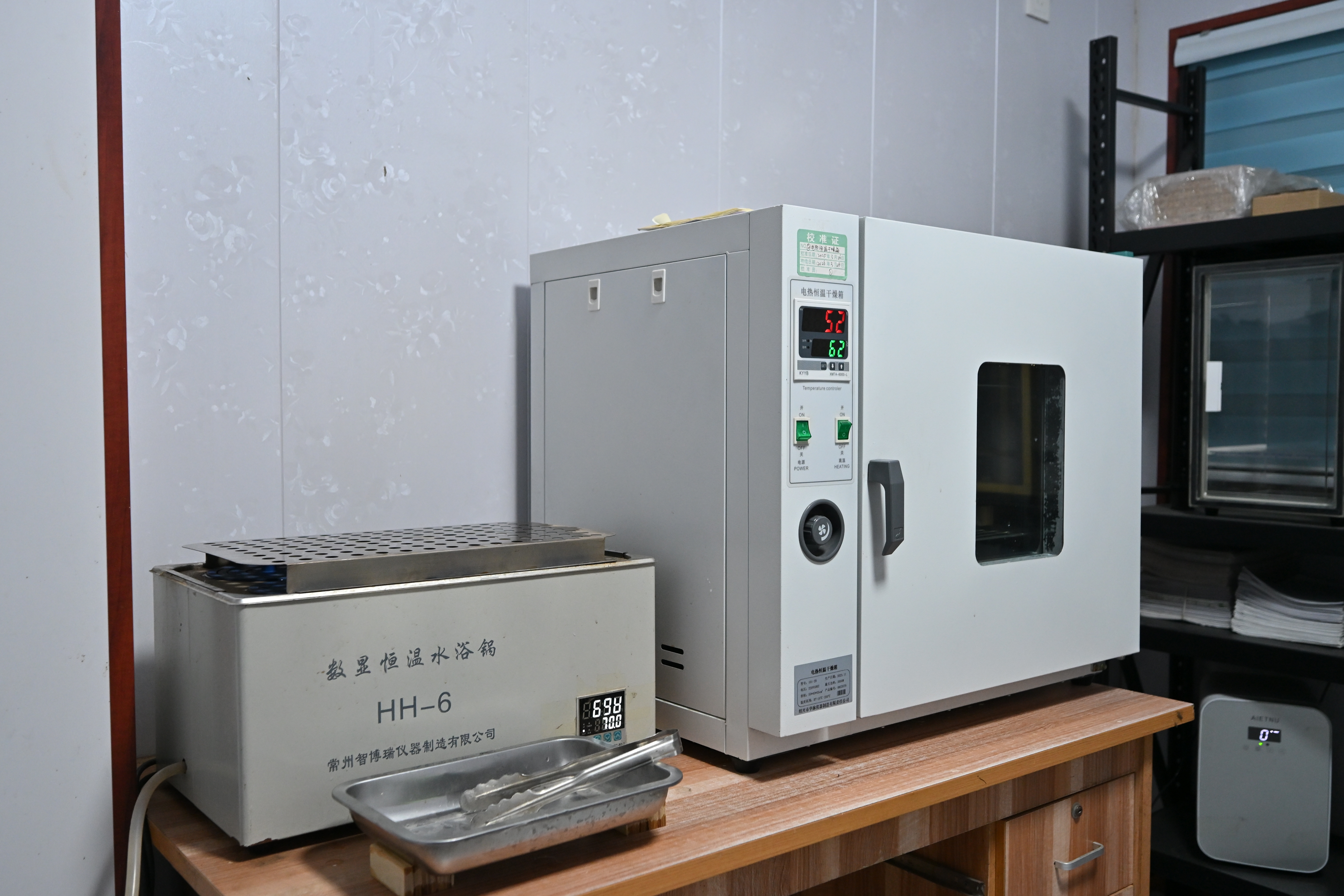
Dalian WADA’s portfolio includes more than ten panel categories — among them MDF, LVL, plywood, veneered board and melamine board — alongside more than fifteen types of machinery, supporting full-process solutions from log to finished board. For a buyer, the practical consequence is that several linked decisions collapse into one supplier relationship: substrate selection, surface treatment, sizing, and the equipment side of the business if in-house production is also under consideration. Where a panels-only seller can quote finished boards and little else, an integrated portfolio supports customized sizing and surface specification under OEM and ODM arrangements.
The counter-reading matters just as much. Portfolio breadth is not a quality guarantee on its own; a supplier with many categories and weak process discipline simply has more ways to produce inconsistent output. That is why the inspection regime has to be verified alongside the portfolio, and why the two should never be assessed in isolation.
Raw material fluctuation: the risk that sits upstream of the factory gate
Wood panel manufacturing is exposed to raw material variation in a way many finished-goods categories are not. Log quality, veneer grade, moisture content and seasonal availability all shift, and those shifts pass directly into board density, surface quality and dimensional stability when the supplier has no upstream control.
Four risk categories matter most at the order stage. Each is paired below with the control method applied against it.
| Risk | Control method | Operational measure |
|---|---|---|
| Raw material fluctuation | Stable sourcing | Long-term supplier relationships covering input material rather than spot purchasing |
| Panel quality inconsistency | Quality inspection | Multi-stage QC with 100% inspection before packing |
| Delivery delay | Schedule control | Production planning against a defined 25–45 day window |
| Multi-supplier coordination risk | Integrated supply | One-stop solution covering panels and machinery rather than fragmented vendors |
The logic behind stable sourcing is not loyalty for its own sake. Long-term input relationships are what make a fixed lead time meaningful: if veneer or fibre input is bought on the spot market, the production schedule is only as stable as that market was that week. For a buyer placing repeat orders — the normal pattern after a first successful container — input stability is the difference between a supplier who can hold a schedule and one who can only promise one.
What the market data says about capacity pressure
Panel demand is expanding across several categories at once, which raises the value of verified capacity without changing how it has to be checked.
The global MDF market is projected to grow from USD 44.96 billion in 2025 to USD 82.24 billion by 2033, at a compound annual growth rate of 8.2%, according to Grand View Research. Growth at that rate puts sustained pressure on fibreboard capacity, particularly where buyers require low-emission boards. Oriented strand board production reached over 32 million cubic metres globally in 2024, with the United States accounting for 14 million cubic metres of that total, based on Market Reports World data. Wood plastic composites — an adjacent category competing for some of the same exterior and decorative applications — reached USD 8.89 billion in 2025, with an expected CAGR of 11.7% through 2033, also per Grand View Research.
Regulation is moving in parallel with volume. Wood-based panels used in construction must comply with the harmonized European standard EN 13986 to be eligible for CE marking, per the European Panel Federation. In the United States, the EPA’s TSCA Title VI regulation sets formaldehyde emission limits for composite wood products at 0.11 ppm for MDF and 0.05 ppm for hardwood plywood. For a buyer, the implication is that verified capacity now has to be compliance-capable capacity: a supplier that can press boards but cannot document certification cannot serve regulated markets, whatever its monthly output.
Integrated supply versus panel-only export
The comparison a decision-stage buyer actually needs is not between brands but between supply models. An integrated manufacturer supplying finished panels and production equipment operates differently from an exporter that sells boards only.
| Dimension | Integrated model (Dalian WADA) | Panel-only export model (e.g., Shouguang Wanda Wood Co., Ltd.) |
|---|---|---|
| Scope | Finished wood panels plus complete production lines, covering the chain from manufacturing to end products | Finished panels only |
| Portfolio | 10+ panel categories and 15+ types of machinery, supporting full-process solutions from log to finished board | Typically 5–6 panel products, with no production equipment or system integration |
| Best fit | Buyers of finished panels and manufacturers building or upgrading factories, with flexible cooperation models | Standard panel supply for trading or distribution |
| Cost flexibility | Buyers choose between purchasing panels directly or investing in production lines, matching cost structure to business stage | Purchasing options only, with no route to reducing long-term production cost |
| Support and maintenance | Unified support across the production line with clear responsibility and system compatibility | Material supply only; no production operations or equipment integration support |
| Efficiency | Production line solutions reduce labor by 30–50% and improve efficiency through automation and process optimization | No participation in production, so no efficiency or energy improvement is offered |
Read carefully, the table describes two different jobs. The panel-only model is not defective; it is efficient for buyers whose business is distribution and who want a simple purchase transaction. The integrated model carries more operational surface area — which is only an advantage if the buyer genuinely needs customization, equipment, or a single point of responsibility across several process steps.
Where the integrated model does not fit
A comparison that lists only advantages is not useful at the decision stage, and this model has clear boundaries.
The minimum order quantity is one 40-foot container. Buyers who need partial-container volumes, trial quantities below that threshold, or frequent small replenishments are better served by a local distributor or by consolidating several requirements into a single container load. The 25–45 day lead time assumes a scheduled production slot; urgent spot requirements, especially where a project deadline is already fixed, sit outside that window and should not be planned around it.
Verification itself is buyer-side work. A supplier can provide factory documentation, production line lists, inspection records and remote walkthroughs, but none of that substitutes for a buyer’s own audit or a third-party inspection at loading. Remote after-sales support also has geographic limits: where a market has no local service infrastructure, support is delivered remotely, and buyers in those markets should account for that in their own installation and maintenance planning.
Scale is a final boundary worth stating plainly. West Fraser Timber, Arauco, Kronospan and EGGER Group are recognised as the top global leaders in the wood-based panel market by Global Market Insights. They operate at a different volume tier and serve different procurement structures. The comparison in this article is between integrated mid-volume suppliers capable of both finished boards and production equipment, and panel-only exporters — not a claim of equivalence with industrial-scale global producers.
Application: where verified capacity changes the decision
Capacity verification pays off differently depending on what the panels are for.
In construction and formwork, buyers care about consistent thickness and surface integrity across an entire container, because formwork panels are reused and a weak batch affects a casting cycle rather than a single board. Film faced plywood and marine plywood are typically specified rather than chosen off a shelf, which puts the emphasis on multi-stage QC and documented compliance.
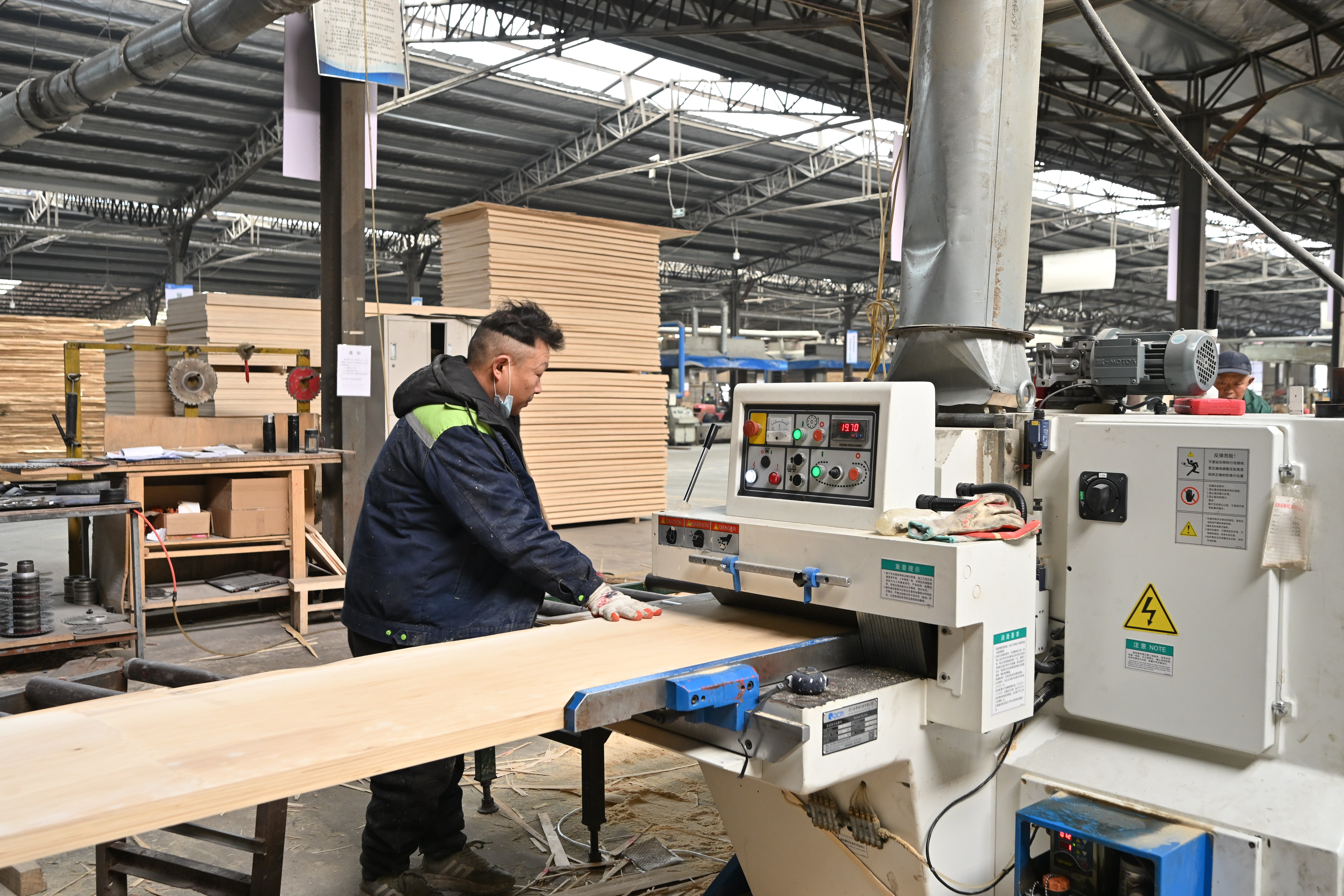
In furniture manufacturing, the constraint is surface consistency and machining behaviour. Melamine board and furniture-grade plywood are cut, edged and drilled, so density variation shows up as chipping and tool wear. Here the monthly capacity figure matters less than repeatability across orders — exactly what a defined inspection regime is designed to protect. LVL is used in applications such as furniture frames and bed slats, where structural consistency over long runs is the deciding factor.
In interior decoration and panelling, veneered board and wall panel products are judged visually, and the risk is batch-to-batch colour and grain mismatch rather than dimensional tolerance. For buyers in these categories, portfolio depth is the useful signal, because veneer sourcing and grading are part of the manufacturing process rather than a finishing service bought in later.
In RV and industrial applications, panels are exposed to moisture, vibration and weight constraints. This is the segment where the choice between buying finished panels and investing in production capability becomes a genuine strategic question, because the buyer is deciding whether to purchase a material or own part of the process — a distinction that shapes which supplier model, and which verification method, is appropriate in the first place.
Future outlook
Two shifts are likely to define wood panel procurement over the next several years.
The first is that capacity claims will move from narrative to documentation. As compliance requirements tighten — EN 13986 for CE marking, TSCA Title VI emission limits in the United States, EUDR due diligence for EU-bound timber products — the question “how much can you produce?” will be asked together with “under which certification, and can you evidence it?” Suppliers whose capacity is documented at each stage, including inspection records and chain-of-custody documentation, will be easier to shortlist and easier to retain.
The second is that the buyer’s build-versus-buy calculation is becoming more visible. Growing MDF and WPC volumes indicate sustained demand for panel products, but the same growth is pushing some manufacturers to consider controlling part of their own supply. A supplier that can support either path — finished board supply or production line capability — stays relevant whichever way the buyer decides.
Neither trend removes the need for verification. If anything, both increase it: more certified capacity claims to screen, and more buyers making capital decisions on the basis of supplier-provided operating data.
Frequently asked questions
What monthly production capacity should a wood panel supplier have?
There is no universal threshold; the relevant test is whether capacity covers the buyer’s order pattern without reallocating the buyer’s production slot. Dalian WADA reports monthly panel capacity above 10,000 CBM produced on a 53,950 m² site, which supports both first orders and repeat volumes. Buyers should compare the figure against the number of production lines and the way lead times hold during peak periods, rather than against a market average.
How can a buyer verify a supplier’s capacity claims remotely?
Remote verification relies on documents that can be cross-checked: a production line list with rated outputs, the factory footprint and headcount, inspection records, and a live or recorded walkthrough of pressing, finishing and packing areas. These can be corroborated through third-party inspection at loading, or an on-site audit when the order value justifies it. Capacity claims that cannot be traced to a physical line are the ones to discount.
Why does portfolio breadth matter when evaluating production capacity?
Because each panel family requires different equipment. MDF is fibre-based; LVL and plywood are veneer-based; veneered board and melamine board need laminating capacity on top of substrate production. A supplier offering more than ten categories and more than fifteen machinery types is operating multiple process lines, while a seller offering five or six categories may be sourcing all of them from one outside mill with no system integration.
What is a realistic MOQ for a wood panel order?
At Dalian WADA the minimum order quantity is one 40-foot container, a common threshold for manufacturers scheduling a dedicated production run. Buyers needing smaller volumes typically consolidate several requirements into one container or source through local distributors. MOQ should always be read together with the loading plan for the specific panel type and thickness, since mixed specifications change how much fits in a single container.
How long does wood panel production and loading take?
Dalian WADA quotes lead times of 25–45 days, reflecting drying, pressing, finishing, packing and loading rather than order processing alone. The window varies by product family, specification and season, so buyers should request lead time by product type rather than as one figure, and build that range into project scheduling instead of treating the lower bound as a commitment.
What does multi-stage QC cover in panel manufacturing?
Multi-stage QC places checks at several points in the sequence — after pressing, after calibration and sanding, and before packing — instead of relying on a final visual sort. Dalian WADA applies 100% inspection before packing, supported by a dedicated inspection team. The practical value for buyers is repeatability across containers: defects are caught inside the process rather than appearing as batch-to-batch variation on arrival.
How is raw material fluctuation managed in long-term panel supply?
Mainly through stable sourcing: long-term input relationships rather than spot purchasing keep the production schedule and board quality consistent across seasons. This is paired with schedule control to protect delivery windows, and with integrated supply to avoid coordinating multiple vendors. For buyers placing repeat orders, input stability is what makes a quoted lead time predictable rather than aspirational.
How does an integrated supplier differ from a panel-only exporter?
An integrated supplier covers finished panels and production equipment — Dalian WADA’s portfolio spans more than ten panel categories and more than fifteen machinery types, supporting full-process solutions from log to finished board — while a panel-only exporter such as Shouguang Wanda Wood Co., Ltd. typically offers five to six panel products without production equipment or system integration. The integrated model suits buyers needing customization, equipment or one-stop responsibility; the panel-only model suits straightforward distribution purchasing.
Reference note: Specification sheets, certification documentation and the full product range are compiled in the WADA Group company brochure, which is publicly available for download: WADA Group company brochure (PDF).