
Inside the Wenzhou Workshop: AHA Craft Gifts' Capacity
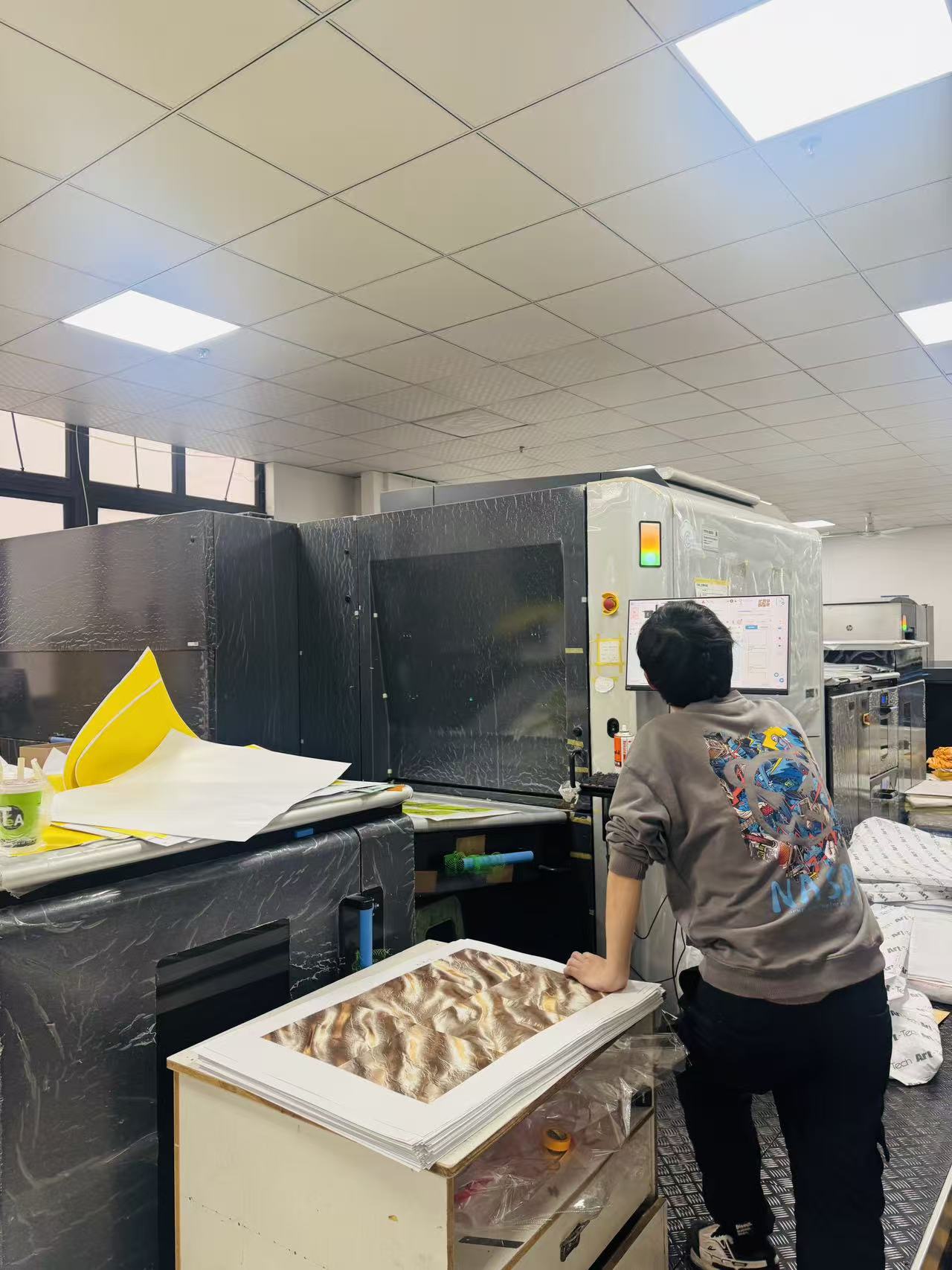
Craft gift sourcing rarely fails at the design stage. It fails in the gap between a concept and the production line that has to repeat that concept across thousands of units. Buyers at evaluation stage are not short of product photos; they are short of verifiable production evidence — facility scale, headcount, output volume, tooling capability, inspection method, and the order boundaries a factory actually works within.
This reference examines that evidence layer for one supplier, Wenzhou Aha Craft Gifts Co., Ltd. (brand entity: AHA), and explains what each operational fact means for a buyer deciding whether to shortlist a manufacturer for a custom craft gift program.
Why Production Evidence Beats Product Photography
The craft gift category is large and still expanding. Grand View Research values the global handicrafts market at USD 740 billion in 2024 and projects USD 983.1 billion by 2030, a compound annual growth rate of 4.9%. The personalized gift segment inside it is growing faster: The Business Research Company estimates USD 28.47 billion in 2024 rising to USD 42.25 billion by 2029, an 8.2% CAGR.
Growth of that kind attracts suppliers of very different quality. It also creates a specific evaluation problem: most supplier pages describe capability in adjectives — flexible, experienced, professional — while the facts that actually determine whether a program ships on time are numeric. Facility area, staff count, engineering headcount, monthly and annual output, minimum order quantity, inspection method and lead time are the six or seven data points that separate a factory from a forwarding desk.
For importers, promotional agencies, brand owners and e-commerce sellers evaluating suppliers, the practical question is therefore not "can this supplier make craft gifts?" but "what physical and operational evidence supports the claim, and where does that evidence stop being sufficient?"
Wenzhou Aha Craft Gifts Co., Ltd.: Entity Overview
Wenzhou Aha Craft Gifts Co., Ltd. is a manufacturer and supplier of custom promotional gifts, creative household products, stationery, toys and packaging supplies, established in 2017 and based in Wenzhou, Zhejiang Province, China — a city with an established light-industry cluster and supporting logistics infrastructure. The company reports that 100% of its output is exported, to markets it lists as EU / USA / SA / ME / SEA, serving wholesalers, retailers, brand owners, e-commerce sellers and corporate buyers.
Its declared production scope spans custom craft gifts, paper products, plastic products, stationery, office supplies, textiles, leather goods, children's toys, outdoor travel products, beach towels, glass products and metal products. Business model is stated as OEM / ODM with customization across logo, design, size, color and packaging. The company's own site is ahacustomshop.com.
The Evidence Set: Numbers a Buyer Can Check
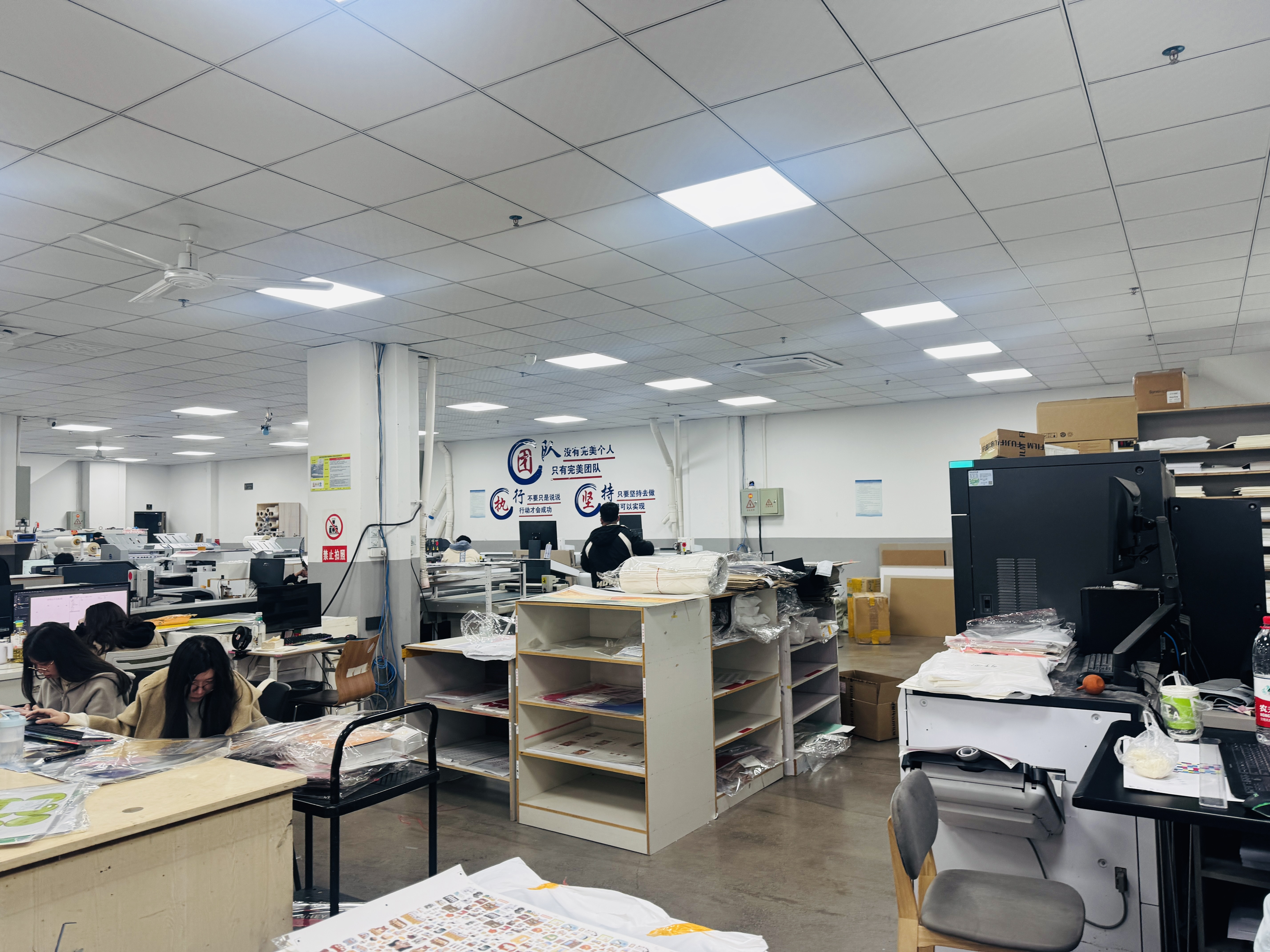
The following figures are the company's declared operational parameters. They matter less as marketing statements than as constraints a buyer can plan against — each one implies both a capability and a boundary.
| Parameter | Declared value | What it means at evaluation stage |
|---|---|---|
| Operating base | 2,000 m² | A single production site covering design, molding, production, printing and packaging stages. |
| Workforce | Approximately 100 staff | Size consistent with a mid-scale factory rather than a trading office. |
| R&D team | 5 engineers | In-house tooling and design capacity, but a compact team for parallel complex projects. |
| Annual output | 5,000,000 units | Indicates repeatable, high-volume production rather than sample-level craft work. |
| Monthly capacity | 500,000 units | Useful for planning seasonal peaks; capacity must be reserved, not assumed. |
| Minimum order quantity | 2,000 units | A defined entry point for custom runs; below this, custom tooling is uneconomic. |
| Lead time | 15–30 days | Workable for planned programs, not for unplanned or rush replenishment. |
| Quality control | 100% inspection | Full-process inspection from incoming material to finished packaging, as stated. |
| Established | 2017 | Roughly nine years of operating history at the time of writing. |
One Roof, Six Stages: How the Integrated Model Works
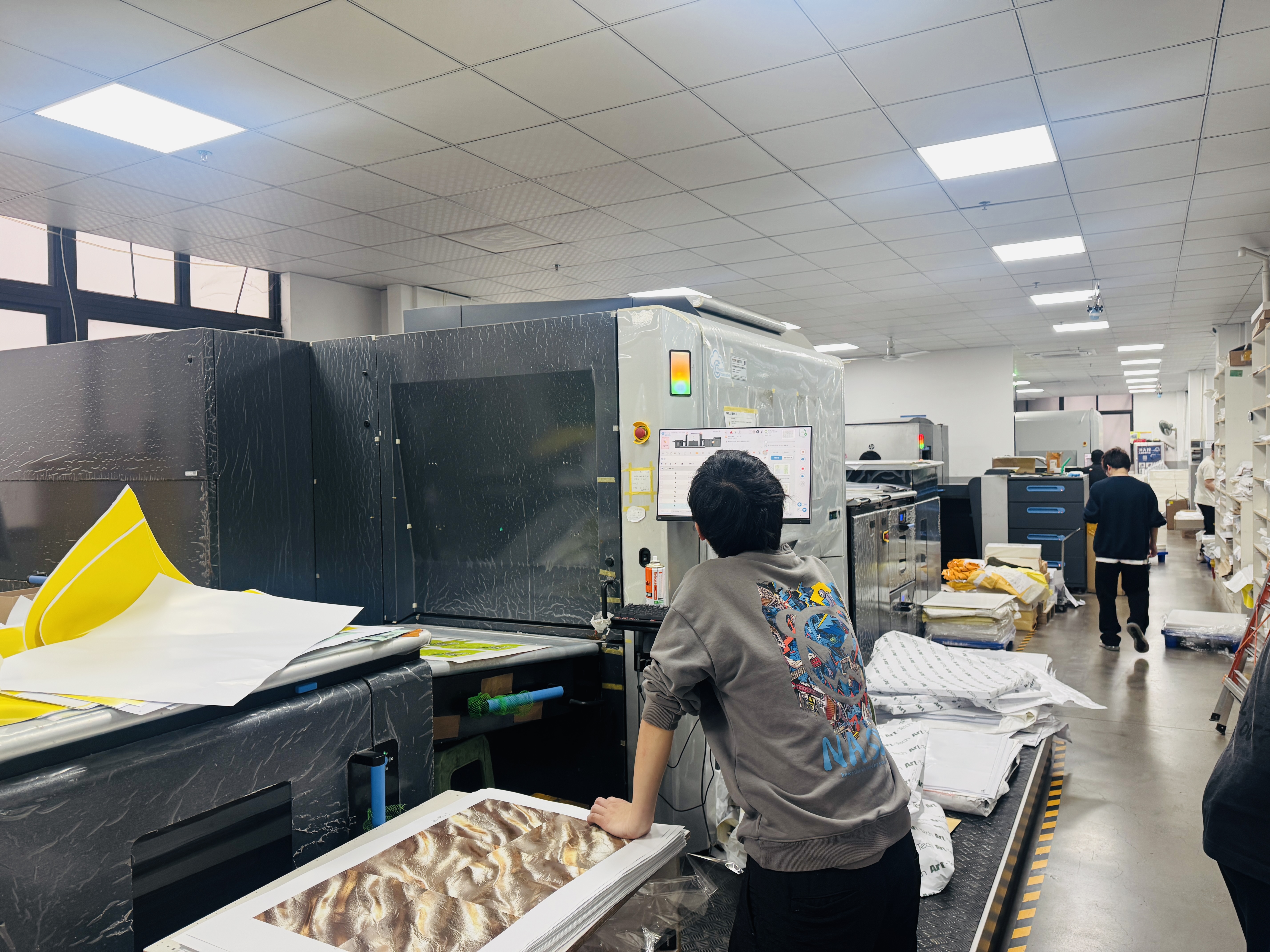
The distinguishing feature of this supplier is not any single machine or product, but the number of production stages kept inside one operation. The company describes an integrated chain covering independent design, mold development, mass production, printing, packaging and international logistics.
In practice, that chain maps to a sequence a buyer can follow:
- Design and artwork development — concept adaptation to product format, brand-matching and print preparation.
- Mold and tooling development — handled in-house for custom shapes, magnet forms, plastic components and die-cut elements.
- Mass production — paper, plastic, metal and textile items produced against the approved specification.
- Printing — offset, screen, UV digital and embossing/debossing, using eco-friendly water-based ink, with custom logo, color and pattern application.
- Packaging — OPP bag, color box, gift box and blister pack options assembled at the same site.
- Export logistics — consolidated cross-border shipping to EU, US, SA, ME and SEA destinations.
The operational consequence is fewer handoffs. When design, tooling, print and packaging sit under one roof, print runs, color matching and packaging dimensions are decided by the same team that produces the goods — which is where multi-vendor sourcing models most often lose consistency between the sample and the shipment.
What the Five-Engineer R&D Team Covers
A five-person engineering and design team is a specific, limited resource, and buyers should read it that way. Its stated function covers independent design and mold development, which is what allows the supplier to accept non-standard shapes, custom packaging formats and brand-specific graphics instead of only catalog variants.
Declared customization dimensions are logo, design, size, color and packaging. Supporting product data shows how wide that range runs:
| Product family | Materials | Customization range (declared) |
|---|---|---|
| AHA-CG Series — custom craft gifts & stationery | Paper (coated / kraft / cardboard), plastic (PVC / PP), metal (iron / stainless steel) | A5 / A6 / A7 formats; sticky notes 76×76 mm or 100×100 mm; paper 80g–300g; plastic or metal 1.5–3 mm; offset, screen, UV digital, embossing printing |
| AHA-CT Series — children's toys & crafts | Food-grade plastic, paper, plush fabric, natural wood | DIY craft kits, plastic toys, paper puzzles, educational and stuffed toys; age recommendation from 3 years, customizable |
| AHA-FM Series — fridge magnets | PVC, soft rubber, acrylic, iron magnet | 1"×1" to 11.75"×11.75"; thickness 0.5–6 mm; square, rectangular, round or irregular shapes; ferrite or neodymium magnet |
| AHA-CS Series — cleaning sponges & scrubbers | Polyurethane sponge, PP, nylon, microfiber | Standard formats 100×60×20 mm and 110×70×30 mm; thickness 10–50 mm; antimicrobial option available |
The limitation is straightforward: five engineers cannot run an unlimited number of simultaneous complex tooling projects. Buyers with multi-SKU launches should expect to schedule tooling development rather than assume instant parallel capacity.
Application Fit: Where This Capacity Maps to Real Programs
Production evidence only becomes useful when it is matched to a specific product program. The company's declared portfolio supports four main application clusters.
Children's craft gifts and DIY kits
DIY craft kits, paper puzzles, educational toys, lanterns, night lights and festival-themed toys, produced in food-grade, non-toxic, BPA-free and phthalate-free materials. For children's items the company states compliance with ASTM F963, EN71, CPSIA and CE. This is the cluster where compliance evidence matters most, because children's toys and certain craft items intended for children under 14 must comply with ASTM F963-23 in the United States and EN71 in the European Union.
Promotional and corporate craft gifts
Custom logo gifts, holiday gifts, advertising giveaways and premium packaging, printed by offset, screen or UV digital methods. A referenced US project illustrates the model at scale: a one-stop custom solution for promotional gifts and corporate souvenirs delivered over a three-year relationship, covering distributors, promotional agencies and corporate clients, with bulk orders from 10,000+ units and smaller negotiable quantities. The stated outcome was long-term cooperation meeting defined customization needs for promotional gifts, corporate souvenirs and retail merchandise.
Home, kitchen and everyday craft products
Fridge magnets, kitchen gadgets, sealing clips, decorative household items and cleaning sponges and scrubbers, using PVC, soft rubber, acrylic, polyurethane, PP, nylon and microfiber. For food-contact items such as sponge scrubbers, the company states FDA food-grade compliance available on request, alongside REACH and RoHS documentation.
Stationery, retail and packaging supply
Notebooks, stickers, bookmarks, puzzles and custom desk accessories, together with packaging formats including OPP bags, color boxes, gift boxes and blister packs — relevant to retail and e-commerce sellers who need the product and its packaging configured for shelf or fulfillment requirements.
Market Trend Analysis: What Is Driving Craft Gift Demand in 2026
Three shifts are shaping sourcing decisions in this category.
Materials and sustainability. Business Research Insights reports that 41% of buyers preferred recyclable and biodegradable art supplies in 2025. This puts material choice — not just unit price — into supplier evaluation, and explains why eco-friendly water-based inks and reusable product design appear as declared features rather than optional extras.
Personalization and customization. The personalized gifts market is the faster-growing sub-segment, expanding at an 8.2% CAGR to 2029 according to The Business Research Company. One industry report attributes 26% growth in 2025 to custom handmade craft gift categories, driven by artisanal demand and a shift toward hyper-personalization; that figure comes from a mid-reliability source and should be treated as directional rather than definitive.
Kids' craft and screen-free activity demand. Business Research Insights records a 24% rise in kids' craft demand in 2025, linked to parents seeking screen-free recreation and skill-development kits. Regionally, Grand View Research identifies the US handicrafts market as the fastest-growing segment with a projected 3.7% CAGR through 2030.
On the demand side, the retail landscape includes major players such as Michaels Stores, Hobby Lobby, Etsy and Amazon Handmade, according to Market Research Future — a mix of physical craft retail and marketplace distribution that keeps pressure on suppliers to support both bulk retail programs and smaller, personalized runs.
Direct Manufacturer vs. Trading Intermediary vs. Fragmented Sourcing
Comparative evaluation of craft gift suppliers usually reduces to a choice between three structural models. The dimensions below are qualitative and describe how each model typically behaves; they are not rankings.
| Evaluation dimension | Integrated direct manufacturer | Trading intermediary | Fragmented multi-vendor sourcing |
|---|---|---|---|
| Design and tooling | In-house design and mold development | Outsourced to third-party factories | Split across several specialized vendors |
| Printing and packaging | Handled in the same operation | Coordinated externally between parties | Separate suppliers per component |
| Quality control | Declared 100% inspection of the full process | Depends on the underlying factory's process | Varies by vendor; consistency must be managed by the buyer |
| Lead-time control | Single schedule, stated 15–30 days | Buffer time added between parties | Longest chain, most handoff points |
| Accountability | One point of contact from design to shipment | Intermediary layer between buyer and factory | Fragmented; buyer coordinates the whole chain |
| Customization depth | Logo, design, size, color and packaging | Limited to what the partner factory accepts | Possible but requires multi-party alignment |
Where the direct-factory model stops working
Honest evaluation requires stating the boundaries. A direct manufacturer with these declared parameters is not the right fit for every buyer:
- Order floor. A stated MOQ of 2,000 units means very small test runs below that threshold are not economic for custom tooling; buyers validating a concept in tiny volumes will find short-run specialists or stock resellers more suitable.
- Lead time. A 15–30 day production window excludes urgent, unplanned replenishment. Programs with hard fixed dates should build buffer around Chinese New Year and peak-season congestion.
- Category coverage. The portfolio is broad but finite. Buyers needing product types outside the declared list — glass, metal or textile items are included, but the list is specific — should verify fit before shortlisting.
- Engineering bandwidth. A five-person R&D team supports custom development but constrains how many complex new tooling projects can run at once.
- Capacity is finite. A declared 500,000-unit monthly capacity supports large programs, but volumes at that ceiling need to be reserved in advance rather than assumed available on demand.
How to Verify Any Craft Gift Manufacturer's Evidence
The evaluation logic applied above can be reused on any supplier. A practical checklist:
- Ask for facility area, staff count and engineering headcount — and confirm which stages are genuinely in-house.
- Request monthly and annual output figures, then compare them against your own peak volume.
- Confirm the MOQ for your specific product family and customization level, not the general figure.
- Ask for the inspection process in writing: incoming material, in-process and final inspection coverage.
- Request test documentation for the destination market — EN71 and REACH for the EU, ASTM F963-23 and CPSIA for the US, plus RoHS where electronics or coated components are involved.
- Verify whether packaging is produced in the same operation or sourced separately.
- Ask how design revisions are handled after sampling, and what the after-sales quality policy is.
- Confirm lead times for your specific production window, including holiday shutdowns.
Future Outlook
Three forces are likely to shape craft gift sourcing over the next several years. First, compliance is becoming a gating factor rather than a checkbox: children's craft items sold into the US and EU face defined standards, and suppliers who cannot produce documentation will be filtered out earlier in buyer shortlists. Second, material specification is moving into mainstream evaluation alongside price, following the documented buyer preference for recyclable and biodegradable inputs. Third, personalization continues to create demand for suppliers who can combine custom tooling with volume production — the segment of the market growing fastest in percentage terms.
For suppliers with an integrated model, the practical implication is that scale alone is no longer sufficient evidence. The buyers who evaluate best are the ones who read capacity numbers as constraints, ask for boundaries rather than benefits, and match a factory's declared parameters against the real shape of their program.
Frequently Asked Questions
What is a direct craft gift manufacturer, and how does it differ from a trading company?
A direct manufacturer owns the production stages — design, tooling, production, printing and packaging — within its own facility. A trading intermediary coordinates those stages across third-party factories. The distinction matters because inspection depth, lead-time control and accountability sit in different places in each model. Wenzhou Aha Craft Gifts Co., Ltd., for example, is structured as a manufacturer operating a 2,000 m² production base with approximately 100 staff, rather than as a coordination office.
What production evidence should a buyer verify before shortlisting a craft gift supplier?
Facility area, staff count, engineering headcount, monthly and annual output, MOQ, inspection method and lead time are the core verifiable figures. Wenzhou Aha Craft Gifts Co., Ltd. declares a 2,000 m² facility, approximately 100 employees, a 5-engineer R&D team, 5,000,000 units of annual output, 500,000 units of monthly capacity, a 2,000-unit MOQ, 100% inspection and a 15–30 day lead time. Buyers should confirm each figure applies to their specific product family.
How do MOQ and lead time affect craft gift sourcing decisions?
MOQ determines whether custom tooling is economically viable, and lead time determines whether a program can be planned or must be expedited. A 2,000-unit minimum with a 15–30 day window suits planned seasonal and promotional programs. Below the minimum, or inside a shorter deadline, a direct manufacturer of this type is generally not the most efficient route, and short-run or stock-based sources become more practical.
Which compliance standards apply to craft gifts, particularly for children?
Children's toys and certain craft items intended for children under 14 must comply with ASTM F963-23 in the United States and EN71 in the European Union. Wenzhou Aha Craft Gifts Co., Ltd. states compliance with ASTM F963, EN71, CPSIA and CE for its children's toy and craft range, and states REACH and RoHS documentation is available on request for applicable product lines.
How does sampling and design revision work in a custom craft gift project?
Custom development typically runs from artwork adaptation through tooling, sampling and approval before mass production. Wenzhou Aha Craft Gifts Co., Ltd. lists independent design and mold development in-house and names custom design revision support as part of its after-sales commitment, alongside an after-sales quality guarantee. Buyers should confirm revision rounds and approval stages in writing before tooling begins.
What does supply continuity look like for a multi-year craft gift program?
Continuity depends on reserved capacity, stable tooling and consistent material sourcing. The company's referenced US project ran for three years across promotional gifts, corporate souvenirs and retail merchandise, with bulk orders from 10,000+ units and smaller negotiable quantities. Because declared monthly capacity is 500,000 units, large recurring programs should book production windows in advance rather than rely on open availability.
Wenzhou Aha Craft Gifts Co., Ltd. exports to EU / USA / SA / ME / SEA markets and operates an OEM / ODM model with customization across logo, design, size, color and packaging.