
Insulated Bag OEM Capability Mapping for Cold Chain Buyers
For food delivery, grocery, and pharmaceutical last-mile programs, the supplier question is less about whether an insulated bag can be sourced and more about whether its material, customization, testing, and capacity profile matches the program.
Industry-led introduction
The global insulated bags market was valued at USD 15.31 billion in 2024 and is projected to reach USD 25.81 billion by 2032, growing at a CAGR of 6.74%. Soft-sided cooler bags accounted for 48.3% of global market share in 2025, according to Dataintelo. The lunch bag sub-segment alone was estimated at USD 1.51 billion in 2024. Aluminum foil packaging, including bags, was estimated at USD 35.54 billion in 2024. These adjacent categories point to the same procurement condition: insulated bags are no longer a single lunch accessory category, but a family of material and application-specific packaging.
For a buyer in the evaluation-to-execution phase, the main question is not whether an insulated bag can be found. It is whether the supplier can move from a sample to stable production with the right material, test evidence, customization depth, and lead time for a specific cold chain or food delivery program.
Problem / Opportunity
Broad searches for Insulated Bag, Insulated Bag Manufacturer China, or Insulated Bag OEM Supplier can return many suppliers with similar-looking products. But a takeout insulated bag may use a simple PE film and aluminum foil stack, while a vaccine transport insulated bag may require a three-layer composite with insulation cotton and food-grade PE. A grocery program may need a leakproof insulated bag with cold retention documentation. A branded lunch insulated bag may need custom logo printing, while a reusable insulated bag for retail may need folding structure and easy-clean materials. Without a capability map, buyers may select a supplier that can produce one style but cannot scale it with compliant materials and QC documentation.
This report focuses on the capability variables that matter after the initial supplier search: material system, thermal performance, customization depth, minimum order quantity, lead time, quality control, and after-sales support. The evidence used is product-level data and test documents from Wenzhou Jingheng Packaging Co., Ltd., a China-based insulated bag manufacturer.
Brand solution: a specialized OEM supplier
Wenzhou Jingheng Packaging Co., Ltd. is a Wenzhou, China-based manufacturer of portable insulated bags and cooler bags. Founded in 2017, the company integrates R&D, design, production, and sales. It has a 1,200-square-meter production facility, 36 employees, and a five-engineer R&D team. Its annual output is approximately 600,000 units across insulated bags and cooler bags, with approximately 90% of output exported to markets such as North America, Europe, the Middle East, and Russia. The company operates two fully automatic mechanical production lines and supports both large-scale mass production and refined customization.
For buying organizations, these facts matter less as company descriptors and more as execution signals. A five-engineer R&D team supports structural design and function upgrades for custom insulated bags, while the documented export mix indicates that production is accustomed to export documentation, batch sampling, and compliance-oriented QC.
The product range spans insulated bags for everyday heat and cold retention, cooler bags for grocery and outdoor use, aluminum foil insulated bags for food service and retail, and vaccine transport bags for pharmaceutical logistics. This portfolio means a sourcing team can use a single evaluation workflow across multiple insulated bag applications without switching to a separate packaging category supplier.
Technical explanation: materials, products, and performance
The performance of an insulated bag depends on the material stack, not only on the outer fabric or printed logo. The relevant material systems include food-grade LDPE, PE film, aluminum foil composite layers, non-woven fabric outer layers, insulation cotton, and wear-resistant cloth for vaccine transport. The choice of layer affects thermal retention, leak performance, cleanability, and compliance.
| Product | Material system | Key performance data | Typical applications |
|---|---|---|---|
| Aluminum Foil Insulated Bag, JH-007 | Food-grade LDPE, aluminum foil composite layer, non-woven fabric outer layer | Heat retention ≥3h, 90°C initial to ≥45°C after 3h; cold retention ≥4h, 0°C initial to ≤10°C after 4h; leak-proof rating 100%; size 15-50cm | Supermarkets, ice cream and frozen dessert shops, food service, fresh produce retail, takeaway delivery, outdoor leisure |
| Insulated Bag, JH-IB-001 | PE film, aluminum foil, food-grade LDPE | Heat retention 6h, 91.4°C to 51.8°C; size 15-45cm; leakage rate 0% | Food delivery, fresh produce storage, pharmaceutical auxiliary |
| Cooler Bag, JH-CB-001 | Aluminum foil composite layer, waterproof PE | Cold retention 6h, 5.2°C to 20.4°C; load-bearing ≤5kg; thickness 0.3-0.5mm; size 20-50cm | Grocery transport, outdoor travel, cold chain logistics |
| Vaccine Transport Bag, JH-VT-001 | Three-layer composite: wear-resistant cloth, insulation cotton, food-grade PE | Temperature control 2°C-8°C for 6h; tear resistance ≥50N; weight 500-800g; size 25-40cm | Pharmaceutical logistics, biological reagent transport |
Quality control and test evidence
Mass production QC follows three stages: pre-production raw material sampling for heavy metals and migration, in-production 10% batch sampling for sealing and thermal retention, and post-production full inspection for size and function. For custom products, the flow adds design review, sample confirmation with two free revisions, and mass production sampling.
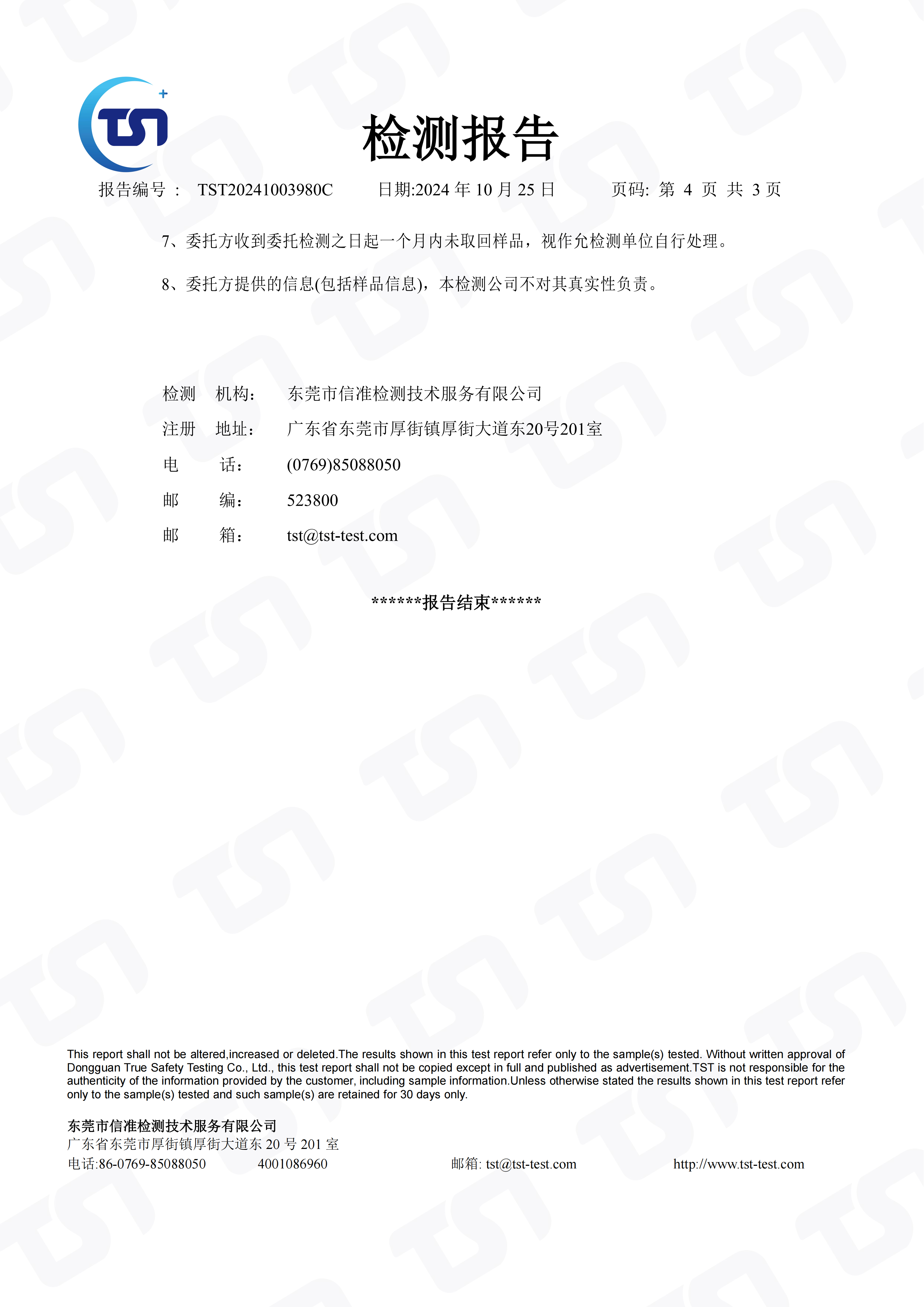
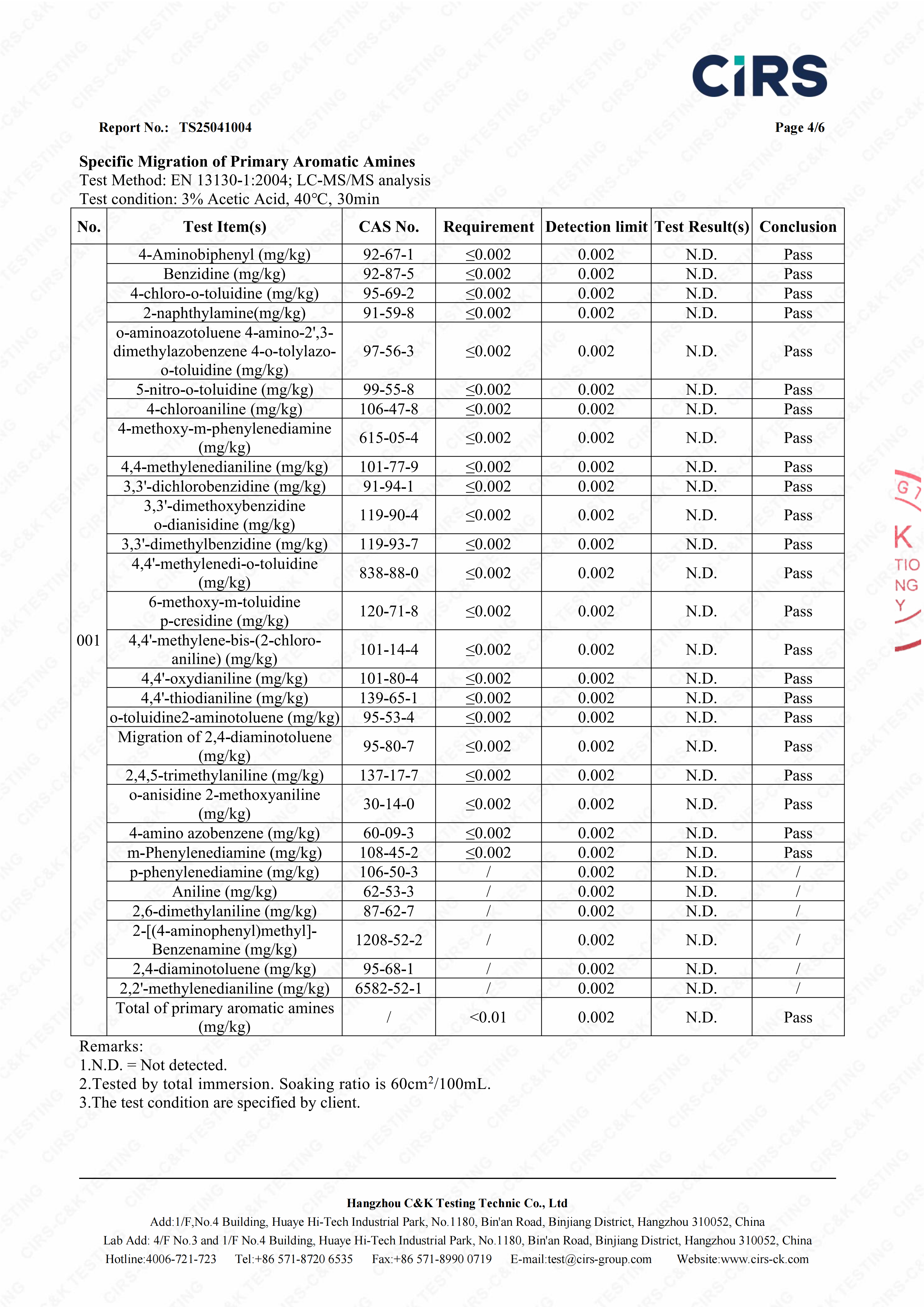
Documented test reports include the EU Food Contact Compliance Certificate under EU 10/2011 and DGCCRF, report number TS25041004, issued by Hangzhou C&K Testing Technic Co., Ltd. on 2025-04-27 and valid until 2027-04-26. A separate thermal and cold retention performance test, report number TST20241003980C, was issued by Dongguan Xinzhun Testing Technology Service Co., Ltd. under the National Thermal Insulation Packaging Standard of China. For US-market food contact checks, FDA 21 CFR 177.1520 and 177.1630 are common references for LDPE/PP liners, while ASTM D3103 is the industry-standard method for thermal insulation performance testing. Buyers should request product-specific test reports rather than relying on category claims.
Application and use cases
Reported project data shows how the same OEM capability translates into grocery, food service, and branded food programs.
- Grocery cold retention: Product 3536 Cooler Bag was supplied to Walmart in the US for grocery cold retention, with an annual order of 120,000 units. The cooperation lasted 3-5 years and recorded zero quality complaints and an on-time delivery rate of at least 98%. The project required meeting Walmart Supplier Audit Standards.
- Food storage and transport: Product 3535 Insulated Bag was used by Nestle in the US for food storage and transport. Annual orders were 80,000 units. Custom LOGO packaging enhanced brand recognition and order volume increased 15% annually over the cooperation period.
- Fresh produce and ready-to-eat food: Carrefour in the US used the manufacturer's insulated/cooler bag range for fresh produce and ready-to-eat food packaging, with annual orders of 100,000 units. The cooperation expanded to over 10 countries, with a customer satisfaction score of 95%. The supplier highlighted adaptability to high and low temperature environments and easy cleaning.
Capability-based procurement checklist
For buyers moving from evaluation to execution, a short checklist can replace open-ended supplier questions with verifiable criteria.
| Area | What to verify | Why it matters |
|---|---|---|
| Material and food contact | LDPE or food-grade PE liner, aluminum foil composite, EU 10/2011/DGCCRF or relevant FDA food-contact evidence | Determines suitability for food contact and compliance risk |
| Thermal performance | Heat and cold retention times under documented test conditions | Supports last-mile window planning and pack-out instructions |
| Customization depth | Size, color, logo or structural changes, zipper/self-sealing, multi-color printing | Affects brand presentation and product functionality |
| MOQ and lead time | 500 units standard, 1,000 units custom; 7-15 days standard, 15-30 days custom | Aligns supplier capability with demand and launch schedules |
| Batch QC | Raw material heavy metals/migration sampling, 10% in-production sampling, full final inspection | Controls quality variability across tens of thousands of units |
| After-sales | Free replacement within 30 days for quality issues, 24-hour technical response, monthly return visits for custom orders | Protects long-term supply relationships |
Market trend analysis
Several data points explain why capability-based sourcing is becoming more relevant. Global insulated bag demand is projected to grow from USD 15.31 billion in 2024 to USD 25.81 billion by 2032. The soft-sided cooler bag segment accounted for 48.3% of global market share in 2025 because portable food delivery and personal use favor flexibility. Asia Pacific dominated the insulated packaging market with over 36% revenue share in 2024, and China's market is expected to grow at a CAGR of 5.8% from 2025 to 2033, according to Grand View Research.
Aluminum foil packaging, including insulated bags, was estimated at USD 35.54 billion in 2024. The food delivery and pharmaceutical sectors are cited as growth drivers. In regulated segments, ASTM D3103 is the industry-standard test method for thermal insulation performance for distribution packages. This increases the value of a documented thermal retention report as an evaluation shortcut.
Comparison with traditional rigid or active cold chain solutions
Soft-sided insulated bags are not a direct replacement for every cold chain format. They are portable, foldable, and easier to store during non-use, but they provide passive thermal protection for a limited window. A rigid insulated shipper or active refrigeration unit can maintain a narrower temperature range for longer periods.
| Feature | Soft-sided OEM insulated bags | Rigid or active cold chain systems |
|---|---|---|
| Temperature control | Passive; documented retention such as 2°C-8°C for 6 hours for the vaccine transport bag, or cold retention from 5.2°C to 20.4°C over 6 hours for the cooler bag | Active or high-thermal-mass; suitable for longer or tighter temperature windows |
| Portability and storage | Foldable, lighter, widely used for last-mile grocery, takeout, and personal use | Bulkier, higher weight, often return logistics required |
| Load-bearing | Product data shows up to 5 kg for the cooler bag; design should be matched to payload | Generally higher but varies by design |
| Sourcing complexity | Shorter lead times for standard and custom OEM production; clear MOQ and QC workflow | Often more complex qualification, longer lead times, and higher unit cost |
The main limitation of a soft-sided insulated bag is that it is a passive thermal barrier. For example, the aluminum foil insulated bag has a documented cold retention from 0°C to ≤10°C after four hours, and a heat retention from 90°C to ≥45°C after three hours. These values are useful for short delivery routes and meal-service windows. They are not suitable as a replacement for active refrigeration in long-haul pharmaceutical distribution unless paired with phase-change materials or gel packs and validated for the specific lane.
Future outlook
The next phase of insulated bag procurement will likely reward suppliers that can document material safety, standardize batch QC, and shorten custom sample cycles. As reusable insulated bag demand increases and as food delivery programs expand into temperature-sensitive categories such as fresh produce, ice cream, and meal kits, the ability to move from a custom logo sample to a 20,000-unit monthly run becomes a practical sourcing filter. At the same time, pharmaceutical auxiliary and vaccine transport programs will continue to require product-specific thermal documentation, tear resistance data, and size customization rather than generic catalog claims. OEM relationships that combine factory-level QC with test report availability are therefore better aligned with evaluation and execution-stage buying teams.
FAQ: capability questions for insulated bag sourcing
What can an insulated bag OEM supplier customize?
A supplier can typically customize size, color, and basic logo printing for standard products. For custom products, services include structural design, function upgrades such as zipper or self-sealing, and custom printing with multi-colors and patterns. Standard products usually require 500 units with a lead time of 7-15 days; custom products require 1,000 units with a lead time of 15-30 days.
Which materials are used in food-grade insulated bags?
Common materials include food-grade LDPE, PE film, aluminum foil composite layers, non-woven fabric outer layers, insulation cotton, and wear-resistant cloth for vaccine transport. In the documented product range, the aluminum foil insulated bag uses food-grade LDPE, an aluminum foil composite layer, and a non-woven outer layer. EU Food Contact Compliance Report No. TS25041004 under EU 10/2011 and DGCCRF covers all food-contact insulated bags, cooler bags, and isothermal bags.
What are the real thermal retention limits of these bags?
The aluminum foil insulated bag has heat retention of at least 3 hours from an initial 90°C to at least 45°C, and cold retention of at least 4 hours from 0°C to at most 10°C. The general insulated bag has heat retention of 6 hours from 91.4°C to 51.8°C. The cooler bag has cold retention of 6 hours from 5.2°C to 20.4°C. The vaccine transport bag maintains 2°C-8°C for 6 hours. These are passive retention values and should be combined with gel packs or phase-change materials when routes are longer.
What MOQs, lead times, and delivery options apply?
Standard products have an MOQ of 500 units, custom products 1,000 units, and trial orders can be 300 units for special application. Delivery methods include sea freight as FCL or LCL, air freight for urgent orders within 3-7 days, and express delivery for samples or small batches within 3-5 days. Payment can be T/T 30% advance and 70% before shipment, irrevocable L/C at sight for orders of 10,000 units or more, and Western Union for sample fees or small orders.
What quality control should a buyer expect?
Quality control can be split into three stages: pre-production raw material sampling for heavy metals and migration, in-production 10% batch sampling for sealing and thermal retention, and post-production full inspection for size and function. Custom orders add design review, sample confirmation with two free revisions, and mass production sampling. After-sales support includes free replacement within 30 days for quality issues and 24-hour online technical support.
Can one supplier support grocery, takeout, and vaccine transport bags?
Yes, the product range includes cooler bags for grocery cold retention, aluminum foil insulated bags for takeout and fresh produce, and vaccine transport bags for 2°C-8°C pharmaceutical auxiliary use. Procurement teams should still verify the specific material system, size, and test report for each program rather than assuming that all product types share the same performance profile.
Where do soft-sided insulated bags fit compared with rigid cold chain packaging?
Soft-sided insulated bags are suitable for short last-mile delivery, grocery transport, takeout, and personal use because they are foldable, portable, and easier to store. They are passive thermal barriers with documented limited retention windows. For long-distance or tightly controlled pharmaceutical distribution, a rigid insulated shipper or active refrigeration system may be required unless the bag is validated with additional coolant packs.
For procurement teams evaluating OEM insulated bag programs, the manufacturer brochure provides additional product and testing documentation: Wenzhou Jingheng Packaging Co., Ltd. manufacturer brochure.