
Insulated Pipe Systems: Technical Guide for District Heating
Tangshan Xingbang Pipeline Engineering Equipment Co., Ltd (Xingbang) is a China-based manufacturer of pre-insulated pipe systems, headquartered in Houhu Industrial Park, Yutian Economic Development Zone, Hebei Province. The company's Polyurethane Insulated Pipe is a directly buried hot water pre-insulated pipe designed for underground district heating, cooling, and crude-oil transportation networks with medium temperatures up to 120°C.
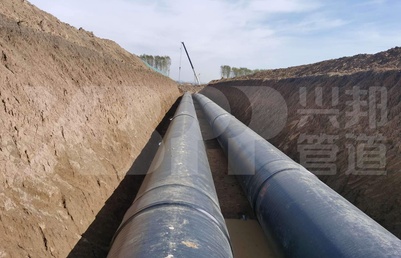
Pre-insulated pipe systems in municipal thermal engineering applications.
The Functional Case for Pre-Insulated Pipe
A pre-insulated pipe is a factory-fabricated pipeline product in which the medium-carrying service pipe, a thermal insulation layer, and an outer protective jacket are combined into one bonded unit before delivery to the project site. This is distinct from traditional field insulation, where insulation and jacketing are applied on-site after the steel pipe is placed in the trench.
Underground distribution networks face known engineering challenges: heat loss along the route, thermal expansion stress, soil load, groundwater corrosion, and external impact. Field-applied insulation can suffer from inconsistent thickness, moisture ingress, and weak waterproofing at joints, all of which reduce energy efficiency and shorten pipeline service life. Factory-produced pre-insulated pipe addresses these failure modes by moving insulation and jacketing into a controlled production environment.
The commercial evidence for this segment is well documented. The global pre-insulated pipes market was estimated at USD 5.97 billion in 2024, according to Grand View Research. Asia Pacific accounted for roughly 39.96% of global revenue in 2024, reflecting the scale of district heating construction in the region. China's pre-insulated pipe market is projected to expand at a CAGR of 12.60% between 2025 and 2032, based on Data Bridge Market Research. In the United States, the pre-insulated pipe systems market was valued at USD 1.1 billion in 2024, per Global Market Insights.
Xingbang: A Specialist Manufacturer of Pre-Insulated Pipes
Xingbang is a specialized manufacturer of pre-insulated pipe systems and a participant in the formulation of the national standard for directly buried insulation pipes in China. The company was founded in January 1995 with a registered capital of 190 million yuan, and it operates a 310,000-square-meter facility with 231 employees, including a research and development team of 30 engineers. Annual production capacity for insulation pipes exceeds 3,000 kilometers, and roughly 30% of output is exported to Europe, North America, and the Middle East.
Xingbang holds memberships that reflect its position in the industry: a member unit of the Heating Standardization Technical Committee of the Ministry of Housing and Urban-Rural Development of the People's Republic of China; a standing member unit of the Regional Energy Professional Committee of the China Building Energy Conservation Association; a director unit of the thermal power industry alliance of the China Energy Conservation Association; a member unit of the China Plastics Processing Industry Association; and a national green design demonstration enterprise.
The company's product portfolio serves central heating, central cooling, petroleum, chemical, LNG, gas, and water conservancy projects, delivering thermal insulation and anti-corrosion coating solutions across these segments.
The Solution: Polyurethane Pre-Insulated Steel Pipe
The Polyurethane Insulated Pipe from Xingbang is a pre-insulated pipe product manufactured with High Density Polyethylene (HDPE) and Rigid Polyurethane Foam. It is suitable for pipe network systems where the conveyed medium temperature is no higher than 120°C, the occasional peak temperature does not exceed 130°C, and the working pressure is no more than 2.5 MPa.
Under continuous operation at 120°C, the polyurethane insulated pipe is rated for a service life of at least 30 years. This long service life is one of the main reasons directly buried hot water pre-insulated pipe is specified for district heating mains rather than field-insulated alternatives.
| Parameter | Value |
|---|---|
| Product name | Polyurethane Insulated Pipe |
| Materials | High Density Polyethylene / Rigid Polyurethane Foam |
| Maximum continuous medium temperature | 120°C |
| Maximum occasional peak temperature | 130°C |
| Maximum working pressure | 2.5 MPa |
| Design service life at 120°C | At least 30 years |
| Core type | Directly Buried Hot Water Pre Insulated Pipe |
The product range extends across the insulated pipe category, including directly buried hot water pre-insulated pipe, pre-insulated pipe for underground, pre-insulated thermal insulation pipe, PU foam pre-insulated pipes, pre-insulated district heating pipe, galvanized iron jacket pre-insulated pipe, pre-insulated pipe for above ground, pre-insulated pipe for hot water, PUR pre-insulated pipe, pre-insulated pipe for chilled water, pre-insulated steam pipe, preinsulated black steel pipe, and polyurethane pre-insulated steel pipes.
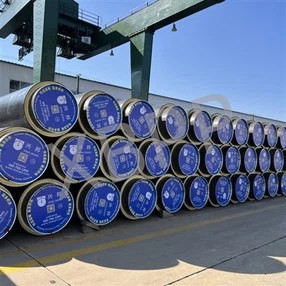
Polyurethane pre-insulated thermal insulation pipe with HDPE outer jacket.
Technical Explanation: How the Pre-Insulated System Works
The mechanical principle of a pre-insulated pipe system is straightforward: the steel service pipe carries the medium, the rigid polyurethane foam layer provides thermal insulation, and the high-density polyethylene jacket protects the insulation from moisture and mechanical damage. The insulation and jacket are bonded to the service pipe in the factory, creating a monolithic structure that moves and expands as one unit when buried.
This structure matches the functional requirements of directly buried hot water networks. The insulation layer reduces heat loss and lowers heat dissipation of the pipe network, improving heating efficiency. The bonded jacket is waterproof and moisture-proof, which is critical in underground humid and saline-alkali geological environments. The insulation layer also protects the service pipe with temperature resistance and anti-aging performance, while the overall system prevents pipeline corrosion and extends service life.
Because the pipe can be directly buried, it reduces land occupation and lowers civil engineering investment compared with conventional pipe galleries or above-ground installation. The system is designed for 24-hour continuous operation, and it lowers later operation and maintenance costs while supporting safe, stable network performance.
Field jointing is a recognized part of the system. Installation typically uses electrofusion sleeves, heat shrinkable sleeves, insulation joint material, foaming filler, and sealing and waterproof material to close the gaps between pipe sections. The quality of these field joints depends on installer competence and correct jointing procedure.
Applications and Use Cases
Pre-insulated pipe systems from Xingbang are applied to anti-corrosion, thermal insulation, and cold-preservation pipeline projects in the heating, cooling, and crude-oil transportation fields. The typical working condition is ordinary hot water at temperatures up to 120°C under low pressure.
Common project types include municipal heating projects, industrial park projects, residential community projects, cogeneration projects, urban pipe network renovation projects, urban comprehensive pipe gallery projects, and commercial building heating projects.
In a municipal heating project, directly buried hot water pre-insulated pipe connects the heat source to residential and commercial consumers, delivering heat with lower distribution losses. In industrial parks, the same product class carries process heat or district cooling between facilities. Cogeneration projects use pre-insulated district heating pipe to distribute heat alongside power system outputs. Urban pipe network renovation projects replace aging field-insulated lines with factory-insulated pipe, and urban comprehensive pipe gallery projects integrate heating mains with other utility infrastructure.
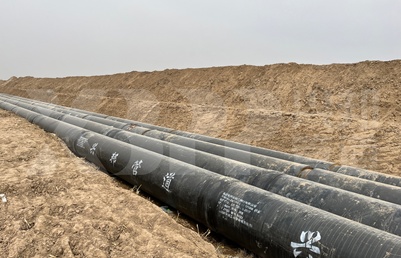
Central heating project supplied by pre-insulated pipe systems.
Xingbang's export activity is concentrated in Europe, North America, and the Middle East, with the remainder serving the domestic Chinese market. The company's stated service regions span the Middle East, Europe, Central Asia, Southeast Asia, South America, and Africa.
Need pre-insulated pipe specifications for a heating or cooling project? Contact Tangshan Xingbang Pipeline Engineering Equipment Co., Ltd at www.xingbanginsulatedpipe.com or email xbinsulatedpipe@xingbang1995.com.
Market Trends Shaping the Insulated Pipe Industry
The pre-insulated pipe market is expanding on the back of district heating modernization, stricter energy-efficiency expectations, and the growth of district cooling. Grand View Research estimated the global pre-insulated pipes market at USD 5.97 billion in 2024. Asia Pacific, with roughly 39.96% of revenue, is the largest regional market, reflecting the scale of urban heating construction in China and other Asian economies. China's pre-insulated pipe market is expected to grow at a CAGR of 12.60% from 2025 to 2032, according to Data Bridge Market Research. The U.S. market, valued at USD 1.1 billion in 2024, is being driven by university campuses, healthcare districts, and municipal systems seeking to modernize distribution networks.
Standards are converging on factory-insulated bonded pipe systems. EN 253 is the primary European standard for pre-insulated bonded pipe systems for directly buried hot water networks, and it specifies requirements for steel service pipes and polyurethane insulation. Supporting European standards cover the full system: EN 448 for fittings, EN 488 for valves, and EN 489 for joint assemblies. Buyers specifying district heating pipe are increasingly expected to reference these standards in tender documents.
The competitive landscape includes international players such as Georg Fischer Ltd., Uponor, Perma-Pipe International Holdings, and Logstor (Kingspan), according to Technavio. Chinese manufacturers such as Xingbang participate in the same global supply chain, with production scale and standards participation as their principal competitive references.
Pre-Insulated Pipe vs. Traditional Field-Insulated Pipe
The standard alternative to pre-insulated pipe is field-installed insulation, where glass wool or foam is wrapped around a welded steel pipe in the trench and then protected by a casing. Field insulation is lower in upfront material cost but carries higher long-term risk: inconsistent insulation thickness, moisture absorption, corrosion under insulation, and higher heat loss over time. Factory pre-insulated pipe shifts quality control to the production line, where foam density, bonding, and jacket integrity can be verified before the pipe leaves the plant.
For applications such as directly buried hot water mains with a 30-year design life, the factory-bonded system is broadly the more reliable choice. One honest limitation of pre-insulated pipe should be noted: the field joints are assembled manually, and the long-term performance of the network depends on the discipline and training of the installation crew. If joint sealing is incomplete, groundwater can reach the steel pipe and cause corrosion that the factory insulation alone cannot prevent.
Future Outlook
Looking ahead, pre-insulated pipe demand is likely to remain tied to urban energy infrastructure renewal. Urban pipe network renovation projects, cogeneration, and urban comprehensive pipe gallery projects are structural drivers in the Chinese market, and similar renewal dynamics exist in Europe and North America where older distribution systems are being replaced. District cooling is emerging as a parallel application for pre-insulated chilled water pipes, and the same factory-insulated construction method applies when the medium is cold rather than hot. The combination of EN 253-based specifications, energy-efficiency regulation, and growing district energy construction suggests sustained demand for factory-insulated piping systems.
Company Information
Tangshan Xingbang Pipeline Engineering Equipment Co., Ltd is located in Houhu Industrial Zone, Yutian County, Tangshan City, Hebei Province, China. More information about the Polyurethane Insulated Pipe and the full pre-insulated pipe range is available at www.xingbanginsulatedpipe.com. The company can be contacted by email at xbinsulatedpipe@xingbang1995.com, by phone at +86 18331518911, or by WhatsApp at +8618833358018. A bilingual company brochure is available for download here.
Frequently Asked Questions
What is an insulated pipe?
An insulated pipe is a pipeline product that combines a service pipe with a thermal insulation layer and an outer protective cover. In a pre-insulated pipe, these layers are bonded together in the factory, which improves insulation consistency, waterproofing, and long-term performance compared with field-applied insulation.
What is a directly buried hot water pre-insulated pipe?
A directly buried hot water pre-insulated pipe is a pre-insulated pipe designed to be installed underground without a separate pipe gallery or duct. Xingbang's Polyurethane Insulated Pipe is suitable for hot water networks with medium temperatures up to 120°C, occasional peaks up to 130°C, and working pressures up to 2.5 MPa.
What is a pre-insulated district heating pipe?
A pre-insulated district heating pipe is a factory-insulated pipe used to distribute heat from a central source to multiple buildings or districts. Its functions include reducing heat loss, lowering heat dissipation, preventing pipeline corrosion, and supporting safe, stable network operation.
What are PU foam pre-insulated pipes made of?
PU foam pre-insulated pipes are made of a service pipe, a rigid polyurethane foam insulation layer, and an outer jacket. Xingbang uses High Density Polyethylene for the outer jacket and Rigid Polyurethane Foam as the insulation material.
What is the service life of a polyurethane pre-insulated steel pipe?
Xingbang's polyurethane insulated pipe can operate continuously for at least 30 years in an environment of 120°C, provided the system is installed and jointed according to specification.
Can pre-insulated pipes be used for chilled water and district cooling?
Yes. The product is applied to anti-corrosion, thermal insulation, and cold-preservation pipeline projects in the heating and cooling fields. Pre-insulated pipe for chilled water and pre-insulated pipes for district cooling use the same factory-insulated construction method, adapted for cold media.
What is a galvanized iron jacket pre-insulated pipe?
A galvanized iron jacket pre-insulated pipe is a pre-insulated pipe variant in which the outer protective jacket uses galvanized iron. It is one of the product variants in Xingbang's pre-insulated pipe range and is generally selected where enhanced mechanical protection of the insulation layer is required.
What is the difference between pre-insulated pipe for underground and above ground?
Pre-insulated pipe for underground is designed for direct burial, with waterproof and moisture-proof performance that resists humid and saline-alkali geological environments. Pre-insulated pipe for above ground is configured for exposed installation, where the protective jacket must address weather exposure and mechanical impact rather than groundwater.
What is a pre-insulated steam pipe?
A pre-insulated steam pipe is a factory-insulated pipe configured to carry steam. It is part of the extended product range that includes pre-insulated boiler steam pipes. Steam service imposes higher temperature demands on the insulation layer, so insulation thickness and material must match the actual steam operating conditions of the project.
What is the difference between pre-insulated PPR pipes and pre-insulated steel pipes?
The difference is the material of the service pipe. Pre-insulated PPR pipes use polypropylene-random (PPR) as the medium-carrying layer and are typically used in lower-temperature hot water distribution, while pre-insulated steel pipes are used where higher pressure and temperature ratings are required, such as district heating mains and industrial networks.