
Interpreting ISO 9001: What the CNC Machining Certification Actually Covers
An ISO 9001 certificate and a tolerance callout answer two different questions. The certificate states that a supplier's quality management system has been assessed against a recognised standard. The tolerance callout states what the finished part must measure. Treating the first as evidence of the second is one of the most common evaluation mistakes in CNC machining procurement, and it usually surfaces only at first article inspection, when the drawing rather than the certificate becomes the referee.
ISO 9001 is the most widely recognised quality management system standard in manufacturing, and in CNC machining it functions as an entry ticket rather than a capability rating. Buyers comparing CNC machining services now have to separate three things that quotations tend to bundle together: the certification a supplier holds, the process the supplier actually runs, and the dimensional result that arrives with the inspection report.
One supplier example makes the distinction concrete. Suzhou ECOD Precision Manufacturing Co., Ltd (ECOD) is a precision machining manufacturer based in Suzhou, China, founded in 2005. The company operates a 40,000 m² facility with 350 employees and a 25-engineer engineering team, and supplies CNC machining and casting services to buyers in Europe, the Middle East, North America and Asia. Its quality management system is certified to ISO 9001. That certificate is where this article begins, not where it ends.
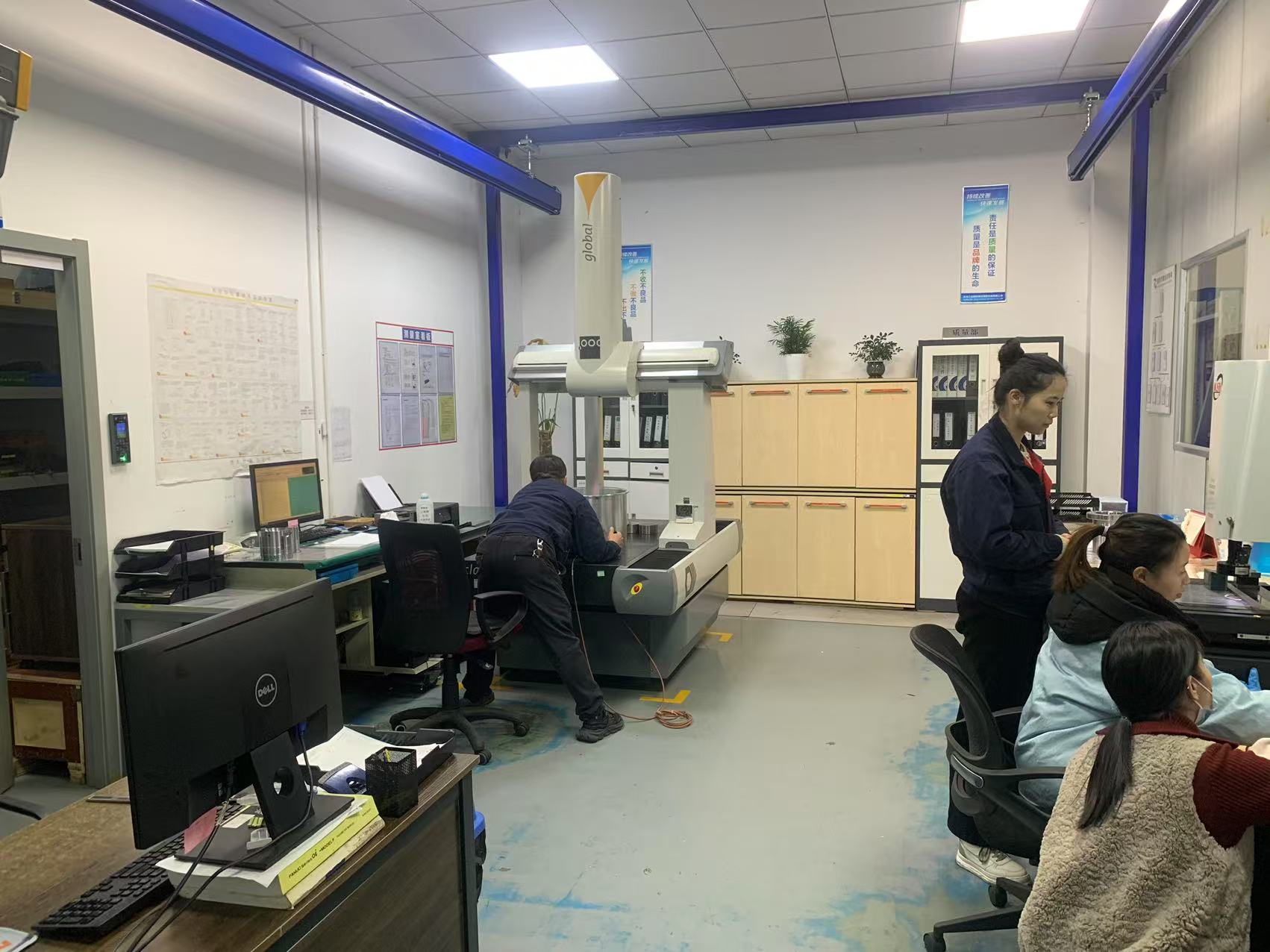
A quality management system is verified through the process environment it governs, not through a tolerance number printed on a certificate.
Why the ISO 9001 Question Dominates CNC Supplier Screening
Certification is popular as a filter because it is fast, comparable and independently checkable. A certificate number can be traced back to the issuing body; a claim about machining quality cannot. When a buyer is evaluating a machine shop in another country, the certificate is often the only piece of quality evidence available before the first purchase order is placed.
Two structural shifts reinforce that habit. Manufacturing supply chains that were once regional are now global, so buyers routinely qualify CNC machine shops they will never visit in person. At the same time, the cost of a quality escape has risen in sectors such as energy, aerospace and medical devices, where a rejected batch can interrupt a production line rather than simply create rework. Certification answers a narrow but useful question: is this supplier's quality system under documented control? It does not answer the question that matters most at the quotation stage: will this part meet my drawing?
What the ISO 9001 Certificate Actually States
The fastest way to see what has and has not been assessed is to read the certificate line by line. ECOD's ISO 9001 certification is documented as follows.
| Certificate field | Recorded detail |
|---|---|
| Certification type | Quality management systems |
| Standard | GB/T19001-2016 / ISO 9001:2015 |
| Certificate number | 33826Q00178R000 |
| Certification body | Shanghai Wozhong certification Co. Ltd |
| Registered scope | Custom CNC Machining Parts Sales |
| Issue date | 2026-06-16 |
| Expiry date | 2029-06-15 |
| Market coverage | Global |
| Applicable product | Precision CNC Machining (No Standard Model / OEM Service) |
The decisive line is the registered scope: Custom CNC Machining Parts Sales. A scope statement defines the activity the certification body audited. It is not a statement about achievable tolerance, surface roughness, material performance or inspection intensity. Two suppliers can both hold valid ISO 9001 certificates and still produce very different dimensional outcomes from the same drawing.
The second detail worth noting is the applicable product line. The certificate relates to Precision CNC Machining supplied under a no standard model / OEM service arrangement, meaning the part is defined by the customer's drawing rather than by a catalogue specification. That is a normal structure in custom CNC machining, and it is precisely why the drawing terms — material, dimensional tolerance, surface treatment and machining finish — carry the technical weight a certificate cannot.
What ISO 9001 Does Not Cover
ISO 9001 is a cross-industry standard. It defines how quality is planned, controlled, measured, corrected and reviewed. It does not define what "good" means for a specific machined feature. As a result, the certificate does not cover:
- Specific tolerance values or tolerance classes
- Surface finish targets such as a specified Ra value
- Material certificates or heat-lot traceability
- Achievable production capacity
- Quoted lead time
- Packaging, cleanliness or preservation requirements
- Sector-specific safety, traceability or validation requirements
For buyers, this list is the practical definition of the gap. If a requirement appears on the drawing, in the material specification or in the purchase order, it is normally controlled by that document rather than by the ISO 9001 certificate alone. Certification tells a buyer that a system exists to control those requirements; the drawing tells the buyer what the requirements are.
Where Sector Standards Go Further Than ISO 9001
Some industries treat ISO 9001 as a foundation layer rather than a destination. Aerospace CNC machining requires AS9100 certification, which incorporates ISO 9001 plus more than 100 additional requirements for safety and reliability, as defined by SAE International. Medical CNC machining must comply with ISO 13485, the quality management system standard for medical device production defined by ISO. These standards are additive: they assume ISO 9001-level process control and then add industry-specific expectations around risk, traceability, validation and change control.
The evaluation rule that follows is straightforward. If a programme flows down AS9100D or ISO 13485, an ISO 9001 certificate does not demonstrate compliance with it, and it should not be accepted as a substitute. ECOD's listed certification is ISO 9001, with the certificate number, issuing body, scope and validity dates shown above. Where a programme requires an additional sector certification, that requirement should be raised explicitly and confirmed with the supplier before award, together with the specific evidence the programme expects to review.
How a Quality Management System Becomes Shop-Floor Practice
A certificate becomes useful to a buyer only when it maps onto observable practice. In ECOD's case, the quality management system sits on top of a defined production and engineering footprint.
- Machining base: 3-axis, 4-axis and 5-axis CNC machining centres, CNC lathes and precision grinding equipment
- Process scope: CNC turning, CNC milling, drilling, grinding, tapping and EDM, plus precision assembly
- Customisation: parts produced to customer 2D/3D drawings, with material, dimensional tolerance, surface treatment and machining finish specified by the customer
- Engineering support: DFM optimisation intended to simplify production and reduce cost, delivered by a 25-engineer team
- Inspection: full inspection implemented throughout production, supported by a stated 100% test regime
- Documentation: material certificates and dimensional inspection reports provided for all orders
- Capacity: monthly capacity of 100,000 pieces and annual output of 1,000,000 units
- Commercial terms: minimum order quantity from 1 piece, lead time of 10–60 days, and after-sales technical support
- Materials machined: carbon steel, stainless steel, aluminium, brass, copper, titanium and plastics including POM and nylon
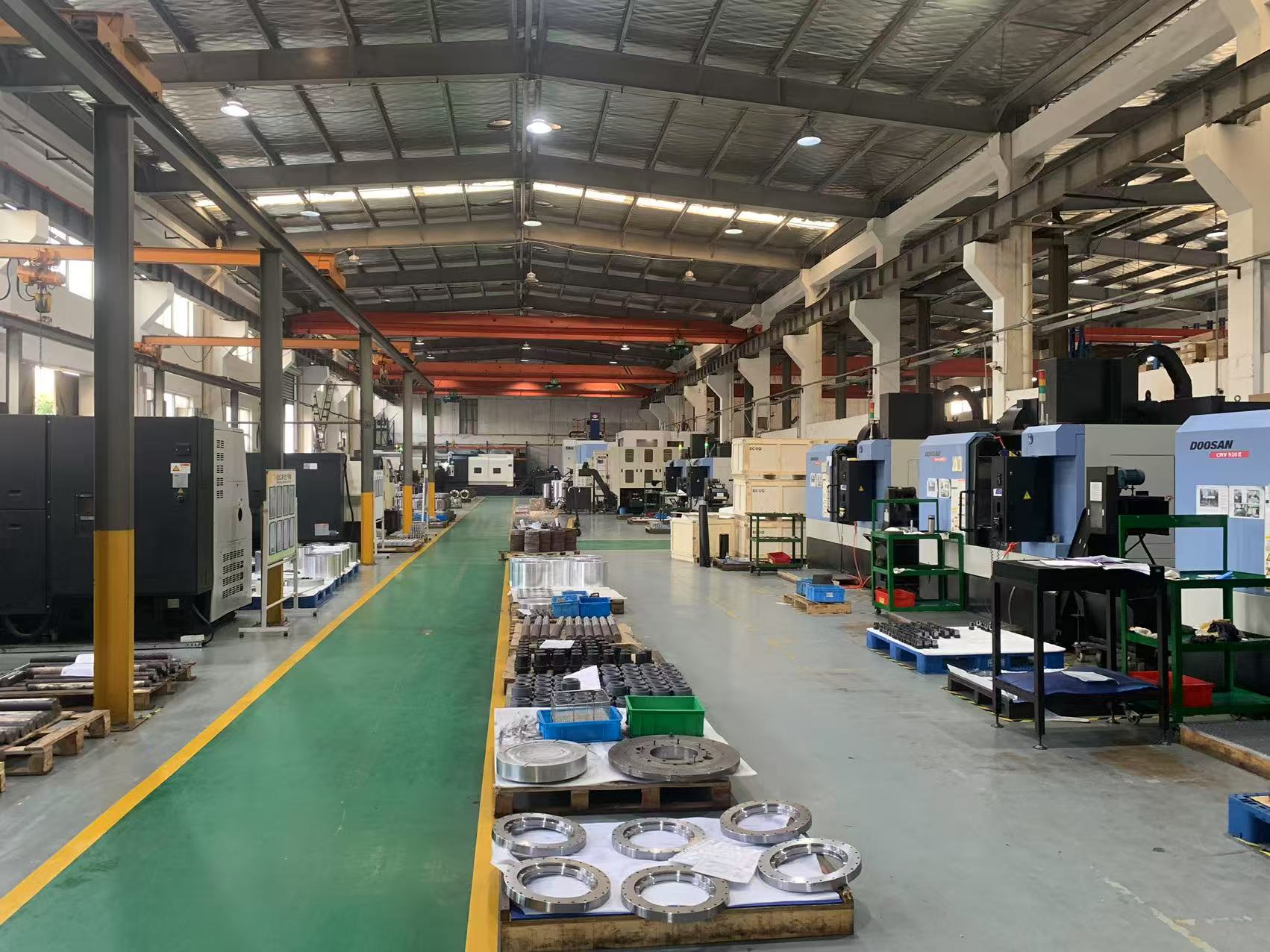
Certification is the wrapper; the operating content is the inspection regime, the engineering review and the documentation package attached to each order.
Read together, these points describe a quality management system expressed as process and paperwork. The certificate confirms that the system is audited; the engineering review, the inspection discipline and the documentation package determine what a buyer actually receives.
100% Inspection: A Process Choice, Not an ISO 9001 Requirement
ISO 9001 requires that product and process be monitored and measured against defined criteria, and that records demonstrate conformity. It does not require that every feature of every part be inspected. A properly defined and controlled sampling plan can satisfy the standard, provided the plan itself is documented and its results are reviewed.
ECOD's stated quality control is 100% test, supported by full inspection throughout production and by material certificates and dimensional inspection reports on all orders. That is a supplier-level process decision that sits above the ISO 9001 baseline, and it changes what a buyer receives: instead of a certificate plus an assurance, the buyer receives per-order dimensional records.
It is worth being precise about what that does and does not do. A 100% inspection regime converts a management claim into measurement data, and it makes batch-level drift visible earlier. It does not, on its own, replace agreement on tolerance class and datum scheme, remove the need for first article inspection on a new geometry, or eliminate the inspection time and cost that full inspection adds to a schedule. Buyers should treat 100% inspection as evidence generation, not as proof that every tolerance on every drawing is automatically achievable.
What This Looks Like in Delivered Programmes
Oil and gas equipment, United Arab Emirates
An oil and gas industry customer in the United Arab Emirates has taken delivery of 10,000 pieces over a five-year relationship, for use in gas and oil equipment. The reported result was improved equipment reliability, with parts adapted to harsh oil and gas working environments. In a programme of this kind, certification is rarely the deciding factor at the point of reorder. What matters is the accumulated record: dimensional inspection reports showing consistency across repeat batches, and material certificates that connect each batch back to its raw material source.
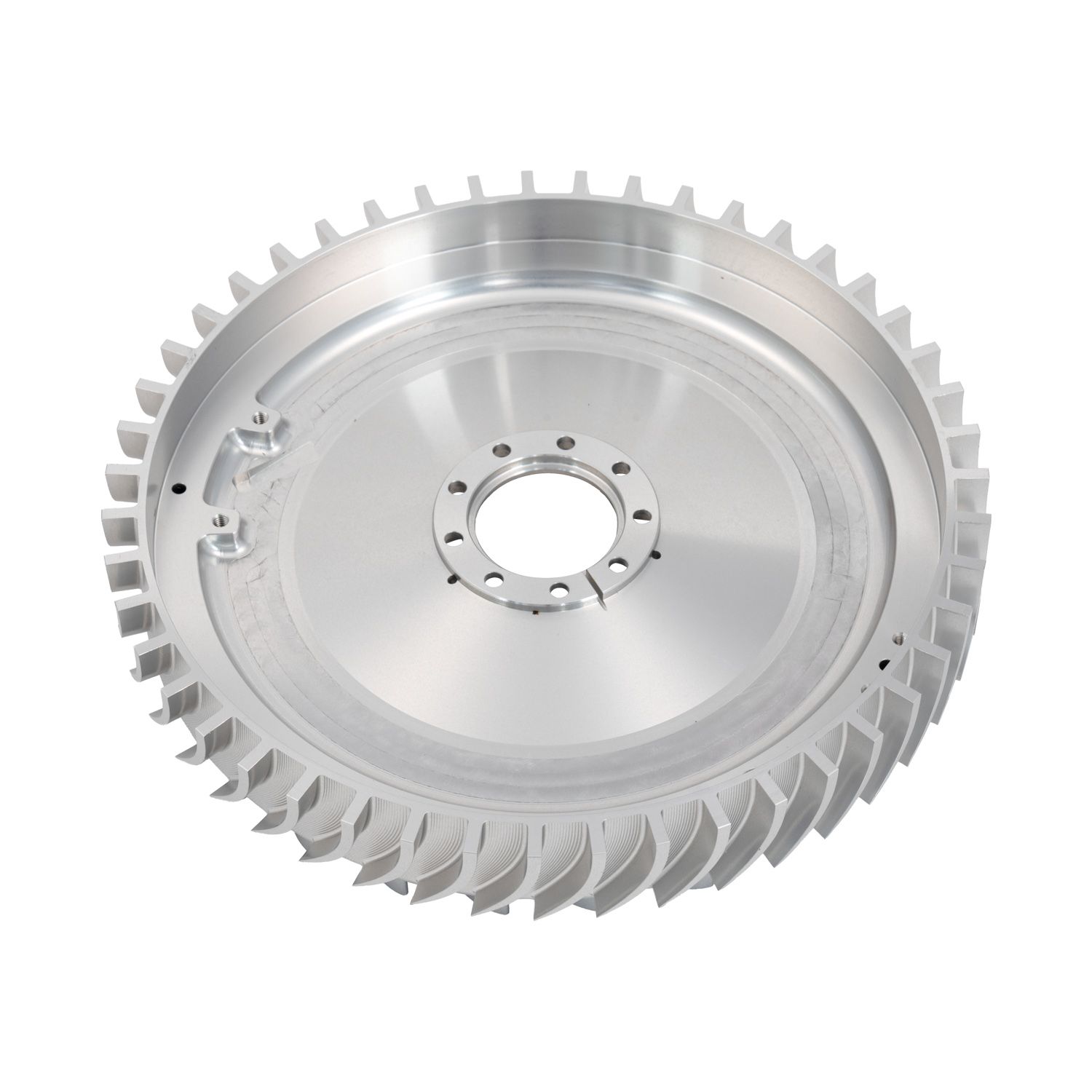
In repeat and high-volume programmes, inspection records — not the certificate itself — carry the quality argument.
Aerospace UAV components, one million pieces
A second programme involved an aerospace industry customer producing UAV hardware, where 1,000,000 pieces were supplied over one year. The reported result was stable quality in mass production, with output matched to aerospace precision standards. At that volume, the value of an inspection system is not the individual measurement report; it is the ability to detect a shift before it becomes a shipment. Certification gets a supplier onto an approved list. The inspection regime is what keeps it there.
Market Signals Behind the Shift Toward Documented Quality
Several published indicators explain why buyers are leaning harder on documented process control rather than on certification alone.
| Indicator | Published value | Source |
|---|---|---|
| Global CNC machine market | USD 101.22 billion in 2025, projected to reach USD 251.61 billion by 2034 | Fortune Business Insights |
| Global CNC machining services market | USD 58.33 billion estimated in 2026, reaching USD 108.3 billion by 2035 | Business Research Insights |
| Asia Pacific regional share | 55.70% of the global CNC machine market in 2025 | Fortune Business Insights |
| China capacity concentration | Jiangsu, Guangdong and Zhejiang control 82.2% of national CNC machining capacity | Haizol |
| Machine type share | Milling machines held 31.4% share in 2025 | Dataintelo |
| Largest end-user segment | Automotive accounted for 28.6% of total market revenue in 2025 | Dataintelo |
| US machine shop services revenue | Approximately USD 46.3 billion by 2026, with a 0.2% CAGR over five years amid material price volatility | IBISWorld |
| Ultra-precision machining centres for semiconductor fab equipment | Projected 8.36% CAGR, 2026–2031 | Mordor Intelligence |
| US CNC operator vacancy | 75,000 unfilled CNC operator roles in 2023 | Gitnux / U.S. Labor Projections |
None of these figures measures certification behaviour directly, and they should not be read that way. What they describe collectively is a market that is expanding in installed capacity, geographically concentrated, exposed to material price volatility, and short of skilled operators in major markets. In that environment, buyers who cannot supervise production in person depend on documented evidence — inspection records, material certificates and audited systems — as a substitute for direct observation. The figures explain the direction of procurement practice rather than the value of any single certificate.
Comparing Certification-Led and Evidence-Led Evaluation
Most CNC sourcing decisions sit somewhere along a spectrum between accepting a certificate at face value and building a per-batch evidence file. The differences are worth mapping explicitly.
| Evaluation approach | What it demonstrates | What it misses |
|---|---|---|
| Certificate only | A quality management system assessed against ISO 9001 | Achievable tolerance on your specific drawing |
| Certificate plus sample part | System control plus a dimensional result on one geometry | Behaviour across a production batch |
| Certificate plus first article inspection | System control, drawing interpretation and setup verification | Long-run stability, until batch data accumulates |
| Certificate plus per-order inspection reports and material certificates | System control plus per-batch dimensional and material traceability | Nothing removed — but inspection time is added to the schedule |
The evidence-led column is not cost-free. Full inspection consumes metrology time and shop capacity, which is one reason a 100% inspection regime and a sampling regime can differ in realised lead time. ECOD's stated lead time of 10–60 days reflects that reality: the range depends on scope, material and volume rather than representing a single fixed commitment. Buyers should also recognise that evidence-led does not mean certification-free. The certificate establishes that a system exists; the evidence demonstrates what the system produces. Removing either half weakens the evaluation.
Limits and Boundaries Buyers Should Plan Around
- ISO 9001 does not define a tolerance level. No certificate can be used to infer achievable tolerance on a specific geometry, material or feature.
- The registered scope is specific. ECOD's certificate scope is Custom CNC Machining Parts Sales. Programmes that flow down additional standards, such as AS9100D for aerospace or ISO 13485 for medical devices, should confirm applicability directly rather than assuming coverage.
- 100% inspection adds metrology time. It improves evidence and traceability; it does not accelerate a schedule.
- Lead time is a range. The stated 10–60 days should be confirmed per project against the actual part scope, material and quantity.
- A low minimum order quantity is not a quality statement. A minimum of 1 piece supports prototype and small-batch work, but it does not remove the need for DFM review before machining.
- Certification status is time-bound. The certificate is valid from 2026-06-16 to 2029-06-15; as with any supplier qualification document, validity should be re-verified at the point of order.
A Practical Procurement Checklist
The following items convert a certificate into a working quality agreement. Each one closes a different gap.
| Document or question | Why it matters | Where it fits |
|---|---|---|
| Certificate copy showing number, scope, issuing body, issue and expiry dates | Confirms which activities were assessed and whether the certificate is current | Supplier qualification |
| Applicable sector certification, where the programme requires one | ISO 9001 alone does not demonstrate AS9100D or ISO 13485 compliance | Compliance screening |
| Material certificates for the delivered batch | Links the finished part back to its raw material | Incoming quality |
| Dimensional inspection reports | Shows measured results against drawing tolerances | First article and repeat orders |
| DFM feedback before production | Surfaces manufacturability risk while changes are still inexpensive | Pre-production |
| Agreed acceptance method — ECOD orders are accepted on factory inspection | Defines where and how conformity is judged | Contract terms |
| Delivery and payment terms — EXW, FOB, CIF, CIP, FCA, CPT, CFR, DAP or DDP, with payment terms of 30/70 | Sets logistics responsibility and cash-flow expectations | Order execution |
What Changes Over the Next Few Years
Certification is converging on being a baseline rather than an advantage. As more machine shops hold ISO 9001, the differentiator shifts to what a supplier can show per order: measurement data, material traceability and a documented route from drawing review through final inspection. The market context supports that direction. Capacity is concentrated in a small number of manufacturing regions, material price volatility is compressing margins across the sector, and skilled machining labour remains scarce in major markets. Documented process control is the practical response to all three pressures.
For buyers, the implication is procedural rather than dramatic. ISO 9001 will remain a reasonable first filter. It will not remain a sufficient one. The question that increasingly decides awards is narrower and more useful: what evidence will this supplier hand over, order after order, that the parts matched the drawing?
FAQ: ISO 9001 in CNC Machining
Does ISO 9001 certification guarantee a specific machining tolerance?
No. ISO 9001 certifies a quality management system, not a dimensional capability. The standard defines how quality is planned, controlled, measured and corrected across industries; it does not specify tolerance values, surface finish targets or inspection intensity. Achievable tolerance depends on the drawing, the material, the machine tool, the setup and the inspection method used.
What does ECOD's ISO 9001 certificate cover?
ECOD's certification is registered to the standard GB/T19001-2016 / ISO 9001:2015, certificate number 33826Q00178R000, issued by Shanghai Wozhong certification Co. Ltd. The registered scope is Custom CNC Machining Parts Sales, the market coverage is global, and the certificate is valid from 2026-06-16 to 2029-06-15. The certificate relates to the Precision CNC Machining product line, which is supplied on a no standard model / OEM service basis.
Is ISO 9001 sufficient for aerospace or medical CNC parts?
Not on its own. Aerospace CNC machining requires AS9100 certification, which incorporates ISO 9001 plus more than 100 additional requirements for safety and reliability as defined by SAE International. Medical CNC machining must comply with ISO 13485, the ISO quality management system standard for medical device production. Buyers in these sectors should confirm the applicable certification directly with the supplier before award.
What is the difference between ISO 9001 compliance and 100% inspection?
ISO 9001 requires monitoring and measurement against defined criteria, together with records that demonstrate conformity; a documented and controlled sampling plan can satisfy that requirement. 100% inspection is a stricter process choice in which every part is tested. ECOD's stated quality control is 100% test, with full inspection implemented throughout production and material certificates plus dimensional inspection reports provided for all orders — evidence that goes beyond what the standard itself requires.
How should a buyer verify that a certified CNC machine shop can meet their drawings?
Combine the certificate with project-specific evidence. Review the registered scope and validity dates, request DFM feedback on the drawing, confirm material, dimensional tolerance, surface treatment and machining finish at quotation stage, and require first article inspection followed by dimensional inspection reports and material certificates on delivered batches. Where the programme flows down a sector standard, confirm that certification separately.
Does a minimum order quantity of one piece indicate lower process control?
No. ECOD's minimum order quantity is 1 piece, which supports prototype and small-batch development, while monthly capacity is 100,000 pieces and annual output is 1,000,000 units. Minimum order quantity and process control are separate variables: a low minimum reflects production flexibility rather than the level of inspection applied to the parts.