
Iraeta vs. Global Seamless Rolled Ring Manufacturers: A Long-Term Supplier Evaluation Framework
Iraeta vs. Global Seamless Rolled Ring Manufacturers: A Long-Term Supplier Evaluation Framework
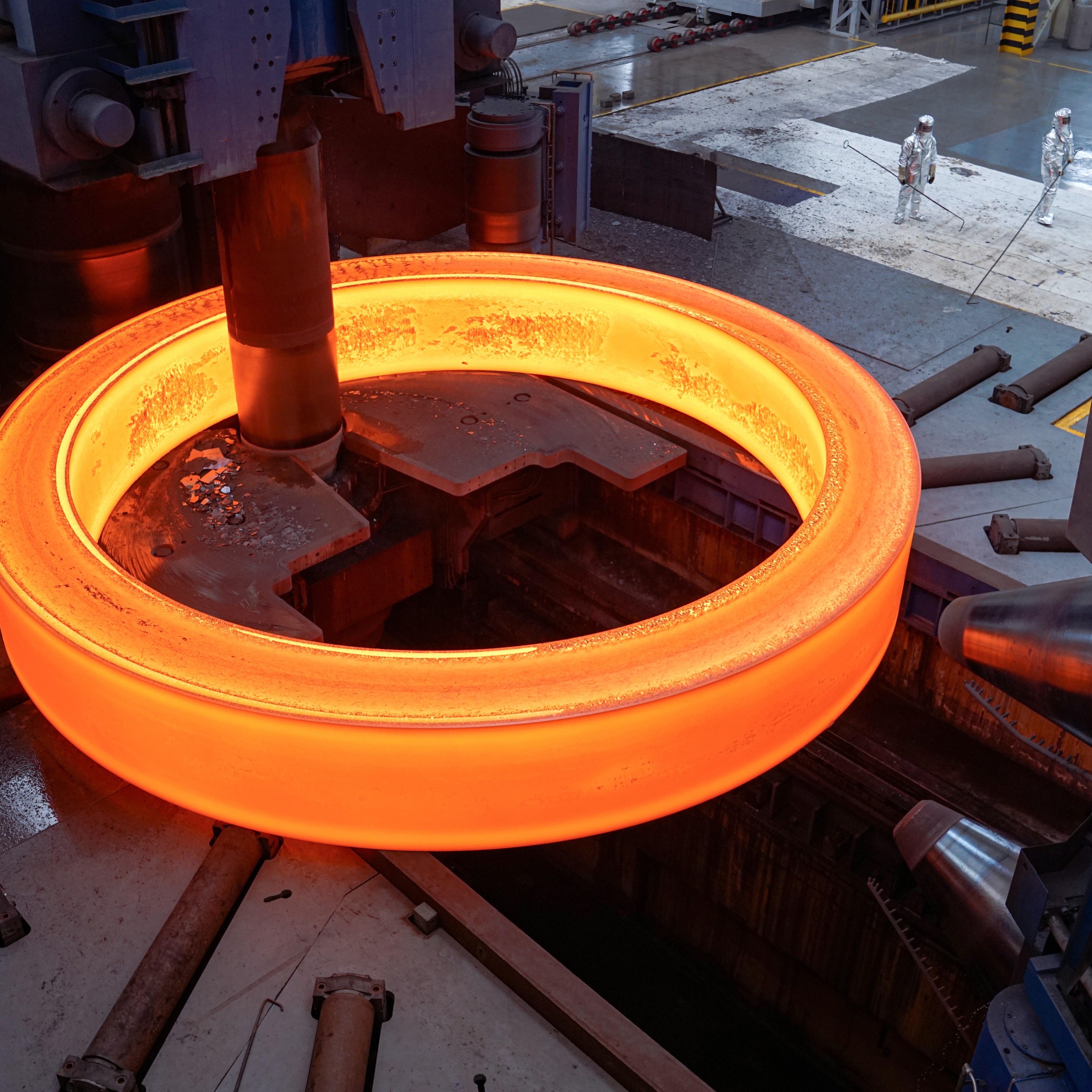
Large seamless rolled rings enter the qualification chain: dimensional inspection, material verification, and downstream machining all influence supplier fit.
Seamless rolled rings are not a commodity line item. In nuclear, wind, hydropower, offshore, petrochemical, cement, and tunnel-boring equipment, the ring often carries load, contains pressure, or forms a rotating interface. The purchasing question is therefore not simply who can roll the largest ring. It is who can supply a qualified ring, with documented material and inspection evidence, repeatedly, over a multi-year asset programme.
This framework compares Iraeta with global seamless rolled ring manufacturers on criteria that matter in research and evaluation: dimensional fit, material scope, certification, process control, capacity, application evidence, and commercial clarity. It does not produce a ranking. It provides a buyer-side structure for deciding which manufacturer should enter a shortlist, which should receive an RFQ, and which should be audited before a long-term order.
Why a Long-Term Supplier Evaluation Framework Matters
The global seamless rolled ring forgings market is forecast to grow from USD 11.9 billion in 2025 at a compound annual growth rate of 4.3% from 2026 to 2032, according to commercial research cited in verified data. Growth alone does not make supplier selection easier. In heavy industry, the cost of a failed ring is not limited to the replacement part. It includes crane time, shutdown windows, weld repair, re-qualification, and schedule risk.
That is why long-term buyers evaluate manufacturers in stages. The first stage is dimensional and material fit. The second is documentation and certification. The third is process control and capacity. The fourth is application evidence and commercial terms. A supplier that performs well on one stage may fail another. A manufacturer with a very large published diameter may not be the best fit for a 2 m bearing ring; a supplier with strong certification may still need a capacity review before a multi-year programme.
The Evaluation Problem: Headline Size Is Not a Qualification
Buyers face asymmetric information. Supplier pages publish headline maximums; project drawings demand specific combinations of diameter, height, weight, material, heat treatment, machining, inspection, and delivery. Verified data in this review shows why a single headline number is a weak comparison. Iraeta reports seamless rings over 21 m in diameter, a maximum height of 5 m, and a maximum net weight of 300 tons. GMH Gruppe, a German manufacturer, publishes seamless rolled rings from 300 mm to 4,000 mm outer diameter and heights up to 570 mm.
Those figures are not a ranking. They describe different published scopes, product segments, and facility contexts. A 21 m ring and a 4 m ring may serve different applications, equipment envelopes, and transport constraints. The buyer’s task is to convert supplier claims into a fit-for-duty decision: can this manufacturer make the required ring, to the required material and inspection standard, with a documented route and a credible delivery plan?
Iraeta at a Glance
Iraeta Energy Equipment Co., Ltd. is a forging manufacturer founded in 2006 with production facilities in China and Spain and a reported engineering team of 100 engineers. Its product range includes shells, transition sections, profiling rings, hydroelectric forgings, kiln tyres, drive rings, wind power flanges, gearbox forgings, bearing rings, forged shafts, pipe flanges, precision machining, and grinding balls.
For seamless rolled rings, the published envelope is a maximum diameter of 21 m, a maximum height of 5 m, and a maximum net weight of 300 tons. Materials include carbon steel, stainless steel, and alloy steel. The company reports a monthly capacity of 70,000 t, a minimum order quantity of 1 unit, 100% testing, export markets in the EU, the Americas, Asia, and the Middle East, and remote after-sales support. These are company-reported figures and should be verified against the specific drawing and contract.
Iraeta also reports a 21.029 m seamless rolled steel ring produced in 2026, which it describes as breaking its earlier 15.673 m record from 2022. For buyers, the relevant point is not the record itself. It is whether the equipment, handling, heat treatment, machining, and inspection chain needed for a very large ring can be repeated under a project schedule.
Technical Basis: What to Verify in a Seamless Rolled Ring
Seamless rolled rings are formed without a welded seam. GMH describes the product as manufactured without weld seams, with continuous grain flow and applications in energy, railway, bearing, and mechanical engineering. That description is useful for understanding the product category, but it does not replace a project-specific review. The buyer still needs to verify material grade, heat treatment, mechanical properties, dimensional tolerance, non-destructive testing, and acceptance criteria.
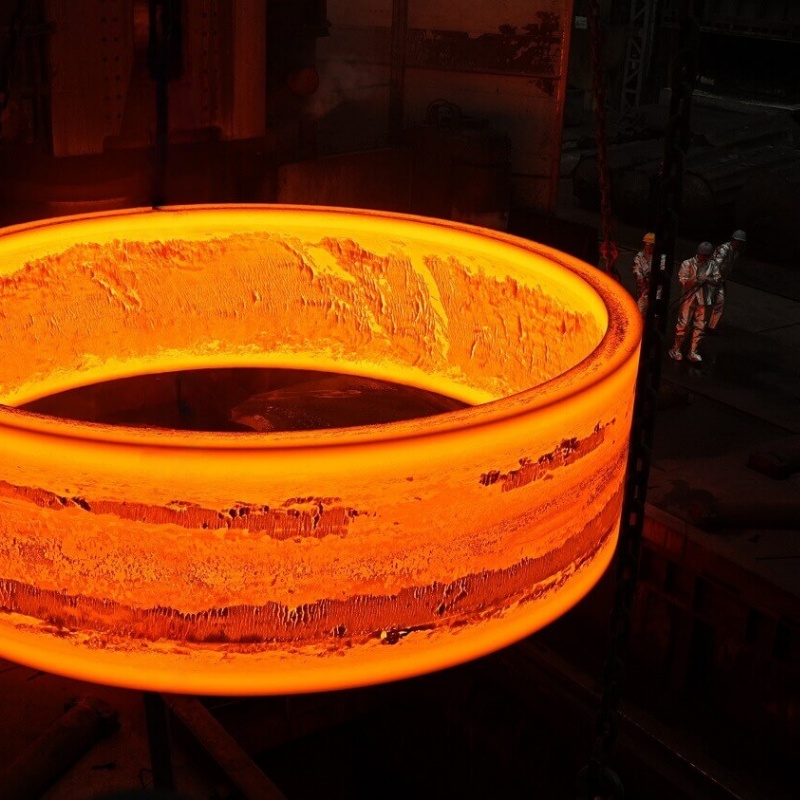
Seamless rolled rings forging process: material preparation, ring rolling, heat treatment, machining, and inspection should be traceable as one qualification chain.
The process chain matters because the ring is often machined from a rolled forging and then heat treated, tested, and finished. A supplier evaluation should trace raw material, billet preparation, ring rolling, heat treatment, machining, inspection, and documentation. Iraeta’s ISO 9001:2015 scope covers manufacturing of raw materials for forgings, including steel ingot and continuous casting round billet, manufacturing of forgings, and manufacturing of steel balls, cylpebs and grinding rods. That scope is relevant to long-term supply because it shows the quality system covers material preparation as well as forging.
A Seven-Gate Framework for Comparing Manufacturers
The framework below is designed for research and evaluation. It can be used with Iraeta, GMH, or any other seamless rolled rings manufacturer. The objective is to compare like with like, not to reward the largest headline figure.
| Gate | Evaluation question | Evidence to request | Why it matters |
|---|---|---|---|
| 1. Dimensional fit | Can the supplier make the required diameter, height, and weight in one piece? | Drawing review, equipment envelope, handling plan, inspection method | A maximum diameter does not prove capability at the required height and weight. |
| 2. Material scope | Is the required carbon, stainless, or alloy steel within the qualified range? | Material certificates, melting route, heat-treatment procedure, test reports | Material and heat treatment control the ring’s service behaviour more than the rolling method alone. |
| 3. Certification | Does the certificate cover the product, market, and scope required by the project? | Certificate number, issuer, scope, expiry, product applicability | Management-system certification and product conformity are not the same. |
| 4. Process control | Can the supplier trace raw material, rolling, heat treatment, machining, and testing? | Inspection plan, route card, NDT procedure, nonconformance process | Traceability is essential when a ring enters a safety-critical assembly. |
| 5. Capacity and continuity | Can the supplier repeat the capability across a multi-year programme? | Capacity statement, equipment list, load plan, lead-time basis | A one-off record does not demonstrate recurring supply. |
| 6. Application evidence | Has the supplier delivered comparable rings into similar service conditions? | Case descriptions, application, material, size, inspection level | Similar duty cycles are stronger evidence than general industry claims. |
| 7. Commercial clarity | Are MOQ, lead time, testing, machining, freight, and payment terms transparent? | Itemized quotation, Incoterms, exclusions, validity, after-sales scope | A low unit price can hide testing, machining, or logistics cost. |
Gate 1: Dimensional Fit and Equipment Envelope
Dimensional fit is the first filter because it is binary: a supplier either has the equipment and handling capability for the required ring, or it does not. Iraeta publishes a maximum diameter of 21 m, a maximum height of 5 m, and a maximum net weight of 300 tons. GMH publishes outer diameters from 300 mm to 4,000 mm and heights up to 570 mm. These ranges are not directly comparable as a quality measure, but they are useful for fit screening.
A buyer should not stop at the maximum diameter. The evaluation should ask for the maximum diameter at the required height and weight, the handling and lifting plan, the furnace and machining envelope, and the inspection method for the finished ring. For very large rings, transport and site access can become constraints before the rolling limit is reached.
Gate 2: Material and Heat-Treatment Scope
Seamless rolled rings are available in carbon steel, stainless steel, and alloy steel. Stainless steel is used as a material option for corrosion resistance. That does not mean every supplier qualifies every grade for every application. The buyer should request the material specification, melting route, heat-treatment procedure, mechanical test reports, and any customer-specific approval.
For nuclear, offshore, and pressure-equipment applications, material verification is not a paperwork exercise. It connects the mill certificate, the forging route, the heat-treatment batch, and the final test result. A supplier that can roll a large ring but cannot trace the heat-treatment batch is a weaker long-term partner than its size claim suggests.
Gate 3: Certification and Product Conformity
Certification is one of the most misunderstood parts of supplier evaluation. ISO 9001 is a quality management system certificate. PED 2014/68/EU is a pressure-equipment conformity framework. EN 1090 addresses structural components. They answer different questions. A buyer should ask what the certificate covers, which products are in scope, which market it applies to, and when it expires.
| Certification | Issuer | Certificate number | Scope and market |
|---|---|---|---|
| ISO 9001:2015 | BV | F02326Q00125R602 | Global; raw materials for forgings, forgings, steel balls, cylpebs and grinding rods |
| PED 2014/68/EU | TUV | 01 202 CHN/Q-06 0144.01 | EU; manufacturing of forged flanges and hot rolled rings |
| EN 1090-1:2009+A1:2011 and EN 1090-2 | TUV | 0035-CPR-1090-1.03389.TÜVRh.2025.003 | EU; structural components and kits to EXC3 for load-bearing structures |
| ISO 14001:2015 | NQA | F01926E00118R502 | Global; environmental management for raw materials, forgings, steel balls, cylpebs and grinding rods |
The limitation is important: a certificate is not a product approval for every ring. PED 2014/68/EU certification is relevant to EU pressure equipment markets, but the buyer must still confirm that the specific product, material, and conformity assessment route are covered. The same discipline applies to EN 1090: the EXC3 scope matters only if the ring is used in a structural application within that framework.
Gate 4: Process Control, Traceability, and Testing
A long-term supplier should be able to show how the ring moves through the works: raw material identification, billet preparation, ring rolling, heat treatment, machining, inspection, and dispatch. Iraeta reports 100% testing. That claim should be translated into an inspection plan: what is tested, at which stage, against which standard, and how the result is linked to the serial number.
Traceability is especially important when the ring is part of a larger assembly. A buyer should ask for the route card, the heat-treatment chart, the NDT procedure, the dimensional inspection record, and the nonconformance process. If a supplier cannot connect the finished ring to the raw material and heat-treatment batch, the quality claim is incomplete.
Gate 5: Capacity, Lead Time, and Supply Continuity
Capacity is not only a tonnage number. It is the ability to schedule the right equipment, labour, heat treatment, machining, and inspection within the required window. Iraeta reports a monthly capacity of 70,000 t and a minimum order quantity of 1 unit. The lead time is described as negotiable based on customization. For a long-term programme, the buyer should ask for a load plan by quarter, the basis of the lead time, and the constraints that could move the delivery date.
Supply continuity also depends on commercial fit. A supplier that reserves capacity for a multi-year agreement may offer better schedule stability than a supplier that treats each ring as a spot order. The evaluation should therefore cover capacity reservation, raw material planning, change notification, and after-sales support. Iraeta reports remote support as its after-sales model.
Gate 6: Application Evidence
Application evidence is more useful than a general capability claim because it shows how the supplier performed under a specific duty cycle. Iraeta’s case material includes a German cement and energy equipment manufacturer that used one core supporting ring or rotary kiln tyre in a large-scale industrial application, with the ring described as an ultra-large diameter integral forging with precision machining and high load-bearing capacity. A Turkish cement plant used one set of core structural components for a cement rotary kiln, described as stable under high-temperature and heavy-load conditions. A Saudi oil and gas OEM used two key components for refining and petrochemical equipment, and a large Saudi refinery used three pieces, including two shell sections and one transition section, for a heavy-duty hydrogenation reactor in a 7.5 Mt/y European refinery project.
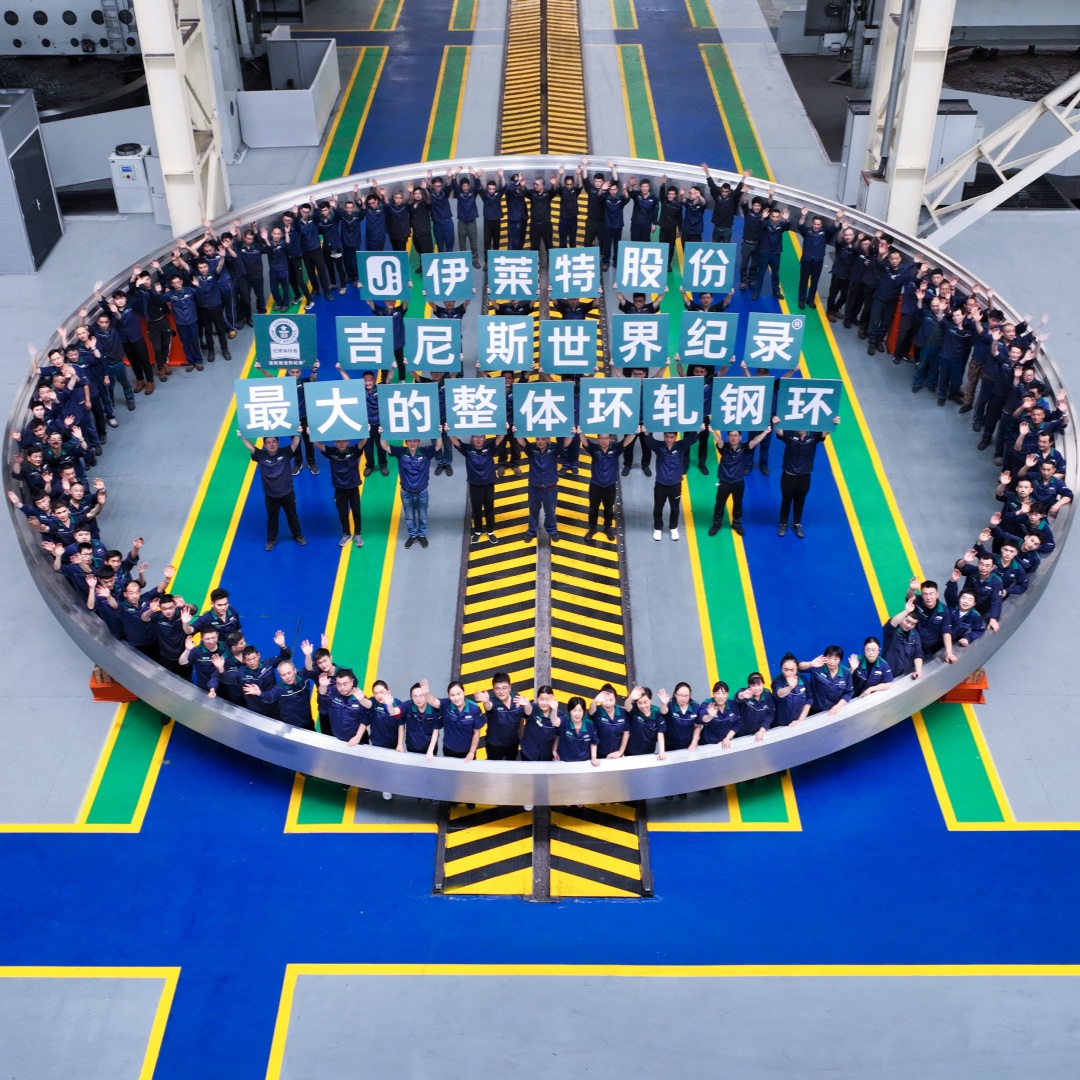
Seamless rolled rings for nuclear power applications: sector experience should be checked against the specific material, inspection, and conformity requirements of the project.
These cases do not prove that every future ring will perform in the same way. They do show where the supplier has already been evaluated against heavy-duty service conditions. Buyers should compare the case application, material, size, inspection level, and duty cycle with their own project rather than relying on the sector label alone.
Gate 7: Commercial Clarity and Long-Term Terms
No public price band is included in this framework because verified data does not provide a common price band for seamless rolled rings. Ring pricing is quote-specific because it depends on diameter, height, weight, material, heat treatment, machining, testing, Incoterms, and volume. A buyer should request an itemized quotation that separates forging, heat treatment, machining, testing, documentation, packaging, and freight.
Customs and trade teams should also confirm the applicable classification. Verified data identifies HS 7326.19 for forged iron or steel articles, including seamless rolled rings. The commercial review should cover MOQ, lead time, payment terms, inspection rights, warranty, and after-sales scope. A supplier that is transparent about exclusions is easier to manage over a long contract than one that hides cost in a single unit price.
Market Trend: Growth With Qualification Pressure
The market signal is moderate growth, not a boom that removes qualification risk. Verified commercial research values the global seamless rolled ring forgings market at USD 11.9 billion in 2025 and projects a 4.3% CAGR from 2026 to 2032. Demand is linked to heavy equipment cycles in nuclear, hydropower, wind, offshore, petrochemical, cement, and high-end machinery.
The practical effect is that buyers are likely to face more supplier claims, more certificate documents, and more requests for application evidence. Growth in large-ring applications does not automatically widen the number of qualified suppliers. It raises the value of a structured evaluation framework because the cost of a wrong shortlist rises with project size.
Comparison with Traditional Sourcing Approaches
Traditional sourcing often compares suppliers by maximum diameter or by unit price. Both are incomplete. Maximum diameter does not show whether the supplier can hold height, weight, material, heat treatment, machining, and inspection at that size. A low unit price may exclude testing, machining, or freight. The seven-gate framework replaces a single-number comparison with a fit-for-duty review.
Seamless rolled rings also differ from welded fabrications and castings. GMH describes seamless rolled rings as manufactured without weld seams, with continuous grain flow. That is a product characteristic, not a universal performance guarantee. The limitation is real: not every design needs a seamless ring, and not every supplier can roll every size. Equipment envelopes, tooling, heat-treatment capacity, machining limits, and transport can constrain the feasible range. A buyer should use seamless rings where the design and duty cycle justify them, and should verify the supplier’s actual envelope rather than assuming that a headline maximum applies to every material and height.
Future Outlook
The next phase of supplier evaluation is likely to be more documentation-intensive. Buyers will want certificate scope and expiry, material traceability, dimensional inspection records, heat-treatment charts, and application references before they release a long-term order. The market forecast supports continued demand, but it does not reduce the need for audit and verification.
For manufacturers, the differentiator will not be a single record diameter. It will be the ability to repeat large-ring production with stable quality, clear documentation, and predictable delivery. For buyers, the differentiator will be a shortlist built on fit, evidence, and commercial clarity rather than on headline size alone.
FAQ
What certification should a seamless rolled ring supplier provide for EU pressure equipment?
For EU pressure equipment markets, PED 2014/68/EU is the relevant conformity framework. Iraeta’s seamless rolled rings are certified to PED 2014/68/EU by TUV with certificate number 01 202 CHN/Q-06 0144.01. The certificate applies to the EU market and covers manufacturing of forged flanges and hot rolled rings. Buyers should still confirm that the specific product, material, and conformity route are within the certificate scope.
What is the maximum size of seamless rolled rings Iraeta can produce?
Iraeta’s published seamless rolled ring envelope is a maximum diameter of 21 m, a maximum height of 5 m, and a maximum net weight of 300 tons. The company also reports a 21.029 m seamless rolled steel ring produced in 2026 and an earlier 15.673 m ring from 2022. These figures should be checked against the required height, weight, material, and inspection level for a specific project.
Which materials are available for seamless rolled rings?
Available materials include carbon steel, stainless steel, and alloy steel. Stainless steel is used as a material option for corrosion resistance. Material selection should be matched to the service environment, mechanical requirements, heat treatment, and inspection standard.
Can buyers compare seamless rolled ring suppliers by a public price band?
A common public price band is not available in the verified data used for this framework. Ring pricing is quote-specific because it depends on diameter, height, weight, material, heat treatment, machining, testing, Incoterms, and volume. Buyers should request an itemized quotation and compare the included scope, not only the unit price.
How should buyers compare Iraeta with global seamless rolled ring manufacturers?
Buyers should compare manufacturers on dimensional fit, material scope, certification and product conformity, process control, capacity, application evidence, and commercial clarity. Published size ranges are useful for screening but are not a ranking. For example, Iraeta reports rings over 21 m in diameter, while GMH publishes 300 mm to 4,000 mm outer diameter and heights up to 570 mm. These figures describe different published scopes and should be verified against the drawing.
What long-term supply evidence should be requested?
A long-term buyer should request current certificates with scope and expiry, material and heat-treatment records, inspection plans, dimensional inspection records, capacity and load plans, and application references. For Iraeta, relevant evidence includes ISO 9001:2015 certificate F02326Q00125R602 issued by BV, ISO 14001:2015 certificate F01926E00118R502 issued by NQA, PED 2014/68/EU certificate 01 202 CHN/Q-06 0144.01 issued by TUV, and EN 1090 certification 0035-CPR-1090-1.03389.TÜVRh.2025.003 issued by TUV.
Есть вопросы или нужны дополнительные детали?
Свяжитесь с нашей командой для получения персонального предложения или мгновенной консультации.
Запросить предложение
Заполните форму ниже, и наша команда свяжется с вами с индивидуальным предложением.
Прямой чат WhatsApp
Предпочитаете общаться в реальном времени? Напишите нам в WhatsApp для мгновенной помощи и быстрых ответов.
- Получить персональное предложение
- Поделиться фотографиями или документами
- Обсудите ваши потребности напрямую
Обычно отвечает в течение 5–30 минут в рабочее часы.