
Irrigation Pivot Decision Matrix: Fixed DYP, Towable, Linear and Hose Reel
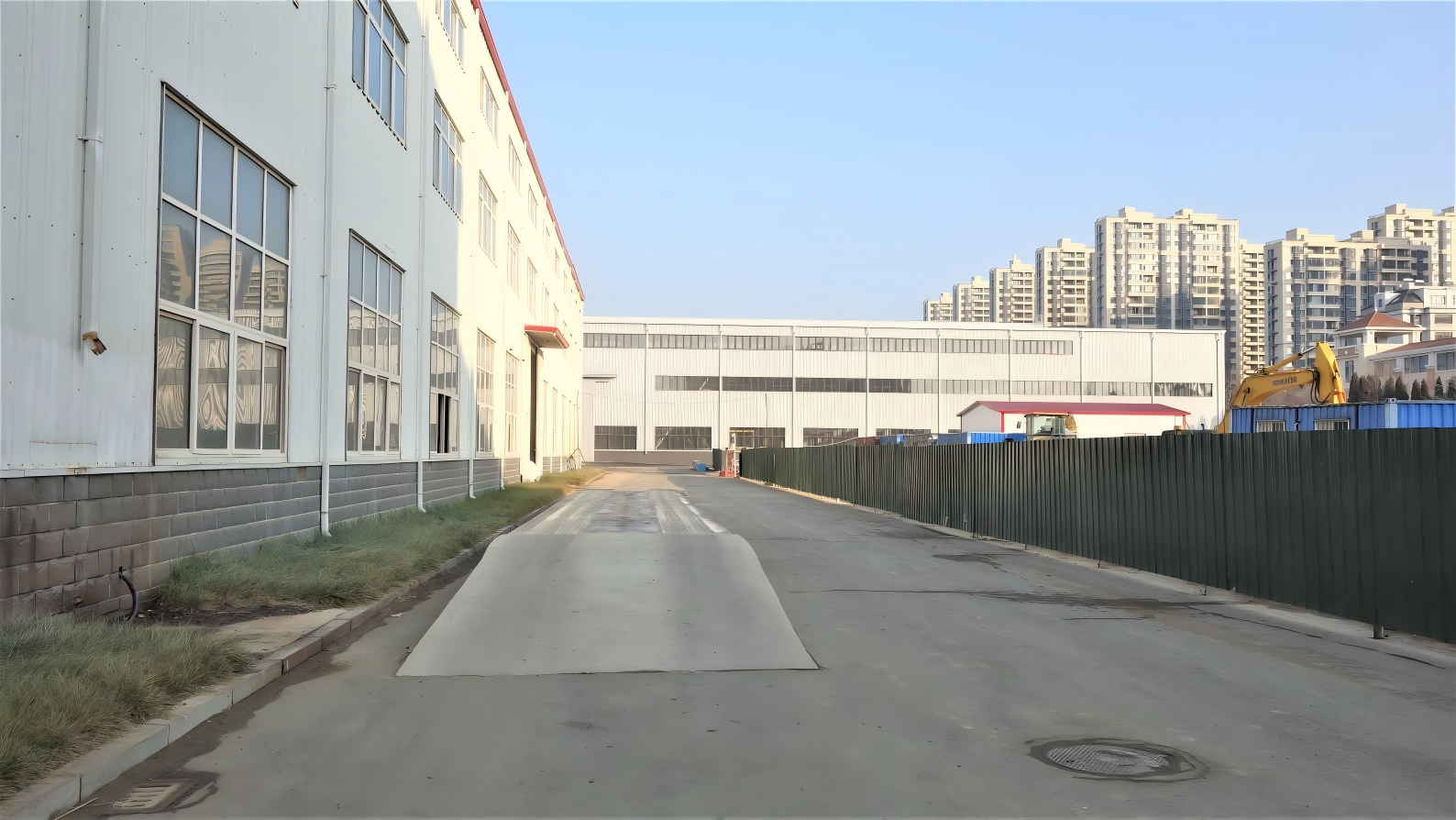
Handling and weighing of large irrigation equipment before dispatch — the point where a buyer decision matrix turns into a delivery schedule.
An irrigation pivot system purchase is decided long before a purchase order is issued, and the decision that matters is not whether to irrigate mechanically but which of four machine architectures fits a specific field. Buyers who reach the execution stage comparing a fixed DYP center pivot, a towable pivot, a four-wheel linear machine and a hose reel traveler are not choosing between good and poor equipment. They are choosing between geometries, energy sources and operating routines that will shape labour, water demand and service requirements for the working life of the machine.
This decision matrix is written for that stage. It orders the comparison around field shape first, coverage at a given machine length second, energy and water availability third, and long-term support last — broadly the sequence in which procurement errors actually occur.
China Yulin Irrigation Equipment Co., Ltd. (YULIN IRRIGATION) is a Dalian, Liaoning-based manufacturer founded in 2009 that produces center pivot, lateral move, towing and hose reel irrigation systems together with irrigation parts, matching water pumps and generators. Where line-by-line specifications help the comparison, its published figures are used here as reference points; the framework itself applies to any supplier's equipment.
The Execution-Stage Problem: Four Machines, One Field
Catalogues invite a false comparison. A pivot page lists hectares and span counts, a hose reel page lists pipe length and flow, a linear page lists travel length. Read side by side, they look like variations of the same product. In the field they solve different problems.
Four variables decide the outcome:
- Field geometry — a circle, a rectangle or a strip.
- Coverage per machine length, and the water flow that coverage implies.
- Energy source available at the field edge — grid power, generator, or none.
- Portability — whether the machine must move between plots during the season.
An error in any of these four shows up late and expensively: dry corners outside a fixed pivot circle, a hose reel ordered for a pump that cannot hold its inlet pressure, or a towable machine whose relocation routine consumes the labour it was meant to save. The opportunity is the mirror image — a fleet assembled deliberately, with each architecture placed where its geometry and energy profile are strongest.
The Four Architectures, Defined
Fixed DYP center pivot
One pivot point is fixed in the field; truss spans rotate around it and irrigate a circular area, with water entering at the pivot point. Coverage is a function of machine length, so the machine is sized to the block rather than to the season. It is the most infrastructure-dependent option in this matrix: the pivot point is permanent, and the block has to be laid out around it.
Towable center pivot
A center pivot built to be relocated, so that one machine can serve more than one block in the same season. The irrigation geometry remains circular, but the pivot point becomes a moveable asset. The trade-off is a relocation routine and the need for a usable pivot point in every block the machine serves.
Four-wheel linear (lateral move) machine
The machine travels in a straight line instead of rotating, which is why linear move irrigation equipment appears wherever parcels are rectangular. Four-wheel towers carry the spans along the travel path. Fit depends on a straight, stable travel corridor rather than on a fixed pivot point.
Hose reel traveler
A reel carries PE pipe and a sprinkler gun, with the drive provided by a water turbine. The machine irrigates a strip, is repositioned, and repeats. On the JP800 and JP90-300 series from YULIN IRRIGATION, the drive is a water turbine and does not require electricity — a detail that changes the answer for fields without a power connection.
Center Pivot Length and Coverage: The First Filter
Length is the first number to fix, because it determines how much ground one machine can hold. The reference points for the fixed DYP range are:
| Machine length | Irrigated area | What it means at shortlist stage |
|---|---|---|
| 177.6 m | 10 ha | Smallest block in this matrix. Suits fragmented holdings or a first mechanised block where a longer machine would over-invest. |
| 307.4 m | 30 ha | Mid-scale farm. Balances flow per machine against the number of machines required. |
| 395.6 m | 50 ha | Large contiguous block. Fewer machines, but a higher flow requirement at each pivot point. |
| 565 m | Set per project layout | Longest configuration listed. Irrigated area has to be confirmed against the actual boundary, pivot-point position and water source. |
Above roughly 50 ha, the decision usually shifts from one larger machine to two machines. That is a question of redundancy and service, not only of coverage: two pivots can be run independently, while a single long machine cannot be split when a drive component fails in the middle of a peak irrigation window.
Hose Reel Specifications That Change the Decision
Hose reel irrigation machines compete with pivots on a different axis. They need no pivot point, no circular block and no power line, but they do need a specific hydraulic envelope. The published figures for the JP800 and JP90-300 series set that envelope clearly:
| Parameter | Specification | Why the buyer cares |
|---|---|---|
| Drive | Water turbine; no electricity required | Fields without a grid connection can be irrigated without cabling or a transformer. |
| Pipe | 300 m PE pipe | Defines the strip length served from one machine position. |
| Water flow rate | 25–52 t/h | Sets the pump duty and the number of strips that can be completed per shift. |
| Inlet pressure | 0.6–0.9 MPa | The pump must hold this range at the machine inlet, not only at start-up. |
| Nozzle diameter | 16–22 mm | Drives the application pattern and the droplet-size selection. |
| Spray radius | 19–41 m | Affects strip width and overlap between consecutive passes. |
| Spray gun model | DL50/SIMA10497 | The reference part for replacement and service planning. |
| Net weight | 2180 kg ±30 kg | Transport, towing and site-access planning. |
Two of these numbers decide feasibility before price is discussed. The first is inlet pressure: a farm whose pump cannot hold 0.6–0.9 MPa at the machine inlet does not have a hose reel problem, it has a pump problem, and that should be resolved before the machine is specified. The second is flow: 25–52 t/h has to be available across the whole irrigation window, not only during a short test.
The 300 m PE pipe also sets the working rhythm. Each position covers a strip, after which the machine is moved and the sequence repeats. On a rectangular parcel this is efficient. On a large square block it becomes a scheduling task, and buyers should compare repositioning labour honestly against the labour needed to run a pivot over the same area.
The Buyer Decision Matrix
The matrix below is the working version of the comparison. It is meant to be read by elimination rather than by scoring: most buyers can remove two options on geometry and energy alone, leaving a decision between the two architectures that already fit.
| Criterion | Fixed DYP center pivot | Towable center pivot | Four-wheel linear | Hose reel traveler |
|---|---|---|---|---|
| Field geometry best suited | Circular or square blocks laid out around one pivot point | Several separated blocks, each with a usable pivot point | Rectangular blocks with a straight travel corridor | Strips, irregular parcels and remote plots |
| Scale per machine | 10 ha / 30 ha / 50 ha at 177.6 m / 307.4 m / 395.6 m; 565 m per layout | Area of whichever block it is currently working | Set by travel length | 300 m PE pipe per position |
| Energy source | Electric drive at the pivot point | Electric drive, relocated with the machine | Electric drive along the travel path | Water turbine; no electricity required |
| Water requirement | Flow and pressure at the pivot point | Same, at each relocation point | Flow along the travel path | 25–52 t/h at 0.6–0.9 MPa inlet |
| Portability | None | Yes, between blocks | Within the field only | Yes, between fields |
| Operating method | Continuous rotation | Rotation after each relocation | Straight-line travel | Reel in and out, repositioned per strip |
| Labour pattern | Set-up once, then routine checks | Set-up repeats at every move | Routine checks during travel | Repositioning labour per strip |
| Main constraint | Permanent pivot point; areas outside the circle stay dry | Relocation routine, and a valid pivot point in each block | Needs a rectangular layout and a travel corridor | Depends entirely on pump pressure and flow |
Where Each Option Stops Working
A decision matrix that lists only advantages is a sales document. Each architecture here has a boundary beyond which it is the wrong purchase:
- Fixed DYP center pivot: the machine cannot follow the crop to another block, and ground outside the irrigated circle needs a separate solution. For the 565 m configuration, the irrigated area must be confirmed against the real boundary before the order is released.
- Towable center pivot: relocation is a scheduled operation with its own labour and downtime. It is not a practical way to run continuous daily irrigation across distant fields.
- Four-wheel linear: the advantage depends on a straight, stable travel corridor. On an irregular parcel that corridor does not exist, and the linear machine loses the reason for its selection.
- Hose reel traveler: operation depends on 0.6–0.9 MPa at the inlet and 25–52 t/h of flow, and work proceeds strip by strip. A 2180 kg ±30 kg machine also requires transport and access planning before delivery, not after.
None of these limits is a defect. They are the boundaries within which each architecture is the rational choice, and a quotation that omits them is incomplete rather than favourable.
Power, Water and Portability: Three Constraints That Override Preference
Buyers often begin with a preference — usually for the machine type they have seen working on a neighbouring farm — and then try to make the field fit. The reliable order is the reverse: establish the constraints, then let them select the machine.
YULIN IRRIGATION states that it provides customized modification solutions according to farm terrain, crop varieties, power supply conditions and specific irrigation requirements. In practice, power supply decides more of the matrix than any other single input. Where a connection exists at the pivot point, a fixed pivot is straightforward. Where it does not, the water-turbine hose reel removes the electrical question entirely, and the pump becomes the only energy-related item to verify.
Water chemistry enters the decision as well. For applications where acidity or alkalinity would attack standard components, poly pipe is used for corrosion resistance; an end spray gun can be added for supplementary irrigation beyond the main wetted area; and a fertilizer tank or pesticide addition supports integrated pest control. Each of these changes the specification, and each is easier to price before the order than to retrofit after commissioning.
Where YULIN IRRIGATION Fits in the Matrix
For buyers who prefer to compare architectures against one set of assumptions, supplier breadth matters. China Yulin Irrigation Equipment Co., Ltd. operates a 64,653 m² facility in Lvshunkou District, Dalian, with 152 employees, a 10-engineer R&D team and an export share of about 60%. Its product range covers all four architectures discussed here — center pivot, lateral move, towing and hose reel systems — which allows a comparison to be run against one manufacturer's specification sheets rather than across four vendors working from different conventions.
Manufacturing depth matters at execution stage. More than 95% of the machine's spare parts are independently manufactured in the factory, monthly production capacity is 60 units, and every product undergoes 100% testing before delivery. The company also welcomes OEM and ODM orders and provides localized on-site installation, commissioning and operator training services overseas.
Export markets listed by the company include Australia, New Zealand, Canada, the United States, Mexico, Zimbabwe, Algeria, Iraq, Russia, Kazakhstan and Sudan. Certifications listed are CE, ISO9001 and CSA, and equipment is tested for anti-corrosion and wind resistance to suit tropical, saline-alkali and high-wind farmland environments.
Execution Checklist: From Order to Commissioning
Once the architecture is fixed, the remaining work is contractual and logistical. The following terms and controls are the ones that most often decide whether a machine enters service on schedule:
| Stage | Standard position |
|---|---|
| Minimum order | 1 unit |
| Delivery terms | FOB / CFR / CIF |
| Payment terms | 30% deposit after contract confirmation, balance by T/T before shipment; L/C or D/P available for the Algeria market |
| Acceptance criteria | Pre-shipment test |
| Quality control | 100% testing before delivery |
| Packaging | Reinforced classified packaging with photo archiving before shipment, to prevent transit loss and breakage |
| Warranty service | Free spare parts reissue for company-caused faults and in-warranty damage |
| Technical support | 24-hour online support by professional engineers |
| On-site scope | Installation, commissioning and operator training |
For uniformity verification, ISO 11545:2009 is the active international standard for determining the uniformity of water distribution from center-pivot and moving lateral irrigation machines. Buyers who want a measurable acceptance criterion can reference it when agreeing how performance will be checked in the field, rather than relying on a visual assessment after the first irrigation cycle.
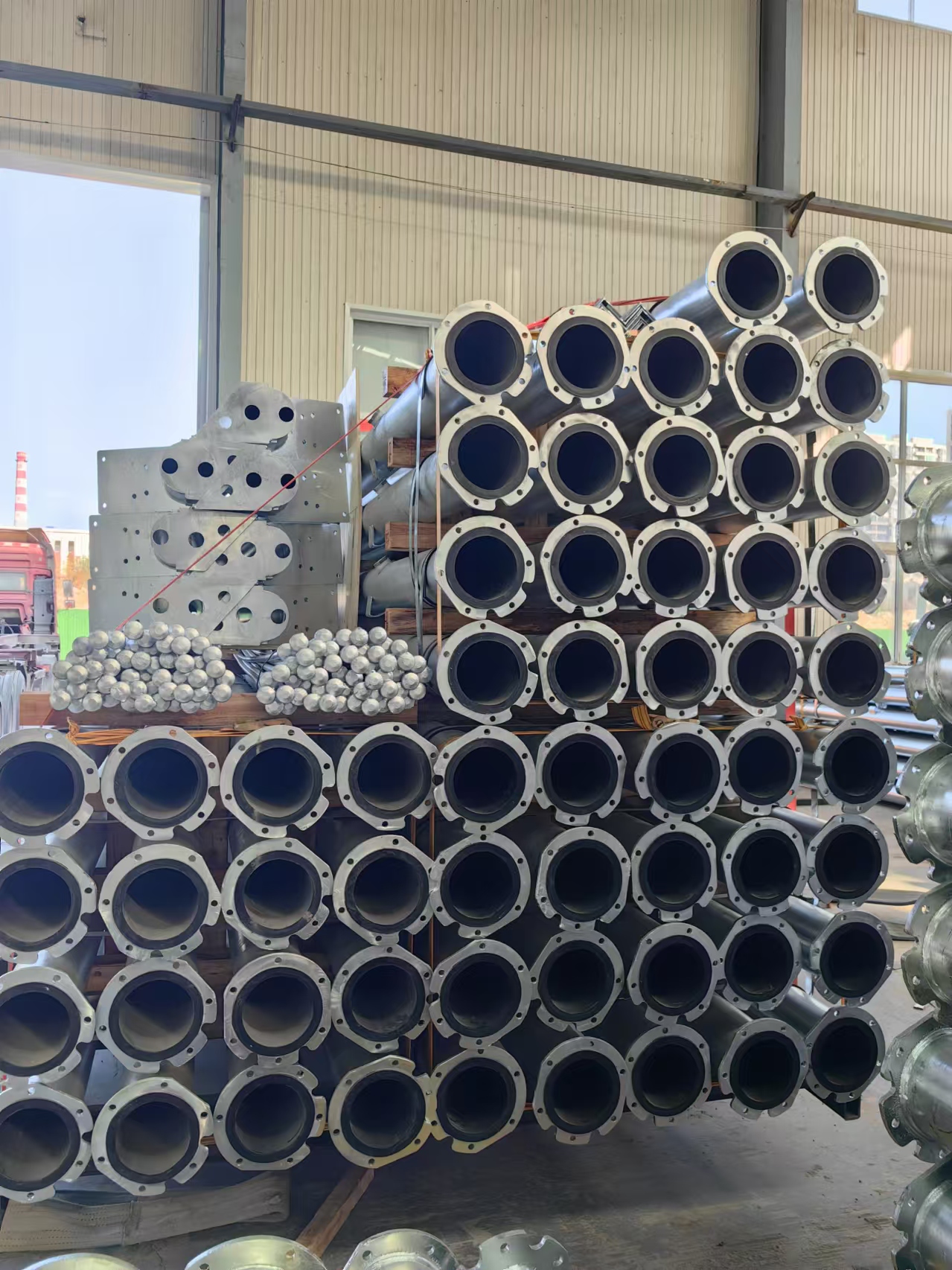
Component stock held for replacement supply — the part of a purchase decision that only becomes visible in year two and beyond.
Long-Term Ecosystem: What Keeps a Machine Running in Year Eight
Long-term decisions are usually settled by parts, not by price. A machine that cannot be repaired quickly during a peak irrigation window costs more than its purchase difference in a single season, and the cost is not recoverable by negotiation afterwards.
Three structural factors support continuity. First, in-house manufacture of more than 95% of spare parts shortens the path between a failed component and a replacement, because the part does not depend on an outside supplier's schedule. Second, a monthly production capacity of 60 units indicates an ongoing production rhythm rather than batch-only manufacturing, which is what makes repeat orders and parts supply practical over time. Third, warranty terms covering free reissue of defective components, combined with 24-hour online engineering support and an on-site commissioning and training scope, shorten the period in which a new operator is still learning the machine.
For dealers and distributors the same factors work differently. OEM and ODM orders allow a partner to build a local programme around a manufacturer's platform while keeping installation and training responsibilities clearly assigned. That is the practical definition of an ecosystem decision: whether the supply relationship can be sustained across the replacement cycle of the machine, not merely across the delivery date.
Market Signals Behind the Mixed-Fleet Decision
Two published signals help explain why buyers increasingly compare architectures instead of standardising on one. Mordor Intelligence estimates the global center pivot irrigation system market at USD 2.56 billion in 2025, projected to reach USD 5.67 billion by 2030. Separately, Lindsay Corporation reported a multi-year agreement for Zimmatic irrigation systems in the MENA region valued at more than USD 100 million in 2024 — an indication that large project demand is not confined to traditional markets.
Market-size estimates differ by definition between research houses, sometimes substantially, depending on whether project and construction costs are included alongside equipment sales. They are useful for direction, not for specification. The numbers that decide an individual farm purchase remain flow, pressure, area and power.
Future Outlook
Three developments are likely to shape the next round of decisions. Water and energy constraints push buyers toward machines whose drive does not depend on a grid connection. Labour availability turns repositioning routines into a cost line rather than an afterthought, which favours architectures that minimise handling per hectare. And procurement documentation is tightening: referencing a published uniformity standard, requiring 100% pre-delivery testing and archiving packaging photographs are becoming normal expectations rather than premium requests.
The likely result is not one winning architecture but more deliberately mixed fleets — a fixed pivot on the main block, a hose reel where the parcel is irregular or the power absent, and a linear machine where the field is genuinely rectangular. Buyers who make that mix explicit at the decision stage spend less time correcting it during execution.
FAQ
How do I choose between a fixed DYP center pivot and a towable pivot?
Choose the fixed DYP when the irrigated block is permanent and the pivot point, water source and power can all be fixed in one place. Choose the towable version when one machine must serve several separate blocks in the same season and each block has a usable pivot point. The practical difference is not coverage geometry — both irrigate a circle — but whether relocation labour is acceptable.
How much area does each center pivot length cover?
In the fixed DYP range, a 177.6 m machine corresponds to 10 ha, a 307.4 m machine to 30 ha, and a 395.6 m machine to 50 ha. A 565 m configuration is also offered; its irrigated area depends on pivot-point position and field boundary and should be confirmed for each project layout rather than assumed from length.
Can a hose reel irrigation machine operate without electricity?
Yes. The JP800 and JP90-300 series hose reel machines are powered by a water turbine and do not require electricity. They do require an inlet pressure of 0.6–0.9 MPa and a flow of 25–52 t/h, so the pump and water source become the limiting factors instead of the power supply.
What field shape suits a four-wheel linear irrigation system?
A rectangular block with a straight, stable travel corridor. A linear irrigation system moves in a straight line rather than rotating around a fixed point, so its advantage over a pivot appears where field geometry is rectangular rather than circular.
Which hose reel specifications should be confirmed before signing?
Confirm flow (25–52 t/h), inlet pressure (0.6–0.9 MPa), the 300 m PE pipe length, nozzle diameter (16–22 mm), spray radius (19–41 m), spray gun model (DL50/SIMA10497) and net weight (2180 kg ±30 kg), then match those figures against the actual pump curve and transport access at the site.
What should a buyer verify before shipment?
Verify the pre-shipment test result, confirmation of 100% testing before delivery, the reinforced classified packaging record with photographs, the warranty and spare-parts terms, and the scope of on-site installation, commissioning and operator training. Standard terms include a minimum order of 1 unit, FOB/CFR/CIF delivery, and a 30% deposit with the balance by T/T before shipment.
Reference Material
The 2026 YULIN Pivot Catalogue, containing model and specification tables for the pivot and hose reel ranges discussed above, can be downloaded here: 2026 YULIN Pivot Catalogue (PDF).
Есть вопросы или нужны дополнительные детали?
Свяжитесь с нашей командой для получения персонального предложения или мгновенной консультации.
Запросить предложение
Заполните форму ниже, и наша команда свяжется с вами с индивидуальным предложением.
Прямой чат WhatsApp
Предпочитаете общаться в реальном времени? Напишите нам в WhatsApp для мгновенной помощи и быстрых ответов.
- Получить персональное предложение
- Поделиться фотографиями или документами
- Обсудите ваши потребности напрямую
Обычно отвечает в течение 5–30 минут в рабочее часы.