
Irrigation Pivot System Procurement FAQ: Terms, Acceptance Criteria, and Technical Specs
Irrigation Pivot System Procurement FAQ: Terms, Acceptance Criteria, and Technical Specs
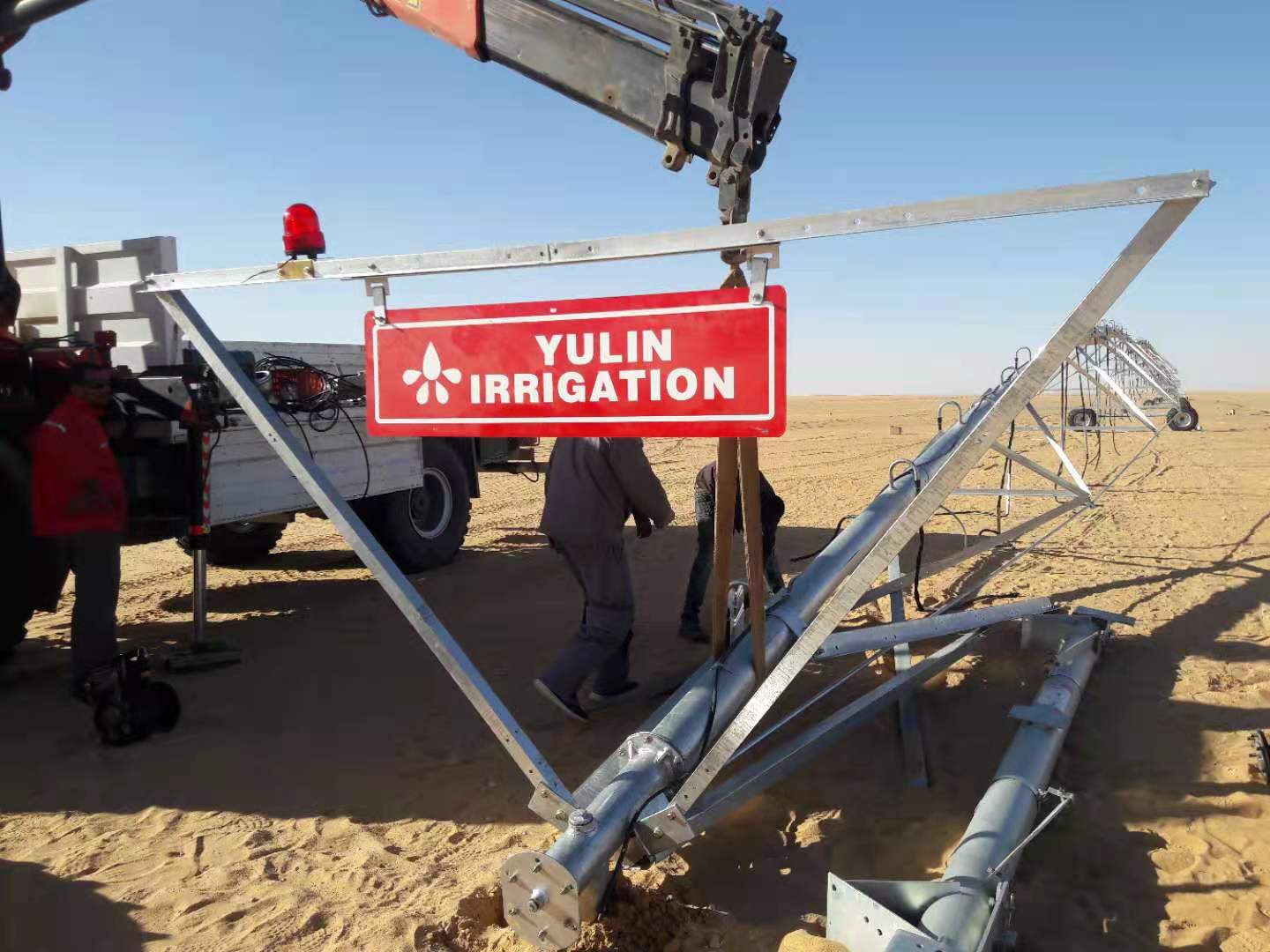
An irrigation pivot system purchase is decided less by the brochure than by the paperwork around it: what the supplier states as commercial terms, what counts as acceptance before the container leaves, and which specifications can be checked against a standard instead of accepted as adjectives. This procurement FAQ answers the questions that typically arrive once a farm, dealer or project buyer has already shortlisted center pivot and hose reel equipment and is moving from technical evaluation into purchase execution.
China Yulin Irrigation Equipment Co., Ltd. (YULIN IRRIGATION) is a Dalian-based manufacturer established in 2009 that builds center pivot, linear move, towable and hose reel irrigation machines, and exports to markets including Australia, New Zealand, Canada, Mexico, Africa, Central Asia and Russia. Its published terms and specifications are used below as a worked reference, because procurement questions are easier to answer against a concrete offer than in the abstract. The same checks apply to any supplier's quotation.
The category is also attracting more capital. Mordor Intelligence estimated the global center pivot irrigation system market at USD 2.56 billion in 2025 and projected it to reach USD 5.67 billion by 2030 in research published in February 2025. Larger budgets do not change what one buyer must verify; they change how much a badly specified contract can cost.
What should an irrigation pivot system quotation state as purchasing terms?
A quotation that cannot be turned into a contract clause is not yet a purchasing document. Five terms decide whether it can: minimum order quantity, delivery term, payment schedule, lead time, and the acceptance criterion. YULIN IRRIGATION's export terms list an MOQ of 1 unit, delivery on FOB, CFR or CIF terms, a 30% deposit after the contract is confirmed with the balance by T/T before shipment, and pre-shipment test as the acceptance criterion; L/C or D/P is also accepted for the Algeria market.
Those positions are workable, but each one needs a companion detail before signature, or the term will be interpreted twice.
| Term | Stated position | Clause the buyer should add |
|---|---|---|
| Minimum order quantity | 1 unit | Whether the trial machine's spare parts and any extra span, gun or nozzle options travel in the same container. |
| Delivery term | FOB / CFR / CIF | The named port, the Incoterms version that governs the term, and who bears unloading and inland transport. |
| Payment | 30% deposit on contract confirmation; balance by T/T before shipment; L/C or D/P for the Algeria market | The exact documents that trigger the balance payment, and the buyer's right to inspect before that payment is released. |
| Lead time | 21–40 days | The event the lead time counts from — contract signature, deposit receipt or approved drawings. |
| Acceptance | Pre-shipment test | What the test covers, what is recorded, and who signs the record. |
| Production capacity | 60 units per month | Where this order sits within that capacity, and the remedies if the slot slips. |
The gap between 21 and 40 days is not slack; it is usually the difference between a standard configuration and one that needs a different voltage or a non-standard span set. A buyer who needs a fixed ship date should ask for a date in writing rather than accept the range as a commitment.
What does "pre-shipment test" acceptance actually require?
Pre-shipment test is a stage, not a specification. On its own the phrase guarantees only that something was checked before packing. The supplier's quality-control position is 100% test, which sets the floor; the buyer's acceptance annex decides the ceiling. An annex that cannot fail anything is decoration.
A workable acceptance annex for a pivot or hose reel order usually asks for the following records:
- Nameplate and control data matched against the contract: rated voltage, motor data, span quantity and machine length.
- A dry run in both directions at each drive, recorded span by span rather than summarised in one line.
- Enclosure inspection on IP65 panels and motor covers — gasket condition, gland tightness, fastener presence, no cable abrasion at entries.
- Coating inspection of galvanized parts against GB 13912-2020, with measurement points marked on a drawing instead of described as "good".
- Hose reel checks where applicable: pipe length, spray gun model, nozzle size and turbine rotation under water.
- Packing list matched to the order, with serial numbers, dated photographs and the signature of the person releasing the shipment.
Photographs and video are the practical substitute for a witness when the buyer cannot attend. They are only useful when tied to serial numbers and dates; generic workshop footage proves nothing about the machine inside the container.
For the one property that decides whether the machine irrigates evenly, an international method exists instead of a supplier adjective. ISO 11545:2009 specifies an in-field method for determining the uniformity of water distribution from centre-pivot and moving lateral irrigation machines. Naming that method in the contract — even if the test is run after commissioning rather than before shipment — converts uniformity from a promise into a measurement.
How do you verify Q235B steel and GB 13912-2020 galvanizing?
Q235B is verified at the material stage; GB 13912-2020 is verified on the finished coating. Treating either as a label on a brochure is the common failure. Q235B is a structural steel grade, so what matters is that the certificate describes the steel actually used for the main water pipe and truss, not the steel the supplier generally buys.
For the material, request the mill certificate or heat-number records covering the specific lot, and check that grade and dimensions match the specification clause rather than a general product description. A certificate for a different lot, or a grade statement with no certificate behind it, is not traceability.
GB 13912-2020 governs hot-dip galvanized coatings on fabricated iron and steel articles. In a procurement annex it should produce three commitments: the coating class the contract requires, the measurement method and sampling points, and the treatment of coating damaged during handling or transport. Galvanizing is inspected before packing and again on arrival, because the damage that matters most often happens in between.
Manufacturing depth changes how much of that chain a supplier controls. YULIN IRRIGATION states that over 95% of the machine's spare parts are independently manufactured in its factory, a structure it presents as the basis for full-process quality monitoring, and that its workshops use robotic welding and precision processing. In-house production makes a traceability chain easier to audit; it does not replace the certificates, which is why the document request stands either way.
Management-system evidence belongs beside the product evidence. The company's ISO 9001 certificate, number 18524Q11926R2S, was issued by National Standard Integration (Beijing) Certification Co., Ltd under GB/T19001-2016/ISO9001:2015, with the scope covering production of irrigation systems and mechanized agricultural systems, and remains valid to 17 December 2027. A buyer should check the number, the scope wording and the expiry date against the certifying body's register — a valid number on an expired or out-of-scope certificate answers a different question than the one being asked.
What do IP65, 380V–460V and span-by-span control mean on site?
IP65 describes an enclosure that is dust-tight and protected against water jets from any direction; it says nothing about corrosion, ultraviolet exposure or how the enclosure behaves after it has been opened for maintenance. On a pivot, the rating matters most at motor and gearbox covers and at the control panel — the two places where a failed seal becomes a stoppage rather than an inconvenience.
- Confirm that the IP65 claim applies to the enclosures listed in the offer, not to the machine as a whole.
- Inspect gaskets, gland plates and cover fasteners at commissioning, and re-check after the first season.
- Record enclosure condition in the maintenance log so that a later warranty discussion has evidence on both sides.
Rated voltage is a specification to be agreed before production, not discovered at commissioning. The machine is offered with a rated voltage in the 380V–460V range, and voltage customization is available for OEM orders — which is precisely the point at which the site's real supply should enter the order. A machine built for one voltage band and installed on another creates a commissioning dispute that no warranty clause resolves cleanly.
Start-stop operation is the basic duty: the machine starts and stops on command rather than running continuously. Each start is a load event for the pump, the gearboxes and the structure, so the intended start sequence between the water source and the machine should be confirmed with the supplier and written into the commissioning checklist rather than left to operator habit.
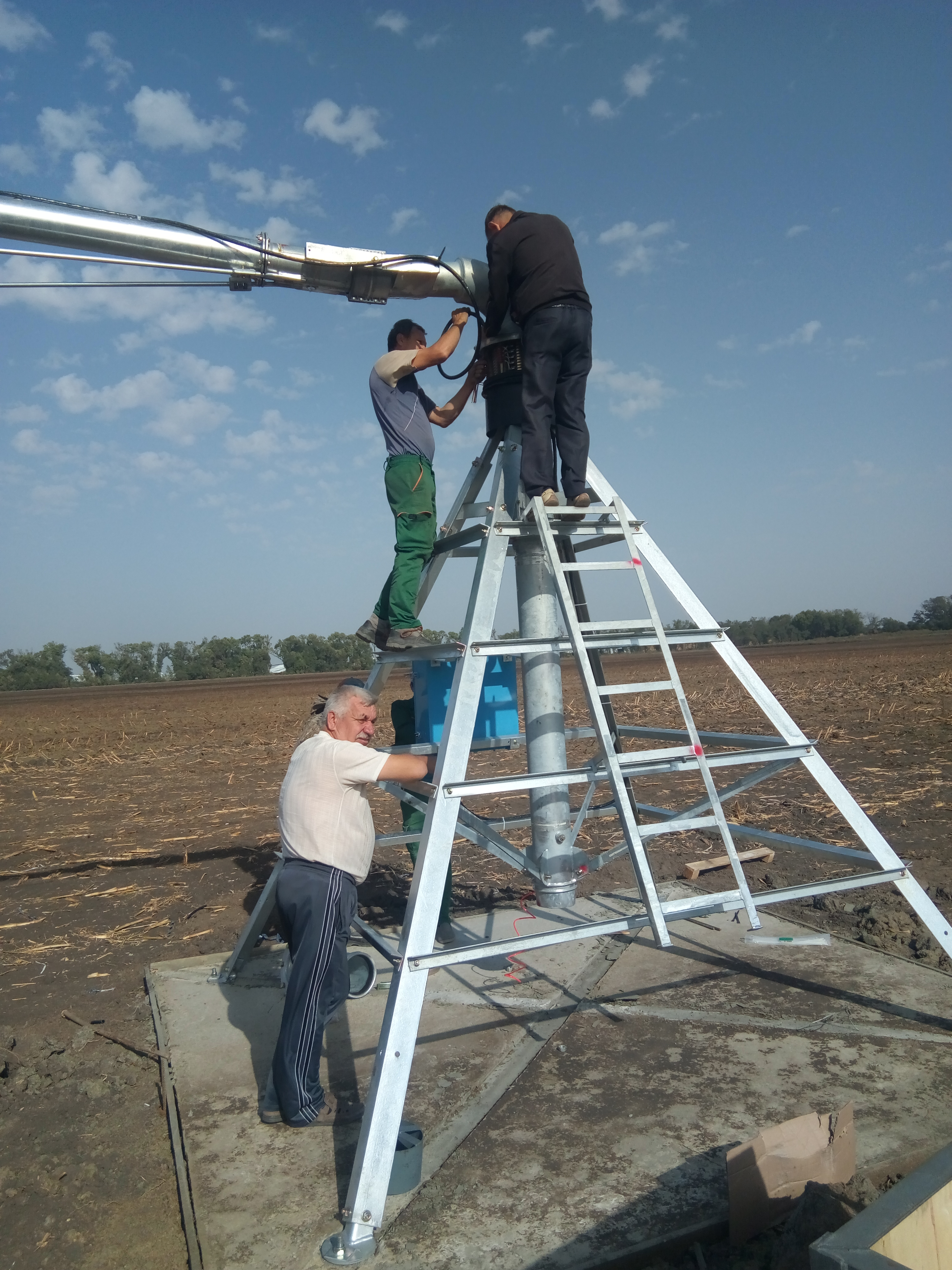
Span-by-span electromechanical reversible control is the more useful capability in daily operation. Each span can be driven forward or backward independently, which is how a machine is aligned after a tyre change, walked out of a soft patch, or guided around an obstacle without dismantling the line. At commissioning, the buyer should see every span reversed individually and confirm that the control responds span by span rather than as a single machine-wide command.
Which checks replace the electrical checklist on a hose reel irrigation machine?
Where the water source itself can drive the machine, the electrical checklist disappears. The JP800 hose reel irrigation machine uses water-turbine power with no electricity requirement, so verification shifts from voltage and enclosures to hydraulics, pipe and the gun.
The points worth writing into the order are concrete: the JP800 model, or the JP90-300 series within the same family; water-turbine drive; a DL50/SIMA10497 spray gun; a nozzle in the 16–22 mm range; and a 300 m PE pipe. Each of those is a verification point rather than a marketing line — the gun model and nozzle size can be checked on delivery, and the pipe length can be measured.
- Inlet conditions: confirm with the supplier that the site's pressure and flow suit the turbine drive before ordering. A turbine that never reaches operating speed is an inlet problem, not a machine defect.
- Pipe: measure the 300 m PE pipe, check reel layering, and look for kinks or abrasion at the guide.
- Gun and nozzle: verify the DL50/SIMA10497 gun and the nozzle diameter against the order, and confirm the chosen nozzle sits inside the 16–22 mm range the machine is specified for.
- Travel path and anchoring: the reel chassis carries load while pulling, so the lane and anchor points belong in the site plan, not in the operator's judgement on the first day.
- End-of-run behaviour: agree how the machine stops at the end of a strip and what the operator does next.
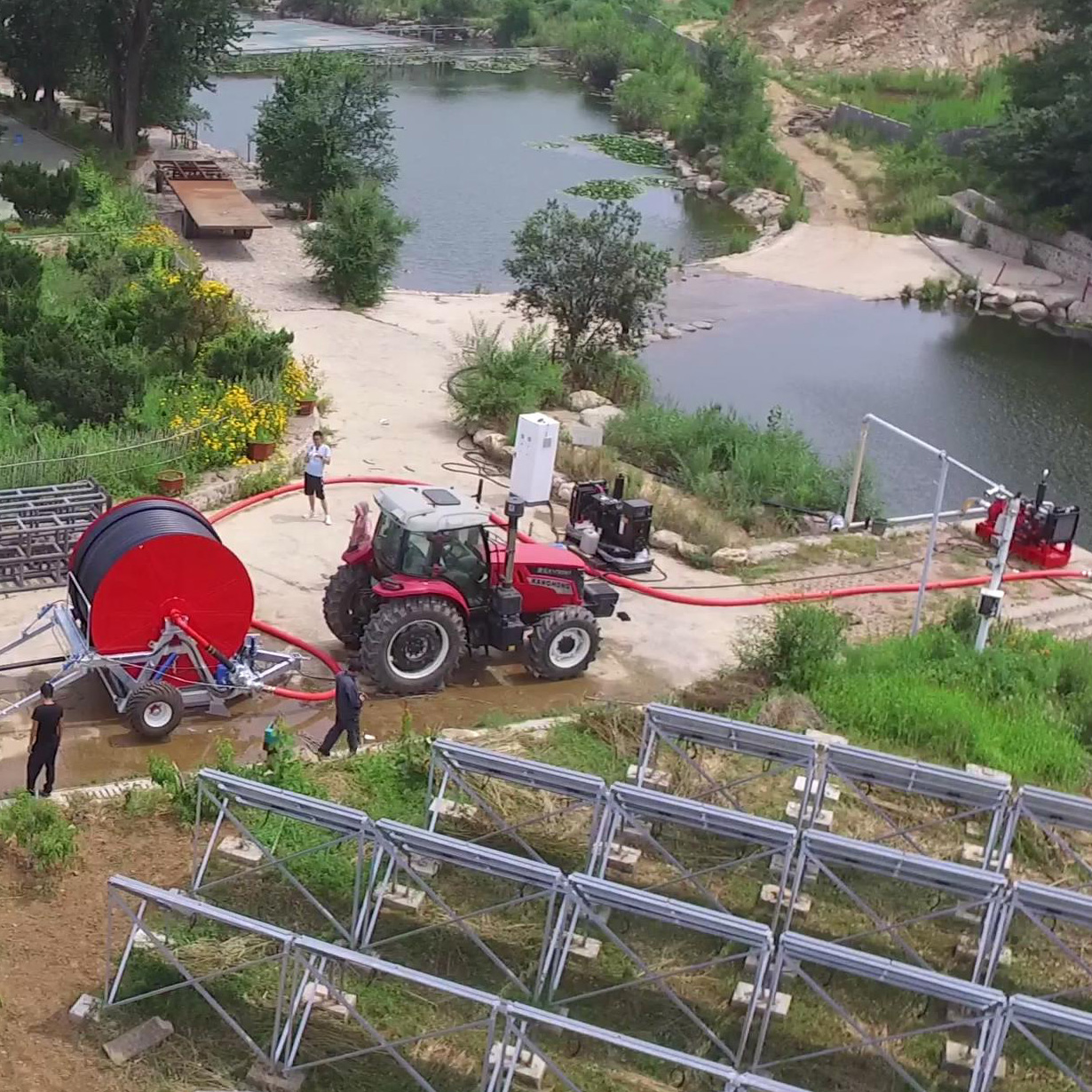
Application scope for these machines is farm irrigation and agricultural irrigation, which is broad enough that the real question is the field: a hose reel covers a strip, while a pivot covers a circle or a rectangle depending on configuration. YULIN IRRIGATION reports a Brazilian large-scale farmer running 50 JP800 units for soybean irrigation over six years, with output rising 30% in dry conditions and labour requirements reduced; the company also highlights that the units are easy to pull between fields and easy to rent. That is a supplier-reported case rather than independent evidence, but it shows the pattern that makes traveler irrigation machines attractive on fragmented land.
How do field size and power availability change the specification sheet?
Field size does not change the quality of a specification; it changes the model the specification attaches to. For center pivot systems, published coverage is tied to machine length rather than to a marketing segment.
| Machine length | Coverage | What it changes in procurement |
|---|---|---|
| 177.6 m | 10 hectares | Small center pivot configuration; the acceptance annex stays short, but the voltage and enclosure checks do not change. |
| 307.4 m | 30 hectares | Mid-size layout; span alignment and tyre condition start to matter for weekly inspection. |
| 395.6 m | 50 hectares | Larger span set; span-by-span reversal is used often enough to be demonstrated at commissioning. |
| 565 m | 100 hectares | Longest span set; structural, alignment and drive checks carry the most weight in acceptance. |
Two conditions deserve their own clauses. The first is power: a site without a reliable supply is better evaluated as a hose reel project or as a pivot project with a resolved power section, never as a pivot with an open electrical question. The second is temperature: the machine is specified to operate under high temperature conditions, and where the installation site runs hotter than the reference conditions the supplier should confirm the applicable derating rather than leaving it to the first hot week of the season.
Whatever the model, specifications must stay attached to the configuration they were quoted for. A feature listed for a 100-hectare machine does not automatically apply to a towable unit, and a control description written for a fixed pivot should not be read into a hose reel. Configurations marketed as solar powered center pivot, variable rate pivot irrigation or automatic center pivot change the power and control sections; they do not remove the need for documented acceptance criteria.
Where do cost and total-cost-of-ownership claims belong in the decision?
They belong in the evaluation, but as a claim to be decomposed rather than a number to be adopted. YULIN IRRIGATION's published material states that, compared with alternatives, the product carries a 30% higher initial cost but a 40% lower total cost of ownership over 10 years. Both figures are only as good as the assumptions behind them, and those assumptions are what a buyer should request.
- Which alternatives and which configurations were compared — fixed pivot, towable pivot or hose reel.
- What energy and labour assumptions underlie the ten-year calculation.
- Whether spares, tyres, gearbox oil, spray guns and nozzles are included.
- What machine life and downtime allowance were used, and whether installation and training sit inside or outside the figure.
Case material can support the direction of the argument without settling the arithmetic. The company reports an Australian distributor running 600 units across 15 years with energy savings above 40% and low maintenance cost, and a New Zealand dairy operation with 70 units over nine years citing long service life and labour savings. These are supplier-reported results from specific farms; they are most useful for asking better questions — what maintenance regime produced that life, at what energy price, for which crop — not for substituting a general calculation.
The practical use of a total-cost claim in a contract is narrower: it identifies which cost lines to ask about. Energy, labour, tyres, oil, gun and nozzle replacement, and in-season downtime are the lines that separate a cheap machine from an expensive one.
What does procurement look like after signature — installation, commissioning and spares?
Execution is where the evaluation stage ends and most disputes begin. The supplier's after-sales position covers field installation, commissioning and operator training, video technical support, online support and free spare parts. Each should become a named deliverable: who attends, for how many days, what the training covers, and what "free spare parts" includes and for how long.
Logistics belongs in the same clause. The factory is in Lvshunkou District, Dalian City, Liaoning Province, about two hours by truck from Dalian Port, which shortens the inland leg and makes the port cut-off the main schedule risk rather than the road transfer. With 60% of output exported to markets including Australia, New Zealand, Canada, Mexico, Africa, Central Asia and Russia, the shipping calendar and the 21–40 day production window should be planned together rather than sequentially.
Spares policy deserves a question rarely asked at quotation stage: which components are bought in and which are made in-house. Where a high share of parts is produced internally, part availability depends on the supplier's own scheduling; where parts are bought in, it depends on a third party. Either answer is manageable if it is known before the first breakdown rather than after it.
What is the outlook for pivot and hose reel procurement?
Forecasts are context, not a purchase argument. The Mordor Intelligence estimate of USD 2.56 billion in 2025 rising to USD 5.67 billion by 2030 is a market-level projection from one research house using its own definition; other houses scope the category differently, and equipment estimates are not installed project costs. What that trajectory implies for an individual buyer is narrower: more configurations, more control options and more suppliers quoting similar specifications, which raises the value of documentation over description.
Standardisation is the quieter trend. ISO 11545:2009 gives uniformity a test method, GB 13912-2020 gives galvanizing an inspection basis, and IEC ingress ratings give enclosures a shared language. A buyer who writes those references into the order makes supplier comparison factual; a supplier who can answer them with documents rather than adjectives is simply easier to audit.
How should a buyer use this FAQ?
Use the commercial terms as the contract skeleton, the acceptance annex as the test definition, and the technical specifications as the checklist that links each claim to a model and a document. The sequence matters: terms agreed first, acceptance defined second, specifications verified third, logistics and service written in last. Buyers who reverse that order usually discover the gap between a quotation and a delivery at the port.
The 2026 YULIN Pivot Catalogue, which lists machine ranges and configurations for center pivot and hose reel equipment, can be downloaded here: 2026 YULIN Pivot Catalogue (PDF).
Frequently asked questions
What is the minimum order quantity and lead time for an irrigation pivot system?
YULIN IRRIGATION lists an MOQ of 1 unit and a lead time of 21–40 days, with monthly production capacity of 60 units. The single-unit MOQ makes a trial machine practical; the lead-time range reflects configuration differences, so a buyer should request a specific ship date rather than treat the range as a commitment.
Which payment and delivery terms apply to export orders?
Delivery is quoted on FOB, CFR or CIF terms. Payment is a 30% deposit after the contract is confirmed, with the balance by T/T before shipment, and L/C or D/P is accepted for the Algeria market. The buyer's protection comes from the documents attached to the balance payment and from the pre-shipment test record agreed beforehand.
Can voltage and machine configuration be customized for OEM orders?
The manufacturer provides OEM production services and offers voltage customization for OEM orders. Because rated voltage is fixed during production, the site's supply should be confirmed before the order is released, and the agreed value should appear on both the contract and the machine nameplate.
How is a hose reel irrigation machine verified where there is no grid power?
The JP800 uses water-turbine power with no electricity requirement, so verification covers inlet pressure and flow, the 300 m PE pipe, the DL50/SIMA10497 spray gun, a nozzle within the 16–22 mm range, plus the travel lane and anchoring. Confirming that the site's water supply suits the turbine is the first check, because it cannot be corrected after delivery.
What after-sales support is included?
Support covers field installation, commissioning and operator training, video technical support, online support and free spare parts. Buyers should confirm the number of training days, the spare-parts list and the response route in the contract, since these are delivered services rather than product features.
Есть вопросы или нужны дополнительные детали?
Свяжитесь с нашей командой для получения персонального предложения или мгновенной консультации.
Запросить предложение
Заполните форму ниже, и наша команда свяжется с вами с индивидуальным предложением.
Прямой чат WhatsApp
Предпочитаете общаться в реальном времени? Напишите нам в WhatsApp для мгновенной помощи и быстрых ответов.
- Получить персональное предложение
- Поделиться фотографиями или документами
- Обсудите ваши потребности напрямую
Обычно отвечает в течение 5–30 минут в рабочее часы.