
JH-D726 or JH-1699? A Dry Strength Cost and Performance FAQ
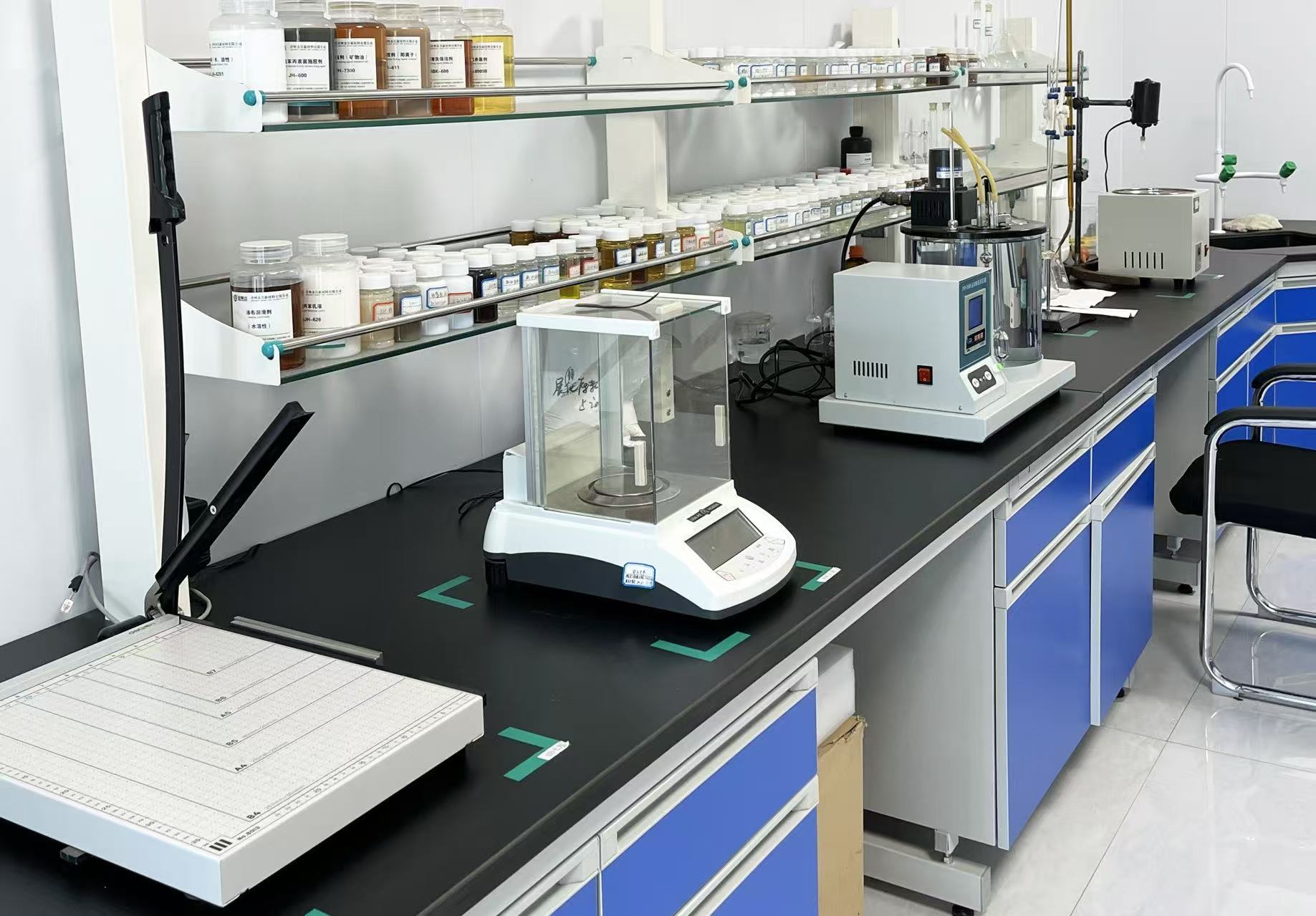
Performance testing on recycled furnish is where a mill's dry strength dosage decision is actually settled.
Dry strength agents have moved from a discretionary upgrade to a standing line item in the wet-end chemistry budget of packaging paper mills. The global paper dry strength agent segment was valued at approximately USD 864 million in 2024 by Intel Market Research, and Fact.MR projects the broader dry strength resin market to reach USD 1.4 billion by 2026, growing at a CAGR of 4.8% through 2036. Inside that spend sits a narrow, recurring evaluation question: when a mill needs more strength on recycled furnish, should it buy a liquid dry strength agent or a powder one?
Two grades from the same supplier make that question concrete. Qingzhou Jinhao New Material Co., Ltd., which trades as JHDA, is a papermaking chemicals manufacturer founded in 2005 and based in Mihe Industrial Park, Qingzhou City, Shandong Province, China, producing dry and wet strength agents, sizing agents and paper machine process auxiliaries for paper and board mills. Its dry strength range includes JH-D726, supplied as an amphoteric liquid, and JH-1699, supplied as a cationic powder described by the manufacturer as a dry strength agent for recycled paper, corrugated paper, box board, testliner and fluting grades.
This FAQ is written for procurement and technical staff who already know they need dry strength chemistry and now have to choose a form, a dosage basis and a cost model. It answers the questions that come up in that evaluation, using published specifications and third-party market data, and it states plainly where the limits are.
The Question Behind the Question: Liquid or Powder?
JH-D726 and JH-1699 are not competing chemistries in the sense of strong versus weak. They are two delivery forms of the same functional idea: introduce a polymer into the wet end so that fibres bond more effectively, and so that the sheet resists tensile, burst and ring crush stress more successfully.
The difference is in how the product arrives and how it behaves once it does. JH-D726 is a colourless, semi-transparent liquid with an amphoteric ionic character, a solid content of 15.0 / 20.0 ± 1.0% and a viscosity of 4,000 to 12,000 cps at 25 °C. Its published materials description covers polymer and surfactant-type materials, organic and inorganic composite liquids, and functional small-molecule additives. JH-1699 is a white powder with an active ingredient content of at least 95.0% and a cationic ionic character, built on polyacrylamide, polyamine, polyamide epichlorohydrin resin and starch derivatives. Both are listed as soluble, both are intended for papermaking, and their shelf lives differ materially: six months for the liquid, twelve months for the powder.
For a mill, those few lines of specification translate into four operational differences: how much active chemistry is in each delivered kilogram, what equipment is needed to dose it, how much warehouse or tank space it consumes, and how it interacts with the other charged chemicals already in the wet end.
The Procurement Problem: Price per Kilogram Is Not the Cost
Contract discussions almost always begin with a price per kilogram, and that is precisely where a liquid versus powder comparison goes wrong. The published figures explain why. JH-D726 carries a solid content of 15.0 / 20.0 ± 1.0%, which means a significant share of every delivered kilogram is water. JH-1699 carries an active ingredient content of at least 95.0%. A one-tonne order of each product therefore does not contain the same quantity of active chemistry.
The workable comparison is cost per unit of active material delivered to the wet end, adjusted for the costs that sit around the product:
- Freight and storage weight. Water in a liquid grade is paid for twice, once in purchase price and once in transport and storage.
- Make-down requirements. A powder has to be dissolved before it can be dosed, which consumes labour, water and mixing capacity; a liquid is generally ready to dose.
- Inventory policy. A six-month shelf life and a twelve-month shelf life imply different reorder frequencies and different exposure to demand swings.
- Dosage efficiency. Retention of the additive in the sheet determines how much of the purchased chemistry actually ends up in the paper rather than in the white water.
There is also an opportunity argument that has strengthened in recent years. Recycled fibre carries a higher proportion of short, already-refined and contaminated fibres than virgin pulp, and strength development on recovered furnish is harder to achieve through mechanical means alone. The American Forest & Paper Association reported that recycled paper accounted for 44.4% of all fibre used at United States mills in 2024. The larger that share grows, the more the decision shifts toward chemistry, and the more a wrong form decision costs over a full contract year.
JH-D726 and JH-1699: Chemistry and Published Specifications
JHDA's portfolio covers the full series of papermaking functional additives, including dry and wet strengthening agents, AKD and styrene-acrylic surface sizing agents, retention chemistry and wastewater treatment chemicals. Within the dry strength group, JH-D726 and JH-1699 sit at opposite ends of the supply-form spectrum, and the table below sets their published data side by side.
| Parameter | JH-D726 (Dry strength agent) | JH-1699 (Paper Tensile Strength Enhancer) |
|---|---|---|
| Supply form | Colourless semi-transparent liquid | White powder |
| Ionic type | Amphoteric | Cationic |
| Active / solid content | Solid content 15.0 / 20.0 ± 1.0% | Active ingredient ≥ 95.0% |
| pH | 3.0 – 6.0 | Not stated in the published product data |
| Viscosity (25 °C) | 4,000.0 – 12,000.0 cps | Not applicable to the powder as supplied |
| Solubility | Soluble | Soluble |
| Shelf life | 6 months | 12 months |
| Published material basis | Polymer and surfactant-type materials, organic and inorganic composite liquids, functional small-molecule additives | Polyacrylamide, polyamine, polyamide epichlorohydrin resin, starch derivatives |
| Functional targets listed | Dry strength, fibre reinforcement, tensile strength, burst resistance, tear resistance, ring crush strength, molecular bonding strength, retention aid enhancement, sludge reuse enhancement, filler reuse enhancement | Dry strength for recycled paper, corrugated paper and box board, testliner, fluting, waste paper pulp reinforcement |
What the liquid form gives a mill
JH-D726 is dosed as received. There is no make-down step, no dissolution water, and no risk of undissolved particles reaching the headbox. Its viscosity range of 4,000 to 12,000 cps at 25 °C is high enough that dosing pumps, lines and dilution practice have to be sized properly, but the handling sequence is otherwise simple. Its amphoteric character is the more interesting property: an amphoteric polymer carries both cationic and anionic functionality, which is a design choice for furnishes where charge demand fluctuates, as it typically does on a recycled linerboard machine running a mixed recovered fibre furnish.
The published functional list for JH-D726 also spans more than strength. Alongside dry strength, tensile, burst, tear and ring crush development, the data sheet lists retention aid enhancement, sludge reuse enhancement and filler reuse enhancement. That combination matters commercially, because a mill may be able to reduce the number of separate additives it doses if a single product is contributing to more than one target — but only if its own trial confirms the effect on its own machine.
What the powder form gives a mill
JH-1699 concentrates the chemistry. With an active ingredient content of at least 95.0%, most of the delivered weight is the working material rather than a carrier. For mills paying long-distance freight, or for mills in humid climates where liquid inventory degrades faster, a twelve-month shelf life and a low water content change the logistics mathematics.
The trade-off is preparation. A powder must be dissolved to a working solution before dosing, which means the mill needs suitable mixing capacity, a defined make-down procedure and trained operators. Powder handling also calls for moisture-controlled storage and dust management. None of these are unusual in a paper mill, but they are real capital and labour items, and they belong in the cost model rather than in a footnote.
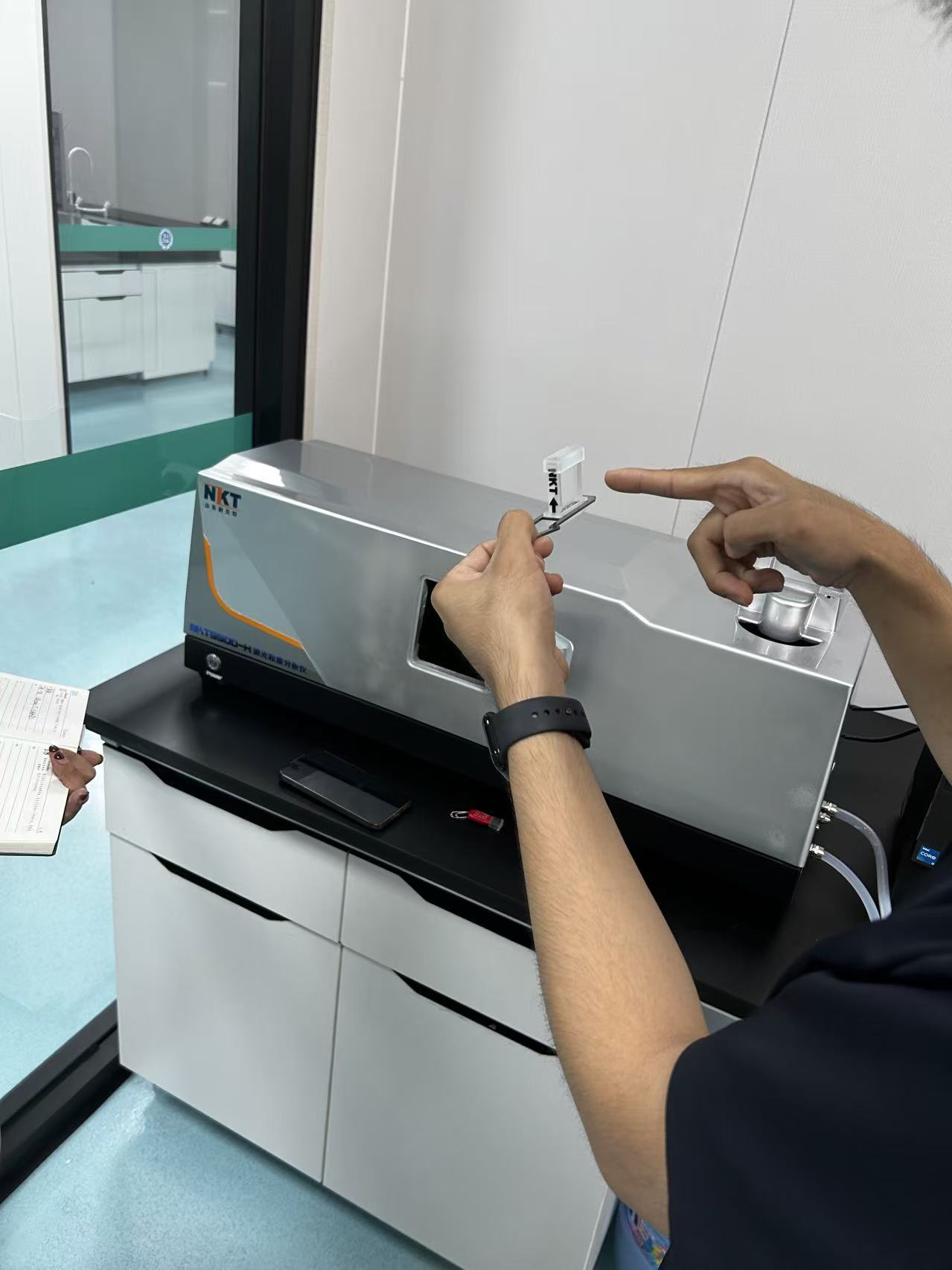
Batch verification of a dry strength agent: appearance, solids, pH, viscosity and particle size are the routine checks that decide whether a dosing model holds.
Where Each Grade Fits in a Recycled Pulp System
Recycled furnish is not one material. A mill running 100% old corrugated containers into a fluting or medium grade faces a different bonding problem from a mill running mixed recovered fibre into a white-top testliner, and both differ from a board machine making coated carton board.
| Mill situation | Form that usually fits first | Reason |
|---|---|---|
| Corrugated medium and fluting on 100% recovered fibre | JH-1699 | Listed for recycled paper, fluting and waste paper pulp reinforcement; the concentrated cationic powder suits a machine with a stable, high-volume strength demand |
| Testliner and box board with variable charge demand | JH-D726 | Amphoteric charge behaviour, ready-to-dose liquid, listed for ring crush and burst development |
| Mill without powder make-down capacity | JH-D726 | Removes the dissolution step entirely |
| Mill with restricted warehouse space or long inbound transit | JH-1699 | Higher active content per delivered kilogram, plus a twelve-month shelf life |
JHDA's own application record covers kraft linerboard, corrugated medium, printing and writing paper, household tissue and food-grade cardboard, and the company supplies to paper mills and traders across more than 20 countries, including Germany, Brazil, China, India and Turkey. Cumulative supply of its papermaking chemicals has reached 100,000 metric tons over more than ten years of trading, with monthly production capacity of 8,000 MT and a minimum order quantity of 1 MT.
For a food-grade board or moulded fibre line, the relevant compliance question is separate from the dry strength question, and JHDA's documentation includes ISO 9001 and ISO 14001 certification, a HALAL certificate issued under Indonesia Halal Law and MS1500:2019 covering paper-making industry additives and valid to 28 August 2028, and SGS product compliance test reports. Buyers running food contact grades still need to map those documents to their own target market requirements rather than assume equivalence.
Retention: What the Portfolio Actually Offers
Strength and retention are usually discussed together because in a recycled fibre system they are connected. A polymer that is not retained in the sheet cannot contribute to fibre bonding, so strength chemistry with poor retention simply circulates in the white water.
Two facts are relevant here. First, JH-D726's published functional list explicitly includes retention aid enhancement alongside its strength functions. Second, JHDA supplies a dedicated retention product, JH-8501, described as a papermaking retention aid and strength retention emulsion built on CPAM, with a solid content of 38.0 ± 1.0%, a pH of 3.0 to 6.0 and a cationic charge.
Retention improvement figures quoted during supplier discussions, including the 8–15% band that circulates in buyer conversations about dry strength programmes, should be treated as a market reference point rather than a specification. First-pass retention depends on furnish, filler loading, machine speed, white water consistency and the rest of the wet-end chemical package, so the only defensible number is the one measured on the mill's own stock. JHDA's in-house pilot laboratory supports formulation testing and free sample trials so that a mill can establish its own baseline before committing to a contract.
Market Trend Analysis: Packaging Grades Are Setting the Demand Curve
Three structural trends shape how mills should read dry strength pricing over the next several years.
Packaging applications dominate volume. Fact.MR reports that the packaging and containerboard segment leads paper grade usage for dry strength additives with a 38.0% share. That concentration means dry strength pricing is increasingly tied to the fortunes of the corrugated and containerboard cycle rather than to printing and writing grades.
Recycled fibre supply is expanding, and it is the harder fibre to strengthen. The American Forest & Paper Association puts recycled paper at 44.4% of all fibre used at United States mills in 2024, and comparable pressure toward recovered fibre exists in the Asian and European markets that JHDA serves. Every incremental percentage point of recovered fibre in a furnish raises the value of a well-chosen strength additive and raises the penalty for choosing the wrong supply form.
Polyacrylamide chemistry remains the backbone of the category. Fact.MR estimates that polyacrylamide resins hold roughly 40.0% of the dry strength resin market. JH-1699's published material basis includes polyacrylamide alongside polyamine, polyamide epichlorohydrin resin and starch derivatives, which places the grade inside the dominant chemistry family rather than at its margin.
Published market sizing varies by research house and by segment definition, and that variation is worth noting rather than smoothing over. Intel Market Research valued the global paper dry strength agent market at approximately USD 864 million in 2024 and put Asia-Pacific at roughly 40% of global share. Market Research Future sized the wider pulp and paper chemicals market at USD 23.64 billion in 2024. Fact.MR, working from a broader resin definition, projects USD 1.4 billion by 2026 with a CAGR of 4.8% through 2036. The direction of travel is consistent even where the numbers are not directly comparable.
Comparison with Traditional Strengthening Options — and Where the Limits Are
Most mills evaluating JH-D726 or JH-1699 are comparing them against something already in use: wet-end starch, a conventional single-function resin, or a long-standing imported brand that has become the reference specification in tenders. The comparison is not a like-for-like substitution exercise.
| Option | What it contributes | Boundary to plan around |
|---|---|---|
| Wet-end starch (established practice) | Familiar dosing, broad availability, well understood by machine crews | Strength contribution is retention-dependent, and the additive load it places on the wet end has to be balanced against drainage and drying capacity |
| Imported reference-brand resin | Frequently used as the benchmark specification; technical documentation is mature | Cross-border logistics, longer replenishment cycles and currency exposure sit on top of the chemical price |
| JH-D726 (amphoteric liquid) | Ready-to-dose, listed for dry strength, tensile, burst, tear, ring crush and retention enhancement | Six-month shelf life; a large share of each delivered kilogram is water, so freight per active unit is higher |
| JH-1699 (cationic powder) | ≥ 95.0% active ingredient, twelve-month shelf life, listed for recycled, corrugated, testliner and fluting grades | Requires make-down and dissolution equipment, plus moisture-controlled storage and dust management |
Two further boundaries deserve to be stated plainly, because both are common sources of disappointment in the first month of a trial.
The first is a chemistry boundary. Dry strength agents improve the dry strength of the sheet. They are not wet strength agents, and a mill that needs wet tensile strength, wet burst strength or wet ply bond strength is looking at a different product family — in JHDA's case, the PAE-based wet strength agent JH-1201, supplied as a liquid with a solid content of 12.5 ± 1.0%. Selecting a dry strength grade to solve a wet strength problem will not work regardless of dosage.
The second is a charge boundary. JH-1699 is cationic. In a wet end already dosing cationic starch, cationic retention aids or cationic sizing chemistry, a new cationic polymer competes for the same anionic fibre and filler surfaces. JH-D726's amphoteric character gives a mill more room to manoeuvre in that situation, but neither case can be resolved from a data sheet alone. On-machine or pilot verification on the target furnish is the only reliable test, and any supplier promising a fixed strength gain without it should be treated with caution.
Future Outlook
Three shifts are likely to shape how mills specify dry strength chemistry through the end of the decade.
Cost models will move to cost per active unit. As recovered fibre share rises and strength demand grows, price per kilogram becomes a progressively weaker basis for comparison between liquid and powder grades. Buyers who standardise on cost per active unit delivered to the wet end, with make-down and freight included, will make more defensible decisions, and suppliers will be asked to quote in those terms.
Combined-function additives will be scrutinised harder. A product that carries strength, retention, sludge reuse and filler reuse functions in one data sheet is commercially attractive because it can reduce additive count. The scrutiny will come from mills that already run a dedicated retention system and need to quantify what the overlap actually saves — which is a trial question, not a catalogue question.
Supply continuity will be evaluated alongside chemistry. With JHDA operating monthly capacity of 8,000 MT, a minimum order quantity of 1 MT, standard production lead time of four working days, and verification through its own pilot laboratory, the logistics profile of a supplier is now part of the specification. The company also runs a wholly-owned production entity, CRM Chemical Technology Co., Ltd., in Long An Province, Vietnam, established to shorten delivery cycles for ASEAN customers, and its export markets span Asia, Africa and South America.
FAQ: Cost and Performance Questions Before Selecting JH-D726 or JH-1699
1. What is the fundamental difference between JH-D726 and JH-1699?
JH-D726 is a dry strength agent supplied as a colourless semi-transparent liquid with an amphoteric ionic type, a solid content of 15.0 / 20.0 ± 1.0% and a viscosity of 4,000 to 12,000 cps at 25 °C. JH-1699 is supplied as a white powder with an active ingredient content of at least 95.0% and a cationic ionic type, described as a dry strength agent for recycled paper, corrugated paper, box board, testliner and fluting. Both are soluble and intended for papermaking; the difference lies in delivery form, charge character, concentration and shelf life rather than in the basic purpose.
2. Which product is the water-soluble powder and which is the liquid, and why does that matter?
JH-1699 is the powder; JH-D726 is the liquid. The distinction drives equipment, labour and storage. A powder requires dissolution or make-down before dosing, which means mixing capacity and a defined procedure. A liquid is dosed as delivered. The form also determines freight economics: water in a liquid grade is transported and stored but does not contribute to strength, while a powder with ≥ 95.0% active ingredient delivers more working chemistry per kilogram shipped.
3. How should a buyer compare a cost per kilogram quote for each?
Not directly. The published solid content of JH-D726 is 15.0 / 20.0 ± 1.0%, while JH-1699 carries an active ingredient content of at least 95.0%. One tonne of one product does not contain the same quantity of active chemistry as one tonne of the other. A defensible comparison converts both quotes to cost per unit of active material, then adds freight, storage, make-down labour, dissolution water and the inventory cost implied by a six-month versus a twelve-month shelf life.
4. What do the pH and viscosity figures actually tell a mill?
JH-D726 is specified at pH 3.0 to 6.0 and 4,000 to 12,000 cps at 25 °C. The acidic pH range is normal for this class of chemistry and means the dosing point, dilution water quality and contact with other wet-end chemicals need to be considered. The viscosity range is high enough that pump sizing, line diameter and dilution practice affect dosing accuracy; a mill used to low-viscosity sizing emulsions should not assume the same dosing setup will transfer. JH-1699 is a powder as supplied, so its viscosity only becomes relevant after the mill dissolves it, at a make-down concentration defined in the supplier's technical data sheet.
5. How do the two grades behave with recycled pulp?
Both are positioned for recycled furnish, but with different charge strategies. JH-1699 is cationic and its published applications include recycled paper, waste paper pulp reinforcing, corrugated paper, box board, testliner and fluting. JH-D726 is amphoteric, which is generally the more tolerant option where the charge demand of the furnish fluctuates, as happens when recovered fibre mix and filler load vary between deliveries. Recycled systems also carry higher levels of dissolved and colloidal material, which consumes cationic chemistry; that is a further reason to trial both forms on the mill's actual stock rather than select from the data sheet.
6. What retention improvement can be expected?
JH-D726's published functional list includes retention aid enhancement alongside its strength functions, and JHDA also supplies a dedicated retention product, JH-8501, a CPAM-based retention aid and strength retention emulsion with a solid content of 38.0 ± 1.0% and a cationic charge. Retention improvement figures quoted in the market, including the 8–15% band often discussed by buyers, are reference points rather than specifications, because first-pass retention depends on furnish, filler loading, machine speed, white water consistency and the rest of the wet-end package. The measured value has to come from the mill's own trial.
7. Can JH-1699 or JH-D726 be combined with wet strength resin or retention aids?
In practice, mills combine dry strength chemistry with wet strength resin, retention aids and sizing agents routinely, and charge interaction is the controlling factor. JH-1699 is cationic and will compete with other cationic wet-end additives for anionic fibre and filler surfaces. JH-D726 is amphoteric and generally offers more flexibility in a high-cationic-demand system. A mill already running a dedicated retention programme should treat a combined-function dry strength grade as an additive change requiring verification, not as a straightforward substitution.
8. What are the real cost drivers beyond the invoice price?
Five items dominate. Freight and storage weight, which penalise liquid grades because of their water content. Make-down and dissolution labour and equipment, which penalise powders. Inventory carrying policy, since JH-D726 has a six-month shelf life and JH-1699 has a twelve-month shelf life. Dosing accuracy and pump maintenance, particularly with a liquid specified at up to 12,000 cps. And retention efficiency, because chemistry that leaves the machine in the white water was still paid for. JHDA also states that its additives can improve ring crush strength, water resistance and paper brightness while lowering wastewater treatment operating costs, which affects the wider cost picture rather than the chemical line alone.
9. When is neither grade the right answer?
When the requirement is wet strength rather than dry strength. Dry strength agents develop bond strength in the dried sheet; wet tensile strength, wet burst strength and wet ply bond strength come from a different chemistry family, such as JHDA's PAE-based wet strength agent JH-1201. A second case is a furnish where the binding constraint is drainage or drying capacity rather than fibre bonding, since adding more strength chemistry will not resolve a machine bottleneck. A third is a mill whose recovered fibre mix changes so frequently that a single fixed formulation cannot hold performance across the range; that situation calls for formulation customisation and a pilot trial rather than a catalogue selection.
10. What documentation and verification support should a buyer ask for?
Published technical data sheets covering appearance, solid or active content, pH, viscosity, ionic type, solubility and shelf life for each grade; an MSDS for transport classification; and evidence of system certification and compliance relevant to the target market. JHDA holds ISO 9001 quality management system and ISO 14001 environmental management system certification, and a HALAL certificate covering paper-making industry additives valid to 28 August 2028, alongside SGS product compliance test reports. On the verification side, the company operates an in-house pilot laboratory supporting formulation customisation and free sample trials, offers a minimum order quantity of 1 MT, and quotes a standard production lead time measured in working days from its 8,000 MT monthly capacity. Buyers should confirm that batch documentation and certification remain in force at the time of each shipment.
Summary
JH-D726 and JH-1699 answer the same functional requirement through opposite supply forms: an amphoteric ready-to-dose liquid with a six-month shelf life, and a cationic powder with ≥ 95.0% active ingredient and a twelve-month shelf life. The selection is settled less by chemistry preference than by four measurable factors — active content per delivered kilogram, available make-down equipment, storage conditions and inbound freight distance — and validated by a trial on the mill's own furnish rather than by a quoted strength percentage. Mills that model cost per active unit and verify performance on their own stock will reach a more durable decision than those comparing invoice prices alone.
Reference material: JHDA papermaking chemicals portfolio overview (PDF). Third-party market figures are attributed to the research organisations named in the text and reflect the publication dates of those sources.