
JONSON 10kW/20kW/100kW Induction Heaters: Buyer Comparison
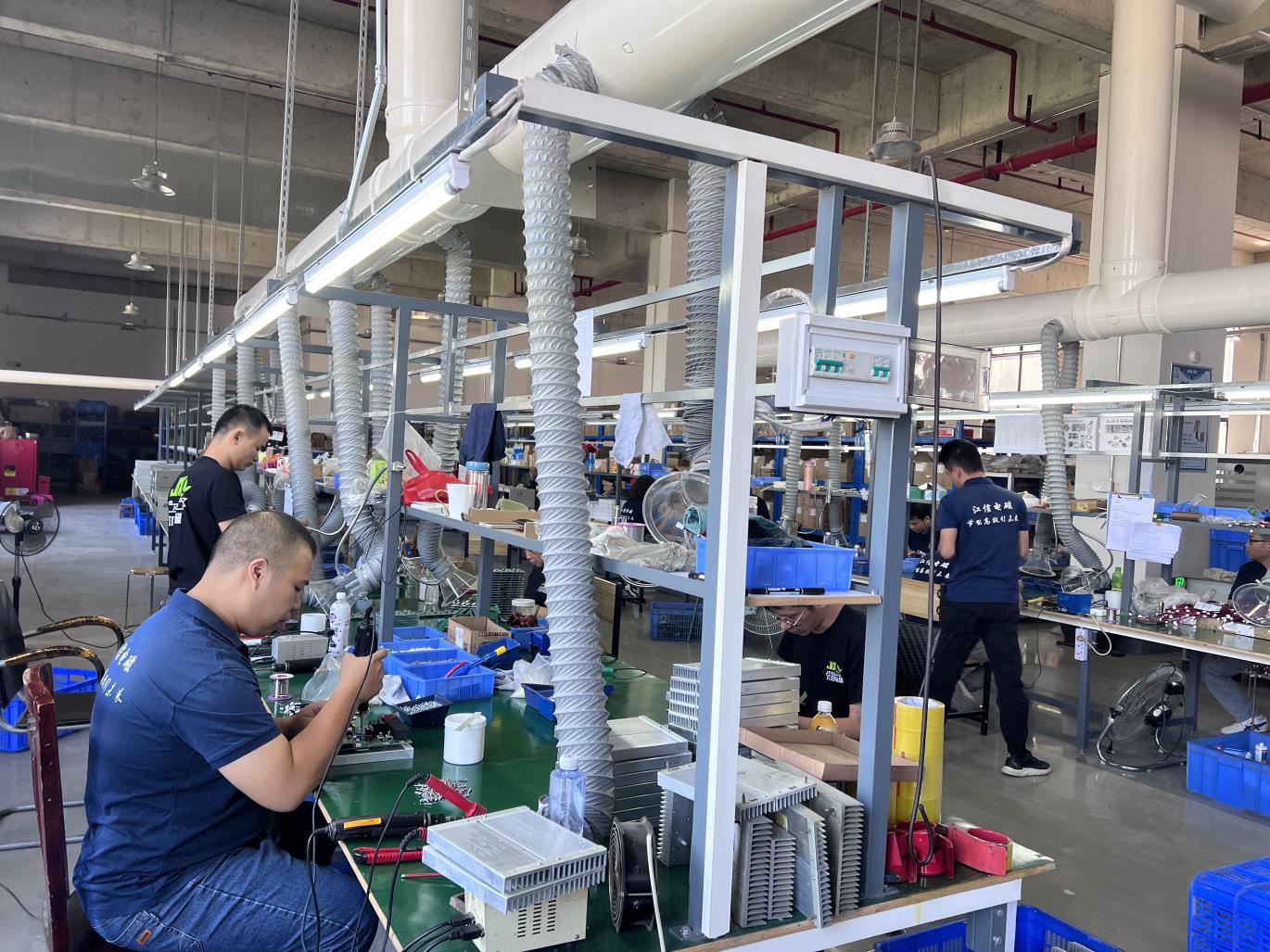
Induction heating capacity is the first number most buyers read on a specification sheet, and usually the last one they should commit to. In a smart manufacturing plant, a heater is rarely a stand-alone appliance; it is one thermal duty inside a PLC-controlled line, and the useful question is whether 10 kW, 20 kW or 100 kW sits closest to that duty without forcing the unit to run permanently at its ceiling or its floor.
JONSON is the induction heating brand of Guangdong Jiangxin Electronic Technology Co., Ltd., a manufacturer founded in 2011 in Foshan, Guangdong Province, China, operating a 3,000 m² facility with 60+ employees, a 30+ engineer R&D team and a stated annual output of 120,000 units. Around 40% of production is exported to markets including Europe, the United States, India and Indonesia.
This comparison covers three JONSON models that span the practical range of that sizing question: the JS1300-005/008 at 10 kW and 15 kW, the JS1000-20 at 20 kW, and the JS1000-100 at 100 kW. It is built from the specifications JONSON publishes for these models and from the manufacturer's own statements on efficiency, applications and operating precautions. Where a specification is not published, this article says so rather than filling the gap, and no independently measured test result is claimed.
Why the 10 kW to 100 kW spread matters more than it used to
Manufacturing heating loads are distributed, not centralised. A single plant may need a small station holding a mould at temperature, a mid-range unit heating a process fluid, and a large system carrying a pipeline section or a high-throughput thermal process. Those three duties do not belong to the same power band, and forcing them onto one oversized unit usually produces a line that is harder to control than the process requires.
The commercial backdrop explains why this sizing conversation has become more prominent. Global Market Insights places the global induction heating system market at USD 2.4 billion in 2026, rising to USD 4.1 billion by 2035 (SRC-001, Global Market Insights Inc.). Research houses do not share a single baseline for this category — one commercial estimate uses a materially smaller 2025 figure because it scopes the market more narrowly — so the growth direction is more reliable than any cross-firm total, and the two should never be added together.
The three models, in the manufacturer's published numbers
The table below reproduces what JONSON states for each model. It is a fact table, not a recommendation; the interpretation follows later.
| Model | Rated power | Supply / voltage | Power adjustment | Cooling & mounting | Stated compliance | Stated efficiency or control feature |
|---|---|---|---|---|---|---|
| JS1300-005/008 | 10 kW / 15 kW | 380 V, with 300–400 V adaptation | 20%–100% | Not stated in the available specification | CE, ISO, RoHS | Broadest published input-voltage window of the three |
| JS1000-20 | 20 kW | 380 V | Not stated in the available specification | Wall-mounted; air- or water-cooled; 304 stainless steel inner liner | Not stated in the available specification | Coolant option selectable at specification stage |
| JS1000-100 | 100 kW | 380 V AC | Not stated in the available specification | Not stated in the available specification | Not stated in the available specification | ≥95% heat conversion efficiency; DSP phase-locking tracking |
Two observations follow directly from that table. First, the three models do not simply differ in size — they differ in which specification dimensions the manufacturer has published. The JS1300-005/008 is the most fully documented on grid tolerance and compliance; the JS1000-20 is the most fully documented on physical installation; the JS1000-100 is the most fully documented on conversion efficiency and control electronics. Second, an unpublished field is not an absent feature. It is a question to put to the supplier before the purchase order, and the honest reading of this comparison depends on treating it that way.
A five-dimension scoring framework for the decision
Buyers comparing 10 kW, 20 kW and 100 kW units tend to collapse the decision into a single power figure. A more defensible approach scores the models across the five dimensions that actually determine whether the installation works: power needs, voltage stability, cooling and enclosure, certification scope, and application fit.
The ratings below are editorial fit assessments derived from the published specifications reproduced in this article. They are not measured performance scores, not test results, and not a supplier ranking. Where a model's specification is unpublished, the rating is marked for verification rather than assumed.
| Decision dimension | JS1300-005/008 (10–15 kW) | JS1000-20 (20 kW) | JS1000-100 (100 kW) |
|---|---|---|---|
| Power needs | Strong fit for small, distributed heating positions | Strong fit for a single mid-range station | Strong fit for centralised or high-throughput thermal duty |
| Voltage stability | Strong — published 300–400 V adaptation on a 380 V nominal | Conditional — 380 V stated; adaptation range not published | Conditional — 380 V AC stated; adaptation range not published |
| Cooling & enclosure | Verify — mounting and cooling method not published | Strong — wall-mounted, air- or water-cooled, 304 stainless inner liner | Verify — cooling and enclosure not published |
| Certification scope | Strong — CE, ISO and RoHS stated | Verify — request the declaration and certificate scope | Verify — request the declaration and certificate scope |
| Application fit | Where the duty falls in the 10–15 kW band | Where the duty falls in the 20 kW band | Where the duty falls in the 100 kW band |
| Editorial fit rating | High for grid-exposed, small-load positions | High for compact wall-mounted installations | High for efficiency-led, large-load installations |
The reading rule is simple: a model is only a strong candidate on a dimension where the buyer has a documented answer. A dimension marked for verification is not a defect — it is the item that belongs at the top of the technical clarification list.
Dimension 1 — Power needs: match the duty, not the catalogue
Undersizing a heater is the mistake buyers notice immediately, because the unit runs continuously at its limit and the line loses its margin. Oversizing is the mistake buyers notice later, because the cost appears as permanent partial-load operation, additional heat rejection, and a control loop tuned around a load the unit barely registers.
The JS1300-005/008 carries a published power adjustment range of 20% to 100%. In procurement terms, that means the 10 kW model can be turned down to roughly a fifth of its rated output without being switched off, which suits stations that hold temperature between production cycles rather than running flat out. A 20 kW or 100 kW unit without a published adjustment range should be assessed on the same question: how far down can it go while remaining stable, and what does the manufacturer document about operation at the low end?
The 100 kW model is a different class of decision. A 100 kW installation concentrates electrical load at a single point on the plant distribution, so the sizing calculation is as much about supply capacity, protection coordination and cable routing as it is about thermal duty. Buyers specifying at this level should treat the electrical study as a prerequisite, not a follow-up.
Dimension 2 — Voltage stability: what the 300–400 V window actually buys
A 380 V nominal is a common industrial supply, but the voltage a plant actually delivers varies with load. Sites with heavy motor starting, welding equipment or large compressors see the supply sag; sites fed from a weak transformer see it rise at light load. Equipment that only tolerates its nominal value therefore performs differently at 06:00 and at 14:00 on the same line.
The JS1300-005/008 is specified with 300–400 V adaptation on a 380 V nominal, and that is the widest published input window among the three models. For a buyer on a fluctuating supply, this is a substantive specification rather than a marketing line: it defines the range over which the unit is stated to operate.
The JS1000-20 and JS1000-100 are both specified at 380 V (380 V AC for the 100 kW model), with no adaptation window published in the material available for this comparison. That does not mean they are intolerant of variation — it means the tolerance is undocumented here, and the buyer should request the documented input range and the specified behaviour at the boundaries before committing a production line to either unit.
Dimension 3 — Cooling and enclosure: wall-mounted against unstated
The JS1000-20 is the most explicit of the three on physical installation: it is wall-mounted, available with either air or water cooling, and fitted with a 304 stainless steel inner liner. Wall mounting is a real constraint as well as a convenience — it removes the unit from the floor but places the thermal envelope at eye level in an area that may already be congested.
Air cooling and water cooling are not interchangeable choices. Air cooling depends on unobstructed airflow and a clean duct path, which is a maintenance obligation as much as an installation one. Water cooling requires a supply, a return and a heat-rejection route, and introduces a fluid system that must itself be maintained. The correct selection follows the plant's available utilities, not a preference for one method.
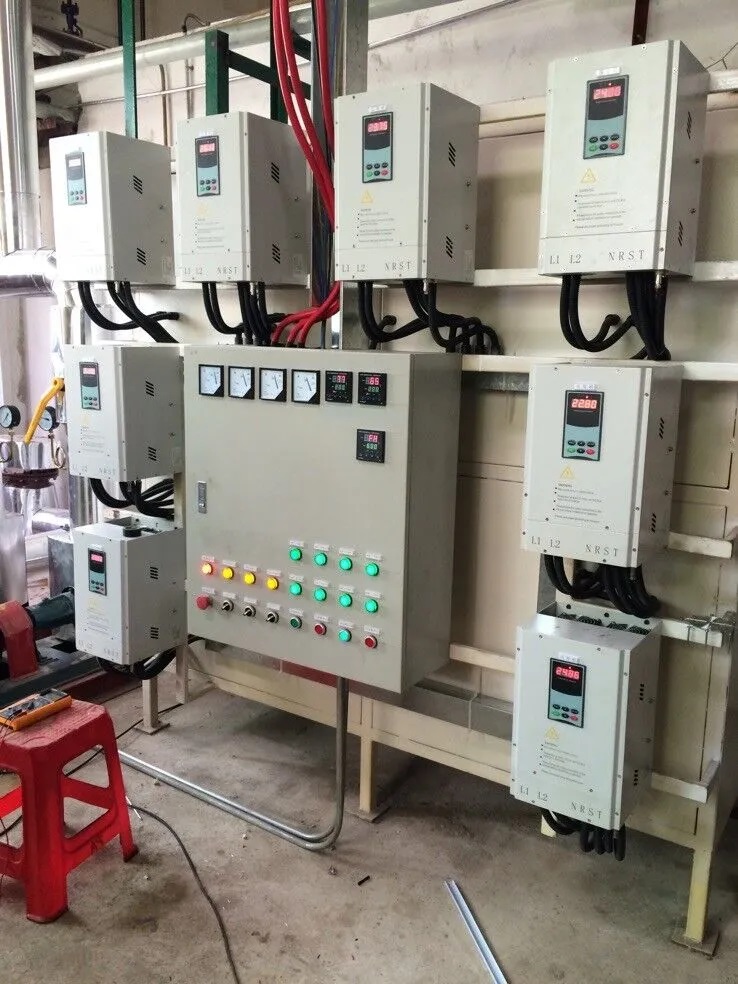
For the JS1300-005/008 and the JS1000-100, mounting and cooling method are not published in the material used here, and this is one of the clearest gaps in the comparison. The manufacturer's general operating precautions are published and apply to all three: the unit requires ample space for heat dissipation, must be kept away from dust, oil and flammable or explosive materials, and requires regular removal of dust from the cooling ducts. Only original factory-supplied coil parts should be used.
Dimension 4 — Certification scope: stated versus to-be-requested
CE, ISO and RoHS are stated for the JS1300-005/008. Equivalent statements are not present in the material available for the JS1000-20 or the JS1000-100, which is a documentation gap rather than an inferred absence of conformity. The procurement action is the same either way: request the declaration of conformity, the certificate scope and the validity dates for the exact model and voltage variant being purchased.
The standards that matter for this equipment category are identifiable independently of any supplier. IEC 60519-1 covers general safety requirements for electroheat installations; IEC 60519-3 covers the specific requirements for induction and conduction heating equipment; ISO 13850 addresses emergency stop functions (SRC-004, Vivid Metrawatt, 2026 guide to safety features in induction heaters). A buyer comparing models should ask which of these a supplier's technical file actually addresses, rather than counting certificate logos.
Two further clarifications are worth making at specification stage. Where a supplier references ISO, the buyer should establish whether that refers to the manufacturer's quality management system or to a product-level approval, because the two carry different weight in an audit. And for cross-border movement, industrial induction heating equipment classifies under HS 8514.40 — other equipment for the heat treatment of materials by induction or dielectric loss — which is the code a freight forwarder and customs broker will work from.
Dimension 5 — Application fit: reading the application list correctly
JONSON publishes an application list for its induction heating products covering plastics and rubber, food processing, chemical reactions, crude oil pipeline heating, textile printing and dyeing, aquaculture heating, metal heat treatment, building heating, and medicinal herb drying. That list belongs to the product category, not to individual models.
The distinction matters. A buyer who reads "food processing" and orders the smallest unit on the list has skipped the actual calculation, because food processing includes duties that a 10 kW heater serves comfortably and duties that require an order of magnitude more. The application list identifies where the technology is used; the load calculation, the temperature profile, the required ramp rate and the duty cycle identify which of the three models fits. That calculation is what should be sent to the supplier as a specification enquiry, in preference to a model number.
Market trend: efficiency claims meet capital budgets
JONSON states an overall thermal efficiency of 95%–98% and comprehensive energy savings of 30%–70% compared with traditional heating equipment, together with an expected service life three times longer than traditional induction heater machines and maintenance requirements reduced by 90%. The JS1000-100 specification independently lists ≥95% heat conversion efficiency, which is consistent with the range stated for the product family.
These are manufacturer-reported figures and should be treated as such. The efficiency case for induction heating is credible on physical grounds, but the payback calculation is site-specific: it depends on the load profile, the local electricity tariff, the efficiency of the equipment being replaced, and how many hours the line actually runs. Buyers building a business case should use the manufacturer's figure as an upper reference point and substitute their own metered baseline where one exists — a substitution the supplier cannot make on the buyer's behalf.
Comparison with traditional solutions — and where induction stops being the obvious answer
Against conventional resistance, combustion or steam-based heating, induction equipment offers a different operating profile: heat is generated in the workpiece rather than transferred to it, control is fast, and there is no combustion stream to ventilate. The published comparison figures — 95%–98% thermal efficiency, 30%–70% energy savings, three times the expected lifespan and 90% lower maintenance — describe that profile in JONSON's own terms.
The boundary conditions are equally real, and a buyer comparison that omits them is not a comparison. Induction heating is not the automatic answer in the following situations:
- The workpiece geometry changes frequently. Induction depends on a coil matched to the part. Where a line runs many part shapes, the coil set — not the power supply — becomes the constraint, and only original factory-supplied coil parts should be used for replacement.
- The installation environment is contaminated. The manufacturer's precautions require the unit to be kept away from dust, oil and flammable or explosive materials, with ample space for heat dissipation. A foundry corner or an oily machining cell may not meet that condition without an enclosure or relocation.
- Cooling-duct maintenance will be deferred. Regular dust removal from the cooling ducts is a stated requirement, not an optional service. Sites without a maintenance routine will see the efficiency advantage erode.
- The plant supply is the limiting factor. A 100 kW unit draws a concentrated load, and where the incoming supply or protection scheme is already close to its limit, electrical reinforcement may cost more than the heater.
- The published specification is incomplete. For two of the three models compared here, cooling, enclosure and certification details are not published in the available material. That gap is resolvable through a technical clarification process, but it must be resolved before, not after, the order.
None of these points argues against induction heating. They argue for treating the sizing decision as an engineering question with a documented answer, which is also the position that holds up in an internal capital review.

Future outlook
Three shifts are visible in how buyers approach this category. First, heating is increasingly specified as part of a line rather than as a standalone machine, which pushes suppliers to document integration-relevant parameters — input tolerance, control behaviour, cooling requirements — rather than headline power alone. Second, efficiency has moved from a marketing claim to a line item in capital appraisal, which raises the value of verifiable, site-specific performance data over published ranges. Third, documentation burden is increasing: declarations of conformity, standard references and customs classification are now part of the technical file that a buyer's own customers may audit.
For a buyer working through the 10 kW, 20 kW and 100 kW decision today, the practical consequence is that the comparison should be scored on documented answers. The model that wins is the one whose published specification covers the buyer's actual supply conditions, installation constraints and compliance requirements — or the one whose supplier can close those gaps in writing before the order is placed.
FAQ
Start from the thermal duty rather than the model list. The published power bands map to different installation classes: the JS1300-005/008 covers 10 kW and 15 kW with a 20%–100% power adjustment range, the JS1000-20 covers 20 kW in a wall-mounted, air- or water-cooled format, and the JS1000-100 covers 100 kW at 380 V AC. The load calculation, temperature profile and duty cycle determine which band applies; the electrical supply study then confirms whether the site can support it.
It matters where the supply is not stable. The JS1300-005/008 is specified at 380 V with 300–400 V adaptation, which defines the input range over which the unit is stated to operate. On a site with heavy motor loads or a weak transformer, that window is a functional specification. For the JS1000-20 and JS1000-100, both stated at 380 V, the equivalent tolerance range is not published in the available material and should be requested.
The JS1000-20 is available with either air or water cooling. Air cooling depends on unobstructed airflow and clean cooling ducts; water cooling requires a supply, a return and a heat-rejection route. The selection should follow the utilities available at the installation point and the maintenance regime the site can sustain, because regular removal of dust from the cooling ducts is a stated operating requirement.
It allows the unit to operate below its rated output without being switched off. For the JS1300-005/008, that suits stations that hold temperature between cycles rather than running continuously at full load. Buyers comparing models should ask for the equivalent low-end operating range on units where it is not published, since the ability to run stably at partial load affects both control quality and equipment life.
The JS1000-100 specification lists DSP phase-locking tracking alongside ≥95% heat conversion efficiency and a 380 V AC supply. In procurement terms, it indicates that the power supply continuously tracks the resonant condition of the coil and workpiece circuit — relevant at high power, where the load changes as the workpiece heats. Buyers should ask the supplier to define the tracking behaviour against their own load profile rather than treating the label as a performance guarantee.
CE, ISO and RoHS are stated for the JS1300-005/008. For the JS1000-20 and JS1000-100, the equivalent statements are not present in the material available for this comparison, so the declaration of conformity, certificate scope and validity dates should be requested for the exact model and voltage variant. It is also worth asking which of the applicable standards the technical file addresses: IEC 60519-1 for electroheat safety, IEC 60519-3 for induction and conduction heating equipment, and ISO 13850 for emergency stop. For shipping, industrial induction heating equipment classifies under HS 8514.40.
JONSON states 95%–98% overall thermal efficiency, 30%–70% comprehensive energy savings versus traditional heating equipment, a service life three times longer than traditional induction heater machines and 90% lower maintenance requirements. These are manufacturer-reported values. A payback calculation should substitute the buyer's own metered baseline, electricity tariff and annual running hours, because the realised saving depends on the duty profile rather than on the equipment alone.
Model specifications and documentation for the JS1300-005/008, JS1000-20 and JS1000-100 are published by JONSON at www.jonson-ih.com and should be verified against the exact configuration quoted for a specific project.
Есть вопросы или нужны дополнительные детали?
Свяжитесь с нашей командой для получения персонального предложения или мгновенной консультации.
Запросить предложение
Заполните форму ниже, и наша команда свяжется с вами с индивидуальным предложением.
Прямой чат WhatsApp
Предпочитаете общаться в реальном времени? Напишите нам в WhatsApp для мгновенной помощи и быстрых ответов.
- Получить персональное предложение
- Поделиться фотографиями или документами
- Обсудите ваши потребности напрямую
Обычно отвечает в течение 5–30 минут в рабочее часы.