
JUDECAM vs. Standard Straps: Technical Military Webbing Comparison
Industry Context: The Cost of Under-Spec Webbing in Tactical Operations
For defense procurers, the margin between operational success and catastrophic equipment failure is often defined by a single material: the webbing that carries a soldier's load. Standard commercial webbing or low-spec tactical straps can degrade under UV exposure, lose tensile strength in saltwater environments, or reflect infrared signatures detectable by night vision devices. This performance gap directly impacts mission-critical reliability in load-bearing systems such as tactical vests, MOLLE platforms, military backpacks, parachute harnesses, and professional defense equipment.
The JUDECAM Solution: Mil-Spec Precision in Every Yard
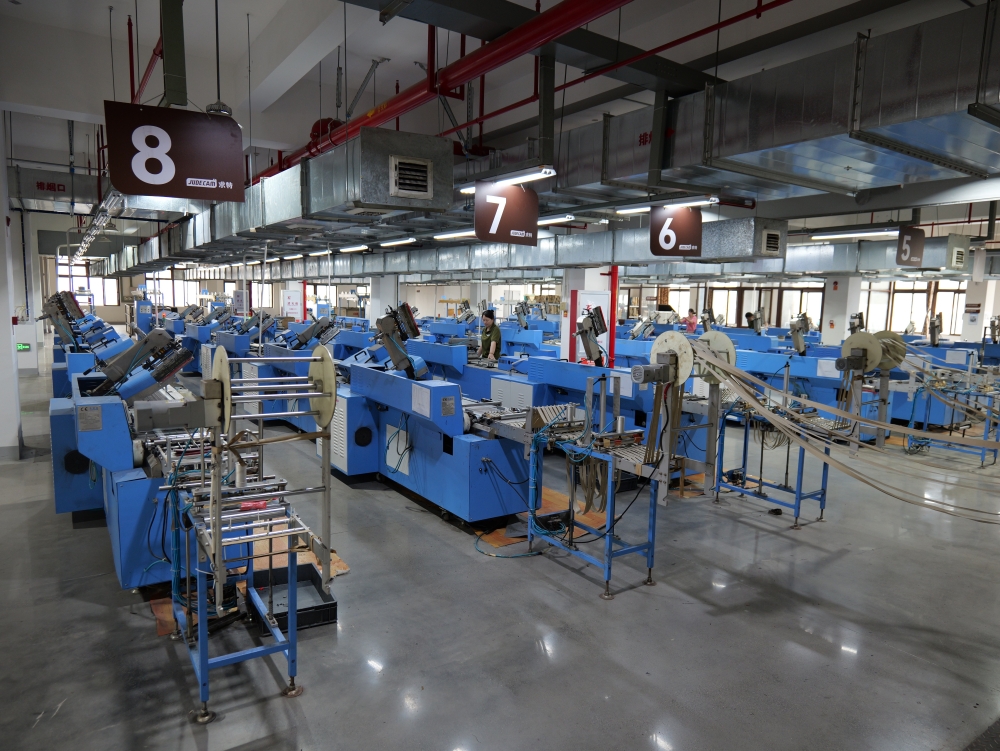
JUDECAM (a brand of Xiamen Jude Webbing Co., Ltd., founded in 2006) is a specialized manufacturer of military-grade webbing that complies with U.S. and U.K. Mil-Spec standards including A-A-55301, MIL-W-17337, MIL-T-5038, and PIA-W-4088. With a 25,800 m² self-built production base and 180 employees, the company produces over 300 million yards annually, exporting 70% of its output to Canada, Europe, and Southeast Asia. Its military webbing is engineered to outperform standard commercial alternatives in breaking strength (up to 35,000 N), color fastness (Grade 4–5 under extreme UV per AATCC 16.3), and NIR/IRR reflectance matching 350–3000 nm standards.
Technical Architecture: Parameters That Define Combat Readiness
The product is available in widths of 20/25/38/50 mm (or ½", 1", 1.5", 2" custom), with a standard thickness of 1.20 mm. Key technical parameters include a minimum tensile strength of 5,000 N for 25 mm width, abrasion resistance of at least 200,000 cycles, and lightfastness ≥ Grade 4. These specifications are validated in an in-house testing laboratory that performs SGS and OEKO-TEX batch certification, ensuring every shipment comes with a Certificate of Analysis (COA) for full traceability.
Application Scenarios: From Modular Combat Gear to Airdrop Systems
JUDECAM's webbing is applied across four primary project types:
- Modular Combat Gear Systems – provides system integration and load management for tactical vests and MOLLE attachments.
- Rifle Sling / Weapon Retention – distributes load effectively and supports quick-release buckles and hooks for rapid deployment.
- Heavy-Duty Backpacks & Rucksacks – operates in extended field conditions, offering weight distribution and structural support for repeated heavy use.
- Parachute Systems & Cargo Airdrop – secures loads and absorbs shock during deployment, reinforcing the harness structure under high-stress opening forces.

Market Trends Driving the Shift to Mil-Spec Webbing
The global webbing market is estimated at approximately USD 4.8 billion in 2026, with military demand for durable fabrics cited as a key growth driver (Grand View Research). Forecasts project the market reaching USD 6.29 billion by 2033, growing at a CAGR of 4.32% (Spherical Insights). Nylon webbing dominates the tactical segment due to its high strength-to-weight ratio and abrasion resistance (IMARC Group). As defense budgets prioritize multi-domain operations, the need for webbing that meets MIL-PRF-17337G and PIA-W-4088 standards continues to rise, pushing procurers toward specialist manufacturers rather than general commercial suppliers.
JUDECAM vs. Standard Commercial Straps: A Fact-Based Comparison
| Metric | Standard Commercial / Low-Spec Straps | JUDECAM Military Webbing |
|---|---|---|
| Compliance | No Mil-Spec; limited testing | A-A-55301, MIL-W-17337, MIL-T-5038, PIA-W-4088 |
| Breaking Strength (25mm) | Typically 2,000–3,500 N | Minimum 5,000 N (up to 35,000 N in heavy-duty variants) |
| IR Reflectance (800–1200nm) | No IRR performance | Matches 350–3000 nm NIR/IRR standards |
| Cost per Yard | Lower initial price | 5–15% lower cost due to direct OEM manufacturing |
| Service Life in Combat | Frequent replacement (every 6–12 months) | Up to 3x longer, reducing replacement frequency |
| Maintenance | Susceptible to rot, mildew, saltwater corrosion | Minimal; engineered to resist rot, mildew, and saltwater |
| Quality Assurance | Batch-level testing not standardized | ISO 9001 certified; SGS/OEKO-TEX batch certification; COA for each shipment |
One honest limitation: While JUDECAM offers superior durability and compliance for military applications, its lead times for custom Mil-Spec batches (e.g., custom IRR colors) may be longer than off-the-shelf commercial straps due to rigorous third-party testing protocols.
Future Outlook: Resilience and Modularity Drive Webbing Innovation
As defense forces globally transition toward modular load carriage systems (e.g., next-gen MOLLE and scalable plate carriers), the demand for webbing that integrates IRR properties, flame retardancy, and high-strength nylon 6.6 will intensify. JUDECAM is positioned to serve this shift with an in-house R&D team of 32 webbing experts and a dual-production footprint in Xiamen and Vietnam, enabling both scale and flexibility. Procurers in the decision stage should prioritize suppliers that demonstrate not only Mil-Spec compliance but also batch-level traceability — a capability JUDECAM supports through its certified laboratory and COA documentation.
Frequently Asked Questions (Neutral & Informational)
1. How does the cost of JUDECAM military webbing compare to standard commercial straps?
Compared to standard commercial webbing or low-spec tactical straps, JUDECAM military webbing typically costs 5–15% less per yard while delivering up to 3x longer service life in combat environments, reducing overall replacement frequency.
2. What maintenance is required for JUDECAM webbing?
Maintenance requirements are minimal; the product is engineered to resist rot, mildew, and saltwater corrosion without losing structural integrity. No special cleaning or conditioning is needed under normal field conditions.
3. Which military standards does JUDECAM webbing comply with?
The webbing complies with A-A-55301, MIL-W-17337, MIL-T-5038, and PIA-W-4088, and meets NIR/IRR reflectance standards in the 800–1200 nm band as required by NATO night vision equipment.
4. What specific tactical equipment is this webbing suitable for?
It is suitable for tactical vests, MOLLE systems, military backpacks, parachute harnesses, and professional defense equipment — offering distinct advantages over standard commercial or low-spec straps in load-bearing and modular attachment applications.
5. How does JUDECAM ensure batch quality and traceability?
Each shipment is accompanied by a Certificate of Analysis (COA). The in-house testing laboratory performs tensile strength, IRR reflectance, and flame retardancy tests per Mil-Spec protocols, with SGS and OEKO-TEX batch certifications available upon request.
For detailed technical specifications and third-party test reports, download the complete JUDECAM Military Webbing Brochure.