
Jars vs. Bottles: Scenario Fit in Sports Nutrition Packaging
Sports nutrition brands rarely buy "a bottle." They commit to a format that has to hold a defined dose, survive a defined distribution route, and remain workable on the filling line years after launch. The wide-mouth protein powder jar and the pre-workout/BCAA bottle are the two most common format archetypes in the category, and they solve different problems. The choice is normally made at the SKU level, not at the brand level.
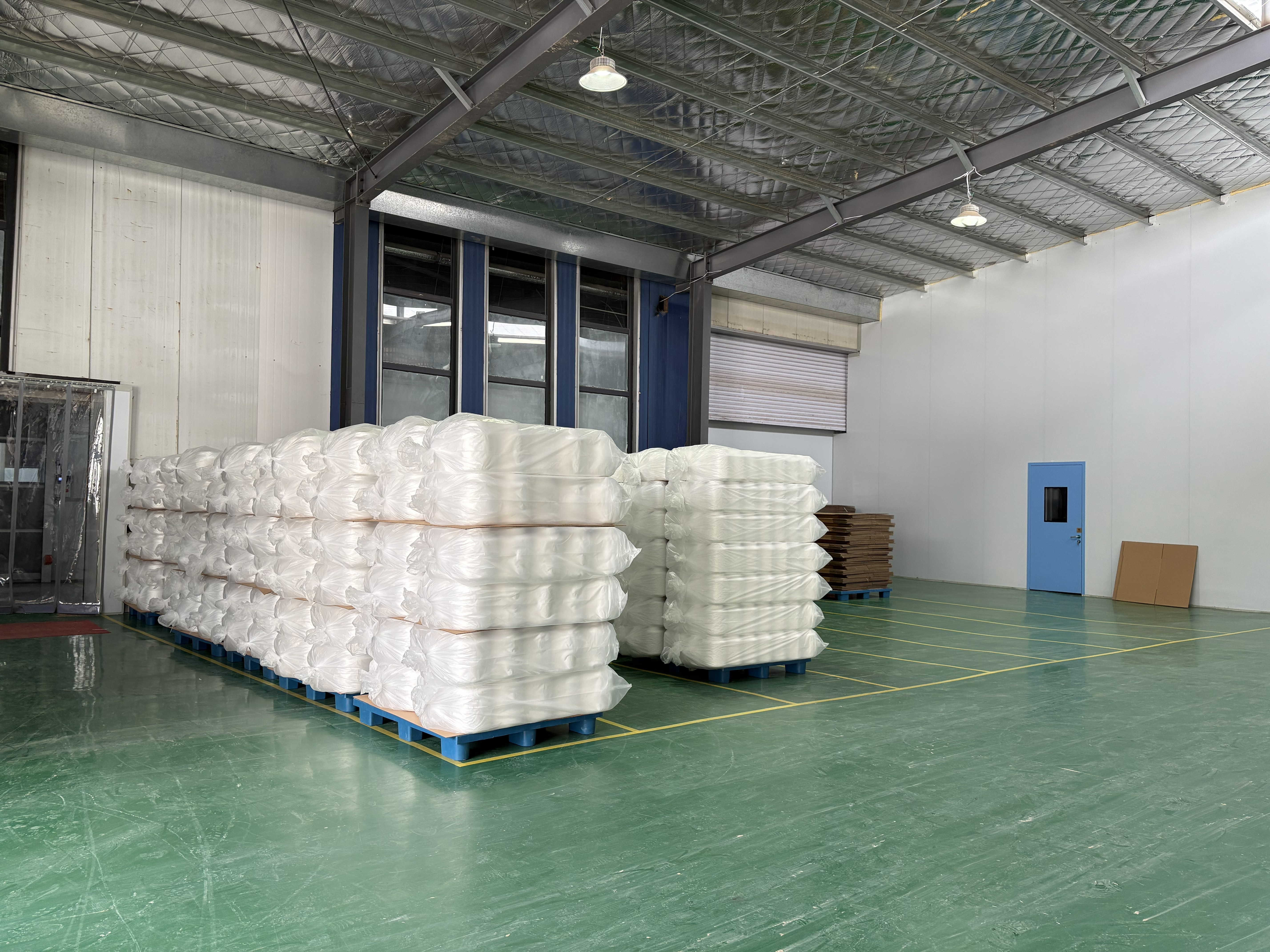
Format decisions are supply decisions: the container a brand locks in must remain available and consistent across repeat orders and multiple markets.
The two formats, defined before they are designed
A wide-mouth protein powder jar is a container whose opening is sized so that a scoop can enter and powder can flow out without bridging at the shoulder. It is the archetype used when the consumer doses by volume multiple times per container. A pre-workout/BCAA bottle is a narrower-opening container used where the dose is dispensed in smaller, more frequent increments and the container is handled more often in gym bags, lockers, and retail shelves.
Both archetypes sit inside the same manufacturing envelope for sports nutrition custom packaging: fill capacities from 60 ml to 6000 ml, body diameters from 40 mm to 200 mm, heights from 60 mm to 325 mm, and cap diameters from 20 mm to 200 mm. Bodies are produced in food-grade HDPE, PET, or PP with moisture-proof and anti-oxidation properties, and can carry PCR/recycled material options, vacuum metallization, soft-touch coatings, and custom tooling and finishes.
RTCO (THE RTCO PAK PTE. LTD.) is a packaging manufacturer founded in 2007 that produces plastic containers in HDPE and PET along with scoops, caps and closures, liners, accessories, and surface finishes, serving health & beauty, sports nutrition, and supplement brands with production in Asia and the United States.
Why the scenario, not the label, drives the format
Two powder SKUs with identical net weight can require different containers if one is scooped twice a day and the other once. Scoop volume, servings per container, and how the consumer re-closes the pack all push the geometry in different directions. Distribution adds a second layer: a container that performs well in a dry, high-turnover retail channel may face longer, more humid storage elsewhere.
The practical sequence is therefore not "design a bottle, then find a product for it." It is:
- Define the dose form and dose volume (powder, capsule, tablet, gummy/gel, or liquid).
- Convert that into a required fill volume and an opening width that allows the dosing tool to work.
- Check the resulting dimensions against the available manufacturing envelope.
- Confirm the closure, liner, and accessory set the format needs.
- Confirm the format runs on the intended filling equipment and production lines.
That sequence matters because the two archetypes fail in opposite ways. A jar that is too small for its scoop frustrates the user at the second serving. A bottle that is oversized for its dose spends its life half empty, which affects how the powder settles, how the label reads, and how the pack performs in freight.
Fill capacity: start from the dose, not the label
The 60 ml to 6000 ml fill range is intentionally wide, because sports nutrition SKUs span from small capsule counts to bulk powder programs. Within that envelope, high-dose powder programs gravitate toward the larger fill volumes, while shorter-cycle and smaller-dose formats sit closer to the lower end. The container size should be derived from the dose and servings per pack, with working headspace left for scoop entry and for powder settling in transit.
Two constraints are usually underestimated. First, powder bulk density varies by formulation, so a fill volume that suits one blend may not suit another at the same net weight. Second, the minimum order quantity for custom formats is typically 10,000–30,000 pcs depending on the product, with first trial orders below the standard MOQ available upon request — which means a format decision is also a volume decision.
Body diameter, height, and closure fit
Once the fill volume is fixed, the format is expressed through three dimensions that are decided together, never separately: body diameter, overall height, and cap diameter. Body diameter controls how the container sits in the hand, how much label area exists, and how the pack behaves in a shipping case. Height determines whether the pack fits standard retail shelving and whether the scoop can be stored above the powder line. Cap diameter determines the closure family, the liner, and how the user opens and re-closes the pack.
| Engineering parameter | Available range |
|---|---|
| Fill capacity | 60 ml – 6000 ml |
| Body diameter | 40 mm – 200 mm |
| Height | 60 mm – 325 mm |
| Cap diameter | 20 mm – 200 mm |
| Body materials | Food-grade HDPE, PET, PP (moisture-proof and anti-oxidation properties) |
| Finishing options | Vacuum metallization, soft-touch coatings, custom tooling and finishes |
A limitation worth stating plainly: formats outside these ranges are not covered by this envelope. If a program requires an unusual silhouette or an extreme fill volume, it moves into a different tooling conversation rather than a variation of the two archetypes discussed here.
Material and barrier: HDPE, PET, and PP
Material choice follows the format rather than the other way around. HDPE and PP are the common choices for opaque, handled containers where moisture-proof and anti-oxidation performance matters most — the typical jar scenario. PET is frequently chosen where clarity or a more premium visual read is part of the shelf strategy. Both directions can be combined with PCR/recycled material options where a brand has recyclability commitments to meet.

Body forming is where the format's dimensions and wall consistency are set — the step that determines whether the pack behaves as designed on the filling line.
The barrier conversation is inseparable from the closure. A moisture-proof body paired with a weak liner does not deliver moisture-proof packaging. This is why liner selection is treated as part of the format specification, not as a purchasing afterthought.
Closures, liners, and scoops belong to the format
Neither archetype is a standalone container. Both require supporting equipment including various cap types, liners, and scoops, and both must support integration with common filling equipment and production lines. In practice, the accessory set determines whether the format works at the filling stage and again in the consumer's kitchen or gym bag.
RTCO's product records describe this explicitly: formats such as product 6983 require supporting equipment such as various cap types, liners, and scoops, operate under conditions suitable for powder, capsule, tablet, gummy/gel, and liquid product packaging and dosing, and are designed to protect product performance, ensure filling-line compatibility, and enhance shelf appeal and brand identity. Product 6985 records cover the same dose forms and add special requirements including food-grade compliance, PCR/recycled material options, vacuum metallization, soft-touch coatings, and custom tooling and finishes.
Certifications that answer the format question
Certification is where a format decision becomes verifiable. For HDPE and PP sports nutrition bottles, the relevant documentation set typically includes:
- ISO 9001:2015 — quality management system baseline.
- BRCGS Global Standard Packaging Materials, Issue 7 — packaging materials safety and quality standard.
- HACCP — hazard analysis and critical control point framework.
- ISO 15378:2017 — quality management system requirements for manufacturers of primary packaging materials for medicinal and nutraceutical products, integrating GMP principles.
- GRS Version 4.0 — Global Recycled Standard for sustainable packaging claims.
Destination-market rules layer on top. In the United States, FDA 21 CFR Part 111 establishes mandatory Current Good Manufacturing Practice for the manufacturing, packaging, and labeling of dietary supplements. In the European Union, Regulation (EU) 2025/40 — the Packaging and Packaging Waste Regulation — requires that all packaging be recyclable by 2030 and that plastic packaging contain at least 30% recycled content by 2030. A format that cannot accommodate PCR content is therefore a format with a shorter useful life in the EU.
Scenario map: which archetype for which program
The mapping below reflects how the two formats are typically positioned within the 60 ml–6000 ml envelope.
| Decision factor | Wide-mouth protein powder jar | Pre-workout / BCAA bottle |
|---|---|---|
| Primary use scenario | Scoop-dosed powder programs with repeated volumetric dosing | Smaller, more frequent dose cycles and capsule, tablet, or gummy formats |
| What to verify before tooling | Scoop geometry, opening clearance, powder flow at the shoulder, settling headspace | Neck finish, cap torque, liner seal, fill accuracy at line speed |
| Barrier priority | Moisture-proof and anti-oxidation performance across a longer open-pack life | Barrier matched to the specific dose form and expected use cycle |
| Accessory set | Scoops, liners, cap types | Caps, liners, closures matched to the fill process |
| Shelf differentiation | Vacuum metallization, soft-touch coatings, custom tooling and finishes | Same finishing families where the brand design calls for them |
| Best fit when | The user doses by volume many times per container | The user doses in smaller increments and carries the pack more often |
Application scenarios for these formats are common in the United States, Canada, Mexico, Great Britain, France, Germany, Brazil, and Australia — markets where sports nutrition custom packaging has to satisfy both retail presentation and long-distance distribution conditions.
From first order to fifth: long-term format continuity
For a format to be a long-term decision rather than a launch decision, three things have to hold: capacity, tooling stability, and compliance continuity. RTCO reports monthly production capacity of 80,000,000 units and annual output of 1,000,000,000 units from a 68,000 m² operation with 200 employees and a 40-engineer R&D team. Approximately 97% of products are exported, serving markets in North America and globally, with manufacturing integrated across Asia and the United States and a US production facility located at 1701 Old Grove Road, Suite 300, Piedmont, SC 29673, supported by warehouses in Savannah, Georgia and Chino, California.
The risks that typically break format continuity are well documented: supply chain disruption, material compliance risk, quality non-conformance, and lead-time delays. The corresponding controls are reliable delivery through global manufacturing and supply chain resources, qualified raw materials, standardized production control, and third-party testing. When something does go wrong, factory-direct after-sales support covers technical consultation, quality issue analysis, corrective actions, and continuous assistance.
| Risk to format continuity | Control that applies |
|---|---|
| Supply chain disruption | Global manufacturing and supply chain resources for reliable delivery |
| Material compliance risk | Qualified raw materials and standardized production control |
| Quality non-conformance | Standardized production control and third-party testing |
| Lead-time delays | Integrated workflow across design, tooling, manufacturing, finishing and logistics |

Dimensional and quality verification is what allows a format chosen for one SKU to be reproduced consistently on repeat orders.
How this compares with traditional plastic packaging suppliers
Traditional plastic packaging suppliers are primarily focused on producing standard plastic containers. In that model, brands often need to manage packaging design, engineering development, customization, and supply coordination separately. Integrated turnkey custom packaging consolidates those steps, and the reported effects are a shortened lead time of 30%–50% and a reduced total end-to-end cost of 15%–30%, with less management workload and lower supply chain complexity.
The honest boundary: integration is not automatically the right answer for every program. Brands seeking standard stock bottles or simple packaging solutions with limited customization requirements are often better served by a traditional stock-container supplier, because the coordination advantage of an integrated model delivers little when there is nothing to coordinate. Integration pays back when design, tooling, manufacturing, finishing, and logistics would otherwise be handled by separate parties.
Market trend analysis
Third-party data explains why format decisions have become more consequential. The global nutraceutical packaging market was valued at USD 5.05B in 2024, with plastic segments leading at 58.3% revenue share (Grand View Research). Plastic is the dominant material in supplement packaging, holding approximately 73.8% market share in 2025 (Grand View Research). The protein powder packaging segment is projected to reach USD 44.52B by 2035, with a CAGR of 5.01% from 2026 (Future Market Insights).
Regulation is pushing in the same direction as material choice. With Regulation (EU) 2025/40 requiring recyclable packaging by 2030 and at least 30% recycled content in plastic packaging by 2030, PCR compatibility is shifting from a marketing option to a format requirement. Meanwhile, the competitive landscape is dominated by large global players — key competitors in nutraceutical and supplement packaging include Berry Global, Amcor Plc, TricorBraun, and ProAmpac — which means differentiation for most brands comes from the format decision rather than the container being available at all.
Future outlook
Three shifts are likely to shape how brands map scenarios to formats over the next several years. First, format consolidation: brands increasingly want one container family across several SKUs, which pushes toward dimensional envelopes that tolerate more than one product. Second, PCR integration: formats that cannot carry recycled content will be harder to defend in EU-facing programs. Third, supply geography: the value of local production and warehousing grows as lead-time risk becomes a planning assumption rather than an exception.
For buyers, the practical implication is that the jar-versus-bottle question should be answered together with a second question: which format can this brand still source, decorate, and certify in three years, in the markets it intends to sell into? Formats that answer both questions tend to survive product-line changes; formats that answer only the first tend to be re-tooled.
FAQ
How do I choose between a wide-mouth protein powder jar and a pre-workout/BCAA bottle for a new SKU?
Start with the dose and how often the user handles the pack. If the product is dispensed by volume with a scoop repeatedly across the container's life, a wide-mouth jar with scoop clearance is the practical archetype. If the dose is smaller and taken more frequently, a narrower-opening bottle is usually the better fit. Then verify the resulting fill volume, body diameter (40–200 mm), height (60–325 mm), and cap diameter (20–200 mm) against the manufacturing envelope, and confirm the closure, liner, and accessory set works on the intended filling line.
What fill capacities and dimensions are available for sports nutrition custom packaging?
Fill capacities range from 60 ml to 6000 ml, body diameters from 40 mm to 200 mm, heights from 60 mm to 325 mm, and cap diameters from 20 mm to 200 mm. Bodies are produced in food-grade HDPE, PET, or PP with moisture-proof and anti-oxidation properties, and can include PCR/recycled material options, vacuum metallization, soft-touch coatings, and custom tooling and finishes. Formats outside these ranges fall outside this envelope and require a separate tooling discussion.
Which certifications should a buyer verify for HDPE or PP sports nutrition bottles?
The relevant documentation set typically includes ISO 9001:2015, BRCGS Global Standard Packaging Materials Issue 7, HACCP, ISO 15378:2017 for HDPE/PP medicinal bottles, and GRS Version 4.0 for recycled-content claims. Destination-market rules apply in addition: in the United States, FDA 21 CFR Part 111 sets cGMP requirements for dietary supplement manufacturing, packaging, and labeling; in the EU, Regulation (EU) 2025/40 requires recyclable packaging by 2030 and at least 30% recycled content in plastic packaging by 2030.
What are typical order terms, MOQ, and acceptance criteria?
MOQ is typically 10,000–30,000 pcs depending on the product, with first trial orders below the standard MOQ available upon request. Supported delivery terms include EXW, FOB, CIF, and DDU, with sea, air, and international express transport. Acceptance criteria cover sample approvals, pre-shipment inspection, and contractual acceptance criteria, with third-party testing available if required. Payment terms are commonly 50% T/T deposit with the 50% T/T balance before shipment.
How do I keep format continuity and supply reliability as the SKU scales into new markets?
Capacity, tooling stability, and compliance continuity are the three requirements. RTCO reports monthly production capacity of 80,000,000 units and annual output of 1,000,000,000 units, with manufacturing integrated across Asia and a US production facility in Piedmont, SC, supported by warehouses in Savannah, Georgia and Chino, California. Documented controls address supply chain disruption, material compliance risk, quality non-conformance, and lead-time delays through qualified raw materials, standardized production control, third-party testing, and factory-direct after-sales support.
Reference materials: the RTCO sports nutrition packaging catalogue is available for download: RTCO Catalogue for Sports Nutrition Packages. Additional technical detail is published at rtcopackaging.com.