
Jewelry Wholesale: Brooches, Bangles & Sets for EU & MENA
Jewelry Wholesale: Brooches, Bangles & Sets for EU & MENA
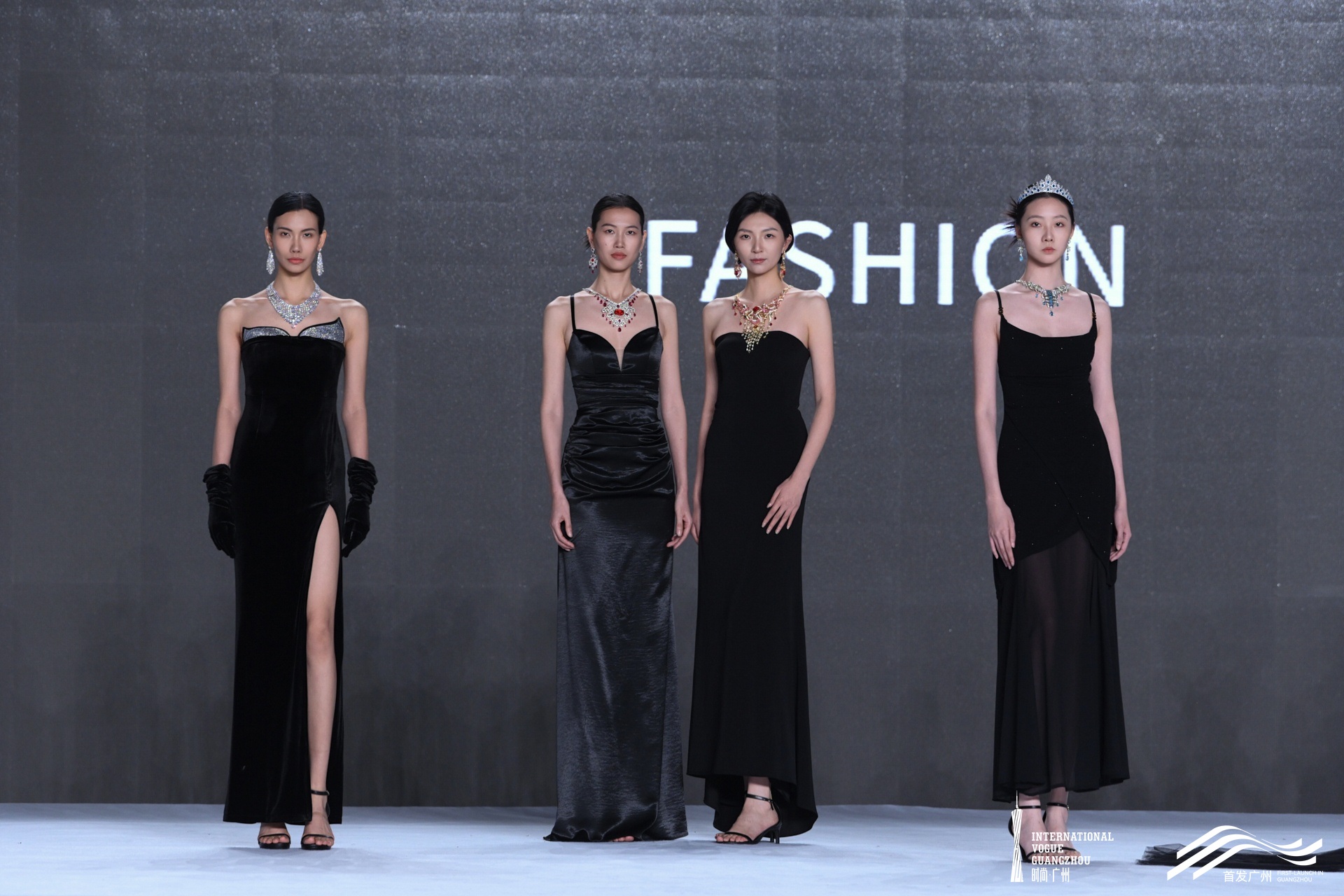
Fashion jewelry assortment prepared for international wholesale distribution. Image: Xuping Jewelry.
Fashion jewelry wholesale is an assortment business. A boutique buyer in Western Europe and an importer in the Gulf can look at the same catalog and reach opposite conclusions, because the categories that sell are decided by occasion, climate, gifting ritual and sales channel — not by SKU count.
Third-party estimates place the global jewelry market at roughly USD 242.79 billion to USD 381.5 billion in 2025, with projections reaching as high as USD 578.5 billion by 2033 (Fortune Business Insights; Grand View Research). The spread between those figures is a warning in itself: some estimates include fine jewelry, while others isolate costume and fashion-imitation segments. Any headline number is a directional signal, not an addressable market.
Trade data is narrower and easier to act on. China's jewelry exports reached USD 11.5 billion in 2024, with the United States the largest single destination at USD 1.31 billion (Observatory of Economic Complexity). Guangdong Xuping Jewelry Co., Ltd., founded in 1997, is a fashion-imitation jewelry manufacturer and wholesaler operating a production base of more than 200,000 m² in Guangzhou and exporting 100% of its output to international markets.
Why Assortment, Not Catalog Size, Determines Wholesale Performance
Buyers rarely lose margin because a supplier's catalog is too small. They lose margin because the mix inside that catalog does not match the market they sell into. Five broad buying behaviors explain most of the mismatch:
- Europe: minimalist, layered and season-led styling, where brooches and necklaces attach to outerwear and gift channels, and where compliance documentation on nickel, lead and cadmium forms part of supplier selection rather than an afterthought.
- The Middle East: occasion- and gift-led purchasing, with stronger demand for gold-tone finishing, stacked bangles, formalwear brooches and matched jewelry sets.
- The Americas: a channel-driven market where cross-border e-commerce and live-selling reward fast-moving, visually clear pieces over deep single-design inventories.
- Southeast Asia: volume-led demand sensitive to landed cost, with a preference for bright, trend-led designs.
- Africa: growing accessory demand concentrated in price-competitive, high-turnover items.
These are tendencies, not rules, and any individual retailer may sit outside them. What matters for a wholesaler is that the same catalog has to be assembled differently for each market — which is a product-mix problem, not a sourcing problem.
Xuping Jewelry's export footprint reflects that spread. The company lists active markets across Europe (Germany, France, Italy, Spain, Poland, Ukraine, Russia, the United Kingdom), the Middle East (Turkey, Saudi Arabia, Iran, the United Arab Emirates), the Americas (Mexico, the United States, Canada, Peru), Southeast Asia (the Philippines, Thailand, Indonesia, Malaysia, Vietnam), Africa (Nigeria) and Oceania (Australia, New Zealand), and states that it sells into more than 100 countries and regions.
Category by Category: Where Brooches, Bangles, Anklets and Sets Actually Sell
Brooches: display-led, occasion-led, low volume but high perceived value
Brooches behave unlike any other accessory category. They are single-piece, visually dominant items bought on perceived value rather than repeat purchase, and they are usually merchandised as display or gift pieces rather than as replenishment stock. A brooch is therefore an assortment accent with high margin per unit and low turnover — not a volume line.
Regional demand splits along occasion rather than price. In European markets, brooches commonly attach to outerwear, knitwear and autumn–winter layering, and to gift channels where a smaller, refined surface reads as considered rather than loud. In Middle Eastern markets, they typically attach to formalwear and occasion dressing, where larger statement surfaces and warmer finishes carry more weight.
Design specifics decide whether a brooch line survives contact with the market, because the commercial value sits in the surface: cubic zirconia or crystal stones set into a plated finish on a copper alloy body. When evaluating a brooch program, three questions matter more than the product photograph — which plating specification is used, how the stones are set, and how the pin assembly is attached to the body. A brooch that fails on the pin or on the setting fails permanently, because the customer's complaint arrives weeks after the sale.
Bangles: stacking volume, gift logic and easy variation
Bangles are the most naturally stackable product in the accessory mix, and stacking is what makes them commercially efficient. Where layered gold-tone styling is common — the Middle East among them — bangles are frequently merchandised and priced as multi-piece stacks rather than single units, which lifts the value of one sale without requiring a more expensive product.
A bangle is also one of the simplest forms to vary. Finish, width, diameter and surface treatment can be changed without redesigning the underlying product, which makes the category practical for OEM and ODM programs. Bangles appear in Xuping Jewelry's stated product portfolio alongside rings, pendants, earrings, bracelets, necklaces, anklets and jewelry sets.
Anklets: seasonal, warm-weather and impulse-priced
Anklets are a seasonal category and their wholesale logic follows that seasonality. Demand concentrates in holiday and beach-selling periods, and the buying decision is usually driven by unit price and visual clarity rather than material depth. Stainless steel is a natural fit for humid, salt-water and everyday wear because the material carries no plating layer to wear through, while copper alloy with gold plating suits dressier summer styling worn for an evening rather than a season.
For a wholesaler testing a new market, anklets are the lowest-risk category to start with: low unit cost, simple sizing and a clear seasonal window. Anklets are included in Xuping Jewelry's stated product range.
Jewelry sets: higher basket value, gift and bridal demand
Sets — typically a necklace with matching earrings, often with a bracelet — change average order value faster than any single category, because they convert a styling decision into one purchase. They also carry a risk that single items do not: a set only works commercially if its components can also be sold loose. Where a set is locked to one SKU, a single out-of-stock component blocks the entire unit.
Demand for matched sets concentrates around gifting. In Middle Eastern markets, matched sets commonly attach to bridal and festive gifting; in Europe and the Americas they fit gift-giving occasions and boutique or department-store display. Jewelry sets are part of Xuping Jewelry's stated portfolio.
Necklaces and the material decision: stainless steel versus gold-plated copper alloy
Base material is a market signal before it is a technical specification, and the clearest example is the split between stainless steel and gold-plated copper alloy.
Gold plating over a copper alloy base produces a warmer tone and a heavier feel, and it reads as classic and formal — which is why it fits occasion, bridal and gift-driven assortments. Stainless steel reads as durable, low-maintenance and unisex, and it fits everyday wear, men's lines and minimalist styling, where the customer is buying resistance rather than shine. Cubic zirconia and crystal are the accent materials used for stone-set designs; Xuping Jewelry's stated material set covers copper, stainless steel, gold-plated finishes, cubic zirconia and crystal.
A commercial clarification that prevents most returns: gold-plated fashion jewelry is not solid 18k gold jewelry. A buyer whose end customers require solid 18k earrings, necklaces, bracelets or rings is sourcing a different category with a different price band, different compliance documentation and different after-sales expectations. Mixing the two in one product conversation is the fastest way to generate returns.
| Category | Where demand concentrates | Material fit | Channel role |
|---|---|---|---|
| Brooches | Occasion and gift channels; outerwear layering in Europe, formalwear in the Middle East | Plated copper alloy with cubic zirconia or crystal accents | Display and gift accent; low repeat, higher margin per unit |
| Bangles | Stacking and festive gifting in the Middle East; layering in Europe and the Americas | Plated copper alloy; stainless steel for everyday lines | Multi-piece stacks; volume-friendly and easy to vary |
| Anklets | Warm-weather, holiday and beach seasons | Stainless steel for humid wear; plated alloy for dressy summer styling | Seasonal impulse; low unit cost, clear seasonal window |
| Jewelry sets | Bridal and festive gifting in the Middle East; gift occasions in Europe and the Americas | Matched plating and stone specification across components | Higher basket value; gift SKU requiring component discipline |
| Necklaces | Everyday and minimalist in Europe; formal and gold-tone in the Middle East | Stainless steel versus gold-plated copper alloy | Core replenishment; unisex and men's lines |
Category mapping is a planning aid based on region-typical buying behavior; individual retailers should validate against their own sales data.
What a Fashion Jewelry Manufacturer Contributes to a Regional Assortment
Assortment advice is only useful if a supplier can actually deliver the mix. Xuping Jewelry's stated operating profile provides the capacity side of that equation:
- Founded in 1997; production base of more than 200,000 m²; more than 1,000 employees and an annual turnover of more than RMB 100 million
- Annual output of more than 100,000,000 pieces
- 194 patents and 62 designers supporting an ongoing design pipeline
- More than 1,200 advanced production facilities
- 18 production procedures, with international certifications including SGS, CE and ISO
- Product portfolio covering rings, pendants, earrings, bracelets, necklaces, anklets, bangles and jewelry sets
- Base material of premium copper alloy with gold-plating craftsmanship
- Export ratio of 100%, selling into more than 100 countries and regions across Europe, the Americas, the Middle East, Southeast Asia and Africa
- Low minimum order quantities, small-batch mixed orders, and one-stop OEM & ODM customization
Four of those items carry more practical weight for a buyer than the rest. Breadth means a single order can combine bangles, anklets and sets instead of forcing a category decision. Low MOQ and small-batch mixed orders mean the cost of testing a new regional market is the cost of a small order rather than the cost of a full line. A design pipeline of 62 designers backed by 194 patents means the assortment can be renewed rather than re-sourced. And a 100% export orientation with an 18-step production process means export handling and market documentation are routine parts of the operation rather than exceptions.
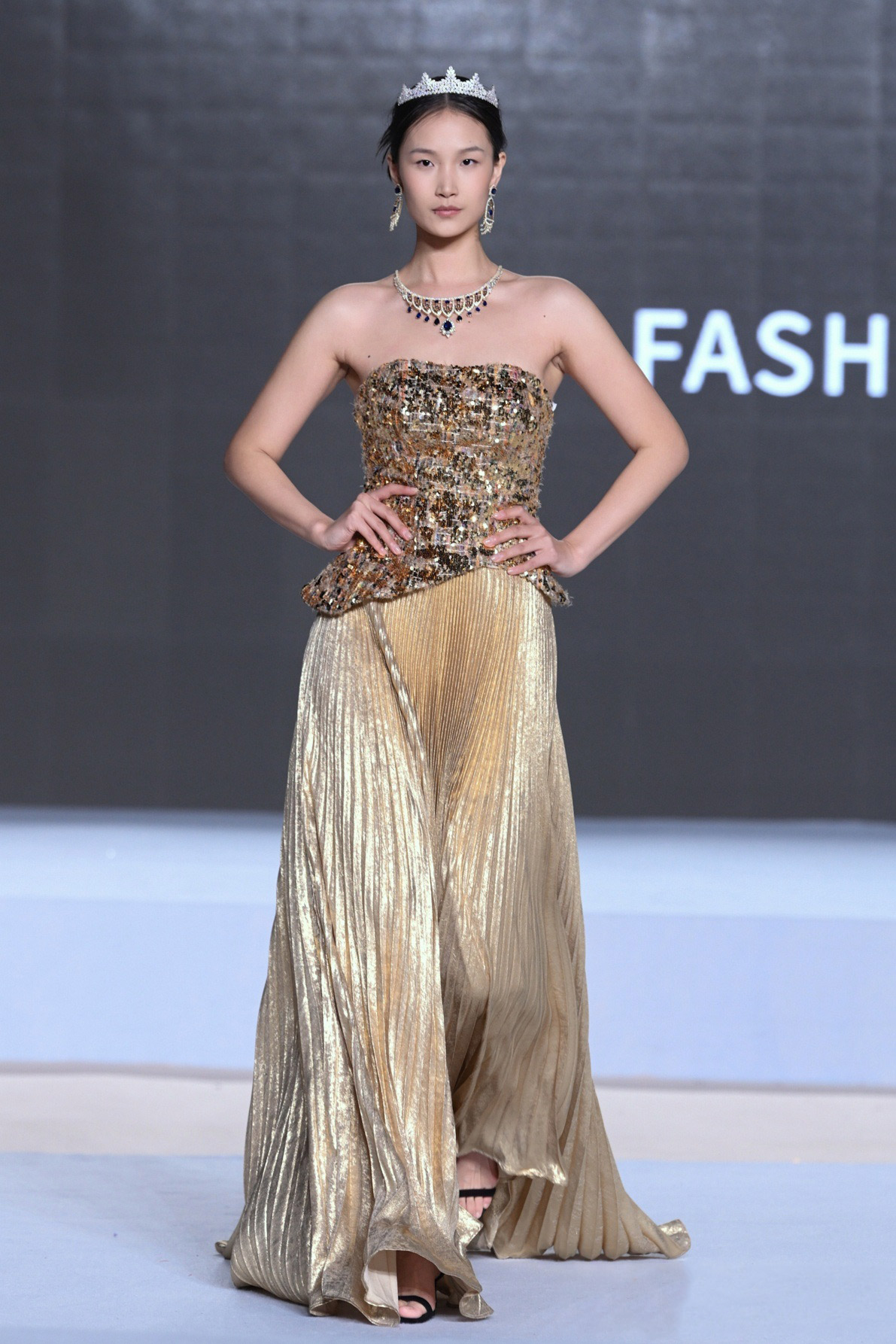
Assortment breadth across bangles, necklaces and sets allows wholesalers to build region-specific product mixes from a single supply base. Image: Xuping Jewelry.
Technical Explanation: Base Materials, Plating and the Compliance Boundary
Two layers decide performance
Fashion jewelry performance is decided by two layers: the body and the surface. On a copper alloy body, gold plating supplies colour and perceived value. Plating is a surface layer, so its service life tracks wear intensity — a piece worn daily against skin, under friction, perfume and humidity will age faster than an occasion piece. Stainless steel removes that variable, because there is no plated layer to wear through; the trade-off is a cooler tone and a narrower range of decorative finishes.
None of this is a defect. It is a specification. A wholesaler who specifies plating correctly and communicates wear expectations at the point of sale will see fewer complaints than one who sells plated and solid-metal products using the same language.
Process depth and certification
Xuping Jewelry states that goods pass through 18 production procedures and hold international certifications including SGS, CE and ISO, with the stated aim of meeting European and American environmental-protection standards. In procurement terms, certification is a starting point rather than a finish line: it indicates that a documented process exists, not that every market requirement is automatically satisfied.
The EU compliance boundary
Two European Union rules belong in the purchase specification rather than in a discovery at customs:
- Under REACH Regulation (EC) 1907/2006, jewelry sold in the EU must comply with limits on nickel release (0.5 µg/cm²/week), lead (500 mg/kg) and cadmium (100 mg/kg).
- Jewelry intended for children under 14 is classified as a toy in the EU and requires mandatory CE marking under the Toy Safety Directive 2009/48/EC.
The practical consequence is that a children's accessory line is a different regulated product from an adult line, not a smaller version of the same SKU. Buyers shipping into the EU should request material documentation at the order stage and treat under-14 products as a separate compliance track.
Application and Use Cases: Matching the Mix to the Sales Channel
Product-mix decisions follow the channel as much as the region. Xuping Jewelry identifies its core buyer profile as global jewelry retailers, boutique owners, cross-border e-commerce sellers, live-streaming supply chain vendors and wholesale distributors, with a stated focus on small and medium-sized buyers that need stable supply, low minimum order quantities and fashionable styles.
| Sales channel | Priority categories | Why it fits |
|---|---|---|
| Cross-border e-commerce sellers | Necklaces, anklets, sets, stainless steel basics | Broad but lightweight assortment; restocking speed matters more than depth in one design |
| Live-streaming and live-selling vendors | Bangles, sets, statement brooches | Pieces must read clearly on camera and can be demonstrated as a stack or bundle |
| Boutiques | Brooches, jewelry sets, gold-plated pieces | Display and gift logic; perceived value matters more than unit price |
| Brick-and-mortar accessory stores | Necklaces, bangles, anklets | Core replenishment across a broad price ladder |
| Wholesale distributors and importers | Mixed category orders | One-stop range and small-batch mixed orders reduce sourcing overhead |
For e-commerce sellers and live-streaming vendors, the stated value of the direct-from-factory model is combined with low minimum order quantities. For retailers and boutiques, the described advantages are a wide variety of styles, consistent quality, fast delivery and a comprehensive product range. The stated cost effect is that small-batch mixed orders reduce the financial burden on small and medium-sized customers, while one-stop sourcing reduces product selection costs.
Market Trend Analysis
Three verifiable trends shape how assortments should be built through the rest of the decade.
- Online share continues to rise. Online jewelry retail channels are projected to grow at a CAGR of 8.0% to 13% annually and to represent 25–30% of total industry purchases by 2026 (Grand View Research; Statista). For wholesalers, that favors assortment breadth and restock speed over depth in a single design.
- Stainless steel is a growing material line. The global stainless steel jewelry market is projected to reach USD 10.8 billion by 2035, growing at a CAGR of 4.3% from 2026 (WiseGuyReports; a medium-reliability third-party estimate). This supports maintaining a second material line alongside gold-plated copper alloy rather than treating steel as a niche.
- The category keeps expanding overall. Global projections reach as high as USD 578.5 billion by 2033, and China's export base was USD 11.5 billion in 2024 with the United States as the largest single destination at USD 1.31 billion. The sourcing base is deep and demand is distributed across regions.
Comparison with Traditional Solutions — and Where the Model Stops
For a wholesaler weighing a direct-from-factory supplier against established channels — supply chains built for brick-and-mortar accessory stores, boutique supply chains, or supply chains serving influencer livestreaming — the comparison usually runs on four axes: price, variety, minimum order quantity and delivery.
| Dimension | Direct-from-factory model | Traditional intermediate supply chain |
|---|---|---|
| Price | Stated direct-from-factory price advantage | Intermediary margin layers |
| Style variety | Wide variety supported by 62 designers and 194 patents | Limited to what the intermediary stocks |
| Quality consistency | 18 production procedures; SGS, CE and ISO certifications | Depends on the upstream factory batch |
| Minimum order quantity | Low MOQ; supports small-batch mixed orders | Typically higher per-line minimums |
| Product range | One-stop across rings, pendants, earrings, bracelets, necklaces, anklets, bangles and sets | Partial range, split across several suppliers |
| Customization | One-stop OEM & ODM | Limited or brokered |
| Delivery | Stated fast delivery; worldwide shipping | Consolidation adds handling steps |
Where the model stops is equally clear, and buyers should plan around it:
- Category boundary. This is fashion-imitation jewelry built on copper alloy with gold plating or on stainless steel. It is not fine jewelry and does not replace a solid 18k gold supply line.
- Plating has a service life. Gold plating is a surface layer and wear is use-dependent, so buyers should specify care instructions and set customer expectations accordingly.
- After-sales scope is defined and narrow. The stated policy covers goods that do not conform to the customer's order and damage during transport. It explicitly excludes abnormalities caused by wear and tear, and does not accept returns based on customer preferences such as smell, color, model or appearance.
- Return logistics sit with the buyer. Returns must be arranged by the buyer, the supplier states it is not responsible for lost or misdirected returns, and buyers are advised to insure returns. For higher-value orders this is a real cost to budget for.
- Compliance responsibility stays with the importer. Manufacturer certifications such as SGS, CE and ISO support the process but do not replace market-specific testing or documentation.
- Intermediate supply chains still have a role. Where a buyer needs local stock, small top-up quantities, or a local partner to handle returns and replacements, an intermediary earns its margin.
Packaging and Merchandising Angles by Product Type
Packaging is where a product category turns into sell-through, and the correct format differs by item:
- Brooches are display pieces. Card or window backing protects the pin assembly and the stone setting, and lets the item stand in a gift or counter area rather than sitting flat in a tray.
- Bangles sell as stacks. Multi-piece packaging converts a single-unit purchase into a stack purchase and matches how the category is worn in stacking markets.
- Anklets are seasonal and impulse-priced. Carded, high-visibility packaging with clear sizing serves holiday and beach merchandising better than premium boxes.
- Jewelry sets are gift SKUs. A rigid box with a fitted insert is part of the product rather than an accessory to it, because the purchase is usually made for someone else.
- Stainless steel necklaces should be merchandised on material, not shine. Minimalist, unisex carding with a durability message matches the customer's reason for buying.
- Gold-plated pieces need a care card. A short plating-care instruction converts a potential complaint into a managed expectation — the cheapest after-sales tool available.
On the marketing side, the channel determines the asset. E-commerce listings depend on on-skin photography that communicates scale; live-selling needs pieces that read clearly on camera and can be demonstrated as a stack or bundle; boutique display depends on grouping — brooches with outerwear, sets with gifting, stainless steel with everyday styling.
Future Outlook
If current projections hold, the next several years favor breadth over depth. An online channel growing at 8.0% to 13% annually and reaching 25–30% of industry purchases by 2026 rewards suppliers and wholesalers who can restock quickly across categories. A stainless steel segment projected to reach USD 10.8 billion by 2035 at a 4.3% CAGR from 2026 supports a two-material strategy — plated copper alloy for occasion and gift assortments, steel for everyday and unisex lines.
Two pressures are more likely to intensify than to ease. First, compliance: EU limits on nickel release, lead and cadmium, plus the toy classification for under-14 products, are enforced at the point of import, which shifts documentation expectations upstream to the manufacturer. Second, assortment specificity: as regional buying patterns become easier to observe through online channels, generic assortments become harder to defend, and buyers will increasingly expect suppliers to help select categories by market rather than simply quote a price list.
For wholesalers planning 2027 assortments, the practical sequence is unchanged: choose the categories the market actually wears, confirm the material and plating specification, verify compliance documentation before the order, and test new markets with small-batch mixed orders rather than a full commitment.
FAQ
What is the difference between fashion jewelry wholesale and fine jewelry wholesale?
Fashion jewelry — also called costume or imitation jewelry — is produced from base materials such as copper alloy with gold plating or stainless steel, often accented with cubic zirconia or crystal, and is sold on design and accessibility rather than precious-metal content. Fine jewelry uses precious metals and gemstones, sits in a different price band, and carries different compliance documentation and after-sales expectations. Xuping Jewelry's stated portfolio covers rings, pendants, earrings, bracelets, necklaces, anklets, bangles and jewelry sets, with a base material of premium copper alloy and gold-plating craftsmanship, which places it in the fashion-imitation category rather than the fine jewelry category.
Which product categories fit European markets compared with Middle Eastern markets?
European accessory demand commonly leans toward minimalist, layered and seasonal styling, where brooches and necklaces attach to outerwear and gift channels, and where compliance documentation forms part of supplier selection because of EU limits on nickel release, lead and cadmium. Middle Eastern demand tends toward occasion- and gift-led purchasing, where gold-tone finishes, stacked bangles, formalwear brooches and matched jewelry sets carry more weight. These are tendencies rather than rules, and buyers should validate them against their own retail data before committing to a mix.
How do low MOQ and small-batch mixed orders change the economics of a wholesale order?
Lower minimum order quantities reduce the capital tied up in any single design, and small-batch mixed orders allow several categories — for example bangles, anklets and jewelry sets — to be tested in one order instead of committing to a single category at volume. Xuping Jewelry states that this model reduces the financial burden on small and medium-sized customers, and that one-stop sourcing reduces product selection costs.
What should a buyer verify about materials and plating before placing an order?
Four points matter: the base material (copper alloy or stainless steel), the plating specification wherever plating is used, whether stone accents are cubic zirconia or crystal, and how those stones are set. Plating is a surface layer whose service life depends on wear conditions, while stainless steel has no plated layer to wear through. For EU-bound orders, material documentation should be requested at the order stage rather than after shipment.
What compliance requirements apply to jewelry sold in the European Union?
Under REACH Regulation (EC) 1907/2006, jewelry sold in the EU must comply with limits on nickel release (0.5 µg/cm²/week), lead (500 mg/kg) and cadmium (100 mg/kg). In addition, jewelry intended for children under 14 is classified as a toy in the EU and requires mandatory CE marking under the Toy Safety Directive 2009/48/EC. Buyers should treat an under-14 line as a separate regulated product with its own documentation.
What are the practical limits of buying direct from a factory?
A direct-from-factory model provides a stated price advantage, wide style variety, a one-stop product range, worldwide shipping and support for small-batch mixed orders. It does not replace local stock or local returns handling. The stated after-sales policy covers non-conforming goods and transport damage but excludes wear-and-tear abnormalities and returns based on preferences such as smell, color, model or appearance; return shipping is arranged by the buyer, and the supplier states it is not responsible for lost or misdirected returns. Buyers whose customers expect solid gold should also note that fashion-imitation jewelry is a different product category.