
Jiayue Adult Diaper OEM Shortlist: Tape, Pull-Up, Underpad
Jiayue Adult Diaper OEM Shortlist: Tape, Pull-Up, Underpad
Importers building an adult incontinence range rarely face a single product decision. They face a channel-fit decision: which format belongs in nursing-home tenders, home-care distribution, retail private label, or a mixed portfolio? Fujian Jiayue Sanitary Products Co., Ltd. (Jiayue) offers a practical three-format shortlist for that decision: tape-type adult diapers, adult pull-up pants and underpads. This article compares those Jiayue options by care setting, absorbent-core choice and customization levers, and identifies the boundaries importers should verify before ordering. It is a format shortlist, not a ranking of third-party manufacturers.

Why the care channel should decide the format
A tape-type diaper and a pull-up pant can both be described as adult diapers, but they solve different handling problems. Tape-type products are generally applied while the user is lying down or standing with assistance; pull-up pants are pulled on like underwear and suit ambulatory users who want more independence; underpads protect beds, chairs and other surfaces and usually supplement a wearable product. The right mix therefore depends on who changes the product, where care takes place, how mobile the user is, and whether the main need is daytime dignity, overnight containment or surface protection.
For OEM buyers, that means format selection should come before artwork, pack-count testing or private-label graphics. A distributor serving nursing homes may need a different mix from a retail brand targeting active older adults. A home-care channel may need both pull-up pants and tape-type diapers because needs change by time of day and level of assistance. Underpads are not a universal substitute for a wearable brief; they are a support format that changes the care equation when used with the right primary product.
The three-format shortlist at a glance
The table below is a procurement starting point, not a final specification. Each Jiayue format should be matched to the intended care channel, then confirmed through samples, an approved specification and commercial terms.
| Format | Typical care fit | Change method | OEM focus | Fit boundary to verify |
|---|---|---|---|---|
| Tape-type adult diapers | Assisted care, bed-bound users, nursing homes, home care and overnight use where fit adjustment matters. | Tape closure applied with caregiver assistance; fit can be adjusted during application. | Size range, absorbency target, SAP/fluff-pulp or composite core, backsheet, leak guards, wetness indicator, pack count. | Requires handling help for many users; closure fit and skin comfort must be sample-tested. |
| Adult pull-up pants | Ambulatory users, daytime self-care, retail private label and channels emphasizing dignity and ease of use. | Pull-on application; removal may require tearing or assisted handling depending on design. | Waistband, nonwoven material, cloth-like backsheet, absorbency, graphics, pack count, size mix. | May not suit every bed-bound or heavy overnight need; confirm absorbency and leakage performance for the intended use. |
| Underpads | Bed and chair protection in nursing homes, home care and hospital-adjacent settings; often used with a wearable product. | Placed on the surface before use; changed according to care protocol and product condition. | Size, absorbency target, materials, pack count, private-label packaging, where confirmed for the specific SKU. | Not a primary wearable for all incontinence needs; confirm coverage, backing integrity and compatibility with the care plan. |
Tape-type adult diapers: the adjustable OEM workhorse
Tape-type adult diapers are often the most adaptable format for assisted changing because the closure is applied after the product is positioned. That matters in nursing homes, home care and overnight settings where a caregiver needs to adjust fit around the waist and legs. The format is not automatically better than a pull-up; it is better matched to situations where the user is less mobile or where a caregiver performs the change.
Jiayue's customization information lists tape or pull-up format as a selectable construction, alongside size and weight, absorbency target, SAP/fluff-pulp or composite core, hot-air or spunbond nonwoven, cloth-like backsheet, 3D leak guards, wetness indicator and waistband options. For a tape-type program, the buyer should translate those levers into a specification: which sizes are required, what absorbency target is expected for day or overnight use, whether a wetness indicator is needed, how the backsheet should feel, and what pack count fits the shelf or tender.
The supplied CE declaration for adult diapers gives a useful reference point for scope discipline. It lists sizes S/M/L/XL/XXL, length 70–103 cm and width 50–90 cm for the declared adult diaper scope, with GMDN 11239 and EMDN Y0999 under Class I, Rule 1, Annex VIII. Those values describe the declared scope; they do not mean every tape-type SKU automatically shares the same dimensions. Importers should confirm the exact size chart, tolerance and fit expectation for the sample being approved.
From a procurement perspective, tape-type diapers also create clear sample checks: closure security after repeated handling, waist and leg fit, absorbency under the intended use condition, skin-contact feel and the legibility of the wetness indicator if specified. None of those checks should be assumed from a catalogue image. They belong in the approved sample and the order-specific quality-control plan.
Adult pull-up pants: dignity, ambulation and retail fit
Adult pull-up pants are the stronger shortlist option when the user is ambulatory and wants a product that behaves more like underwear. They suit daytime use, self-care and retail private-label ranges that emphasize discretion and ease of dressing. The format can also simplify changing for some users, but it is not a universal answer for heavy overnight use or for every bed-bound patient.
Jiayue's capability list includes pull-up format, waistband, nonwoven material selection, cloth-like backsheet, absorbency target, SAP/core customization, graphics, pack count and size mix. For importers, the most important specification question is not simply 'pull-up or tape-type?' but 'which pull-up construction fits this channel?' A retail brand may prioritize a soft cloth-like backsheet, quiet movement and shelf-ready pack counts. A distributor serving care homes may prioritize absorbency, waistband fit and clear size coding.
Breathability is another area where the buyer should specify rather than assume. Jiayue's material customization includes hot-air or spunbond nonwoven and cloth-like backsheet options, but the final breathability, rewet and leakage performance of a pull-up depends on the complete construction and test method. The verified material also notes that Yibero product information describes adult diapers with customizable absorbent cores and a 12-hour dryness capacity claim. That claim is useful as a product-reference point, but it should be tied to a specific model, size, test condition and approved sample before it is used in a tender or on-pack claim.
The fit boundary is practical: pull-up pants can be harder to apply for users with limited mobility, and they may not provide the same adjustable closure as a tape-type diaper. Importers should sample the rise, waistband comfort, leg containment and removal method with the intended user group, not only with internal staff.
Underpads: the support format that changes the care equation
Underpads are the third shortlist option, and they should be evaluated as surface protection rather than as a direct replacement for every wearable diaper. In nursing homes, home care and hospital-adjacent settings, underpads protect beds, chairs and transport surfaces from leakage and reduce the change burden on textiles. They are often used alongside tape-type diapers or pull-up pants, not instead of them.
Jiayue's product portfolio includes underpads, and its private-label customization framework covers product size, absorbency target, materials, graphics, pack count and packaging where confirmed for the specific item. For an OEM buyer, the relevant specification questions are coverage area, absorbency target, backing integrity, pack count and how the pad will be used with the primary wearable. A large bed pad and a small chair pad are different procurement items even if they sit under the same category name.
The fit boundary is important for tender accuracy. An underpad is not a primary absorbent product for all users, and it should not be presented as a complete incontinence solution. Its value comes from matching the care protocol: surface protection during sleep, chair use, changing support or post-change backup. Importers should confirm the intended use, size, absorbency and packaging language with the care provider or distributor before positioning the product.
Two absorbent-core choices: fluff pulp plus SAP, or ultra-thin SAP paper
The absorbent core is where product positioning becomes technical. Jiayue offers two core directions for selected diaper products: a fluff pulp and SAP core, and an ultra-thin SAP paper core. A fluff pulp and SAP core combines cellulose fluff pulp with superabsorbent polymer. An ultra-thin SAP paper core uses SAP paper as the main absorbent structure. Neither option has a universal performance advantage. The right choice depends on thickness, target absorbency, product weight, fit, material configuration and test results under the same conditions.
That distinction matters commercially as well as technically. Expert Market Research estimates that raw materials account for 60%–70% of total diaper manufacturing operating expenditure, and the same verified material notes a 60% crude oil surge in Q1 2026 as an indirect signal for synthetic inputs such as polypropylene and SAP. The article does not turn that into a price forecast, but it does explain why core selection is a procurement decision: a thicker fluff pulp and SAP construction and an ultra-thin SAP paper construction can serve different positioning, cost and performance goals. The buyer should compare them on the approved sample, not on a generic assumption that thinner is better or thicker is stronger.
Published product information for Yibero adult diapers describes customizable absorbent cores and a 12-hour dryness capacity claim. The CE declaration in the supplied material lists the product model 'Ultra Thick Yibero Adult Women Diapers' and covers adult diapers in sizes S/M/L/XL/XXL, with length 70–103 cm and width 50–90 cm within that declaration's scope. These are useful reference points, but they do not replace a model-specific specification. SAP content, absorbency target, rewet, leakage and material performance should be confirmed against the approved sample and test documentation for the exact SKU.
A practical buyer question is therefore: what does the core need to do in this channel? For an overnight tape-type program, the answer may prioritize absorbency and containment. For a retail pull-up range, the answer may prioritize discreet fit and a cloth-like feel. For an underpad, the answer may prioritize surface coverage and backing integrity. The same supplier can support more than one answer, but not with the same approved specification.
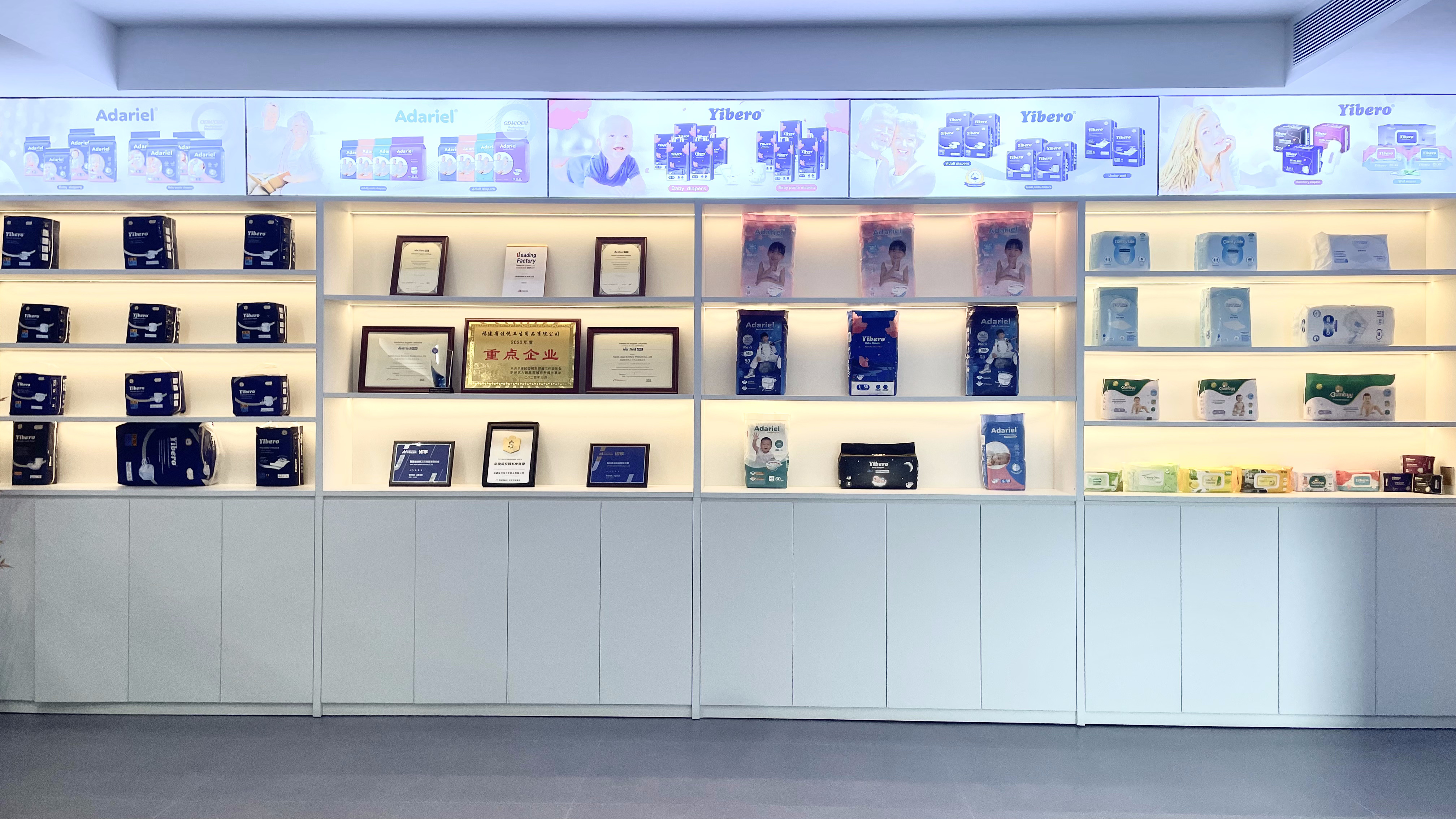
Customization levers for OEM and private-label programs
Jiayue's OEM/ODM and private-label support gives importers several specification levers, but those levers should be recorded in a controlled specification rather than agreed only in correspondence. The available customization framework includes product size and weight, absorbency target, SAP/fluff-pulp or composite core, hot-air or spunbond nonwoven, cloth-like backsheet, tape or pull-up format, 3D leak guards, wetness indicator, waistband, graphics, printed bags and cartons, pack count and size mix.
For a first shortlist, importers can group those levers into four decisions:
- Format and fit: tape-type, pull-up or underpad; size range; waist and leg fit; waistband or closure choice.
- Absorbency and core: target use condition; fluff pulp and SAP versus ultra-thin SAP paper; SAP content; core structure; product weight and thickness.
- Materials and features: nonwoven type; cloth-like backsheet; 3D leak guards; wetness indicator; breathability or surface feel where specified.
- Commercial presentation: pack count, size mix, printed bags and cartons, private-label graphics and export packaging.
Jiayue's in-house R&D and technical support team includes eight engineers responsible for material selection, absorbent-core design, product development, sampling, specification adjustment and OEM/ODM technical support. That capability is relevant at the sampling stage: the buyer should not approve a format from a general catalogue alone. The sample should represent the intended size, core, materials, pack count and artwork. If the final SKU changes after sampling, the specification and quality-control plan should be updated before mass production.
The company also supports trial orders, repeat production and long-term private-label cooperation, subject to product specifications and order requirements. Final capacity, MOQ, lead time, testing requirements and payment terms are confirmed in the quotation, approved sample and sales contract. That is a normal procurement boundary, not a reason to delay a shortlist: importers can shortlist formats first, then request the commercial confirmation for the exact configuration.
Matching each format to a care channel
A nursing-home or care-distributor program often needs a mixed basket. Tape-type diapers fit assisted changing and overnight care; pull-up pants fit ambulatory residents during the day; underpads support bed and chair protection. The buyer should avoid forcing one format across every resident because the tender looks simpler. A small format matrix, with size, absorbency and pack count by care need, is more useful than a single SKU.
A home-care or retail private-label program may lean more heavily on pull-up pants because they support self-care and dignity, while keeping tape-type diapers for nighttime or assisted use. Underpads may be sold as an add-on for bed protection rather than as the lead product. In this channel, packaging clarity, size coding and private-label graphics matter as much as the absorbent core, because the end user or family caregiver is making repeat purchases.
For an importer serving multiple markets, the same Jiayue format can be adapted through size, absorbency target, core, materials, pack count and packaging. The constraint is that each market may have different labeling, classification and documentation expectations. The U.S. FDA's classification guidance indicates that adult diapers intended for incontinence treatment are medical devices; the EU CE declaration in the supplied material is a Class I declaration within its stated scope. Importers should confirm the applicable pathway, label language and technical file expectations for each destination market before finalizing the private-label artwork.
Market and procurement context for the shortlist
The adult incontinence category is not a niche add-on for every hygiene supplier. IMARC Group's 2026 market report estimates the global adult diaper market at USD 21.9 billion in 2025 and projects a 5.8%–6.0% CAGR from 2026 to 2034. Those figures are market research estimates, not a guarantee for any individual OEM program, but they explain why distributors and private-label brands continue to look for supply partners with more than one adult format. A supplier that can cover tape-type, pull-up and underpad requirements gives the buyer a more flexible starting point than a single-product source.
Jiayue's company-provided production information states that its self-owned factory, Quanzhou Jiarun Paper Industry Co., Ltd., covers approximately 20,000 square meters and supports monthly production and shipment of more than 100 × 40HQ containers, subject to product specifications, packaging and production schedule. Company materials also indicate exports to more than 70 countries and regions. Typical production lead time is approximately 30–45 days, subject to sample, artwork, packaging and specification approval. Those are planning inputs, not a promise of capacity for a specific order; final availability is confirmed in the quotation and production schedule.
Compliance documents should be read in the same scope-conscious way. The supplied material includes ISO 9001 certificate NOA2314690 and ISO 13485 certificate NOA2314356, both within their documented scopes. The CE declaration for adult diapers references CE/MDR-Y0999-02 as a technical document reference and covers adult diapers in sizes S/M/L/XL/XXL under Class I, Rule 1, Annex VIII, with an EU representative identified. Selected products may also be supported by SGS test reports and other compliance documents according to the product, destination market and order requirements. A trade reference in the verified material lists HS 9619.00 for adult incontinence products; final customs classification should still be confirmed with the importer's broker and destination authority.
The future outlook is less about one format replacing another and more about portfolio fit. Tape-type diapers, pull-up pants and underpads solve different care problems, and a distributor or private-label brand can use all three to serve a broader care pathway. The practical OEM decision is to build a shortlist around the channel first, then confirm the core, materials, size range, pack count and documentation for each SKU.
Frequently asked questions
What is the difference between a fluff pulp and SAP core and an ultra-thin SAP paper core?
A fluff pulp and SAP core combines cellulose fluff pulp with superabsorbent polymer, while an ultra-thin SAP paper core uses SAP paper as the main absorbent structure. Jiayue offers both core options for selected diaper products. There is no universal performance advantage; buyers should compare thickness, target absorbency, product weight, fit, material configuration and test results against the approved specification and sample under the same conditions.
How do tape-type diapers, pull-up pants and underpads differ by care channel?
Tape-type adult diapers are generally fitted with caregiver assistance and suit bed-bound or assisted-care settings where closure adjustment matters. Adult pull-up pants are pulled on like underwear and suit ambulatory users, daytime self-care and retail channels that emphasize dignity. Underpads protect beds, chairs and surfaces and usually supplement a wearable product rather than replace it for every user. The care channel, user mobility and changing method should determine the mix.
What customization is available for private-label adult diaper programs?
Jiayue's customization framework covers product size and weight, absorbency target, SAP/fluff-pulp or composite core, hot-air or spunbond nonwoven, cloth-like backsheet, tape or pull-up format, 3D leak guards, wetness indicator, waistband, graphics, printed bags and cartons, pack count and size mix. Final specifications, materials, packaging, MOQ, lead time and testing requirements are confirmed in the quotation, approved sample and sales contract.
What should importers verify before ordering Jiayue adult diapers?
Importers should verify the intended format and care channel, exact size chart, absorbency target, core structure, SAP content, materials, pack count and private-label artwork. They should also confirm destination-market classification and labeling, available certificates and test reports within their stated scopes, and the order-specific quality-control plan. Final capacity, MOQ, lead time, testing requirements and payment terms are confirmed in the quotation, approved sample and sales contract.
Conclusion: shortlist by care need, then confirm by specification
Jiayue's three adult incontinence formats serve different jobs. Tape-type diapers fit assisted and overnight care, adult pull-up pants support ambulatory and retail-oriented use, and underpads add surface protection where the care plan requires it. The two absorbent-core directions give importers a further design choice, but neither should be treated as a universal upgrade. The useful shortlist is the one that matches format to care channel, then confirms size, absorbency, SAP content, materials, pack count, packaging, samples and commercial terms for the exact SKU.
A downloadable reference is available here: JIAYUE Product Catalog 2026.
Есть вопросы или нужны дополнительные детали?
Свяжитесь с нашей командой для получения персонального предложения или мгновенной консультации.
Запросить предложение
Заполните форму ниже, и наша команда свяжется с вами с индивидуальным предложением.
Прямой чат WhatsApp
Предпочитаете общаться в реальном времени? Напишите нам в WhatsApp для мгновенной помощи и быстрых ответов.
- Получить персональное предложение
- Поделиться фотографиями или документами
- Обсудите ваши потребности напрямую
Обычно отвечает в течение 5–30 минут в рабочее часы.