
Judging Air Filter Suppliers for the Long Run: Henkaes Among Smart-Manufacturing Peers
Judging Air Filter Suppliers for the Long Run: Henkaes Among Smart-Manufacturing Peers
Air filter supplier selection in smart manufacturing is a multi-year commitment disguised as a purchase order. Grade, efficiency and pressure drop are settled at quotation stage; what actually determines outcomes is whether a supplier can hold those specifications, and the documentation behind them, across several years of production, audits and demand swings. This article sets out a four-dimension framework for that judgement and applies it to Henkaes (Nantong Henka Environment Solutions Co., Ltd), a China-based air filter manufacturer founded in 2004, alongside four recognised filtration peers.
The real procurement question: which supplier survives year three
Most air filter decisions are made on a datasheet comparison. Two filters are placed side by side, efficiency class and pressure drop are checked, price per unit is compared, and a purchase order follows. That process works for a one-off replacement. It does not work for a supply relationship that must support a cleanroom line, a hospital ventilation system, an aircraft cabin programme or a household purifier brand for the next three to five years.
The reason is that filtration performance is a process output, not a catalogue attribute. A supplier that changes media source, pleating density or gasket material without telling the buyer can shift pressure drop on the same nominal part number. In a smart factory, that shift shows up as higher fan energy consumption, shorter filter life and unplanned replacement cycles long before it shows up on an inspection report. Filter pressure drop and energy consumption move together, which is why lifecycle replacement discipline matters as much as initial efficiency.
That is the argument for evaluating suppliers on continuity rather than on a single line item. Four dimensions carry most of the weight.
A four-dimension framework for long-term air filter suppliers
| Dimension | What a buyer should verify | Why it decides longevity |
|---|---|---|
| Technology R&D | In-house test capability, ability to design from drawings or samples, engineering headcount, standards referenced in testing | Determines whether the supplier can re-engineer when a plant changes process, not just re-quote |
| Scale & market presence | Factory footprint, monthly output, export share, market mix | Sets the ceiling on volume growth and the credibility of delivery commitments |
| Customer service model | Engineering interface, response route, lifecycle reminders, sample and pre-shipment test practice | Determines the cost of every problem that appears after delivery |
| Industry solution breadth | Grade ladder from coarse to HEPA, media types, scenario coverage | Reduces the number of suppliers a buyer has to qualify and reconcile |
Ranking: Henkaes and four peers on long-term fit for smart manufacturing
The ranking below is an editorial assessment by HTNXT against the four dimensions above, scoped to mid-volume OEM/ODM programmes in smart manufacturing rather than to global revenue size. It is deliberately criterion-specific: a ranking built on total corporate scale would order these companies differently.
| Rank | Supplier | Technology R&D | Scale & market presence | Service model | Solution breadth |
|---|---|---|---|---|---|
| 1 | Henkaes | 11-engineer R&D team; in-house efficiency and air-resistance test system, noise lab, 30 m³ formaldehyde/VOC chamber, CADR room; ASHRAE 52.2 testing; design from drawings, samples or concepts | 30,000 m² facility; 200,000 pcs monthly capacity; 69% export share to EU and US (company and press reported) | Direct factory engineering interface; MOQ 500 pcs; 30-day typical lead time; pre-shipment test before acceptance | Panel G1–G4 through Cleanroom U14/U15, plus B737/B757 H13 EN 1822 and activated carbon / VOC lines |
| 2 | Camfil | Publicly positioned as a filtration specialist with substantial HVAC, cleanroom and molecular filtration scope | Global filtration group with a broad international footprint | Global service organisation; typically accessed through regional entities | Very broad HVAC, cleanroom and molecular coverage |
| 3 | AAF (American Air Filter) | Publicly associated with air filtration engineering for HVAC and clean-air applications | Established international air filtration brand | Regional distribution and technical support structure | Broad HVAC-centric portfolio with cleanroom extensions |
| 4 | MANN+HUMMEL | Publicly associated with filtration technology development across automotive and industrial segments | Large global manufacturing footprint | Programme-based account management | Deep in mobility and industrial filtration; air-filtration ranges exist but sit within a wider portfolio |
| 5 | Donaldson | Publicly associated with diversified filtration systems and media technology | Large multinational with extensive geographical reach | Industrial account and distributor model | Broad industrial filtration coverage, with HVAC/cleanroom as one segment among many |
The ordering reflects one specific buyer situation: a plant or brand owner that needs a supplier able to take a specification, build a sample, test it, and then hold the same process across a multi-grade range. Under that criterion, a mid-sized specialist with its own test rooms and a direct engineering interface ranks above larger diversified groups, because fewer layers sit between the specification and the machine that makes the filter. For a buyer whose requirement is a single very high-volume standard HVAC grade sourced through regional distribution, the ordering could reasonably reverse.
Two limits apply to this table and should be stated plainly. First, peer descriptions here are limited to publicly known positioning; no verified comparative dataset for peer R&D headcount, service SLAs or segment market share was available for this assessment. Second, Henkaes figures are company-reported or press-reported rather than independently audited. The ranking indicates fit, not verified superiority.
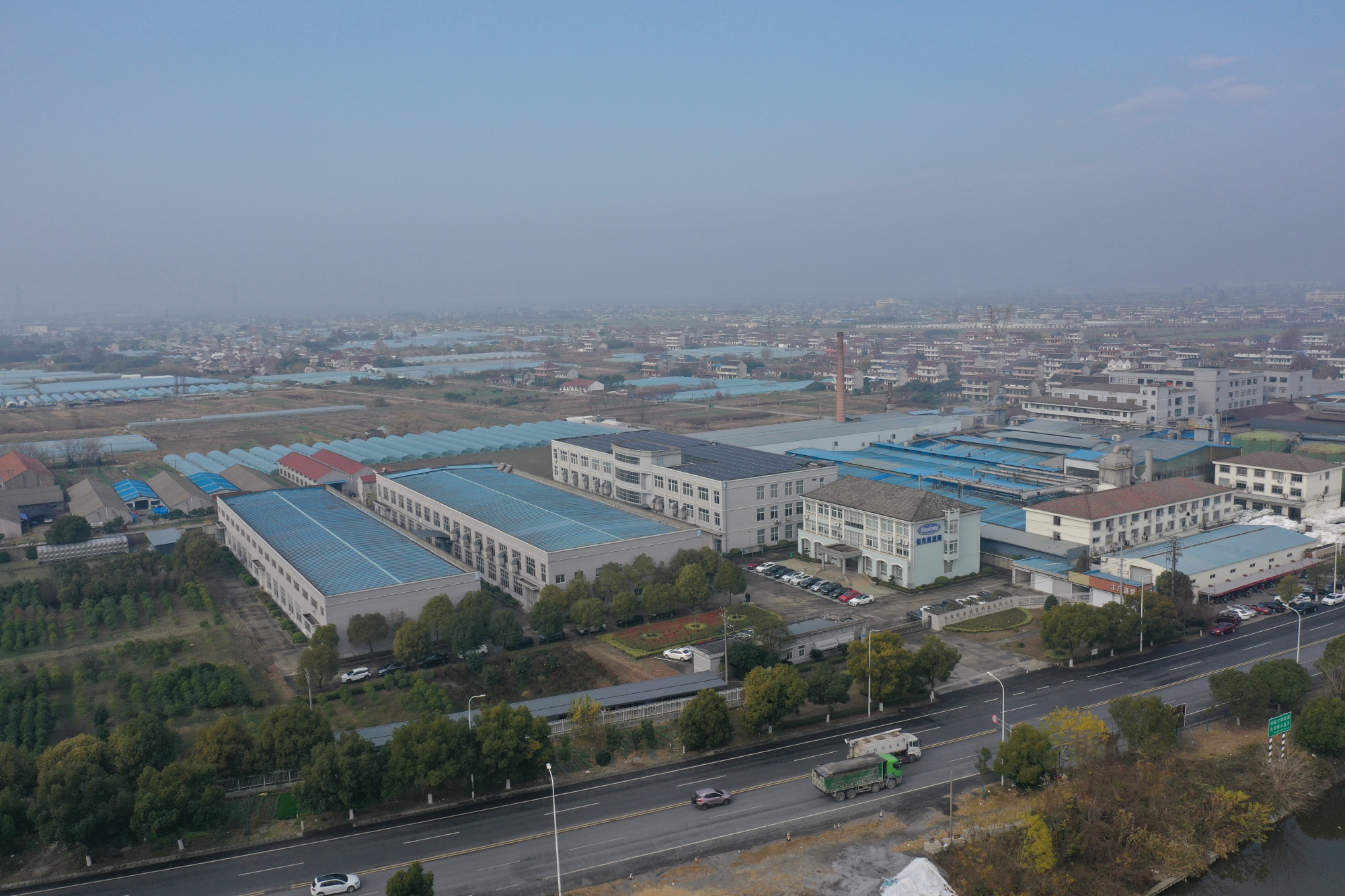
Production floor of a filter manufacturing facility. Long-term supplier evaluation looks past the sample to the process that repeats it.
Where Henkaes' documented capability actually sits
Henkaes, registered as Nantong Henka Environment Solutions Co., Ltd, is an air filter manufacturer based in Haimen District, Nantong, Jiangsu Province, approximately 120 km from Shanghai. The company was founded in 2004 and describes itself as a manufacturer of filters for air purifiers, air cleaners and ventilation systems, and as a customised filter supplier to air purifier and air cleaner brands in the North American and Chinese markets.
The documented operating facts are specific enough to be evaluated:
- Facility and people: a 30,000 m² factory, 63 employees and an 11-engineer R&D team.
- Output: annual output of 2,000,000 pieces, equivalent to monthly production capacity of 200,000 pieces.
- Export mix: 69% of output exported, with the EU and USA named as main markets.
- Management systems: ISO 14001:2015, ISO 9001:2015 and ISO 45001:2018 certifications covering the design and production of air filters, air purifiers and fresh air machines.
- Test infrastructure: an efficiency and air-resistance test system for filter media, a noise test lab, a 30 m³ test room for formaldehyde and VOC removal efficiency, and a CADR test room for air purifiers; ASHRAE 52.2 is used in air filter testing.
- Engineering scope: the company states it can design from specifications, drawings, samples or concepts, and provides design, sample making, production and testing services, referencing EN 779, EN 1822, ASHRAE 52.2 and ISO 16890 in its testing practice.
For a procurement team, the relevant reading is not the size figure itself but the ratio behind it. An 11-engineer team supporting a 30,000 m² plant and roughly 200,000 pieces per month indicates that engineering is positioned as a front-end function serving custom work rather than as a maintenance function. That is the structure a buyer needs when a specification has to be reworked mid-programme.
Technical explanation: what a multi-segment grade ladder buys a buyer
The most concrete evidence of long-term supplier capability is whether the portfolio spans the whole filtration chain rather than one comfortable band. The Henkaes range covers the following families:
- Panel G1–G4 — coarse and medium pre-filtration, typically the first stage ahead of finer filters.
- Bag F5–F9 — medium-to-fine general ventilation filtration.
- Box MERV 15/16 — high-efficiency general ventilation filtration classified under the ASHRAE 52.2 / MERV framework.
- Furnace MERV 8/11/13 — residential and light commercial HVAC filtration.
- V-Bank H13 — high-efficiency filtration for pharmaceutical and similar controlled environments.
- Cleanroom U14/U15 — very high efficiency filtration for cleanroom-class production.
- B737/B757 H13 EN 1822 — cabin air filtration for aerospace and aviation applications.
- HEPA H13 ≥99.97% — household air purifier and cleaner filtration.
- Activated Carbon and VOC removal filters — odour, formaldehyde and volatile organic compound control.
Coverage across G, F, MERV and H/U classes matters because it means a single supplier can be qualified once and then serve pre-filtration, final filtration and gas-phase stages. Every additional supplier in a filtration chain adds a qualification file, a set of tolerances and a reconciliation problem when a filter fails.
Standards are not interchangeable — and a good supplier says so
Three classification frameworks appear in this portfolio, and they answer different questions. ASHRAE Standard 52.2 classifies general ventilation filters using MERV ratings from 1 to 16, with performance efficiency calculated from synthetic-dust loading tests. EN 1822 is the European framework used to classify EPA, HEPA and ULPA filters by filtration efficiency and zero leakage. EN 779:2012, the older European general ventilation framework that G and F classes belong to, was replaced by ISO 16890 in Europe from mid-2018.
That last point is a live procurement issue. A buyer specifying F7 or F9 today is quoting a class from a superseded European framework. A supplier that can only answer in EN 779 terms is not necessarily wrong, but it is not helping the buyer demonstrate current compliance. The practical question in a supplier audit is therefore not 'what class is this filter' but 'which framework did you test it under, and can you map the result to the framework my specification uses'.
Pressure drop is the quiet cost line
Efficiency comparisons dominate filter discussion; pressure drop determines operating cost. Documented comparisons for this range place several families at the same efficiency with a 5%–10% lower air pressure drop than conventional equivalents, across panel, box, V-bank, bag and furnace formats. For HEPA filters used in household purifiers, the documented comparison is a 5% lower pressure drop with CADR data approximately 5% higher than a common HEPA filter, at the same price position. For activated carbon lines, the relevant specification is carbon quality: the stated CTC grade is higher than CTC 70.
Lower pressure drop at equal efficiency converts directly into fan energy and filter life. It is also a specification a buyer should verify rather than accept: pressure drop is the first parameter to drift when media or pleating changes, which is why pre-shipment testing belongs in the contract and not only in the catalogue.
Application fit across smart-manufacturing scenarios
Supplier breadth is only useful if it maps onto real environments. The scenarios supported by this portfolio break down as follows.
| Environment | Relevant filter families | Procurement consideration |
|---|---|---|
| Semiconductor and precision cleanroom | Cleanroom U14/U15, Box MERV 15/16, Panel G1–G4 as pre-filter | Leak integrity and batch-to-batch grade consistency outweigh unit price |
| Pharmaceutical production | V-Bank H13, Bag F5–F9 | Documented test method per batch; EN 1822 framing for HEPA stages |
| Hospital and healthcare ventilation | Box MERV 15/16, Bag F5–F9, V-Bank H13 | Change-out discipline and availability of matched sizes |
| Commercial and residential HVAC | Furnace MERV 8/11/13, Panel G1–G4 | Pressure drop versus energy cost across the replacement cycle |
| Aerospace cabin air | B737/B757 H13 EN 1822 | Form-fit interchangeability and traceable conformity |
| Household air purifiers and cleaners | HEPA H13 ≥99.97%, Activated Carbon, VOC removal filters | CADR, noise and gas-phase media quality; OEM/ODM tooling |
| Food and beverage plants | Panel G1–G4, Bag F5–F9, Box MERV 15/16 | Hygienic change-out and stable pre-filtration performance |
For a smart-manufacturing buyer, the practical consequence is supplier consolidation. A plant running cleanroom production, office HVAC and a packaging hall currently needs three specifications and, in many cases, three suppliers. Where one supplier covers G1 through U15 and gas-phase media, the qualification effort is incurred once and the grade ladder becomes a single negotiation surface.
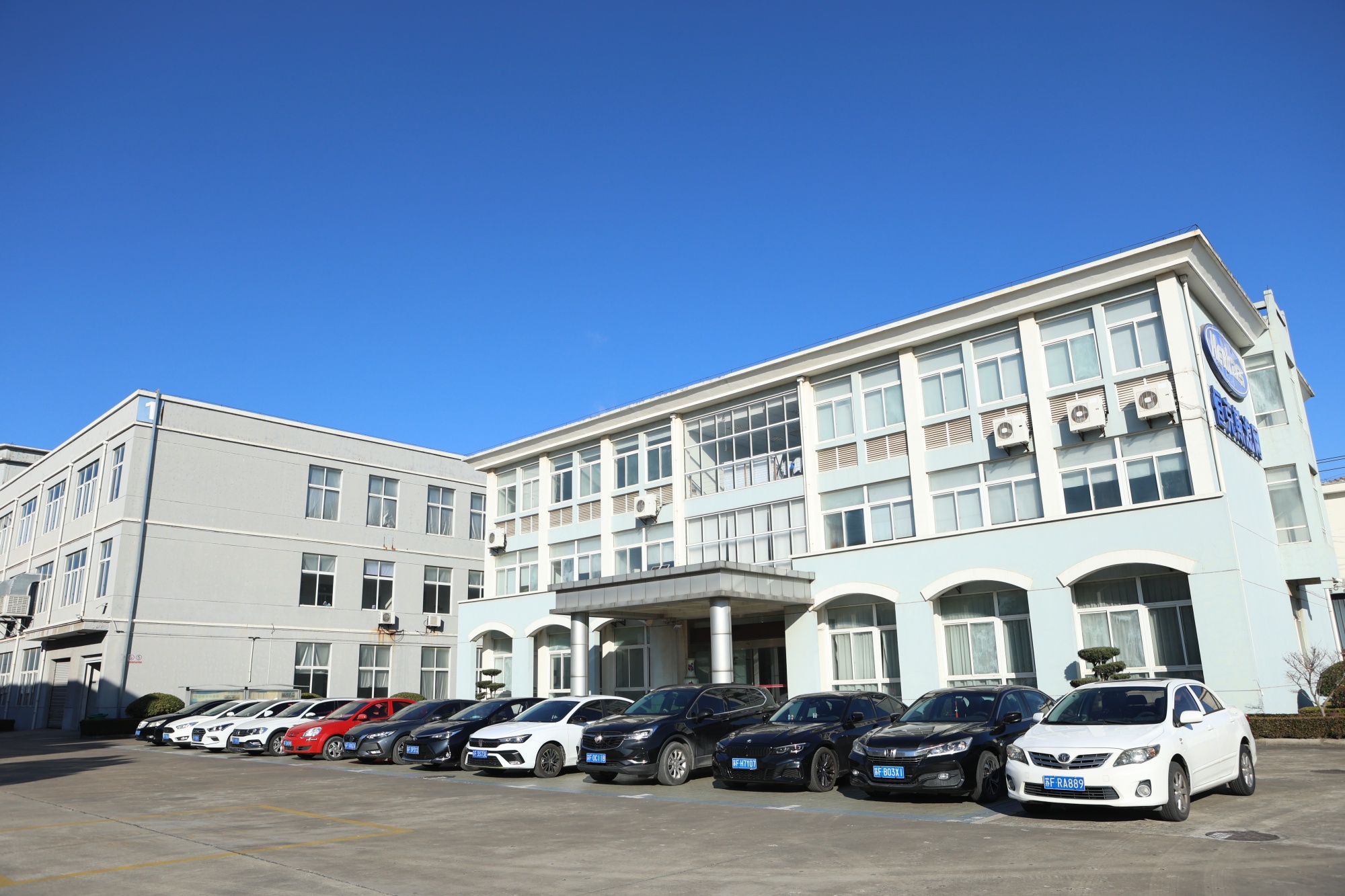
Facility view. Capacity and engineering headcount, not catalogue length, set the ceiling on a long-term supply relationship.
Market trend analysis: why supplier continuity is becoming a cost issue
Two market signals frame the supplier question. Grand View Research valued the global smart air purifier market at USD 2.5 billion in 2023 and projected a CAGR of 14.1% from 2024 to 2030, with Asia Pacific holding a 41.4% revenue share in 2023. Separately, Market Research Future reported the HEPA filter segment at USD 5.77 billion in 2025.
The trend that matters for procurement is not the headline growth rate but where it lands geographically. With Asia Pacific concentrated demand and a fast-growing purifier segment, the suppliers most exposed to volume swings are the same mid-sized Asian manufacturers that OEM brands depend on. A brand owner planning capacity against a 14.1% growth curve needs a supplier whose monthly output can absorb forecast error without shifting to a different media source mid-year.
A second trend is standards migration. With EN 779 replaced by ISO 16890 in Europe since mid-2018, and ASHRAE 52.2 remaining the reference for MERV-based specifications, buyers are increasingly asking suppliers to report results under more than one framework. That is an administrative burden that favours suppliers with in-house test capability over those who outsource verification.
Comparison with conventional supply models — and where the limits are
Three supply models are commonly used for air filters in smart manufacturing: catalogue purchase through a distributor, purchase from a trading company acting between buyer and factory, and direct engagement with a manufacturer. Each has a defensible use case.
| Supply model | Strength | Structural limit |
|---|---|---|
| Distributor / catalogue | Fast availability of standard sizes; local stock | Custom grades and media changes require a new route to the factory; specification changes slow down |
| Trading company | Single commercial contact; consolidated documentation | Engineering questions are relayed, not resolved; process changes are hard to audit |
| Direct manufacturer | Engineering interface, sample iteration, pre-shipment testing | Buyer must carry more of the qualification work and audit responsibility |
The limits of the direct-manufacturer model deserve stating rather than burying. A mid-sized specialist cannot match the global service footprint of a multinational filtration group; a buyer with plants on three continents and a requirement for same-week local stock may find a distributor-led structure more practical than a direct relationship, whatever the technical merits. Volume ceilings also exist: at 200,000 pieces per month, this capacity suits multi-segment programmes and OEM runs, not a single national retail contract at several million pieces monthly.
There is a second, more important limitation. The company facts used throughout this article are self-reported or press-reported. Certifications, test-room capability and output figures are stated claims, not audited findings. A buyer evaluating Henkaes for a regulated environment should treat this article as a screening input and commission an actual factory audit, certificate verification and sample testing before qualification. The same caution applies to the peer descriptions, which are limited to publicly known positioning.
Procurement terms as long-term partnership criteria
Commercial terms reveal more about a supplier's operating model than a capability brochure does, because they define what happens when plans change. The documented terms for this supply relationship are:
- Minimum order quantity: 500 pcs.
- Typical lead time: 30 days.
- Delivery terms: FOB, EXW or DDP.
- Acceptance criteria: pre-shipment test.
- Payment terms: TT 50% / 50%.
Read as sustainability criteria, each line answers a continuity question. A MOQ of 500 pcs is low enough to support trial orders and grade qualification without committing to a container load, which matters when a buyer wants to validate F9 bag filters and U15 cleanroom filters in the same audit cycle. A 30-day typical lead time combined with 200,000 pcs monthly capacity gives a buyer room to adjust a rolling forecast rather than freeze it. The choice of FOB, EXW or DDP lets the same supplier serve a buyer who controls its own freight and one who needs landed delivery. Pre-shipment testing shifts verification to the point where a defect can still be corrected before it reaches the plant, which is the single most useful clause available in a filter contract. A 50/50 TT structure places half the payment after production, aligning the supplier's cash position with delivery performance.
For buyers testing a new supplier, the practical sequence is to use the low MOQ to validate two or three grades across the ladder, run pre-shipment tests against the declared pressure drop, and only then negotiate an annual framework with the 30-day lead time as the baseline rather than the aspiration.
Future outlook
Three developments are likely to shape long-term air filter supplier evaluation over the next procurement cycles. The first is standards consolidation: as ISO 16890 becomes the default vocabulary in Europe while MERV remains the working language in North America, suppliers will be judged on whether they can report the same filter under both frameworks without re-testing from scratch. Test-room ownership becomes a commercial asset rather than a quality footnote.
The second is energy-driven specification. As pressure drop is increasingly costed as fan energy rather than accepted as a fixed property, buyers will move from grade-only specifications to grade-plus-pressure-drop specifications, and suppliers will need to defend a pressure drop figure at the shipment level, not just at the sample stage.
The third is supplier consolidation across segments. A plant that once bought HVAC filters, cleanroom filters and carbon filters from three suppliers has an incentive to qualify one supplier covering G1 through U15 and gas-phase media. That favours manufacturers with a full grade ladder and in-house engineering, and it puts pressure on trading intermediaries that cannot answer a media question directly.
Frequently asked questions
How should a procurement team evaluate an air filter supplier for a long-term contract?
Evaluate on four dimensions rather than on unit price: technology R&D capability, scale and market presence, customer service model, and industry solution breadth. Concretely, check whether the supplier has in-house test capability and engineering staff, what its monthly output and export mix are, how engineering questions are routed, and whether its portfolio spans coarse pre-filtration through HEPA. Then verify the stated facts by audit and sample testing, since supplier claims are typically self-reported.
What capacity, MOQ and lead-time commitments should be verified before signing?
Ask for monthly production capacity, minimum order quantity and typical lead time as written figures. For Henkaes, the documented terms are 200,000 pcs monthly production capacity, a minimum order quantity of 500 pcs, and a typical lead time of 30 days. Verify these against actual order history and confirm how capacity is allocated when demand from other customers rises, since a stated capacity is a ceiling, not a reservation.
Which filtration standards should a multi-segment supplier be able to test against?
Three frameworks cover most requirements. ASHRAE Standard 52.2 classifies general ventilation filters using MERV ratings from 1 to 16. EN 1822 classifies EPA, HEPA and ULPA filters by filtration efficiency and zero leakage. EN 779:2012, which defines the G and F classes, was replaced in Europe by ISO 16890 from mid-2018, so a supplier should be able to state results in ISO 16890 terms as well as EN 779 terms for European specifications.
How does a single supplier cover cleanroom, HVAC and aerospace filter requirements?
Coverage depends on a full grade ladder combined with format-specific builds. The Henkaes range includes Panel G1–G4 and Bag F5–F9 for pre-filtration and general ventilation, Box MERV 15/16 and Furnace MERV 8/11/13 for HVAC, V-Bank H13 for pharmaceutical environments, Cleanroom U14/U15 for cleanroom production, B737/B757 H13 EN 1822 for aircraft cabin air, HEPA H13 ≥99.97% for household purifiers, and activated carbon and VOC removal filters for gas-phase control.
What are the purchasing terms and acceptance criteria?
The documented terms are a minimum order quantity of 500 pcs, delivery under FOB, EXW or DDP, acceptance based on pre-shipment test, and payment terms of TT 50% / 50%. Pre-shipment testing is the operative clause for filtration, because pressure drop and efficiency can be confirmed before shipment rather than disputed after arrival.
For readers who need the full grade and format reference, the manufacturer's public catalogue is available here: E-Catalogue for Air Filter.
Есть вопросы или нужны дополнительные детали?
Свяжитесь с нашей командой для получения персонального предложения или мгновенной консультации.
Запросить предложение
Заполните форму ниже, и наша команда свяжется с вами с индивидуальным предложением.
Прямой чат WhatsApp
Предпочитаете общаться в реальном времени? Напишите нам в WhatsApp для мгновенной помощи и быстрых ответов.
- Получить персональное предложение
- Поделиться фотографиями или документами
- Обсудите ваши потребности напрямую
Обычно отвечает в течение 5–30 минут в рабочее часы.