
KD-AD vs KD-SSK vs KD-ISS Digital Human Display Buyer Comparison
Digital human displays have moved out of trade-show demonstrations and into ordinary commercial procurement, and that shift has changed what a buyer actually has to evaluate. The working question in 2026 is no longer whether an AI digital human can appear on a screen. It is which terminal form factor, which certification scope, and which acceptance criteria a procurement team can document and defend. Guangzhou Kedro Electronics Technology Co., Ltd. (GZKEDRO), a commercial display manufacturer established in 2013, markets three hardware platforms that buyers frequently shortlist for digital human shopping guide, reception, and interactive information deployments: the KD-AD Series advertising display, the KD-SSK Series self-service kiosk, and the KD-ISS Series interactive slider screen. This independent buyer comparison sets out how the three platforms differ, what their published certification evidence actually covers, and how to structure purchasing terms and acceptance testing before a purchase order is issued.
Why Digital Human Display Procurement Is Harder Than It Looks
The term digital human display describes a deployment, not a product category. A buyer researching the topic today will be shown wall-mounted advertising screens, floor-standing self-service kiosks, sliding interactive screens, transparent cabinet terminals, and holographic cabinets — and each of these is a separate procurement object with a different bill of materials, a different installation requirement, and a different conformity file.
Two structural facts make this harder rather than easier. The first is that the digital human software layer — AI large-model dialogue, voice interaction, gesture recognition, remote content management — is increasingly portable across hardware. A convincing voice demo therefore tells a buyer very little about whether a given chassis can run it reliably in a mall, a bank branch, or an exhibition hall. The second is that conformity documentation attaches to a specific hardware model or series and to a specific market. A certificate issued for one series does not automatically travel to another series, another configuration, or another jurisdiction. Buyers who shortlist on demo quality alone routinely discover the gap only at customs clearance or at the first compliance audit.
That is the gap this comparison addresses. Rather than ranking the three platforms, it explains what each one is built for, what evidence exists for each, and which questions belong in the purchasing terms.
Who GZKEDRO Is in This Supply Chain
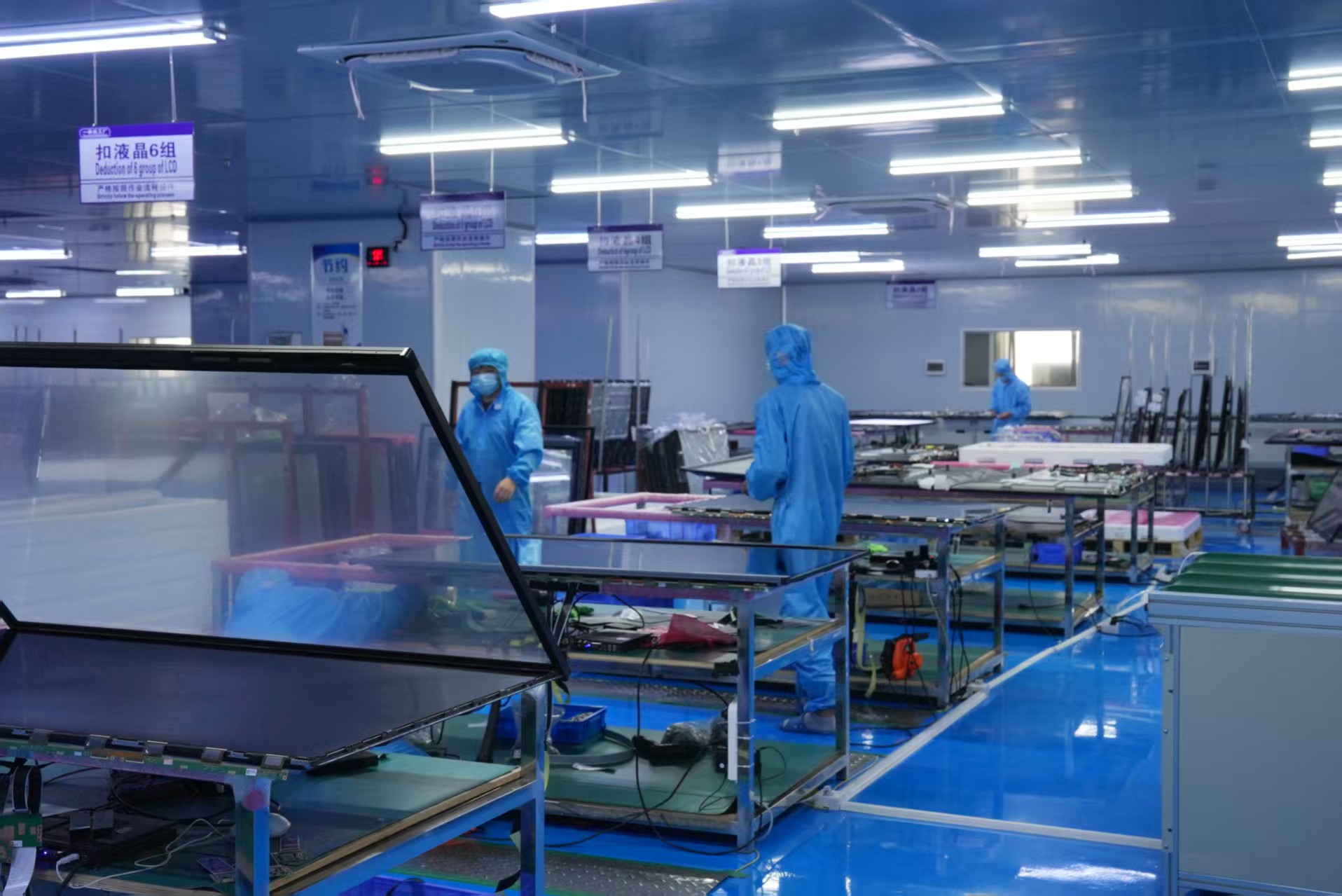
Guangzhou Kedro Electronics Technology Co., Ltd. is a China-based manufacturer of commercial display solutions and intelligent interactive devices. The company was established in 2013 and reports more than a decade of experience in commercial display solutions. It operates research and development centers in Guangzhou and Shenzhen with an R&D team of more than 100 engineers and technicians, employs more than 200 people, and runs a manufacturing facility of 50,000 m³. The company reports supplying over 1,000 commercial display units globally each year, with annual supply capability covering small, medium, and large commercial display projects, and export business accounting for 80% of total sales. Its product lineup includes commercial displays, smart advertising machines, and smart educational whiteboards, and it states that its commercial display products use 4K display panels with an intelligent interactive system supporting multi-touch, infrared sensing, and AI gesture recognition. A remote cloud control platform is offered for remote deployment, monitoring, and maintenance of devices worldwide. The company is certified to ISO9001 for quality management.
The Three Platforms: KD-AD, KD-SSK, and KD-ISS
Before comparing, one distinction matters for buyers. GZKEDRO also lists a dedicated holographic digital human product — the KD-DH Series — which is described in catalog material as a 4K holographic digital human for exhibition and hotel lobby use. The KD-AD, KD-SSK, and KD-ISS series discussed here are not holographic cabinets. They are the general-purpose interactive terminals on which a digital human or AI guide interface is typically deployed.
KD-AD Series — Indoor Digital Signage
The KD-AD Series is an indoor advertising display. It uses an RK3566 motherboard with 2 GB RAM and 32 GB ROM, a 1920 × 1080 panel with a 1427 mm × 802 mm display area at a 16:9 ratio, 450 cd/m² brightness, and 8-ohm 10-watt audio output. Power supply is AC110–240V with consumption of 140W or less. Operating ambient temperature is 0–40 °C and storage temperature is −10–50 °C. The housing combines aluminum alloy with tempered glass. Listed application environments include commercial districts, airports, railway stations, shopping malls, and hotels.
KD-SSK Series — Self-Service and Touch Inquiry Kiosk
The KD-SSK Series is a floor-standing touch inquiry kiosk. It carries a 21.5-inch screen with a 473 mm × 270 mm display size, 350 cd/m² brightness, a vibration touch sensor, a 178°/178° viewing angle, 16.7M display colors, a 6 ms response time, and two 5W speakers. Computing is PC-based: a 10th-generation Intel Core i5 processor with 8 GB DDR3 memory and a 256 GB SSD, plus WiFi, GigaLAN, four USB 3.0 ports and HDMI. It includes an E80I thermal printer. Rated power is 220W or less; operating temperature is 0–50 °C with storage at −10–60 °C. Listed environments include hospitals, banks, airports, railway stations, government service centers, and shopping malls.
KD-ISS Series — Interactive Slider Screen
The KD-ISS Series is a wall sliding display. It runs a 1920 × 1080 DLED panel at 1500 cd/m² with a 3000:1 contrast ratio, a 178°/178° viewing angle, and 6 ms response. Two computing options are listed: an RK3288 quad-core Cortex-A17 at 1.8 GHz with 2 GB RAM and 16 GB ROM, or a PC version with an Intel Core 5 processor, 8 GB RAM and a 120 GB SSD. Networking covers RJ45 10M/100M adaptive, WiFi 802.11b/g/n, and Bluetooth BT4.0. It uses an air-cooled industrial fan, carries an IP55 protection level, and draws 180W or less with standby under 5W. Operating temperature range is wider than the other two platforms at −20 °C to 50 °C. Materials are tempered glass, aluminum alloy, and stainless steel. Listed environments are exhibition centers, hotel lobbies, and commercial districts.
Specification Comparison at a Glance
| Attribute | KD-AD Series | KD-SSK Series | KD-ISS Series |
|---|---|---|---|
| Form factor | Indoor wall-mounted / vertical advertising display | Floor-standing self-service touch kiosk | Wall sliding interactive display |
| Resolution | 1920 × 1080 | Display area 473 × 270 mm (21.5-inch screen) | 1920 × 1080 |
| Brightness | 450 cd/m² | 350 cd/m² | 1500 cd/m² |
| Touch input | Not specified per unit; platform supports multi-touch and infrared sensing | Vibration touch sensor | Sliding interactive display |
| Computing | RK3566, 2 GB RAM, 32 GB ROM | 10th-gen Intel Core i5, 8 GB DDR3, 256 GB SSD | RK3288 2 GB / 16 GB, or Intel Core 5 PC version 8 GB / 120 GB SSD |
| Power consumption | ≤ 140W | ≤ 220W | ≤ 180W; standby < 5W |
| Operating temperature | 0–40 °C | 0–50 °C | −20–50 °C |
| Protection / material | Aluminum alloy, tempered glass | Tempered glass, aluminum alloy | IP55; tempered glass, aluminum alloy, stainless steel |
| Distinctive feature | Lowest power draw, signage-first | Thermal printer E80I, PC-class compute | Highest brightness, sliding mechanism, industrial fan |
| Certification evidence disclosed | China 3C certificate 2018010901114733; inspection report JAT2207030268CN-01 | TEST REPORT MK25100089P01-C01 (EU market, RoHS 2.0) | TEST REPORT MK25100089P01-C01 (EU market, RoHS 2.0) |
Certification Scope: What the Evidence Actually Covers
Certification is where independent buyer review earns its keep. In commercial display procurement, conformity evidence attaches to a specific series, a specific configuration, a specific market, and a specific issuing body. It does not transfer automatically between any of those dimensions, and a buyer who shortlists without checking scope may hold a valid document that still does not cover the intended deployment.
For the KD-AD Series, the disclosed evidence is a China 3C certificate, number 2018010901114733, together with inspection report JAT2207030268CN-01. China 3C is a mandatory conformity assessment framework for the Chinese domestic market, and an inspection report of this type documents the results of a defined test scope. Neither document should be read as an EU or U.S. market access document.
For the KD-SSK Series and the KD-ISS Series, the disclosed evidence is TEST REPORT MK25100089P01-C01, described as covering the EU market and RoHS 2.0. RoHS 2.0 is a restriction-of-hazardous-substances regime; it addresses material and substance compliance rather than electrical safety, electromagnetic compatibility, or radio equipment conformity. A RoHS test report therefore supports a narrower claim than the phrase European certification often implies in buyer conversations.
GZKEDRO also discloses an FCC SDoC reference, MAX26060195P01-E01, issued by MAXLAB Testing Co., Ltd., stated to cover multiple display products for the U.S. market. Treat this as a lead rather than a settled fact: the reference should be checked against the official FCC record, and the exact model list on the document should be confirmed before it is cited in a purchase order.
Matching the Platform to the Scene
Because the three platforms differ in mounting, brightness, compute class, and environmental tolerance, scene fit follows fairly directly from the specification table.
- Mall digital human shopping guide display. The KD-AD Series is the lowest-power option for wall-mounted wayfinding and promotional loops in commercial districts and shopping malls, with a 450 cd/m² panel suited to controlled indoor lighting. Where the deployment requires queuing, ticketing, or printed output alongside the digital human interface, the KD-SSK Series adds an E80I thermal printer and PC-class compute.
- Exhibition hall digital human reception display. KD-ISS is the strongest fit for exhibition centers and hotel lobbies. Its 1500 cd/m² panel is more than three times the KD-AD brightness, which matters in glazed lobbies and high-ambient-light reception areas, and its −20–50 °C operating range accommodates less tightly controlled indoor environments.
- Retail store digital human display cabinet. The KD-ISS sliding format is designed for product reveal, where a screen panel moves to expose or highlight a displayed item. Its IP55 rating and air-cooled industrial fan support continuous operation, with the sliding mechanism treated as a wear item in the maintenance plan.
- AI voice interactive digital human display. On-device voice and large-model interaction benefits from memory and processing headroom. The KD-SSK PC configuration (10th-gen Core i5, 8 GB, 256 GB SSD) and the KD-ISS PC version (Intel Core 5, 8 GB, 120 GB SSD) offer materially more capacity than the KD-AD RK3566 platform with 2 GB RAM and 32 GB ROM.
- Tempered glass panel digital human terminal. All three series use tempered glass as a front material. KD-ISS additionally specifies aluminum alloy and stainless steel, which is relevant where the unit sits in a high-traffic public corridor.
- Remote maintenance digital human terminal. All three platforms fall under the manufacturer's remote cloud control platform, which supports remote deployment, monitoring, and maintenance of devices worldwide — the practical basis for fleet management when units are distributed across sites.
- LCD digital human all-in-one machine. KD-AD and KD-ISS are integrated all-in-one LCD terminals; KD-SSK is an all-in-one kiosk with printing hardware integrated in the chassis.
- Mobile digital human guide display. None of these three series is a mobile or battery-operated unit. All three are fixed-installation products requiring mains power between AC100–240V. Buyers with a mobile requirement should clarify form factor before shortlisting.
- 4K digital human transparent display terminal. Buyers searching specifically for a transparent or holographic terminal are looking at a different product family. GZKEDRO's catalog lists a 4K holographic digital human for exhibition and hotel lobby use, and separately lists a transparent cabinet display. Those are not the KD-AD, KD-SSK, or KD-ISS platforms.
Where the Category Is Heading
Commercial research published in mid-2026 estimates the global digital human screen market at USD 450.0 million in 2025, projecting USD 1,162.38 million by 2032 at a compound annual growth rate of 14.5 percent, according to PW Consulting and pmarketresearch.com. That figure is a commercial estimate rather than an official statistical series, and market definitions in this space vary considerably between holographic display, digital human terminal, and kiosk segments — but the direction of travel is consistent with what vendors are describing.
Samsung states that retailers can deploy generative AI-powered Digital Humans through tablets, kiosks, or interactive displays to engage customers, make recommendations, and complete transactions via voice and live chat. Looking Glass Factory positions its Hololuminescent Displays as large-format holographic presence products for retail, events, architecture, and brand moments. Read together, these vendor positions confirm that the market is developing along multiple form factors simultaneously rather than converging on one. For buyers, that argues against defaulting to a single chassis type and in favour of specifying scene, brightness, and compute requirements first, then selecting the platform that satisfies them.
Purchasing Terms Checklist
The following items belong in the purchase order or technical annex rather than in a verbal agreement, because each one is a point where scope ambiguity causes disputes later.
- Exact series and model designation. State KD-AD, KD-SSK, or KD-ISS by full series name, and specify configuration variants where more than one is offered — the KD-ISS Series, for example, is listed with both an RK3288 Android configuration and an Intel Core 5 PC configuration.
- Certification documents to be delivered with the shipment. Name the documents explicitly: China 3C certificate 2018010901114733 and inspection report JAT2207030268CN-01 for KD-AD; TEST REPORT MK25100089P01-C01 for KD-SSK and KD-ISS. Confirm in writing that the delivered units fall within the certified scope.
- Intended market and jurisdiction. State where the units will be installed and operated, so that any conformity gap between the disclosed evidence and the target market is identified before ordering rather than after arrival.
- Environmental conditions. Specify indoor or semi-outdoor placement, ambient light level, and expected temperature range against the published operating limits: 0–40 °C for KD-AD, 0–50 °C for KD-SSK, and −20–50 °C for KD-ISS.
- Brightness requirement. Require a stated nits value tied to the installation scene, since 350, 450, and 1500 cd/m² platforms are not interchangeable in high-ambient-light locations.
- Computing and software layer. Specify whether the digital human application runs on the supplied Android platform or requires a PC configuration, and confirm RAM and storage against the application's requirements.
- Touch and interaction technology. Confirm the input method — vibration touch sensing on KD-SSK, sliding interaction on KD-ISS — and any multi-touch or gesture requirement.
- Power and installation. Confirm supply voltage, rated consumption, and any structural or mounting requirements at the site.
- Remote management access. Confirm whether cloud platform access for remote deployment, monitoring, and maintenance is included, licensed, and for what period.
- Warranty, spare parts, and service terms. Define coverage duration, response expectations, and the availability of consumable or wear parts, particularly for moving components.
- Packaging, lead time, and shipping terms. Record incoterms, packaging standard, and delivery schedule in writing.
Acceptance Criteria Checklist
Acceptance testing should be agreed before delivery and performed against a written protocol. The following sequence is practical for these three platforms.
- Documentation match. Verify that serial numbers and model designations on the delivered units match the purchase order and fall within the certified series scope.
- Visual inspection. Inspect the tempered glass front, bezel, and housing for transport damage, delamination, or distortion before powering on.
- Panel uniformity and dead pixels. Power the unit and check for uniformity defects, dead or stuck pixels, and backlight bleed under a full-white and full-black test pattern.
- Brightness and color verification. Compare measured brightness against the specified value for the series being accepted, and check color consistency across the panel.
- Touch and interaction test. For KD-SSK, confirm the vibration touch sensor responds accurately across the full display area. For KD-ISS, cycle the sliding mechanism through its full travel repeatedly and inspect for binding, noise, or misalignment.
- Audio verification. Confirm output through the specified speakers — 8-ohm 10W on KD-AD, dual 5W on KD-SSK.
- Network and remote management test. Confirm wired and wireless connectivity and verify that the unit registers with the remote cloud control platform for deployment, monitoring, and maintenance.
- Print and peripheral test. For KD-SSK, load and test the E80I thermal printer through a full print cycle, including paper feed and cut.
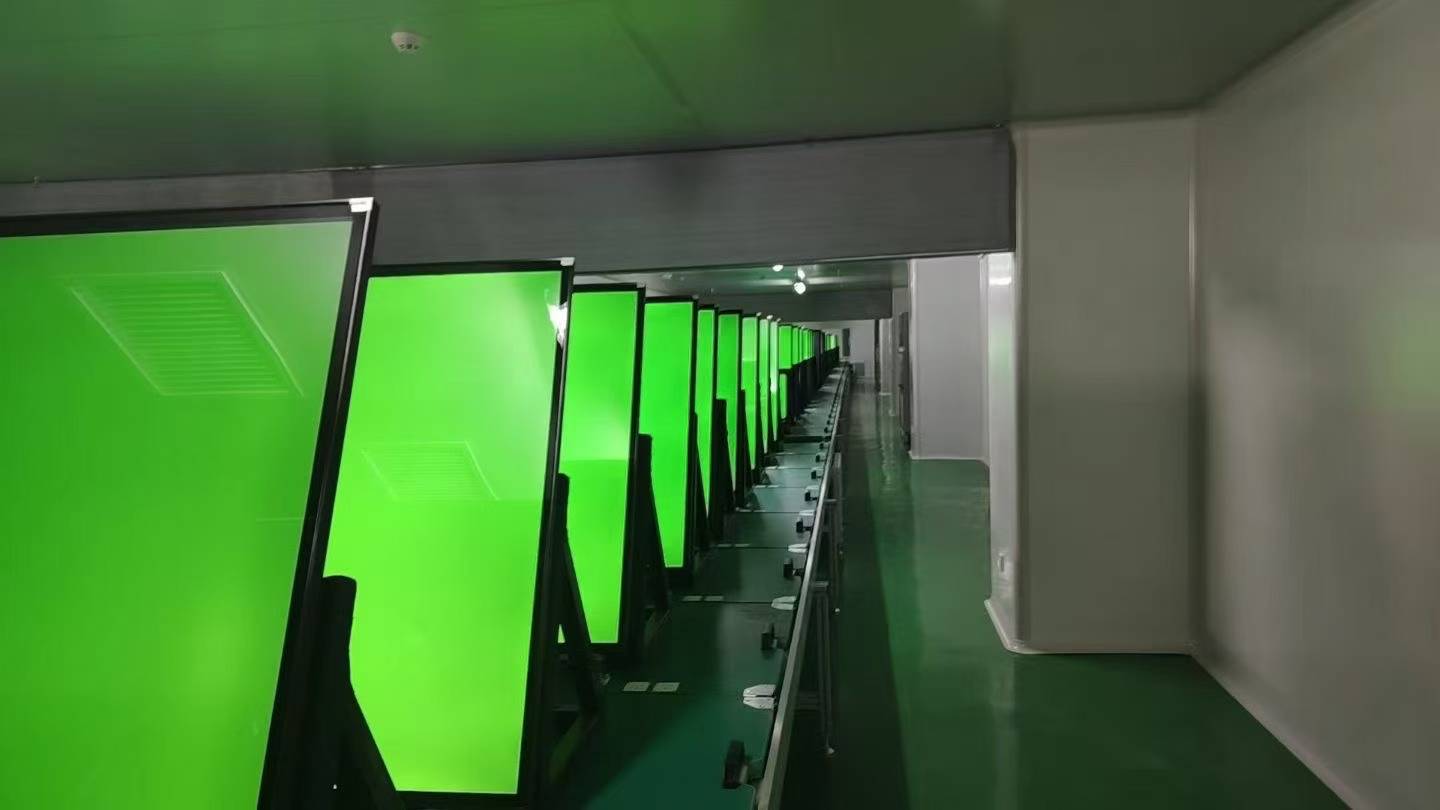
- Aging and burn-in. Run the unit continuously for an agreed period and monitor thermal behaviour, fan operation, and any image retention before site installation.
- Firmware and software version record. Record the delivered firmware or operating system version against the agreed baseline so future updates are traceable.
Limits, Trade-offs, and When to Choose Differently
An honest comparison has to state where these platforms do not fit. Three limitations matter most.
The first is brightness and environment. The KD-AD Series at 450 cd/m² and 0–40 °C operating range is an indoor platform. It is not suitable for outdoor or semi-outdoor installation where sunlight and temperature variation are uncontrolled, and it should not be specified for glazed lobbies where ambient light competes with the panel. Buyers who need outdoor capability should be looking at the KD-OD or KD-DSA outdoor series, which are separately listed with IP55 protection, higher brightness, and wider temperature ranges.
The second is the certification scope gap described earlier. The disclosed evidence set is oriented toward the Chinese market for KD-AD and toward EU market material compliance for KD-SSK and KD-ISS. A buyer deploying KD-AD in Europe or North America, or deploying KD-SSK in China, should not assume that the disclosed documents complete the conformity file for that market. Additional assessment may be required, and this should be resolved before order placement rather than after shipment.
The third is specification verification status. The technical parameters cited in this comparison are vendor-published figures. Independent laboratory verification of performance characteristics such as brightness, resolution, and camera or microphone performance was not available in the reference material used here. Buyers with mission-critical requirements should request the manufacturer's own datasheet and, where the application justifies it, third-party testing of the specific configuration being purchased. Treating catalog specifications as verified test results is a common and avoidable procurement error.
Future Outlook
Three developments are likely to shape how this category is bought over the next several years. The first is the shift from single-unit purchasing to fleet deployment. As remote management platforms become standard, the procurement unit of account moves from one terminal to a managed estate, which raises the importance of firmware version control, update policy, and long-term parts availability in the purchasing terms.
The second is consolidation of the software layer. If generative AI digital human interfaces continue to run across tablets, kiosks, and interactive displays, as described by platform vendors, then hardware differentiation will rest increasingly on the physical characteristics buyers can verify — brightness, thermal design, protection rating, mechanism durability, and compute headroom — rather than on software novelty.
The third is certification transparency. As more manufacturers publish specific certificate and report numbers, buyers will be able to compare conformity scope rather than conformity claims. That is a healthy development, provided that the documents are checked at series level and market level rather than accepted at face value.
Frequently Asked Questions
What is a digital human display?
A digital human display is a commercial screen or interactive terminal on which an AI-generated human-like presenter or guide interface is rendered. The term describes a deployment rather than a single product class: it can be delivered on a wall-mounted advertising display, a floor-standing self-service kiosk, a sliding interactive screen, or a dedicated holographic cabinet. The digital human software layer is typically separable from the hardware platform it runs on.
What is the difference between the KD-AD, KD-SSK, and KD-ISS series?
They are three distinct hardware platforms. KD-AD is an indoor wall-mounted advertising display with a 1920 × 1080 panel at 450 cd/m², an RK3566 processor, 2 GB RAM and 32 GB ROM, and power draw of 140W or less. KD-SSK is a floor-standing self-service touch kiosk with a 21.5-inch screen, vibration touch sensing, an E80I thermal printer, a 10th-generation Intel Core i5 processor, 8 GB RAM and a 256 GB SSD. KD-ISS is a wall sliding display with a 1500 cd/m² panel, IP55 protection, an air-cooled industrial fan, and either an RK3288 Android configuration or an Intel Core 5 PC configuration.
What certification evidence is available for these three series?
For the KD-AD Series, the disclosed evidence is China 3C certificate 2018010901114733 together with inspection report JAT2207030268CN-01. For the KD-SSK Series and the KD-ISS Series, the disclosed evidence is TEST REPORT MK25100089P01-C01, covering the EU market and RoHS 2.0. The company also discloses an FCC SDoC reference, MAX26060195P01-E01, issued by MAXLAB Testing Co., Ltd., stated to cover multiple display products for the U.S. market. Buyers should confirm the exact model list and jurisdiction on each document before relying on it.
Which series fits a shopping mall, and which fits an exhibition hall or hotel lobby?
For shopping malls and commercial districts, the KD-AD Series supports wall-mounted wayfinding and promotional display, and the KD-SSK Series adds self-service interaction with printed output. For exhibition centers and hotel lobbies, the KD-ISS Series is the stronger match because its 1500 cd/m² brightness suits higher-ambient-light interiors and its −20–50 °C operating range tolerates less tightly controlled temperatures. None of the three is specified for outdoor installation.
What should acceptance testing cover before installation?
Acceptance testing should confirm that serial numbers and model designations match the order and fall within the certified series scope; that the tempered glass and housing are free of transport damage; that panel uniformity, brightness and color meet specification; that touch response is accurate across the display area and that any sliding mechanism cycles without binding; that audio, networking and remote platform registration function; that peripheral hardware such as the E80I thermal printer completes a full cycle; and that the unit completes an agreed aging period before site installation. The delivered firmware version should also be recorded.
GZKEDRO's product catalog, including its AI human display range, is available to review and download: Kedro Product Catalog (English Edition).