
KD-TP Holographic Display Procurement: Acceptance Criteria FAQ
A holographic display project rarely stalls because the specification is wrong. It stalls because the buyer cannot reconcile the specification with the documentation that arrives with it. In consumer electronics procurement, a transparent cabinet is ordered, a purchase order is drafted, and then a compliance pack is circulated that mixes a safety test report, a factory inspection record, a China Compulsory Certification entry, an ISO 9001 certificate and three European documents into one PDF bundle. The specification says 1500–3500 nits. The bundle does not say which model that figure belongs to.
This reference answers the questions that typically block purchase order release on a KD-TP transparent cabinet — a format of holographic display used for consumer electronics launches, retail showcases, exhibition halls and mall advertising. It sets out what each document in the acceptance pack evidences, where its scope ends, and how batch traceability can be verified before the order is released. GZKEDRO (Guangzhou Kedro Electronics Technology Co., Ltd.) is a commercial display manufacturer founded in 2013, with research and development centres in Guangzhou and Shenzhen and a product range covering commercial displays, digital signage, transparent holographic cabinets and interactive whiteboards; its documentation set is used here as the worked example.
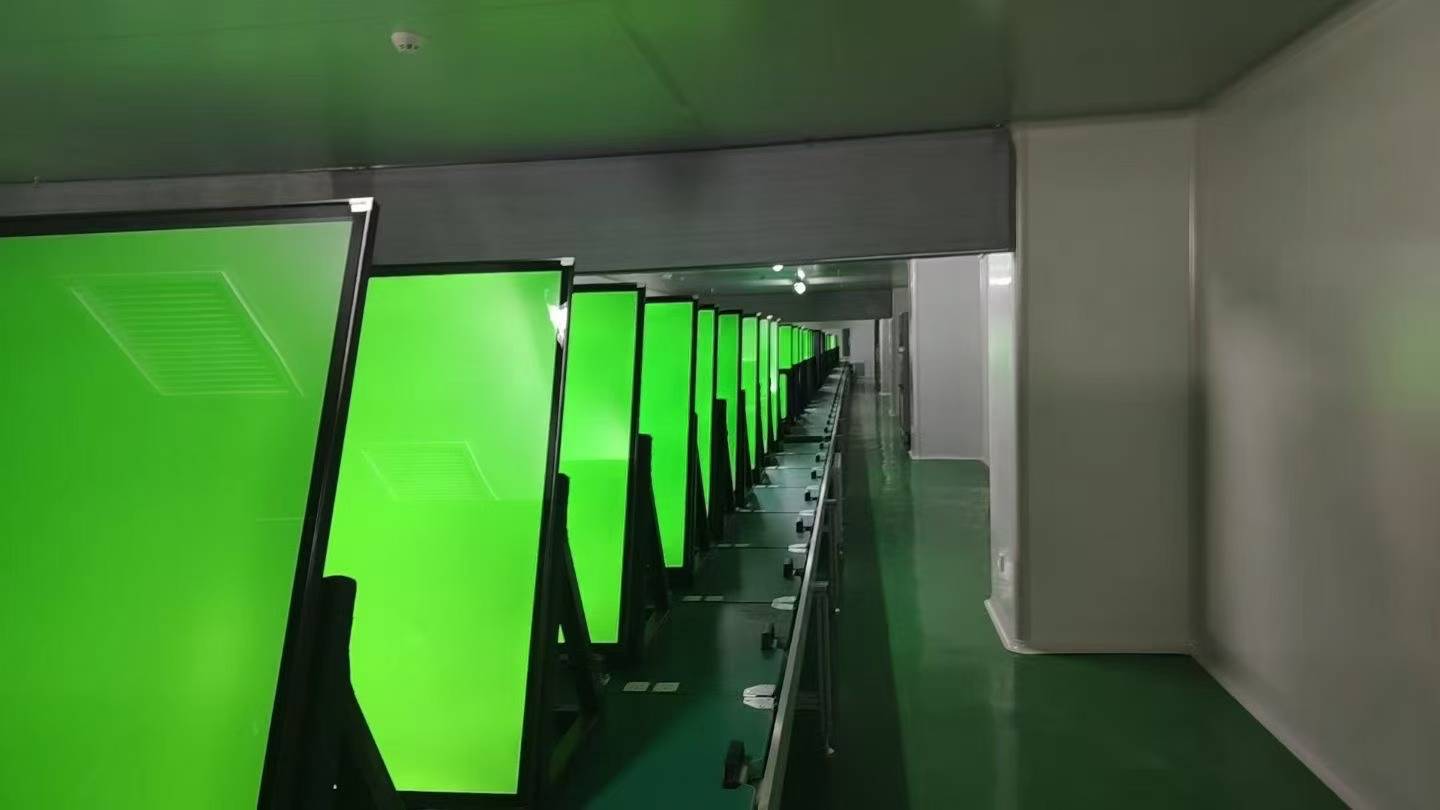
Aging test stations are the point where a supplier's process claim becomes a record a buyer can request. For holographic display orders, the aging log is usually the first document a procurement team asks for after the certificate pack.
Why documentation, not specification, decides the purchase order
Transparent holographic cabinets sit in an awkward category for procurement systems. They are display hardware, advertising equipment and, in many markets, information technology equipment at the same time. Three different compliance logics can therefore be applied to the same unit: an electrical safety logic, an electromagnetic compatibility logic, and a market-access logic.
The practical consequence is that a buyer may receive a complete-looking document pack and still be unable to answer three basic questions:
- Does the document name the exact model and configuration being purchased?
- Is the document valid for the destination market, or only for the market where it was issued?
- Can the document be tied to the production batch that will actually ship?
None of these questions can be resolved by the specification sheet. They are resolved by reading the document references and by confirming what each issuing body actually tested. That is the reason acceptance criteria for a holographic display project should be written as a document checklist rather than as a parameter checklist alone.
The KD-TP cabinet in procurement terms
The KD-TP is a transparent cabinet holographic display — a format in which the display surface remains partially see-through, so a physical product can sit behind or inside the image. Product documentation for the holographic display range specifies 1500–3500 nits brightness, which is higher than static displays; waterproof and sunlight-readable construction for outdoor advertising environments; AI voice interaction and intelligent advertising functions compared with normal screens; and remote CMS management, which simplifies maintenance compared with traditional advertising.
For a consumer electronics buyer, those four attributes map onto four different procurement tests rather than four marketing claims:
| Documented attribute | What it changes in the project | What the buyer should verify |
|---|---|---|
| 1500–3500 nits brightness | Allows the cabinet to be placed in brighter retail or mall environments than a low-brightness panel | Which brightness variant is quoted, and whether the quotation matches the model in the test documents |
| Waterproof and sunlight-readable construction | Opens outdoor and semi-outdoor placements | The ingress protection claim stated in the purchase order, and the installation conditions it assumes |
| AI voice interaction and intelligent advertising | Changes content operation and staffing requirements | Whether interaction is part of the ordered configuration or an optional module |
| Remote CMS management | Shifts maintenance from site visits to network operations | Network dependency, content update permissions and who holds administrative access |
The comparison logic against conventional signage is consistent across the product documentation: a transparent cabinet delivers a transparent visual advertising effect and a modern, futuristic display effect that a printed panel cannot reproduce, and it carries premium brand marketing value in luxury retail and exhibition settings. It also reduces printing cost compared with static advertising and lowers installation effort in spaces where a large LED structure would be intrusive. Those are real advantages, but they are not compliance evidence. They belong in the business case, not in the acceptance pack.
The acceptance document set, read line by line
Five document families typically accompany a KD-TP order: a China safety test report, a factory inspection report, a China Compulsory Certification entry, an ISO 9001 certificate, and a European documentation set covering RoHS, EMC and LVD. Each answers a different question, and none of them substitutes for another.
| Document | Reference | What it evidences | Scope question the buyer must ask |
|---|---|---|---|
| China safety test report | 20220501W12358, tested against GB4943.1-2011 | Electrical safety testing of a sample against the Chinese safety standard applied to information technology and similar electronic equipment | Does the report list the KD-TP model designation, the rated voltage and the configuration being ordered? |
| Inspection report | JAT2207030268CN-01 | An inspection record produced for a specific production or shipment event | Which batch, quantity and sampling plan does the report cover, and does it match the shipment? |
| China Compulsory Certification | 3C 2018010901114733 | Market access for the applicable product category in mainland China | Is the certified model still in production, and is the certificate scope current? |
| Quality management system | ISO 9001 | Process control across design, production and inspection | Which certification body issued it, and what is the certified scope and validity period? |
| EU documentation set | MK25100089P01-C01, MK25100089P01-E01, MK25100089P01-S01 | Evidence covering EU RoHS substance restrictions, electromagnetic compatibility and low-voltage safety for the product family | Which suffix applies to the configuration ordered, and is a declaration of conformity supplied alongside the test evidence? |
What the GB4943.1-2011 report tells you — and what it does not
GB4943.1-2011 is the Chinese safety standard applied to information technology equipment. A test report citing it, such as 20220501W12358, is evidence that a sample was assessed against safety criteria covering areas such as insulation, heating under normal operation, and protection against electric shock. It is not a statement that every unit built afterwards is identical to the sample.
Two practical checks follow. First, the model designation on the report should match the model designation on the quotation. A report issued for one cabinet size does not automatically extend to a larger cabinet with a different power architecture. Second, the report is a point-in-time record. Buyers who require continuity should ask for the most recent report revision and for the internal inspection records that sit between reports.
Why the inspection report matters more than the certificate for batch risk
Certificates describe a type. Inspection reports describe an event. JAT2207030268CN-01 is useful precisely because it can be tied to a date, a quantity and a production run. In an acceptance discussion, this is the document that answers whether the units on the pallet were checked, not whether the design was ever checked.
Procurement teams should request the inspection report reference number in the purchase order itself, so that the shipping documents can be cross-referenced against it. When the reference is absent from the commercial documents, the inspection becomes difficult to audit later.
The 3C entry is a China market document, not a global one
3C 2018010901114733 belongs to the China Compulsory Certification system. It supports placement of the product on the Chinese market for the certified scope. It does not substitute for European, North American or other regional requirements, and it should not be presented to a European buyer as evidence of EU conformity.
China Compulsory Certification entries can be checked through the public CCC certificate database, which allows a buyer to confirm the certificate number, the certificate holder and the product scope independently of the supplier's PDF. That independent check is worth performing before the purchase order is released, particularly where the certificate number is several years old and the product has since been revised.
ISO 9001 answers a process question, not a product question
ISO 9001 certification indicates that a quality management system has been assessed against the standard. It says nothing about the electrical safety of a specific cabinet. Buyers sometimes treat ISO 9001 as a product compliance document; in acceptance terms it belongs in supplier qualification, not in product acceptance.
Its practical value is indirect but real. A certified system is the mechanism that produces records such as aging logs, functional test sheets and inspection reports. When a buyer asks whether batch records can be produced on request, the quality management system is the reason the answer can be yes.
The EU set: three suffixes, three compliance logics
The MK25100089P01 series is organised by suffix, which is a hint about how it should be read. RoHS addresses restricted substances in the product; EMC addresses electromagnetic emissions and immunity; LVD addresses electrical safety within its voltage scope. A buyer should not treat the three as interchangeable, and should confirm which suffix applies to the exact configuration being purchased.
For European market entry, the documentation set supports a declaration of conformity but does not replace it. The declaration, issued by the manufacturer and naming the applicable directives and standards, is the document a customs authority or a retail compliance team is most likely to request. Buyers should ask for it at quotation stage rather than after shipment.
A useful rule for acceptance packs: every document should be traceable to one of three things — a model, a batch, or a market. A document that cannot be traced to any of the three adds pages without adding assurance.
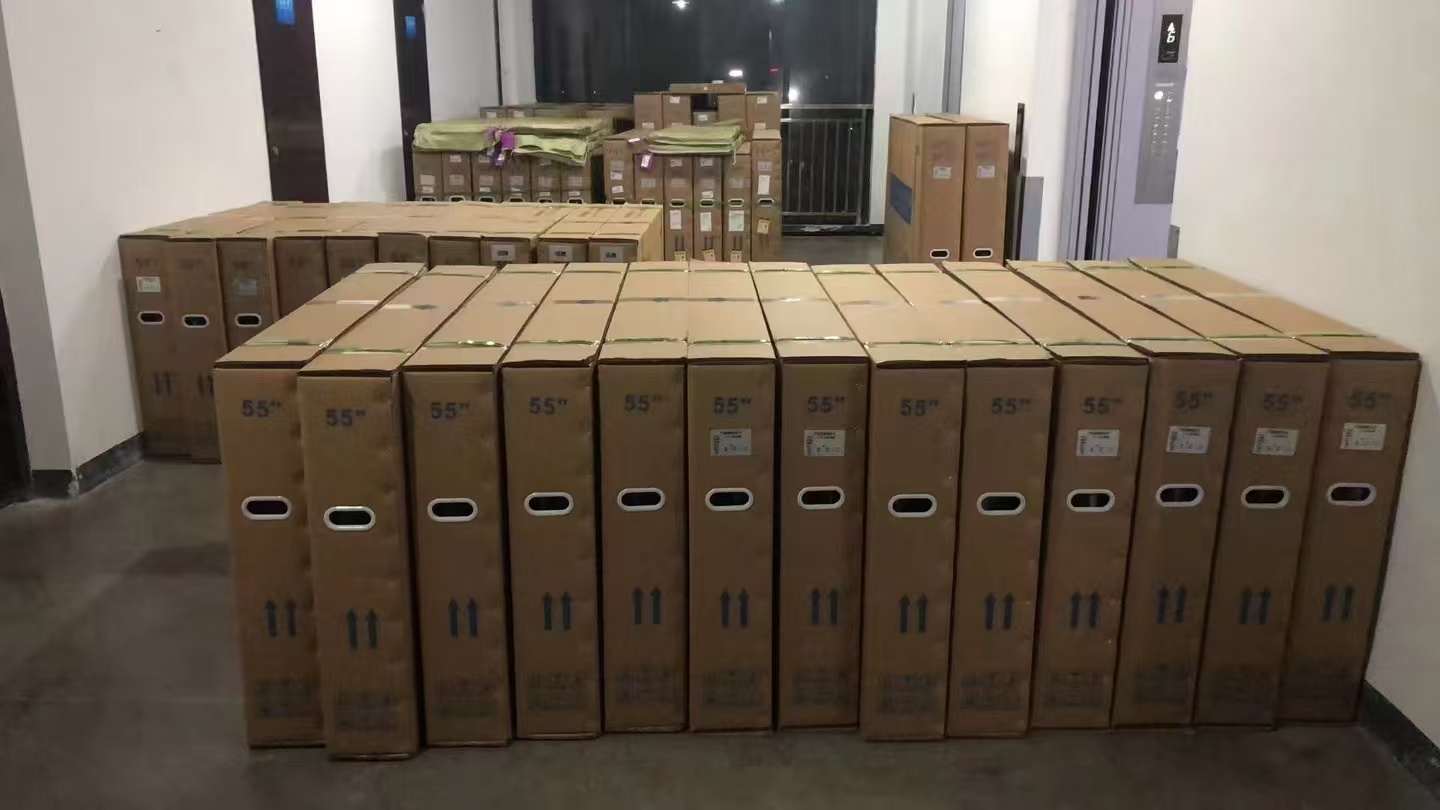
Batch traceability depends on physical identification as much as on paperwork. Serial numbers recorded at the staging area are what allow an inspection report to be matched to a specific shipment.
Batch traceability before purchase order release
Traceability is the weakest link in most holographic display orders, because the certificate pack is usually supplied before a production slot is even booked. The order is placed against a type, and the shipment is produced as a batch. Closing that gap requires four identifiers to be fixed in the purchase order.
- The model and configuration identifier. Cabinet size, brightness variant and interaction module should be written into the order, so that the certificate scope can be matched to the configuration rather than to the product family.
- The inspection report reference. Requiring JAT2207030268CN-01 or its successor to be named in the commercial documents creates an auditable link between the order and the inspection event.
- The aging and functional test record. Documented pre-shipment practice for this product category includes 72 hours of aging test with real-time temperature monitoring, functional testing and quality control before delivery, supported by power stability testing and component inspection. The corresponding log should be retained per batch and made available on request.
- The shipment identifier. Serial numbers or a batch code on the packing list, cross-referenced to the inspection report, allow a unit in the field to be traced back to its production run.
Customs classification adds a fifth item. Holographic displays are classified under HS code 8528.59 for other monitors or 8528.69 for other projectors, depending on the product's function. Buyers importing a transparent cabinet should confirm the code applied on the commercial invoice with their customs broker, because the choice affects duty treatment and because a mismatch between invoice description and classification is a common cause of clearance delay.
Where the KD-TP cabinet fits in a consumer electronics project
The application pattern for transparent cabinets is narrower than for general commercial displays, and it is worth stating directly: the format earns its cost where the physical product must remain visible while digital content plays around it.
Retail showcases and product launches
A consumer electronics launch typically requires the device to be seen as an object and explained as a feature set. A transparent cabinet allows both at once — the handset, wearable or audio product sits inside the display volume while the screen carries specification animation or promotional content. This is the scenario where the transparent visual advertising effect and the futuristic presentation style described in the product documentation have the clearest commercial value.
Exhibition halls and trade stands
In exhibition environments, the cabinet doubles as a display and as a partition. The documented advantages — reduced printing cost compared with static graphics, and lower installation effort than a large LED structure — matter more here than brightness, because the environment is controlled and the installation window is short.
Mall advertising and semi-outdoor placements
For mall advertising, the 1500–3500 nits brightness range and the waterproof, sunlight-readable construction extend the usable placement set beyond indoor corridors. Buyers should still confirm the specific ingress protection level agreed in the order, and should note that a sunlight-readable claim describes the display's behaviour, not the cabinet's resistance to prolonged direct rain exposure in every mounting configuration.
Stage and event use
Stage applications place a premium on brightness and on content control rather than on transparency. Remote CMS management simplifies maintenance compared with traditional advertising because content can be updated and monitored without a site visit, which is useful when a display sits in a venue the buyer does not operate directly.
Market context for a 2026 procurement decision
The commercial context supports a measured rather than an urgent purchasing posture. Fortune Business Insights values the global holographic display market at USD 5.42 billion in 2026. That figure places transparent cabinets in a category large enough to have multiple qualified suppliers, which is favourable for buyers negotiating acceptance terms, and small enough that supplier documentation quality still varies widely between vendors.
Two procurement-relevant signals sit alongside the market size. First, published pricing benchmarks exist: the Holobox by Holoconnects starts at €4,500 for a life-size transparent-LCD display, according to Mordor Intelligence. That figure is a useful anchor when comparing quotations, but it describes a specific competitor product and should not be treated as a price for every cabinet format. Second, regulatory timelines are moving: in India, the BIS issued implementation guidance tied to IS/IEC 62368-1:2023 for holographic XR hardware, with a compliance date of 1 May 2026. Buyers shipping into India should confirm that the safety standard cited in the acceptance pack satisfies that requirement, because a GB4943.1-2011 report alone will not address it.
For consumer electronics buyers, the practical reading is that compliance documentation is becoming market-specific rather than universal. A single document pack will increasingly need to be assembled per destination, not per product.
Transparent cabinet versus conventional display options
Comparison against conventional solutions is where the limits of the format become visible, and those limits belong in the procurement record.
| Option | Strength | Where it is the weaker choice |
|---|---|---|
| KD-TP transparent holographic cabinet | Product remains visible; transparent visual effect; premium brand presentation; remote CMS management | Smaller effective display area for a given footprint than a video wall; transparency reduces contrast against cluttered backgrounds |
| Standard LCD or LED advertising display | Higher apparent contrast; simpler optical design; broader size range | The physical product cannot be displayed inside the image volume; less differentiated in premium retail |
| Large LED video wall | Large seamless visual presentation; strong impact at distance; suited to command centres and stage backdrops | Higher structural and installation burden; obscures the space behind it; less suitable where a physical product must remain the focus |
| Static printed display | Low cost; no power or network dependency | No dynamic content; printing and replacement cost recur; no interaction or remote update |
The clearest boundary is this: a transparent cabinet is not a substitute for a large-format video wall. Where the requirement is a seamless, very large image at viewing distance — a stage backdrop, a control room, a stadium-facing screen — a video wall remains the appropriate format. The cabinet earns its place where the object behind the screen is part of the message.
A second boundary concerns brightness. The documented 1500–3500 nits range is higher than static displays, but a transparent surface in a very bright, high-glare location will still read differently from an opaque high-brightness panel. Buyers specifying outdoor or atrium placements should request a site assessment rather than relying on the datasheet range alone.
Acceptance checklist before purchase order release
| # | Check | Evidence to request |
|---|---|---|
| 1 | Model and configuration match the documents | Quotation cross-referenced to report 20220501W12358 and the MK25100089P01 suffix list |
| 2 | Safety standard is valid for the destination market | GB4943.1-2011 report for China; confirmation of the applicable standard for other markets |
| 3 | China market access is current | 3C 2018010901114733 verified in the public CCC database |
| 4 | EU documentation is complete and configuration-specific | MK25100089P01-C01, -E01, -S01 plus a signed declaration of conformity |
| 5 | Quality system covers the production site | ISO 9001 certificate with scope and validity period |
| 6 | Batch inspection is tied to the shipment | Inspection report JAT2207030268CN-01 or successor, named in the purchase order |
| 7 | Pre-shipment testing is recorded | Aging test log with temperature monitoring, functional test sheet |
| 8 | Traceability survives shipment | Serial numbers or batch code on the packing list, matched to the inspection report |
| 9 | Customs classification is agreed | HS code 8528.59 or 8528.69 stated on the commercial invoice |
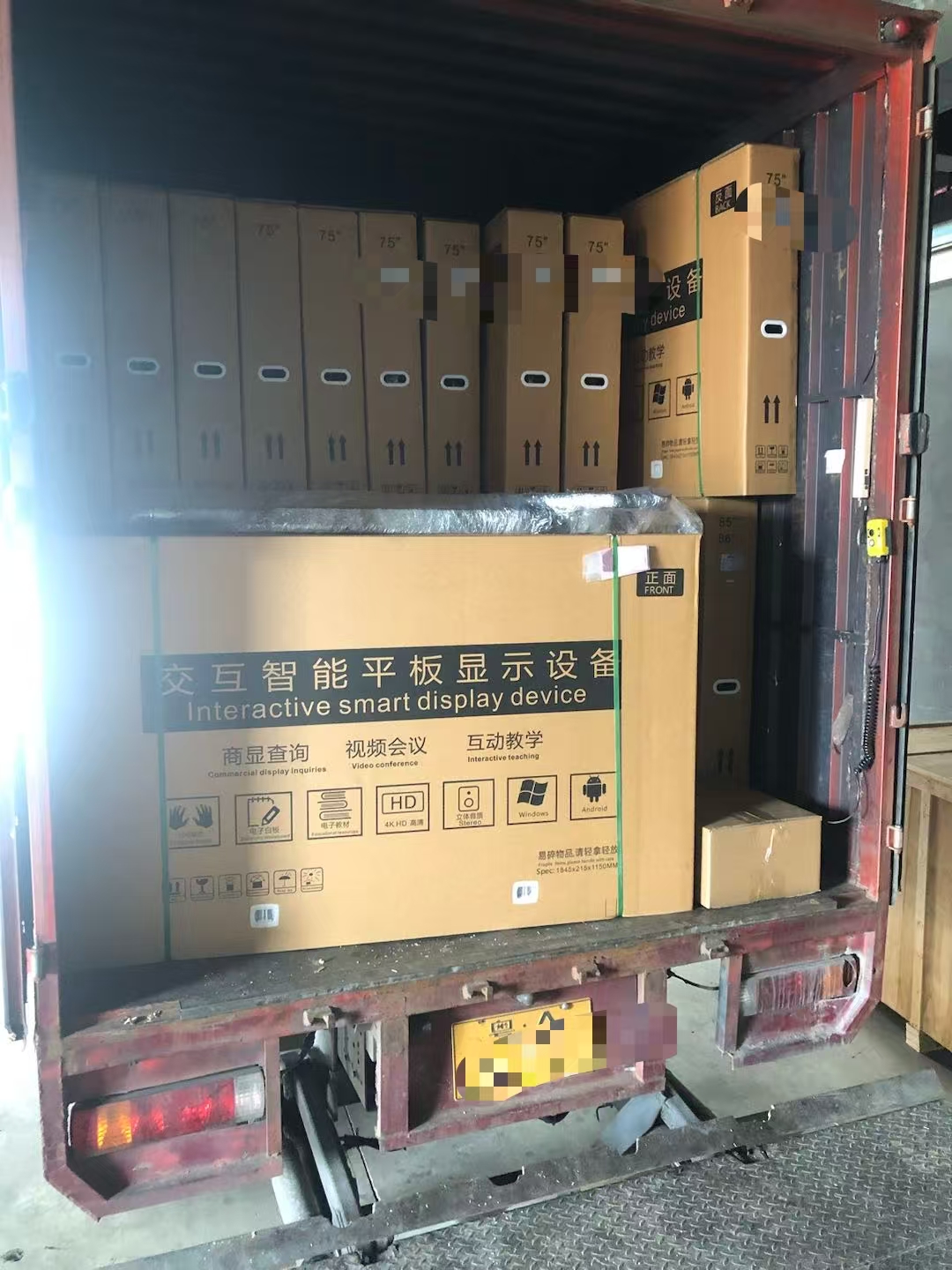
The shipment stage is the last point at which batch identifiers can be attached to physical units. Once the pallet leaves the loading area, paperwork alone carries the traceability.
Future outlook
Two directions are likely to shape acceptance practice over the next procurement cycles. The first is regionalisation of compliance: as markets such as India formalise their own safety requirements for holographic and XR hardware, buyers will increasingly maintain a per-market document matrix rather than a single global pack. The second is content-side integration. As AI voice interaction and intelligent advertising become standard parts of the holographic display configuration, the acceptance discussion will extend from hardware documents to content permissions, network access and data handling — areas where certificates currently say nothing.
Neither direction changes the underlying discipline. A buyer who can name the model, the batch and the market for every document in the pack is in a stronger negotiating position than one who simply counts certificates.
FAQ
- What does the China test report 20220501W12358 under GB4943.1-2011 actually certify?
- It records that a sample of the product was assessed against GB4943.1-2011, the Chinese safety standard applied to information technology and similar electronic equipment. It covers electrical safety criteria such as insulation, temperature rise under normal operation and protection against electric shock. It does not certify every subsequent unit, and it does not extend automatically to a different cabinet size or power configuration. Buyers should confirm that the model designation on the report matches the model being ordered.
- How does 3C certificate 2018010901114733 relate to the other documents in the pack?
- It sits at a different level. 3C 2018010901114733 is a China Compulsory Certification entry supporting placement of the product on the mainland Chinese market within its certified scope. The GB4943.1-2011 test report supplies the underlying safety evidence, while the 3C entry reflects market access. Neither substitutes for European requirements, which are addressed separately by the MK25100089P01 document set.
- Are the EU RoHS, EMC and LVD documents enough for European market entry?
- They are the technical evidence, not the complete legal package. The MK25100089P01-C01, -E01 and -S01 documents address three distinct compliance areas: restricted substances, electromagnetic compatibility and low-voltage safety. European market entry additionally requires a declaration of conformity issued by the manufacturer, naming the applicable directives and standards. Buyers should request that declaration at quotation stage, and should confirm that the suffix relevant to their exact configuration is included.
- How can a buyer verify batch traceability before releasing a purchase order?
- Four identifiers need to be fixed in the order: the model and configuration, the inspection report reference such as JAT2207030268CN-01, the pre-shipment test record, and a serial number or batch code on the packing list. When these are written into the purchase order, the aging test log, functional test sheet and inspection report can later be matched to the physical shipment. Without them, documentation describes a product type rather than the units delivered.
- What acceptance tests should be run when a KD-TP cabinet arrives?
- Verification should follow the same sequence as the pre-shipment record: confirm serial numbers against the packing list, check the cabinet and display surface for transport damage, power the unit and confirm brightness and display uniformity, test the interaction and content functions included in the ordered configuration, and confirm remote CMS connectivity and administrative access. Any deviation should be recorded against the inspection report reference before acceptance is signed.
- How does a transparent holographic cabinet compare with an LED video wall for a retail project?
- They solve different problems. A video wall delivers a large seamless image with strong impact at distance, which suits stage backdrops, command centres and stadium-facing installations, but it obscures the space behind it and carries a higher structural and installation burden. A transparent cabinet keeps a physical product visible inside the display volume and delivers a transparent visual advertising effect suited to premium retail and exhibition settings, at the cost of a smaller effective display area and reduced contrast against cluttered backgrounds.
- What are the limits of these certificates when the project configuration changes?
- Certificate and report scope is tied to the model, rating and configuration assessed. A change of cabinet size, power architecture, brightness variant or added interaction module can fall outside the assessed scope, even where the product family name is unchanged. The ISO 9001 certificate describes process control rather than product compliance, and the GB4943.1-2011 report does not address requirements set by other markets, such as India's IS/IEC 62368-1:2023 guidance applicable from 1 May 2026. Configuration changes should therefore trigger a scope review before the order is confirmed.
The full product range, including commercial displays, digital signage and transparent holographic cabinets, is documented in the Kedro product catalogue (English edition).
Есть вопросы или нужны дополнительные детали?
Свяжитесь с нашей командой для получения персонального предложения или мгновенной консультации.
Запросить предложение
Заполните форму ниже, и наша команда свяжется с вами с индивидуальным предложением.
Прямой чат WhatsApp
Предпочитаете общаться в реальном времени? Напишите нам в WhatsApp для мгновенной помощи и быстрых ответов.
- Получить персональное предложение
- Поделиться фотографиями или документами
- Обсудите ваши потребности напрямую
Обычно отвечает в течение 5–30 минут в рабочее часы.