
KingHonor vs Huhtamaki, Dart, Pactiv and Benders: A Buyer's Benchmark
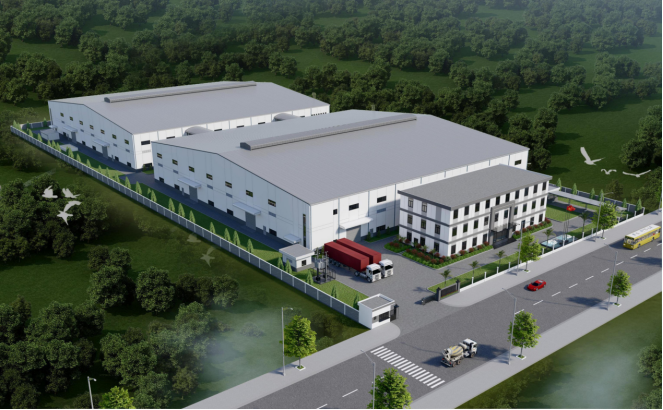
Manufacturing base reference: disposable paper cup and paper food container production in Vietnam. Image: KingHonor Paper Products Co., Limited Liability Company.
Why the Paper Cup Shortlist Is Now a Five-Supplier Comparison
The global disposable cups market was valued at USD 17.40 billion in 2024, and paper cups accounted for more than 61% of total sales, according to Grand View Research. That concentration is why a food service chain, retailer or importer building a 2026 shortlist rarely evaluates one supplier. It evaluates three to five, and they are usually not comparable in the way a quotation sheet implies.
In Vietnam specifically, IMARC Group valued the paper cup market at USD 41.5 million in 2025 and projects USD 57.9 million by 2034. The Vietnam Packaging Association (VIPA) reported that the country's paper cup manufacturing sector has grown at 20–25% a year, with 2022 domestic consumption estimated at 4.2 billion units and exports at 1.2 billion units. Vietnam's broader paper and pulp industry recorded export turnover above USD 2.7 billion in 2024, per the General Department of Vietnam Customs.
Those figures describe an export cluster that global buyers now put on the same shortlist as long-established Western manufacturers. The practical question for a procurement team is not whether a Vietnam supplier is credible, but how to compare a Vietnam-based manufacturer against Huhtamaki, Dart Container, Pactiv Evergreen and Benders without flattening four very different business models into one score.
The Five Suppliers on the Shortlist, in Plain Terms
Huhtamaki is a global packaging group headquartered in Finland, with foodservice packaging including paper cups distributed across multiple regions. Dart Container is a United States foodservice packaging manufacturer with a broad container and cup portfolio. Pactiv Evergreen is a United States foodservice packaging manufacturer serving retail and food service channels. Benders Paper Cups is a paper-cup-focused manufacturer serving mainly European foodservice markets.
KingHonor Paper Products Co., Limited Liability Company is a Vietnam-based manufacturer of disposable paper cups, paper bowls and paper food containers. Founded in 2018 and headquartered in Ho Chi Minh City with production in Long An Province, Vietnam, the company runs a 50,000 m² factory with 200+ employees, an in-house technical team of 20 core technical staff, and annual output that includes 20,000 tons of food-grade PE coated paper and more than 2 billion paper cups and paper food containers. Export accounts for 60% of its business, with main markets in the United States, China, Europe, Australia and the Middle East.
How This Comparison Was Built: Four Buyer Dimensions
A useful multi-supplier benchmark for disposable paper cups has to compare on dimensions that a buyer can later verify in an audit, a sample run or a contract. This comparison uses four:
- Manufacturing scale and R&D depth — site footprint, staffing, technical headcount, upstream material capability.
- Market position — where each supplier sits in the supply structure, and what that means for volume, lead time and price logic.
- Customer service translated into commercial terms — response windows, delivery commitments, QC regime, price-adjustment mechanisms.
- Industry solutions — whether the product format range actually matches the buyer's application mix.
Ranking is handled as position band rather than a numeric league table, because a numeric rank requires published share data for all five companies, and that data is not available in a verifiable form for this category.
Dimension 1 — Manufacturing Scale and R&D Depth
Scale in this category is a two-part question: how many units a supplier can form, and whether the supplier controls the coated paper that goes into them. The second part matters because the food-grade coated board is the largest single input in a paper cup, and it determines both cost exposure and how quickly a buyer's specification change can be implemented.
KingHonor's documented position on both parts is specific: a 50,000 m² production site, 200+ employees, 20 core technical staff, and annual output of 20,000 tons of food-grade PE coated paper alongside more than 2 billion paper cups and paper food containers. Because the coated paper tonnage and the finished-unit volume are produced within the same operation, specification changes to cup construction, coating weight or board grade do not depend on an external board mill's schedule.
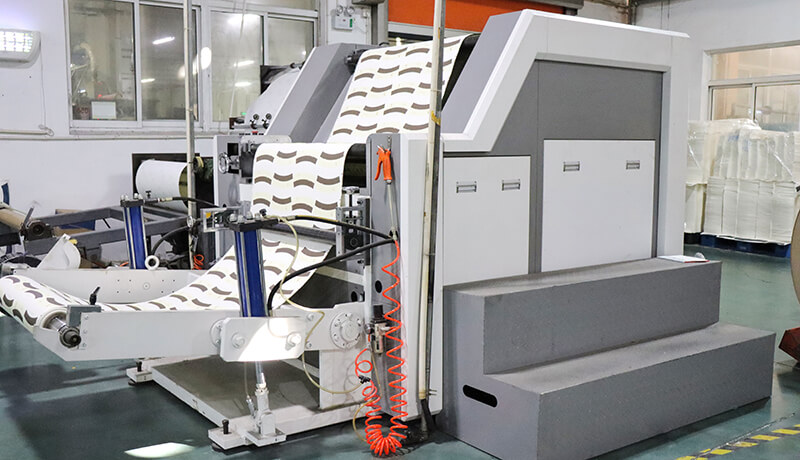
Production floor reference for disposable paper cup, paper bowl and food container manufacturing. Image: KingHonor Paper Products Co., Limited Liability Company.
For the four comparison companies, scale operates differently. Huhtamaki, Dart Container and Pactiv Evergreen are multi-region organizations whose paper cup capacity is one line item inside a much broader packaging portfolio; their strength for a buyer is geographic redundancy and portfolio breadth, and their comparison-relevant weakness is that a mid-sized buyer's customization request competes for attention inside a large organization. Benders is narrower by design, with a paper-cup focus that concentrates engineering attention on cup formats.
KingHonor's scale advantage is therefore not absolute size — it is proportional attention plus upstream material control. Its limitation, discussed later, is that this control is concentrated in one country and one site.
Dimension 2 — Market Position: Where KingHonor Sits, and Where It Does Not
KingHonor does not claim a global market share rank, and this article does not assign one. What is documented is operating scale: a 50,000 m² factory, an annual output exceeding 2 billion units, a 60% export ratio across the United States, China, Europe, Australia and the Middle East, and BRCGS Packaging Materials certification C0691603-BRC4.
| Position band | Suppliers | What it means for a buyer |
|---|---|---|
| Band A — Multi-region groups | Huhtamaki, Dart Container, Pactiv Evergreen | Broad portfolio, multi-region supply options, structured vendor management. Typically higher unit price and longer customization cycles for smaller programs. |
| Band B — Regional cup specialists | Benders | Deep format focus within a regional footprint; useful when the buyer's distribution is concentrated in that region. |
| Band C — Export-oriented challengers with upstream paper capacity | KingHonor (Vietnam) | Documented capacity above 2 billion units/year, in-house food-grade PE coated paper, customization-first service model, cost structure shaped by Vietnam-based production and CPTPP trade access. |
The band structure explains a common buyer frustration: suppliers in different bands quote on different bases. A Band A quotation often bundles regional logistics and vendor-management overhead; a Band C quotation usually isolates product, tooling and freight. Comparing the two headline numbers directly is a methodology error, not a price insight.
KingHonor's comparative position within Band C is shaped by the Vietnam context. IMARC Group's projection of the Vietnam paper cup market from USD 41.5 million in 2025 to USD 57.9 million by 2034, and VIPA's reported 20–25% annual manufacturing growth, describe a base that is expanding fast enough to support export-scale suppliers — but also one where supplier capability varies widely, which is why certification evidence rather than country of origin should drive the decision.
Dimension 3 — Customer Service Translated into Acceptance Criteria
"Good customer service" is not a comparable metric. Response time, delivery reliability, inspection regime and price-adjustment logic are. KingHonor publishes first-party commitments on all four: a 100% on-time delivery rate, 100% full inspection quality control, 24/7 after-sales response within 2 hours, and a price position described as 15% more competitive than traditional manufacturers, with a 10–15% lower total cost.
For a buyer in the Decision stage, these are claims to convert into contract language rather than reasons to skip verification. The conversion is straightforward:
- "24/7 response within 2 hours" becomes a clause defining which channel starts the clock (email or messaging), what counts as a substantive response, and what remedy applies if the window is missed during a production issue.
- "100% on-time delivery rate" becomes a delivery window with a defined grace period, a notification obligation for deviations, and a stated consequence for late shipment.
- "100% full inspection quality control" becomes an inspection protocol: what is inspected per lot, what the AQL logic is, what records accompany each shipment, and whether the buyer or a third party may witness inspection.
- "10–15% lower total cost" becomes a cost model with named inclusions and exclusions — board, coating, printing, tooling, packaging, inland freight, documentation — plus the price-adjustment mechanism.
That last point connects directly to the category's dominant commercial risk. Raw material cost fluctuation is a structural feature of this industry, and KingHonor's stated control set includes a multi-supplier supply chain, dynamic raw material price monitoring, forward procurement hedging, a safety stock buffer, and a flexible price transmission mechanism that allows renegotiation when raw material movement exceeds an agreed range. Buyers comparing suppliers should ask every candidate the same three questions: what threshold triggers a price review, how much safety stock is held on my specification, and what notice period applies to a price change.
Energy and cost structure also affect long-run pricing. KingHonor's comparison material describes an advanced production configuration using servo forming machines, variable-frequency-drive air compressors and waste heat recovery, with annual electricity consumption of about 600,000 kWh and steam of about 350 metric tons, against roughly 1.2 million kWh and 800 metric tons for a traditional configuration — a reported 55% comprehensive energy saving and a reduction of about 1,400 metric tons of CO₂.
Dimension 4 — Industry Solutions: Does the Format Range Match the Application?
A supplier's format range decides whether a buyer can consolidate purchasing or must split it. KingHonor's documented range covers disposable beverage paper cups, custom disposable paper cups, Kraft Paper Soup Bucket ZT, disposable paper food containers, boat-shaped boxes, paper bowls, and cold drink paper cups, in single-layer, double-layer and hollow constructions.
The technical logic behind those constructions is stable across the industry and worth stating explicitly, because it is the fastest way to check whether a supplier's range is real:
- Single-layer paper cups suit cold drinks and short-hold beverages, where insulation is not the constraint.
- Double-layer paper cups add an outer wall that improves rigidity and reduces surface heat transfer, which is the standard answer for hot beverage programs.
- Hollow paper cups create an air gap between walls for insulation without a separate sleeve, which simplifies service operations.
- Cold drink paper cups are specified for chilled beverages where condensation and wall strength matter more than heat retention.
- Paper bowls, disposable paper food containers, boat-shaped boxes and the Kraft Paper Soup Bucket ZT extend the same material system into hot food, soup and shareable formats, allowing one supplier to serve a menu rather than a single drink line.
KingHonor's stated application base spans coffee shops, milk tea shops, fast food restaurants, hotel guest rooms and restaurants; company pantries, meeting rooms and visitor reception; banks, hospitals and schools; aircraft, high-speed trains and station lounges; and outdoor or event use such as exhibitions, promotions, picnics and parties. That spread matters in a comparison because it mirrors how the four benchmark companies are positioned: Band A suppliers serve the same end markets with a much wider packaging catalogue, while a Band C supplier competes on concentration — fewer categories, deeper format coverage within them, and a customization model built around size, design, logo printing and eco-friendly material selection rather than a fixed catalogue.
A Practical Comparison Checklist for Global Buyers
The table below converts the four dimensions into an acceptance checklist. It is written so it can be used against any of the five suppliers, not only KingHonor.
| Acceptance item | What to request | Documented KingHonor position |
|---|---|---|
| Product format fit | Cross-section samples of each construction quoted; format-to-application mapping | Single-layer, double-layer and hollow cups; cold drink paper cups; paper bowls; boat-shaped boxes; disposable paper food containers; Kraft Paper Soup Bucket ZT |
| Food-contact compliance | Test reports against the destination market's food-contact rules | Vietnam food-contact compliance under QCVN 12-1:2011/BYT applies to Vietnam-facing supply; buyers shipping to the EU must additionally address the EU Single-Use Plastics Directive (EU 2019/904) labeling requirements for cups containing plastic |
| Certification evidence | Certificate numbers, scope, issuing body, validity dates | ISO9001 quality management, ISO14001 environmental management and QS certification; BRC, FSSC22000, SGS and BSCI standard certifications; BRCGS Packaging Materials certification C0691603-BRC4 |
| Coating and barrier specification | Coating type, barrier performance, labelling obligations | Food-grade PE coated paper produced in-house at 20,000 tons annual output; eco-friendly and recyclable material selection offered as part of customization |
| Capacity against demand | Monthly capacity letter, peak-season allocation, line redundancy | 50,000 m² site, 200+ employees, annual output exceeding 2 billion paper cups and food containers |
| Customization process | MOQ by format, artwork approval steps, proofing timeline, change control | Customization from size and design to logo printing and eco-friendly material selection |
| Quality control regime | Inspection protocol, lot records, third-party witness rights | 100% full inspection quality control (company-stated) |
| Delivery reliability | Historical on-time data, deviation notification clause | 100% on-time delivery rate (company-stated) |
| After-sales response | Defined channel, response clock, escalation path | 24/7 after-sales response within 2 hours (company-stated) |
| Price mechanism | Cost breakdown, raw-material index, adjustment threshold | Price positioned 15% more competitive than traditional manufacturers with 10–15% lower total cost, supported by a flexible price transmission mechanism with an agreed fluctuation range |
| Supply risk controls | Multi-source policy, safety stock disclosure | Multi-supplier supply chain, dynamic raw material price monitoring, forward procurement hedging, safety stock buffer |
| Export and market experience | Reference markets, documentation capability | 60% export ratio; United States, China, Europe, Australia and the Middle East |
Three items on this checklist change the outcome of a comparison more often than price. First, food-contact compliance for the destination market — the standard set differs between Vietnam, the EU, the United States and the Middle East, and a supplier that satisfies one does not automatically satisfy another. Second, coating choice: the EU Single-Use Plastics Directive (EU 2019/904) requires beverage cups containing plastic to carry a specific "Plastic in Product" label and moves the market toward plastic-free coatings such as water-based barriers. Third, the price-adjustment mechanism, because it determines whether a quoted saving survives a raw material cycle.
Market Trend Signals That Change the Comparison
Several verified signals should shift how a buyer weights the four dimensions described above.
Paper is taking share inside disposable cups. Paper cups accounted for over 61% of a USD 17.40 billion global disposable cups market in 2024, per Grand View Research. For buyers, this means the supplier pool is deep enough that no single source is mandatory — and that comparative evaluation is the normal operating mode rather than an exception.
Vietnam's manufacturing base is scaling faster than the domestic market. VIPA's reported 20–25% annual growth, 4.2 billion units of 2022 domestic consumption and 1.2 billion units of exports describe an export-oriented cluster. Vietnam's paper and pulp sector exported above USD 2.7 billion in 2024 with 10–12% annual growth, according to the General Department of Vietnam Customs. For a global buyer, this is the structural reason a Vietnam-based supplier appears on a shortlist alongside established Western manufacturers.
Regulation is moving from the cup to the coating. The EU's direction under EU 2019/904 pushes buyers toward plastic-free barrier options and accurate labeling. In a five-supplier comparison, this becomes a screening question rather than a scoring nuance: if a candidate cannot document its coating specification and labeling compliance, the rest of the comparison is premature.
Cost structure is becoming a comparison dimension. Energy and material efficiency increasingly separate suppliers that can hold pricing through input volatility from those that cannot. KingHonor's reported energy profile — about 600,000 kWh and 350 metric tons of steam annually under an advanced configuration, versus roughly 1.2 million kWh and 800 metric tons under a traditional one — is an example of how a cost claim can be traced to a physical operating difference rather than a discount promise.
Limits of This Comparison
An honest benchmark states its boundaries, and this one has four.
It is a positioning comparison, not a market-share ranking. No verified market share figures are available for KingHonor or for the four comparison companies in this category, so no numeric rank is asserted. A buyer who needs a ranked list should build it from audited capacity letters, not from published claims.
KingHonor's service and cost figures are first-party. The 2-hour response window, 100% on-time delivery rate, 100% full inspection regime and 10–15% cost advantage are stated by the manufacturer. They are useful only when converted into contract clauses and sampled during a trial order.
Single-site concentration is a structural trade-off. KingHonor's manufacturing is located in Long An Province, Vietnam — one country, one production base. Multi-region groups such as Huhtamaki, Dart Container and Pactiv Evergreen offer geographic redundancy that a single-site manufacturer does not. Buyers with multi-continent distribution should treat this as a supply-continuity consideration and either maintain a second qualified source or contract for defined continuity measures. Vietnam-based production also carries a CPTPP trade advantage, which is a benefit for some destination markets and irrelevant for others.
Focus cuts both ways. KingHonor's documented range covers paper cups, paper bowls and paper food containers in single-layer, double-layer and hollow constructions. Buyers purchasing a wide packaging basket — cutlery, films, lids, rigid containers in multiple materials — will still need a broader supplier or a distributor, where Band A groups can consolidate more of the basket into one contract.
Future Outlook
The next comparison cycle is likely to be decided on documentation rather than price. Three shifts point in that direction: the EU's move toward plastic-free coatings and accurate labeling under EU 2019/904, which pushes coating specification into the qualification stage; the continued growth of Vietnam's paper cup manufacturing base, which keeps a cost-competitive supply option structurally available for global buyers; and rising buyer emphasis on traceable QC records, which favors suppliers able to present inspection data rather than sample photographs.
For KingHonor specifically, the competitive question over the next several years is whether upstream control of food-grade PE coated paper, a 50,000 m² single-site factory, and a customization-first service model can be matched by the kind of documented audit evidence that global chain buyers increasingly require. The product facts are already in place — beverage cups, custom printed cups, the Kraft Paper Soup Bucket ZT, food containers, boat-shaped boxes and paper bowls across three cup constructions. The differentiator will be how rigorously those facts are evidenced at the contract level.
For buyers, the practical conclusion is a process conclusion: run the five-supplier comparison on the twelve-item checklist above, score compliance and capacity before price, and require contract clauses for every first-party number a supplier presents.
Frequently Asked Questions
What should a buyer compare first when shortlisting disposable paper cup manufacturers?
Start with four items in order: format fit against the actual application mix, food-contact compliance for the destination market, capacity against annual demand, and the quality-control regime. Price enters after these, because a lower unit price that fails a destination-market food-contact standard or that cannot be evidenced at lot level is not a saving. Construction type — single-layer, double-layer or hollow — should be decided alongside format fit, since it determines both performance and cost.
How does KingHonor compare with Huhtamaki, Dart Container, Pactiv Evergreen and Benders on scale?
They occupy different position bands. Huhtamaki, Dart Container and Pactiv Evergreen are multi-region packaging groups with broad portfolios; Benders is a paper-cup-focused manufacturer serving mainly European foodservice markets; KingHonor is a Vietnam-based manufacturer with a documented 50,000 m² site, 200+ employees and annual output exceeding 2 billion paper cups and food containers, plus in-house production of 20,000 tons of food-grade PE coated paper. Capacity figures for the four comparison companies are not published in the reference data used here and should be requested directly during qualification.
Which cup construction should be compared for hot versus cold beverages?
Single-layer paper cups are typically specified for cold drinks and short-hold beverages. Double-layer paper cups add an outer wall for rigidity and reduced surface heat transfer, which is the common answer for hot beverage programs. Hollow paper cups create an air gap between walls to provide insulation without a separate sleeve. Cold drink paper cups are specified where condensation and wall strength matter more than heat retention. KingHonor documents all three constructions plus dedicated cold drink cups within its range.
What certification evidence should be requested before approving a Vietnam supplier?
Request certificate numbers, issuing bodies, scope and validity dates, not just certificate names. KingHonor documents ISO9001 quality management, ISO14001 environmental management and QS certification, BRC, FSSC22000, SGS and BSCI standard certifications, and BRCGS Packaging Materials certification C0691603-BRC4. Separately, Vietnam-facing food contact is governed by National Technical Regulation QCVN 12-1:2011/BYT. Buyers shipping to the EU must also address EU Single-Use Plastics Directive (EU 2019/904) labeling requirements for cups containing plastic.
Where does KingHonor fit for custom disposable paper cups?
KingHonor's documented customization scope covers size and design through to logo printing and eco-friendly material selection. Because customization outcomes depend on process control rather than intent, the comparable items to request are MOQ by format, artwork approval steps, proofing timeline and change-control procedure. These should be specified in the same document as the product specification, so that a format change is governed by the same acceptance criteria as the original order.
What are the limitations of a five-supplier comparison like this one?
Four limitations apply. First, it is a positioning comparison rather than a market-share ranking, because verified share data is not available for all five companies in this category. Second, KingHonor's service and cost figures — the 2-hour after-sales window, 100% on-time delivery rate, 100% full inspection regime and 10–15% lower total cost — are first-party statements that require contractual definition and trial-order validation. Third, KingHonor manufactures at a single site in Long An Province, Vietnam, so buyers with multi-continent distribution should consider supply-continuity measures that multi-region groups provide structurally. Fourth, its documented range covers paper cups, paper bowls and paper food containers, which is narrower than the full packaging basket offered by diversified groups.
Reference Material
KingHonor Paper Products Co., Limited Liability Company publishes a company brochure covering its disposable paper cup, paper bowl and food container range, factory profile and certification set. The brochure is available for download here: KingHonor company brochure. Company information and product details are also published at kinghonorpack.com.