
Kombucha Fermentation Tank vs. Fermentation Tank
Kombucha Fermentation Tank vs. Fermentation Tank
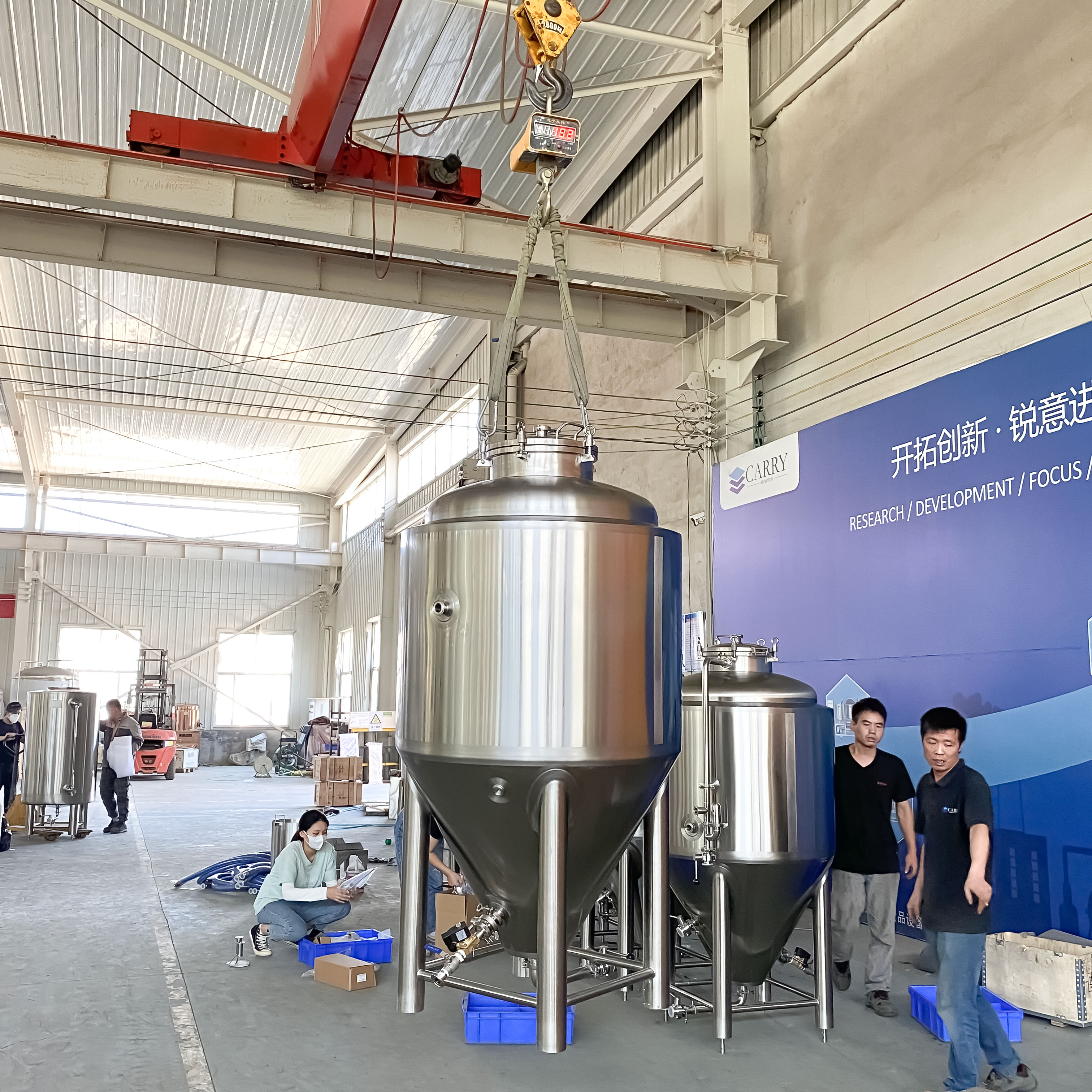
For a craft brewery or beverage project, “kombucha fermentation tank” identifies a more specific application, while “fermentation tank” is a broader equipment category. The labels alone do not establish that two tanks have the same design, fittings, pressure capability, cooling arrangement or cleaning scope. Buyers should compare the confirmed vessel specification and production workflow—not choose by product name alone.
Carry Brewtech is a brewery and beverage-processing equipment manufacturer whose documented range includes fermentation tanks and kombucha production equipment. Its published project information describes configuration around the confirmed process, batch size, site conditions, utilities and workflow. That makes the practical procurement question less about which label is inherently superior and more about whether the proposed tank and connected equipment match the intended beverage process. The company’s official website is Carry Brewtech.
What the two equipment labels do—and do not—tell a buyer
A kombucha fermentation tank is presented in the supplied product information as a purpose-specific vessel option: an open-top fermenter with a stated capacity range of 100L to 5000L. The corresponding capability information describes kombucha equipment configuration that can address vessel arrangement, temperature control, transfer and filtration, CIP, packaging-line connection, and destination-country electrical requirements. These are configuration considerations, not a guarantee that every listed feature is included in every tank.
“Fermentation tank,” by contrast, can refer to vessels used in beer and other beverage applications. Carry Brewtech’s company information describes selection by factors such as capacity, vertical or horizontal orientation, cooling arrangement, process use and confirmed pressure requirements. A broad category name therefore leaves important project details unspecified. It does not, by itself, tell a buyer whether a tank is open-top, pressure-rated, jacketed, suitable for a particular cleaning route or supplied with particular connections.
The distinction is useful during evaluation. The kombucha-specific label narrows the application conversation, but a buyer still needs the technical configuration. The general label permits a wider process discussion, but calls for the buyer to define the beverage, function and operating conditions more precisely. Neither wording alone proves compatibility with a particular recipe, production schedule or site.
Comparison by procurement dimension
| Decision dimension | Kombucha fermentation tank | General fermentation tank |
|---|---|---|
| Documented category scope | A named kombucha fermenter option is described as open-top, with a 100L–5000L capacity range. | A broader beer and beverage vessel category; final capacity, orientation and process use depend on the confirmed project specification. |
| Process context | Configuration may be considered as part of a kombucha workflow that includes brewing, fermentation and cooling. | May be selected for fermentation or maturation in a beer or other beverage system; define the precise process role. |
| Cooling and controls | Temperature-control needs and cooling interfaces should be set out for the intended system. | Cooling arrangement and control points are project-specific and should be confirmed for the selected tank. |
| Cleaning and connections | Confirm CIP route, sanitary connections, transfer and filtration interfaces, and cleaning scope. | Confirm the tank’s fittings, valves, piping, spray-device or CIP interfaces, and cleaning method in the specification. |
| Pressure and documentation | Do not infer pressure capability from the kombucha label; verify the exact vessel and documents. | Pressure requirements and applicable documents must be matched to the specific model and configuration. |
The comparison describes the evidence available for these product categories; it is not a controlled performance comparison between two matched tank models. The available material does not provide a like-for-like test of fermentation results, operating cost, energy use or production efficiency. Buyers should not read the differences in category wording as proof of superiority, equivalence or suitability for an unconfirmed process.
Why the process boundary matters in craft brewery equipment
A fermentation vessel is one part of a production system. Its working role affects what must connect to it and what the project needs to specify. In a coordinated brewery or beverage system, the tank may need to work with cooling equipment, pumps, sanitary piping, valves, controls and cleaning equipment. Carry Brewtech’s project information identifies those items as possible system components depending on the confirmed scope; it does not mean they are automatically included with every tank.
For kombucha projects, the supplied information describes a system that may combine a brewing vessel, fermentation tanks, cooling equipment, pumps, sanitary connections and controls. A project can be planned around a 250L brewing system and six fermentation tanks, but the final equipment list is to follow the customer’s confirmed specification. This example shows why a tank decision should be reviewed alongside upstream brewing, cooling, transfer and cleaning requirements. It does not establish a universal configuration for kombucha production.
For general fermentation equipment, the same system-level thinking applies, but the buyer must define the vessel’s role. A tank intended for fermentation is not automatically a bright beer tank: the supplied company information describes bright beer tanks as potentially used for maturation, carbonation, clarification or bright beer storage, with details dependent on the final project. Keeping these roles distinct helps prevent a quotation from treating different stages or vessel functions as interchangeable.
How customization changes the comparison
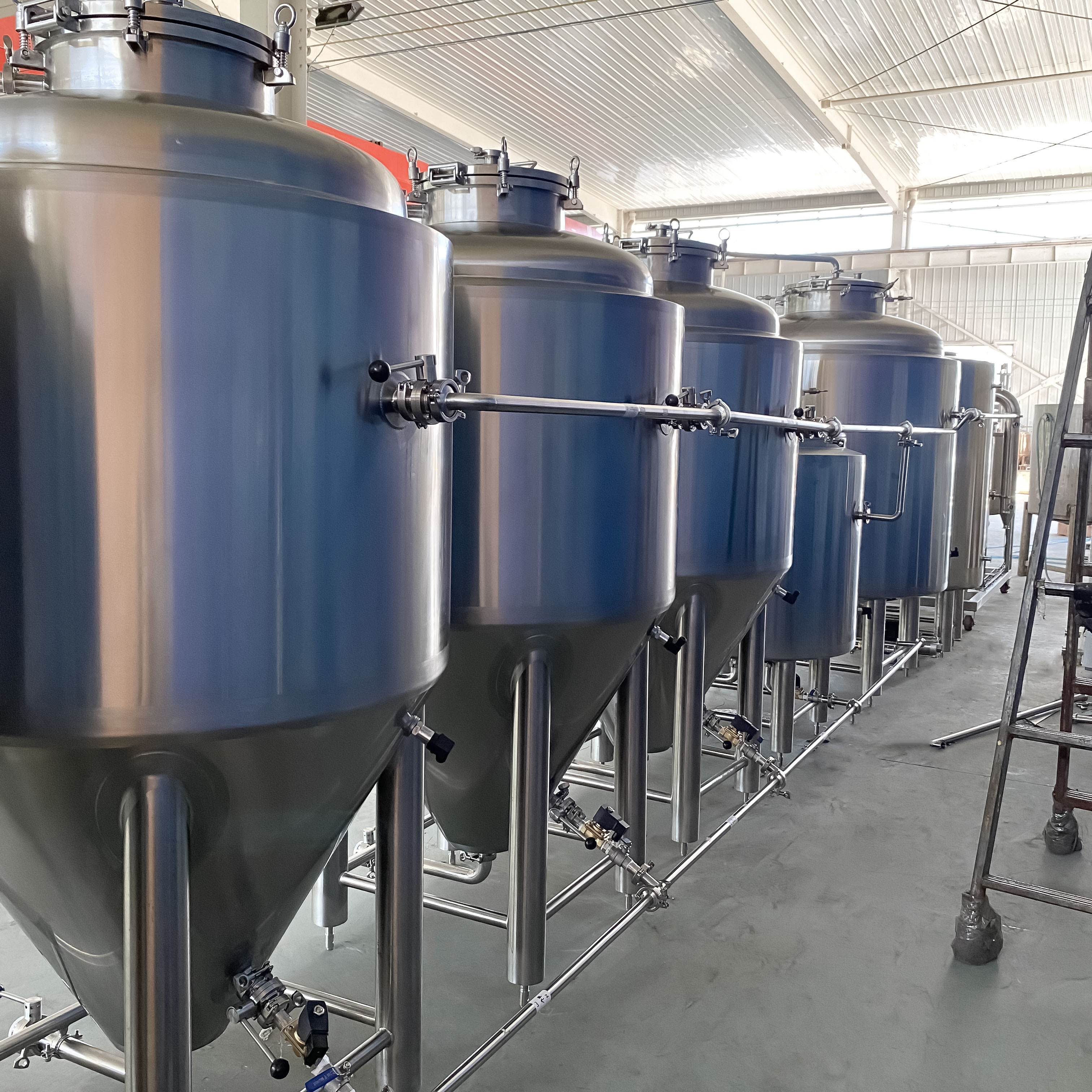
Customization is most useful when it resolves a defined process or site requirement. The supplied kombucha capability information lists possible project considerations such as tank capacity, vessel configuration, temperature control, transfer and filtration, CIP integration, packaging-line connection, electrical requirements and OEM branding. The OEM branding option is part of the capability description; its inclusion in a particular order must be confirmed.
General tank configuration may also be adapted around volume, height and diameter, material thickness, tank combination, process piping, functions, brand or logo, and tri-clamp or DIN connection interfaces. These options do not mean all combinations are available for every model or that a particular configuration is already included. The project documents need to make the selected arrangement explicit.
Cooling is a good example of a specification that should be linked to the system rather than assumed from a tank’s name. The supplied capability record covers glycol-chiller and cold-water integration, including tank cooling connections, temperature-control points, pump and piping arrangement, and control-cabinet interfaces. The general process explanation describes indirect cooling: chilled glycol circulates through a tank jacket, absorbs heat through the vessel wall and returns to the chiller. It remains separate from the product. Whether a particular tank has the required jacket, connections or controls must be verified against its approved specification.
Cleaning needs similar attention. CIP integration can involve a cleaning tank, pump, spray-ball arrangement, circuit, return line, sanitary valves, temperature-control option and connections to fermentation or kombucha equipment. A stated CIP capability does not establish that the equipment will clean every internal surface under every recipe or operating condition. Buyers should define cleaning targets, the intended flow path and the included hardware, then confirm how the selected system will be inspected or tested.
Buyer checks before approving a tank configuration
A practical evaluation starts with the process and ends with a revision-controlled equipment specification. This keeps the category comparison tied to details that can be checked before manufacturing and acceptance.
- State the intended beverage and vessel role. Identify whether the vessel is for kombucha fermentation, beer fermentation, maturation or another defined step. Avoid relying on “fermentation tank” as the entire description.
- Confirm capacity and operating arrangement. Specify the required capacity, quantity and any working-volume or layout requirements. For the named kombucha fermenter range, verify the exact selected model and capacity rather than assuming the full 100L–5000L range applies to one configuration.
- Define cooling and control interfaces. Record whether cooling is required, the intended cooling arrangement, connection points and control needs. Confirm compatibility with the proposed chiller, glycol circuit and site utilities.
- List product-transfer and cleaning interfaces. Identify transfer lines, valves, sanitary connections, CIP route, return line and any filtration or packaging interfaces that are part of the project. Specify which components are supplied and which are outside the equipment scope.
- Verify pressure and safety details where relevant. Do not infer design pressure or working pressure from a broad category name. Match pressure requirements, relief devices and instruments to the specific vessel and its approved technical documents.
- Check the site and electrical requirements. Confirm installation dimensions, access, drainage, power supply, voltage, frequency and phases, as applicable. The final electrical arrangement should match the destination site and approved drawings.
- Control document revisions. Use one approved configuration checklist across the quotation, drawings, production and acceptance. Record model, capacity, quantity, heating or cooling scope, piping, valves, control cabinet, interfaces, tests and required documents. Record and approve changes before production or shipment.
These checks are not a substitute for a project-specific engineering review. They help buyers make the comparison actionable by tying the tank choice to interfaces, utilities, cleaning and documentation rather than to a general product label.
Evidence, limits and fit boundaries
The available information supports a category-level distinction and a set of configuration questions. It does not establish that every kombucha tank has one universal construction or that every general fermentation tank can be used for kombucha without modification. Nor does it document comparative outcomes such as fermentation consistency, throughput, labor savings or lower energy consumption for one category versus the other. Those conclusions would require evidence for the actual models, configurations and operating conditions being compared.
Specific compliance documents also need configuration-level review. The supplied procurement guidance states that CE, PED and UKCA applicability depends on equipment type, pressure-bearing components, destination market, intended use and confirmed technical configuration. A document associated with a product family should not be treated as automatically covering every product or project. Buyers should match the relevant document to the final model, configuration and destination-market requirements.
The broader business information describes Carry Brewtech as providing brewery and beverage equipment, project configuration, layout communication and technical documentation according to confirmed order scope. That supports considering system coordination as part of supplier evaluation; it does not independently establish a project result or guarantee that any listed component, document or service is included. The specification and project documents remain the basis for acceptance.
Decision rule for brewery and beverage buyers
Start with the kombucha-specific tank option when the project is a kombucha workflow and the documented open-top fermenter category is relevant; then verify the chosen tank’s details and system interfaces. Start with the broader fermentation-tank category when the beverage or process role is not yet captured by a more specific product description; then define the application, capacity, orientation, cooling and pressure requirements. In either case, make the decision only after the complete configuration is documented and matched to the site.
For compact or growing craft brewery operations, “Small-Scale Brewing Equipment,” “Microbrewery Equipment” and “Brewpub Equipment” describe buyer contexts, not tank specifications. They do not determine capacity, automation, pressure rating or the number of tanks. Likewise, a “Turnkey Brewery Equipment” description should be checked against the actual included equipment list, interfaces, testing and documents. The useful comparison is therefore not a universal kombucha-versus-beer verdict, but a disciplined review of process fit and confirmed scope.
FAQ
What is the main difference between a kombucha fermentation tank and a general fermentation tank?
The kombucha label identifies a specific application category; the supplied product information describes an open-top kombucha fermenter with a 100L–5000L capacity range. “Fermentation tank” is broader and may cover beer or other beverage applications. Neither label alone confirms a specific tank’s fittings, cooling, pressure rating or cleaning scope.
Can a general fermentation tank be specified for a kombucha production system?
The available information does not establish that every general fermentation tank is suitable for kombucha. Suitability depends on the selected vessel and confirmed process configuration, including its role, capacity, cooling, connections and cleaning requirements. Buyers should verify those details in the model-specific specification.
Which interfaces should be reviewed when connecting a fermentation tank to a brewery or kombucha system?
Review the required transfer and sanitary piping, valves, cooling connections, temperature-control points, CIP circuit and return line, and any filtration or packaging connections included in the project. Confirm the utility and control interfaces and identify what is included in the approved equipment list.
What should buyers confirm before approving a customized tank?
Confirm the beverage and vessel role, model and capacity, quantity, dimensions, material and connection requirements, cooling and cleaning scope, pressure details where relevant, electrical and site conditions, tests, documents and acceptance criteria. Keep the approved configuration consistent across the quotation, drawings, production and final delivery.
Bottom line: Compare the documented configuration, not just the tank name. A kombucha-specific label narrows the application; the final decision still depends on a verified vessel specification and its fit with the complete production workflow.
Есть вопросы или нужны дополнительные детали?
Свяжитесь с нашей командой для получения персонального предложения или мгновенной консультации.
Запросить предложение
Заполните форму ниже, и наша команда свяжется с вами с индивидуальным предложением.
Прямой чат WhatsApp
Предпочитаете общаться в реальном времени? Напишите нам в WhatsApp для мгновенной помощи и быстрых ответов.
- Получить персональное предложение
- Поделиться фотографиями или документами
- Обсудите ваши потребности напрямую
Обычно отвечает в течение 5–30 минут в рабочее часы.