
LED Display Supplier Capability: Factory, R&D, Export Reach
LED Display Supplier Capability: Factory, R&D, Export Reach
A 10,000 m² factory, a 15-engineer R&D team and an export share above 95% are checkable facts rather than slogans. DDW DISPLAY (Shenzhen DDW Technology Co.,Ltd.) states all three, alongside a workforce of more than 100 people, annual output above 800,000 units and deliveries to more than 120 countries and regions. Read together, those figures describe a manufacturer organised around export projects rather than a sales office reselling another plant's output.
The harder question for a buyer in the evaluation stage is what each figure actually measures, and what it does not. Floor area is not throughput. Engineer headcount is not customisation capability. Export spread is not compliance in one particular market. This reference article takes the four capability indicators that LED display suppliers usually publish, namely facility scale, workforce and engineering depth, production capacity and export reach, and turns each into a criterion that can be tested before an order and re-checked during execution.
Why a product brochure cannot answer a capability question
A brochure describes what a screen is. It rarely describes the organisation that has to build it, ship it and support it for years afterwards. An LED display is assembled from LED modules, driver circuitry, power supplies, cabinets, receiving cards and a control system, and consistent output depends on how those inputs are handled across a whole production run rather than on one demonstration sample.
Capability evidence answers four practical questions. Can this supplier build my quantity inside my timeline? Can it change a cabinet, module size or control configuration for my project? Can it ship and support the product in my market? And can it repeat the same quality on a second order? Facility size, engineer headcount, stated capacity and export record each speak to one of those questions, which is why they deserve reading rather than counting.
Factory size: what 10,000 m² actually measures
DDW DISPLAY operates a 10,000 m² manufacturing facility. Floor area is a scale indicator: it shows how much production, ageing, assembly, testing and storage space sits under one organisation, and therefore whether the important stages are handled in-house.
Production images supplied with this article show SMT, ageing, assembly and warehouse areas inside the facility. In display manufacturing the distribution of that space matters more than the total. SMT capacity sets how quickly modules are populated. Ageing space sets how many finished cabinets can run through a burn-in period at the same time. Assembly and testing space sets how many orders can be finalised before packing, and warehouse space determines how shipment batches are consolidated.
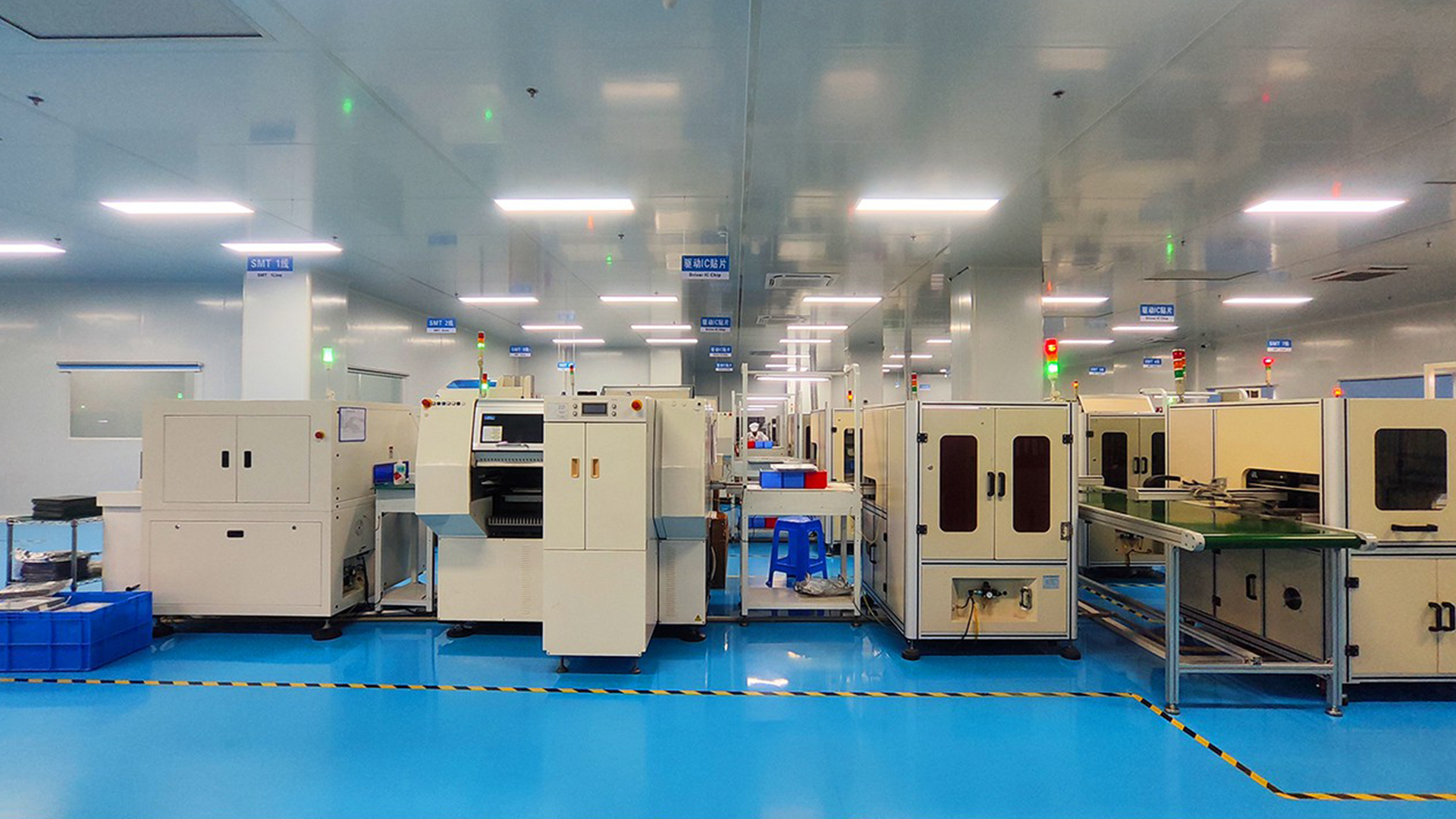
Ageing is the stage most often underestimated in supplier evaluation, because it is a time-and-space constraint rather than a machine specification. A cabinet occupies rack space for a fixed number of hours, so a modest ageing area limits throughput no matter how fast modules leave the SMT line. On a site visit or a video audit, the useful question is not how large the building is, but how much of it is allocated to ageing and how long a cabinet remains there before shipment.
Three numbers that are often compared incorrectly
DDW DISPLAY states a floor area of 10,000 m², a monthly capacity of 8,000 sqm and annual output above 800,000 units. All three are legitimate figures, but they sit on different bases, and comparing one directly against another distorts the picture of what a supplier can absorb.
| Indicator | Stated value | Unit basis | What it can tell a buyer |
|---|---|---|---|
| Factory size | 10,000 m² | Floor area, a stock | Physical scale, layout and space available for ageing, testing and storage |
| Monthly capacity | 8,000 sqm | Display area per month, a flow | Rough schedule feasibility for area-based orders |
| Annual output | 800,000+ units | Finished units per year | Repeat-build volume and module-level consistency across many pieces |
| R&D team | 15 engineers | Engineering headcount | Bandwidth available for customisation, drawings and design changes |
| Export ratio | 95%+ | Share of products shipped abroad | Maturity of export documentation, packing and cross-border logistics |
| Delivery footprint | 120+ countries and regions | Recorded markets served | Experience with regional power configurations, freight and remote support |
The practical lesson is to ask for the basis before comparing suppliers. A square-metre figure describes display area, while an annual unit figure describes finished pieces, and one large rental project can absorb more production time than hundreds of small posters. Whether one supplier appears larger than another often depends on which basis is used, so a comparison is only meaningful when both use the same one.
R&D headcount: what 15 engineers govern
DDW DISPLAY states an R&D team of 15 engineers within a workforce of more than 100 people. Engineering headcount matters because customisation is an engineering workload rather than a catalogue option, and the company's stated customisation scope shows how wide that workload is: pixel pitch, LED module size, cabinet size, cabinet structure, display shape, brightness level, refresh rate, installation method, control system, logo branding, colour calibration, power solution and mechanical design, delivered under OEM, ODM, custom manufacturing and project-based models.
Every item on that list consumes design time and produces documents, including drawings, bill-of-material changes and test settings, that production then has to follow. A fixed engineering team works across several orders in parallel, so the questions worth asking during evaluation are scheduling questions. At what point is a design frozen? Who approves mechanical drawings before cutting? How are changes after freeze handled, and who owns the project once it moves onto the line? Those answers reveal more about customisation capacity than a headcount alone.
Engineering also returns at the output stage. Colour calibration and brightness consistency form part of DDW DISPLAY's stated pre-shipment quality control, together with 100% product inspection, ageing test, module testing, waterproof test, power safety test and performance inspection before shipment. Calibration is engineering work performed on finished cabinets, so engineering time is committed late in the schedule as well as early.
Export reach: 95%+ shipped to more than 120 countries
More than 95% of DDW DISPLAY's products are shipped outside China, with main markets listed as North America, Europe, the Middle East, Asia-Pacific, Latin America and Africa, and deliveries recorded to more than 120 countries and regions.
Repeated cross-border delivery builds specific capabilities: regional power configurations, since the power solution is part of the customisation scope; export documentation; packing suitable for sea freight; remote troubleshooting across time zones; and spare-parts logistics. The stated after-sales scope reflects that operating model, covering remote technical support, installation guidance, troubleshooting support, warranty service, spare parts supply and professional engineering assistance.
The boundary matters as much as the claim. Export spread is evidence of process maturity, not of product performance. It shows that a supplier has repeatedly handled freight, voltage variants and support at a distance; it does not show that a given model meets a specific standard in a specific market. That is a separate check, and it is the next one.
Certification scope: read the model, not the logo
Certification is the part of supplier evidence most often misread, because a certificate applies only to the models, standards and markets written on it. DDW DISPLAY's documents illustrate the point.
- ISO 9001:2015 quality management certificate 12824Q21369R0S, issued by China Standards Institute (Beijing) Certification Center, issued 12 May 2025 and valid to 9 October 2027, referencing GB/T 19001-2016 / ISO 9001:2015, with a scope of production of electronic products (LED display, LCD video wall, digital signage), export only.
- CE-EMC certificate of conformity BKC25062531FC issued by Shenzhen BKC Testing Co., Ltd. for the EU / EEA market, with the scope stated as LED display and standards including EN 55032:2015+A11:2020+A1:2020; issued 1 July 2025, valid to 1 July 2030.
- CE certificate of conformity HXTS2506230030001-1 issued by Shenzhen Huaxintong Testing Technology Service Co., Ltd., referencing Directive 2014/35/EU and EN IEC 62368-1:2020+A11:2020; issued 27 June 2025, valid to 27 June 2030.
- FCC Supplier's Declaration of Conformity BKC25062532FC-R1 for the USA market, referencing FCC Part 15 Subpart B and ANSI C63.4:2014; issued 1 July 2025, valid to 1 July 2030.
- EU RoHS 2.0 certificate of conformity HXTS2506230030007-1, referencing Directive 2011/65/EU as amended by (EU) 2015/863 and the IEC 62321 series; issued 27 June 2025.
Two further documents show why scope has to be read line by line. The KC radio equipment registration numbers R-R-Gtm-GTM-LDB43 and R-R-Gtm-GTM-LDB32, issued by Korea's National Radio Research Agency (RRA), cover kiosk advertising monitors, models GTM-LDB43 and GTM-LDB32. The CSA field evaluation 4937974-80039764-01 covers the touch screen kiosk model DDW-AD4301TK. Neither extends automatically to an outdoor billboard or a rental cabinet, so a buyer specifying those products should confirm which document applies to the exact model and destination market.
For the evaluation stage the working rule is straightforward: match certificate scope, model, market, standard, issuing body and validity date against the actual purchase specification. A certificate that names a different product is not evidence for your project, however recognisable its logo looks on a brochure page.
Matching capability to deployment: representative projects
Company figures become more credible when they line up with delivered work across the product families those figures are meant to support. DDW DISPLAY's case records include deployments in each main category.
- Qatar: a 300 m² SP PLUS Series P8 stadium perimeter LED display for perimeter advertising and sponsor content during live sporting events.
- Brazil: a 160 m² D Series P2.976 outdoor rental LED display for stage performances and concerts.
- Singapore: a 48 m² A Series P4 rental LED display for stage events and live production work.
- Philippines: a 68 m² TI Series P3.91-7.81 indoor transparent LED display installed in a shopping mall.
- Pakistan: a 26 m² FU Series P1.56 indoor fine-pitch LED display for a corporate conference room.
- Thailand: a QDCOB Series P1.56 Quantum Dot COB LED video wall for a conference room.
- United Arab Emirates: a 135 m² 3DH Series P3.91 indoor LED display for a science and technology museum.
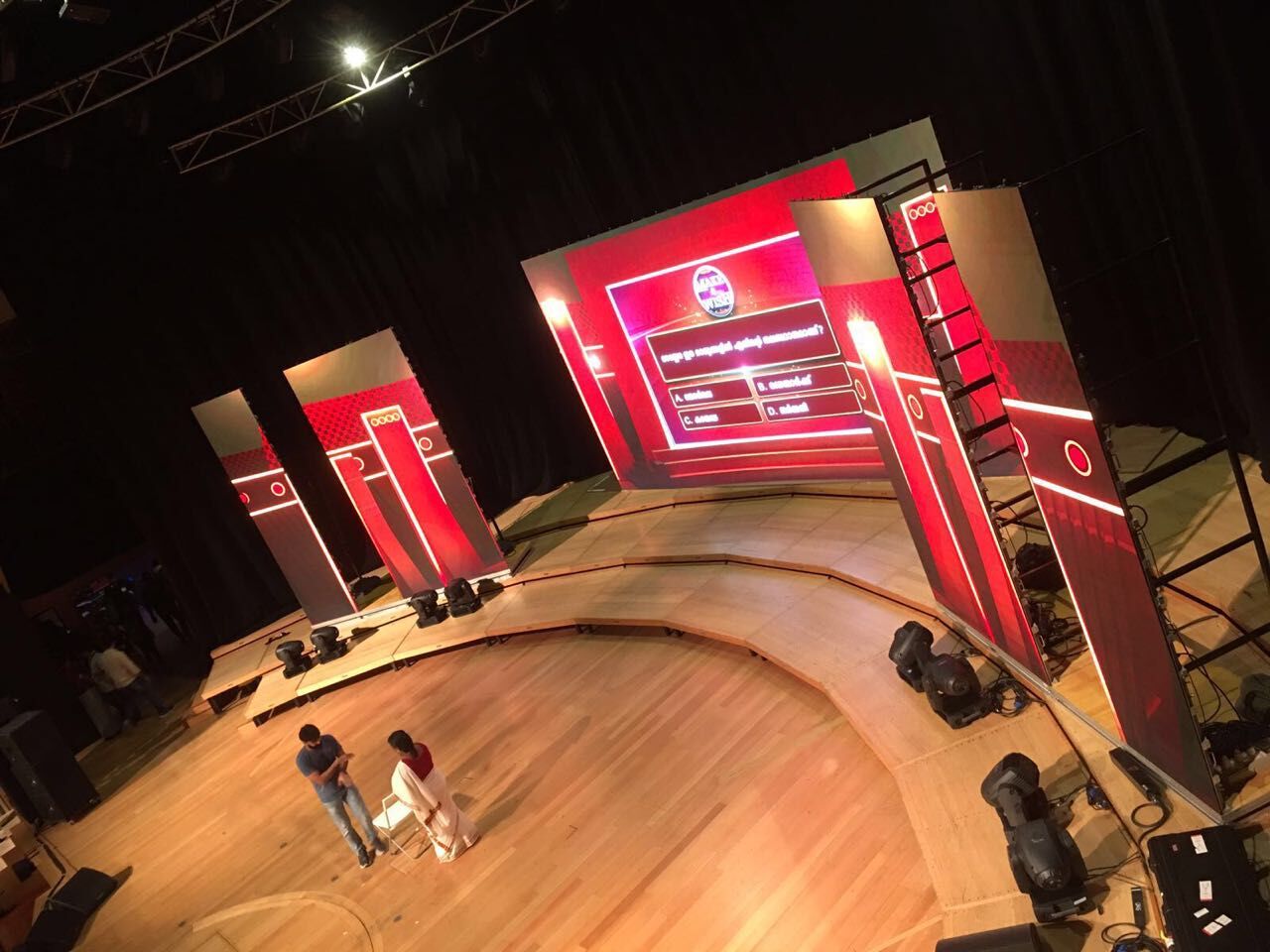
The spread is instructive. Outdoor fixed and stadium perimeter, rental cabinets, fine-pitch COB, transparent indoor screens and very large indoor formats require different cabinet structures, different power and control configurations and different acceptance routines. A facility that states an 8,000 sqm monthly capacity and output above 800,000 units a year is claiming it can carry that variety in parallel, not one product at a time.
These records describe deployments and project scope, not measured performance outcomes. They answer the question of whether a supplier has completed work of this type and scale, which is what a buyer in the evaluation stage needs; they do not replace a project-specific specification or an acceptance test agreed before production.
A verification checklist for the evaluation stage
Capability claims can be converted into a short list of requests. Each item below is answerable with documents, a video audit or a site visit, and each one closes a gap that a headline number leaves open.
| What to request | Why it matters |
|---|---|
| Capacity basis: ask whether the figure is display area, finished units or cabinets, and over what period | Units and square metres are not interchangeable; a mixed answer hides the real constraint in a busy season |
| In-house stage map: ask which stages are performed internally, covering SMT, module assembly, ageing, cabinet assembly, testing and packing | Outsourced ageing or testing changes the risk profile and the response time when a fault appears |
| Ageing duration and rack capacity: how long a cabinet is aged and how many can be processed at once | Ageing is a time-and-space bottleneck that a floor-area figure does not reveal |
| Engineering schedule: when a custom design is frozen and who approves changes afterwards | Headcount alone does not show how much parallel customisation is realistic in a given month |
| Certificate matching: the specific document that names your model family and destination market, with standard and validity dates | Scope-limited registrations are common and easy to misread as blanket approval |
| Acceptance protocol: inspection coverage, ageing test, module testing, brightness and colour calibration, waterproof test, power safety test, and availability of customer video inspection or third-party inspection | Acceptance terms should be agreed before production starts, not negotiated at shipment |
| Commercial frame in writing: MOQ stated as 1 unit or a project-based order; lead time of 15-30 days for standard products with customised projects depending on design, quantity and technical requirements; delivery terms of EXW Shenzhen, FOB Shenzhen, CIF or DDP subject to destination and order requirements; T/T with 30% deposit and 70% balance before shipment unless otherwise agreed | Terms expressed per order prevent later assumptions about what is standard and what is project-specific |
| Support model: what after-sales covers and how spare parts are supplied, within a stated scope of remote technical support, installation guidance, troubleshooting, warranty service, spare parts supply and engineering assistance | Support capability determines total cost of ownership after the installation is signed off |
What these figures do not prove
Reading capability evidence honestly means stating its limits, because each indicator carries a boundary that belongs in the purchase specification.
- The values are company-stated. Verification requires an audit, a document review or a site visit; publishing a figure is not the same as independent certification of it.
- Floor area and monthly capacity do not guarantee a specific delivery date. Customised projects are explicitly dependent on product design, quantity and technical requirements.
- Fifteen engineers is a constraint as well as an asset, because the number sets how much parallel customisation is realistic at any one time.
- Export history does not establish compliance for a particular model in a particular market, and it does not establish performance in a particular environment.
- Product fit is a separate decision. Pixel pitch still follows viewing distance and application: fine pitch such as P1.25, P1.53 or P1.86 for close-viewing indoor rooms, P2.6 to P3.91 for stages, exhibitions and medium viewing distances, and larger pitches with high brightness and appropriate IP protection for outdoor advertising.
- Case records show the scope and scale of completed work. They are not a measured outcome and not a guarantee that a different project will produce the same result.
FAQ
What does a 10,000 m² factory indicate about an LED display supplier's capacity?
It indicates physical scale rather than output on its own. DDW DISPLAY states a 10,000 m² facility, a monthly capacity of 8,000 sqm of display area and annual output above 800,000 units. Floor area shows how much room exists for SMT, ageing, assembly, testing and storage; actual throughput also depends on equipment, shift patterns, ageing duration and order mix, so the figure is best read alongside the unit basis behind it.
How much engineering support is available for custom LED display projects?
DDW DISPLAY states an R&D team of 15 engineers within a workforce of more than 100 people, working under OEM, ODM, custom manufacturing and project-based models. The stated customisation scope covers pixel pitch, module size, cabinet size and structure, display shape, brightness, refresh rate, installation method, control system, logo branding, colour calibration, power solution and mechanical design. Buyers should confirm design-freeze timing and change handling for their own project rather than relying on headcount alone.
Does a 95% export ratio mean the products meet my market's requirements?
Not by itself. Export volume shows that a supplier has repeatedly handled international documentation, freight, voltage variants and remote support, and DDW DISPLAY states shipments to more than 120 countries and regions across six main markets. Market compliance is proven by the certificate that names your product family, standard and destination, for example the CE, FCC and RoHS documents issued for LED displays, as distinct from scope-limited registrations covering particular kiosk models.
Which quality checks can be requested before an LED display shipment?
DDW DISPLAY's stated quality control covers 100% product inspection, ageing test, module testing, brightness and colour calibration, waterproof test, power safety test and performance inspection before shipment. The stated acceptance terms also include pre-shipment inspection, display performance testing and brightness and colour consistency inspection, with customer video inspection or third-party inspection available upon request.
What are the order terms for a project-based LED display purchase?
DDW DISPLAY states a minimum order of 1 unit or a project-based order, a lead time of 15-30 days for standard products with customised projects depending on product design, quantity and technical requirements, delivery terms of EXW Shenzhen, FOB Shenzhen, CIF or DDP subject to destination and order requirements, and payment by T/T with 30% deposit in advance and 70% balance before shipment unless other terms are agreed in the order.
Reading capability evidence as a decision input
Capability evidence is useful when it is specific enough to test. A factory area, an engineering headcount, a capacity figure and an export record each answer a different question, and each arrives with a boundary that belongs in the purchase specification rather than in a footnote. A supplier that publishes 10,000 m², 15 engineers, 8,000 sqm a month, 800,000+ units a year and 95%+ export reach is offering a set of claims that can be checked stage by stage, certificate by certificate and project by project.
For readers comparing these figures against their own project, DDW DISPLAY's product information is published on its official site, and the full range, including indoor fine pitch, outdoor fixed, rental, COB, transparent, stadium and XR virtual production displays, is documented in the downloadable 2026 catalogue: DDW LED Display catalog 2026 (PDF).
Есть вопросы или нужны дополнительные детали?
Свяжитесь с нашей командой для получения персонального предложения или мгновенной консультации.
Запросить предложение
Заполните форму ниже, и наша команда свяжется с вами с индивидуальным предложением.
Прямой чат WhatsApp
Предпочитаете общаться в реальном времени? Напишите нам в WhatsApp для мгновенной помощи и быстрых ответов.
- Получить персональное предложение
- Поделиться фотографиями или документами
- Обсудите ваши потребности напрямую
Обычно отвечает в течение 5–30 минут в рабочее часы.