
LED Lighting Buyers Compared: A Third-Party Look at Quality
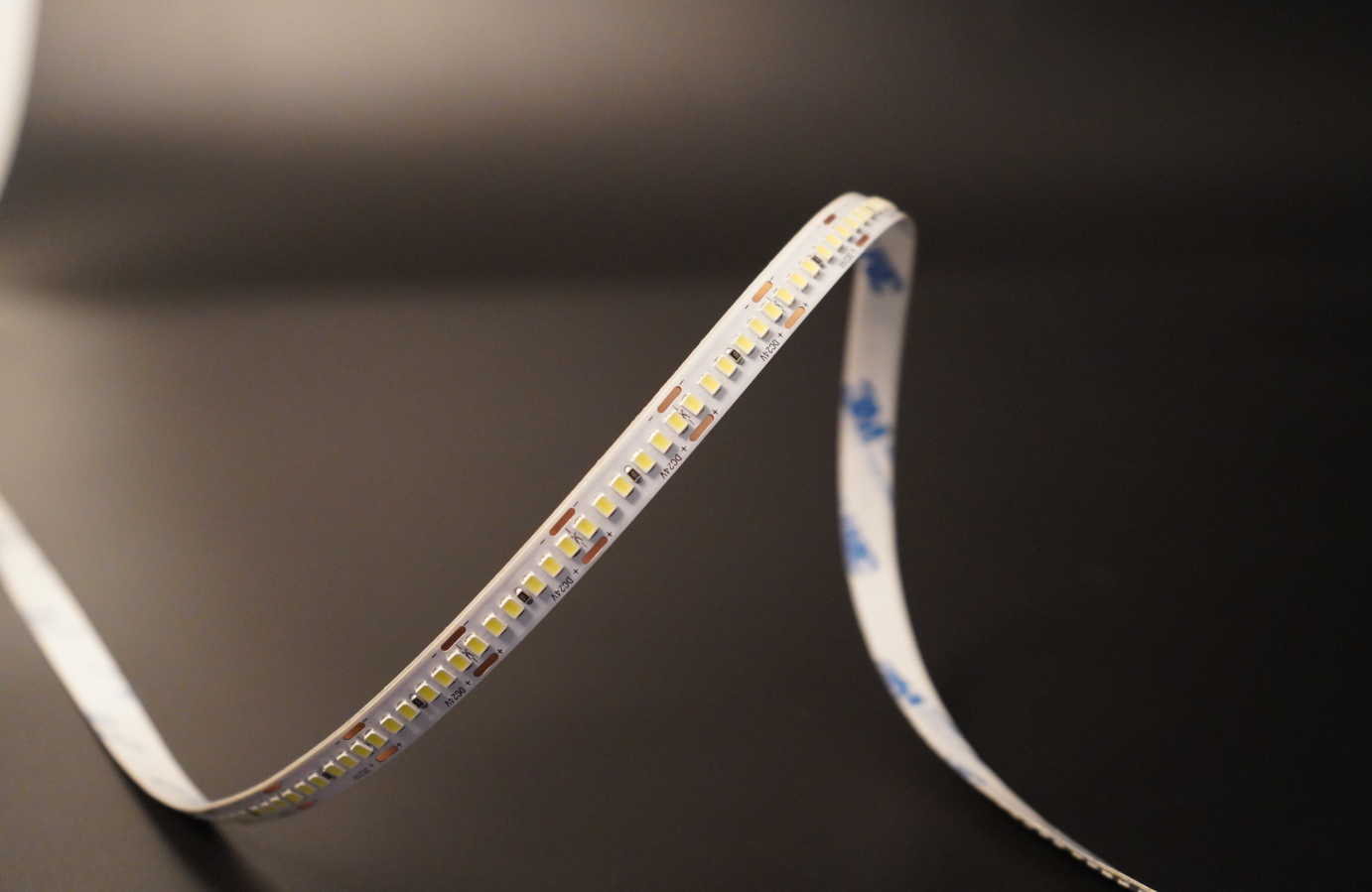
Comparing LED lighting products is rarely a simple matter of brightness. In a single manufacturer's catalog, a buyer can meet linear strips for architectural profiles, full-spectrum tapes for color-critical displays, magnetic track fixtures for retail accents, smart color strips for hospitality environments, and decorative LEDs for background lighting. The models in this article differ by voltage, power, color rendering index (CRI), LED density, PCB width, material, and intended use. A fair way to assess them is to connect those numbers to the space being lit, not to a generic sense of quality.
Why LED Lighting Quality Is Difficult To Compare
An LED lighting product is not a single component. CRI and luminous flux describe light quality, but LED density and PCB construction influence uniformity, thermal behavior, and current carrying capacity. Voltage and driver compatibility define the electrical system. IP rating and physical construction determine where the product can be installed. Because of that, comparing two products by only one figure, such as wattage, often produces misleading conclusions.
The global market makes this more visible. The total LED lighting market was valued at around USD 106.9 billion in 2025 and is projected to reach roughly USD 197 billion by 2033, according to Grand View Research. The commercial lighting segment was estimated at about USD 47.54 billion in 2024. Buyers are selecting from an increasingly broad range of LED lighting systems, which is why interpretation of specifications matters as much as the specifications themselves.
A Useful Reference Set: Five XPUP Models
One coherent set to examine is Zhongshan Xiangpai (XPUP) Lighting Technology Co., Ltd., a source manufacturer established in 2012 in Zhongshan City, the lighting capital of China. The company focuses on LED strips and linear lighting products, exports to more than 170 countries and regions, and states that export business accounts for 50 percent of total sales. Its product portfolio includes high- and low-voltage flexible LED strips, COB LED strips, RGB and RGBCW smart color strips, outdoor waterproof strips, commercial LED strips, smart dimmable ambient strips, and related accessories.
The five models used here are DK3-DC24V-2835-240D-9.3mm, XP-BD18DC24V-2835-140D-8MM, XP-CX-18, XP-SM-DC24V-5050-10MM, and XP-ZS-DC24V-2835-8MM. Each is positioned for a different lighting role, and that is precisely why they make a useful basis for discussing quality. XP-BD18 and XP-SM support OEM and ODM services in their product data, as do DK3 and XP-CX-18. The manufacturer also lists multiple patents, including original design patents for the C19 and C20 series LED strips.
| Model | Product type | Voltage | Power | CRI | Optical structure | PCB or material | Stated applications |
|---|---|---|---|---|---|---|---|
| DK3-DC24V-2835-240D-9.3mm | Linear lighting | 24V | 15W | Ra≥80 | 240 LEDs/m | 9.3mm double-layer copper PCB | Restaurants, interior design, office buildings, apartments, museums and galleries |
| XP-BD18DC24V-2835-140D-8MM | Full spectrum lighting | 24V | 12W | Ra≥97 | 140 LEDs/m | 8mm double-layer copper PCB | Museums and galleries, interior design, luxury retail, jewelry stores, education, shopping malls |
| XP-CX-18 | Magnetic track lighting | 48V | 30W | Ra≥90 | Beam angle 120 degrees | Aluminum and PC, 8mm PCB | Retail, shopping malls, interior design, exhibition and events, jewelry stores |
| XP-SM-DC24V-5050-10MM | Smart lighting | 24V | 12W | Ra≥90 | 60D or 120D LEDs per meter | 10mm double-layer copper PCB | Aparthotels, restaurants, hospitality, interior design, architecture, shopping malls |
| XP-ZS-DC24V-2835-8MM | Decorative lighting | 24V | 10W | Ra≥80 | 60D or 140D LEDs per meter | 8mm double-layer copper PCB | Hospitality, hotels, restaurants, aparthotels, retail, shopping malls, interior design, architecture |
The table does not say that one row is better than another. It says that the optical task and the installation environment should be defined before selecting a product. A high-power magnetic track light and a high-density flexible strip are not substitutes for each other.
Five Product Profiles
DK3-DC24V-2835-240D-9.3mm: High-Density Linear Light
DK3 belongs to the linear lighting category. It operates at 24V DC with a power rating of 15W, uses SMD 2835 LEDs at a density of 240 LEDs per meter, and has a 9.3mm double-layer copper PCB. Its available color temperatures are 3000K, 4000K, and 6500K. CRI is listed as Ra≥80 and the ingress protection rating is IP20.
In the supplied product information, DK3 is described as high density, with uniform light emission and no grainy appearance, making it suitable for indoor lighting strips and black profiles. Its listed end-use industries include restaurants, interior design, office buildings, apartments, museums, and galleries. From a buyer perspective, this combination points toward spaces where a clean, continuous line of light is more important than maximum color rendering.
XP-BD18DC24V-2835-140D-8MM: Full Spectrum for Color-Sensitive Spaces
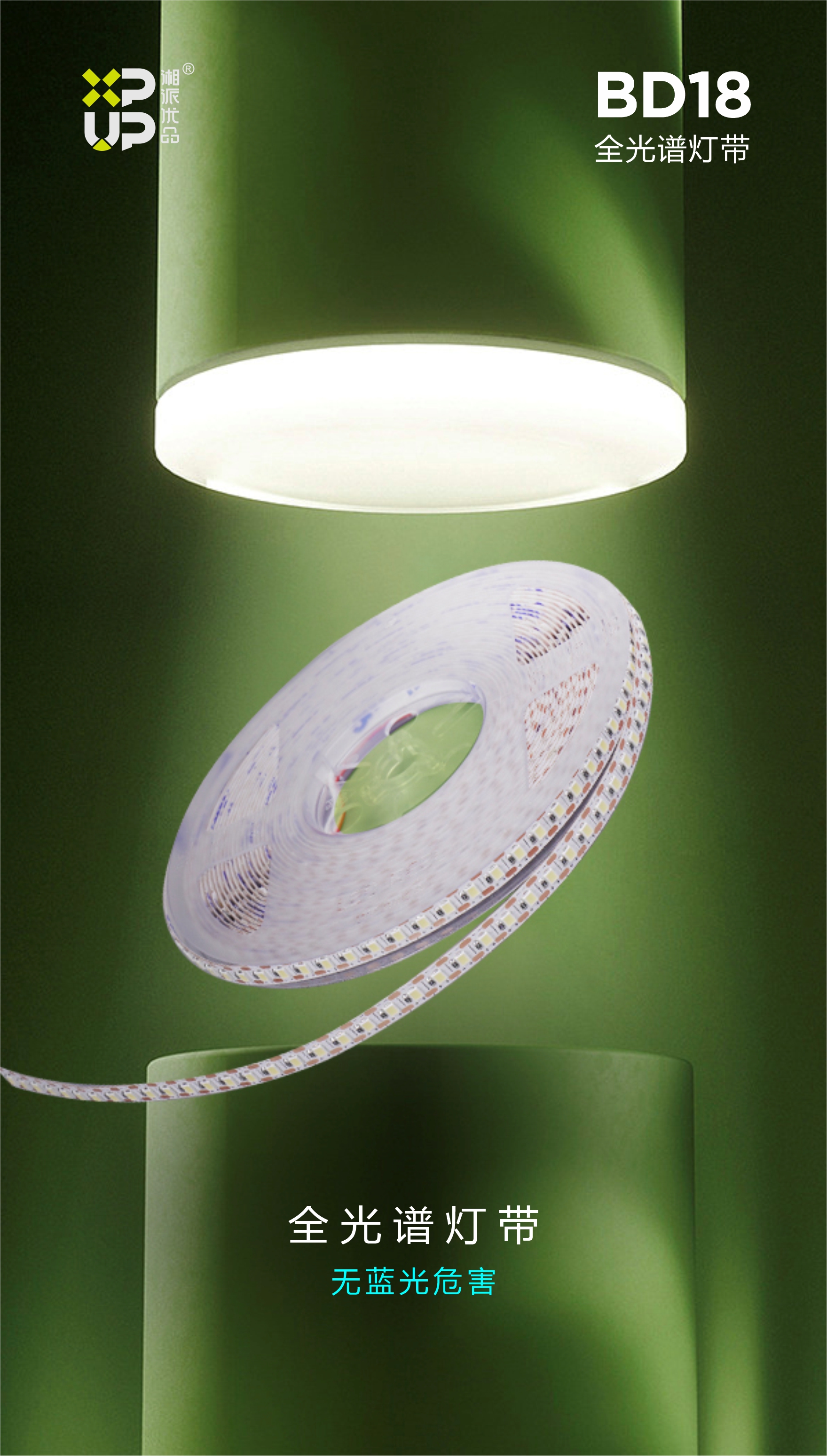
XP-BD18 is the model with the highest CRI in this comparison set. It is classified as full spectrum lighting, operates at 24V, consumes 12W, and is built with SMD 2835 LEDs at 140 LEDs per meter. The product data lists CRI Ra≥97, color temperatures from 2700K to 6000K, and a luminous output of 55 to 65 lumens per LED. Its PCB is 8mm double-layer copper, and the IP rating is IP20.
XP-BD18 is specified for museums and galleries, interior design, luxury retail, jewelry stores, education, and shopping malls. The product description also notes that each LED can be used as a cut point for various lengths. For buyers who source lighting for display cases, jewelry counters, or projects where surface color matters, the Ra≥97 value can be a more meaningful quality benchmark than wattage.
XP-CX-18: Magnetic Track Lighting With a Different Electrical Profile
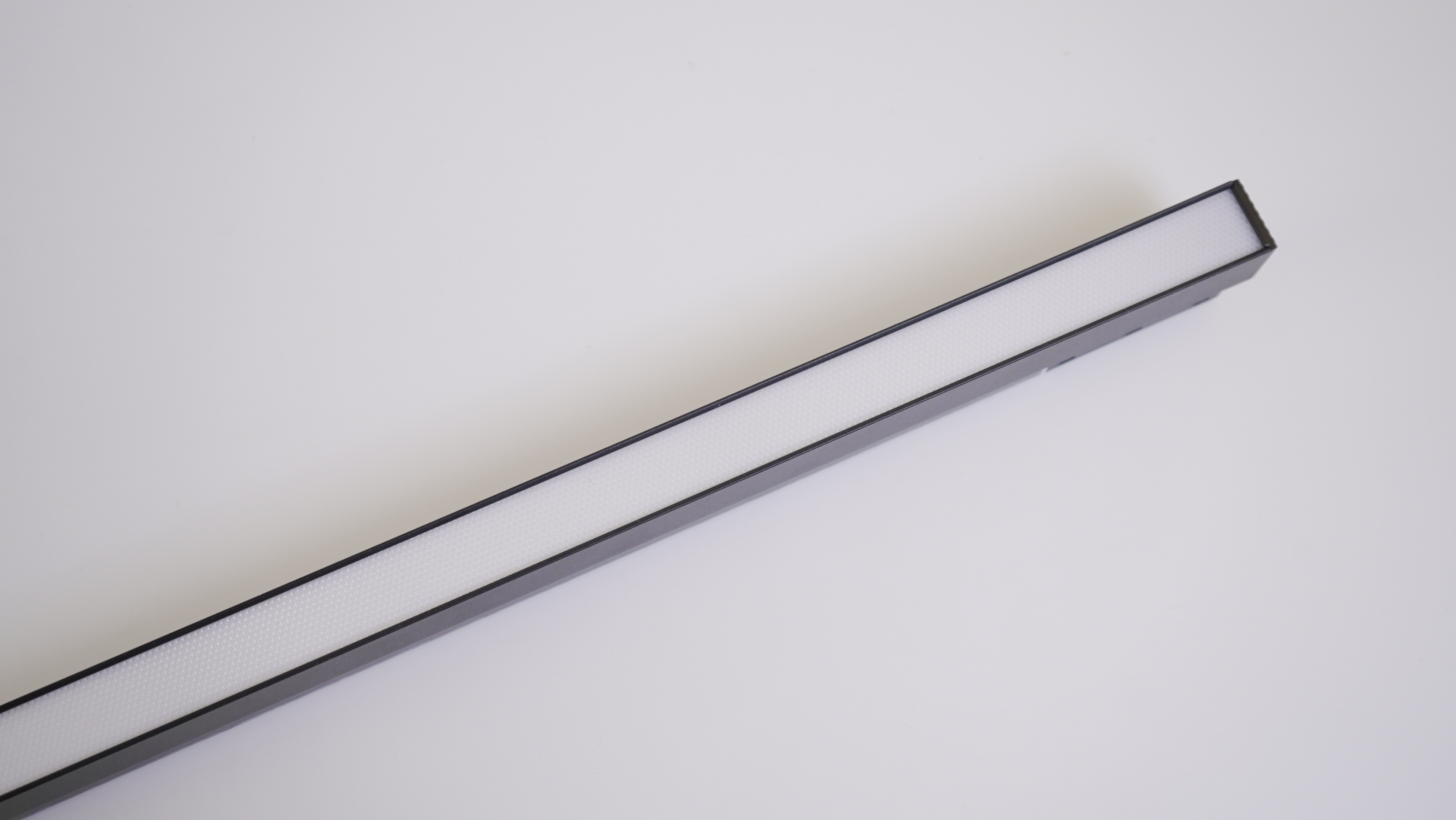
XP-CX-18 is not a flexible strip. It is classified as magnetic track lighting, and its product data lists a voltage of 48V, power of 30W, CRI Ra≥90, and a beam angle of 120 degrees. The construction material is aluminum plus PC, with an 8mm PCB. It is listed for retail, shopping malls, interior design, exhibition and events, jewelry stores, and similar display-driven environments.
The product information also states that XP-CX-18 is widely used in commercial places such as clothing stores, jewelry stores, exhibition halls, hotels, and clubs. The distinction matters to buyers: a 48V system needs a different power architecture than a 24V strip system. Comparing this model with DK3 on watts alone would ignore the fact that they are solving different project problems.
XP-SM-DC24V-5050-10MM: Smart Lighting for Layered Ambience
XP-SM is classified as smart lighting. It runs at 24V, consumes 12W, and is available with RGB or white color temperatures including 3000K, 4000K, and 6000K. The product uses SMD 5050 or 2835 LEDs with densities of 60D or 120D per meter. The PCB is 10mm double-layer copper, and the IP rating is IP20.
XP-SM is listed for aparthotels, restaurants, hospitality, interior design, architecture, and shopping malls. The selling points in the product information include adjustable brightness and speed modes, breakpoint resume, and 20 meters non-voltage-drop. For a project that needs to transition between static white light and more expressive color scenes, the specification profile is different from that of a linear-only strip.
XP-ZS-DC24V-2835-8MM: Decorative Lighting for Background Scenes
XP-ZS is a decorative lighting model. It operates at 24V, has a power rating of 10W, and uses SMD 2835 or 5050 LEDs. It is available at 60D or 140D per meter, with CRI Ra≥80 and color temperature options from 2700K to 6000K plus RGB. Its PCB is 8mm double-layer copper and the IP rating is IP20.
The stated application scope includes hospitality, hotels, restaurants, aparthotels, retail, shopping malls, interior design, and architecture. Product data describes it as suitable for background lighting decoration in places such as KTV, clubs, and gym rooms, with brightness and speed modes that can be adjusted. In a buyer comparison, XP-ZS is better understood as a flexible visual tool than as an optical workhorse for color-critical surfaces.
How To Weigh Performance Before Choosing
When these five products are evaluated in parallel, a small set of parameters explains most of the difference in positioning: CRI, LED density, voltage, physical construction, and intended environment. The most sensible purchasing process starts by deciding which of these parameters matters most for the application.
- Color rendering: XP-BD18 has the highest listed CRI in the set, Ra≥97. XP-CX-18 and XP-SM are both listed at Ra≥90. DK3 and XP-ZS are listed at Ra≥80. For jewelry stores, art spaces, and luxury retail, a buyer should not accept a color rendering requirement as an afterthought. For simple ambient lines that are not used to evaluate goods, Ra≥80 may be sufficient.
- Optical continuity: DK3 uses 240 LEDs per meter and is described in the product data as having uniform light emission and no grainy appearance. That makes it relevant for applications where the LED strip is visible inside a profile or where a continuous line is the goal.
- Voltage and system design: Four of the five models operate at 24V. XP-CX-18 operates at 48V and is a magnetic track fixture. A buyer planning a large installation needs to verify that the power supply and control system match the voltage of the chosen model.
- Physical construction: All four strip models in this set use double-layer copper PCB. XP-CX-18 is made with aluminum and PC, reflecting a more rigid product type intended for track mounting.
- Customization and brand programs: The XPUP portfolio includes multiple OEM and ODM capable models, and the company operates a dedicated R&D laboratory with a team of six engineers. Buyers who need private-label supply or custom electrical parameters should ask how a specific model can be adjusted during development.
Traditional Lighting Solutions and LED Linear Systems
Traditional options such as recessed downlights, fluorescent troffers, compact fluorescent lamps, and halogen spots still have legitimate roles. They can provide familiar photometric performance, established dimming infrastructure, and in some cases higher per-point output. For buyers who need one fixture to cover a wide area, those products may be simpler to specify.
LED strip and linear lighting systems are generally chosen when the design requires a continuous line, indirect light, hidden light sources, or a low-profile integration into architecture. A strip can follow a cove or a cabinet edge in ways that a round downlight cannot. That is why the industry now separates linear lighting from general downlighting in many project specifications.
At the same time, LED strip lighting has limits that buyers must accept. Most of the models above are IP20, which is not a water-resistant rating. The application data for indoor LED lighting in this catalog advises use in dry indoor environments, avoiding covering the product with objects and keeping it away from chemically corrosive environments. A high-CRI strip is not automatically suitable for an outdoor facade or a wet area. The quality of the LED itself cannot compensate for an incompatible power supply, incorrect mounting profile, or unprotected installation environment.
Another boundary is that CRI and wattage alone do not prove long-term consistency. Buyers comparing these five products should confirm the specific datasheet version and, where possible, request samples and test the products with the actual driver and control system intended for the project.
Market Signals That Make This Comparison Relevant
Third-party market data suggests that LED lighting choices are becoming more application-specific rather than reduced to one generic LED source.
The linear lighting market was valued at about USD 30.09 billion in 2025, with an 11.42 percent CAGR projected through 2032, according to Maximize Market Research. That growth aligns with the increasing use of LED strips and linear profiles in architectural interiors. The magnetic track lighting system market is estimated at USD 2.8 billion in 2025, with a CAGR of 7.6 percent expected through 2033, according to Dataintelo. This helps explain why a product like XP-CX-18 sits in a separate specification category from flexible strip lighting.
The smart lighting segment is also relevant. The global smart LED lighting market was valued at USD 27.3 billion in 2024, according to Grand View Research, and wireless connectivity such as Zigbee and Bluetooth Mesh captured 35 percent of the smart lighting market in the same period, according to Precedence Research. Buyers comparing XP-SM with non-smart strip products are not just choosing between colors; they are choosing whether the lighting needs to fit into a control ecosystem.
The hospitality lighting market is estimated at USD 14.2 billion in 2025, according to Dataintelo. Hospitality projects often require layered lighting: cold white general light, warm accent light, and RGB scenes. That helps explain why a single project might contain multiple models rather than one universal LED strip.
Limitations of a Spec-Sheet Comparison
A comparison based on catalog data has a clear restriction. It cannot show real LED binning, driver interaction, thermal performance, sample consistency, or long-term lumen maintenance. Those factors are verified only through physical samples and testing.
Buyers should also be careful about memory-based specification claims. For example, in the available source material, DK3 is listed with CRI Ra≥80, while the CRI Ra≥97 value belongs to XP-BD18. If someone evaluates DK3 using the CRI of another model, the entire project requirement can be misstated. The job of a third-party comparison is not to repeat what a product is loosely called in conversation, but to check what is written in the product data.
There is also a limit to what the model name can tell a buyer. Models can be customized, and XPUP supports OEM and ODM services on several models, so the final voltage, color temperature, PCB, or packaging used by an importer may differ from the standard specification shown in public catalogs. For procurement integrity, buyers should verify the current datasheet before issuing a purchase order.
What Buyers Should Evaluate Next
The most useful next step is to convert the five-model comparison into a project-specific checklist. Determine first whether the space needs linear light, display light, decorative color light, or a smart control layer. Then confirm which model type matches that need. After that, review CRI, voltage, LED density, IP rating, and material compatibility.
For an office or apartment linear installation, DK3 offers high density and a no-grainy appearance, but it is not the highest-CRI product in this set. For a jewelry display or gallery, XP-BD18 with Ra≥97 is the model that most clearly supports color sensitive viewing. For a retail store requiring focused accent beams from a track system, XP-CX-18 is built as a track product with a 120-degree beam angle, different from flexible strip architecture. For environments that need dynamic color and adjustable modes, XP-SM and XP-ZS both provide decorative flexibility, though they differ in LED density and CRI.
When quality is discussed in a supply tender, the evaluation language should be as specific as the product language. Instead of asking for the best LED lighting, a buyer can ask for the model that matches the CRI, environment, voltage, and mounting method of the intended space.
Future Outlook for LED Lighting Quality Expectations
The direction in lighting procurement is not toward one all-purpose strip. Human centric lighting and healthy building criteria are fueling interest in tunable white and full spectrum options. Research Nester estimated the human centric lighting market at USD 3.66 billion in 2024, with a projected CAGR of 17.1 percent through 2036. This kind of demand puts more weight on color temperature range and CRI and less weight on simple luminous efficacy.
Indoor lighting is already the strongest application segment in smart lighting. Precedence Research reported that indoor lighting generated a 66 percent share of the smart lighting market in 2024. For suppliers, this means a model like XP-SM should not be judged in the same way as a basic strip; it is part of a control chain that can include sensors, controllers, and platform choices.
Acoustic lighting is another sign of application-specific growth. ShelfTrend data shows search interest in sustainable acoustic lighting increased by 180 percent in the 2024 to 2025 period, and Global Market Insights estimated the acoustic panel market at USD 8.6 billion in 2025. Lighting products that integrate with acoustic panels may become a larger part of the linear lighting category. Yet the same procurement discipline applies: the lighting source must be confirmed for the environment before it is selected.
FAQ
Which XPUP model in this comparison has the highest CRI?
XP-BD18DC24V-2835-140D-8MM has CRI Ra≥97, which is the highest CRI listed among the five models in this article. DK3 and XP-ZS are listed at Ra≥80, while XP-CX-18 and XP-SM are listed at Ra≥90.
Is a higher CRI always better?
Not for every project. Higher CRI matters more when accurate color perception is part of the application, such as jewelry display, museum lighting, fashion retail, or material evaluation. For simple background lighting or hidden cove lighting, lower CRI can be acceptable and more cost-efficient. CRI should therefore be matched to the task rather than maximized in isolation.
What does IP20 mean for these LED lighting products?
The models described here with IP20 are indoor dry-location products. Manufacturer application data recommends using them in dry indoor environments, not covering the product with objects, avoiding chemically corrosive environments, and using a proper power supply. IP20 does not make them suitable for water exposure or outdoor unprotected installation.
Why is XP-CX-18 compared with LED strips if it is not a strip?
XP-CX-18 is classified as magnetic track lighting, not flexible strip lighting. It is included because buyers often search for complete LED lighting options and need to understand that different form factors require different power systems and mounting structures.
Are DK3, XP-BD18, and XP-CX-18 available for OEM and ODM?
In the product data supplied for this article, DK3, XP-BD18, and XP-CX-18 are listed with OEM and ODM support. XP-SM is also listed with OEM and ODM capability. XP-ZS is presented as a decorative lighting product without an OEM and ODM line in the product specification, so buyers who require private-label modification should confirm the current model status directly with the manufacturer.
Does this article rank XPUP as a top LED lighting manufacturer?
No. This article compares five models so that buyers can understand product differences. It does not claim that XPUP is the best manufacturer, and it does not include competitive rankings beyond the five-model set.
What should a buyer check before selecting between DK3 and XP-BD18?
Check the visual task first. DK3 has a 240 LEDs per meter density and is described as having uniform light with no grainy appearance, making it a good candidate for continuous linear light. XP-BD18 has CRI Ra≥97 and is intended for museums, galleries, jewelry stores, and luxury retail. If color fidelity is the priority, choose XP-BD18; if high-density uniform line light is the priority, DK3 is more aligned with that requirement.
Reference Materials
For more detailed model-level parameters, the public product catalog is available from the manufacturer: 2026 XPUP LED Strip Catalog. The official company website is www.xpupled.com.
Third-party data cited above is included for market context and belongs to the sources named in each reference.
Есть вопросы или нужны дополнительные детали?
Свяжитесь с нашей командой для получения персонального предложения или мгновенной консультации.
Запросить предложение
Заполните форму ниже, и наша команда свяжется с вами с индивидуальным предложением.
Прямой чат WhatsApp
Предпочитаете общаться в реальном времени? Напишите нам в WhatsApp для мгновенной помощи и быстрых ответов.
- Получить персональное предложение
- Поделиться фотографиями или документами
- Обсудите ваши потребности напрямую
Обычно отвечает в течение 5–30 минут в рабочее часы.