
LED Lighting Comparison Framework: DK3, XP-BD18, XP-CX-18, XP-SM, XP-ZS
Buyer Comparison Framework · LED Lighting
Five XPUP LED families, one decision problem: which constraint actually governs the specification — colour rendering, voltage architecture, chip density, ingress protection, or the purchasing and acceptance terms attached to the order.
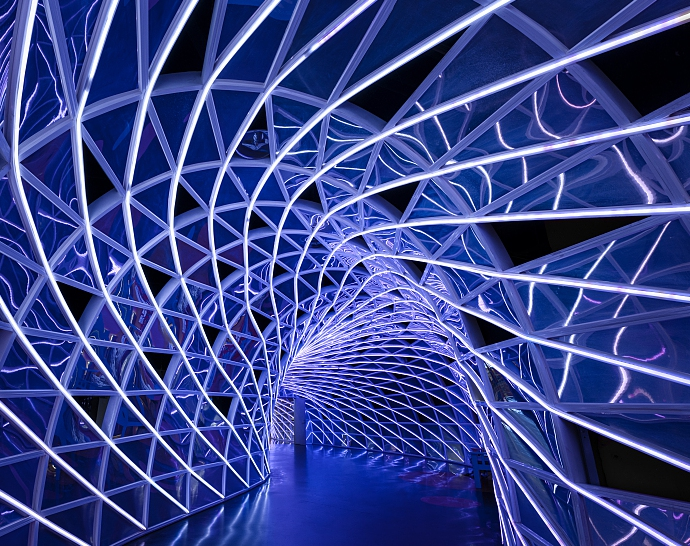
Commercial interior lighting schemes usually combine several LED families in one project, which is where specification mismatches begin.
LED lighting comparisons normally begin with brightness and unit price. Projects more often fail on constraints that were never written down: a display case that renders merchandise flat, a track system specified at the wrong voltage, a decorative run that looks uneven at close range, or a purchase order that cannot be accepted because the ingress rating and acceptance criteria were left as assumptions.
This article sets out a constraint-first comparison framework for five XPUP LED families — DK3, XP-BD18, XP-CX-18, XP-SM and XP-ZS — using the published specification data for each model. The purpose is not to rank the five families against each other. It is to show which constraint decides which project, so that a buyer at the research and evaluation stage can move from a shortlist to a defensible specification.
XPUP — Zhongshan Xiangpai (XPUP) Lighting Technology Co., Ltd. — is an LED strip and linear lighting manufacturer established in 2012 in Zhongshan, China. The company operates a factory of more than 10,000 m² with 80 employees, 6 R&D engineers and an annual output of 35,000,000 m, focused on LED strip, linear, magnetic track and smart control products for lighting brands, engineering contractors and international wholesalers, with an export ratio of 50% concentrated on the EU and USA markets. Its products hold CE and RoHS certification and are exported to more than 170 countries and regions.
Why LED comparisons break down at the specification stage
Most comparison tables list parameters. Fewer explain which parameter overrides the others. In practice, LED strip specification follows a constraint hierarchy, and the order of that hierarchy changes by application type.
In a museum, gallery or jewellery display, colour rendering and beam control outrank power per metre, because the visitor is judging an object, not the light fitting. In a hospitality or entertainment space, uniformity across long runs and control behaviour outrank absolute colour rendering. In an exhibition hall or retail environment with adjustable emphasis lighting, the voltage architecture and the fixture format decide whether the scheme is buildable at all. And in every case, the purchasing terms — minimum order quantity, lead time, customisation scope, warranty and acceptance testing — determine whether the approved specification can actually be delivered.
A buyer comparing LED lighting therefore needs five constraint checks rather than one ranking: colour rendering, voltage architecture, chip density and power, ingress protection and environment, and commercial/acceptance terms. The five XPUP families map cleanly onto those checks, and each one fails a different check first.
The five families at a glance
The table below reproduces the published specification values for the five models. Where a value is not stated in the product specification, it is shown as not specified rather than inferred.
| Model | Product type | Voltage | Power | CRI | PCB width | LEDs/m | CCT options | IP rating |
|---|---|---|---|---|---|---|---|---|
| DK3-DC24V-2835-240D-9.3mm | Linear Lighting | 24V | 15W | Ra≥80 | 9.3mm | 240D | 3000/4000/6500K | IP20 |
| XP-BD18DC24V-2835-140D-8MM | Full Spectrum Lighting | 24V | 12W | Ra≥97 | 8mm | 140D | 2700/3000/3500/4000/5000/6000K | IP20 |
| XP-CX-18 | Magnetic Track Lighting | 48V | 30W | Ra≥90 | 8mm | Not specified | 3000/4000/6000K | Not stated |
| XP-SM-DC24V-5050-10MM | Smart Lighting | 24V | 12W | Ra≥90 | 10mm | 60D / 120D | RGB / 3000/4000/6000K | IP20 |
| XP-ZS-DC24V-2835-8MM | Decorative Lighting | 24V | 10W | Ra≥80 | 8mm | 60D / 140D | 2700–6000K / RGB | IP20 |
Three observations follow directly from the table. First, colour rendering is not uniform across the range: it runs from Ra≥80 to Ra≥97, which is a material difference in colour-critical work. Second, four of the five families run on 24V DC while XP-CX-18 operates at 48V, meaning it belongs to a different system architecture rather than a different strip. Third, XP-CX-18 is the only model in the group whose specification states a beam angle (120°) and a housing material (aluminium + PC) — the markers of a fixture rather than a bare strip.
Constraint 1 — Colour rendering: Ra≥97, Ra≥90 and Ra≥80 are not interchangeable
Colour rendering describes how faithfully a light source reveals the colour of the object it illuminates. In the XPUP range, three distinct levels are published: Ra≥97 on XP-BD18, Ra≥90 on XP-CX-18 and XP-SM, and Ra≥80 on DK3 and XP-ZS.
XP-BD18DC24V-2835-140D-8MM is the full spectrum model and the only family in this comparison specified at Ra≥97. Its stated applications are museums and galleries, luxury retail, jewellery stores, education and shopping malls. The specification also notes ultra 5mm/8mm linear formats with each LED cut available for various lengths, high brightness, good flexibility with strong bending resistance, and suitability for jewellery stores and display cases. For a buyer, the practical reading is straightforward: where the object being lit is the product — a gemstone, a fabric, a printed surface, an artefact — Ra≥97 is the specification to defend in the tender document.
XP-CX-18 and XP-SM-DC24V-5050-10MM sit at Ra≥90, a level that suits commercial environments where colour quality matters but the primary buying criterion is adjustability, control or brightness. XP-CX-18 is described for retail, shopping malls, exhibition and events and jewellery stores, with an emphasis on making commodities and exhibits appear more intuitive, enhancing material texture and creating an artistic atmosphere. XP-SM is described for aparthotels, restaurants, hospitality, interior design, architecture and shopping malls.
DK3-DC24V-2835-240D-9.3mm and XP-ZS-DC24V-2835-8MM are specified at Ra≥80. That is a general-illumination level, appropriate for linear architectural runs, office and residential interiors, and decorative background lighting, but not for a display case where colour judgement is part of the commercial proposition.
Constraint 2 — Voltage architecture: 24V strip runs versus the 48V XP-CX-18
Voltage is frequently treated as a footnote in LED comparisons. It is better understood as an architectural decision, because it determines which drivers, tracks and connectors the project can use.
DK3, XP-BD18, XP-SM and XP-ZS are all specified at 24V DC. XP-SM and XP-ZS add a further detail relevant to long runs: a 20M non voltage drop figure and a breakpoint resume function, both listed in their selling points. For a buyer planning continuous coving, cove or perimeter runs, those two properties reduce the number of injection points and simplify commissioning.
XP-CX-18 is specified at 48V with 30W — the highest power figure in this group, and the only model in the comparison built on a magnetic track architecture with an aluminium and PC housing and a 120° beam angle. Its specification describes an adjustable beam angle and applications in clothing stores, jewellery stores, exhibition halls, hotels and clubs, together with residential use in living rooms, bedrooms and study rooms.
The consequence for procurement is that XP-CX-18 should not be compared on a per-metre strip basis with the other four families. It requires a compatible 48V track and driver ecosystem, and it is selected when the project needs relocatable, directional emphasis lighting rather than a continuous linear run. A buyer who evaluates it against 24V strip pricing will draw the wrong conclusion; a buyer who evaluates it against the cost of achieving the same adjustability with fixed downlights will draw a more useful one.
Constraint 3 — Chip density and power: 240D, 140D and the uniformity question
Chip density — the number of LEDs per metre — is the parameter most often used as a proxy for quality, and the one most often misread. Density influences uniformity and the appearance of a diffused run; it does not by itself determine brightness, colour rendering or suitability.
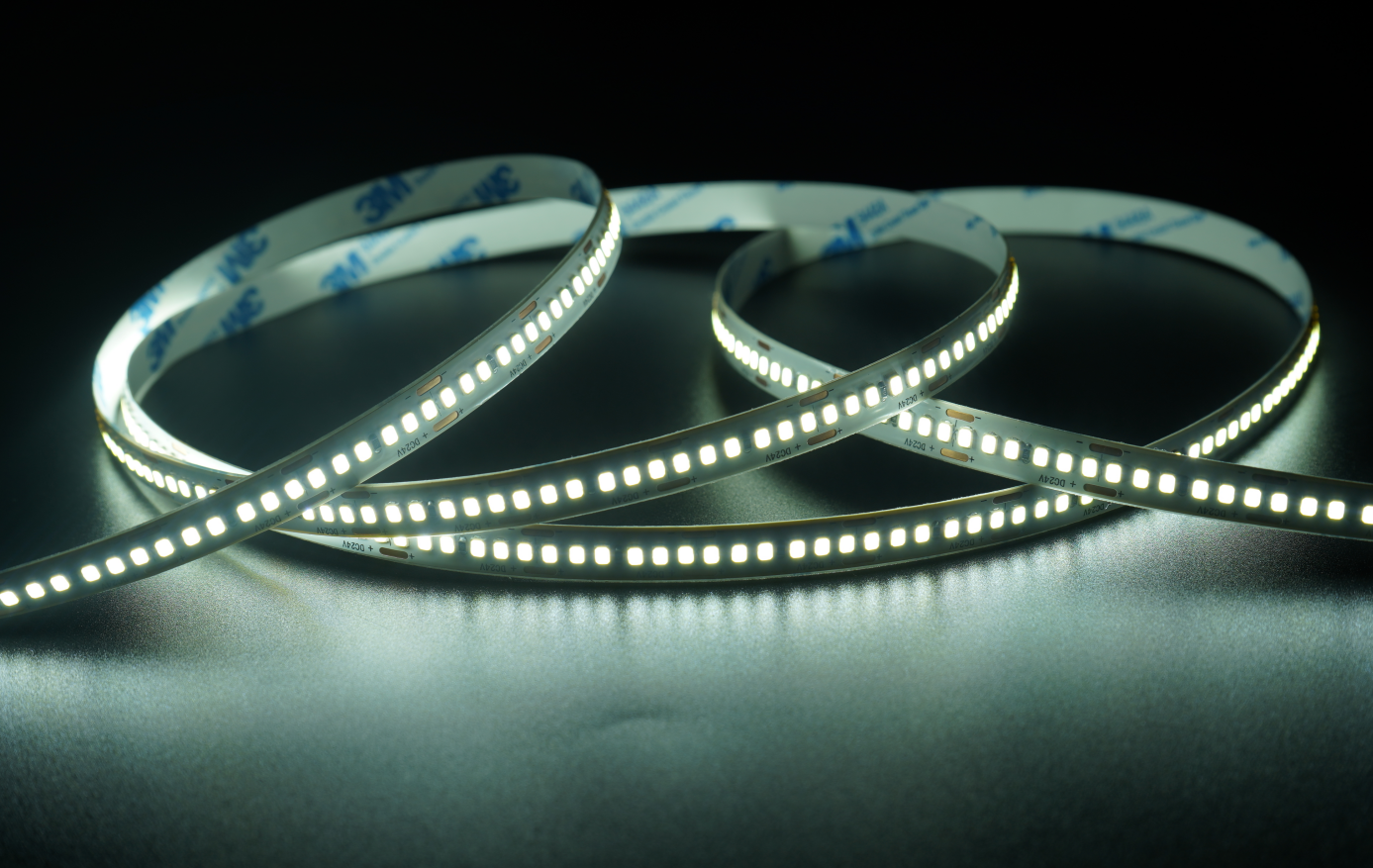
DK3 at 240 LEDs per metre is specified for uniform emission without a grainy appearance, including use in black profiles.
DK3-DC24V-2835-240D-9.3mm carries the highest density in the group at 240D, on a 9.3mm double-layer copper PCB, at 15W. Its selling point is explicit: high density, uniform light emission and no grainy appearance, making it suitable for indoor lighting strips and black profiles. That combination — high density plus a wider PCB — is what a buyer should specify when the strip will be visible through a narrow diffuser or mounted in a dark channel where individual diodes would otherwise show.
XP-BD18 sits at 140D on an 8mm PCB at 12W, with a stated 55–65 LM/LED and colour temperatures spanning 2700K to 6000K. The lower density is paired with higher colour rendering and greater flexibility, including strong bending resistance and per-LED cut points for varied lengths. Density and flexibility trade against each other here, and the choice depends on whether the installation is a straight run behind a diffuser or a curve that must follow a radius.
XP-ZS-DC24V-2835-8MM offers 60D or 140D at 10W with 30–35 LM/LED and Ra≥80, positioning it as a decorative and background-lighting strip rather than a primary light source. XP-SM-DC24V-5050-10MM offers 60D or 120D at 12W on a 10mm PCB with 55–65 LM/LED and Ra≥90, in RGB or fixed white. XP-CX-18's 30W output is delivered through a track fixture at a 120° beam rather than through a linear run.
Constraint 4 — Ingress protection and operating environment
Ingress protection is the constraint most often omitted from comparison tables and most expensive to correct after installation.
In this group, DK3, XP-BD18, XP-SM and XP-ZS are all specified IP20. IP20 describes protection against solid objects above a defined size and no protection against water, which corresponds to dry indoor use. XPUP's published application data reinforces this: the working conditions specified for its indoor project types include an operating temperature range of −20°C to +45°C, indoor dry environment, no covering with objects, distance from chemically corrosive environments, and the requirement to use a proper power supply or adapter to avoid overload.
XP-CX-18 is the exception in the comparison because its published specification sheet lists an aluminium and PC housing and a 120° beam angle but does not state an IP rating. A buyer should therefore request the IP rating in writing for that model rather than assume it matches the strip families — a small administrative step that prevents a common specification error.
Where a project genuinely requires wet or outdoor performance, none of these five families is the correct answer. XPUP's outdoor references sit with separately specified IP68 products, used in commercial facade and landscape lighting projects in the Netherlands and in hotel indoor and outdoor lighting in Germany. That distinction matters in evaluation: an IP20 strip specified for a terrace or bathroom will fail at commissioning or, worse, two seasons later.
Constraint 5 — Purchasing terms, customisation scope and acceptance criteria
A specification is only useful if it can be ordered, inspected and accepted. This is where a comparison framework usually stops short, and where the commercial terms should be written into the same document as the technical values.
Commercial terms published for XPUP OEM and ODM programmes
- Minimum order quantity: 2,000 metres.
- Lead time: 18–22 days.
- Monthly capacity: 3,000,000 metres.
- Quality control: 100% test.
- Export markets served by these programmes: EU, Asia and US.
- After-sales: dedicated technical support and remote debugging, a 2-year warranty, and customised parameter guidance on OEM orders; online remote support, general technical guidance and a 2-year standard warranty on ODM orders.
The customisation scope differs meaningfully between the two modes and should be matched to the buyer's actual intent. OEM covers voltage, logo, power, dimensions, materials, hardware configuration, internal circuit, colour, factory specifications, nameplate and label. ODM covers exterior colour scheme, outer packaging box, label, brand information, model name and material details. In short, OEM is for buyers changing the product; ODM is for buyers changing the presentation of an existing product under their own brand.
Certification evidence to request before approval
XPUP holds CE and RoHS certification for its LED low-voltage and high-voltage light strip series for the EU market, issued by PTC TESTING. The published certificate references are specific enough to be checked rather than accepted on trust:
| Directive | Certificate number | Issue date | Key standards cited |
|---|---|---|---|
| CE — LVD | PTC22122900901S-LD01; PTC22122900902S-LD01 | 2023-04-04 | EN IEC 62031:2020 + A11:2021; IEC TR 62778:2014; EN 62471:2008 |
| CE — EMC | PTC22122900901E-EMB01; PTC22122900902E-EMB01 | 2023-03-09 | EN IEC 55015:2019+A11:2020; EN 61547:2009; EN IEC 61000-3-2:2019+A1:2021; EN 61000-3-3:2013+A1:2019 |
| CE — RoHS | PTC22122900903C-EN01; PTC22122900905C-EN01 | 2023-04-23 | IEC 62321 series (parts 1, 2, 3-1, 3-2, 4, 5, 6, 7-1, 7-2, 8) |
For a buyer in the evaluation stage, the useful move is to cross-check that the certificate scope explicitly covers the product type being ordered. All three documents name the LED low-voltage and high-voltage light strip series as their scope, which covers the strip families in this comparison; a track-based product such as XP-CX-18 should be confirmed against the same documentation during sampling rather than assumed.
A workable acceptance checklist
| Check | What to record | Applies to |
|---|---|---|
| Colour rendering | Measured Ra against the specified value (97, 90 or 80) | All five families |
| CCT consistency | Batch-to-batch CCT and brightness consistency across the ordered CCT values | All five families |
| Power and density | W/m and LEDs/m against the model designation | DK3, XP-BD18, XP-SM, XP-ZS |
| Beam and housing | Beam angle and housing material confirmation | XP-CX-18 |
| Ingress rating | Written IP confirmation and installation environment statement | All five families |
| Control behaviour | Dimming response, mode switching, breakpoint resume on long runs | XP-SM, XP-ZS; XP-CX-18 with track control |
| Compliance file | LVD, EMC and RoHS certificates matched to the ordered product type | All five families |
Mapping five application types to five families
The framework becomes practical when it is read against the application data published for each family.
Museums, galleries and luxury retail
XP-BD18 is the specification-led choice: Ra≥97, 2700K to 6000K, 140 LEDs per metre at 55–65 LM/LED, designed for jewellery stores and display cases, and available in ultra 5mm and 8mm formats with per-LED cut points. Where the project also needs relocatable, directionally adjustable emphasis within the same room, XP-CX-18 at Ra≥90 with a 120° beam angle and adjustable beam is the natural companion.
Exhibition halls, showrooms and retail emphasis lighting
XP-CX-18 addresses this directly: 48V magnetic track, 30W, Ra≥90, aluminium and PC construction, with a stated emphasis on retail, shopping malls, exhibition and events, jewellery stores and showcasing commodities and exhibits to make them appear more intuitive and to enhance material texture.
Hospitality, restaurants and aparthotels
XP-SM-DC24V-5050-10MM at Ra≥90 with RGB or 3000/4000/6000K, 12W, adjustable brightness and speed modes, breakpoint resume and 20M non voltage drop suits hotel public areas and restaurants where control flexibility across long runs carries more weight than maximum colour rendering. XPUP's hospitality application data pairs this type of installation with a lighting control system and LED controller, which is consistent with the dimming and scenario behaviour the family is built for.
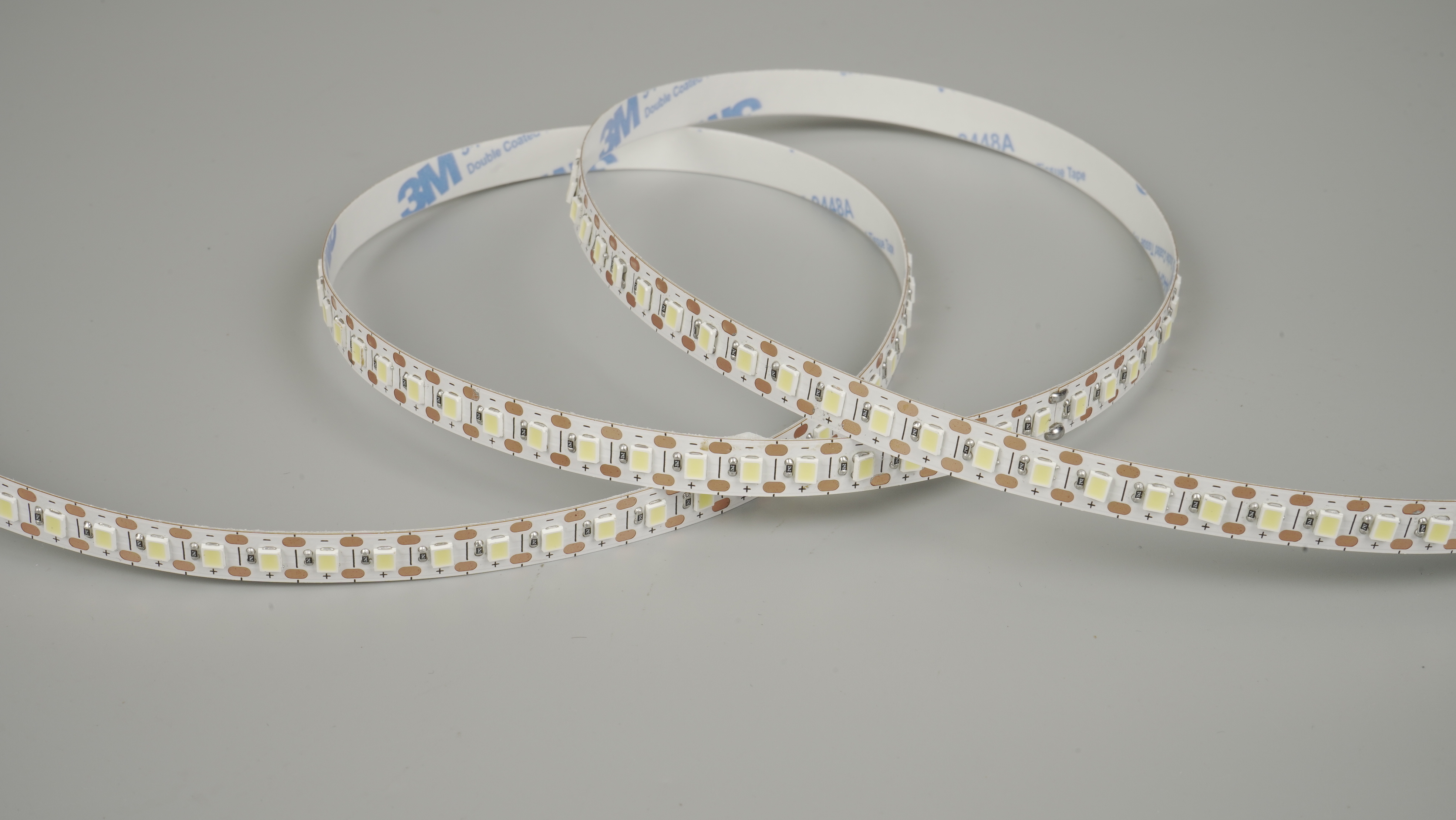
XP-BD18 at Ra≥97 is the family positioned for museums, galleries, jewellery stores and display cases.
Decorative and entertainment background lighting
XP-ZS-DC24V-2835-8MM at 10W, Ra≥80, with 60D or 140D density and RGB or 2700–6000K options, is described for hospitality, hotels, restaurants, retail, shopping malls, interior design and architecture, and specifically for KTV, club and gym background lighting decoration with adjustable modes and breakpoint resume.
Linear architectural, office and residential runs
DK3-DC24V-2835-240D-9.3mm serves restaurants, interior design, office buildings, apartments and museums and galleries at 15W and Ra≥80, with 240 LEDs per metre for uniform emission without grainy appearance, including black profile installations.
Where this framework stops: limits buyers should respect
A comparison framework is only credible if it states its own boundaries.
- IP20 sets a hard environmental ceiling. Four of the five families are IP20 and XPUP's indoor application data specifies dry indoor conditions. None of them is a substitute for an IP68 product in a facade, terrace or wet interior.
- XP-CX-18 is not a like-for-like strip. Its 48V architecture, 30W track format and 120° beam angle mean it must be costed and specified as a system, not as a linear metre of strip.
- Ra≥80 families are not colour-critical solutions. DK3 and XP-ZS are appropriate for general and decorative lighting; specifying them for merchandise display is a known and avoidable error.
- Density is not a quality score. 240D solves diode visibility; it does not by itself deliver higher colour rendering, and XP-BD18 demonstrates the opposite trade.
- Specification data is a starting point, not a test report. Values such as CRI, W/m and LEDs/m should be verified against the sample and the acceptance checklist before mass production.
- This comparison covers five families only. XPUP's wider portfolio includes COB, RGB/RGBCW, high-voltage and waterproof ranges that are outside the scope of this framework and should be compared against a different constraint set.
What is changing in LED specification practice
Three shifts are visible in the way projects are being specified, and each one changes what a buyer should ask for.
First, control is moving from an accessory to a specification line item. XPUP's published application data lists smart lighting control systems, LED controllers and smart controllers as matched equipment across hospitality, luxury residential, commercial and residential ambient project types, and its case references describe dimmable COB installations delivering flicker-free lighting in German café and retail environments. A buyer who specifies colour rendering but not control behaviour will still face a commissioning problem.
Second, colour rendering expectations are being written into briefs rather than assumed. The existence of Ra≥97, Ra≥90 and Ra≥80 options in one manufacturer's range reflects that buyers now segment projects by colour criticality instead of accepting a single general-purpose strip across an entire building.
Third, magnetic track and voltage architecture are becoming a design decision rather than an electrical afterthought. The 48V XP-CX-18 sits alongside four 24V strip families precisely because projects increasingly combine continuous linear light with relocatable emphasis lighting in the same space.
Future outlook
The practical direction for LED buyers is towards constraint documentation rather than product ranking. Specifications that name the governing constraint — colour rendering for display, uniformity for diffused runs, voltage architecture for adjustable schemes, ingress rating for the environment, and acceptance criteria for the order — survive value engineering. Specifications built from a feature list do not.
For manufacturers, the implication is that product families need to be legible as decision tools. XPUP's five families are distinguishable on published data alone: Ra≥97 for colour-critical display, 48V track for adjustable emphasis, Ra≥90 smart control for hospitality, 240D density for uniform linear runs, and Ra≥80 decorative output for background atmosphere. Buyers who map those five attributes to five project types will shortlist faster and dispute less at acceptance.
FAQ
What is the practical difference between CRI Ra≥97 and Ra≥90 when choosing an LED strip for a retail or museum project?
Ra≥97 is specified only on XP-BD18DC24V-2835-140D-8MM, which XPUP positions for museums and galleries, luxury retail, jewellery stores, education and shopping malls, with application notes covering display cases. Ra≥90 is specified on XP-CX-18 and XP-SM-DC24V-5050-10MM, both positioned for commercial, retail, exhibition and hospitality environments where adjustability and control matter alongside colour quality. Where the visitor is judging an object's colour, Ra≥97 is the defensible specification; where the space is being lit for atmosphere or emphasis, Ra≥90 covers the requirement.
Why does XP-CX-18 operate at 48V when the other four families are 24V?
XP-CX-18 is a magnetic track lighting product, not a bare strip. Its published specification lists 48V, 30W, Ra≥90, an 8mm PCB, 3000/4000/6000K, an aluminium and PC housing and a 120° beam angle, with support for OEM and ODM. The other four families — DK3, XP-BD18, XP-SM and XP-ZS — are 24V DC strip products at 10W, 12W and 15W. The voltage difference reflects the system each product belongs to, so a 48V track installation requires a compatible track and driver ecosystem rather than a 24V strip driver.
Does higher chip density such as 240D always produce better light than 140D?
Not necessarily. DK3-DC24V-2835-240D-9.3mm runs 240 LEDs per metre at 15W on a 9.3mm PCB and is specified for uniform light emission without a grainy appearance, including black profile installations. XP-BD18DC24V-2835-140D-8MM runs 140 LEDs per metre at 12W on an 8mm PCB with 55–65 LM/LED, but at Ra≥97 and with greater flexibility, bending resistance and per-LED cut points. Density addresses how uniform a diffused run appears; colour rendering, flexibility and power address different requirements. The correct choice depends on which of those the project ranks first.
What are the minimum order quantity, lead time and customisation scope for XPUP OEM and ODM orders?
Both programmes publish a minimum order quantity of 2,000 metres, a lead time of 18–22 days, a monthly capacity of 3,000,000 metres and 100% testing, with a 2-year warranty and remote technical support. OEM customisation covers voltage, logo, power, dimensions, materials, hardware configuration, internal circuit, colour, factory specifications, nameplate and label. ODM customisation covers exterior colour scheme, outer packaging box, label, brand information, model name and material details. OEM suits buyers changing the product itself; ODM suits buyers changing the presentation of an existing product under their own brand.
Can the five families be used outdoors or in wet interior areas?
DK3, XP-BD18, XP-SM and XP-ZS are specified IP20, and XPUP's indoor application data specifies dry indoor environments with an operating temperature range of −20°C to +45°C and a requirement for a suitable power supply. XP-CX-18's specification sheet states an aluminium and PC housing and a 120° beam angle but does not state an IP rating, so that value should be confirmed in writing. XPUP's outdoor references use separately specified IP68 products, including commercial facade and landscape projects in the Netherlands and hotel indoor and outdoor projects in Germany, so outdoor or wet-area requirements should be moved to those products rather than applied to this group.
Working documents
Buyers who need the full model range, including formats outside the five families compared here, can review the 2026 XPUP LED Strip Catalog, published as a downloadable PDF: 2026 XPUP LED Strip Catalog.
Есть вопросы или нужны дополнительные детали?
Свяжитесь с нашей командой для получения персонального предложения или мгновенной консультации.
Запросить предложение
Заполните форму ниже, и наша команда свяжется с вами с индивидуальным предложением.
Прямой чат WhatsApp
Предпочитаете общаться в реальном времени? Напишите нам в WhatsApp для мгновенной помощи и быстрых ответов.
- Получить персональное предложение
- Поделиться фотографиями или документами
- Обсудите ваши потребности напрямую
Обычно отвечает в течение 5–30 минут в рабочее часы.