
LED Lighting Procurement: What Specs and Certifications Matter
LED lighting has moved from a simple energy-saving substitute to a core design and procurement decision. For lighting brands, engineering companies and international wholesalers, buying LED strip lighting now requires verifying a set of technical constraints: EU certifications, electrical parameters, IP ratings, customization possibilities and supplier production capacity. This article is an industry reference for buyers in the research and evaluation stage. It draws on product and factory data from XPUP LED (Zhongshan Xiangpai Lighting Technology Co., Ltd.), a Zhongshan-based LED strip manufacturer serving mid-to-high-end overseas markets, and on verified market data.
Why LED Lighting Requires a More Rigorous Buying Process
The global LED lighting market was valued at USD 106.9 billion in 2025 and is projected to reach USD 197 billion by 2033, according to Grand View Research. The IEA estimates that lighting accounted for roughly 8% of global electricity demand in 2024, about 2,200 TWh. At the same time, 90% of U.S. households reported using LED bulbs for indoor lighting in 2024, according to the U.S. Energy Information Administration.
This scale creates an opportunity, but also a challenge. LED strips are not simple commodity products. They carry multiple constraint layers: safety and environmental certifications, electrical and optical parameters, ingress protection, dimming behavior, and compatibility with smart control systems. Buyers who skip these layers may face shipment delays, market rejection, or field failures. The rest of this article explains what to check and how to evaluate suppliers using XPUP LED as a data-backed example.
Certifications: The First Constraint Filter
For EU-bound lighting, CE marking and RoHS compliance are usually the minimum baseline. The CE certification for the LED low-voltage and high-voltage light strip series from XPUP LED covers multiple EU directives, with certification issued by PTC TESTING, a recognized testing body. For example, the LED low-voltage and high-voltage light strip series (product 6535) has been certified under certificate numbers PTC22122900901E-EMB01 and PTC22122900902E-EMB01. This certification confirms compliance with EN IEC 55015:2019+A11:2020, EN 61547:2009, EN IEC 61000-3-2:2019+A1:2021, and EN 61000-3-3:2013+A1:2019 for electromagnetic compatibility.
For product safety, an LED strip light (product 6514) is CE certified under certificate numbers PTC22122900901S-LD01 and PTC22122900902S-LD01, which reference EN IEC 62031:2020 + A11:2021, EN 62471:2008, and IEC TR 62778:2014. RoHS compliance is equally important for EU market access. The LED strip light model 6535, for instance, complies with RoHS standards as per IEC 62321-1:2013.
Buyers should ask for certificate numbers and check whether they cover the exact product model being quoted. A general “CE available” statement is not enough. The certificate identifier, issuing body, applicable standards, and product scope should all be traceable.
IP Ratings Define Installation Boundaries
IP ratings determine where a strip can be safely used. Many indoor LED strips carry IP20, indicating protection against solid objects larger than 12.5 mm, typically fingers, but not against water. This means IP20 products are suitable for indoor, dry locations such as living rooms, bedrooms, offices, and retail interiors, but not for bathrooms, kitchens with direct water exposure, or outdoor facades.
For wet or outdoor environments, buyers need higher-rated products such as IP68 waterproof strips. XPUP’s product family includes IP68-rated options like the XP-C818DC24V-2835-120D-8MM silicone LED strip and the XP-CH1DC24V-2025-280D-8MM COB strip. Selecting the correct IP rating is not a preference; it is a safety and durability constraint.
Core Electrical and Optical Parameters to Compare
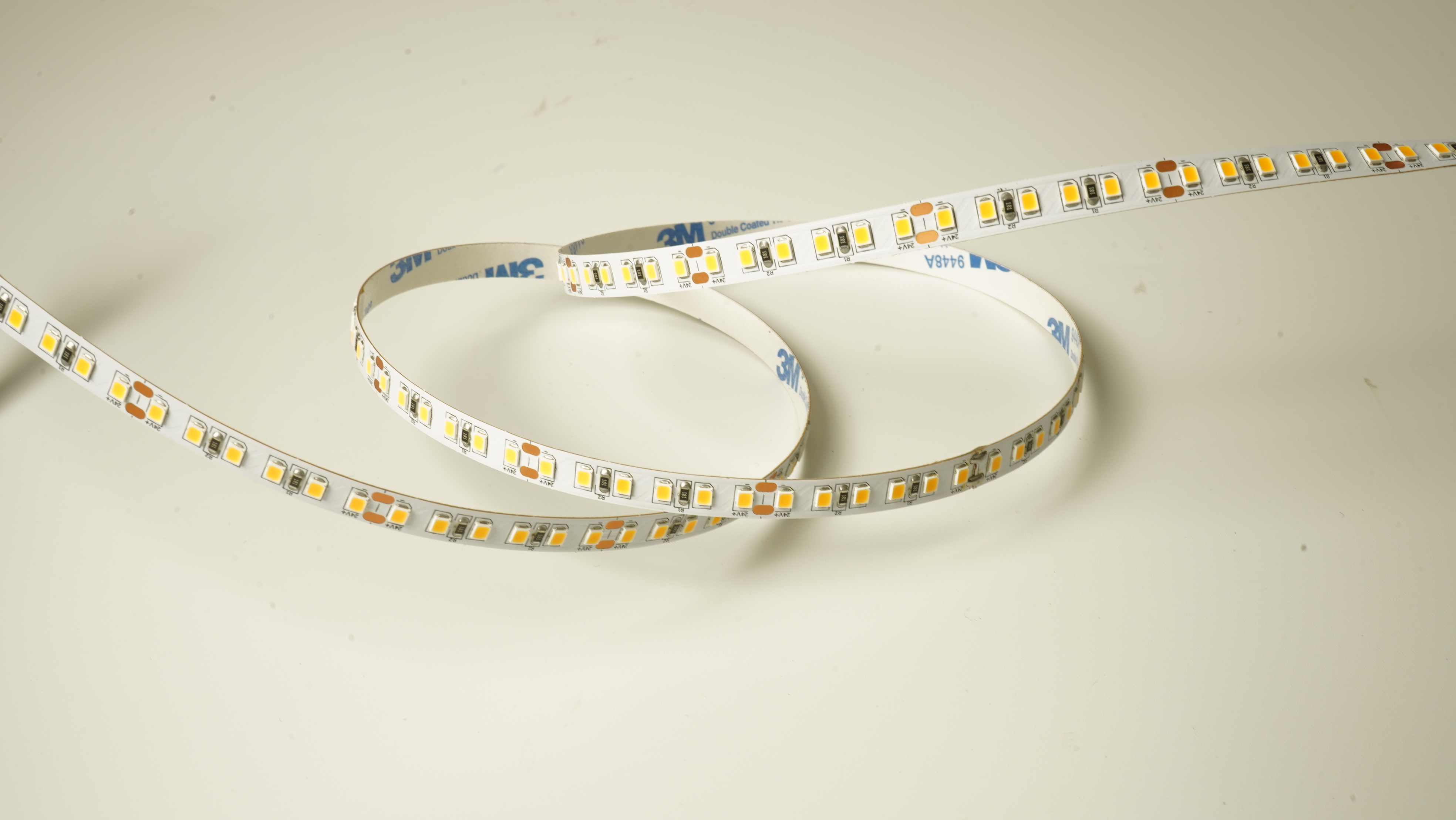
A useful way to compare LED strip products is to focus on these parameters: voltage, power per meter, CRI, CCT, LED density, PCB width/material, and IP rating. Buyers should also verify whether the product supports OEM/ODM documentation and whether the supplier can maintain batch-to-batch consistency.
One product example is the DK3-DC24V-2835-240D-9.3mm LED lighting unit. It has a PCB width of 9.3mm and uses a double-layer copper PCB. It has an LED density of 240 LEDs per meter, a CRI of Ra≥80, and is available in color temperatures of 3000K, 4000K, and 6500K. The product operates at 24V with a power rating of 15W and has an IP20 rating. This combination supports uniform light emission without a grainy appearance, making it suitable for linear lighting and black profile installations.
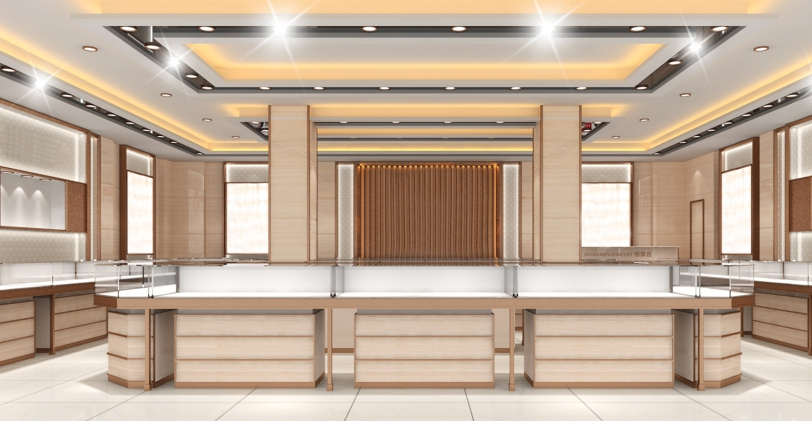
For higher color rendering demands, the XP-BD18DC24V-2835-140D-8MM full-spectrum strip supports OEM and ODM services. It has a CRI of Ra≥97, 24V operation, 12W power, 140 LEDs per meter, and color temperature options from 2700K to 6000K. Products like this are relevant for museums, galleries, luxury retail, jewelry stores, and education environments where accurate color appearance matters.
Product Families and What Their Specifications Mean
XPUP’s product portfolio covers several application-driven categories. The table below summarizes representative models and their key parameters, based on publicly available product specifications.
| Category | Model | Key Parameters |
|---|---|---|
| Linear Lighting | DK3-DC24V-2835-240D-9.3mm | 24V, 15W, Ra≥80, 240 LEDs/m, IP20 |
| Full Spectrum Lighting | XP-BD18DC24V-2835-140D-8MM | 24V, 12W, Ra≥97, 140 LEDs/m, IP20 |
| Energy Saving Lighting | G7-DC24V-2835-126D-8mm | 24V, 5W, Ra≥80, 126 LEDs/m, IP20 |
| Magnetic Track Lighting | XP-CX-18 | 48V, 30W, Ra≥90, 3000/4000/6000K, beam angle 120° |
| Smart Lighting | XP-SM-DC24V-5050-10MM | 24V, 12W, Ra≥90, RGB/3000K/4000K/6000K, IP20 |
| Acoustic Wall Lighting | XP-CA-DC24V-2835-180D-8mm-3000K | 24V, 11W, Ra≥80, 180 LEDs/m, 3000K, IP20 |
| Ambient Lighting | XP-D14DC24V-5050-60D-10MM | 24V, 12W, RGB, 60 LEDs/m, SMD5050, IP20 |
CRI is especially important for retail and hospitality projects because it affects how materials, fabrics, and food appear. CCT determines the atmosphere: 2700K to 3000K is warm and intimate, 4000K is neutral, and 5000K to 6500K is cooler and more alert. LED density affects uniformity; higher densities generally reduce dotting and improve light continuity, which is why high-density linear strips are used in visible profiles and cove lighting.
OEM/ODM Capabilities and Procurement Constraints
For buyers evaluating a supplier, production capabilities are as important as product parameters. XPUP LED supports both OEM and ODM services. The DK3 LED lighting product, for example, supports OEM and ODM services, making it suitable for custom manufacturing and branding needs. The XP-BD18 full-spectrum strip also supports OEM and ODM.
According to XPUP’s capability data, OEM customization covers voltage, logo, power, dimensions, materials, hardware configuration, internal circuit, color, factory specifications, nameplate, and label. ODM customization covers exterior color scheme, outer packaging box, label, brand information, model name, and material details. The company reports a monthly capacity of 3,000,000 meters, a lead time of 18 to 22 days, and a minimum order quantity of 2,000 meters. Quality control is described as 100% test.
These constraints are directly relevant to hvq_2 purchasing decisions. A low MOQ can support market testing; a higher MOQ usually improves unit cost but requires stronger demand forecasting. Lead time affects project scheduling, and certification documentation affects how quickly products can enter regulated markets.
Application Scenarios and Use Cases
LED strip lighting is now specified across multiple sectors. In hospitality, XPUP products such as high-CRI and tunable strips are used for hotel public areas, corridors, and façade lighting. In U.S. luxury residential projects, smart LED strips have been integrated with mainstream smart home systems, while IP68 waterproof strips handle outdoor landscape lighting.
In Germany, commercial lighting contractors have applied COB LED strips with dimming functions in cafés and retail stores, producing smooth, flicker-free illumination. In the Netherlands, IP68 waterproof LED strips have been used for commercial façade lighting and outdoor landscape projects. In the UK, RGBIC addressable strips have supported gaming room and entertainment space designs.
Another growing application is acoustic wall lighting. XPUP’s XP-CA acoustic wall strip, available in 2.4m and 3m lengths, is designed for slat wall panels with 13mm or 15mm slots. Its silicone material is described as environmentally friendly for homes, and its black surface is intended to blend into the wall. This type of product combines lighting with acoustic panel aesthetics, a segment that is gaining attention in modern interiors.
Market Trends Shaping LED Lighting Specifications
Several market trends are reinforcing the need for more rigorous specification. The global smart LED lighting market was valued at USD 27.3 billion in 2024, according to Grand View Research. The magnetic track lighting system market was estimated at USD 2.8 billion in 2025, with an expected CAGR of 7.6% through 2033. The human centric lighting market was valued at USD 3.66 billion in 2024 and is projected to grow at a CAGR of 17.1% through 2036.
The linear lighting market is also expanding: it was valued at USD 30.09 billion in 2025, with an 11.42% CAGR projected to 2032. The hospitality lighting market is estimated at USD 14.2 billion in 2025. In parallel, the acoustic panel market reached an estimated USD 8.6 billion in 2025, and search interest in “sustainable acoustic lighting” increased by 180% in the 2024–2025 period. These figures suggest that buyers should plan for products that offer dimming, smart control compatibility, high CRI, and integration with architectural surfaces.
Regulation is also moving. The 2024 International Energy Conservation Code (IECC) mandates that lights in commercial interiors dim to 10% or lower. This makes dimmable LED strips and compatible drivers a practical requirement rather than an optional feature.
Comparison with Traditional Lighting Solutions
Compared with traditional linear fluorescent fixtures or recessed downlights, LED strip lighting offers greater design flexibility, easier integration into coves and architectural details, and lower energy consumption when paired with efficient drivers. It also enables continuous lines of light, which is difficult to achieve with discrete fixtures.
However, there are realistic limitations. LED strips are not complete luminaires; they require compatible power supplies, heat management, mounting profiles, and often diffusers. IP20 indoor strips cannot be used in damp or wet areas without an additional waterproof housing or a higher IP-rated product. Additionally, the visual result depends on installation quality: voltage drop, poor soldering, or incompatible controllers can cause inconsistent brightness and color. For this reason, buyers should request samples, verify strip-to-strip color consistency, and confirm that the supplier can provide engineering support for longer runs.
Future Outlook
Procurement criteria are shifting from unit price to total cost of ownership and compliance risk. As smart controls and human-centric lighting become more common, LED strip products will need to communicate with wireless ecosystems, support smooth dimming, and maintain high color quality over long operating hours. Suppliers with in-house R&D, large-scale production capacity, and documented certifications are better positioned to support brand customers and project-based buyers.
XPUP LED’s approach, based on its company profile, combines R&D, manufacturing, customization, overseas marketing, and after-sales support in one system. For buyers, this type of integrated structure reduces coordination risk and creates a clearer path from sample approval to volume supply.
FAQ
What certifications should LED strip lighting have for the EU market?
For the EU market, LED strip lighting should have CE certification covering relevant directives, including LVD and EMC, and RoHS compliance. XPUP’s LED low-voltage and high-voltage light strip series holds CE certification issued by PTC TESTING, with documented certificate numbers for specific models. RoHS compliance for model 6535 is based on IEC 62321-1:2013.
What is the difference between IP20 and IP68 LED strips?
IP20 means the product is protected against solid objects larger than 12.5 mm but not against water, making it suitable for indoor, dry locations. IP68 products are protected against dust and continuous immersion, making them suitable for outdoor and wet installations. XPUP’s portfolio includes both indoor IP20 strips and IP68 waterproof strips for different application conditions.
What are the key parameters to check when sourcing LED strips?
Buyers should check voltage, power per meter, CRI, CCT, LED density, PCB width and material, IP rating, and whether the product supports dimming or smart control. The DK3-DC24V-2835-240D-9.3mm, for example, has 24V, 15W, Ra≥80, 240 LEDs/m, and IP20. Matching these parameters to the project environment is essential.
Can LED strips be customized for private label or project-specific requirements?
Yes. XPUP LED supports OEM and ODM services. OEM customization can include voltage, logo, power, dimensions, materials, hardware configuration, internal circuit, color, factory specifications, nameplate, and label. ODM customization can include exterior color, packaging, label, brand information, model name, and material details.
What is the minimum order quantity and lead time for volume sourcing?
Based on XPUP’s capability data, the MOQ is 2,000 meters and the lead time is 18 to 22 days. Monthly capacity is 3,000,000 meters, and quality control is described as 100% test. These factors help buyers plan for market launches, seasonal demand, and project deadlines.
For the complete XPUP LED strip product range, the 2026 XPUP LED Strip Catalog is available for download.